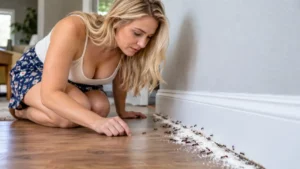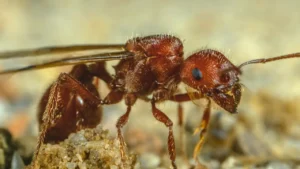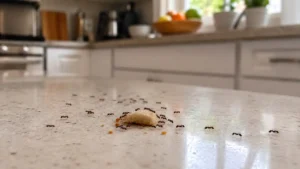
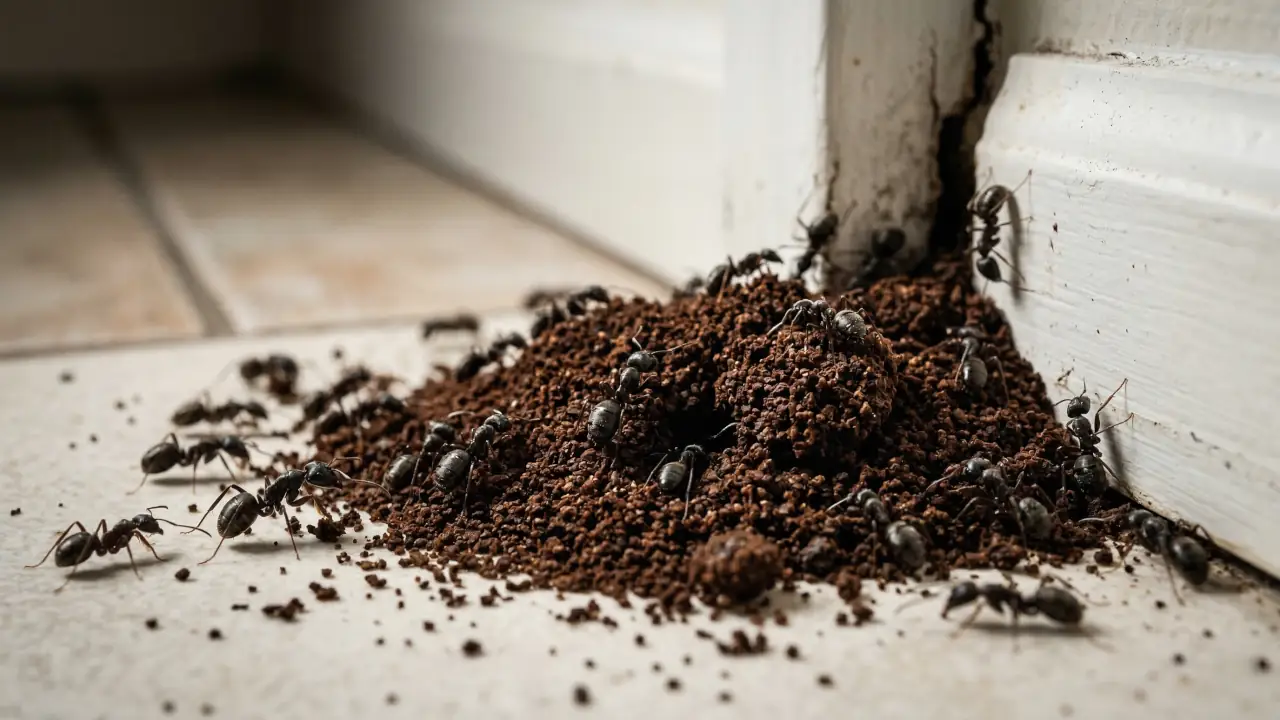
You’ve probably heard the tip a hundred times: save your used coffee grounds and sprinkle them around the kitchen or garden to keep ants away. It sounds neat — free, eco-friendly, and something you can do between sips of your morning cup. It’s one of the most common home remedies people try when they want to keep ants away naturally, especially around kitchens, patios, and garden beds.
As someone with nearly two decades of hands-on pest control experience, I’ll tell you straight: coffee grounds can sometimes change ant behavior, but they’re not the silver bullet many people hope for.
They’ll confuse a trail now and then and make the area smell intense, but they won’t reliably stop colonies or solve a full-blown infestation. That doesn’t mean coffee grounds are useless — used the right way they can be one small part of a practical plan that combines sanitation, baiting, and exclusion.
In this article I’ll walk you through what coffee grounds actually do to ants, how to use them intelligently, the best places to try them, whether they’ll kill ants, and when it’s time to switch to proven baiting or professional treatment.
Also Read: What Eats Ants — Natural Predators That Keep Ants in Check
Quick Answer: Do Coffee Grounds Repel Ants?
Yes, coffee grounds can repel ants temporarily by disrupting their scent trails, but they do not reliably kill ants or eliminate a colony. Think of them as a mild, short-term deterrent rather than a real treatment. If you try them, combine them with bait stations, sanitation, and sealing entry points. For major or persistent infestations, targeted baiting is the more reliable long-term solution.
What Coffee Grounds Actually Do to Ants
Short answer: sometimes, mildly, and temporarily.
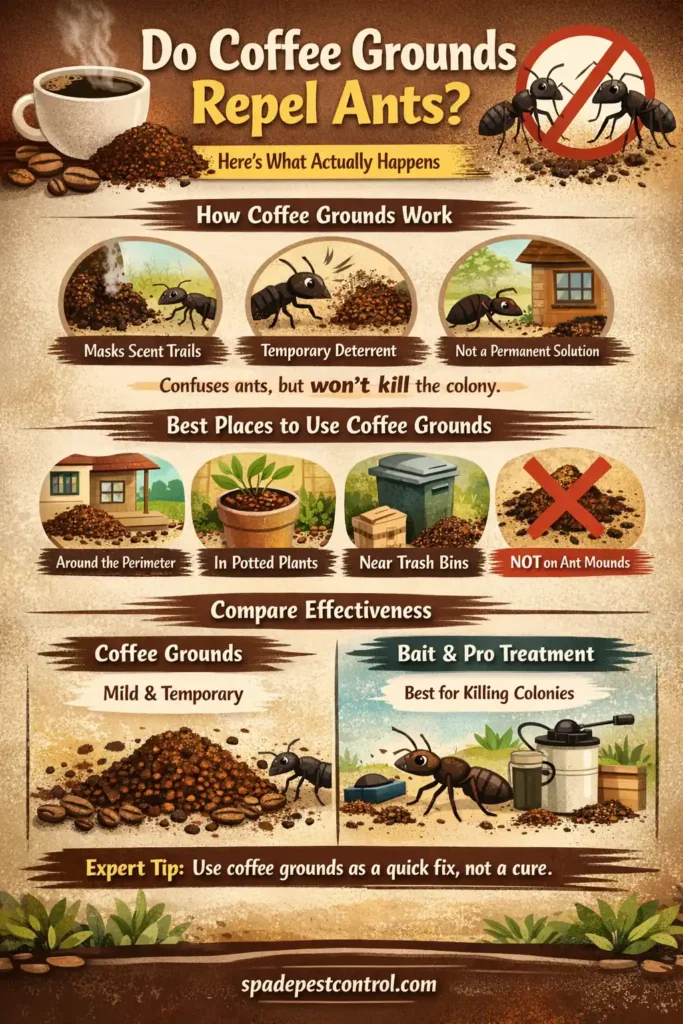
Here’s the thing. Ants navigate using chemical trails — tiny scent molecules laid down by foragers that lead workers to food. The strong smell of coffee can mask or confuse those scent trails for a while, so to the human eye ants may appear to avoid the area where grounds are scattered.
Some lab and small-scale testing suggests coffee compounds may show repellent or even toxic effects in concentrated forms, but that’s very different from spreading used grounds on soil or a kitchen counter. In real homes, dry grounds tend to produce inconsistent results and often fail to stop colonies long-term.
So if you’re wondering whether coffee grounds actually stop ants, the honest answer is only temporarily — and usually only at the trail level, not at the colony level.
Expert tip: If you try coffee grounds, use them as a temporary barrier while you set up a proper baiting strategy. Don’t rely on them alone — they’re a short-lived confusion tactic, not a cure.
Why Coffee Grounds Sometimes Seem to Work
In real homes, coffee grounds usually seem effective for a few simple reasons. The first is scent disruption. Ants rely heavily on chemical trails to move workers back and forth between food and the nest, and strong-smelling materials can interfere with that for a little while. When that happens, the trail may break up, the ants scatter, and it looks like the problem is solved — even though the colony is often still active nearby.
The second reason is species behavior. Not all ants react the same way. Some species will avoid a strong smell for a short time, some barely care, and others may simply reroute around it and keep foraging. That’s why one homeowner swears coffee grounds worked while another says they did absolutely nothing.
Odorous house ants, pavement ants, and little black ants can all react differently to strong-smelling barriers, which is one reason coffee grounds feel inconsistent from one home or yard to the next.
The third reason is that people often mix up used coffee grounds with concentrated coffee extracts studied in controlled conditions. That difference matters. A concentrated extract is not the same thing as the damp grounds left in your coffee maker. In real homes, used grounds may interrupt traffic briefly, but they rarely do enough to affect the colony itself.
How To Use Coffee Grounds to Keep Ants Away
If you want to include coffee grounds in your ant-fighting toolkit, here’s a pragmatic way to use them that won’t waste time and will avoid creating other problems (like mold or pest attraction).
- Dry the grounds first. Wet grounds can mold quickly and attract other pests. Spread used grounds in a thin layer on a cookie sheet and let them air-dry in the sun for a few hours.
- Sprinkle a light band where you’ve seen ants coming in. You’re aiming to interrupt the trail, not bury the area under pounds of wet coffee.
- Reapply daily for the first 2–3 days. Scent fades. If you don’t reapply, ants will simply reestablish the path.
- Use while you set baits. Apply grounds as a temporary surface barrier while you place an appropriate ant bait nearby. Sweet baits tend to work better when ants are chasing sugars, while protein or grease-based baits can work better when they’re after fats. The grounds may reduce visible activity long enough for the bait to do the real work. If you use any bait, keep it out of reach of children and pets and always follow label directions on commercial products.
Expert tip: Don’t put grounds directly into cracks, electrical outlets, or HVAC intakes. They’re messy and can create moisture and mold problems. Use them where you can clean them up easily.
The Best Places to Use Coffee Grounds for Ants
If you’re going to try coffee grounds, they work best in outdoor transition areas and around entry points rather than deep inside the house. A thin band outside a door threshold or along the exterior side of a window sill can sometimes help disrupt an active trail, especially when ants are using that exact route to move in and out.
You can also use a light sprinkle around the rim of outdoor potted plants or along the surface of soil where tiny foraging ants are active, but avoid mixing heavy amounts directly into potting soil where it can hold moisture or affect drainage.
If you’re trying to keep ants away from plants or garden beds, this is about as far as coffee grounds are worth taking — a light surface deterrent, not a real colony-control method.
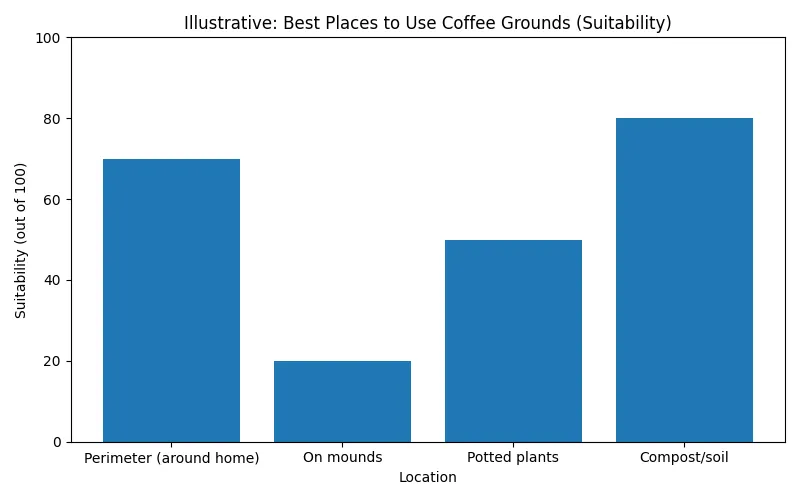
In the yard, coffee grounds make the most sense as a temporary surface deterrent along garden edging, landscape beds, around compost bins, or near outdoor trash areas where ants are actively foraging. Just keep the layer light and dry. Thick, damp piles are where homeowners get into trouble, because wet grounds can mold, stain surfaces, and sometimes attract other insects.
If your problem is in the lawn — especially if you’re dealing with visible mounds, repeated trails, or widespread activity — coffee grounds are not a realistic colony-control method.
The same goes for ant hills or active ant mounds: coffee grounds may change surface activity for a short time, but they won’t reliably reach the colony underneath.

At that point, you’re better off following a proper lawn treatment plan using baiting or mound treatments. If you need a full walkthrough, this guide on how to get rid of ants in your lawn covers what actually works, when broadcast bait makes sense, and when it’s time to bring in professional treatment.
Expert tip: Use coffee grounds only as a short-term, surface-level deterrent outdoors. If ants are nesting in the lawn, targeted baiting or mound treatments are more effective than scattering grounds on the grass.
Will Coffee Grounds Kill Ants?
In real homes, almost never.
Most home uses of coffee grounds are too weak to be lethal. In field-style testing, spreading used coffee grounds on an active mound did not reduce ant activity compared with leaving it alone. That same reality applies to many common species: a handful of grounds won’t penetrate a colony or stop foragers from going back and forth. In contrast, concentrated extracts and specific formulations tested in labs can show mortality or repellency — but those are lab products, not your morning compost.
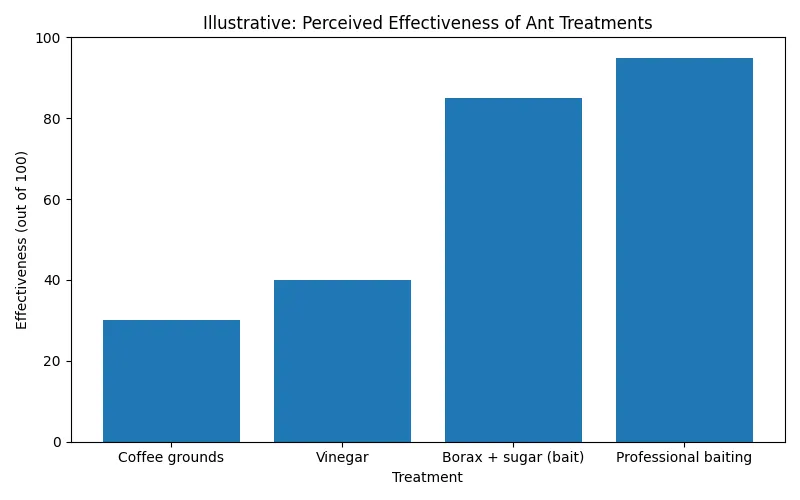
If your goal is to kill ants, the proven approach is a targeted baiting strategy. Baits exploit the ants’ food sharing behavior: a worker takes the bait back to the nest and shares it, applying a slow-acting toxicant that reaches the queen and brood. Home remedies rarely accomplish that distribution.
Expert tip: For active indoor infestations, use a sweet or protein bait (depending on what ants prefer at the time). A properly placed commercial ant bait — or a carefully used borax-based bait where appropriate — usually outperforms most ‘sprinkle and hope’ remedies for colony control. If uncertain, match the bait type to the food preference you observe (sugar vs greasy/protein).
What the Research and Real-World Testing Show
Most extension specialists and experienced pest pros agree on the same basic point: coffee grounds may disturb ant movement for a short time, but they are not a dependable fix for an active infestation. Guidance from the University of California Statewide IPM Program consistently emphasizes sanitation, exclusion, and properly placed baiting as the backbone of real ant control, which lines up with what we see in the field.
The strongest reality check comes from extension testing. In a well-known roundup of home remedies, Texas A&M Fire Ant Research found that spreading used coffee grounds on fire ant mounds did not reduce activity compared with untreated mounds. That doesn’t mean coffee smell does nothing at all — it just means the typical “dump grounds on the mound” approach doesn’t solve the problem homeowners are actually trying to solve.
There is some nuance, though. Controlled research on coffee extracts suggests certain concentrated formulations may show repellent or even mortality effects under lab conditions. That’s interesting, but it’s not the same as using loose, spent grounds from your coffee maker. In practical home pest control, that’s the distinction that matters. That’s why coffee grounds are best treated as a short-term trail disruptor, not a stand-alone ant control method.
When Coffee Grounds Are Worth Trying — And When They’re Not
Coffee grounds are worth trying when you’re dealing with a light outdoor trail, a few foragers near a doorway, or a temporary problem while you’re waiting for bait to start working. In those situations, they can sometimes interrupt visible ant traffic and help keep ants away from a specific route for a short time. That’s especially true outdoors, where cleanup is easier and moisture isn’t building up inside the house.
They’re usually not worth your time when ants are nesting indoors, building ant hills in the lawn, or showing up day after day in the same place. That’s when the colony is established, and surface repellents rarely do much beyond shifting the traffic pattern. If you need lasting control, baiting and exclusion are the better use of your effort.
Step-By-Step Practical Plan: When To Use Coffee Grounds — And When to Stop
- Spotting ants indoors near counters or doors? Wipe surfaces with soapy water to remove trails. Put out baits suited to the species (sugary for sugar-feeding ants, protein for grease-feeding ants). If you want, sprinkle dried coffee grounds outside the entry as a temporary barrier while bait works.
- Small outdoor trail activity in landscape beds? Apply a thin ring of dried grounds to confuse trails, then place bait stations nearby. This is one of the few situations where coffee grounds in the garden can make sense, especially when you’re trying to interrupt a light foraging trail near the edge of a bed or border. Grounds may briefly interrupt visible trail activity, but baiting is what reaches the colony.
- Active mounds or colony in lawn? Don’t waste large quantities of grounds on mounds. Use labeled mound treatments or broadcast baits intended for lawn ant control instead. If you need a step-by-step breakdown, our guide on how to get rid of ants in your lawn walks through baiting, mound treatments, and when professional help makes sense. If mounds are numerous or you may be dealing with an invasive species, it’s smart to get professional help sooner rather than later.
- After treatment: Clean up leftover grounds, compost them properly, and monitor. Grounds left wet will mold and attract other insects or critters.
Expert tip: If you’re composting grounds, add them to the compost pile away from the house. They’re excellent for compost when mixed and allowed to break down, and that avoids making a messy, smelly band around foundations.
Common Mistakes People Make with Coffee Grounds
Safety and Plant Considerations
Used coffee grounds are slightly acidic, but once they’re mixed into soil or compost they usually buffer out over time. The bigger issue is how they’re applied. Fresh, heavy layers of grounds can form a crust that reduces air and water movement if you use them like mulch, so avoid piling them thickly around plants — especially acid-sensitive ones — unless they’ve been properly composted first.
Inside the home, keep coffee grounds away from carpet, porous stone, pet feeding areas, electrical outlets, appliance vents, and food-prep surfaces. They can stain, hold moisture, and create more cleanup than they’re worth in the wrong spot. If you’re using any bait alongside coffee grounds, follow the product label carefully and keep bait placements out of reach of children and pets.
This article is for informational purposes only. Always follow product label directions, keep baits away from children and pets, and contact a licensed pest professional if you’re dealing with repeated indoor infestations, invasive ants, or uncertain species identification.
Also Read: Does Baking Soda Kill Ants? Not the Way Most People Think
Conclusion
Coffee grounds are a reasonable, low-cost tool to add to your ant-management toolbox — but think of them as a short-term confusion tactic rather than a treatment that will eliminate a colony. They can mask scent trails, sometimes deter foragers, and help while you set up effective baits. If your goal is simply to keep ants away from one doorway or one garden edge for a day or two, they may help — but that’s very different from solving the infestation.
For lasting control, follow integrated pest management basics: sanitation, exclusion (seal entry points), proper baiting, and targeted mound treatments where appropriate. When you see persistent colony activity, especially in lawns or structural infestations, professional baiting and monitoring are the ways to get rid of the problem for good. If coffee grounds buy you a day, great. If ants keep coming back, stop sprinkling and start baiting.