Do cockroaches make noise in your home? In many infestations, the first sign of cockroaches isn’t seeing one — it’s hearing faint movement somewhere in the kitchen or walls late at night.
In many homes, the first clue isn’t seeing a roach — it’s hearing something faint in the kitchen late at night. Homeowners often describe a light scratching inside cabinets, a rustling sound behind the refrigerator, or quick scuttling along baseboards when the house is quiet.
In pest control inspections, homeowners frequently report hearing faint scratching or rustling in kitchens before they ever see a cockroach. In many cases, that nighttime noise turns out to be cockroaches moving through cabinets, behind appliances, or inside wall voids. People frequently ask the same question after hearing it:
Do cockroaches make noise?
The answer is yes — but not in the way most people expect. Cockroaches don’t buzz or chirp constantly like crickets, but they can create several types of sounds when they move, feed, or interact with each other.
Some species can even produce deliberate sounds such as hissing or stridulation (a chirping sound made by rubbing body parts together). Researchers have documented these behaviors in several cockroach species during courtship and defensive interactions.
Understanding these cockroach sounds can help homeowners recognize the early signs of an infestation and figure out whether the noise they’re hearing is likely cockroaches, rodents, or something else entirely.
In this guide, we’ll explain what cockroach sounds are like, why they happen, which species make the most noise, and what it means if you hear them in your home.
Also Read: How to Keep Cockroaches Away at Night (Sleep Safe)
Quick Answer: What Kind of Noise Do Cockroaches Make?
Yes — cockroaches can make noise, although the sounds are usually very quiet. Most cockroach noises come from movement — scuttling legs, scratching inside walls, or rustling as they crawl through cabinets. Some species can also produce deliberate sounds such as hissing or chirping (stridulation) for communication or defense.
Do Cockroaches Make Noise?
Short answer: yes and no. Most of the everyday noises you associate with roaches — tiny scrapes, soft thumps, and the whisper of legs — are incidental: the sound of many small bodies moving, bumping into surfaces, or chewing. But some cockroach species produce deliberate, audible sounds as part of communication or defense.
Those deliberate sounds include hissing (the famous Madagascar hissing cockroach), chirping or stridulation in some species during courtship or when disturbed, and occasional clicking made by body parts rubbing together. Even when sounds are deliberate, they are usually quiet and species-specific — not a steady, loud buzz you’d mistake for a running engine.
How loud these noises are depends on the species, the number of roaches, where they are (inside walls, under flooring, behind appliances), and how still your house is at night. In a quiet kitchen, the scuttle of dozens of German roaches can sound louder than a single noisy hissing cockroach in a crowded room.
Why They Make Noise
Cockroaches make noise either accidentally or on purpose. Accidental noises are the simple mechanical result of bodies, legs, antennae, and wings interacting with surfaces: walking across a countertop, scrambling under a cabinet, or nibbling on cardboard. Purposeful noises are produced for communication: attracting mates, warning rivals, or startling predators. Some hisses and chirps are also defense behaviors meant to scare away threats.
Quick tip: If your home is quiet and you hear repeated, patterned sounds at night (like a rhythmic clicking or chirping), treat it as a sign to inspect food and garbage areas — patterned noises are more likely to be intentional communication and could point to an established population.
What Is Stridulation?
Stridulation is the production of sound by rubbing together specialized body parts. It’s well known in insects like crickets and beetles, but it also occurs in certain cockroach species. In cockroaches, the sound is typically produced when small ridged body structures rub together, creating a short chirp or clicking noise. Research published in Nature documented stridulation behavior in cockroaches during courtship, showing that certain species produce chirping sounds by rubbing body structures together as part of mating communication (Hartman, Stridulation by a Cockroach During Courtship Behaviour, Nature).
Quick tip: Stridulation is usually short and patterned. If you hear a short chirp or series of chirps at night, try to localize where it’s coming from — near baseboards, under cabinets, or behind appliances are common spots.
What Types of Cockroaches Are the Noisiest?
Most urban pest control callers worry about German or American cockroaches because they are common and prolific in homes. But “noisiest” depends on the sound type.
Some cockroach species are capable of producing louder or more noticeable sounds than others. The comparison chart below shows how common cockroach species differ in the types and intensity of noises they can produce.
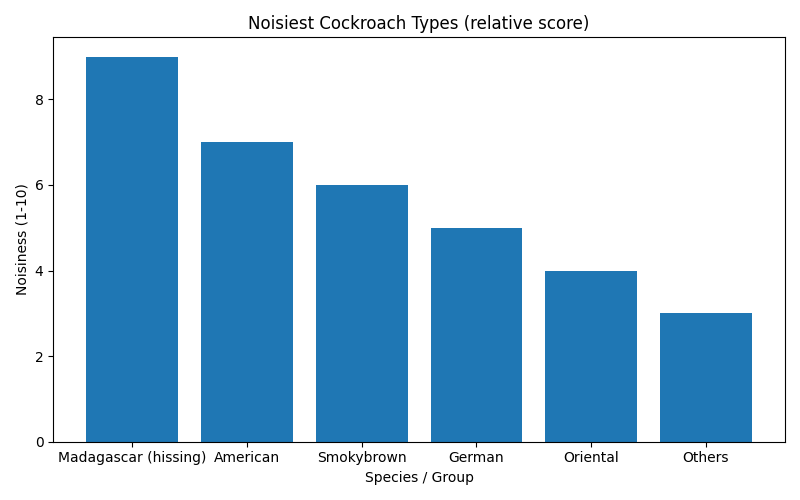
Loudest/noisiest types by behavior:
Quick tip: Don’t equate volume with species automatically — a single large American or Madagascar hiss will sound different from the combined scuttle of a German infestation.
Common Cockroach Sounds in Homes
During cockroach inspections, homeowners typically report several different types of sounds depending on where the insects are active. Below I explain what they are, which species tend to make them, and practical tips to locate them.
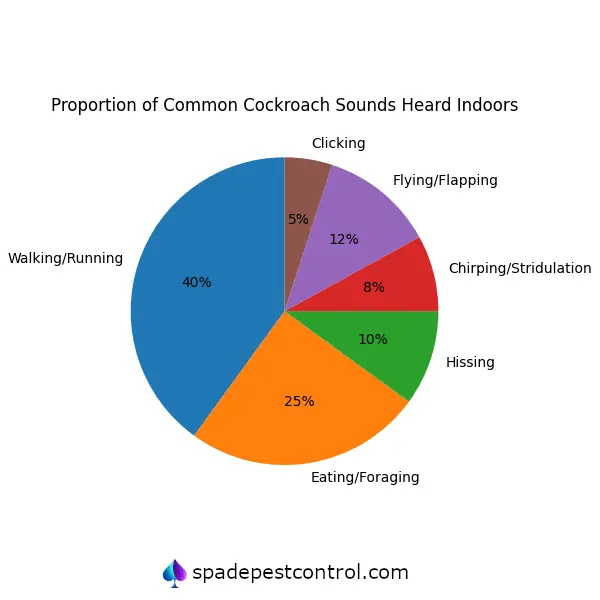
Cockroach noises generally fall into a few categories, with movement sounds being the most common. The chart below shows the typical types of cockroach sounds homeowners report hearing.
Walking and Running
Most of the tiny noises people hear are the pitter-patter of many legs on surfaces. Each cockroach has six legs; when lots of roaches move together you hear a distinct rustle. Cockroaches can also produce faint scurrying or walking sounds when many insects move across surfaces at the same time, especially on materials like cardboard, paper, or drywall. On a quiet night, the drag of legs on drywall or the scrape across floorboards becomes surprisingly apparent.
Quick tip: If you suspect movement inside cabinetry or walls, turn off all background noise and place your ear close to baseboards or appliance exteriors. You’ll often hear the direction the sound’s coming from.
Running
Running sounds are fast, staccato scuttles that happen when cockroaches quickly dart across surfaces. Highly active infestations (lots of nymphs and adults) produce a carpet-of-feet sound. German cockroaches are famed for rapid dashes; they’ll bolt when lights are turned on.
Eating
Soft munching and crackling noises are sometimes reported when roaches chew cardboard, paper, or dry food. They’re more likely to be feeding in pantry or storage spots where they can find starches and grease. The chewing sound is faint and often masked by kitchen appliances; you hear it more when everything else is silent.
Quick tip: If you hear soft nibbling near stored boxes or cardboard, clean out the pantry, remove cardboard, and move dry goods to sealed plastic containers. That both reduces sound sources and lowers food for them.
Flying
Large cockroaches like American and Smokybrown can produce a buzzing or wing flutter sound when they fly. It’s not the constant hum of a bee but a heavier flapping or distant buzz. If the noise is a brief fluttering followed by a thump, that’s often a flying roach striking a surface.
Hissing
The Madagascar hissing cockroach produces a strong hissing sound using spiracles — not something common in typical household pests, because Madagascar hissing cockroaches are not household pests in most regions. But hissing can be loud and alarming.
Researchers studying insect acoustics have recorded these signals and analyzed how cockroaches use air movement through spiracles to produce defensive or social sounds (MDPI Sensors study on cockroach acoustic signals). While this species is famous for its hiss, it is rarely responsible for noises inside typical homes.
Chirping / Stridulation
Some cockroaches produce short chirps when courting or in response to disturbance. These are usually short, high-frequency sounds and are not common in the usual household pests — they’re species-specific and often faint unless recorded with sensitive gear.
Clicking
Clicking is produced when body parts or wing veins rub together (mechanical noise). Clicking is usually intermittent and short. It can be easy to misidentify clicking produced by house structures (pipes, settling wood) as insect clicking, which is why localizing the sound is important.
Quick tip: If you can safely isolate the area and place a glass jar or cup against the wall to amplify the sound, you may be able to confirm if the noise is insect-related or structural.
Do Cockroaches Make a Buzzing Sound?
Not usually. The “buzz” most homeowners reference is typically either small wing-beat sounds from larger roaches in flight (American or Smokybrown) or the electrical hum of appliances. A true continuous buzzing is not typical of cockroaches. If you hear a steady, electric-sounding buzz it’s more likely a loose transformer, a buzzing insect like a wasp, or an appliance. If the buzzing is intermittent, heavier, and accompanied by thumps, that could be a large roach flying in and hitting surfaces.
Is It Possible to Hear Them Inside Walls?
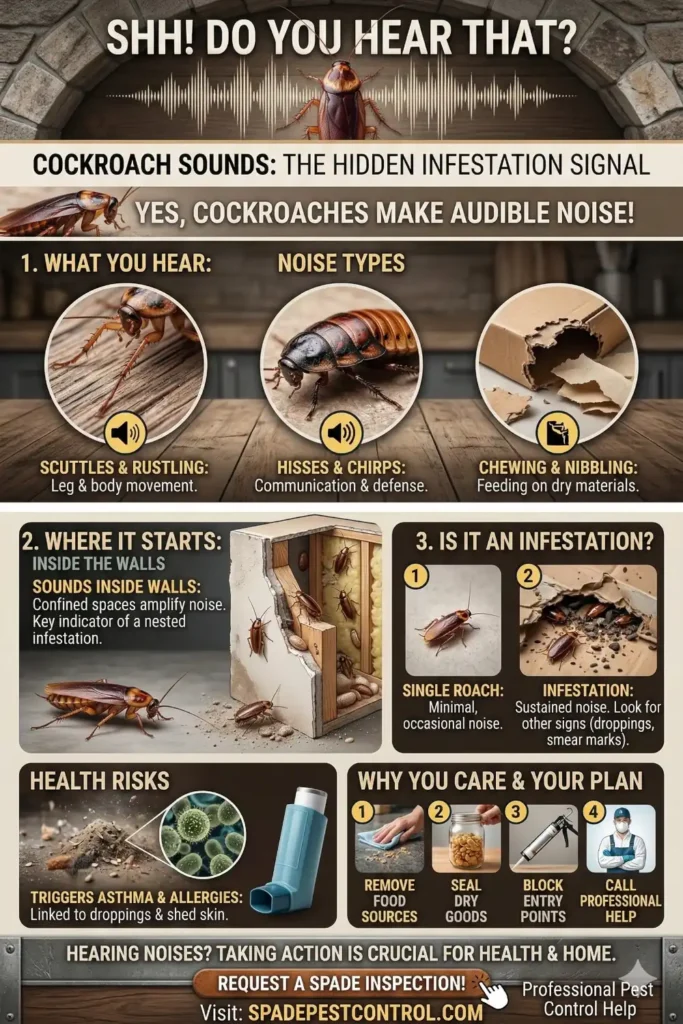
Yes. Cockroaches often shelter behind walls, in wall voids, between insulation and sheathing, inside ceiling cavities, and under flooring. When they move in those confined spaces you can hear scratching, rustling, or light thumping. It’s especially noticeable at night when your home is quiet and the insects are most active.
If you hear persistent rustling in a particular wall or in ceiling spaces, it often indicates a population has nested close by. Many customers report a “scratching in the walls” sound as the first sign of a problem in kitchens or bathrooms where moisture and food are available.
In one kitchen inspection I handled, a homeowner reported a faint scratching sound behind the refrigerator every night around midnight. When the appliance was pulled forward, the wall behind it contained a German cockroach harborage with dozens of nymphs and adults moving along the drywall and cardboard food packaging.
The noise the homeowner heard wasn’t a single insect — it was the combined movement of many cockroaches traveling between the wall void and the kitchen cabinet. In many infestations, homeowners describe the noise exactly this way — a faint scratching or rustling that only becomes noticeable when the house is quiet at night.
Why It’s More Common to Hear Them at Night
Cockroaches are primarily nocturnal. They avoid light and prefer to feed at night when people are less active. At night the house is quieter, other sound sources are reduced, and your hearing is more likely to catch faint noises. Also, cooler nighttime temperatures can push roaches to move more in search of food and water. That combination — increased activity and a quieter environment — is why many homeowners first notice the sounds after dark.
Are Cockroach Sounds a Sign of an Infestation?
Often, yes. When homeowners ask “do cockroaches make noise at night?”, it’s usually because they’re hearing repeated scuttling, scratching, or rustling in the same area after dark. A single cockroach rarely produces noticeable noise. However, when multiple cockroaches are active together — especially inside cabinets or wall voids — their combined movement can create a distinct scratching or rustling sound.
If you also see cockroach droppings, smear marks, egg cases (oothecae), or live sightings, those signs combined with sound strongly suggest an infestation and should prompt action.
Practical steps when you think sound means infestation:
- Do a quick visual check of kitchen cabinets, under sinks, behind appliances, and in pantry storage.
- Remove exposed cardboard and store dry food in sealed plastic or glass containers.
- Clean grease and crumbs on counters and behind appliances.
- For immediate control, sticky traps can confirm and reduce small numbers; bait stations are better for German cockroaches.
- For large, persistent problems, call a licensed pest control professional.
Note: Many pest-control resources confirm that persistent nocturnal noises and localized rustling often correspond to established infestations, particularly with German cockroaches.
Health Risks of Cockroach Infestations
Cockroach infestations are more than just unpleasant. Cockroach droppings, shed skins, and saliva can trigger allergies and asthma symptoms, especially in children. According to medical research and public health agencies, cockroach allergens are a common indoor trigger for respiratory irritation in homes with infestations.
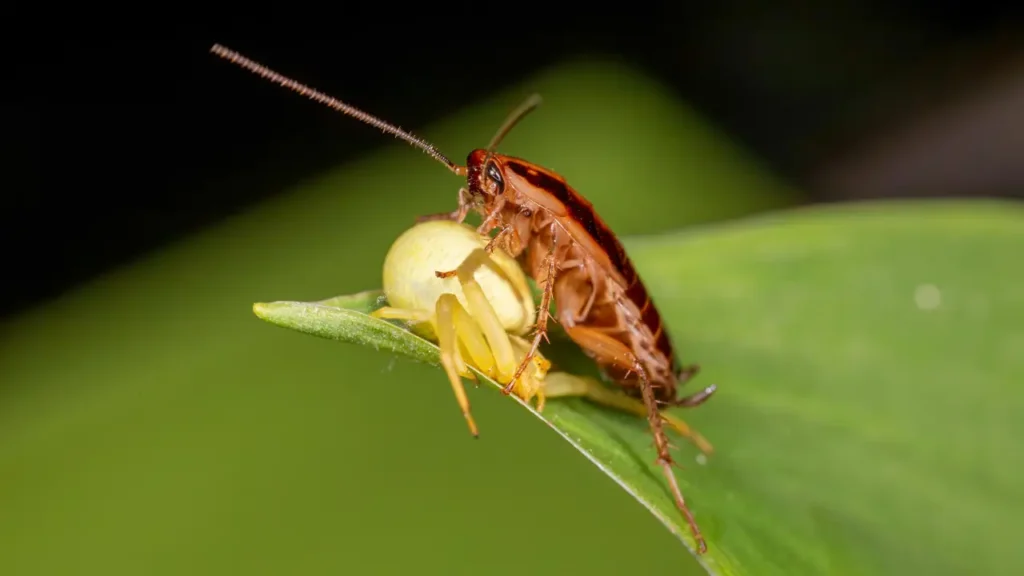
Because of this, hearing repeated cockroach activity — especially in kitchens or food storage areas — should be treated as an early warning sign that sanitation and pest control steps may be needed.
When Sound Doesn’t Mean Cockroaches
Not every night noise is a roach. Mice, rats, squirrels, or even settling pipes and loose ducts can produce similar sounds. Compare the sound you’re hearing to these descriptions: rapid scurrying and faint rustling usually points to insects; heavier thumping, gnawing, or droppings indicate rodents; a continuous click might be a structural issue. If you’re unsure, an inspection by a pro will quickly identify the source.
What a Pest Control Professional Will Do
If you call a pest professional, they will:
Professionals can identify the species by sight and by the pattern of activity. That matters because treatment varies: German cockroaches respond well to baiting and integrated programs, while American and Smokybrown may need a different strategy.
Conclusion
Yes — cockroaches can make noise. In most homes, the sounds people notice are small mechanical noises created when cockroaches run across surfaces, move inside cabinets, or travel through wall voids. From field experience, noticeable nighttime scratching or rustling almost always means more than one cockroach is present. When several insects are active in the same area, their combined movement can become surprisingly audible in a quiet house.
Persistent nighttime scratching, rustling, or scuttling in the same location often indicates an established cockroach population nearby and should prompt inspection and action. If you suspect an infestation, steps like better sanitation, sealing entry points, and targeted baiting will help; for larger problems, hire a licensed pest control company.