If you’re searching for how to get rid of spider crickets, chances are you just saw one launch itself across your basement floor. I’ve had plenty of homeowners call me after that exact moment — laundry basket dropped, heart rate up, and the assumption that if you see one, there must be fifty more hiding in the dark.
The good news is spider crickets look worse than they are. In more than 18 years of crawling through basements and damp crawlspaces, I’ve found they’re usually a moisture problem first — not a major infestation disaster.
In this article I’ll explain what spider crickets are, why they come inside, and exactly what to do—cleaning, trapping, targeted dusts, sprays, humidity control, and sealing entry points—to get rid of them fast and keep them from coming back.
Also Read: How To Get Rid of Skinks Fast
How To Get Rid of Spider Cricket — Quick Answer
The fastest way to get rid of spider crickets is to vacuum visible insects, place sticky traps along walls, reduce basement humidity below 50%, apply targeted dusts in wall voids if needed, and seal exterior gaps. Moisture control and exclusion are what stop them long term.
What Are Spider Crickets?
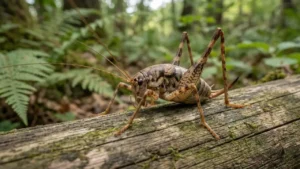
Spider crickets, often called camel crickets or cave crickets, are members of the insect family Rhaphidophoridae. They belong to the order Orthoptera, which also includes grasshoppers and locusts. In many eastern U.S. states, the non-native Asian camel cricket (Diestrammena asynamora) is now more common than native species and is especially well adapted to basements and crawlspaces.
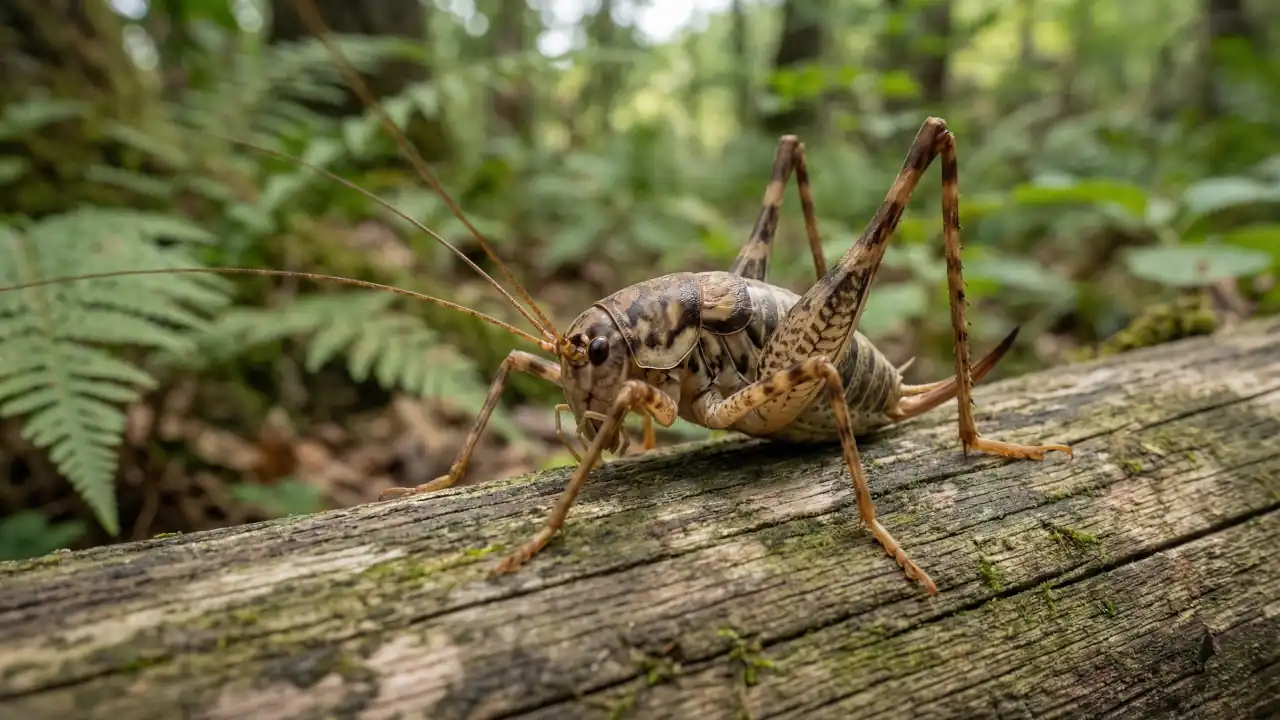
They are wingless, have a rounded humped back, extremely long antennae, and very powerful hind legs built for jumping. They are typically brown to tan and range in size from about one-half to one inch or slightly larger depending on species.
Unlike house crickets, spider crickets do not chirp. They are most active in cool, dark, damp places and are commonly found in basements, crawlspaces, under mulch and stones, and inside garden sheds.
They can be accidental invaders, wandering in from outside harborage, or they can reproduce in moist areas in or near the house.
Like other Orthopterans, they develop through incomplete metamorphosis, moving from egg to nymph to adult without a pupal stage. Indoors, reproduction is usually slower than pests like roaches because they depend heavily on stable moisture conditions.
Quick Answer: If you want to make fast ID easier, look for the humped back and long antennae. Keep a jar handy next time you see one and take a quick photo—this will help you confirm what you are dealing with and avoid mistaking them for other pests.
What Are They Attracted To?
Spider crickets are attracted to dark, humid, and sheltered locations. They prefer environments with steady moisture: damp basements, leaky crawlspaces, cluttered garages, stacks of cardboard or firewood, and thick mulch beds right up against foundation walls. They feed opportunistically.
Once inside, they will chew on organic materials like cardboard, fabric, moldy wood, and sometimes plant material or dead insects. Because many of the indoor spots they favor are quiet and out-of-the-way, you may not notice them until they show up in larger numbers or when lights are turned on.
They also respond to shelter offered by clutter and vegetation that touches the house; a tightly packed foundation bed or heavy mulch creates an ideal runway from yard into basement.
In the Mid-Atlantic and Southeast especially, I see spikes in spider cricket activity during humid late summer and early fall when crawlspaces stay damp.
Activity often increases in late summer and early fall, especially east of the Mississippi River where humidity remains high. In those regions, damp crawlspaces and basements create ideal shelter during seasonal transitions.
Quick Answer: Walk the outside of your house with a flashlight at dusk. Look for dense mulch, foundation plantings touching the siding, leaking spigots, or stacked wood. Anything that keeps the soil cool and damp and lies against the foundation is a likely entry path.
What I See in Real Homes
In the field, spider cricket issues almost always trace back to moisture. I once inspected a split-level home where the homeowner kept finding them in a finished basement bathroom. Traps were catching 20–30 per week.
The real problem? A slow plumbing leak behind the vanity combined with mulch piled 6 inches high against the exterior foundation wall.
We fixed the leak, pulled the mulch back, ran a dehumidifier for two weeks, and sealed a utility penetration. Trap counts dropped to zero within 18 days — without heavy pesticide use.
That’s typical. When you remove moisture and entry points, spider crickets collapse quickly.
How To Get Rid of Spider Crickets
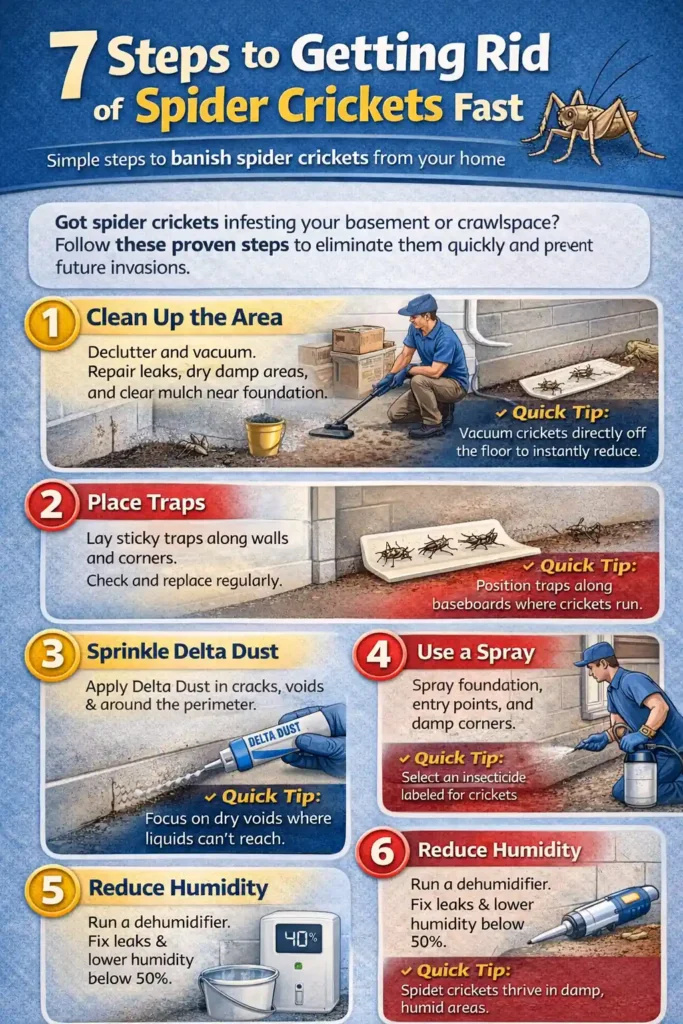
The fastest and most durable approach combines immediate knockdown with long-term exclusion and environmental changes. Think short-term removal plus long-term prevention. Below I walk through each tactic the way I would if I were standing beside you, tools in hand.
Now let’s break down each step so you know exactly how to do it the right way.
Clean Up the Area
Begin by decluttering the infested space. Spider crickets love hiding in piles of boxes, old clothing, cardboard, and insulation. Clean up any loose cardboard, move stored items off the floor and away from walls, and vacuum thoroughly. The vacuum is one of the most effective non-toxic tools you have.
Vacuuming removes adults, nymphs, eggs, and droppings. After vacuuming, take the bag or canister outside and dispose of the contents in an outdoor trash can so the crickets do not escape back into the house. Remove or thin mulch beds or move them back at least a few inches from the siding. Dry out any wet material and repair leaks or pooling water. Fix obvious sources of moisture like dripping pipes, faulty downspouts, and leaking outdoor hoses.
Quick Answer: Vacuum first, then clean. Use sticky traps along baseboards and near suspected entry points immediately after cleaning so you can monitor where they are coming from.
Place Traps
Traps give you a quick reduction in visible numbers and help monitor the infestation. For spider crickets, common-store sticky traps or glue boards work well when placed along walls, behind appliances, and in corners of the basement or crawlspace. Put traps in a grid or along likely runways rather than randomly scattering them.
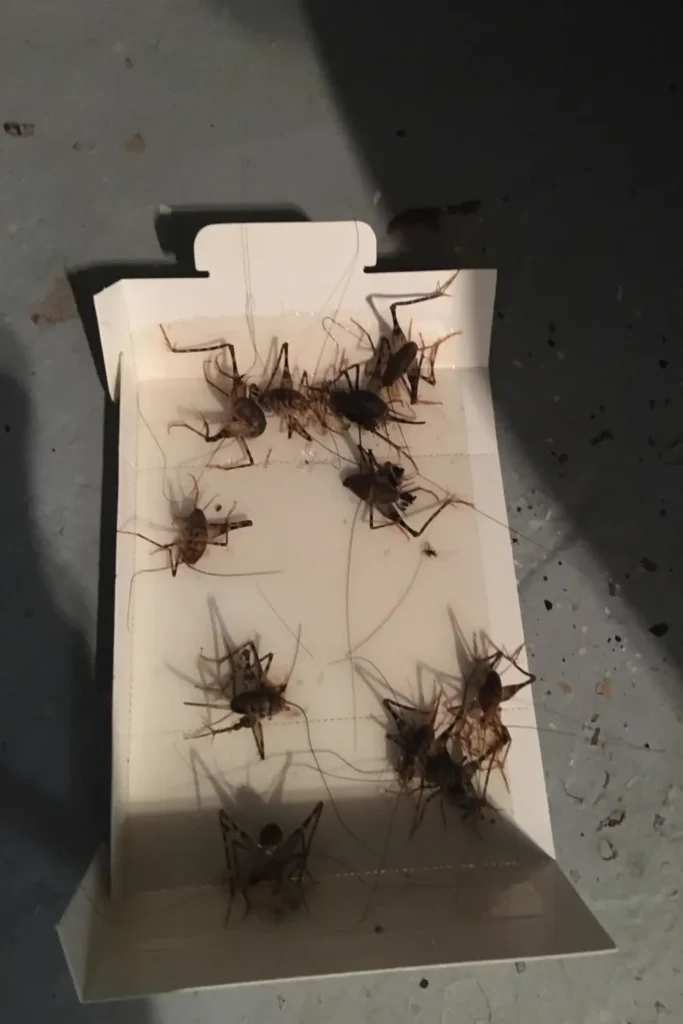
Check traps every few days and replace when loaded. For a low-tech trap, place a shallow bowl with soapy water under a light source or near a hotspot; crickets seeking warmth and light will jump into the water and drown. Frequent checking and removal keeps the total population down while you address the environment.
Quick Answer: Put sticky traps perpendicular to the wall so crickets running along the baseboard snag more easily. Reposition traps weekly to follow their pathways.
Sprinkle Delta Dust
Delta Dust is a professional-grade dust product whose active ingredient is deltamethrin, a synthetic pyrethroid. Dust formulations are useful because they penetrate voids, cracks, and wall cavities where liquid sprays have trouble reaching.
This type of crack-and-crevice treatment is commonly used as part of an Integrated Pest Management (IPM) approach, where targeted application replaces broad surface spraying.
Dusts like Delta Dust are labeled for application into wall voids, under rim joists, in crawlspace voids, and around foundations—places where spider crickets hide or travel. Apply dust sparingly and target application to dry, inaccessible voids rather than open floor surfaces.
Use a proper hand duster to place dust into cracks and crevices and follow the product label for safety precautions, dosage, and allowed use areas. Keep people and pets out of treated areas until the dust has been applied and any treated surfaces are dry and ventilated per label instructions. The product label is the legal authority for how to use it safely.
Always consult the product label, such as the Delta Dust (deltamethrin) label from Envu, which outlines approved use areas, safety requirements, and application limits. The label is the law.
Quick Answer: Dust only in voids and around baseplates, not out in the open where children or pets might contact it. If you are unsure about using dusts, consult a licensed pest professional.
Use A Spray
A residual pyrethroid perimeter insecticide can reduce migrating spider crickets entering the structure. For perimeter work, use a labeled product intended for exterior perimeter and foundation treatment. Focus on the foundation wall, around vents, under porches, and along concrete steps, creating a treated band around the house.
Indoors, sprays are most effective when used as a spot treatment around baseboards, behind appliances, and in corners where dust cannot reach. If you prefer a lower-toxicity route, there are pyrethrin-based sprays and insecticidal soaps that give fast knockdown with limited residual. Always read and follow the label. Sprays kill on contact and give temporary reduction, so pair spraying with the steps above for a long-term solution.
Quick Answer: Use sprays to treat runways and entry points, not as the only measure. Sprays are quick but temporary; exclusion and moisture control are what keep crickets away permanently.
Reduce Humidity
Lowering humidity is one of the most effective long-term controls. Spider crickets are drawn to moist, cool areas. Running a dehumidifier in a damp basement will make the space less inviting. Fix leaking pipes, use proper ventilation behind dryers, and slope soil away from foundation to prevent groundwater pooling.
If you have a crawlspace, consider installing a vapor barrier over the soil and running a small dehumidifier if the space is ventilated and accessible.
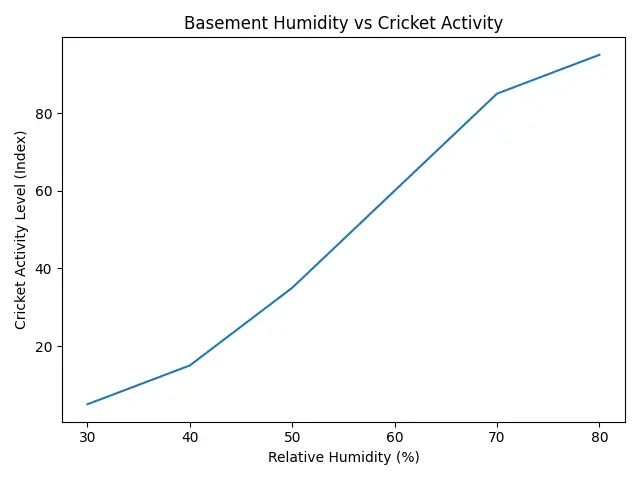
In chronically damp homes, crawlspace encapsulation may be worth considering. A sealed vapor barrier, properly insulated rim joists, and controlled ventilation can stabilize relative humidity (RH) below 50 percent. If you notice condensation, efflorescence on foundation walls, or recurring seepage, grading and drainage corrections or a sump pump upgrade may also be necessary.
University and extension programs consistently emphasize moisture control as the primary solution. NC State Extension notes that camel crickets are strongly associated with damp crawlspaces and basements and that drying the area is often more effective than spraying alone. The University of Maryland Extension also highlights humidity reduction as the most reliable long-term prevention strategy.
Quick Answer: Measure your basement humidity with an inexpensive hygrometer. If it’s above 55 percent, a dehumidifier will pay for itself in pest reduction and reduced mold risk.
Seal Exterior Openings
Physical exclusion prevents future invasions. Walk the foundation carefully and seal gaps around pipes, utility penetrations, sill plates, rim joists, expansion joints, and foundation vents. Use outdoor-grade caulk, door sweeps, and expandable foam where appropriate. For larger gaps, use hardware cloth or metal flashing to block entry.
Pay special attention to areas where landscaping touches the house; trim back plants and keep mulch away from the foundation by several inches. Also, screen foundation vents and check that attic and crawlspace vents are covered. Sealing is often the most permanent solution and the one that will save repeated pesticide use in the future.
Quick Answer: Use a flashlight and a pocket mirror to inspect under eaves and around plumbing vent stacks; many entry points are tiny and easily missed.
Common Mistakes Homeowners Make
In my experience, moisture correction does more than any spray ever will.
Are They Dangerous?
Short answer: no, not in a meaningful way. Spider crickets do not carry venom, they are not poisonous, and they do not pose disease risks like mosquitoes or certain ticks. They have chewing mouthparts and may nibble if mishandled, but they rarely bite humans and the bites are not medically significant.
According to the National Pest Management Association (PestWorld), camel crickets are considered nuisance invaders rather than structural or medical threats.
Their main impacts are nuisance and occasional damage to fabrics, cardboard, or plant material if large numbers are present. They can also cause distress to people who fear insects. In some extreme cases, if the population becomes very large inside a house, they can leave droppings and cause localized damage to stored items. But from a medical and structural standpoint, they are not considered dangerous.
Quick Answer: If you worry about pets or small children, prioritize exclusion and targeted trapping rather than broad-area sprays. Sticky traps and sanitation are very effective and safe.
A Practical, Step-by-Step Fast-Action Plan
If you want to get rid of spider crickets quickly, follow this plan in order.
- First, clear the clutter and vacuum all visible insects and egg-bearing debris.
- Second, place sticky traps along baseboards, behind appliances, and in corners.
- Third, inspect the perimeter and apply an exterior perimeter spray or dust in voids if you are comfortable with it and follow label instructions.
- Fourth, set a dehumidifier in the basement and fix any leaks.
- Fifth, seal obvious entry points like gaps around utility pipes and foundation vents.
- Sixth, check traps and reapply or reposition dust and traps for two to three weeks until trap counts drop dramatically.
These combined steps attack the problem now and prevent future re-infestation.
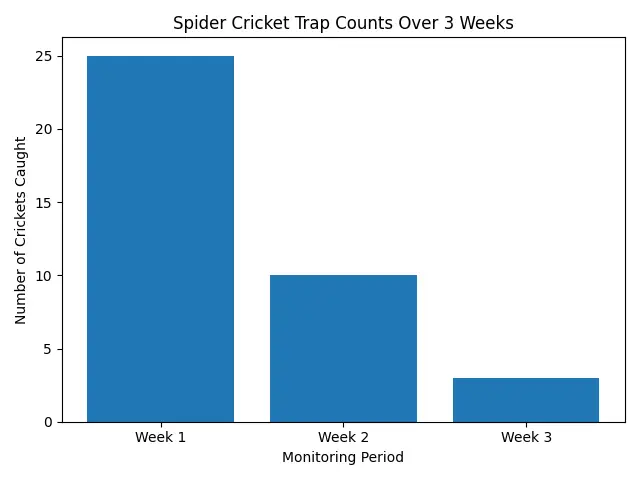
Why this order matters: sanitation and trapping immediately reduce the number of visible crickets. Dusts and sprays reduce survivors and reduce movement through voids. Humidity control and exclusion remove the conditions that allowed them to settle and reproduce.
When to Call a Pro
If you have tried the steps above and you still see steady catches on traps after three weeks, or if insects appear from hidden internal voids or hollow walls, it is time to call a licensed pest professional.
They have access to tools and treatments not available to homeowners, plus training in safe use of dusts and residuals in tricky spaces. Additionally, if a severely damp crawlspace or foundation issue is feeding the infestation, professionals can recommend structural repairs or specialized remediation that are beyond DIY scope.
If structural moisture issues like foundation seepage or chronic crawlspace flooding are involved, a contractor or waterproofing specialist may be needed alongside pest control.
Quick Answer: Ask a pest pro for a follow-up plan and make sure they explain where they will treat and why. Good technicians will point out moisture and exclusion issues and recommend the non-chemical fixes in addition to any treatment.
Final Thoughts
Spider crickets are a common seasonal nuisance. They are not dangerous, but seeing them in the house can be unpleasant. The smartest way to win is to combine immediate removal with long-term prevention. Clean first, trap to monitor, use targeted dusts or sprays if needed, cut humidity, and seal entry points.
In my experience, homes that fix moisture and seal entry points rarely see repeat spider cricket problems. Sprays and dusts can help reduce numbers, but dry conditions and exclusion are what solve it permanently. Focus there first, and the rest becomes maintenance rather than crisis control.