If you have fleas in the house, I get why bug spray sounds like the fastest fix. You see bugs, you grab a spray, and you expect the problem to disappear. That is a normal reaction. The part most people miss is that fleas do not behave like the pests bug spray was built for.
They live in a cycle, they hide in carpets and bedding, and they can keep coming back long after the first spray dries. That is why flea jobs are so frustrating. You can kill the fleas you see today and still have more hatching out later.
So, does bug spray work on fleas? Sometimes, yes. But it depends on the product, where you use it, and what you are actually trying to do. A repellent on your skin is not the same thing as a flea treatment for your house. A clothing spray is not the same thing as a flea product made for pets. And a natural oil that smells strong does not automatically mean it will solve an infestation.
The truth is simpler than the marketing: bug spray can help, but it is rarely the whole solution. The bigger issue is whether you are trying to prevent bites or actually break an active flea problem inside the home.
Also Read: Spadepestcontrol Blog
Quick Answer: Does Bug Spray Work on Fleas?
Some bug sprays can kill or repel fleas temporarily, but most regular bug sprays will not eliminate a flea infestation. If fleas are already in the house, the real fix is treating the pet, vacuuming carpets and furniture, washing bedding, and repeating cleanup long enough to break the flea life cycle.
So, does bug spray kill fleas? Sometimes it can kill exposed adult fleas, but it usually will not eliminate the eggs, larvae, or pupae that keep an infestation going. Some bug repellents can help reduce flea bites outdoors, but that is very different from treating an active flea infestation inside the house.
Bottom line: Bug spray can help stop flea bites, but it usually will not solve a flea infestation unless you also treat the pet and the home.
When Bug Spray Helps with Fleas (and When It Doesn’t)
Does bug spray work on fleas? The short answer is yes, sometimes, but most standard bug sprays are not a real flea-control plan. If you are trying to keep fleas from biting you outdoors, a repellent may help. If you are trying to clear fleas out of your house, you need a much bigger approach that includes your pets, your flooring, your bedding, and often your yard.
That is the part a lot of homeowners learn the hard way. As the CDC explains in its flea life cycle guidance, fleas can survive year-round when there is a host, and the life cycle is what makes one quick spray fail so often.
The flea life cycle is what changes everything. Adult fleas lay eggs in the fur and in the surrounding environment. Those eggs hatch into larvae, then pupae, and the pupal stage can resist insecticides for a while before adults emerge. In plain language, you might kill the fleas you see today and still have more waiting in the carpet.
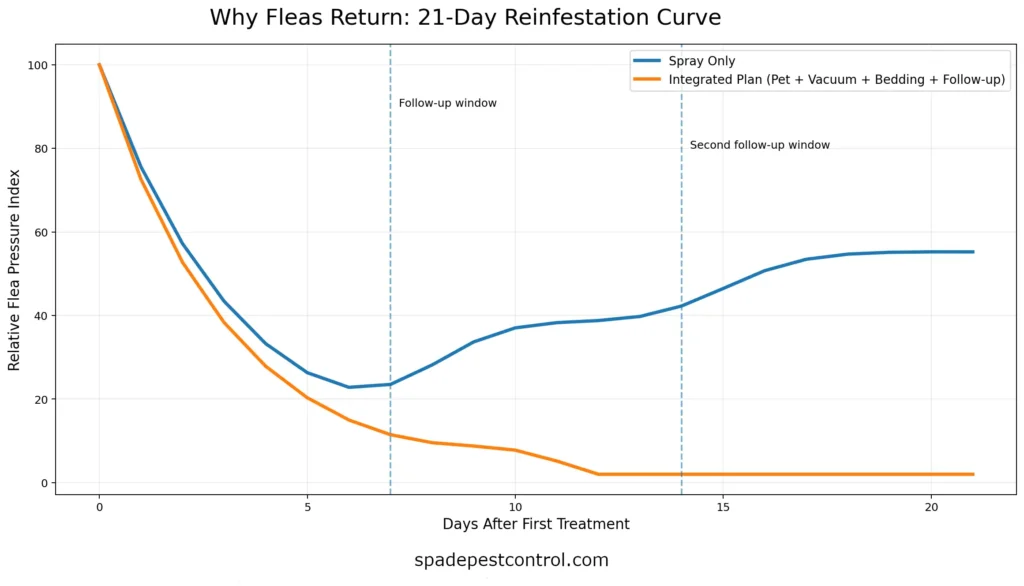
That is why a single spray often feels like it worked for a day or two, then the problem comes roaring back.
Fleas are not just random bugs drifting through the air. They react to warmth, motion, carbon dioxide, and access to a host. If you only treat the bites on your skin but do nothing about the source in the home, the cycle keeps going. If you want to understand why they showed up in the first place, it helps to know what attracts fleas in and around a home.
How Effective Is It?
Bug spray is most effective when you use it as a barrier, not as a cure.
If you are going outdoors in an area where fleas may be present, a repellent on exposed skin or treated clothing can help reduce bites. That is very different from spraying the edge of a carpet and expecting the whole infestation to collapse.
A simple way to think about it is this: if you spray your ankles before walking through a flea-prone yard, that may help reduce bites. If you spray the baseboard once and expect fleas to disappear from the house, that usually fails. Those are two completely different jobs, and the product has to match the job.
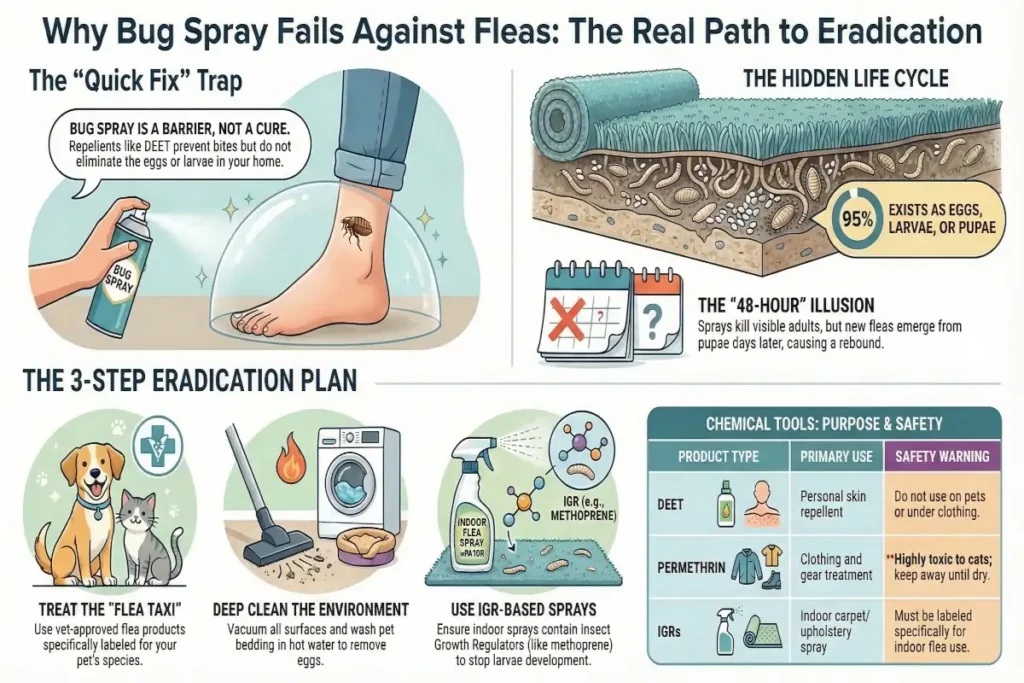
Here is where flea jobs usually go sideways: fleas are usually not living only on the thing you sprayed. They are in the carpet. They are in the bedding. They are in the cracks along the floor. They are around the pet’s favorite chair, under cushions, and in the spots you never inspect closely.
So yes, bug spray can reduce bites and can knock down some exposed fleas. But it will not outwork a bad infestation by itself. When fleas keep coming back after “one good spray,” that usually means the source was never fully addressed. The pet was not treated consistently, the bedding and carpet were not cleaned deeply enough, or the follow-up did not last long enough to catch the next wave.
Real-World Example: Why Fleas Come Back After One Spray
A common flea job looks like this: a homeowner sprays the baseboards, edge of the carpet, and maybe the pet’s favorite room with a regular household bug spray. For a day or two, it seems like the problem is gone. Then the bites start again.
What usually happened is simple. The spray hit some exposed adult fleas, but it did not solve the eggs, larvae, or pupae hiding deeper in the carpet, under furniture, or in pet bedding. That is why people think the product “worked for 48 hours” and then suddenly failed.
The homes that clear up fastest usually follow the same pattern:
That is what actually breaks the cycle.
Which Sprays Actually Help with Fleas?
Not all sprays do the same job. This is where homeowners waste a lot of time and money.
DEET
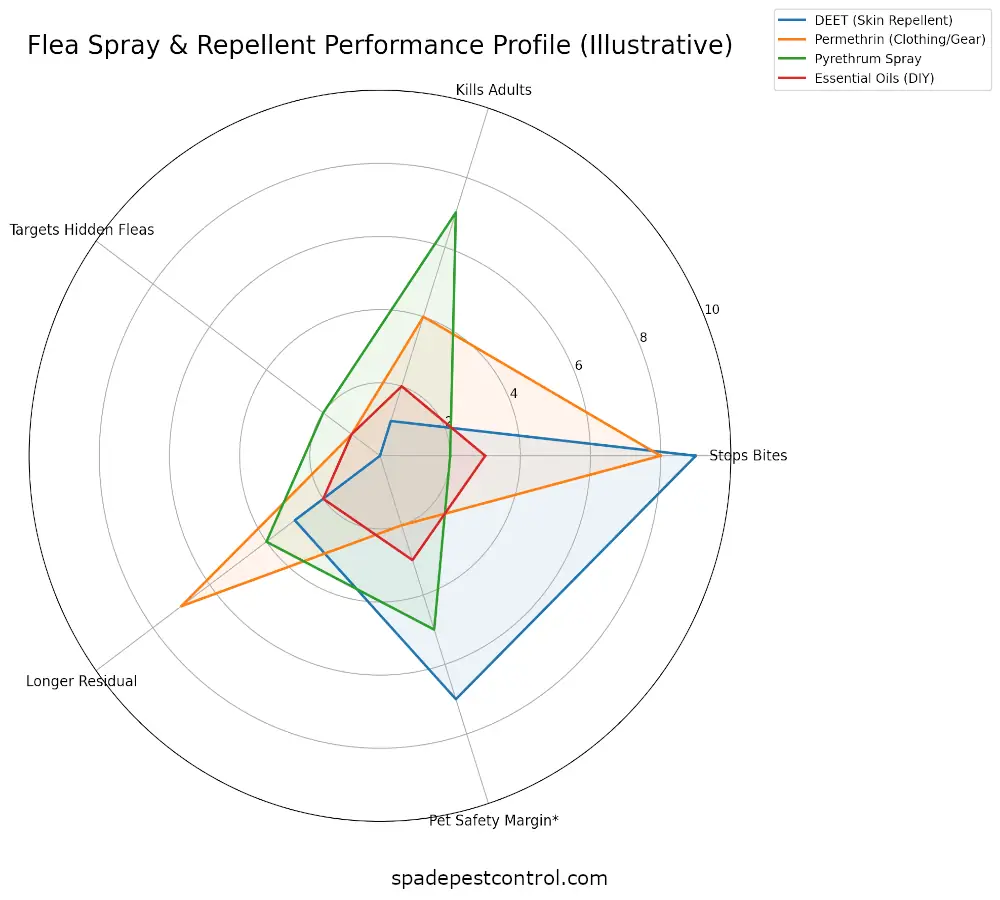
DEET is one of the best-known insect repellents for people. When used as directed, it can be a solid option for reducing flea bites outdoors. But it is mainly for exposed skin, not for solving a flea infestation inside the home.
Think of DEET as personal protection, not flea extermination. In other words, DEET is an insect repellent for bite prevention, not a product designed to clear fleas out of carpets, pet bedding, or furniture.
If you use DEET, follow the label carefully. Do not spray it under clothing, near the eyes, or on irritated skin. It only helps when it is used the right way.
Permethrin
Permethrin is where a lot of flea control gets misunderstood. It is a synthetic pyrethroid used mostly on clothing and gear, not as a routine skin spray.
In practice, it can be very useful for preventing bites when you are moving through flea-prone areas outdoors. Treated boots, pants, socks, or gear can make a noticeable difference.
Important: Permethrin should never be used on cats. If you have cats in the home, keep treated items and wet spray residue well away from them until the label says it is safe.
Regular Bug Spray vs. Indoor Flea Spray
This is the difference that trips most people up.
A regular household bug spray may kill a few exposed adult fleas, but flea sprays are usually designed more specifically for the flea life cycle. They often work better when they include an insect growth regulator (IGR) that helps interrupt development instead of just killing what you can see.
That is why mosquito repellent or a general outdoor bug spray may help reduce bites on people, but it usually does not do the same job as a true indoor flea treatment.
If the label does not clearly say it is for indoor flea treatment, do not assume it will do the same job as a true flea product.
If you are treating carpets, rugs, or pet resting areas, the best indoor flea sprays usually combine:
- an ingredient that kills exposed adults
- an IGR such as methoprene or pyriproxyfen to disrupt the life cycle
That combination is much more useful than random spraying.
And just as important: if the label does not clearly say it is safe for the exact surface you want to treat, do not use it there. That matters on carpet, upholstery, pet bedding areas, and furniture.
Pyrethrum
Pyrethrum can kill exposed adult fleas, but it still will not solve the whole infestation by itself.
It is a botanical insecticide derived from chrysanthemum flowers and can be useful as a quick knockdown ingredient. But a knockdown is not the same thing as long-term control. If eggs, larvae, and pupae are still in the environment, more adults will keep appearing.
That is why the strongest flea programs combine direct kill products with cleaning and follow-up.
How To Use Them Effectively
The safest and most effective way to use any spray or repellent is to match the product to the job.
Never use any repellent or insecticide on a pet unless the label clearly says it is made for that animal. That one rule prevents a lot of accidental poisonings.
Then focus on the home.
Vacuum carpets, rugs, furniture, cracks, and pet resting areas carefully. Empty the vacuum outside when you are done so anything captured does not crawl back out. Wash pet bedding and soft washable fabrics in hot water, and keep repeating that process.
The home environment is a major part of the flea cycle, especially:
- carpets
- pet bedding
- upholstered furniture
- baseboards
- resting areas where pets spend time
Timing matters more than most people think. Flea eggs do not hatch all at once, and pupae can sit in the environment until the right trigger shows up. Heat, pressure, vibration, and movement can all help new adults emerge. That is why vacuuming or even walking across a room can seem like it “wakes up” the infestation.
Repeat treatment is not a sign that the first step failed. It is usually a sign that the life cycle was not finished yet.
You also need to protect the pet side of the problem. Talk with your veterinarian about the right flea product for your pet and stay consistent with treatment long enough to stop the cycle. If your pet remains the flea taxi, the infestation remains active.
Simple Flea Control Plan That Works Better Than Random Spraying
- Treat the pet with a vet-approved flea product made for that species.
- Vacuum carpets, rugs, furniture, and baseboards thoroughly.
- Wash pet bedding and soft washable fabrics in hot water.
- Use an indoor flea product only if the label clearly allows treatment for those surfaces.
- Repeat cleaning and follow-up long enough to catch newly emerging adults.
- If fleas keep coming back, inspect outdoor pet resting areas and consider professional help.
Safety Notes Before You Spray
Never use a general bug spray, insect repellent, or flea product on a pet unless the label clearly says it is made for that animal and that species. Dog products should never be used on cats unless the label specifically says they are safe for cats too.
If you are spraying indoors, make sure the label allows use on the exact surface you are treating. Carpet, upholstery, pet bedding areas, and furniture all have different restrictions depending on the product.
Keep pets and children away from treated areas until the label says it is safe. If a pet starts drooling, vomiting, shaking, or acting unusually tired after exposure, call a veterinarian right away.
Natural Alternatives to Try
Natural alternatives can help in limited situations, but I would not build a full flea plan around them. In real homes, I have seen more people lose time with essential oils than actually solve a flea problem with them.
The biggest mistake is assuming “natural” automatically means “safe” and “effective.” It does not.
If you are considering a DIY flea repellent made with essential oils, treat it as a support tool at best, not a primary solution for a real infestation.
Neem Oil
Neem oil is one of the more reasonable natural options because it can act as a repellent and may interfere with insect development. But even neem is not a stand-alone fix for a flea infestation.
Tea Tree, Peppermint, and Cedar Oils
This is where caution matters.
Some homeowners use tea tree, peppermint, or cedar oil because the smell seems strong enough to repel fleas. The problem is that strong smell does not equal reliable control. More importantly, essential oils can be risky around pets, especially cats and small dogs.
Tea tree deserves extra caution because it has been linked to toxicity issues in pets. Peppermint and cedar may show up in some flea-related products, but they are not something I would trust to carry the whole job.
The honest takeaway is simple. Natural options can sometimes help reduce pressure, but they are usually support tools, not the main event. If you need real control, the job still comes back to treating the pet, cleaning the home, and using label-directed products that are actually designed for fleas.
Also Read: How To Get Rid of Fleas: 8 Proven Methods That Actually Work
The Part Most People Miss
Flea control is not one action. It is a sequence.
First, you stop the bites on people when needed. Then you treat the pet. Then you clean the environment. Then you repeat the steps long enough to cover the life cycle. If you skip any one of those pieces, the infestation can hang on. The pattern is always the same in real flea jobs: fleas live on the pet, but they also build pressure in the environment, and that environment has to be handled too.
That is also why flea problems often show up in homes with carpet, soft furniture, pet bedding, and shaded outdoor areas. Fleas thrive in carpets, bedding, pet resting areas, and other warm, protected spots where pets spend time. Once you understand that, the whole problem makes a lot more sense. You are not fighting a bug that lives in one obvious place. You are fighting a life cycle spread across your home.
Conclusion
So, does bug spray work on fleas? Sometimes, yes. But not in the way most people hope. A bug spray or repellent can help prevent bites on your skin, and permethrin-treated clothing can help protect gear and clothing. Pyrethrum-based products can knock down exposed fleas. But if you are dealing with a real flea infestation, the winning strategy is bigger than a spray can. You need the pet treated, the home cleaned thoroughly, and the follow-up repeated long enough to catch fleas still hiding in the pupal stage.
When It’s Time to Call a Professional
If fleas are still active after two to three weeks of treating the pet, vacuuming, and washing bedding, the problem is usually bigger than one round of DIY cleanup. Homes with multiple pets, heavy carpeting, crawlspace activity, or possible wildlife under decks or porches often need a more complete inspection.
At that point, getting a licensed pest professional and your veterinarian involved usually saves time and stops the cycle faster.
If you remember one thing, make it this: bug spray can reduce flea bites, but breaking a flea infestation takes pet treatment, environmental cleanup, and enough follow-up to outlast the life cycle. That is what actually gets fleas out of a real home.