If you’re trying to figure out how to kill ants with borax, the first thing to know is that borax works best when you stop thinking like a frustrated homeowner and start thinking like the ants. In real homes, the people who get the best results are not the ones who spray the trail first. They’re the ones who let the ants feed, carry the bait, and bring it back to the colony.
If ants have taken over your kitchen, countertops, pantry, or pet-food corner, borax can be one of the most practical DIY tools you have. The reason it works is simple: ants do not just wander into bait and die in place. They carry food back to the colony, share it, and keep feeding the nest. That makes a slow bait much more useful than a fast spray in many real homes.
Borax fits that job well when you mix it with the right attractant and place it where ants are actually feeding. The catch is that the bait has to match the species, and it has to be placed correctly. One species may chase sugar, another may prefer protein or greasy foods, and another may switch depending on the season. That is why some borax recipes seem to work in one house and fail in another.
Also Read: Does Baking Soda Kill Ants? Not the Way Most People Think
Quick Answer: How to Kill Ants with Borax
Mix borax into a bait the ants actually want to eat, place it directly on active ant trails, and let the workers carry it back to the colony. Borax works best as a slow-acting bait, not as a powder scattered around the house. For best results, match the bait to the ant’s food preference and avoid spraying near the bait, since sprays can break the trail and reduce bait feeding.
What Is Borax?
Borax is a naturally occurring boron compound, also known as sodium borate. It is closely related to boric acid and other borate salts, but they are not exactly the same thing. In pest control, what matters most is simple: borate compounds can act as stomach poisons when ants eat them in bait form. That is why borax works better as a bait ingredient than as a powder sprinkled around the house.
In plain English, borax works best as part of a bait the ants will actually eat and carry back. If you scatter it randomly, it often gets ignored. In ant control, bait acceptance matters more than the container or the brand.
Quick tip: Think “bait first, powder second.” If the ants are not eating it, borax is not doing its job. The recipe matters more than the brand or the container.
Borax vs. Boric Acid for Ants: Quick Comparison
| Feature | Borax (Sodium Borate) | Boric Acid |
| What it is | A borate salt commonly sold as borax | A related boron compound commonly used in many ant baits |
| Works on ants? | Yes, when mixed into bait they will eat | Yes, when mixed into bait they will eat |
| Better for homeowners? | Fine for DIY bait if used carefully | Often found in commercial ant bait products |
| What matters most | Bait acceptance and placement matter more than the name on the box | Bait acceptance and placement matter more than the name on the box |
For most homeowners, the real difference is less important than using the right bait type, placing it on an active trail, and letting the ants carry it back to the colony.
Does Borax Kill Ants?
Yes, borax can kill ants, but not in the dramatic instant-kill way people often imagine. Boric acid and borate products can act as stomach poisons for ants, which means the ants have to eat the bait before it works. That is exactly why borax can be effective against a colony instead of just a few foragers. The workers feed, share, and carry bait deeper into the nest. That transfer matters because foragers are only part of the problem — the real goal is getting the bait into the colony, not just killing the ants you can see.
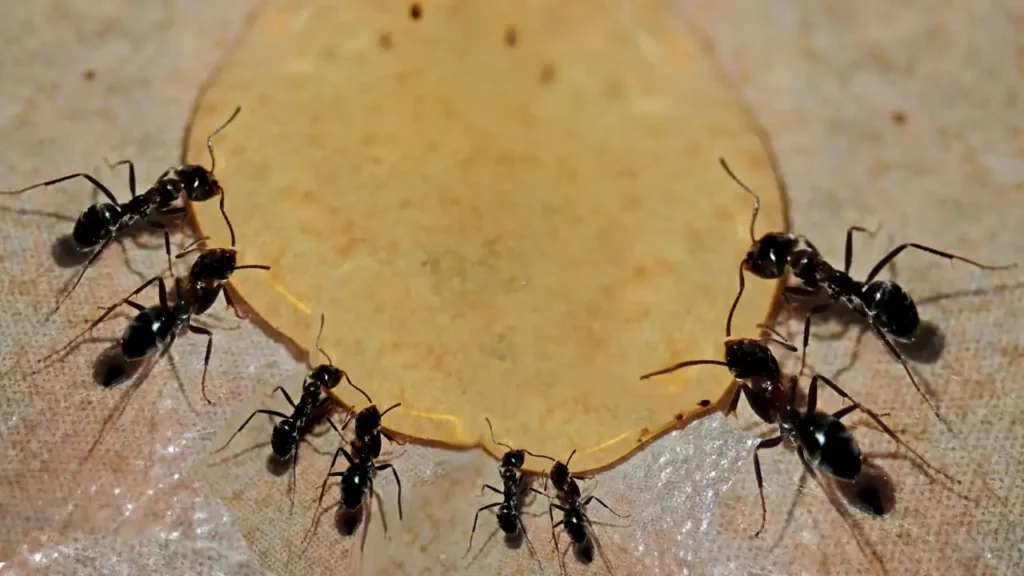
That slow action is a feature, not a flaw. If the bait kills too fast, the workers may die before they can bring much back. When the dose is low enough and the bait is attractive enough, the colony gets exposed over time. That is the whole point of using a bait instead of a spray.
Quick tip: Don’t judge borax by what you see on day one. A good bait often looks “too quiet” at first because the ants are feeding and transporting, not dropping dead in a pile.
What Types of Ants Does It Work On?
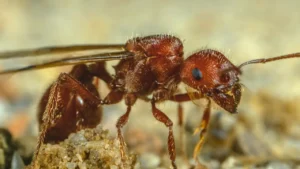
Borax can work on many common household ants, but the bait has to match what they want to eat. That is the part most people miss. According to UC IPM’s ant guidance for homes, sweet baits are often attractive to Argentine ants year-round, while protein baits can matter more in spring. Other species, including thief ants and Pharaoh ants, may prefer protein or greasy baits.
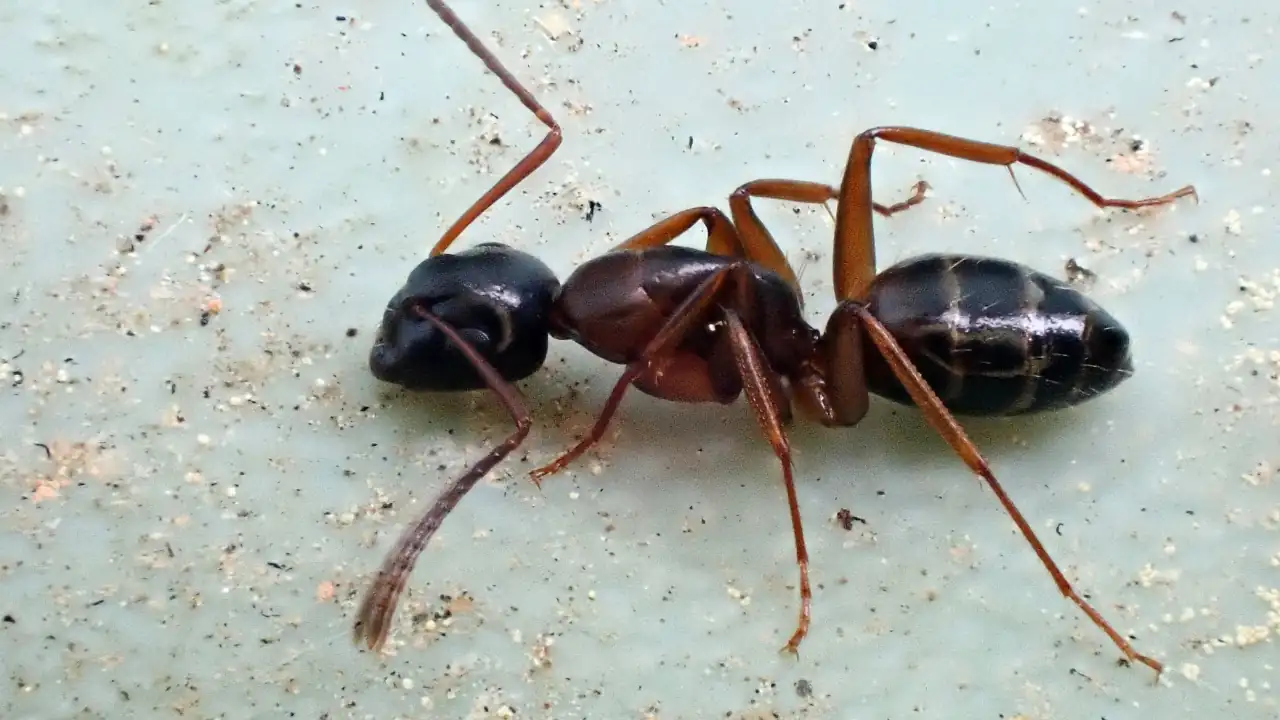
Carpenter ants can feed on both protein and sugar, and in homes they often go after meats, pet food, syrup, honey, and other sweets. If you suspect carpenter ants indoors, do not stop at baiting alone — they can be a sign of damp or damaged wood, and the moisture issue often matters more than the bait.
That means borax is not limited to one “kind” of ant. The real question is what kind of bait will make the ants eat it. Sugar-loving ants usually take liquid or sweet baits quickly. Protein-leaning ants may ignore a sugary bait and walk right past it. If you get that part wrong, you can blame the recipe when the real problem is species preference.
How Long Does It Take to Kill Them?
Borax ant bait is not a fast knockdown treatment. It is a colony treatment. In practice, that means you may see feeding activity stay the same or even increase at first, but meaningful reduction usually takes longer. As the University of Minnesota Extension explains in its ant control guidance, ant baits work slowly and may take weeks to eliminate a colony, especially when different species are not equally attracted to the same bait.
A realistic homeowner timeline looks like this: in the first 1 to 3 days, ants may keep feeding normally or appear more active around the bait. In about 4 to 10 days, trails may start shrinking if the bait is accepted. For larger colonies, hidden nests, or picky species, full suppression can easily take 2 to 4 weeks or longer. That is normal. Slow baiting often looks unimpressive at first, but it usually works better than fast sprays when the goal is colony control.
Quick tip: Keep the bait fresh and in active traffic areas. Old, dry, or ignored bait usually adds delay instead of speed.
How To Get Rid of Ants with Borax
The safest way to use borax is to think like an ant, not like a frustrated homeowner. Ants follow scent trails, search for food, and carry food back to the nest. If you place bait near their traffic lane without disturbing the route, your chances go up fast. That is why the first step is not mixing bait — it is watching where the ants are actually moving.
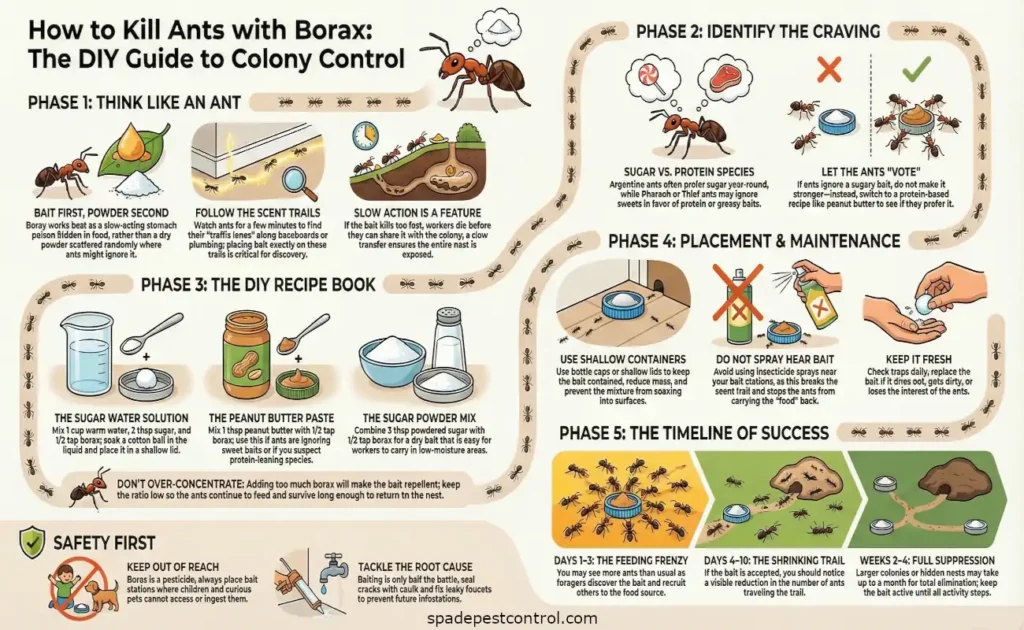
Find Trails or Nests
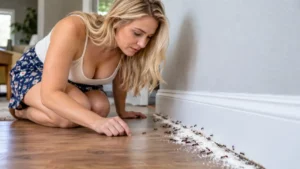
Start by watching the ants for a few minutes. Do they form a line along the baseboard, under the sink, or near the sink drain? Do they appear to be coming from a crack, a gap around plumbing, or a window frame?
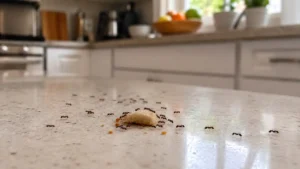
If the trail starts around sinks, counters, crumbs, or pet food, a focused guide on how to get rid of ants in your kitchen can help because kitchen infestations usually follow predictable food and moisture sources. The key is to follow the route instead of spraying the first ant you see. Ants often leave trails that other workers will follow until the food source disappears.
Those first ants you notice are often scout ants or early foragers. If they accept the bait, more workers usually follow the same trail.
If you can find the path, you can place bait where the ants naturally travel. If you cannot find the path, the bait gets random placement and weaker results. That is why trail-reading matters so much. The best bait in the world is useless if the ants never find it.
Quick tip: Follow the ants back as far as you safely can. Even a rough clue, like “they disappear behind the dishwasher,” is enough to make your bait placement much smarter.
Identify The Species You’re Tackling
This step matters more than most people realize. Different ants like different foods, and that changes everything about your bait. Sugar-loving ants usually go after sweet liquid bait first. Protein-seeking ants may prefer peanut butter or other protein-rich bait. Some ants change preferences by season, which is why one recipe can work one month and fail the next.
You do not need a lab to get useful information. A clear photo, the size of the ant, where you found it, and what food it ignores can point you in the right direction. If the ants swarm sugar water but ignore peanut butter, that tells you something. If they go straight for nutty or greasy bait, that tells you something else. Let the ants vote with their feet.
From the Field: Why One Borax Recipe Fails and Another Works
One of the most common mistakes I see is homeowners assuming every ant will take the same sweet bait. In real homes, that is not how it plays out. I have seen kitchens where sugar water bait sat untouched for two days while the ants kept marching straight to dry pet food or grease residue near the stove. In those cases, switching to a peanut butter or protein-based bait often gets a response much faster than making the sweet bait stronger.
That is an important lesson: if the ants ignore your first borax recipe, do not assume borax failed. Usually, the bait type failed. I would much rather see a homeowner test two small bait types side by side than keep remaking the same sugary mix that the colony clearly does not want.
Gather Bait Containers
Use small, low-risk containers that keep the bait together. Bottle caps, shallow lids, tiny disposable dishes, or cotton balls soaked in liquid bait can all work. The main goal is to keep the mixture accessible to ants while reducing mess and limiting access for children and pets. Borax products can still be harmful if swallowed, so loose piles on the floor are a bad idea.
The container should match the recipe. Liquid baits need something absorbent or a shallow reservoir. Paste baits can go in a lid. Dry sugar baits need a dry, flat surface where workers can carry grains away. Small containers also make it easier to monitor which bait the ants actually prefer.
Quick tip: Put each recipe in a separate container. That way you can see which one the ants choose instead of guessing.
Create Your Bait Recipes
The smartest borax bait is usually the simplest one the ants will actually eat. Start with small test batches, not oversized mixes. You are not trying to make the strongest bait. You are trying to make the most acceptable bait. If the ants ignore one recipe, change the food type before you increase the borax. There is no single best borax ant bait for every infestation — the best recipe is the one the ants actually accept and carry back to the colony.
Safety Notes Before You Set Out Borax Bait
Borax bait should always be treated like a pesticide, even if the ingredients came from your laundry shelf or pantry. Keep every bait station in a small container, never as a loose pile on the floor or countertop. Do not place borax bait directly on food-prep surfaces unless it is fully contained in a shallow lid or bait station. Wash your hands after mixing it, and store leftover borax in the original labeled container.
If you have toddlers, curious pets, or a messy feeding area, enclosed store-bought bait stations are often the safer choice than open DIY bait. If a child or pet gets into the bait, contact Poison Control or your veterinarian right away rather than waiting to “see what happens.”
Place Traps Strategically
Put the bait close to where ants are already traveling, not in the middle of a random room. That usually means along the edge of a counter, behind a trash can, near the sink cabinet, beside a pet-food station, or along a wall where you spotted a trail. Outdoor bait works best near entry points, because ants often forage outside and then move inside through tiny gaps.
Do not spray insecticide near the bait. That sounds helpful, but it can ruin the feeding pattern and drive the ants away before they take enough back to the colony. Baits work by being eaten and shared, so anything that disrupts the trail too early can work against you.
Wait & Repeat Application
Once the bait is out, patience matters. Check the traps daily at first, then replace them when they dry out, get dirty, or stop getting attention. If the ants are feeding, keep going. If one bait goes untouched while another gets hit, keep the winner and drop the loser. That is how you let the colony tell you what works.
You may be tempted to clean everything immediately. Do not rush past the bait stage. If you wipe out the trail too early, you may reduce the ants’ interest in the bait before enough of them feed. There is a balance here: preserve active baiting, but remove other competing food sources.
Common Mistakes Homeowners Make with Borax Ant Bait
The biggest mistake is making the bait too strong. More borax does not always mean better results. If the concentration is too high, many ants will avoid it or stop feeding before enough gets back to the colony.
Another common mistake is using only one bait type and assuming the ants will eventually take it. If they ignore sweet bait, switch to a protein or greasy bait instead of remaking the same recipe. Homeowners also hurt their own results by spraying near the bait, wiping out active trails too early, or placing bait in random spots instead of directly on known ant traffic.
Address The Root of the Problem
Borax can shrink the colony, but it will not fix a leaky faucet, a crumb-filled cabinet, or a crack in the foundation. The long-term fix is removing crumbs, grease, and spills, sealing cracks with caulk, storing food in sealed containers, fixing leaks, and reducing outdoor food sources near the home. This is also where homeowners waste time on weak repellents. If you are tempted to try kitchen shortcuts, it helps to know whether methods like baking soda for ants or coffee grounds to repel ants are actually worth your time before you skip the cleanup and baiting steps that matter more.
Think of borax as one part of the solution, not the whole plan. If the house keeps offering food, water, and entry points, the ants will keep trying. Once baiting is working, clean the trail, seal the gap, and remove the conditions that brought them inside.
Borax Ant Killer Recipes
If you want a simple borax ant bait recipe that actually works, start with small batches and test it where ants are already traveling. If one recipe gets ignored, switch the food type before you increase the borax. The goal is not to make the strongest mix. The goal is to make the most acceptable bait.
Important: These are starter recipes, not universal formulas. Always use small test batches first. Stronger is not better — if the borax is too concentrated, many ants will avoid the bait. Keep all bait in shallow containers and out of reach of children and pets.
Sugar Water Solution
This is the simplest liquid borax ant bait for sugar-loving ants. Mix 1 cup of warm water, 2 tablespoons of sugar, and 1/2 teaspoon of borax until everything dissolves. Then soak a cotton ball or sponge in the solution and place it in a shallow lid or small dish. This gives the ants a liquid bait they can feed on easily.
This recipe is best when the ants are clearly after sweet foods, like around sinks, counters, trash bins, or spilled drinks. If the bait gets attention, refill it. If it dries out or gets ignored, replace it. Liquid bait often works best for ants that want easy access to sugar and water together.
Sugar Powder
Some ants prefer dry food, and dry bait is easier to place in tight spots. Mix 3 tablespoons of powdered sugar with 1/2 teaspoon of borax, then stir until the mix is even. Put a thin layer into a bottle cap or a very shallow dish. This works well when the ants are foraging on dry crumbs or moving through low-moisture areas.
The advantage of dry bait is that it is easy for workers to carry. The downside is that it can be less attractive if the colony wants liquid food. That is why a dry mix is worth testing alongside a liquid mix instead of relying on one recipe alone.
Honey Borax Bait
Honey is useful when ants are clearly drawn to sticky, sugary foods and ignore plain sugar water. Mix 2 tablespoons of honey with 1/2 teaspoon of borax and a tiny splash of warm water if needed to loosen it, then place a small amount in a shallow lid near active trails.
Peanut Butter Paste
Peanut butter paste is the recipe to try when sugar baits fail or when you suspect a protein-leaning species. Mix 1 tablespoon of peanut butter with 1/2 teaspoon of borax until smooth. Put a small amount in a lid or on wax paper and place it where the ants are traveling.
This option is especially useful because carpenter ants and several other species will take protein-rich foods, and some ants prefer protein or greasy baits over sugary ones depending on the season. If the sweet bait gets ignored, this is the one most homeowners should test next.
Making Your Own vs. Buying
There is no one-size-fits-all winner here, but in real homes I usually lean one way based on the situation. For a light kitchen trail or a small nuisance problem, DIY borax bait is often fine because you can test multiple food types quickly. In homes with toddlers, pets, or recurring infestations near food prep areas, enclosed store-bought bait stations are usually the smarter first move because they are cleaner, harder to spill, and easier to manage safely.
Store-Bought Borax Ant Killers
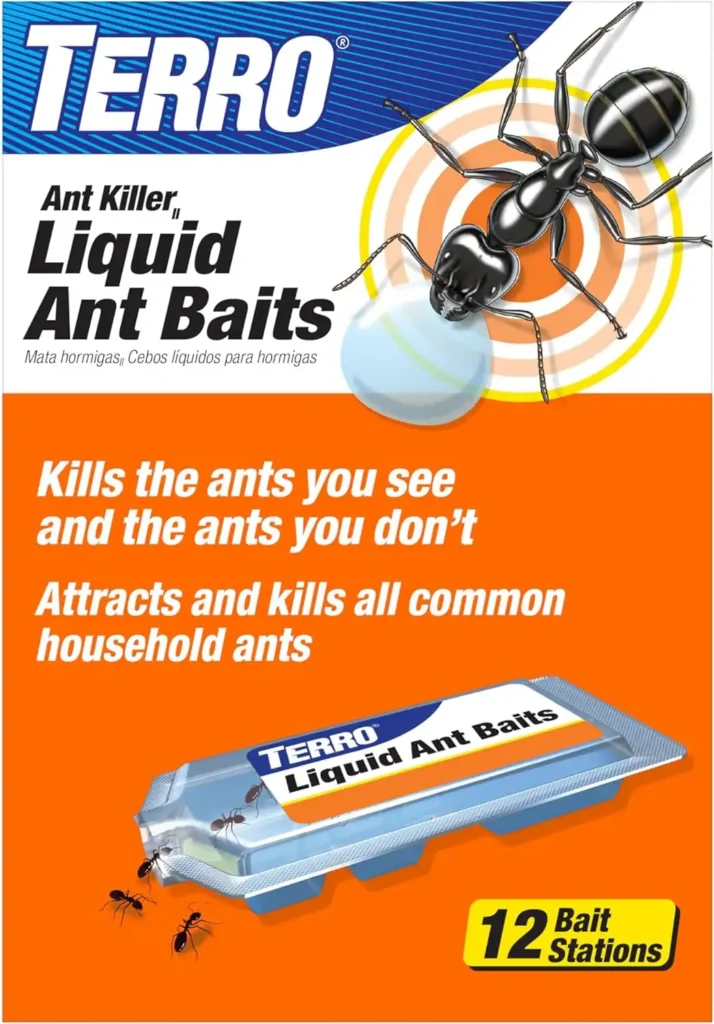
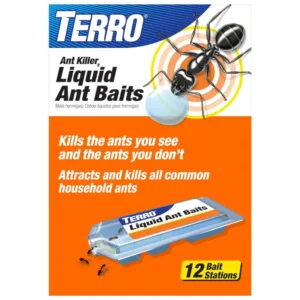
Commercial borax ant traps and bait stations are convenient because they come pre-measured and enclosed. That usually makes them cleaner to use and easier to place near trails without handling loose bait. Follow the label directions for exact placement, but in most homes they are used close to active trails, entry points, or the areas where ants are repeatedly showing up.
Many labels also note that complete control can take up to two weeks or longer. Store-bought bait is often the better first choice when you need cleaner placement, faster setup, or a safer enclosed option around children and pets.
Another advantage is consistency. The bait concentration is already set, and the station is already built for feeding. That can save time and reduce the risk of making DIY bait too strong, too weak, or too messy.
Quick tip: Choose store-bought bait when you want convenience, a cleaner setup, or a more controlled station around kids and pets.
DIY Borax Ant Killers
DIY is the better choice when you want to test multiple food types quickly. You can run a sugar bait and a peanut-butter bait at the same time, watch which one the ants choose, and then scale up the winning recipe. That kind of flexibility is hard to beat.
DIY also costs less. In most cases, you only need borax and a few pantry ingredients. The tradeoff is that you must be more careful with placement, storage, and cleanup, especially in homes with children or pets.
Also Read: What Do Ant Bites Look Like? These Red Bumps Can Be Easy to Miss
When DIY Borax Bait Is Not Enough
Borax bait is a practical tool for many nuisance ant problems, but it is not the right answer for every situation. If the ants are still active after 2 to 3 weeks of accepted bait, something deeper is going on. That usually means the bait is not reaching the colony well, the species is not responding to that food type, or the nest is larger or more hidden than it first looked.
It is also smart to stop and inspect more closely if you suspect carpenter ants, especially if you see them near window frames, damp wood, wall voids, or moisture-damaged areas. Carpenter ants are not just a bait problem. They can point to a structural moisture issue that needs attention. If you keep getting recurring infestations in the same room or season after season, it is time to move beyond bait placement and look harder at nesting sites, entry points, and moisture conditions.
Conclusion
Borax for ants works best when you stop treating it like a random household hack and start using it like a bait strategy. The ants need to find it, want to eat it, and carry it back to the colony. That is why trail spotting, species matching, container choice, and bait placement matter so much.
Once the bait is working, you still have to finish the job. If you only bait and never fix the leak under the sink, clean the grease film behind the trash can, or seal the gap under the window trim, you are not solving the problem — you are just setting up the next round. Borax can be very effective, but it works best when the bait fits the ant and the house stops offering easy food, water, and entry points.
If the ants are still active after a couple of weeks of good bait acceptance, do not keep repeating the same setup forever. Change the bait type, inspect for deeper nesting, and look harder at the conditions that brought them inside in the first place.
Frequently Asked Questions
For more practical DIY pest guides, visit Spade Pest Control.