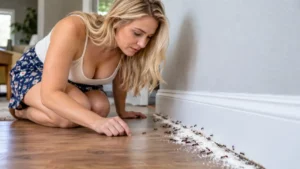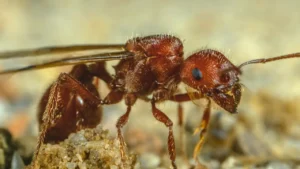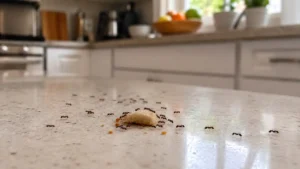
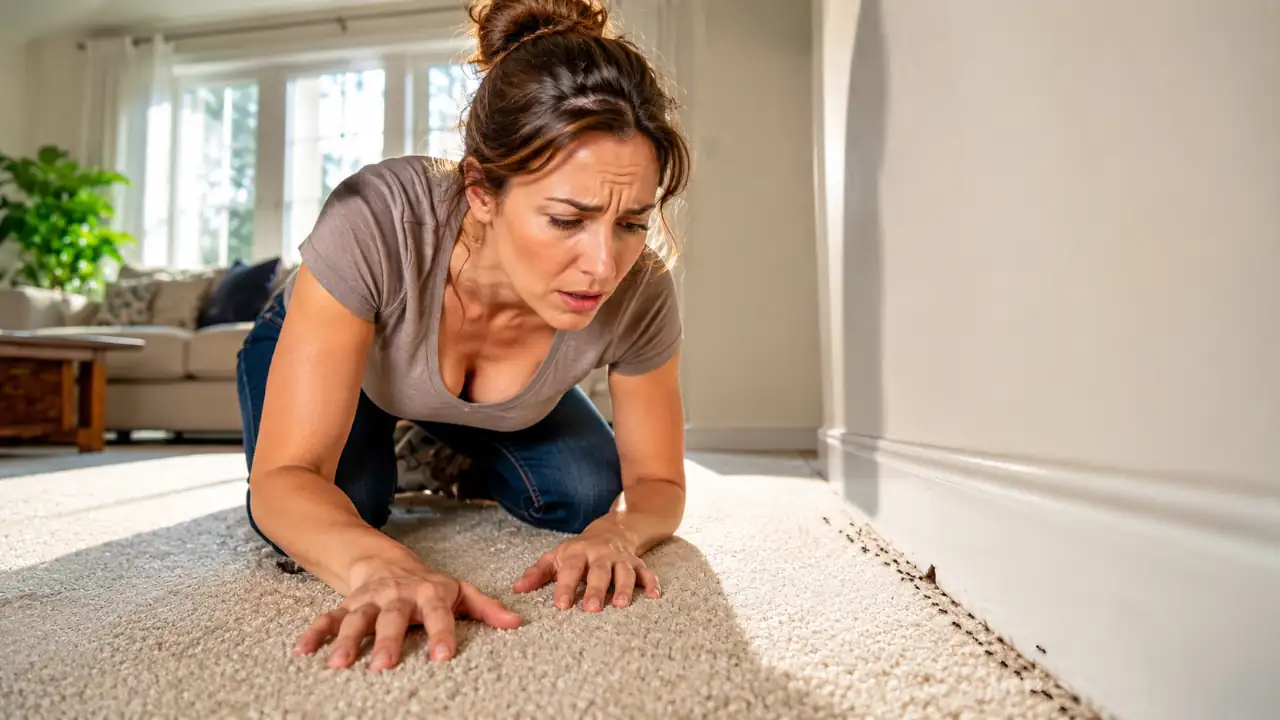
If you just spotted ants crawling through your carpet, do not panic. The good news is that carpet ants are usually a foraging problem, not a carpet-living colony problem. The bad news is that they are almost always telling you something important about food, moisture, or a hidden entry point nearby. If you’re wondering how to get rid of ants in carpet, the fastest fix is not just killing the ants you see. It is removing what brought them in and then treating the trail the right way.
Also Read: What Attracts Ants to Your House: The Complete List
Quick Answer
The fastest way to get rid of ants in carpet is to vacuum thoroughly, remove food and moisture sources, clean ant trails, and place bait along active travel routes. Most ants found in carpet are not nesting there. They are usually foraging workers traveling between a food source and a nearby colony.
What Causes Ants to Get in Your Carpet?
Ants do not wander into carpet for no reason. According to the National Pesticide Information Center, indoor ant activity is typically linked to food, water, or shelter resources that workers have located inside the home.
They are usually following scent trails toward food crumbs, sticky spills, pet food residue, or even a moisture source hidden nearby. Some species, including grease ants, are especially attracted to fatty food residue and pet food that can become trapped deep within carpet fibers.
A carpet can look clean and still hold enough crumbs in the fibers to attract scouts. Once one scout ant finds a usable food source, the rest of the colony can follow that chemical trail fast. That is why a single ant can turn into a line of them before you know it.
Carpeted rooms also give ants a few things they like: cover, warmth, and easy access to edges, baseboards, and tiny gaps along walls. In real homes, ants often travel along the carpet edge or bottom of the baseboard instead of marching right across the middle of the room. That is one reason people think the carpet itself is the problem when the real issue is usually the route the ants are using to reach food or shelter.
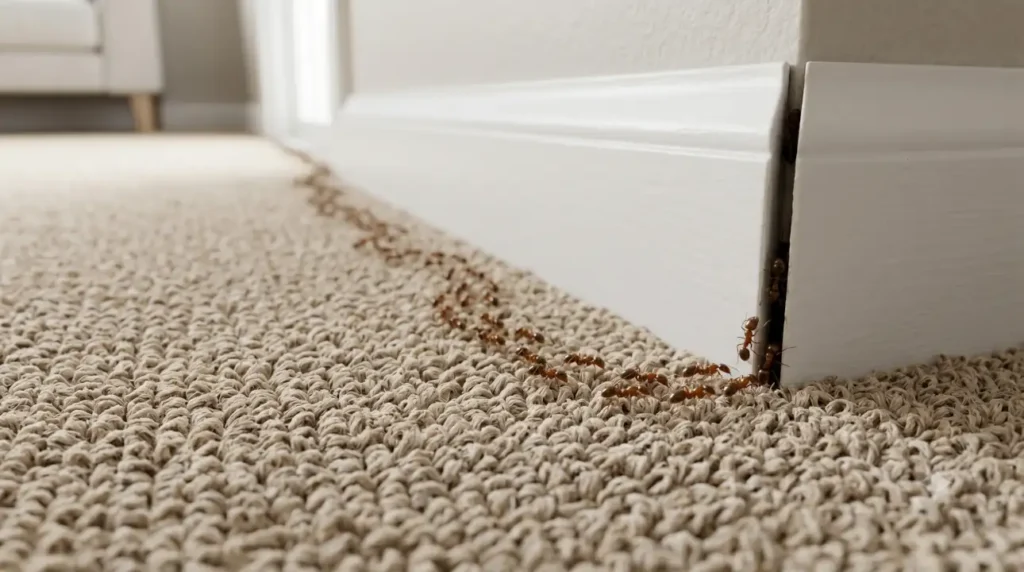
Sometimes the problem is not crumbs at all. Hidden moisture from a leak, damp carpet padding, a wet subfloor, or a nearby wall void can make the room appealing enough for ants to keep returning. Your guide on what attracts ants in the home explains the bigger picture well: ants are drawn by food, water, and shelter, not dirt alone. That matters because a clean-looking room can still be attractive to ants if one of those three needs is being met.
The species matters too. Odorous house ants, pavement ants, and carpenter ants can all show up in carpeted rooms, but they are often there for different reasons. Odorous house ants usually follow food trails, while carpenter ants are more commonly associated with moisture problems and damaged wood. If you repeatedly find ants near damp areas, windows, or wall voids, identifying the species can provide important clues about what is attracting them in the first place.
Seasonal activity can also play a role. Many homeowners notice ant activity increasing during spring and summer when colonies are actively expanding and foragers are searching for food and water. Heavy rain, drought conditions, or sudden weather changes can also push ants indoors.
How Long Can They Live in Your Carpet?
Most ants you see in carpet are not truly living there long term. In many homes, they are worker ants moving through the room to feed, then heading back to a nest or satellite nest somewhere else. Ant colonies are organized groups with different castes, and the workers, queens, and males all have different jobs. Some species can even establish satellite nests near a building, which makes the problem feel like it is coming from the carpet when it is actually coming from the structure around it.
That said, “how long can they live in your carpet?” is a fair question because the answer depends on the species and the nearby conditions. For example, carpenter ant workers can live for years, and queens can live much longer, but those ants are living in a colony somewhere, not in your carpet fibers. In other words, the ants in the carpet may only be passing through, but the colony behind them may be very persistent.
Expert tip: if you keep seeing ants in the same carpeted area for more than about a week after cleaning and baiting, stop treating it like a surface problem and start treating it like a nest or entry-point problem. That is the point where you should inspect baseboards, wall gaps, plumbing openings, and nearby moisture sources instead of just re-vacuuming the rug over and over.
In my experience inspecting homes with recurring ant problems, repeated activity in the same carpeted area is often tied to a hidden moisture issue rather than food alone. I’ve found everything from slow plumbing leaks behind walls to damp subfloors beneath carpeting that homeowners never realized were present. When ants keep returning despite cleanup efforts, moisture should move to the top of the inspection checklist.
Signs the Ants May Be Nesting Nearby
If ants keep appearing in the same area despite cleaning and baiting, the problem may be larger than a simple food trail. Watch for signs such as:
- Ants emerging from the same baseboard crack every day
- Activity increasing after rain
- Soft or moisture-damaged flooring
- Rotting wood or water-damaged subfloors beneath carpet
- Ants appearing even when no food is present
- Trails leading into wall voids or plumbing penetrations
In homes I have inspected, recurring ant activity is sometimes linked to hidden moisture damage beneath the flooring. Soft spots, damp carpet padding, or deteriorating subfloors can create conditions that attract carpenter ants and other moisture-loving species and support ongoing infestations.
How To Get Rid of Ants in Carpet
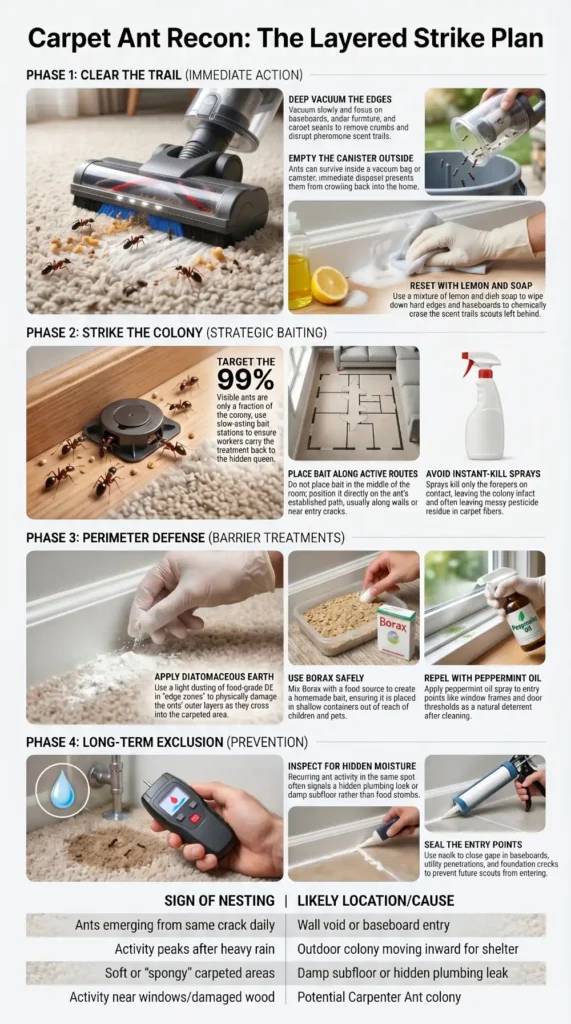
The best way to get rid of ants in carpet is to work in layers. First, remove the food they are tracking. Then disrupt the trail. Then use bait or dust to reach the colony. That order matters because contact killing alone usually wipes out only the ants you can see. It does not address the nest that keeps sending more workers back into the room.
Vacuum More Often
Vacuuming is the first move because it removes crumbs, debris, and some of the ants themselves. It also breaks up the scent trail ants use to recruit more workers. Your own guide on what attracts ants makes the key point clearly: even tiny food residue can keep a trail going. If you skip cleanup and go straight to sprays, the ants often just return to the same source.
Do a slow, careful vacuum pass over the whole area, then go back and focus on the carpet edges, the baseboards, under furniture, and any spots where food or snacks are usually eaten. When you are done, empty the vacuum outside right away. That matters because ants can survive in the bag or canister for a while, and you do not want them crawling back out in the kitchen trash.
Understanding the real item that attracts ants is important because carpet ant problems usually start with a missed attractant, not the carpet itself. If your home has snack crumbs, pet food residue, spilled drinks, or sticky spots under a couch, vacuuming is not just cleaning. It is breaking the chain that keeps the infestation alive.
Place Bait
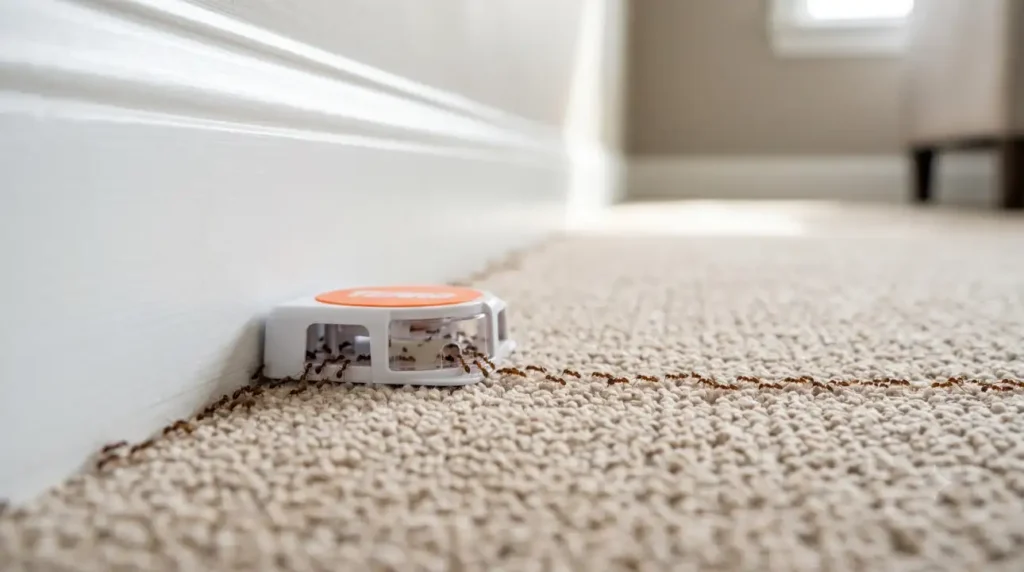
Bait works better than a quick spray when your goal is to reach the colony. Ants carry bait back to the nest, share it, and help wipe out the source of the problem over time. That is the real reason slow bait often works better than a visible kill. If you only kill the workers on the carpet, the colony keeps replacing them. If the bait reaches the colony, the pressure drops much more meaningfully.
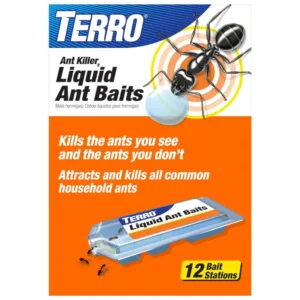
For carpet use, place the bait where ants are already traveling, not in random spots across the room.
A small, well-placed bait station near the trail usually works better than a bigger amount placed far away from the ants. Commercial bait stations can work especially well in carpeted rooms because they protect the bait from dust, foot traffic, and accidental disturbance. They also help keep the bait attractive longer while allowing worker ants to feed and carry it back to the colony.
Most of the ants you see in a carpeted room are workers from a much larger colony, which is why eliminating only the visible insects rarely solves the problem. Depending on the species, a colony can contain hundreds or even thousands of ants, which is why treating only the visible workers rarely provides lasting control.
If you are using a liquid bait, check it daily and replace it when it dries out or stops getting traffic. If nothing changes after several days, the species may not like that formula, or the trail may be tied to a different food source.
In homes I have inspected, one of the most common baiting mistakes is placing bait in the middle of a room instead of directly along an active ant trail. Ants are much more likely to find and feed on bait when it sits naturally in their travel path. At that point, switching bait type is smarter than repeating the same thing and hoping for a different result.
Spread Powder
Powders are useful because they sit in the carpet and keep working where ants travel through the fibers. This is the kind of treatment that can help when ants are moving repeatedly through one area, especially near carpet edges, seams, and the bottom of baseboards. The point is not to dust the whole house.
In most carpet ant situations, I focus powder applications near baseboards, carpet edges, utility penetrations, and visible entry points rather than broad carpet treatments. Those locations usually intercept more ant traffic while reducing unnecessary product use. The point is to place a light layer where ants are already active.
Use powder carefully and lightly. Too much product can build up in the carpet and make cleanup harder later. A thin application is usually enough for a trail area. If kids or pets are in the home, choose products and placement carefully and follow the label exactly. Carpet is not the place to get casual with treatments.
How Can You Get Rid of Them Naturally?
If you want a lower-toxicity approach, start with cleanup and then move into natural options that either bait the ants or disrupt their trail. The key thing to remember is this: natural does not automatically mean weak, but it also does not automatically mean complete. Some methods are good for stopping trail activity. Others are better for killing foragers. Very few do both well.
Sprinkle Baking Soda
Many homeowners immediately sprinkle baking soda when they notice an ant trail because it is one of the most common DIY remedies people try first. It may help with small trails, especially if it is mixed with a bait ants actually want to eat, but it is not a reliable colony killer by itself. In real homes, it tends to work best as a short-term option for light activity, not as the final answer for a serious infestation.
If you test baking soda, use it as a small bait rather than scattering it everywhere and hoping for the best. Your baking soda guide explains that results vary a lot based on species and bait acceptance. That is the real issue. The ants have to eat enough of it and carry enough back for it to matter. If they ignore it, the remedy goes nowhere.
Try Borax
Many homeowners choose to try borax because it remains one of the most widely used DIY bait ingredients for controlling household ants. When mixed correctly with a food source, it can be more effective than baking soda for colony suppression because it works as a slow-acting bait. That slow action matters. Ants need time to carry it back, share it, and spread it through the colony.
Expert tip: do not make the bait too strong. A common mistake is assuming more borax means faster results. In reality, a bait that is too concentrated can make ants avoid it. Small test batches are safer and often more effective because the ants are more likely to keep feeding on them. Keep any bait away from kids and pets, and use shallow, controlled placements instead of open piles.
Use Diatomaceous Earth
Diatomaceous earth is a good option when you want a dry, naturally derived dust that can help with ant trails. Food-grade diatomaceous earth works by damaging the ant’s outer layer and drying it out. It is widely used around the home, but the important part is using the correct product and placing it where ants actually travel.
I like diatomaceous earth best for edge zones, entry points, and narrow carpet pathways where ants are already moving. It is not magic, and it is not usually a one-step colony wipeout. It works best as part of a layered approach that includes vacuuming, trail cleanup, and a proper bait or exclusion plan. Also, do not overapply it. A light dusting is usually enough.
Peppermint Oil Spray
Peppermint oil spray is more of a repellent than a full kill method. It can help drive ants away from a carpeted area and may disrupt the scent trail they are following. Cornell’s review of peppermint oil research notes that peppermint oil has shown repellent effects against some ant species, which matches what many homeowners notice in practice: the ants often move away, but the colony is not necessarily gone.
Use peppermint oil as a cleanup-and-deterrent tool. A few drops mixed with water can create a light spray for edges, cracks, and other travel points. It is most helpful after vacuuming, not before. If you spray first and clean later, you may wipe out the trail before the ants have even been drawn to a bait. In other words, timing matters. If pets are present, especially cats, check product safety before using essential oils indoors since some oils can cause adverse reactions in animals.
Lemon & Dish Soap
Lemon and dish soap are useful because they help erase the scent trail ants rely on. Lemon adds a strong smell that can interfere with trail-following, and dish soap helps break up the residue on the surface. This combination is not the strongest killer in the world, but it can be a smart way to clean a carpet edge, baseboard area, or hard flooring near the carpet before baiting.
The big mistake is treating lemon and dish soap like a final kill solution. It is better to think of it as a trail reset. Use it after vacuuming and before baiting, or in areas where ants keep crossing from a hard surface into carpet. That way, you are doing two things at once: cleaning the trail and making the area less useful to the colony.
How To Keep Ants Away from Your Carpet in the Future
Long-term control starts with a cleaner feeding pattern in the home. That means no crumbs in the carpet, no open food bowls sitting out longer than necessary, and fewer chances for ants to discover easy calories in the first place. Your own guide on what attracts ants makes this point plainly: crumbs, spills, moisture, and shelter are the big drivers. When those are removed, the home becomes much less attractive.
The same prevention principles apply when getting rid of ants in your bedroom, since food residue, moisture, and hidden entry points often attract ants regardless of which room is affected. Professional pest control companies often refer to sealing access points as exclusion.
Exclusion focuses on preventing ants from entering in the first place by closing gaps, repairing screens, sealing utility openings, and reducing easy access around the home’s exterior. If outdoor colonies are contributing to the problem, addressing ants in your lawn and yard can reduce the number of foragers making their way indoors.
If people snack in the bedroom, leave drinks on the floor, or track food residue into the room, ants will notice. A carpeted bedroom is often just a quieter version of the same food problem.
The best prevention habits are simple, but they work. One homeowner I worked with kept treating the same carpeted family room for months without success. The real problem turned out to be a pet feeding station tucked behind a piece of furniture. Once the food source was moved and the trail was cleaned, the ant activity disappeared within days.
Vacuum regularly, clean up spills fast, store food in sealed containers, seal cracks around pipes and baseboards, and fix leaks that create hidden moisture. Pay particular attention to foundation cracks, utility penetrations, door thresholds, window frames, and wall gaps because these are some of the most common entry points ants use to access a home.
Is Ant Spray a Viable Option?
Ant spray can kill the ants you hit, but it usually does not solve the underlying problem in a carpeted room. Broad contact sprays often only take out the foragers that are out in the open, while more ants remain in or near the nest. Some extension guidance also warns that spray treatments kill only the foragers and do not eliminate the colony, which is why infestations can seem to come back almost immediately.
Spray is also a poor fit for carpet because residue can linger in the fibers. That creates a cleanup problem, especially in homes with kids or pets. Your own site notes that pesticide sprays can leave residue behind and are not a great option for most carpeted areas. That is why bait, vacuuming, and dust-based methods are usually the better first choices.
Can You Use Vinegar for Ants in Your Carpet?
Vinegar is useful for trail cleanup, but it is not a great carpet ant killer. It can disturb scent trails and make the area less attractive temporarily, which is why some people think it is working better than it really is. The problem is that it usually repels rather than eliminates, and in carpet it can also bring its own issues, including odor and possible discoloration if used too aggressively.
A better way to use vinegar is as a cleanup step, not as the main treatment. Wipe the trail, remove the residue, and then switch to bait or another control method that actually reaches the ants behind the scenes. That approach fits with the broader pest-control rule repeated across extension sources: removing the attractant and the trail matters just as much as killing the visible insects.
Also Read: How To Get Rid of Ants in Electrical Outlet Quickly
When To Call a Professional
Consider professional help if:
- Ants continue returning after several weeks of baiting
- You suspect carpenter ants
- Moisture damage is present
- Ant activity is spreading to multiple rooms
- You cannot locate the entry point
Persistent infestations often indicate a larger nesting issue that requires a more detailed inspection.
Conclusion
If you are dealing with ants in carpet, the fastest real fix is usually not one single product. It is a combination of vacuuming, trail cleanup, baiting, and blocking the conditions that brought the ants in. Carpet is just the place you notice the problem. The actual cause is usually nearby food residue, moisture, or an entry point the colony is using over and over again.
Start with the easiest win first. Vacuum the area well, empty the vacuum outside, place bait where the ants are active, and use powder or diatomaceous earth only where it makes sense. Then keep the room cleaner than before. In most homes, recurring carpet ant problems are symptoms of a larger food, moisture, or access issue rather than a problem with the carpet itself. That is the part that stops a small ant problem from turning into a repeated headache.