If you wake up itchy and instantly wonder, “Was that bed bugs or fleas?” you are in good company. These bites look similar at first, and that is exactly why people mix them up. The real clue is not just the bump on your skin. It is the pattern, the body location, the timing, and the signs hiding around your home. Once you know what to look for, telling bed bug bites vs flea bites apart becomes much easier.
In bed bug and flea inspections, one of the most common mistakes homeowners make is focusing only on the bite itself. After years of inspecting homes, I have found that the surrounding evidence almost always tells the real story. Bed bug cases usually involve signs around beds, mattresses, or nearby furniture, while flea problems often involve pets, pet bedding, carpets, or rooms where animals spend time. The bite pattern helps, but the environmental clues are usually what confirm the culprit.
Also Read: Does Lysol Kill Bed Bugs or Make the Problem Worse?
Quick Answer: How to Tell Bed Bug Bites from Flea Bites
The easiest way to tell bed bug bites from flea bites is by location and timing. Bed bug bites usually appear in lines or clusters on exposed upper-body skin after sleeping, while flea bites typically occur around the ankles, feet, and lower legs and often begin itching quickly. Environmental evidence around the home provides the most reliable confirmation.
Bed Bug Bites vs Flea Bites Quick Visual Guide
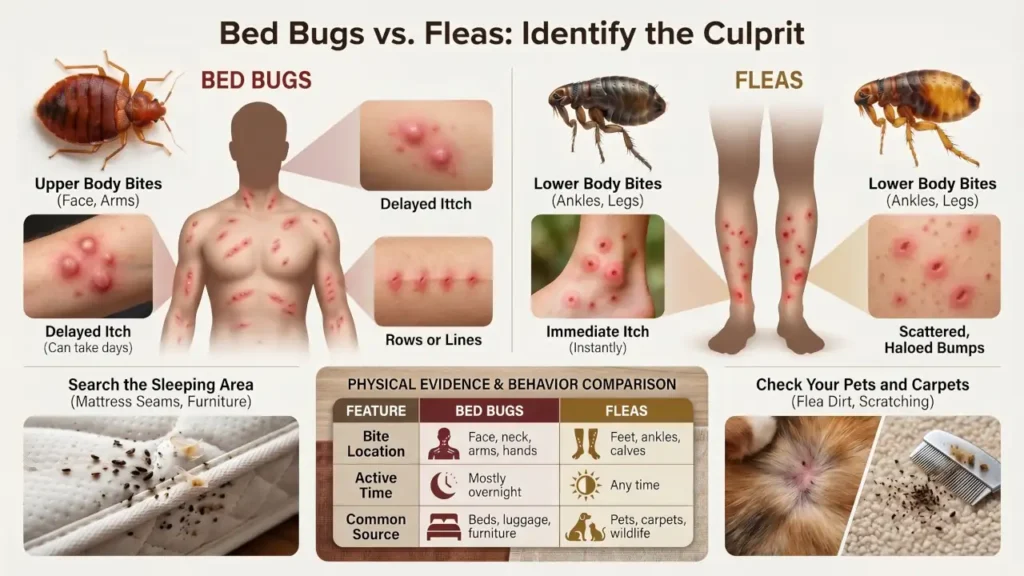
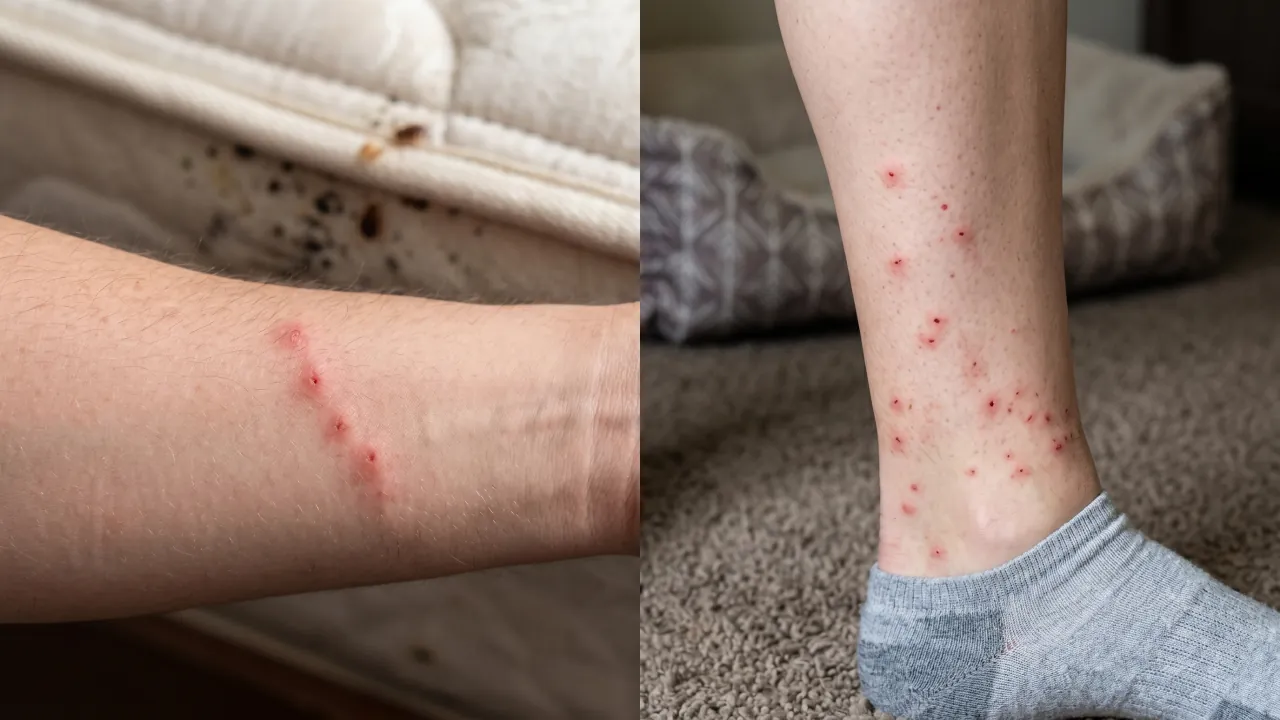
Bed bug bites usually look like itchy, inflamed bumps that show up in rough lines or tight clusters. At first glance, bed bug bites can look very similar to mosquito bites, which is another reason homeowners often misidentify them. Some people refer to a line of three bites as the “breakfast, lunch, and dinner” pattern, although not every bed bug infestation produces this classic arrangement.
These bites often appear on skin that was exposed while you slept, like the face, neck, arms, and hands. Flea bites are usually smaller and more sharply red, and they often have a little ring or halo around them. They tend to cluster on the lower legs, feet, calves, and ankles. That single detail, upper body versus lower body, solves a lot of the confusion.
Here is the simplest way to think about it. If the bites look like they were “mapped out” in a line or row, bed bugs move to the top of the suspect list. If the bites are scattered low on your legs and they came with intense itching fast, fleas are much more likely. Neither pest produces a perfect textbook reaction every time, but those patterns show up often enough to matter.
If I had to choose the single most useful clue, it would be location on the body. In actual infestations, bed bug bites are far more likely to show up on exposed upper-body skin after sleeping, while flea bites overwhelmingly appear around the ankles, feet, and lower legs. That one detail often narrows the investigation immediately.
Why People Confuse Bed Bug Bites and Flea Bites
Learning how to tell bed bug bites from flea bites can be surprisingly difficult because skin reactions vary significantly from person to person. One person may develop large itchy welts, while another develops barely noticeable red spots. In many inspections, homeowners focus entirely on how the bite looks and ignore where it appears, when it appeared, and what evidence exists in the home. That approach often leads to the wrong conclusion. The surrounding clues are usually more reliable than the bite itself.
Where Do Bed Bug Bites vs Flea Bites Show Up?
Bite location is often one of the quickest ways to narrow down the culprit. While both pests can cause itchy red bumps, bed bugs and fleas tend to bite different parts of the body based on how they feed and where they live.
Bed Bug Bites Target
Bed bugs go after skin that is easy to reach during sleep. That usually means the face, neck, arms, and hands, although they can bite other exposed areas too. They hide near beds and furniture, so the bites often line up with whatever was uncovered overnight. In many cases, the person never feels the bite happen at all, which is why the marks can show up later and seem random at first glance.
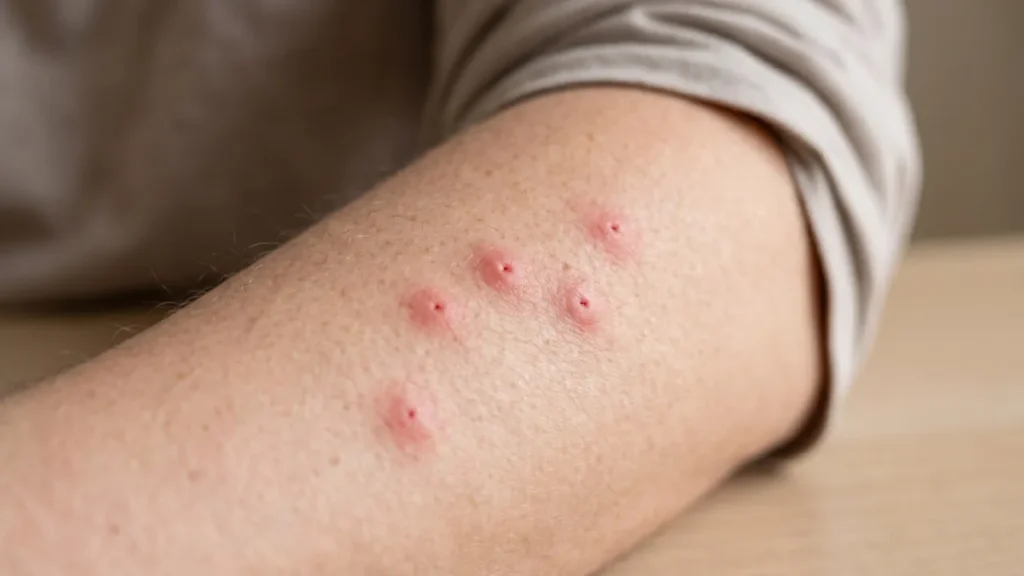
During inspections, homeowners frequently assume random bites automatically mean bed bugs. In reality, confirmed bed bug infestations usually come with additional evidence such as spotting on bedding, shed skins, or insects hiding near sleeping areas. In many confirmed infestations, bed bugs arrive after travel, used furniture purchases, or secondhand items are brought into the home.
When bites appear shortly after a trip or after acquiring used furniture, bed bugs move higher on the list of suspects. Hotel stays and luggage are also common introduction sources because bed bugs can hitchhike unnoticed and spread into sleeping areas after travel. Bites alone rarely provide enough proof.
Flea Bites Target
Fleas behave differently because they are usually coming from pets, carpets, furniture, or other low areas where they can jump onto a host. That is why flea bites usually show up on the feet, ankles, calves, and legs. If you have been sitting or lying down for a long time, they can show up higher too, but the lower body is still the classic flea target. When people say, “The bites are all around my socks,” that is often a flea clue.
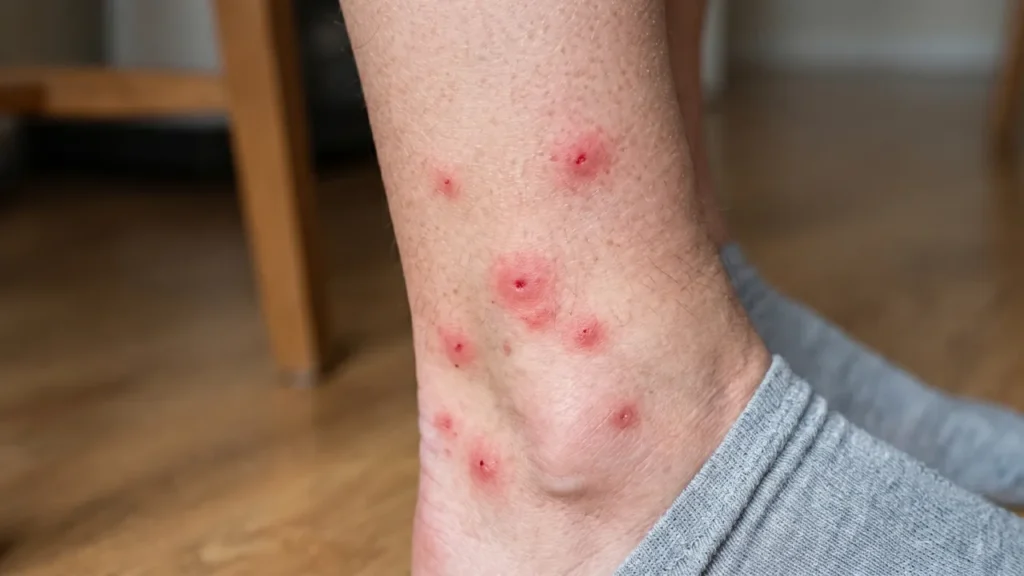
In homes with active flea problems, I often find that the pet is showing symptoms before the homeowner realizes there is an infestation. Excessive scratching, flea dirt, or restless behavior can provide some of the earliest warning signs. While pets are the most common source, fleas can also enter homes through wildlife such as raccoons, squirrels, opossums, or stray animals that spend time near the property.
Also Read: What Attracts Fleas? 5 Surprising Things That May Be Causing Fleas
When Do They Bite and When Do You Feel it?
Timing can provide another valuable clue. Bed bugs and fleas do not just bite in different places. They also tend to feed at different times and trigger skin reactions on different schedules.
Bed Bug Timeline
Bed bugs are nighttime feeders. They usually bite while people are asleep, and many people do not feel the bite when it happens because bed bugs inject saliva that helps keep the skin from reacting right away. The marks may appear the same morning, but they can also take a day or two, and in some people they can take much longer. CDC notes that bite marks may take as long as 14 days to develop in some people. That delay is one of the biggest reasons bed bug bites get misread as something else.
Flea Timeline
Flea bites usually feel more immediate. A flea bite can cause a quick, sharp sensation, and the itch often starts fast. Flea bites usually trigger itching quickly because the body reacts to proteins in flea saliva. In many cases, redness and irritation develop soon after the bite occurs, which is one reason flea bites often feel more obvious than bed bug bites. So if the bite seems to announce itself almost right away, fleas move up the list very quickly.
Beyond the Bites, Other Signs to Look For
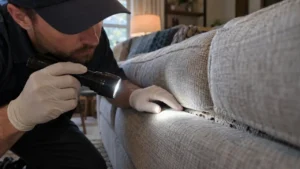
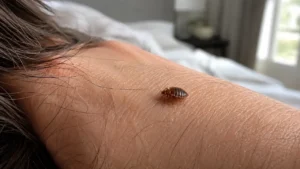
The bites matter, but the home clues matter just as much. According to the CDC, homeowners should look for live bed bugs, shed skins, rusty-colored blood spots, and insects hiding in mattress seams, box springs, bed frames, and nearby furniture. Homeowners may also find tiny white eggs hidden in mattress seams and cracks near sleeping areas. Adult bed bugs are roughly the size and shape of an apple seed, making them visible to the naked eye during a careful inspection. If you are unsure what you’re looking for, understanding how big bed bugs are at different life stages can make inspections much easier.
In real infestations, these physical signs are often far more reliable than the bite pattern itself because skin reactions vary significantly from person to person. If the bedroom is showing these clues, the bites are probably only part of a bigger story. If you are checking a room for activity, it also helps to know what bed bug nests look like, since most infestations involve multiple hiding areas rather than a single location. Homeowners also miss baby bed bugs surprisingly often because they are much smaller and lighter in color than adults.
Fleas leave a different trail. Flea problems usually show up through pets first. In most homes, the earliest clues are increased scratching, flea dirt that looks like black pepper flakes, and bites appearing around the ankles or lower legs.
Unlike bed bugs, fleas are often concentrated in carpeting, pet bedding, upholstered furniture, and areas where animals regularly rest. If your dog or cat is restless and you are finding itchy bites on your lower legs, that combination is hard to ignore. Understanding what attracts fleas can also help explain why certain rooms or pet areas become hotspots for activity. Once fleas are confirmed, the next step is learning how to get rid of fleas fast before the infestation spreads through carpets, furniture, and bedding.
How to Confirm Whether You Have Bed Bugs or Fleas
If you are unsure which pest is responsible, spend a few minutes looking for evidence before treating the problem.
Check for bed bugs if:
- Bites appear after sleeping.
- Marks are on exposed upper-body skin.
- You find spotting, shed skins, or insects near the bed.
Check for fleas if:
- Bites are concentrated around ankles or lower legs.
- Pets are scratching more than normal.
- Flea dirt is visible in pet bedding or carpeting.
In my experience, homeowners who identify the source early solve the problem much faster than those who focus only on treating the bites.
Treatment That Makes the Itch Stop
Once you have a reasonable idea of which pest is responsible, the next priority is reducing the itching and preventing complications. Fortunately, the basic treatment approach is similar for both bed bug bites and flea bites.
Immediate Relief for Both Types
The good news is that most bites from either pest do not need complicated treatment. The first step is simple: wash the area gently with soap and water, then avoid scratching. Scratching makes the itch worse and raises the risk of infection. For quick relief, an ice pack can help with swelling, and over-the-counter hydrocortisone or calamine lotion can calm the skin. Oral antihistamines may also help reduce itching when the reaction becomes difficult to ignore.
Also Read: Fleas vs Ticks: What’s the Difference (and Which Is Worse)?
When to See a Doctor
Most bed bug bites clear up on their own within a week or two, and flea bites often settle in a few days. Still, there are times when home care is not enough. Get medical help if you see signs of infection such as pus, increasing redness, warmth, or discharge, or if the bites start to look worse instead of better.
Seek medical attention if symptoms become severe or extend beyond simple itching and redness, especially if you experience hives, breathing difficulties, facial swelling, fever, headache, or body aches. If the skin reaction is spreading or the person is having trouble breathing, that is not a wait-and-see moment.
The Bottom-Line Key Differences at a Glance
| Feature | Bed Bugs | Fleas |
| Bite Location | Face, neck, arms, hands | Feet, ankles, calves |
| Pattern | Lines or clusters | Random clusters |
| Itching Starts | Delayed | Usually immediate |
| Active Time | Mostly overnight | Any time |
| Common Source | Beds, luggage, furniture | Pets, carpets, wildlife |
| Evidence Found | Blood spots, shed skins | Flea dirt, scratching pets |
The fastest way to separate bed bug bites from flea bites is to look at the full pattern, not just one spot. In real homes, the difference between bed bug bites and flea bites is usually clearer when you look beyond the skin itself. Bite location, timing, and environmental evidence often reveal far more than the appearance of the bite alone.
Bed bug bites are more likely to appear after sleep, on exposed upper-body skin, in lines or clusters, and with a delay before you notice them. Flea bites are more likely to hit the lower body, itch fast, and show up as smaller bumps with a ring or halo. Bed bugs point you toward the bed, furniture, luggage, and hidden cracks. Fleas point you toward pets, carpets, bedding, and low resting areas. That is the real difference in a nutshell.
In actual service calls, homeowners often focus on the appearance of the bites and overlook where they are occurring. More often than not, the location of the bites on the body and the evidence found in the home provide a faster and more reliable answer than the bite shape itself.
One simple memory trick helps a lot. High on the body and delayed? Think bed bugs. Low on the body and immediate? Think fleas. It is not perfect, but in real homes it is often enough to point you in the right direction before the problem gets worse. If the bites keep appearing, the source needs to be found, not just the itch soothed.
Also Read: Flea Bites on Cats: Identification, Treatment & Prevention
Final Thoughts
Bites are really just the warning sign. The pest behind them is the real issue. Bed bugs and fleas both create miserable itching, but they come from different places and leave different clues behind. That is why treating only the skin rarely solves the problem. The bites are a symptom. The infestation source is the actual issue that needs attention.
If you suspect bed bugs, check the bed, nearby furniture, and hidden seams. If fleas seem more likely, focus on pets, bedding, carpet, and the areas where your animals rest. When the evidence keeps pointing to one pest, act on that source quickly.
The CDC notes that bed bug infestations can be difficult to eliminate completely because the insects hide in tiny cracks and can survive for extended periods without feeding. Many homeowners also underestimate how fast bed bugs spread once an infestation becomes established. Their ability to survive is also tied to how long bed bugs can live without food, which is much longer than most homeowners expect. When repeated bites continue despite cleaning and monitoring efforts, professional treatment is often the fastest path to control.
If you are unsure which pest is responsible, spend more time looking for evidence around the home than studying the bites themselves. In many cases, the environment reveals the answer long before the skin does. That is the difference between a bad week and a problem that drags on for months.