Most people do not notice baby bed bugs right away, and that is exactly why they become such a problem. A lot of homeowners expect to see a big, obvious bug crawling across a sheet, but bed bug nymphs are much easier to miss. They can be tiny, pale, and tucked into the tightest seams of a mattress, headboard, or sofa. By the time people finally spot them, the infestation has usually been building for a while. The good news is that once you know what to look for, baby bed bugs are much easier to identify.
In homes where bed bugs have been active for a while, one thing that surprises people is how often the youngest stages are missed during a quick inspection. In many real infestations, homeowners focus on finding adult bugs and overlook tiny nymphs hiding inside mattress stitching or furniture joints. By the time the smaller bugs become noticeable, there are often multiple generations already present. In this guide, I will walk you through the signs in plain language so you can check your home with confidence and react before the problem spreads.
Also Read: How To Remove Bed Bugs from Books Permanently
Quick Answer: What Do Baby Bed Bugs Look Like?
Baby bed bugs (nymphs) are tiny, flat, oval insects that usually appear pale white, cream, or translucent when they first hatch. They look like miniature adult bed bugs and become darker after feeding. Most hide in mattress seams, furniture joints, and other tight spaces close to where people sleep.
Baby Bed Bug Identification Checklist
What Do Baby Bed Bugs Look Like?
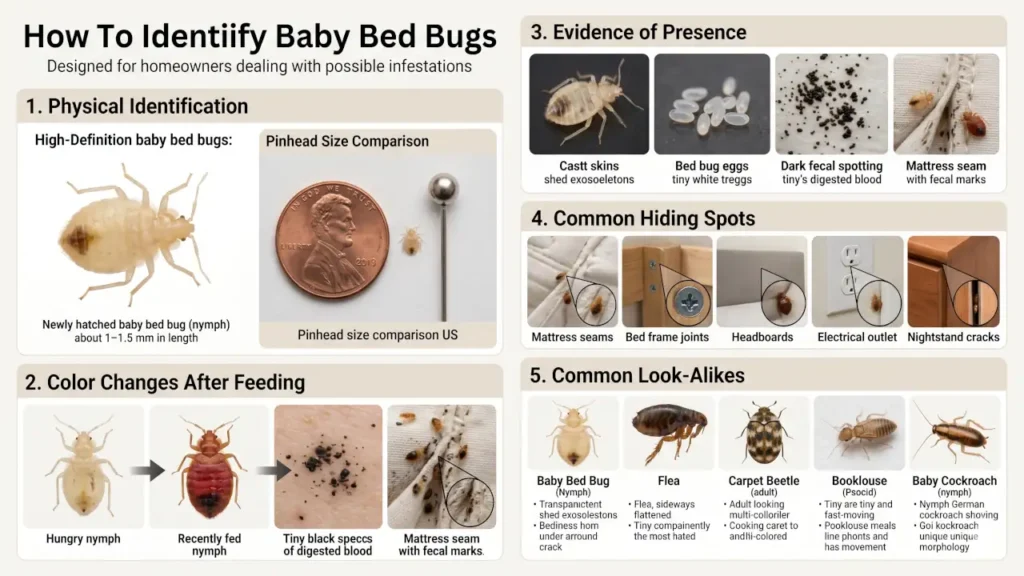
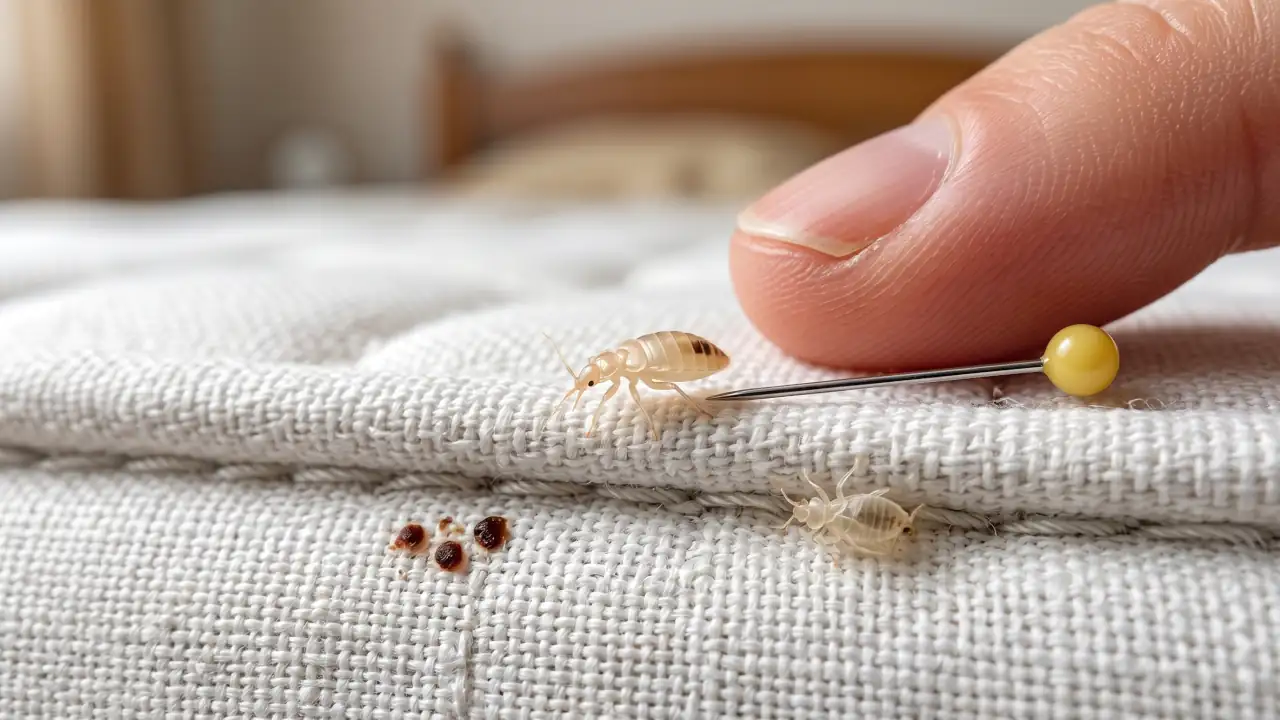
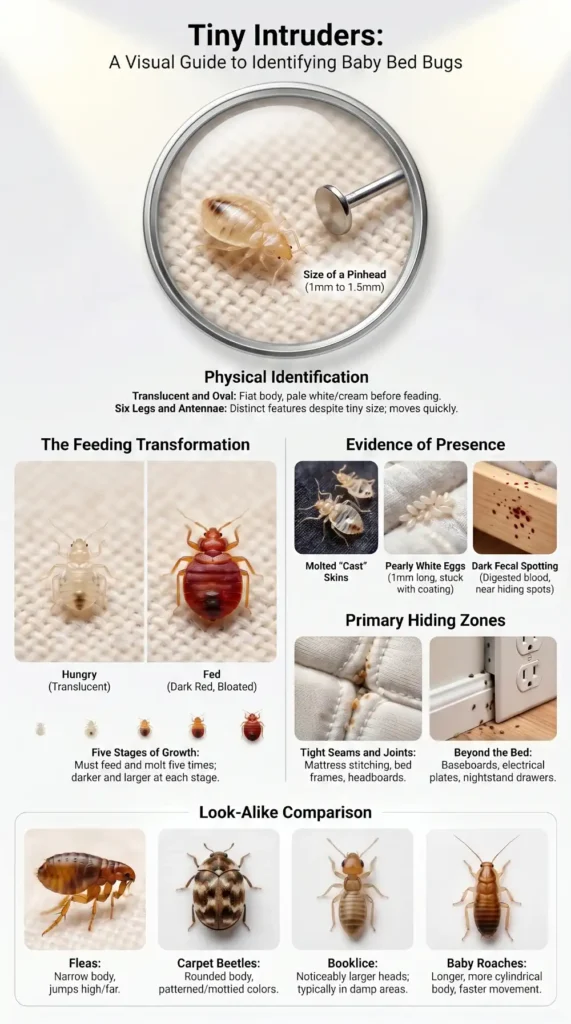
Baby bed bugs are also called nymphs, and they look like smaller, younger versions of adult bed bugs. They have the same flat, oval body shape, the same six legs, and the same overall design, but they are easier to overlook because of their color and size. Freshly hatched nymphs are usually pale white, cream, or light yellow. In some cases they can look almost translucent, which makes them blend into light-colored bedding very easily. Once they feed, they become easier to see because their bodies darken and you may even notice a red or brown spot inside the abdomen from the blood meal.
A simple way to think about them is this: they are not some completely different insect stage that turns into a weird larva or pupa later. Bed bugs do not go through a larval stage like flies or beetles. They hatch, molt several times, and slowly mature into adults. Bed bugs normally pass through five nymph stages before reaching adulthood, and each stage requires a blood meal before the insect can continue developing.
That means baby bed bugs still look like bed bugs from the start, just smaller, paler, and thinner. If you are checking a mattress seam with a flashlight and see a tiny pale bug that moves quickly into cover, that is the kind of sighting that should make you take a closer look.
How Big Are They?
Newly hatched baby bed bugs are tiny. The first stage is only about 1 millimeter to 1.5 millimeters long, which is roughly pinhead-sized and still visible if you are paying attention. As they grow, each nymph stage gets a little larger after feeding and molting. By the time they are older nymphs, they are still much smaller than adults, but noticeably easier to see.
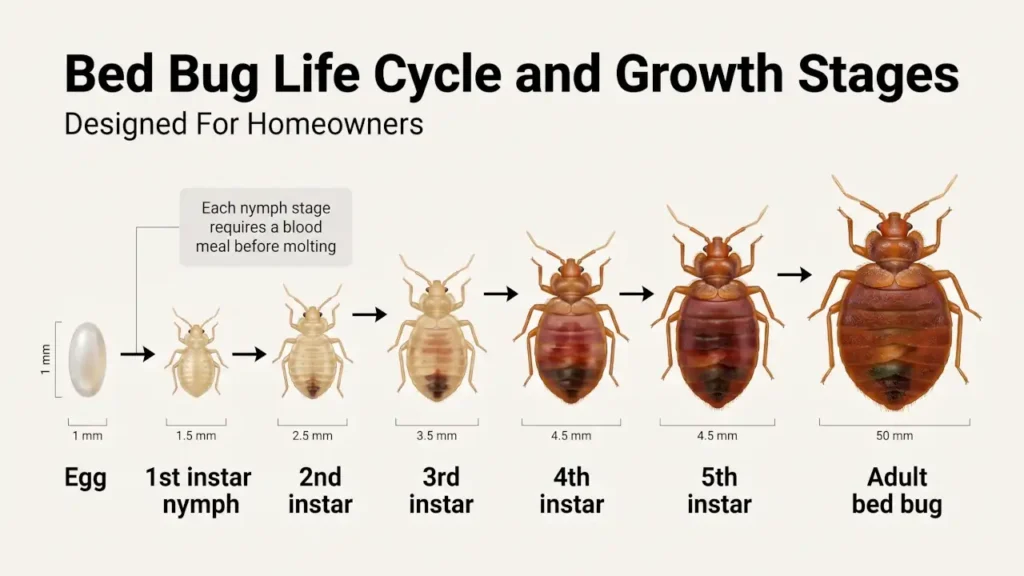
Adults usually measure about 5 to 7 millimeters long, which is why many people compare them to an apple seed. For a better visual comparison, seeing the actual size of adult bed bugs beside common household objects makes it easier to understand how much smaller newly hatched nymphs really are.
What catches people off guard is not just the final adult size, but how quickly a small nymph can blend into the background. A baby bed bug on a white sheet may be harder to see than an adult on dark fabric, especially if it has not fed recently. The tiny size also means homeowners often mistake them for dust, lint, or a fleck of debris. During inspections, tiny nymphs are often missed simply because people brush them away thinking they are fabric fuzz or debris instead of stopping to look closely. That is why a bright flashlight and slow inspection matter so much.
Do Baby Bed Bugs Bite?
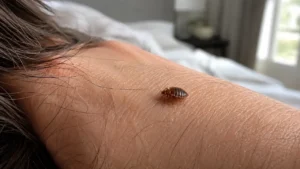
Yes, they bite. Baby bed bugs need blood to grow, so they feed just like adults do. There is a common myth that only the large, fully grown bugs bite, but that is not true at all. A newly hatched nymph can feed as soon as it finds a host. Bed bugs locate people partly through body heat and the carbon dioxide released during breathing, which helps explain why sleeping areas become their primary activity zones. In a home, that usually means people sleeping nearby.
MGK Crossfire® Bed Bug Concentrate
The bite itself is not something you can reliably use to identify age, though. Bed bug bites from nymphs and adults often look the same on the skin. Some people get small red bumps, some get itchy welts, and some barely react at all. That is one reason relying on bites alone can be misleading. You need the physical signs too: live bugs, cast skins, eggs, and dark fecal spotting.
If you are waking up with bites and you also find pale tiny insects in mattress seams, that is a strong sign you are dealing with bed bugs rather than another pest.
The Color of Baby Bed Bugs
Color is one of the biggest clues. Young bed bugs are usually white, pale yellow, or translucent when they first hatch. The U.S. Environmental Protection Agency notes that bed bug nymphs become darker after feeding because blood inside the body becomes visible through their lighter outer covering, which explains why color can appear to change dramatically during different feeding stages.
Because of that, they can almost disappear against light bedding or unfinished wood. After feeding, they often take on a reddish or brownish tone because the blood meal shows through the body. As they get older, they gradually become darker and more similar in color to adults.
One thing that helps a lot is understanding that color changes based on feeding. A hungry nymph may look almost clear. A recently fed nymph may look bloated and pinkish-red. That shift can happen fast enough to confuse people who are checking the same area on different nights. So if you think you saw a pale bug one night and a darker bug later, you may have been looking at the same type of insect at different feeding stages.
How Fast Can They Move?
Baby bed bugs can crawl fairly quickly for their size, but they are not fast in the way roaches or ants are fast. Like adult bed bugs, nymphs are generally most active during nighttime hours when people are sleeping and less likely to disturb them. They are more of a hidden runner than a speedster. When the light turns on or they sense movement, they usually head straight for a crack, seam, or protected edge.
What matters is that they do not need to travel far to stay successful. Bed bugs prefer to live close to where people sleep or sit for long periods. That is why they hide in beds, couches, chairs, and nearby furniture. Once they find a safe spot, they can feed and retreat without having to cross open space very often. This habit is exactly why early inspection matters so much. Individual bed bugs may not move especially fast, but the infestation can still grow fast if you do not catch the hiding spots early.
The Best Ways to Look for Them
The best way to find baby bed bugs is to stop thinking only about the bed surface and start thinking like the insect. These pests want dark, tight, protected places close to a food source. If you suspect bed bugs, it helps to understand how fast bed bugs spread because movement between rooms and nearby furniture often happens earlier than homeowners expect.
Look For Molted Shells
Nymphs must shed their skin as they grow, so cast skins are a strong clue that young bed bugs are present. They often look like tiny empty shells that resemble the bug itself. They may be light, brittle, and easy to crush. If you find several of them in one place, you are likely looking at an active harborage.
Search For Eggs
Bed bug eggs are very small, usually about 1 millimeter long, and they are often white or pearly in color. They are usually stuck to surfaces with a sticky coating, which means they can cling to rough spots, seams, cracks, and edges. Eggs are one of the clearest signs that a breeding population is nearby.
Check Common Hiding Spots
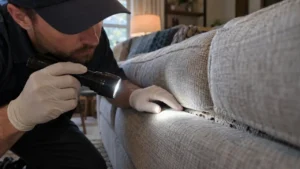
Start with mattress seams, box springs, bed frames, headboards, and the stitching on upholstered furniture. Then move outward to nightstands, baseboards, picture frames, curtains, and even the edges of electrical plates. Bed bugs do not always stay only in the bed. Heavier infestations often spread farther into the room and beyond.
Inspect Cracks and Voids
Tiny insects love tiny spaces. Screws, joints, drawer corners, baseboard gaps, and trim seams can all hold bed bugs or their evidence. A lot of people miss these spots because they check only the obvious surfaces. Slow, detailed inspection beats a quick glance every time.
Use Detector Traps
Interceptor-style traps or other bed bug detection devices can help confirm activity when you are not sure what you are seeing. These traps are especially useful near bed legs and other travel points because they can catch bugs that move between the floor and the sleeping area.
Use Visibility Tools
A flashlight is essential. A magnifying glass helps too, especially for eggs, tiny nymphs, and molted skins. A bright phone light can help in a pinch, but a dedicated flashlight usually makes it easier to spot movement and see the outlines in seams or cracks.
Quick Tip: Inspect at night or in a darkened room with a strong flashlight. Baby bed bugs are easier to spot when they are active, and a slow inspection with light from the side can reveal movement, cast skins, and tiny eggs you would miss in daylight.
One mistake homeowners make is assuming every tiny pale insect near a bed is automatically a bed bug. Finding a single insect without cast skins, eggs, dark spotting, or additional evidence does not always confirm an infestation. Multiple signs together create a much stronger identification picture.
Can Bed Bug Nymphs Lay Eggs?
No, not yet. Baby bed bugs cannot lay eggs until they reach adulthood and, in the case of females, mature enough to reproduce. Under favorable conditions with regular feeding, bed bug nymphs can move through development surprisingly quickly, which is one reason infestations can appear to grow suddenly. That is one of the reasons nymphs matter so much during an infestation. Their presence tells you the colony is still growing, even if the adults are hidden.
It also means that if you are seeing nymphs, the infestation has likely been around long enough for eggs to hatch and the life cycle to keep moving. That is an important clue because it tells you the problem is not just a stray bug or two. It suggests a larger breeding source somewhere close by.
Other Insects That Look Like Them
This is where a lot of people get stuck. Baby bed bugs are easy to confuse with other tiny insects, especially when they are pale or freshly fed. Carpet beetles are one of the most common insects people confuse with bed bugs because homeowners often discover them near fabrics, furniture, and sleeping areas.
Other insects that may cause confusion include fleas, booklice, spider beetles, bat bugs, and very small cockroach nymphs. The trick is to pay attention to body shape, color, where the insect was found, and whether there are other bed bug signs nearby. Bed bug nymphs tend to be flatter than many look-alikes, and they are usually found close to sleeping or resting areas rather than wandering randomly through the house.
If you are unsure, do not guess. Put the specimen in a sealed container or take a clear photo and compare it with an accurate identification guide. That one small step can save a lot of time and prevent the wrong treatment.
Common Baby Bed Bug Look-Alikes
| Insect | Common Difference |
| Fleas | Narrow body and strong jumping ability |
| Carpet beetles | More rounded body and patterned appearance |
| Booklice | Larger head and found in damp areas |
| Baby cockroaches | Longer body shape and more active movement |
| Bat bugs | Extremely similar but usually linked to bat activity |
What You Should Do If You Find Baby Bed Bugs
If you find baby bed bugs, treat it as a real infestation, not a minor issue. People sometimes assume that because the bugs are small, the problem must be small too. In reality, nymphs usually mean eggs have already hatched and the population is active.
One thing that commonly surprises homeowners is that the first visible baby bed bug is often not the beginning of the problem. By the time young nymphs are easy to notice, hidden activity may already exist behind headboards, inside furniture joints, or around nearby sleeping areas.
Start by isolating the area as much as possible. Do not move bedding or fabric items through the house without care, because that can spread the problem. Vacuum carefully along seams and edges, seal the vacuum contents right away, and keep checking the same areas over the next several days. You will also want to reduce clutter, because clutter gives them more hiding places and makes inspection harder.
If the signs are concentrated around beds or furniture, inspect the nearby walls, outlets, and furniture joints too. One pattern that repeatedly shows up during bed bug problems is that homeowners often treat only visible surfaces around the bed while the actual harborage remains hidden in furniture joints, wall gaps, or nearby objects. Surface treatment alone frequently leaves the population untouched.
Why Early Identification Matters
A baby bed bug is more than a tiny insect. It is proof that a life cycle is already in motion. That is why early identification matters so much. Once eggs hatch, the infestation is no longer just about a single hidden adult. Now you have multiple growth stages, multiple hiding spots, and more chances for the problem to spread into the rest of the room.
The earlier you find them, the easier it is to keep control of the situation. A small cluster of nymphs near the bed is much easier to deal with than a population that has already moved into wall voids, furniture joints, closets, and nearby rooms. That does not mean the issue is simple, but it does mean your chances are better when you catch it at the nymph stage.
This is also why guesswork is dangerous. Many homeowners waste time cleaning the wrong area or treating only visible spots. Meanwhile, the real harborages stay untouched. A careful inspection gives you a much better map of where the bugs are living, where they are moving, and which items need attention first.
If there is one habit that makes a big difference, it is repeated checking. Do not inspect once and assume the problem is over. Check again a few days later, then again after laundering, vacuuming, or trap placement. Bed bugs are good at hiding, but they are not good at staying invisible forever when you keep looking in the right places.
Safety Notes When Checking for Bed Bugs
Avoid immediately spraying random insecticides on mattresses, couches, or sleeping areas before confirming what insect you are dealing with. One of the most common homeowner mistakes is treating unknown bugs with multiple over-the-counter products, which can spread bed bugs into additional hiding places or create unnecessary chemical exposure around children and pets.
When inspecting areas like electrical outlets, remove covers only if you can do so safely and avoid inserting liquids or sprays into energized spaces.
Also Read: Does Lysol Kill Bed Bugs or Make the Problem Worse?
Final Thoughts
Baby bed bugs are small, but they are not harmless. They bite, they feed, they grow, and they signal that a bed bug problem is already underway. The biggest lesson is simple: do not wait for a giant, obvious infestation before you act. Tiny pale bugs, shed skins, eggs, and dark spotting are enough reason to inspect closely and move quickly.
If you know what baby bed bugs look like, how they move, where they hide, and what they leave behind, you can catch the problem earlier and respond more effectively. That is the real advantage. Early identification saves time, lowers stress, and gives you a much better chance of stopping the spread before the whole home gets involved.
One pattern that repeatedly shows up with bed bug problems is that issues often become harder to control when people wait too long to confirm what they are seeing. When it comes to bed bugs, careful inspection beats wishful thinking every single time.