You wipe away an ant trail before bed, only to wake up the next morning and find another one marching across the exact same countertop. After a few rounds of sprays or bait stations that seem to work only temporarily, it’s easy to wonder whether calling an ant exterminator is actually worth it. Understanding what happens during a professional ant treatment can help you know what to expect and why some infestations are much harder to eliminate than they first appear.
Also Read: How To Get Rid of Flying Ants Before They Spread
Quick Answer
An ant exterminator begins by identifying the ant species, locating the nest and entry points, inspecting the property for food, moisture, and structural issues, and selecting a treatment plan based on the infestation. Most professional treatments rely on ant bait, targeted insecticides, and follow-up inspections to achieve complete colony elimination rather than simply killing the ants you see.
Professional ant infestation treatment focuses on eliminating the entire colony rather than simply reducing the number of ants you see. That usually involves identifying the species, locating the nest, and choosing the right combination of bait, targeted insecticides, and follow-up inspections based on how the colony is behaving.
What Does an Ant Exterminator Do?
Most homeowners try the DIY route first, and honestly, that’s a reasonable place to start. You grab a can of ant spray, maybe some bait stations, and go to work on the trail you can see. The problem is that ants are much better at hiding than most people realize. What you’re spraying is usually just a small fraction of the colony, and the queen, the one ant actually keeping the whole operation alive, is tucked away somewhere you’ll probably never find on your own.
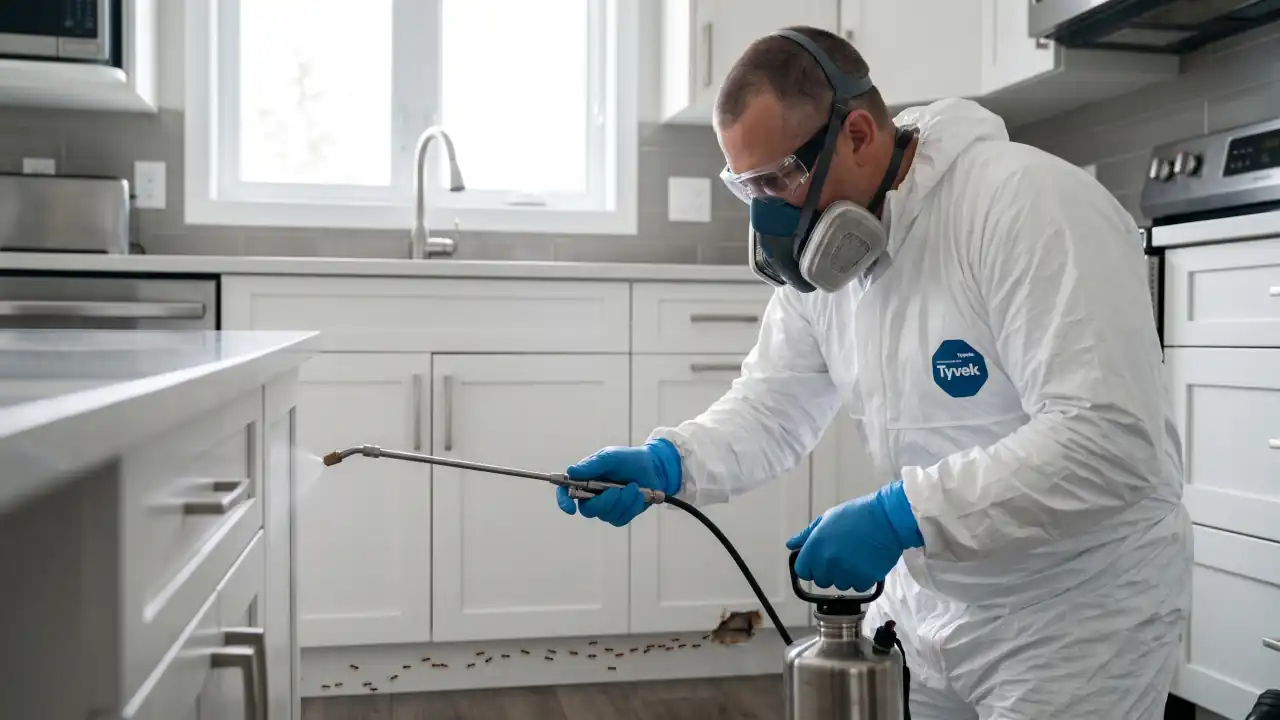
That’s usually the point where people decide to call in a professional ant exterminator instead of fighting a losing battle. A real ant exterminator isn’t just someone with a spray bottle and a truck. They’re licensed, trained, and they’ve seen just about every version of an ant problem you can imagine.
Quick Tip: Killing the ants you can see is the easy part. The real work an exterminator does is figuring out where the rest of the colony is hiding and cutting off the problem at the source, not just treating the symptoms.
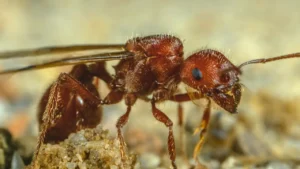
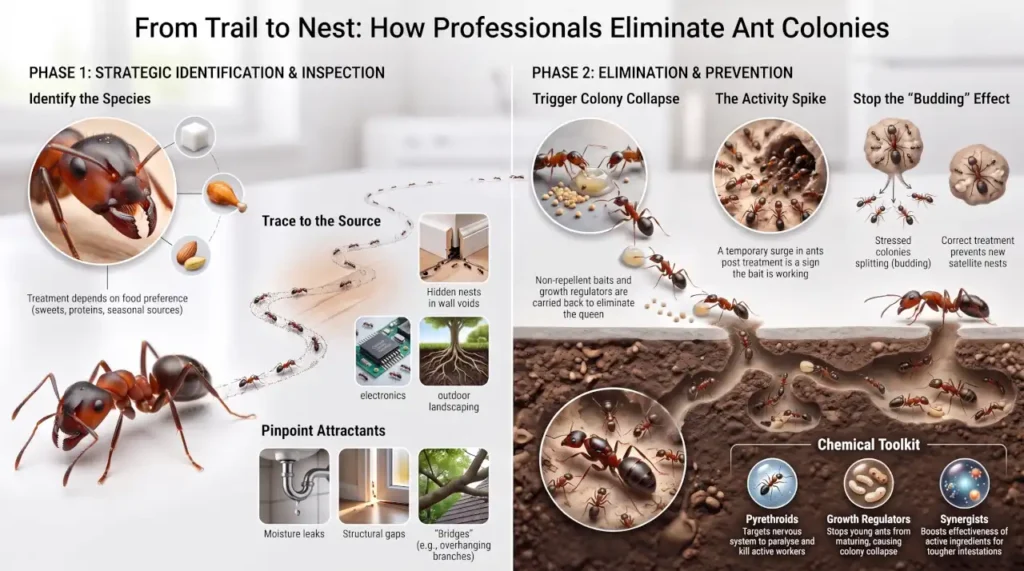
The first thing a good exterminator does is figure out exactly which type of ant has moved into your home. This matters more than people expect. Season also plays a role. Many species forage more aggressively during warmer months, while others move indoors as outdoor food and moisture become scarce. For example, odorous house ants, pavement ants, carpenter ants, Argentine ants, and pharaoh ants all respond differently to treatment. Some readily accept sweet baits, while others prefer protein or grease-based food sources depending on the season.
Many ant species also change their food preferences throughout the year. A bait that works well in spring may be ignored later in the season, which is one reason accurate identification is so important before treatment begins.
Not all ants behave the same way, and treating the wrong type incorrectly can waste time and money. If your issue is sweet-loving ants raiding your pantry, you’ll want to know how to get rid of sugar ants, and that treatment looks nothing like what you’d need for getting ants out of electronics, which is a whole different situation involving ants nesting inside outlets, routers, or appliances.
If the activity is limited to switches or outlets rather than appliances, dealing with ants in an electrical outlet requires a slightly different approach because of the electrical safety concerns involved.
Once the species is identified, the exterminator moves into a deeper inspection. In my experience, homeowners are often surprised that the nest isn’t anywhere near the ants they’re seeing. I’ve inspected homes where a trail in the kitchen led back to a colony under a landscaping stone twenty feet away, and others where carpenter ants were nesting in damp wall voids behind a bathroom. The visible ants are only clues. Finding the colony and confirming its nest location is what solves the problem.
This is where they try to pin down what is attracting the ants to your home in the first place, whether that’s a moisture problem near your foundation, food debris in the kitchen, or a gap around a window frame that’s basically an open invitation. They’ll also trace the entry points, which can take a while since ants are experts at squeezing through cracks you’d never notice.
During that inspection, they’ll often check under sinks, behind appliances, around plumbing penetrations, expansion joints in slabs, crawl spaces, and exterior mulch beds. These are areas where moisture and shelter frequently attract ant colonies.
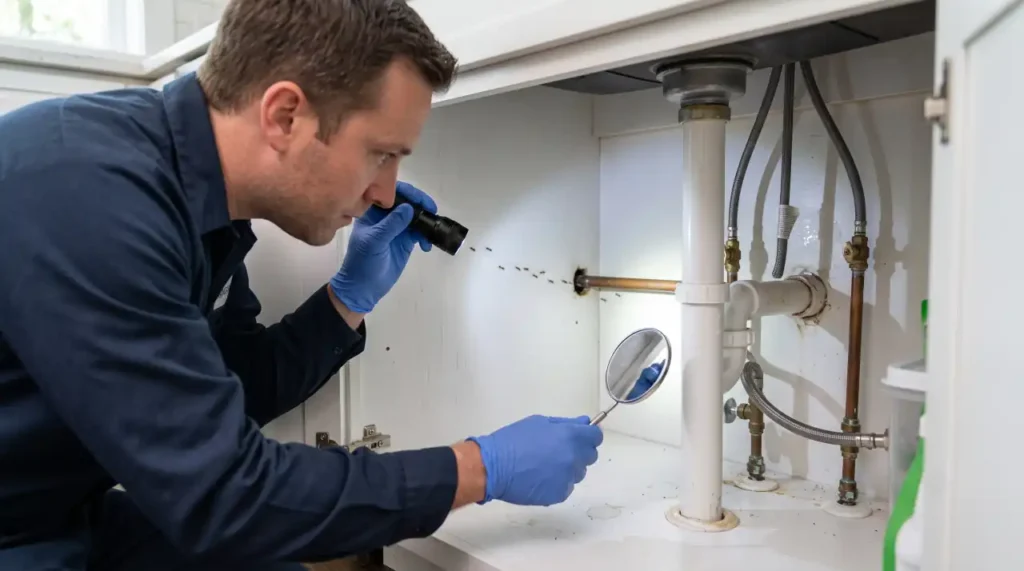
After the source is tracked down, you and the exterminator sit down and talk through options. In many cases, treatment is only part of the solution. Your exterminator may also recommend sealing entry points, repairing leaks, trimming vegetation, or correcting moisture problems to reduce the chances of another infestation. Depending on where the colony is located, the treatment plan may include exterior treatment around the foundation along with targeted interior treatment where ants are actively foraging.
Be upfront if you have kids or pets running around the house. If your treatment plan includes bait stations, you may also want to understand whether Terro ant bait is safe for pets before placing them around your home.
That detail changes what products and application methods make sense for your situation. Some infestations also benefit from a perimeter treatment that helps reduce new ants from entering the home while the existing colony is being eliminated. Once everyone agrees on a plan, the treatment can begin. And don’t be shy about asking questions here. A good exterminator wants you to understand what’s happening in your own home, not just hand you a bill and leave.
The Advantage of Using a Professional Ant Exterminator
There’s nothing wrong with trying to handle a small ant problem yourself. Hardware stores sell plenty of decent products, like borax, that can knock down a minor trail of ants without much trouble. There are also a bunch of natural remedies people swear by online, things like vinegar, cinnamon, or diatomaceous earth. Some of these work reasonably well for a quick fix.
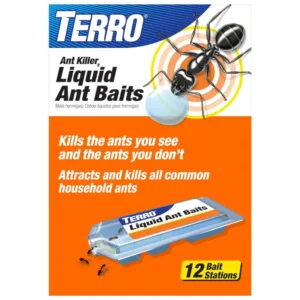
If you’re dealing with a small indoor infestation and want to try a bait before hiring an exterminator, liquid ant baits are usually more effective than contact sprays because worker ants carry the bait back to the colony. Terra Liquid Ant Killer is one of the most widely used options for sweet-feeding household ants.
The catch is that most DIY methods only deal with the ants that are already out foraging. They don’t touch the nest itself. So you might see things clear up for a week or two, then the ants show up again just as strong as before, sometimes worse. That’s because unless the queen—or queens, in species with multiple queens—is eliminated, the colony just keeps producing more worker ants to replace the ones you killed.
Quick Tip: Some ant species respond to stress by budding, which means the colony splits into multiple smaller colonies that spread out into new areas of your home. A DIY treatment done carelessly can actually trigger this and turn one problem into several.
There’s nothing wrong with giving DIY a shot if your infestation is small and you’re comfortable rolling up your sleeves. But if the ants keep coming back, or if you’re dealing with a serious infestation, a professional exterminator is going to save you time, money, and a lot of frustration in the long run.
I’ve also seen homeowners unintentionally make an infestation worse by spraying every ant trail they found. In one home, repeated use of a repellent spray caused an odorous house ant colony to split into multiple satellite nests, and what started as activity in the kitchen eventually spread into nearby rooms. That’s one reason professionals often rely on targeted ant bait instead of trying to kill every visible worker ant immediately.
The biggest advantage of going professional is experience. One pattern I’ve seen repeatedly is homeowners treating the same trail every few days because it looks like the infestation is returning. In reality, they’re only eliminating the workers while thousands more remain protected inside the nest. Until the colony itself is eliminated, the problem usually continues.
Experienced exterminators begin recognizing patterns after inspecting hundreds of homes. They know which species prefer wall voids, which are more likely to nest beneath patios or landscaping, and which signs usually point to hidden moisture problems. That experience helps them solve infestations much faster than trial-and-error treatments.
They also know how to trace hidden entry points, recognize conditions that support recurring infestations, and choose treatment strategies that match the ant species they’re dealing with. That combination of experience and specialized products is difficult to match with over-the-counter solutions.
Getting Your House Ready for Treatment
Here’s something a lot of people don’t expect: your exterminator can’t do this alone. Getting rid of ants for good is a team effort, and your part of the job is prepping the house before the treatment happens.
Follow whatever instructions your exterminator gives you closely. Skipping a step or doing it halfway can seriously reduce how well the treatment works, and in some cases it can create a safety risk for your family. It might feel like extra work upfront, but it pays off once the ants are actually gone for good.
Start with a deep clean, especially in your kitchen. Wipe down counters, sweep the floors, and don’t forget the sink, since standing water and food residue there are a magnet for ants. After that, vacuum the whole house. If you’re finding trails disappearing into rugs or carpeting, our guide on getting rid of ants in carpet explains why they often nest beneath flooring and how to treat those areas safely.
Avoid using household ant sprays or strong cleaners anywhere the exterminator has placed bait. These products can contaminate the bait or remove the pheromone trails that help workers carry the bait back to the colony. Crumbs hiding in carpet or under furniture can pull ants away from the treated areas and mess with the whole plan.
Quick Tip: Don’t overlook your pet’s feeding area. Leftover kibble or spilled water in a bowl is one of the easiest meals an ant colony can find, so clean it up right after your pet eats.
Your exterminator will also probably ask you to seal up any open food, whether that means plastic containers, zip bags, or just tossing it in the fridge. Sticky bottles of honey, syrup, or ketchup should get wiped down too. Basically, anything that could tempt ants away from the treatment zone needs to disappear for a while. On top of that, take the trash out regularly, run the dishwasher daily instead of letting dishes sit, and rinse out recyclables before they pile up.
Quick Tip: Keep a simple log of where you’re seeing ant activity each day leading up to and after treatment. That small habit gives your exterminator useful information about how the colony is behaving and whether the treatment is working as expected.
How Long Will It Take to See Results?
Once your house is prepped and the treatment is done, it’s tempting to expect the ants to vanish overnight. Unfortunately, that’s not how it works. Ant extermination is a process, not an instant fix, and patience matters here more than people expect.
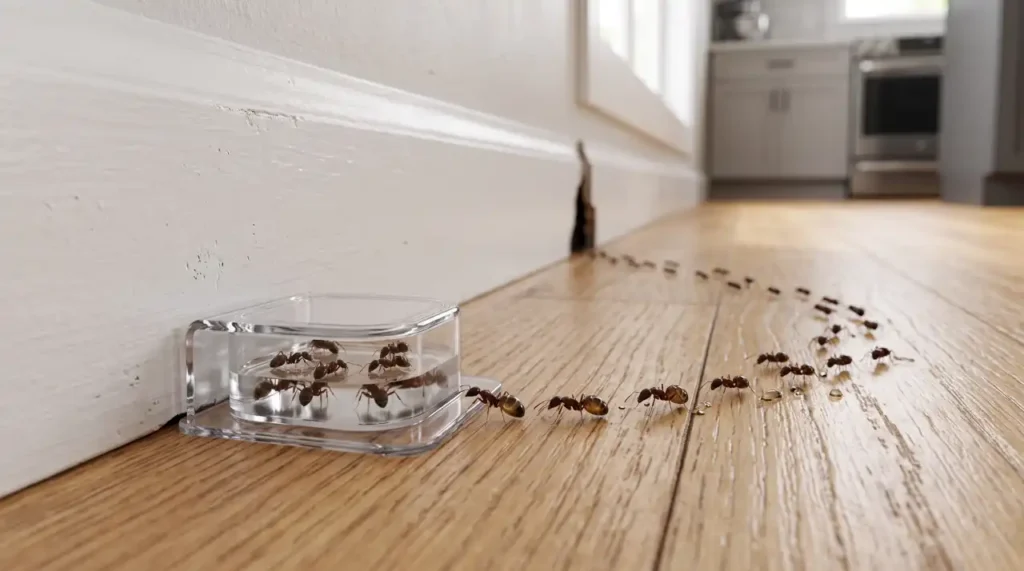
For the first couple of weeks after treatment, you might still see ants around, and in some cases you’ll notice more activity than before, not less. This can be alarming if you weren’t warned about it, but it’s actually a normal part of the process. When bait or treatment products disrupt a colony, the ants scatter, their usual trails break down, and the whole nest goes into a kind of chaos. If bait stations were used, you’ll often see a temporary surge of ants swarming toward them. That’s actually a good sign. It means the bait is being carried back to the nest, which is exactly what needs to happen for the treatment to reach the queen.
Depending on the species, colony size, and treatment method, noticeable improvement often takes anywhere from several days to three or four weeks. Large or multi-nest infestations can require additional follow-up visits before activity disappears completely. For persistent species or properties with multiple colonies, it’s not unusual for an exterminator to schedule a follow-up inspection to confirm the treatment worked as intended.
Why Some Ant Treatments Don’t Work
Even professional treatments don’t always eliminate an infestation after a single visit. Some ant species maintain multiple nests, while others change food preferences throughout the year and may ignore a bait they previously accepted. Heavy rain, untreated satellite colonies, or homeowners accidentally contaminating bait with household sprays can also slow the process. If activity continues longer than expected, a follow-up inspection usually helps determine whether the colony survived or a separate colony has moved in.
Chemicals Exterminators Use for Ants
Professional exterminators have access to products and application methods that aren’t available to most homeowners. Just as importantly, they know when, where, and how to use those products safely and effectively. That’s a big reason why professional treatments often produce better long-term results than over-the-counter solutions.
Quick Tip: A trustworthy exterminator will always walk you through which chemicals they plan to use, explain any potential risks, and answer your questions honestly. If a company is cagey about what they’re spraying in your home, that’s a red flag worth paying attention to.
Most ant treatments rely on pyrethroids or pyrethrins as the main active ingredient. Pyrethrins come from chrysanthemum flowers and have been used in pest control for a long time, while pyrethroids are the synthetic, lab-made version of the same compound. Both work by attacking an insect’s nervous system, which paralyzes and eventually kills them.
According to the U.S. Environmental Protection Agency, pyrethrins and pyrethroids are included in more than 3,500 registered pest control products used in and around homes. Their popularity has grown as pest control has shifted away from older, more acutely toxic pesticide classes like organophosphates.
Even so, the product itself is only part of the equation. Using the wrong formulation or poor bait placement can reduce effectiveness instead of improving it. That’s why professional training and proper application matter just as much as the active ingredient being used.
Beyond that, exterminators have access to a whole toolkit of other chemicals that aren’t available to regular consumers, which lets them mix and match based on the specific ant species and severity of your infestation. In practice, professionals rarely rely on a single product. Depending on the species and where it’s nesting, an exterminator may combine ant bait, a residual insecticide, a non-repellent treatment, crack-and-crevice applications, and exclusion recommendations to attack the infestation from multiple angles rather than depending on one chemical alone.
Piperonyl butoxide is one example, and it’s often combined with another active ingredient to boost its effectiveness. It’s worth noting that this one carries more health concerns than pyrethroids on their own, so it’s not something you’d want to handle without professional guidance.
Growth regulators are another category worth knowing about. Instead of killing ants outright, these products stop young ants from maturing into adults, which slowly collapses the colony’s ability to sustain itself. Methoprene and pyriproxyfen are the two most commonly used growth regulators in ant control. You might also hear your exterminator mention avermectin, neonicotinoids, or hydramethylnon, all of which serve different roles depending on the ant species and where the colony is nesting.
Signs You’re Dealing with More Than Just A Few Stray Ants
Before we wrap up, it’s worth talking about how to tell the difference between a minor nuisance and a real infestation, since that distinction changes how urgently you should act. Seeing one or two ants wandering across your countertop every so often isn’t usually a huge deal. Ants are curious foragers, and a stray scout wandering in from outside happens in almost every home at some point.
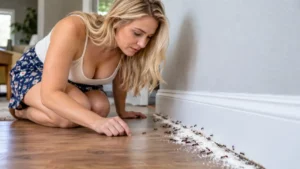
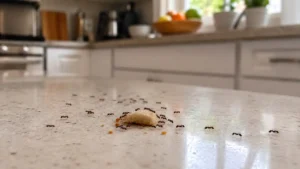
The real warning sign is a visible trail, a consistent line of ants moving back and forth between a food source and an entry point. That tells you there’s an established colony nearby, and the ants you’re seeing are just the tip of the iceberg. Another red flag is spotting ants in multiple rooms at once, especially rooms that don’t share an obvious food source. That pattern often means the colony has already spread further into your walls or foundation than you’d expect from the outside.
You should also pay attention to how often the ants return after cleaning or spraying. If the same trails reappear day after day, especially in the exact same locations, it’s usually a sign that an established colony is continuously sending out new workers rather than a few random ants wandering indoors.
Winged ants indoors are another thing to take seriously. If you’re not sure whether you’re seeing flying ants or termites, our guide to identifying and getting rid of flying ants explains what to look for and what those insects may indicate. Those are reproductive ants, sometimes called alates, and their presence usually means a colony nearby is mature enough to be producing new queens.
If the winged insects turn out to be carpenter ants rather than termites, it can also indicate moisture-damaged wood somewhere in the structure. While carpenter ants don’t eat wood, they excavate it to build nests, so locating and correcting the moisture problem is just as important as eliminating the ants themselves.
If you’re seeing winged ants inside your home rather than just outside near a window, it’s a strong signal that the nest is close, possibly even inside your walls or under your foundation. At that point, waiting it out rarely helps, and the infestation tends to get worse the longer it’s left alone.
If any of this sounds familiar, that’s usually the point where calling a professional makes more sense than reaching for another can of spray. The sooner an exterminator gets a look at what’s actually going on, the easier the whole process tends to be, both for your wallet and your patience.
What To Expect During Your First Visit
If you’ve never worked with a pest control company before, the first visit can feel a little unfamiliar, so here’s a rough idea of what usually happens. The exterminator will typically start by asking you a handful of questions about what you’ve noticed. Where are you seeing the ants? Is it worse at certain times of day? Have you tried anything yourself already? Answering these as specifically as you can helps them narrow down the species and the likely nest location faster.
From there, expect a walk-through of your home, both inside and outside. Exterminators often spend just as much time outdoors as they do indoors, since that’s usually where the actual colony and entry points are located. They’ll check around your foundation, near windows and doors, along utility lines entering the house, and in any areas with moisture buildup, since damp wood and soil are prime real estate for several common ant species.
If necessary, they may also use a moisture meter or other inspection tools to identify conditions that encourage carpenter ants or other moisture-loving species.
Once the inspection wraps up, you’ll usually get a clear explanation of what they found, what type of ant they believe you’re dealing with, and a proposed treatment plan with a rough timeline. This is the point to ask about cost, what products will be used, and whether follow-up visits are included. A good exterminator won’t rush you through this conversation, and they should be able to answer your questions in plain language without talking over your head.
If an exterminator recommends extensive treatment without performing a thorough inspection first, it’s reasonable to ask for an explanation of what they found and why the treatment is necessary. A reputable company should be willing to explain its recommendations.
How to Help Prevent Future Ant Infestations
Even after the colony is eliminated, ants can return if the conditions that attracted them remain.
To reduce the chances of another infestation:
- Seal cracks around doors, windows, and utility penetrations.
- Repair plumbing leaks and eliminate standing moisture.
- Store pantry items in sealed containers.
- Trim tree branches and shrubs away from the home.
- Replace damaged weatherstripping.
- Keep mulch and firewood away from the foundation.
- Clean up food spills and pet food promptly.
- Reduce excess mulch touching the foundation and keep vegetation from creating bridges to the home.
Prevention won’t guarantee you’ll never see another ant, but it makes your home much less attractive to future colonies.
Also Read: How To Get Rid of Crazy Ants That Just Won’t Go Away
Final Thoughts
Dealing with an ant infestation on your own can work for small, minor problems, but once the ants keep returning or the trail seems endless, it’s time to bring in a professional. An experienced ant exterminator doesn’t just spray and leave. They identify the species, determine where the colony is nesting, choose the appropriate treatment strategy, and help eliminate the conditions that attracted the ants in the first place.
The sooner the infestation is properly identified and treated, the easier it usually is to eliminate. Waiting until ants spread into multiple rooms or establish additional nests often makes the process longer and more expensive.