You step into the yard and there it is again: a bare dirt disc with a small crater in the middle and reddish ants streaming in and out. Learning how to get rid of harvester ants feels tricky because the colony lives deep underground. After 18 years in this trade, I can tell you the fix is simpler than it looks. Here is what works, plus the one step most people skip.
Also Read: How To Get Rid of Ants in the Kitchen: Safe Steps That Work
Quick Answer
If you want the fastest visible reduction, a properly labeled insecticide dust or spray can kill exposed harvester ants quickly. If you want to deal with the colony rather than just the ants on the surface, start with an appropriate granular bait that the workers will actually carry into the nest. The trade-off is simple: contact products are faster to see working; bait takes longer but targets the colony’s foraging system.
What Are Harvester Ants?
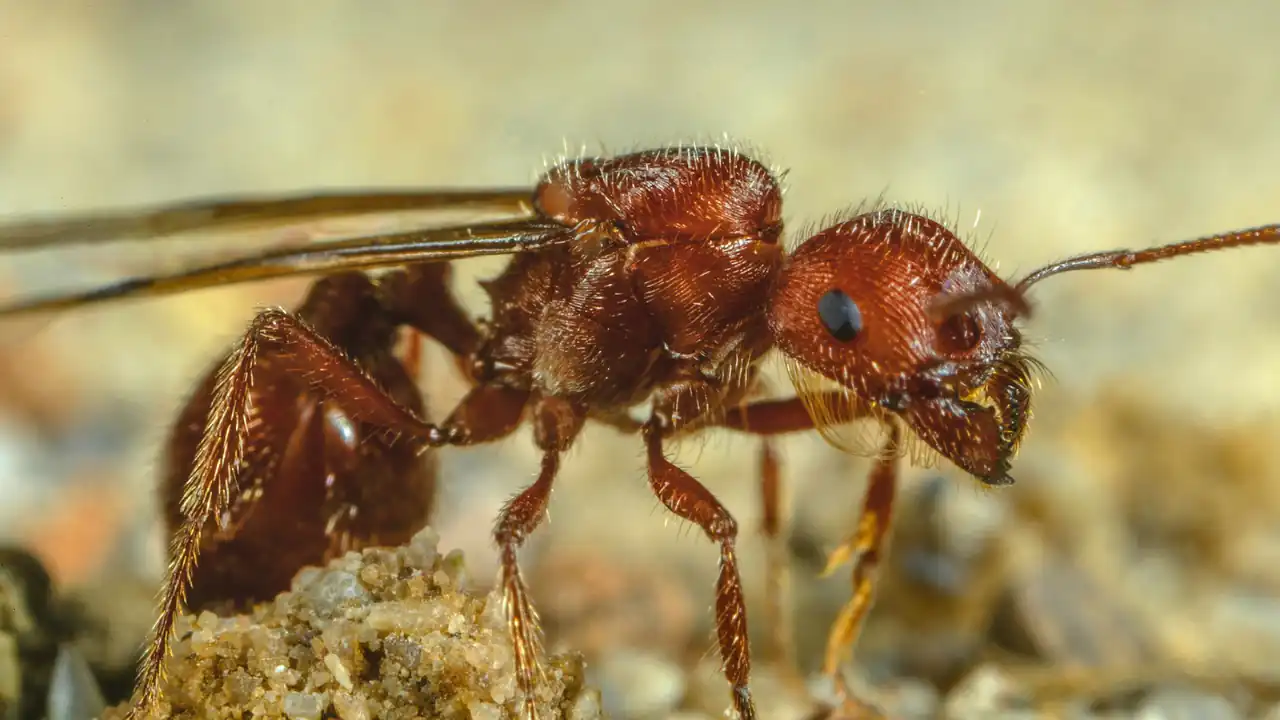
Harvester ants are the ants that look like they have a job and take it seriously. They’re generally larger than the little sugar ants you see in kitchens, with coloration that varies from reddish or reddish-brown to darker shades depending on the species. There are about 22 species in the United States, according to University of Nevada, Reno Extension, and they’re most common in the dry, open country of the West and Southwest. If your yard gets a lot of sun and has sandy or hard-packed soil with little shade, you’re in harvester ant territory.
The name tells you what they eat. Harvesters gather seeds, haul them underground, and stash them in storage chambers like tiny grain silos. They’ll grab a dead insect now and then, but seeds are the main course. That one fact matters more than anything else in this article, because it changes how you treat them. Ants that love sweets will ignore plenty of baits that harvesters carry off in a heartbeat, and the opposite is true too. The syrupy bait that clears out your kitchen ants usually does very little out in the lawn.
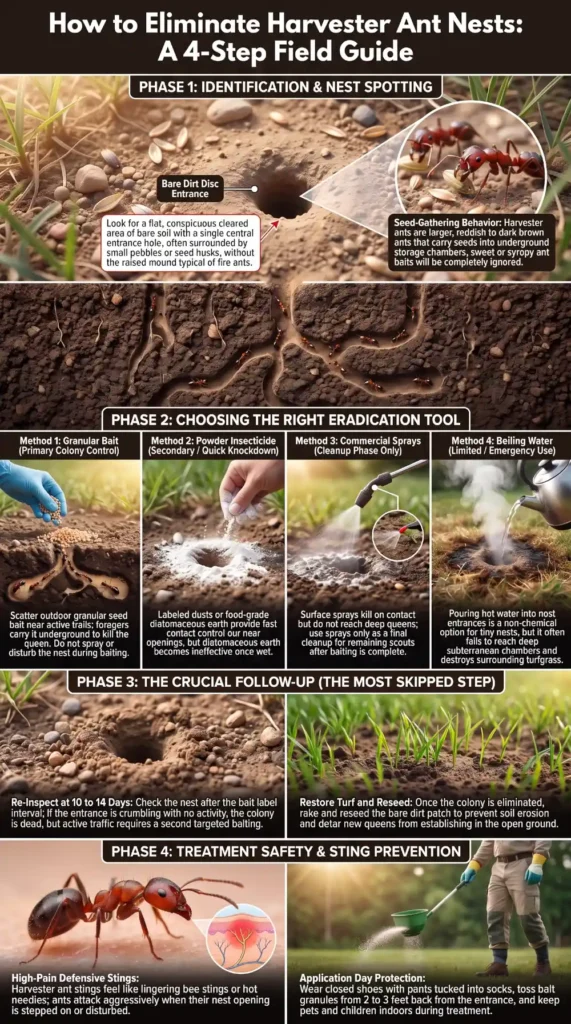
The nest usually appears as a conspicuous bare patch of soil with a central entrance, sometimes surrounded by small pebbles, seed husks, or a low soil rim. Harvester ants clear vegetation around the entrance, making the nest easier to spot.
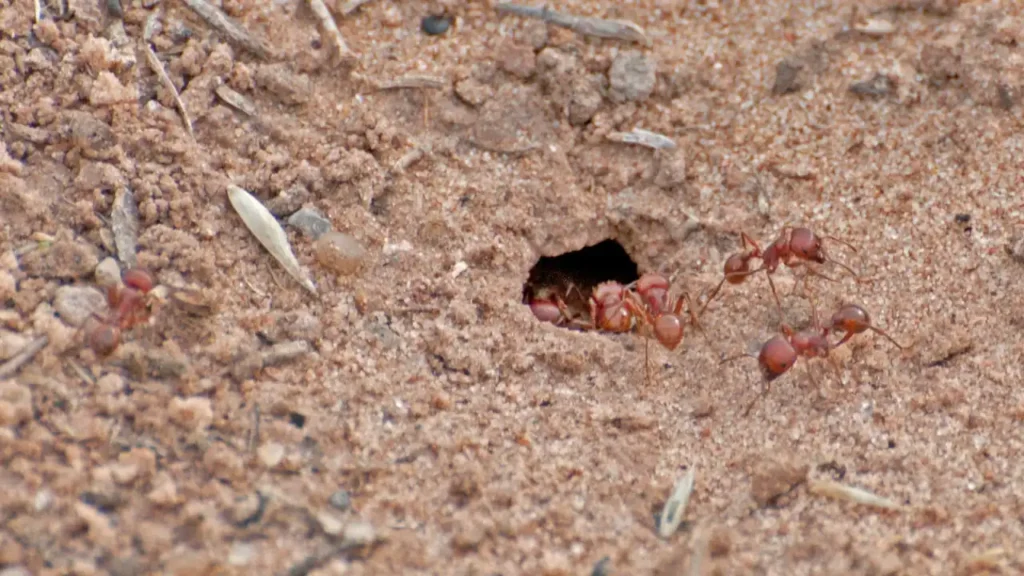
Harvester ants are often confused with fire ants. Harvester nests are typically open and cleared rather than the raised, mound-like nests associated with fire ants, and the ants are generally larger.
The challenge is underground. Established nests can extend well below the surface, so killing the workers you see does not necessarily eliminate the colony. That is why colony-directed control, rather than surface knockdown alone, matters.
Quick Tip: Before you buy anything, watch the nest for five minutes on a warm morning. If ants are carrying seeds or husks in and out of one central hole, you’ve got harvesters, and you want a granular bait made for lawn ants, not a sugary one. If you’re not sure, send a clear photo to your county extension office. They’ll usually identify it for free.
Make Sure You Have Harvester Ants
Before treating, confirm the identification. Look for relatively large reddish or reddish-brown ants working from a conspicuous nest entrance surrounded by cleared soil. Appearance varies by species and region, so don’t rely on the bare dirt patch alone.
If the ants are small, black, or moving in dense trails toward food, stop and identify them before applying bait. A clear close-up photo of the ant and the nest can help narrow down the identification.
Is It Important To Keep Them Under Control?
Harvester ants do some good. Their digging can loosen and aerate soil, while their foraging moves seeds through the landscape. On larger properties, that can be a perfectly normal part of the local ecosystem rather than a pest problem that automatically needs treatment. Birds and lizards also feed on ants, so these colonies have a role in the yard ecosystem. If you’re curious about what eats ants, natural predators are one reason these insects remain part of the local food chain.
It becomes a problem when the nest sits somewhere you actually live. Right beside the patio, near the kids’ play area, next to the dog’s favorite napping spot, along the walkway you use every day. Because the ants strip the plants around their entrance, even one nest leaves a dead patch in your lawn. Several nests turn a nice yard into a patchwork of bare dirt, and bare dirt invites weeds and erosion. And then there’s the sting, which I’ll get to in a minute.
The other reason to act early is plain math. A small nest can become a much larger colony as it matures, which is why repeated activity across the same yard is more meaningful than the number of ants you see on any single day.
Established colonies can persist for years and are harder to deal with than a small, localized nest, so acting when the problem is actually affecting your yard makes sense. Waiting never makes it easier.
So here’s the rule I give homeowners. Leave a lone nest alone if it’s far from where people and pets go. Treat it if it’s in your living space, if anyone’s been stung, or if you notice a second and third nest showing up. Once they start multiplying, you’re no longer dealing with one colony’s appetite. You’re dealing with a yard they’ve decided to move into.
How To Get Rid Of Harvester Ants
The main mistake is treating only the ants you can see. For established nests, the goal is to get control beyond the surface workers, which is why bait is usually the first method worth considering.
These four methods have different jobs. Bait is the main colony-control option; powders and sprays provide contact control; boiling water is a limited option for very small nests.
1. Bait
If you only do one thing, start with a properly labeled granular bait. Because harvester ants collect seeds, the bait must be attractive to the species you’re treating—don’t assume a sweet liquid bait made for household ants will work.
If you’re wondering how to kill harvester ants rather than simply knock down the workers you can see, the goal is to get active foragers to take an attractive bait back to the colony.
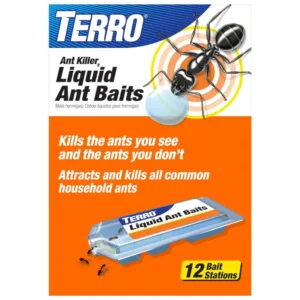
For an outdoor harvester-ant nest, a properly labeled harvester ant bait is usually a better starting point than the liquid bait stations commonly used for indoor ants. The important distinction is not the word “station” or “trap,” but whether the product is labeled for outdoor ants and whether the harvester ants will actually accept it.
Skip sweet liquid bait stations unless the product is specifically appropriate for the ant you’re treating. Harvester ants are seed collectors, so a sugary bait designed for other household ants may not be attractive to them.
One practical trick is to watch whether the ants actually accept the bait. Put a very small amount near an active trail and watch from a distance. If workers pick it up and carry it toward the nest, that’s a good sign. If they walk around it or ignore it, don’t keep dumping more product in the same spot. The bait isn’t doing its job if the ants won’t take it.
Apply bait when ants are actively foraging and follow the product label for placement and amount. Don’t pile it up or apply it immediately before rain or irrigation.
Don’t spray, rake, or disturb the nest immediately after baiting. You need live foragers to carry the bait back into the colony. Give the product the time specified on its label and look for a sustained decline in activity rather than expecting the nest to disappear within hours.
2. Powder Insecticide
Powder is useful for speed and as a backup. It won’t match bait for colony control, but a properly labeled insecticide dust can provide quick contact control when used according to the product label.
You’ve got two different categories here, and they shouldn’t be treated as interchangeable. Food-grade diatomaceous earth is not automatically a pesticide simply because it can kill insects. If you use a pesticide product, use one that is registered and labeled for the intended pest and application site.
Diatomaceous earth works only when the material stays dry and contacts the insect. It is not a colony-ending treatment by itself. A thin application around active areas may kill exposed workers, but rain, irrigation, and heavy dew can make it ineffective. Avoid creating airborne dust, and follow the product’s safety directions.
The other kind is a labeled insecticide dust. Some labeled insecticide dusts can be applied to nest openings, but the exact application method varies by product. Don’t assume that more dust means better penetration. Apply only the amount and in the manner permitted by the label. The objective is to treat the nest safely and effectively, not to fill the entrance with powder.
Powder is most useful for quick knockdown near high-traffic areas or as a targeted secondary treatment. Don’t heavily dust an active nest immediately before baiting, because you want foragers alive long enough to carry the bait home.
If you’re using bait for colony control, don’t automatically add dust after a fixed number of days. Let the bait work according to its label, then reassess the nest. If additional treatment is appropriate, use a labeled dust according to its directions and avoid interfering with any bait that is still being accepted.
3. Commercial Sprays
Liquid ant killers from the store are the tool most people reach for first, and I get it. They’re easy, and you see dead ants right away. The problem is that sprays mostly kill what they touch. They’re surface killers, and the queen is several feet below that surface.
That doesn’t make them useless. I treat a spray as cleanup. After the bait has done its job and the colony is mostly gone, a spray handles the stragglers and the leftover scouts.
If you go this route, choose a product labeled for outdoor ants and for the exact site you’re treating. Mix and apply it exactly as the label says.
Don’t assume midday is automatically the best time. The right timing depends on the product, weather, temperature, and ant activity. More importantly, don’t spray an active foraging area immediately before or after putting out bait unless the bait’s label specifically allows that combination. You don’t want to kill the workers you’re relying on to carry the bait into the colony.
One warning. Don’t spray around a bait you’ve already put down, and don’t spray as your opening move. Knocking out foragers early can scatter the survivors instead of finishing the colony, and then you’re chasing ants across the yard.
4. Boiling Water
Boiling water is the old-school fix, and it can kill ants that it actually contacts. The problem is that an established harvester-ant nest can extend well below the surface, so there is no reliable way to know that hot water has reached the colony’s critical chambers. It can also kill grass, scorch nearby plants, damage some surfaces, and create a serious burn hazard.
For those reasons, I consider boiling water a limited option rather than a primary treatment. It makes the most sense only for very small nests in areas where vegetation won’t be damaged and where you can safely control where the water goes.
If you try it, pour the hot water slowly into the entrance while keeping children, pets, and yourself well clear of the area. Wear closed shoes and long pants, carry the pot with oven mitts, and keep kids and pets far away. A kettle with a spout is much safer than a stockpot. A spilled pot of boiling water can cause a serious burn, so don’t let the convenience of this method make you underestimate the hazard.
The Step Most People Skip
Now for the piece I promised. After you treat the nest, you wait, and then you check.
Most people treat once, see fewer ants, and walk away. Two or three weeks later a few survivors have started rebuilding, or a young queen from a nearby colony has moved in, and the whole problem is back. They decide the product didn’t work. It did work. It just wasn’t followed up.
Here’s what I do and what I tell every homeowner to do. Check the nest after the treatment interval specified on the bait label. As a practical rule, checking around ten to fourteen days is reasonable for many bait treatments, but don’t treat that as a universal deadline. Weather, bait formulation, colony size, and ant activity can all change the timeline.
If you see no traffic and the entrance hole is crumbling or filled in, you’re done. If you still see substantial activity, first check whether the ants accepted the bait and whether weather or irrigation removed it. If the product label permits reapplication, a second treatment may be appropriate. Some colonies are big enough to need two. Then check again a couple of weeks after that.
If activity is still strong, don’t automatically assume the first treatment failed. Check three things first: Did the ants actually accept the bait? Did rain or irrigation remove it? And are you treating the correct nest?
Harvester ants can forage surprisingly far from the nest, so a trail in one part of the yard does not always mean the nest entrance is directly beside it. Follow workers when practical and look for the actual entrance before treating again.
Once the nest is dead, rake and reseed the bare patch if practical. Restoring vegetation removes the conspicuous cleared patch and helps keep the yard from becoming an easy place for another colony to establish.
It isn’t a guarantee. Harvester ants naturally choose suitable open ground, and a healthy lawn won’t stop every new colony. The goal is to remove one of the conditions that made the old nest easy to establish and easy to spot.
Can They Sting Or Bite?
Yes, and they mean it. Harvester ants have one of the more painful stings you’ll get from an ant, especially when their nest is disturbed. The pain feels like a hot needle that spreads, and many people compare it to a bee sting that lingers for hours.
Here’s the part that calms most people down. These ants aren’t out hunting humans. They sting when you step on the nest, kneel in it, kick it, or dig it up. Kids who flop down in the grass near a nest and barefoot dogs are the usual victims. Leave the nest alone and the ants generally leave you alone.
Treatment day is when you’re most at risk, because you’re standing right at the door of the colony.
If you do get stung, move away from the nest first, since other ants will join in. Brush off any ants still on you, wash the spot with soap and water, and put a cold pack on it for ten to fifteen minutes. An over-the-counter antihistamine or hydrocortisone cream helps with swelling and itching. Serious allergic reactions are rare, but they’re real. Swelling of the face or lips, trouble breathing, dizziness, or hives that spread across the body mean you call emergency services right away. Several stings at once, especially on a small child or a pet, are worth a call to a doctor or vet as well.
Quick Tip: Never treat a nest in sandals or shorts. Wear closed shoes, tuck your pants into your socks, and keep kids and pets indoors until the bait is down. Toss the granules from a couple of feet back, instead of crouching right at the hole, and you’ll avoid most treatment-day stings.
The Likelihood Of Them Infesting Your Home
Low, and that’s good news. Harvester ants are outdoor ants. They want open ground to dig deep nests and a steady supply of seeds, and your kitchen has neither. They don’t follow the crumb-and-sugar trails that make other ants such a nuisance indoors. Real indoor colonies are very rare.
Still, a stray scout can wander in. It usually happens when a nest sits close to the foundation and the ants find a gap under a door, around a window frame, or through a crack in the wall. The other common reason is stored seed. Bird seed, grass seed, and pet food in an open bag in the garage or on a porch will draw harvesters like a grocery store. If you’re finding a few ants inside, look there first.
Also Read:
A couple of scouts isn’t an infestation, but it’s a message. It tells you the colony outside is big enough, or hungry enough, to send workers farther than normal. Treat the outdoor nest using the steps above, seal the gaps along doors and windows, and store seed in lidded bins. Also double-check that those ants really are harvesters, because many other ants get into homes for different reasons.
When Should I Call A Professional?
Call a pest professional when the problem is bigger than one easy-to-reach nest or when you’ve already made a reasonable treatment attempt and aren’t getting control.
Good reasons include multiple active nests, nests immediately beside a frequently used patio or play area, repeated activity after properly applied bait, uncertainty about which ant species you’re dealing with, or a location where treating the nest yourself creates a safety problem.
I’d also get professional help if someone in the household has had a serious reaction to a sting. In that situation, the priority is reducing the chance of another encounter rather than experimenting with different DIY treatments.
A professional can also help when the nest entrance isn’t obvious. Harvester ants may forage well away from the colony, and treating the wrong end of a trail is an easy way to waste time and product.
Conclusion
Harvester ants are usually an outdoor problem, and a single nest in an unused part of the yard doesn’t always need treatment. When a nest is near people or pets, or multiple nests are spreading through the yard, control makes more sense.
Start with a properly labeled granular bait that the ants accept, and give it time to work. Use powders or sprays for targeted contact control when appropriate, and treat boiling water as a limited option rather than a primary solution.
Most importantly, don’t stop after the first application. Check the nest after the product’s recommended treatment interval and reassess before applying more. That’s the follow-up step that turns a quick knockdown into a more complete control strategy.