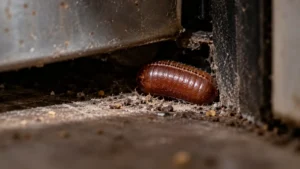
Found a little brown capsule behind your fridge and wondering how to kill cockroach eggs before they hatch? That capsule is an ootheca, and spraying it isn’t always enough. After 18+ years dealing with roaches, I’ve learned that the real trick is finding where the cases hide, physically removing the ones you can reach, and stopping the adults and nymphs from keeping the cycle going.
Also Read: What Attracts Roaches? 15 Surprising Culprits
Quick Answer
The most direct ways to eliminate accessible cockroach egg cases are physical removal, crushing, and appropriately applied heat, steam, or freezing. But killing the cases you can see isn’t enough. You also need to control newly hatched nymphs (baby cockroaches) and adult roaches, remove food and water sources, and find the hidden cases you haven’t spotted yet.
What Actually Kills Cockroach Eggs?
Then give the reader the distinction they’re looking for:
What Cockroach Eggs Look Like and Why They’re So Hard to Kill
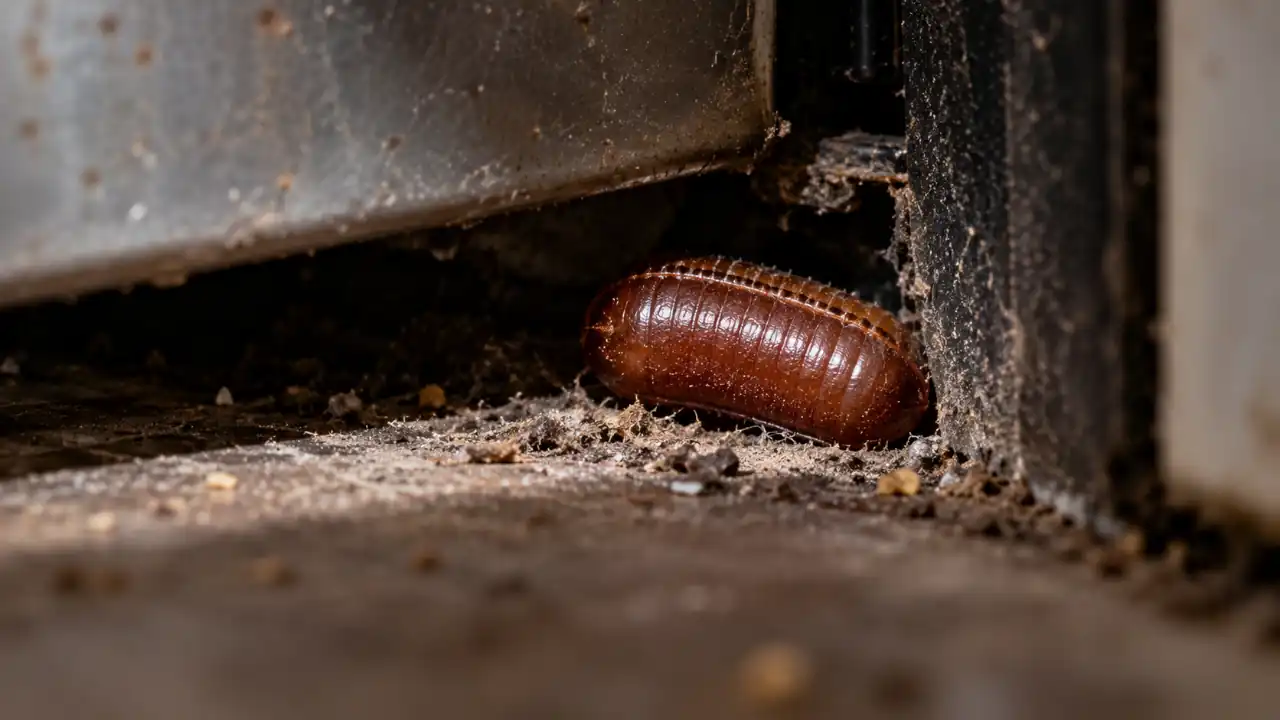
Cockroach eggs don’t lie around loose. They’re packed inside a capsule called an ootheca (say it “oh-oh-THEE-kah”). It’s a hard, bean-shaped case that can be brown, reddish-brown, or darker depending on the species. German cockroach cases are relatively small, while other species produce larger cases. If you find a case that’s split open and looks empty or pale, it may have already hatched.
Depending on the species, a cockroach egg case can contain multiple eggs—sometimes dozens—so finding one case doesn’t necessarily mean there’s only one or two roaches developing inside.
The exact appearance and development time depend on the species. The University of California Statewide Integrated Pest Management Program notes that cockroach egg cases can contain multiple eggs and that different species handle their egg cases differently. German cockroach females, for example, carry the ootheca for most of its development rather than simply leaving it behind immediately. If you’re not sure which type you’re dealing with, this guide to German cockroaches vs. American roaches explains the differences that matter in a home infestation.
The case is the reason ordinary sprays often disappoint. An ootheca protects the developing eggs from drying out and from many treatments applied to the outside surface. A pesticide sprayed onto the case isn’t automatically going to penetrate it and kill everything inside.
That’s why I wouldn’t judge an egg treatment by whether the outside of the case looks wet or coated. If you want to physically eliminate a case, remove it, crush it, vacuum it, or use a treatment specifically capable of killing the eggs under the conditions on its label. For the rest of the infestation, concentrate on the nymphs, females, food, water, and hiding places that keep the cycle going.
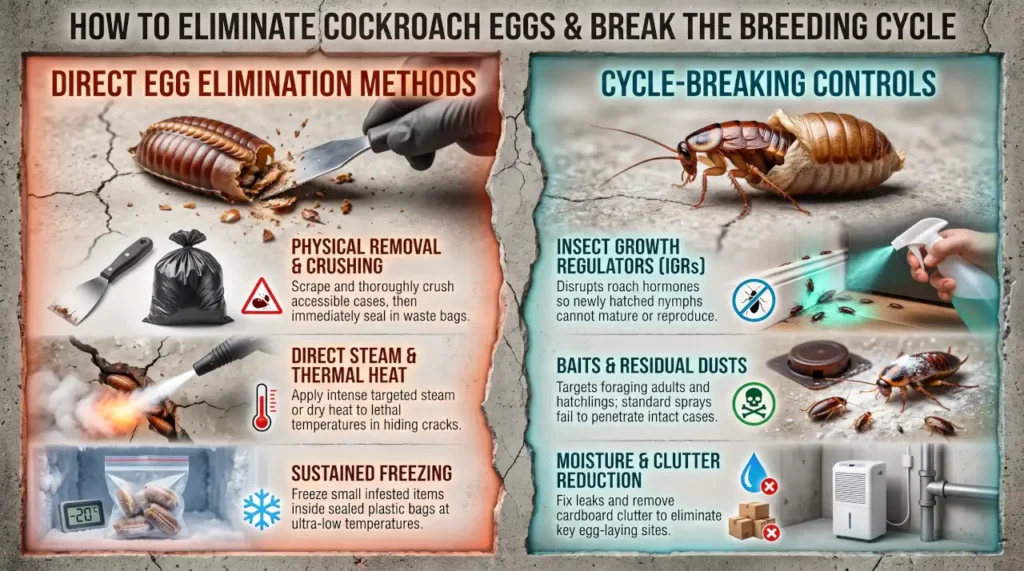
Here’s the important distinction: only some methods physically remove or kill the eggs inside a case. Crushing removes the case, while properly applied heat, steam, or cold can kill eggs under the right conditions. Baits, IGRs, dusts, and residual insecticides are mainly for the roaches that hatch or the adults producing new cases.
Where Do Cockroaches Lay Eggs? The Spots You’re Missing
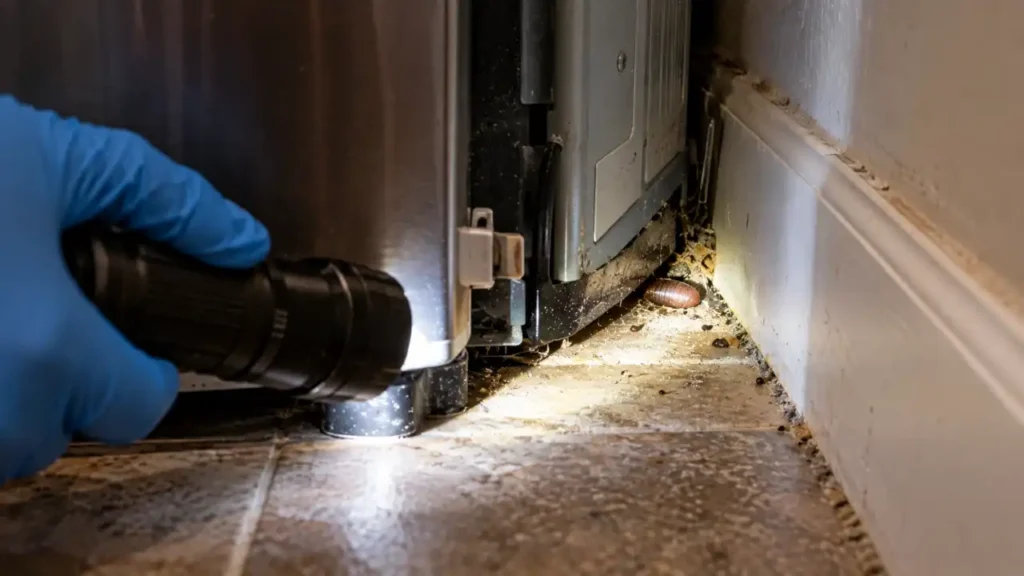
Most people check under the kitchen sink and behind the fridge, but where cockroaches lay their eggs can be much less obvious. Egg cases can be tucked into surprisingly small, dark spaces, so grab a flashlight and check these spots:
Also look for dark fecal specks, shed skins, and live roaches. Cockroach droppings can be an especially useful sign because they can help you identify where the infestation is concentrated, even when you don’t find an egg case.
12 Ways to Kill Cockroach Eggs and Break the Breeding Cycle
Cockroach egg cases are protected from many treatments, so the most effective approach depends on whether you can reach the case, where it’s hiding, and whether you also need to control the roaches producing new egg cases.
1. Physical Removal and Crushing
This is the simplest method when you can actually reach the egg case. Wear disposable gloves, remove the case with a tissue or tool, and crush it thoroughly before sealing the waste in a bag.
If it’s attached to a surface, scrape it loose before crushing it. Don’t pry into wall cavities, electrical components, or appliances just to reach one. For inaccessible cases, vacuuming or another appropriate treatment makes more sense.
The catch is that you only remove the cases you find. Physical removal is useful, but it won’t solve an infestation by itself.
2. Heat Treatment Application
Heat can kill cockroaches and their egg cases, but temperature alone isn’t enough. What matters is how hot the actual infested material or hiding space becomes and how long it stays there.
For small items that can safely tolerate heat, a clothes dryer can be useful. Follow the item’s care instructions and use an appropriate high-temperature cycle. Don’t put plastics, electronics, adhesives, or other heat-sensitive items in a dryer simply because you suspect roaches.
Whole-room heat treatment is different. Professional technicians use specialized heaters, fans, and temperature monitoring equipment to bring the treatment area to lethal temperatures while checking cooler locations where roaches may be hiding.
Don’t try to reproduce professional structural heat treatment with space heaters. Closing up a room and running household heaters unattended can create a serious fire hazard, and heating the room air doesn’t prove that the hidden areas have reached a lethal temperature.
For a whole-home infestation, heat is something to discuss with a licensed pest professional rather than a DIY temperature experiment.
3. Steam Cleaning Method
Steam is my favorite DIY tool for egg cases, because it hits the exact places where cases hide and you can see the result right away. Steam can kill cockroach eggs when sufficient heat reaches the egg case, making it useful for accessible cracks, seams, and crevices.
A household steamer can be useful on accessible cracks and crevices, but don’t rely on a stopwatch alone. Steam temperature drops as it travels away from the nozzle, and the amount of heat reaching an egg case depends on the equipment, distance, surface, and exposure time.
Move the nozzle slowly enough to heat the target area rather than quickly passing over it. Follow the steamer manufacturer’s instructions and avoid using steam on electrical outlets, energized equipment, electronics, delicate finishes, or materials that can be damaged by heat or moisture.
Steam is best treated as a targeted physical-control tool. It can be especially useful for accessible cracks, seams, and other areas where you can safely direct the heat.
4. Freezing and Cold Exposure
Freezing can work on infested small items, but the entire item needs to reach a sufficiently low temperature and remain there long enough. A freezer that feels cold isn’t automatically proof that the center of the item has reached the temperature needed to kill every life stage.
For small, non-food items, seal the item in a plastic bag before moving it into the freezer. This helps contain insects and prevents condensation from damaging the item. Use a freezer that reliably reaches the temperature required by the treatment guidance rather than relying on an estimate.
Freezing is most practical for small movable items. It isn’t a realistic way to treat eggs hidden inside walls, cabinets, or an entire home.
5. Diatomaceous Earth Application
Diatomaceous earth (DE) does not penetrate a cockroach egg case and kill the developing eggs inside. Its value is after the nymphs hatch, when insects crossing a properly treated dry surface can be affected by the abrasive and desiccating action of the dust.
Don’t assume that a product sold as “food grade” is automatically appropriate for pest control. Use only a pesticide product that is legally labeled for the intended pest and application, and follow its label directions.
The key with dusts is application. More isn’t better. A heavy layer can be avoided by insects, while an appropriately applied treatment in a protected crack or void has a better chance of contacting them. Keep dust away from food, food-contact surfaces, children’s play areas, and places where pets can disturb it. Avoid creating airborne dust while applying it.
If you have a moisture problem under a sink, fix the leak first. Dust products generally perform poorly when they become wet or clumped.
6. Boric Acid Treatment
Boric acid is another treatment that works on cockroaches after they contact and ingest it. It does not reliably penetrate an intact egg case, so don’t count it as an egg-killing treatment.
As with other dusts, the application has to be appropriate for the product label and the location. A light, properly placed application in a protected crack or void is preferable to piles of powder scattered around the room. Keep it away from food, food-preparation surfaces, children, and pets, and use only products labeled for cockroach control.
Safety matters here more than with DE. Boric acid is toxic if swallowed, and pets and small children are the big worry. Only put it in spots they can’t reach, like behind heavy appliances or inside wall voids, and never on countertops, food prep areas, or anywhere near dishes. Read the label and follow it.
7. Insect Growth Regulators (IGRs)
IGRs can be a useful tool for disrupting the cockroach breeding cycle, particularly when they’re combined with methods that reduce the active adult population. IGRs don’t kill adult roaches quickly, and they won’t crack open an egg case. What they do is mess with the roach’s hormones so its offspring can’t grow up properly.
Nymphs exposed to an IGR can have their normal development disrupted, which can reduce the number of insects that successfully mature and reproduce. The exact effect depends on the active ingredient and product formulation, so don’t assume every IGR works in exactly the same way.
IGRs are not a substitute for killing the roaches that are already active. They work more slowly than many insecticides and are best viewed as one part of an integrated control program. Follow the product label for placement, application rate, and safety precautions.
The tradeoff is speed. IGRs work over weeks and months, not hours. If you only use an IGR, you’ll still be seeing roaches for a while, and that frustrates people into thinking it isn’t working. So pair it with something fast, like gel bait, that reduces the adults now while the IGR shuts down the next generation.
Use the product exactly as the label says, and place discs or apply sprays in the areas where roaches travel and harbor, such as under sinks, behind appliances, and inside cabinets. Skip areas where you’re already using repellent sprays, because they can push roaches away from the IGR. And be patient. IGRs work slowly, so judge them by the trend in activity over time rather than expecting an immediate drop in roaches.
8. Residual Pesticide Sprays
Don’t assume a residual spray has killed the eggs just because you sprayed the outside of the case. Their more useful role is controlling nymphs and adult roaches that contact treated surfaces after hatching.
German cockroach populations can also show resistance to some insecticides, including some pyrethroids, so performance can vary between infestations. Use only products labeled for cockroach control and apply them exactly where the label permits.
So what are residual sprays good for? They’re useful for what happens after hatching. A properly labeled residual product can remain active after application, so nymphs that crawl across treated cracks, baseboards, and voids may pick up the pesticide and die. That makes it a real part of a full plan, but it’s a cleanup tool for hatchlings, not an egg killer.
Some sprays can also interfere with baiting if they repel roaches away from treated areas. That’s one reason I prefer a targeted approach rather than coating every baseboard and floor with insecticide.
If you use a pesticide, choose a product specifically labeled for cockroach control and follow the label for where and how it can be applied. Avoid treating countertops, food-contact surfaces, children’s play areas, or other locations where the label does not permit application.
Also, please skip bug bombs. Foggers scatter roaches deeper into walls, leave residue on your kitchen surfaces, and rarely reach the cases hidden inside cabinets and gaps. They cause more headaches than they fix.
9. Professional Fumigation
Fumigation is the big gun, and it comes up a lot when people search for how to kill cockroach eggs. Let me explain what it really means, because there’s plenty of confusion.
True structural fumigation is a specialized process involving a registered fumigant and strict preparation, exclusion, monitoring, and re-entry procedures. It is not the same thing as using a consumer total-release fogger.
For ordinary cockroach infestations, ask the pest professional what treatment they are proposing and why. Depending on the species and circumstances, an integrated program may involve inspection, sanitation, exclusion, baiting, insect growth regulators, targeted insecticide applications, or dusts in appropriate voids.
10. Vacuum Removal Technique
A vacuum is one of the most underrated tools in roach control. It pulls out egg cases, live roaches, nymphs, and droppings without adding any chemicals to your home.
Here’s how I do it. Use the crevice attachment and go slowly along baseboards, inside cabinets, under the edges of appliances, and along cracks. If you can safely crush a visible case first, do that, then vacuum up the pieces. If not, vacuum it and move quickly to the next step.
Don’t leave the vacuum sitting indoors after you’ve collected roaches or egg cases. Empty a bagless vacuum outdoors into a sealed waste bag, or remove and seal a disposable vacuum bag according to the vacuum manufacturer’s instructions. Clean the collection container as appropriate for the machine.
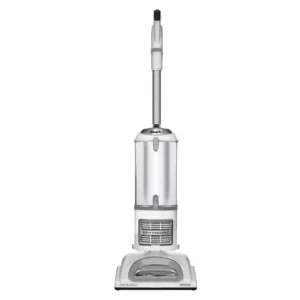
Vacuuming works best as a regular habit, not a one-time event. Do the main spots once a week for the first month, and you’ll pick up cases you missed the first time, plus any new nymphs.
11. Sanitation and Habitat Modification
You can kill every egg case in your kitchen today and still have a new batch next month if the conditions are the same. Sanitation isn’t the flashy part of pest control, but it’s what decides whether your treatment sticks.
Start with water. Fix leaky pipes and dripping faucets, wipe the sink dry at night, and dry the area under the sink. If you have a damp basement or bathroom, address the moisture source rather than simply trying to dry the entire house.
Next, take away the hiding places. Get rid of cardboard boxes, stacks of newspaper, and paper bags. Switch to plastic bins with lids for storage. Seal gaps around pipes, baseboards, and cabinets with caulk, so there are fewer cracks to tuck cases into.
Then deal with food. Keep dry goods in sealed containers, wash dishes before bed, and take out the trash regularly. If you’re still seeing roaches after dark, these steps to keep cockroaches away at night can help identify the nighttime habits keeping them active. Don’t forget pet food, which is often left out all night. Wipe the grease behind the stove, too, because roaches feed on it.
If you’re wondering what attracts roaches in the first place, there are plenty of everyday food, moisture, and clutter sources that homeowners overlook. Clean homes get roaches too, so don’t take it personally. But a tidy, dry, sealed-up home gives them far fewer reasons to stay and breed.
12. Targeted Breeding Control
Every new egg case comes from a female, so long-term control means reducing the number of reproductive adults rather than simply killing the nymphs you happen to see.
Gel bait can be an important part of that strategy. Place small amounts in areas where roaches are actively traveling and hiding, using only products labeled for cockroach control. Follow the product’s placement instructions rather than assuming that larger amounts will work better.
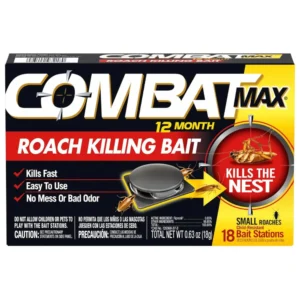
Bait works best when competing food sources are reduced and when other insecticides aren’t applied in a way that repels roaches away from the bait. Don’t assume every bait will work equally well against every population. If a properly placed bait is consistently ignored, the product, active ingredient, formulation, or local resistance/feeding behavior may be part of the problem.
If roaches consistently ignore a bait, don’t simply keep adding more. Check whether competing food is available, whether the bait has dried out, and whether another pesticide is repelling the roaches from the area.
If the problem continues, a different bait formulation or active ingredient may be appropriate. Follow the product label and, for persistent infestations, consider professional evaluation rather than repeatedly rotating products at random.
A Practical Approach: Combining Multiple Methods
No single method handles every stage of a cockroach infestation. A practical approach combines physical removal, population control, sanitation, and monitoring.
Start with inspection
Work through the hiding-spot checklist and use sticky traps to identify where activity is concentrated. Look for live roaches, droppings, shed skins, and egg cases rather than treating every room equally.
Remove what you can reach
Physically remove visible egg cases. Vacuum accessible cracks, cabinet edges, and appliance areas. Use steam only on surfaces that can safely tolerate heat and moisture.
Deal with the active population
Use appropriately labeled cockroach bait in areas of activity. An IGR may be useful as part of a longer-term program, depending on the product and infestation. Use dusts or residual insecticides only where the product label permits and where the application can be kept away from people and pets.
Remove food, water, and hiding opportunities
Repair leaks, dry wet areas, reduce unnecessary cardboard and paper storage, seal practical gaps, and keep food and pet food contained. These steps won’t kill an egg case by themselves, but they make the home less supportive of a growing population.
Monitor instead of guessing
Keep checking traps and previously active areas. If activity is declining, continue the program rather than stopping after the first few dead roaches. If new egg cases continue appearing, the infestation is still reproducing somewhere.
If activity remains substantial despite consistent treatment, or if the infestation involves multiple units, inaccessible wall voids, or areas you cannot safely treat, bring in a licensed pest professional.
When Should I Call a Professional?
Call a licensed pest professional if you keep finding fresh egg cases despite consistent treatment, see substantial daytime activity, or live in a multi-unit building where neighboring units may also be affected. A professional can identify the species, locate hidden activity, and determine which control methods make sense for the infestation.
It’s also worth getting professional help if roaches are coming from inaccessible wall voids, you’ve tried properly labeled treatments without seeing a clear decline, or pesticide use is difficult to manage safely around children or pets.
Final Thoughts
Cockroach eggs are tough, but they aren’t unbeatable. The shell is designed to defend against a lot of things, so the trick is to use the tools that remove or physically affect it, like crushing, heat, steam, cold, and vacuuming, and to go after everything else with baits, growth regulators, and cleanup. Most of the work is finding the cases in the first place, so take that inspection seriously and look beyond the two spots everybody checks.
Stay patient and keep monitoring. Cockroach control is usually a process rather than one dramatic afternoon of treatment. Follow every pesticide label, keep products away from children and pets, and don’t combine treatments unless the labels allow it.
Most importantly, don’t let one visible egg case—or even one live roach—convince you to spray everything in sight. If you’ve only seen one roach, finding out whether one cockroach means an infestation can help you decide how aggressively to inspect and monitor. Find the source of the activity, physically remove what you can, reduce food, water, and hiding places, and watch whether the infestation is actually declining.