If you just spotted little dark specks near your stove or along the baseboards and your stomach dropped, I get it. After eighteen years of crawling through kitchens, basements, and attics on pest calls, I can tell you that cockroach droppings are usually the first real clue homeowners notice, often before they ever see a live roach. Let’s walk through exactly what to look for and what to do next.
Also Read: How Many Legs Do Cockroaches Have? Creepy Truth
What Do Cockroach Droppings Look Like?
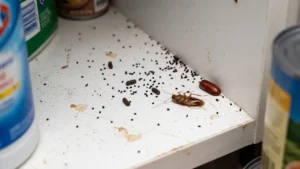
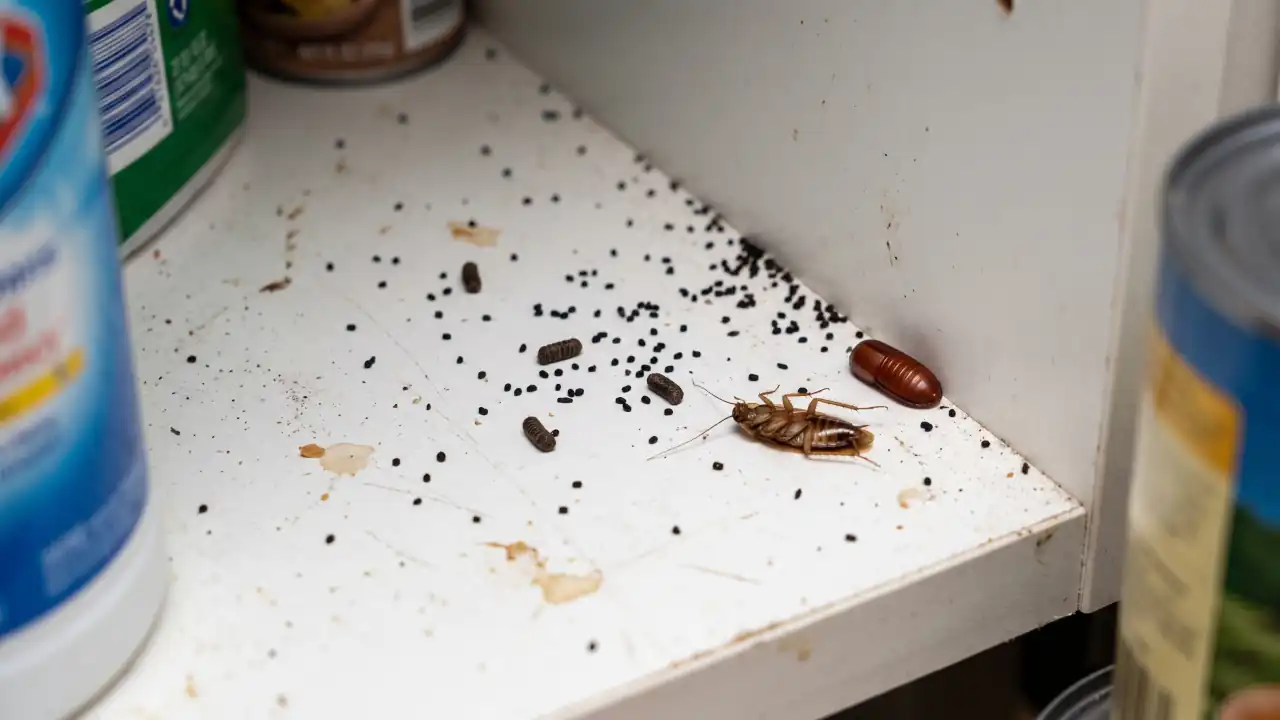
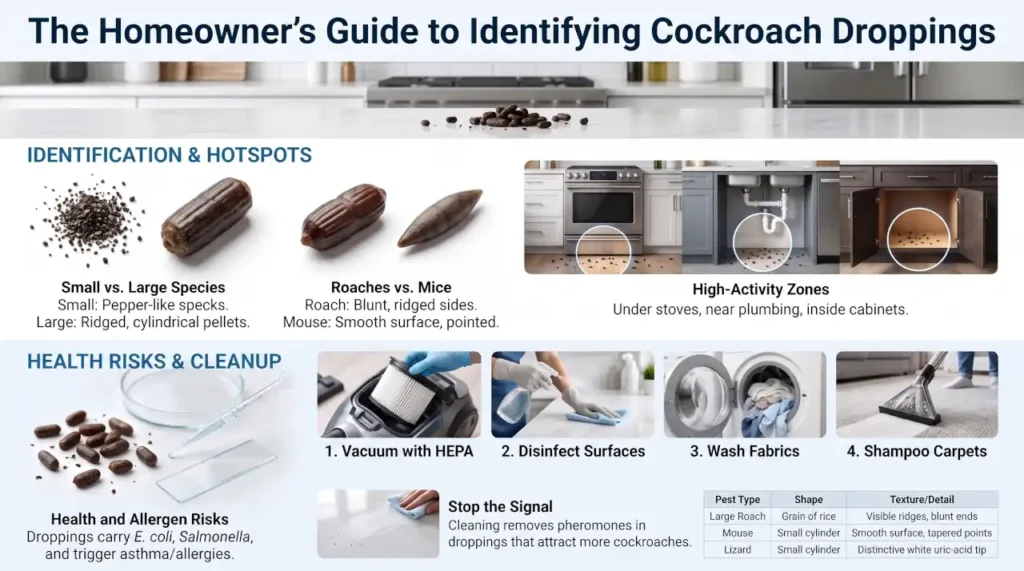
Cockroach droppings usually look like black pepper, coffee grounds, or tiny dark pellets depending on the species. Small roaches such as German cockroaches leave pepper-like specks, while larger species produce ridged cylindrical droppings. Because cockroach droppings can contain allergens and harmful bacteria, they should be cleaned promptly and treated as a sign that an active infestation may be nearby.
Dealing With a Cockroach Problem?
If you’re dealing with an active cockroach problem and DIY methods aren’t enough, you can speak with a local pest control provider about your options.
How to Identify Cockroach Droppings
Cockroaches are primarily nocturnal. They squeeze into your home through gaps you’d never notice, and they build up their numbers in the dark while you’re asleep. Most people don’t catch on until the population is already established, because roaches are experts at staying hidden. What gives them away almost every time is their droppings.
In the pest control world, we call cockroach waste “frass.” It’s a mix of solid pellets and smeared residue, and here’s a detail that surprises a lot of homeowners: Cockroaches conserve water by excreting most waste in their feces rather than producing liquid urine like mammals. So their feces is really the main physical trace they leave behind, aside from shed skins and egg cases.
So what does it actually look like? That depends on the size of the roach and the surface it’s crawling on. The species matters because different cockroaches produce noticeably different droppings. If you’re not sure which species you’re dealing with, comparing German cockroaches vs. American roaches can make identification much easier before you begin treatment. German cockroaches leave the tiny pepper-like frass most homeowners mistake for dirt, while larger species such as American and Oriental cockroaches produce more defined pellets that are much easier to identify during an inspection.
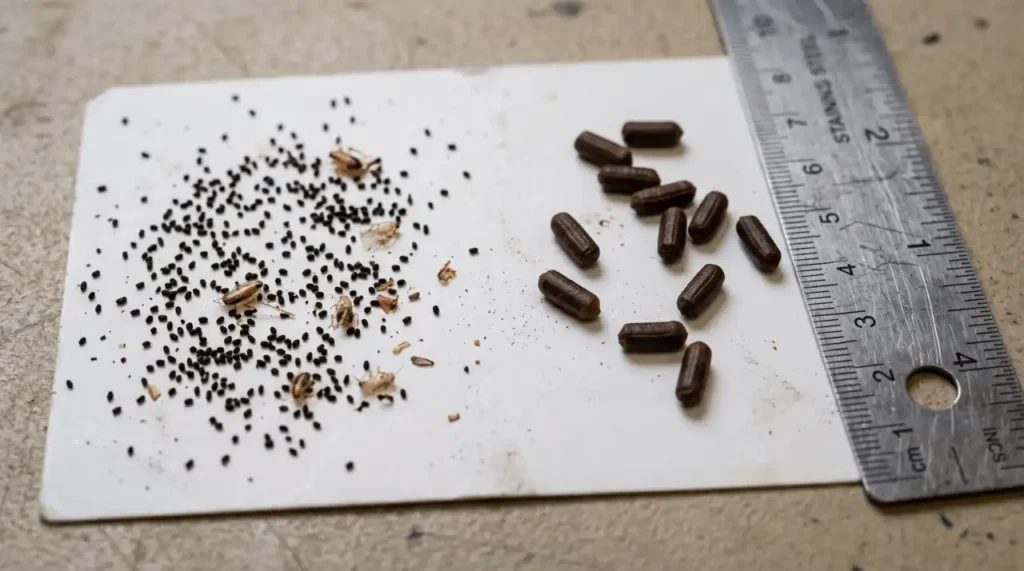
If you’re dealing with German cockroaches or brown-banded roaches, which are the two species I see most often in apartments and kitchens, the droppings are tiny and fine. On a hard surface like tile or countertop, they look almost exactly like ground black pepper or gritty coffee grounds. Color-wise, expect dark brown to nearly black. If the surface has some moisture on it, the droppings can smear into small dark streaks instead of staying as separate pellets.
These smaller droppings are genuinely hard to spot with the naked eye, especially early on. That’s exactly why people miss the signs for weeks. Once the population grows, though, you’ll start noticing clusters of dark specks in the same spots, sometimes so dense they look like someone flicked a paintbrush loaded with dark ink across the surface.
Quick Tip: Baby cockroaches produce droppings from the moment they hatch. Their droppings are so microscopic that you’ll rarely notice them unless dozens of nymphs have been using the same hiding spot for a while. If you see a fine dusting of dark grit in a crack or corner, don’t assume it’s just dirt.
Now, if you’re dealing with bigger species like American cockroaches (people often call these palmetto bugs) or Oriental cockroaches, the frass is a lot easier to identify. It’s larger, cylindrical, and shaped a bit like a grain of rice with rounded tips. Grab a magnifying glass and look closely—you’ll actually see faint ridges running along the sides of each piece. That ridged texture is one of the easiest ways to tell roach droppings apart from mouse droppings, which are usually smoother and more tapered at both ends.
One mistake I see fairly often is homeowners assuming the droppings are coffee grounds, pepper, or dirt tracked in from outside. If the specks keep appearing after cleaning, especially in the same location, they’re much more likely to be cockroach frass than ordinary household debris.
What Looks Like Cockroach Droppings but Isn’t?
Not every dark speck around your home is cockroach frass. Over the years, I’ve seen homeowners mistake everything from spilled coffee grounds to mouse droppings for roach waste, which can lead to unnecessary worry or, just as often, overlooking a real infestation.
Here are a few common lookalikes:
- Mouse droppings: Usually larger than cockroach droppings, smooth rather than ridged, and pointed at both ends. They also tend to be scattered along walls or travel routes instead of appearing as fine pepper-like specks.
- Termite frass: Drywood termite droppings are tiny pellets with a uniform shape and are often found in neat piles beneath small kick-out holes in wood. Unlike cockroach droppings, termite frass is usually light brown, tan, or beige rather than black.
- Ground black pepper or coffee grounds: These are among the most common false alarms I encounter. If the material keeps reappearing after you’ve cleaned it up, especially in hidden corners or beneath appliances, it’s worth taking a closer look.
- Lizard droppings: Lizard feces are typically dark but have a distinctive white tip made of uric acid, making them much easier to distinguish from cockroach frass.
A magnifying glass can often make identification much easier. If you’re still unsure, look for other signs such as egg cases, shed skins, or live cockroaches nearby.
Where to Check for Cockroach Droppings
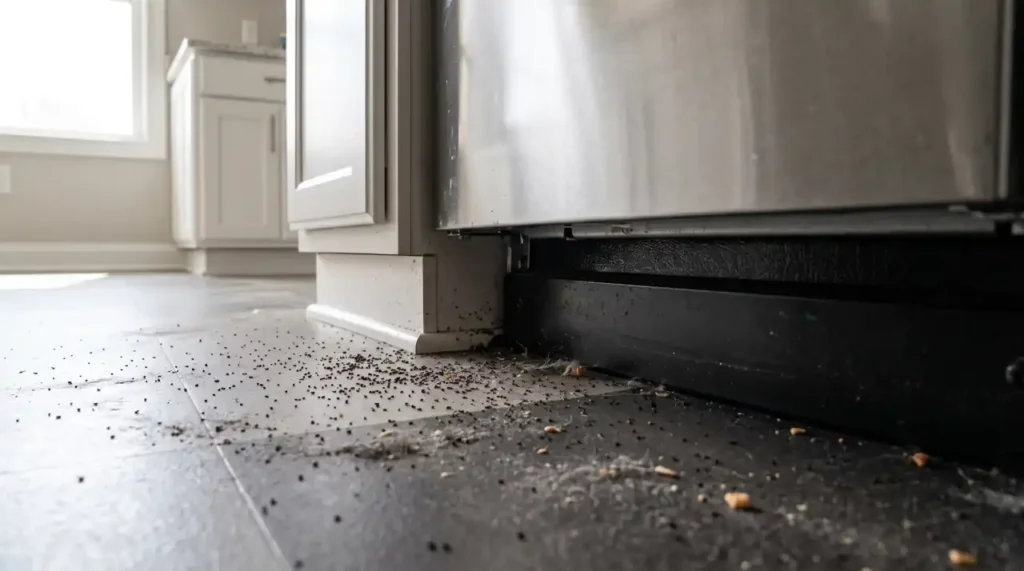
Roaches aren’t picky about where they relieve themselves. They’ll do it wherever they happen to be. But from years of doing inspections, I can tell you their droppings cluster in three general zones: near their hiding spots, in areas shielded from light, and anywhere close to food or moisture. Heavy accumulations of droppings often indicate a nearby harbourage or nesting area rather than random roach activity, so inspect surrounding cracks, voids, and cabinets carefully.
Hidden Nooks & Crannies
Roaches love tight spaces. Cracks in your baseboards, gaps around plumbing, the seam where your cabinet meets the wall, all of it is prime real estate for them. Check along the edges of the room first, especially corners and any structural gaps in the floor, wall, or ceiling. If a roach can squeeze through it, it’s probably using it as a highway, and highways come with pit stops.
Dark Areas
Cockroaches avoid light almost entirely, so look anywhere that stays dim most of the day. That includes underneath your fridge and stove, behind picture frames, on top of tall shelves, around window frames, and inside cabinets. In my experience, kitchen cupboards near the stove are one of the worst offenders because they’re dark, warm, and usually close to a food source too.
Food Sources
Roaches will eat almost anything organic, including crumbs, grease, cardboard, and even the glue in book bindings. That means droppings show up heavily in pantries, around the trash can, near pet food bowls, and inside any cabinet where food is stored. If dishes get left out overnight or crumbs sit on the counter, expect that spot to become a regular stop for them.
Around Water Sources
Water is just as important as food for cockroaches. Check beneath sinks, around dishwasher connections, under refrigerator drip pans, near water heaters, and around leaking pipes. Even small plumbing leaks can create the humid conditions that help cockroach populations thrive. Moisture is only part of what attracts cockroaches. Understanding what cockroaches hate can also help make these damp areas much less attractive to them over time.
Quick Tip: Don’t stop at the kitchen. Roaches will travel into bedrooms if there’s food residue anywhere nearby, so check mattress seams, toy bins, and even backpacks or lunch bags that get left around. I’ve found droppings in some pretty unexpected spots on inspections, including inside a kid’s stuffed animal that had been snacking crumbs stuck to it.
What Other Signs of Cockroaches Should You Look For?
Cockroach droppings are rarely the only sign of an infestation. During inspections, I also look for shed skins, egg cases (oothecae), smear marks on walls, a persistent musty odour, and live cockroaches hiding beneath appliances or inside cabinets. Finding several of these signs together usually confirms that the infestation is active and established.
If you hear unusual clicking, rustling, or chirping around walls or cabinets as well, learning what kind of noise cockroaches make can help you confirm whether roaches are active even when you rarely see them.
How To Get Rid of Cockroach Droppings
Finding droppings is your cue to act, not to panic. Here’s the process I recommend to every homeowner I work with.
Step 1: Vacuum
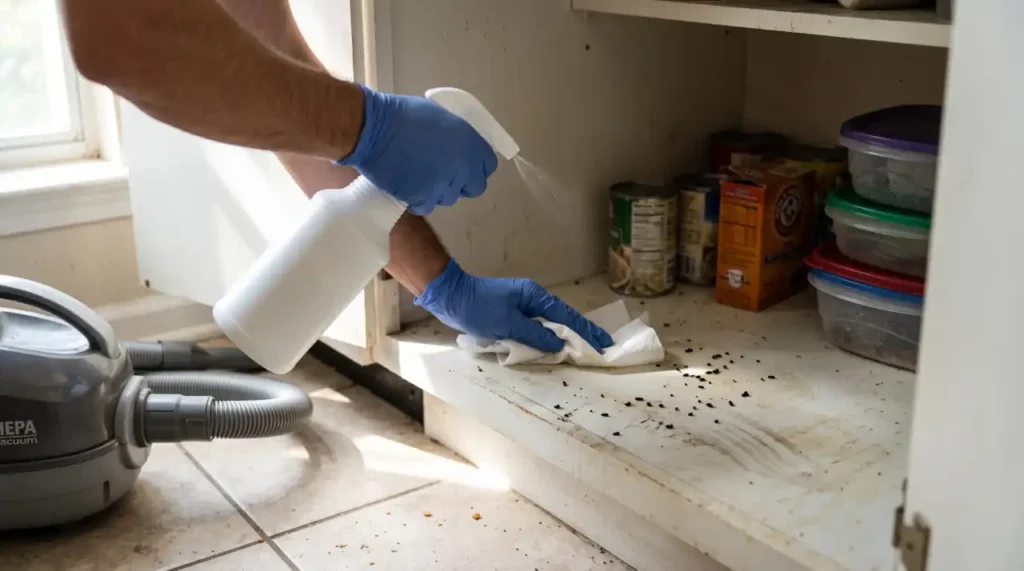
Start by vacuuming up any loose droppings. A vacuum with a HEPA filter is your best friend here because it traps the fine particles instead of just blowing them back into the air. Once you’re done, empty the canister into a sealed bag right away and toss it outside. If your vacuum has a washable canister, give it a rinse with hot, soapy water afterward.
Step 2: Disinfect
Next comes sanitizing. Before vacuuming or wiping large accumulations of droppings, lightly mist the area with a disinfectant or damp paper towel to reduce the amount of dust that becomes airborne. This is especially helpful if anyone in the home has asthma or allergies. I also recommend wearing disposable gloves and, if you’re cleaning a large amount of droppings, a well-fitting mask to reduce contact with dust and contaminated debris.
Step 3: Wash fabrics
Roach droppings can harbor bacteria, so treat the area like it needs a real cleaning, not just a wipe-down. On hard, non-porous surfaces, clean the area with an EPA-registered disinfectant according to the label directions. A diluted bleach solution may also be appropriate on bleach-safe surfaces, but avoid using bleach on materials that can be damaged by it. Proper disinfection helps eliminate bacteria while reducing the odors that can attract additional cockroaches.
Step 4: Clean Carpets and Upholstery
Soft surfaces take a little more effort. If you find droppings in carpet, vacuum thoroughly first since particles tend to settle deep into the fibers. Follow that with a carpet shampoo that has enzyme cleaners built in. Those enzymes are genuinely good at breaking down organic waste. Let it sit, then vacuum again once it’s dry. The same approach works for couch cushions and mattresses, just use a scrub brush to work the cleaner into the fabric.
Quick Tip: For anything washable like bedding, curtains, or clothing that’s been near an infestation, run a full hot-water cycle with a disinfecting detergent. Heat and the right detergent combination will handle what a quick rinse won’t.
What To Do After Finding Cockroach Droppings
Finding droppings tells you one important thing: cockroaches have been active in that area. Cleaning the frass is only the first step. To stop the problem from getting worse, I recommend following this checklist:
- Inspect nearby hiding places. Check inside cabinets, beneath appliances, around plumbing, and in nearby cracks or crevices for additional signs of activity.
- Estimate the extent of the problem. A few isolated droppings may indicate occasional activity, while large clusters in several rooms often point to an established infestation.
- Remove food and moisture sources. Wipe up crumbs, empty rubbish regularly, repair plumbing leaks, and avoid leaving pet food out overnight.
- Begin treatment promptly. If you’re tackling the problem yourself, use quality cockroach baits in the areas where activity is highest rather than relying on sprays alone.
- Monitor the area. Continue checking the same locations over the following weeks. If fresh droppings continue to appear despite treatment, it’s usually time to consider professional pest control.
Recommended Cockroach Bait (Editor’s Pick)
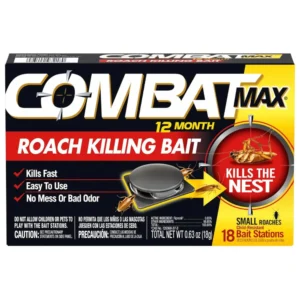
If you’ve confirmed cockroach activity, I recommend using a quality gel or bait station rather than relying on sprays alone. Combat Max 12-Month Roach Killing Bait is a solid option for light to moderate infestations because the bait is carried back to the nest, helping reduce the colony instead of just killing the roaches you see.
Does It Smell?
Yes, and if you’ve got a real infestation, you’ll notice it. In small amounts, roach droppings don’t put off much of an odor at all. But once a population grows, the smell becomes distinctly musty and oily, almost like a damp basement smell mixed with something faintly chemical.
Here’s the part that catches people off guard: that smell isn’t just unpleasant, it’s functional for the roaches. Frass carries pheromones that signal to other roaches that an area is safe to gather, feed, and breed in. It’s basically an open invitation. That’s part of why droppings tend to show up in dense clusters rather than scattered evenly through a home. Once a spot gets marked, more roaches follow.
In my experience, isolated droppings usually point to occasional activity, while heavy accumulations in several locations often suggest an established infestation rather than a single wandering cockroach.
Cleaning and disinfecting the area doesn’t just get rid of the smell for your sake. It removes those pheromone signals, which genuinely helps slow down further congregation in that spot.
Can It Make You Sick?
Short answer: yes. Cockroach droppings are more than an unpleasant mess—they can contribute to indoor air quality issues and expose people to bacteria and allergens if they’re left to accumulate.
Roach droppings are essentially a byproduct of everything a cockroach has eaten, which can include garbage, dead insects, and whatever bacteria was riding along on that food. Cockroaches can mechanically carry a wide range of bacteria picked up from unsanitary environments, including E. coli and salmonella, and their droppings can transfer that bacteria onto your counters, dishes, and food storage areas.
There’s also the allergy angle, which doesn’t get talked about enough. Proteins found in cockroach droppings, saliva, and shed skins are well-known indoor allergens. The U.S. Environmental Protection Agency notes that exposure to these allergens can trigger asthma attacks and allergic reactions, particularly in children and people with existing respiratory conditions. This is one of the biggest reasons I encourage homeowners not to ignore even a small amount of frass.
If droppings end up in your food storage or on food prep surfaces, it’s entirely possible to ingest small traces without realizing it. That can lead to stomach illness, and in more severe or prolonged exposure cases, more serious bacterial infections. This is why I always tell clients not to brush off a few specks of frass as a minor cosmetic issue. It’s a health issue.
Why You Should Look for Droppings Consistently
I recommend doing a quick walkthrough of the usual trouble spots at least once a month, even if you haven’t seen a live roach recently. Droppings tell you things a visual sighting alone won’t, like how long an area has been active and roughly how big the population might be.
Ignoring frass lets a few problems snowball. The bacteria and allergens don’t go away on their own, and the pheromones in the droppings keep attracting more roaches to that same location. What starts as a handful of droppings in one cabinet can turn into a much bigger colony spread across multiple rooms within weeks if conditions stay favorable.
Quick Tip: Keep a mental note of where you’ve found droppings before, and check those same spots first on every walkthrough. Roaches are creatures of habit, and they’ll often return to the same nooks again and again unless you seal them off or treat them directly.
Staying consistent with these checks gives you a real handle on the scope of the problem, which makes it a lot easier to decide whether DIY treatment is enough or whether it’s time to bring in a professional.
On service calls, it’s common for homeowners to focus only on the room where they first noticed droppings, but inspections often uncover additional activity in neighbouring cabinets or utility spaces. That’s why I recommend checking the entire home instead of stopping after finding one hotspot.
Preventing Cockroach Droppings from Returning
Cleaning droppings only removes the evidence of an infestation—not the insects causing it. To prevent new droppings from appearing, eliminate food and water sources, seal cracks around plumbing and baseboards, store pantry items in airtight containers, repair leaks, and reduce clutter around kitchens, laundry rooms, and utility spaces. Combining sanitation with targeted cockroach control is far more effective than relying on cleaning alone. Although you may come across home remedies online, mothballs aren’t an effective way to keep roaches away, and using them incorrectly can create unnecessary health risks.
Also Read: I Saw One Cockroach. Should I Be Worried?
When Should You Call a Professional?
If you continue finding fresh droppings after several weeks of careful cleaning, sanitation, and baiting, it’s usually a sign the infestation is larger than it appears. I also recommend contacting a licensed pest control professional if droppings are showing up in multiple rooms, you begin seeing cockroaches during the day, or anyone in the home has severe asthma or allergies that could be aggravated by continued exposure. If most of your sightings happen after dark rather than during the day, it’s also worth learning why cockroaches come out at night and what you can do to make your home less inviting.
Conclusion
Cockroach droppings aren’t just gross to look at, they’re one of the clearest warning signs you’ll get that roaches have made themselves at home. Once you know what to look for, whether it’s fine pepper-like specks from German roaches or larger ridged pellets from American cockroaches, you can catch an infestation early and deal with it before it spreads.
Clean up what you find, sanitize thoroughly, and make it a habit to check the usual hiding spots regularly. If the droppings keep coming back no matter what you do, that’s usually a sign the infestation has outgrown DIY methods and it’s time to bring in a licensed exterminator.
Acting on the first signs of droppings almost always leads to a faster, less expensive solution than waiting until you start seeing cockroaches during the day, which often indicates the infestation has grown significantly. Cockroaches are naturally nocturnal, so daytime activity often means hiding spaces are becoming overcrowded, although disturbances like cleaning or renovations can occasionally flush them out as well.
Frequently Asked Questions
Below are answers to some of the most common questions homeowners ask after finding cockroach droppings.