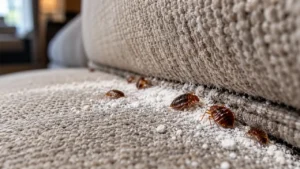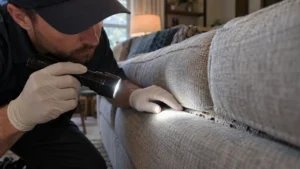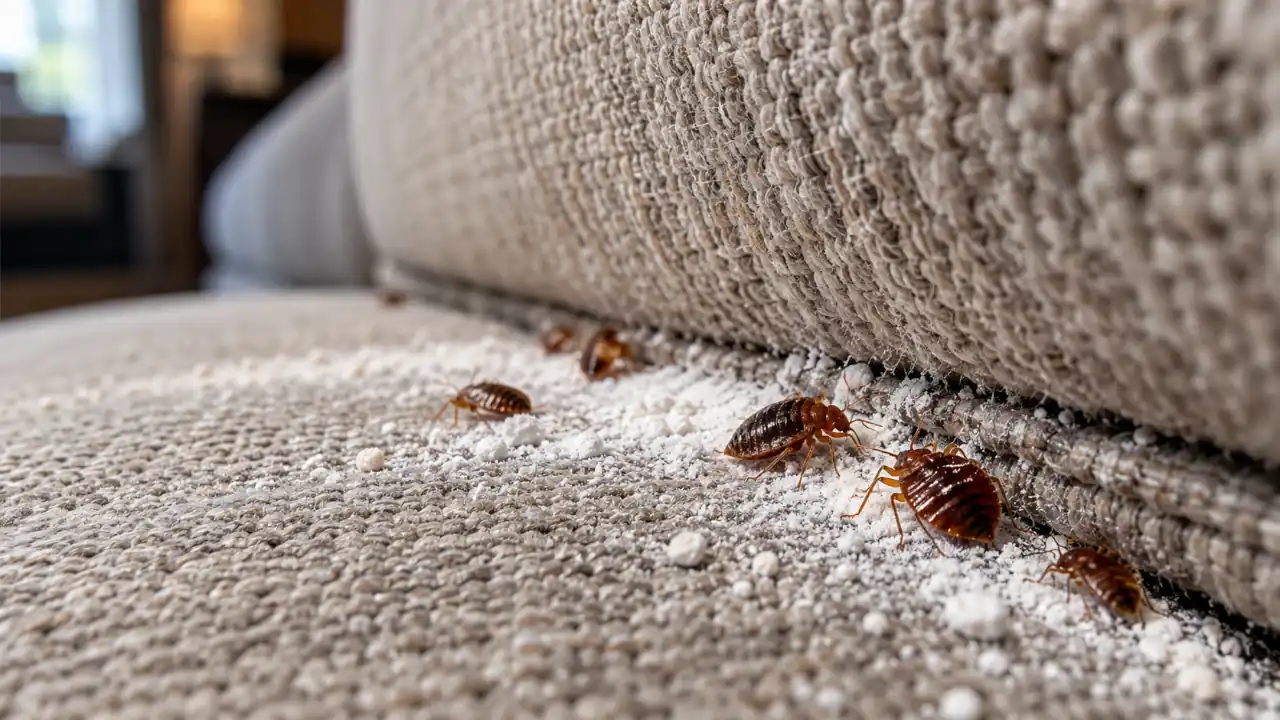
Does borax kill bed bugs? Not reliably, and it shouldn’t be your main treatment. Research on boric acid, a related but different compound, found that bed bugs survived exposure to its dust. That doesn’t prove borax behaves identically, but it gives homeowners little reason to trust ordinary laundry borax against an infestation. You’re better off treating suitable washable items with heat, vacuuming accessible hiding places, using bed bug encasements and interceptors, and arranging targeted treatment if the bugs persist.
Also Read: Can Bed Bugs Make You Sick? Symptoms and Risks Explained
Quick Answer
Borax is not a reliable way to kill bed bugs. Research on the related compound boric acid found that bed bugs survived exposure to its dust, although this does not prove that every borax formulation behaves identically. Instead of spreading borax on mattresses, carpets, or baseboards, focus on appropriate heat treatment, vacuuming, bed bug encasements, interceptors, and targeted treatments designed for bed bugs.
Key Takeaways
Does Borax Kill Bed Bugs?
Let’s start with what borax actually is. Borax is a sodium borate mineral commonly sold as a laundry and household cleaning product. You may already have a box in your laundry room. People use it as a cleaning booster and in some DIY household recipes, which helps explain why it also appears in home pest-control advice. It also has a long history as a bug killer, which is where the confusion starts.
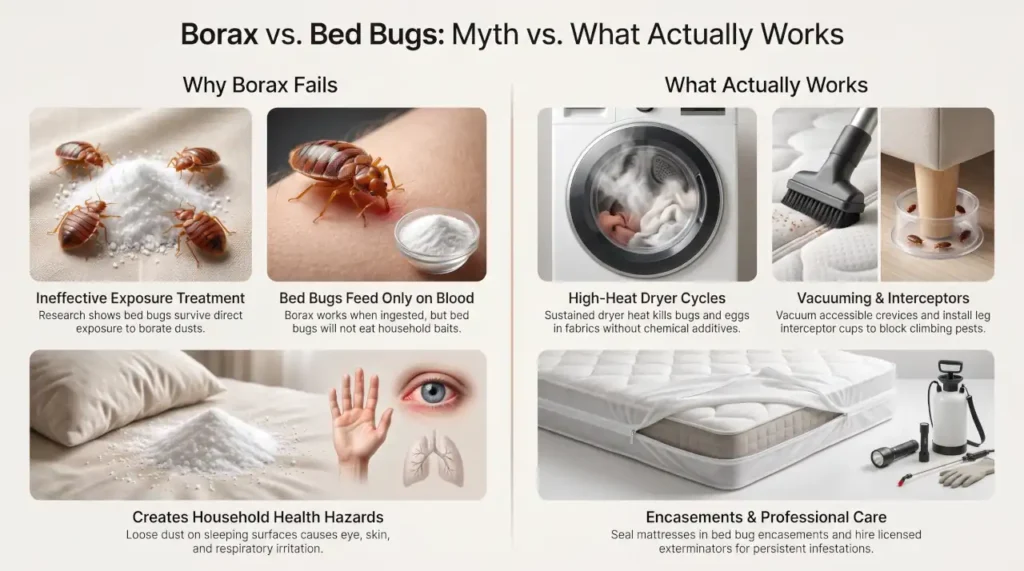
Borax is used in some pest-control home remedies because certain insects can ingest it in bait formulations. But that doesn’t mean the same approach works for every pest. Bed bugs feed on blood rather than household food, so they won’t seek out a sugar-based or greasy borax bait. That difference is important: a substance that works when swallowed may do little when a bed bug simply walks across it.
What happens when bed bugs encounter boric acid dust? Researchers tested this in a controlled study. Boric acid was effective when delivered through feeding, but bed bugs survived exposure to the dust, including at high concentrations. Smaller particles didn’t solve the problem. The same dust treatment was effective against German cockroaches, highlighting how differently these pests respond to the same substance.
There’s an important distinction here: boric acid and borax are related, but they are not identical. This study does not establish that every borax formulation behaves exactly the same way. It does show why you shouldn’t assume that laundry borax will kill bed bugs simply because it can affect other insects. There isn’t enough evidence here to recommend borax dust as a dependable bed bug treatment.
Be cautious with claims that borax kills bed bugs on contact or eliminates a specific percentage of them. Unless the actual product and application method have been tested, those claims shouldn’t be treated as reliable evidence of bed bug control.
Does Borax Kill Bed Bugs on Contact?
There is insufficient evidence to say that ordinary laundry borax reliably kills bed bugs on contact. Claims that the powder abrades their bodies or suffocates them shouldn’t be treated as established facts without testing of the actual product and application method. Don’t assume that a bug exposed to borax will die or that killing a few visible bugs will eliminate an infestation.
Do the Pros Really Disagree?
Bed bug treatment advice can vary, especially when it comes to DIY powders and home remedies. But the practical question isn’t whether a product can kill some insects under certain conditions. It’s whether it can reliably reach bed bugs in their hiding places and help control the infestation. That’s why treatment plans often combine several methods rather than relying on one household product.
Experienced bed bug technicians typically combine several methods rather than relying on one product. Depending on the infestation and the property, a treatment plan may include targeted vacuuming, steam or professional heat treatment, mattress and box spring encasements, bed leg interceptors, and appropriately labeled insecticides or desiccant dusts. The key is reaching the places where bed bugs hide, following up after treatment, and checking whether live bugs remain. Powders can be useful when the specific product is labeled for bed bugs and applied exactly as directed, but ordinary laundry borax is not a substitute for that approach.
There’s also a time problem. Bed bugs reproduce over time, and eggs can hatch while an ineffective treatment is being repeated. The longer a population goes uncontrolled, the more opportunities it has to spread to nearby furniture or rooms. That is why an approach that sounds inexpensive can end up costing more in time, effort, and treatment.
What a Failed DIY Treatment Can Look Like
One useful lesson from bed bug work is that a cleaner-looking mattress doesn’t necessarily mean the infestation is under control. A homeowner may vacuum the mattress, wash the sheets, and stop seeing bugs for several days, only to find fresh activity around the headboard or bed frame.
The important question isn’t whether the visible bugs disappeared. It’s whether the hiding places were treated and whether monitoring shows continued activity. Bed bugs can remain in furniture joints, screw holes, upholstery seams, and other places a quick cleaning misses.
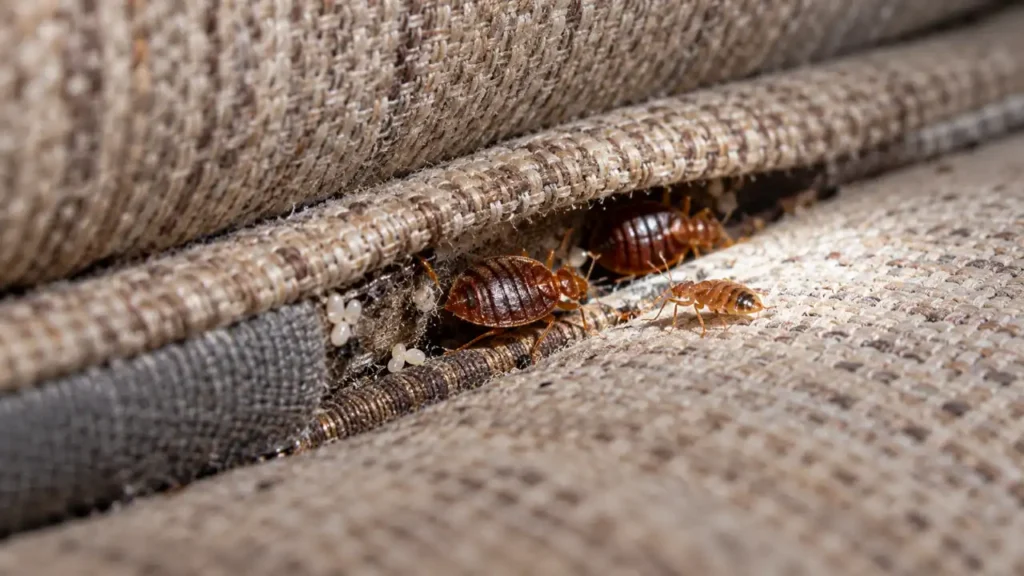
That’s why I wouldn’t spend days applying different household powders. Start by removing accessible bugs and treating washable items, then inspect the surrounding furniture and monitor for survivors. If activity continues, reassess the treatment rather than repeating the same steps and hoping for a different result.
How To Use Borax for Killing Bed Bugs
If you’re wondering how to use borax against bed bugs, the honest answer is that there is no established DIY application method you can rely on to eliminate an infestation. You may find advice recommending borax on mattresses, homemade sprays, or powder along baseboards, but these methods aren’t supported by enough evidence to recommend them.
The safer approach is to leave ordinary laundry borax out of your bed bug treatment plan and focus on removing bugs, treating washable items appropriately, and monitoring for continued activity. Here’s what to do instead when you’re considering the three common borax applications.
1. Should You Sprinkle Borax on a Mattress or Couch?
I wouldn’t recommend it. There is insufficient evidence that ordinary laundry borax reliably kills bed bugs when applied to mattress seams or upholstery. Loose powder can also end up on surfaces where people sleep, sit, or come into contact with it.
Instead, remove bedding carefully and vacuum the mattress seams, piping, labels, bed frame, and accessible upholstery crevices. Seal and dispose of the vacuum contents promptly. A bed bug encasement can help contain bugs inside a mattress or box spring and make future inspections easier, but it won’t eliminate bugs hiding elsewhere in the room.
2. Does Adding Borax to Laundry Kill Bed Bugs?
Borax is sometimes added to laundry as a cleaning booster, but it shouldn’t be relied on to kill bed bugs or their eggs. The important factor in laundry treatment is sufficient heat, not the addition of borax.
Place affected bedding and clothing in a sealed bag before carrying them to the laundry. Use a dryer cycle that reaches a lethal temperature throughout the load, following the fabric care instructions and reliable bed bug treatment guidance. Afterward, put treated items in clean, sealed bags or containers so they remain separate from potentially infested belongings.
3. Should You Spread Borax Around Baseboards and Bed Legs?
No. Spreading household borax around a room is not a dependable way to intercept or eliminate bed bugs. Bugs may avoid the powder, travel around it, or remain hidden in places the dust never reaches. Loose powder can also become airborne or spread to areas where children and pets may encounter it.
A more useful option is to place bed bug interceptor cups under the legs of the bed, where the bed design permits. Pull the bed away from the wall, keep bedding off the floor, and check the interceptors regularly. These measures help you monitor activity and reduce access to the bed, although they won’t treat an infestation on their own.
For carpet edges, vacuum along the junction between the carpet and wall, then inspect nearby furniture and bed-frame joints. If you continue finding live bugs, use a treatment specifically labeled for bed bugs and permitted for the intended application site rather than scattering household powder around the room.
Safety Precautions to Take
Borax is a household chemical, not a harmless bedroom dust. Depending on the amount and route of exposure, it can irritate the eyes, skin, and respiratory tract, and swallowing it can cause illness. Children and pets are at particular risk if they reach loose powder or contaminated surfaces.
The safest choice for bed bug control is not to spread ordinary borax around the bedroom. If you’re handling the product for another legitimate household use, follow the package directions, avoid creating airborne dust, keep it away from children and pets, and wash your hands afterward. Store it in its original, clearly labeled container. If someone swallows borax, contact your local poison control service or seek medical advice promptly.
Borax vs. Diatomaceous Earth for Bed Bugs
Borax and diatomaceous earth (DE) are different materials, and neither should be treated as a guaranteed bed bug solution.
Diatomaceous earth is made from fossilized microscopic aquatic organisms. Certain insecticidal formulations work by damaging the protective outer layer of susceptible insects and contributing to moisture loss. Unlike a bait, the insect doesn’t need to eat the material. However, results depend on the formulation, exposure, application, and the bed bug population.
The important distinction is between food-grade DE and a pesticide product intended for insect control. Food-grade DE is not the recommended substitute for a labeled bed bug treatment. If you choose a dust-based pesticide, select one specifically authorized for bed bugs in your country and follow its label for application sites, quantity, protective equipment, and precautions around people and pets. Never assume that a product is suitable for bedrooms simply because it is labeled food-grade.
Borax is another product homeowners sometimes consider for bed bugs, but the evidence discussed above doesn’t establish it as a reliable treatment either. Borax and boric acid are related, not interchangeable, so the study on boric acid dust shouldn’t be treated as a direct test of every borax product. The practical takeaway is simpler: don’t rely on either household powder to eliminate an infestation.
Even a suitable insecticidal dust has limitations. Bed bugs can hide deep in furniture joints, mattress seams, and wall gaps, where a treatment may not reach them. Eggs can also survive some treatment methods. Dusts are therefore best considered only as one possible component of a properly planned treatment—not a complete solution on their own.
Can Borax Kill Bed Bug Eggs?
Ordinary laundry borax should not be relied on to kill bed bug eggs. Bed bug eggs are tiny, roughly pinhead-sized, and are often attached to mattress seams, furniture joints, and other protected surfaces. Because eggs don’t ingest bait, a method that depends on poisoning an insect through feeding won’t work on them in the same way. There is insufficient evidence to recommend household borax as a reliable egg treatment.
Bed bug eggs commonly hatch in about a week to ten days under favorable conditions, although the timing varies with temperature. This is why killing the adults you can see doesn’t necessarily solve the problem. Eggs may remain in seams and crevices, then hatch into tiny nymphs that are difficult to spot.
Treatment effectiveness against eggs depends on the method used. A properly performed heat treatment can kill eggs when the eggs themselves reach a lethal temperature for sufficient time. Steam can also kill eggs that receive enough direct heat, but it won’t reliably treat deep hiding places that the steam doesn’t reach. Vacuuming may remove some eggs, although eggs firmly attached to surfaces can be difficult to dislodge.
Plan to monitor for continued activity and follow the treatment schedule recommended for the method being used. A follow-up inspection or treatment is often necessary because newly hatched bugs can remain after the first round. Don’t assume the infestation is gone simply because bites or visible bugs temporarily disappear.
Is Borax Soap Effective?
“Borax soap” can mean a few different things, which is part of why the advice online is such a mess. Some people mean plain borax powder from the laundry aisle, some mean a bar soap with borax in it, and some mean a homemade spray of borax dissolved in water. They all share the same basic problem. Bed bugs don’t eat soap, and a wet spray only affects the bugs you actually hit.
A homemade borax-and-water spray is not a dependable way to control bed bugs. It may wet a bug you hit directly, but that doesn’t establish that the mixture will kill it reliably, reach hidden bugs, or control an infestation. The bugs you can see are often only a small part of the population, with others concealed in seams, furniture joints, and narrow cracks.
Avoid spraying homemade mixtures onto mattresses, upholstered furniture, or other surfaces where people sleep or sit. These mixtures are not established bed bug treatments and may leave unwanted residue or damage materials. Use targeted cleaning, appropriate heat treatment, monitoring, and products specifically labeled for bed bugs instead.
Quick Tip: Check the product label before buying or applying an insecticide. Confirm that bed bugs are listed as a target pest, that the intended application site is permitted, and that you can follow the safety precautions. Check the relevant pesticide regulator’s requirements in your country. Never assume that a product is suitable for mattresses, upholstery, or bedrooms simply because it kills other insects.
As for the borax scoop in your laundry, keep using it for fabric care if you like. Just don’t count on soap, borax, or any mix of the two to be the thing that ends the infestation.
What Actually Works Against Bed Bugs
For the fastest practical reduction, use a dryer on suitable items with sufficient heat, vacuum bugs you can reach, and arrange targeted treatment for the places you cannot safely access. These steps can reduce activity quickly, but they don’t guarantee that an entire infestation has been eliminated.
Start with laundry and the dryer. Treat washable bedding, sleepwear, and other suitable fabrics using a heat cycle that reaches a lethal temperature throughout the load. Follow fabric care instructions and reliable extension guidance. Bag items before moving them, and keep treated belongings separate from untreated items.
Next, vacuum mattress seams, bed frames, upholstered furniture, and accessible cracks. Vacuuming removes some exposed bugs, but it won’t reliably reach every hiding place or eliminate an infestation by itself. Seal and dispose of the contents carefully.
Use mattress and box spring encasements designed for bed bugs. Pull the bed away from walls, keep bedding off the floor, and install interceptor cups under the bed legs where possible. These steps make monitoring easier and reduce opportunities for bugs to climb onto the bed, but they don’t replace treatment of the surrounding room.
Steam can kill bed bugs and eggs that receive sufficient heat. Move slowly over suitable seams and crevices, use equipment according to its instructions, and test delicate materials first. Steam won’t reach every deep hiding place, and excessive moisture can damage furniture. Keep steam away from electrical components and outlets.
Also Read:
Finally, inspect the room and nearby furniture systematically. Reduce clutter without carrying loose belongings through the home, and avoid foggers or bug bombs as a substitute for targeted treatment. If activity continues, use a coordinated treatment plan that may include an appropriately labeled insecticide or a professional heat treatment. Follow-up checks are essential because one successful-looking day doesn’t prove the infestation has ended.
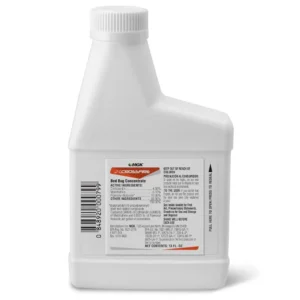
If you’re considering a bed bug insecticide, check that the current product label permits the treatment you intend to perform. A product’s effectiveness depends on using it according to its directions, including the approved application sites and safety precautions.
When to Call a Professional
Be honest with yourself about this one. Bed bugs are among the hardest household pests to remove, and plenty of people pay twice, once for the DIY products and once for the professional who fixes what the products didn’t.
Call a professional if you find bed bugs in multiple rooms, keep finding live bugs despite consistent treatment, or cannot safely reach the hiding places in upholstered furniture. Daytime sightings are worth investigating, but the time of day alone doesn’t establish how large the infestation is.
If you rent, notify your landlord or property manager in writing as soon as you confirm or reasonably suspect bed bugs. Responsibility for inspection and treatment depends on local law, your lease, and the circumstances, so report the problem promptly and keep a copy of the notice.
A good pest control company will inspect the property, explain its recommended treatment, and arrange follow-up checks or treatment when needed. Before hiring one, ask which methods it uses, how you should prepare the home, what precautions are necessary around children and pets, and how it will assess whether the infestation has been controlled. A clear treatment plan should explain both what happens during the initial visit and what to expect if live bed bugs remain.
Final Thoughts
So, does borax kill bed bugs? It isn’t a dependable treatment, and there is no good reason to rely on ordinary laundry borax to eliminate an infestation. Research on the related compound boric acid found that bed bugs survived exposure to its dust, and that evidence doesn’t support spreading borax around a bedroom.
Focus instead on treating washable items with sufficient heat, vacuuming accessible hiding places, using bed bug encasements and interceptor cups, and monitoring for continued activity. Steam and properly selected, labeled pest-control products can also have a role when used correctly.
The most important thing is to avoid confusing activity with progress. A mattress covered in powder isn’t necessarily a treated mattress, and a few days without visible bugs doesn’t prove the problem is gone. If you keep finding live bed bugs, reassess the plan and arrange a professional inspection rather than losing more time on ineffective home remedies.