If you have ever found bed bugs living in wood furniture, like a dresser drawer, bed frame, or nightstand, you already know how unnerving the problem can be. Wood furniture makes the problem worse because it gives them exactly what they want: cracks, seams, screw holes, joints, and dark little hiding places. Bed bugs do not need a lot of room, and they do not need to chew through wood. They just need a protected spot close to people.
That is why a wooden bed frame, nightstand, dresser, or antique chair can turn into a hiding place before most people even realize there is a problem. Bed bugs are small, flat, and easy to miss, and adults are only about 3/16 to 1/4 inch long, while nymphs and eggs are even easier to overlook.
The hard part is that once bed bugs settle into furniture, they rarely stay in one spot for long. They can move into other rooms, hide in nearby furniture, and keep rebuilding the infestation if the source is not found. That is why wood furniture infestations feel like they come out of nowhere and then suddenly spread everywhere. The good news is that this is fixable if you inspect carefully, treat the right places, and do not rely on home myths or scent tricks to do the work for you.
Also Read: What Eats Bed Bugs at Night? Hidden Predators Revealed
Quick Answer: What Eats Bed Bugs at Night?
A few insects and animals can act as natural predators of bed bugs if they happen to find them, including masked hunters, spiders, ants, house centipedes, and sometimes cockroaches. But none of them are reliable enough to control an infestation. If you have bed bugs, the real solution is inspection, heat, cleaning, containment, and targeted treatment — not natural predators.
Can Bed Bugs Live in Wood?
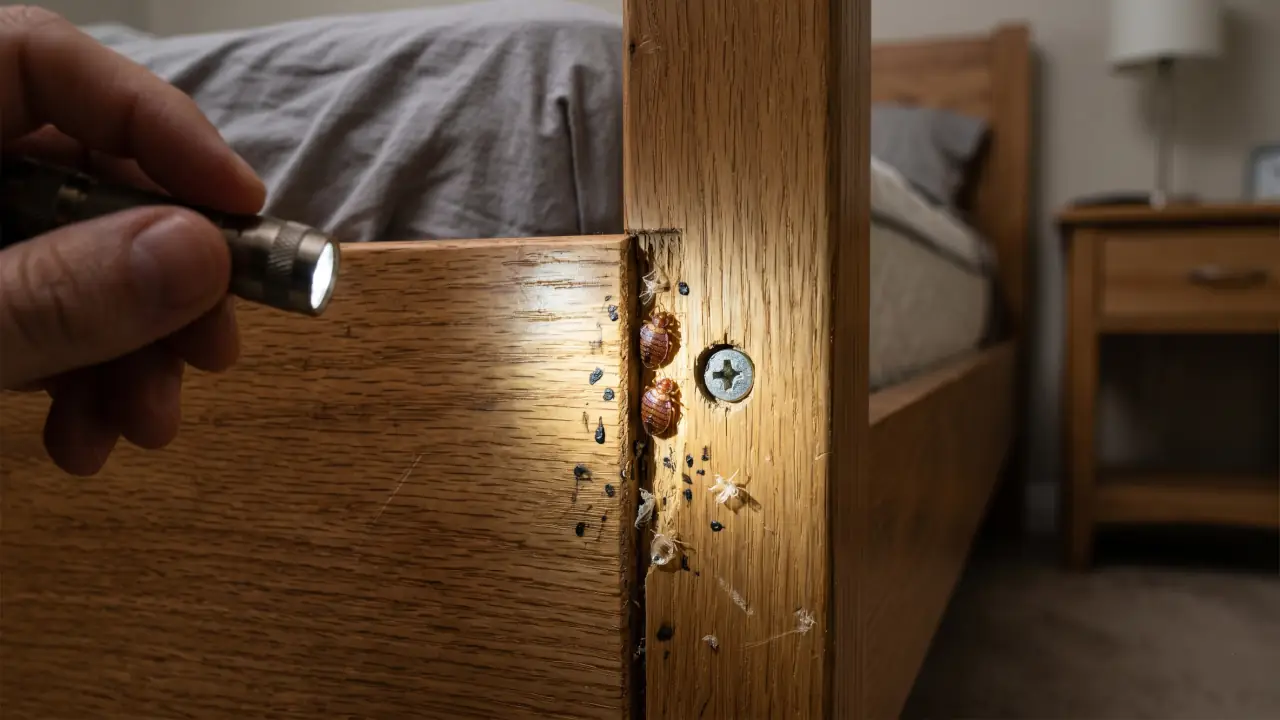
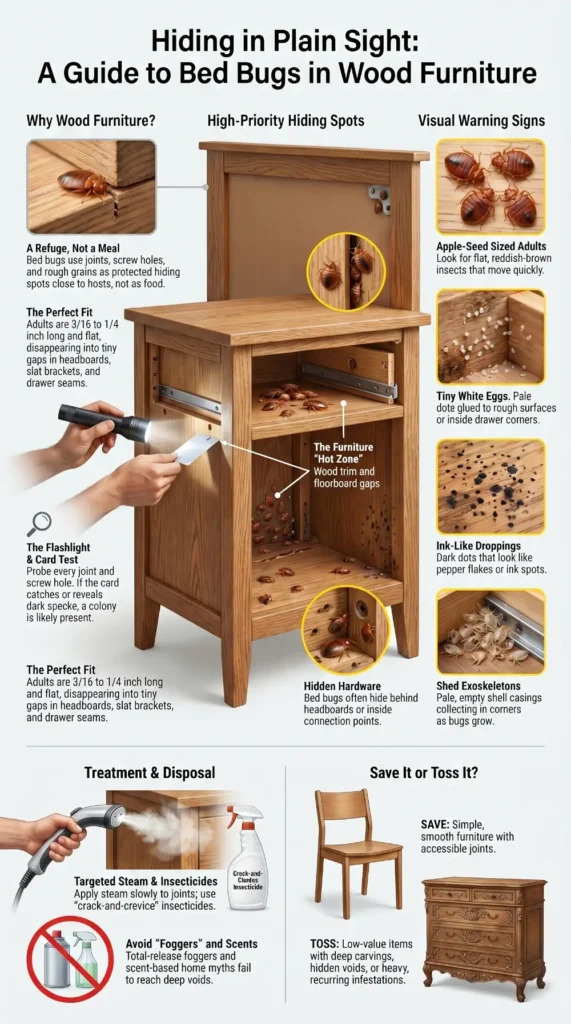
Yes, bed bugs can absolutely live in wood. They do not eat wood, but they love the cracks, grooves, screw holes, joints, and worn edges that often come with wooden furniture. Bed bugs in a wood bed frame are one of the most common trouble spots because they can hide in rail joints, slat brackets, screw holes, and behind headboards just inches from where people sleep. In fact, they are tiny enough to slip into spaces most people would never think to check, especially where wood is rough, split, chipped, unfinished, or worn.
The same hiding behavior can also show up in nearby wood trim, floorboard gaps, or cracks around the bed, but furniture closest to the sleeper is usually the higher-priority place to inspect first.
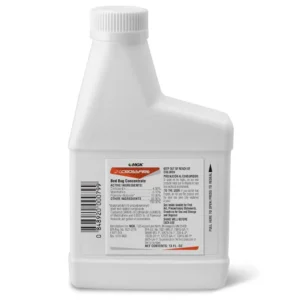
MGK Crossfire® Bed Bug Concentrate
Bed bugs are not attracted to wood itself the way termites are. They are attracted to people, warmth, and carbon dioxide, then they hide in whatever structure gives them a safe route back and forth. So a wood dresser or headboard is not a meal to them, it is a refuge. That is why bed bugs can be found in wood furniture, in bed frames, and even in other furniture near the bed, including couches and upholstered chairs.
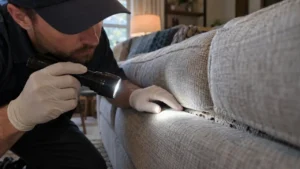
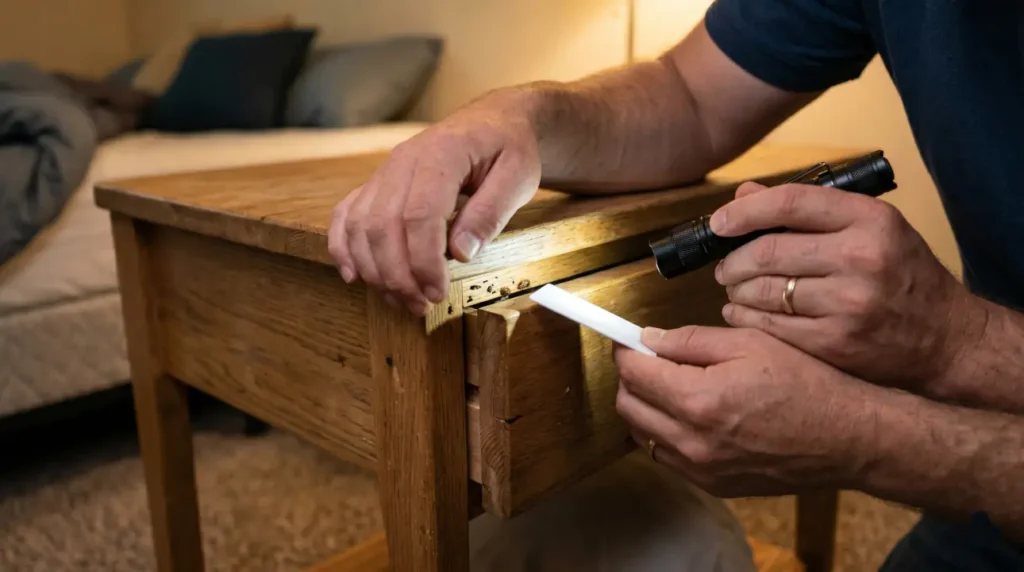
Quick Tip: Use a flashlight and a thin card edge to inspect every joint, screw hole, drawer cavity, underside seam, and any exposed hardware where wood pieces connect. If the card catches or you see dark specks, keep checking that exact spot instead of moving on too fast. Bed bugs are small enough to disappear into extremely tight gaps, including spaces that are not very big, which is why tiny seams, rough wood edges, and worn joints are easy to miss during a quick inspection.
Signs Of Bed Bugs in Wood Furniture
Before you start looking for signs, remove any drawers you can safely pull out and inspect the underside, inside corners, and hardware areas. If the piece can be partially disassembled without damaging it, that can reveal hidden joints and connection points where bed bugs often stay out of sight. Many homeowners first notice bed bugs in wooden furniture only after the infestation has already spread beyond the bed itself.
Live Bugs
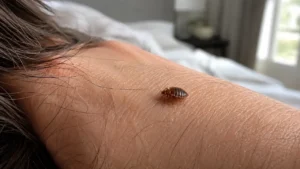
The most obvious sign is seeing the bugs themselves. Adult bed bugs are flat, reddish-brown, and about the size of an apple seed. When they have not fed recently, they look more flattened and darker. If you open a drawer or look inside a cracked wood joint and see a small insect that moves quickly into shelter, that is a strong reason to keep inspecting the furniture piece and the area around it.
Tiny Eggs
Bed bug eggs are tiny, white, and easy to miss. They are often glued to surfaces and can be laid on rough surfaces such as wood or paper near sleeping and resting places. If you see clusters of tiny pale dots stuck to the inside of a drawer, near a screw head, or in the grain of unfinished wood, do not brush it off as dust until you have looked very closely.
Shed Exoskeletons
Bed bugs shed their skins as they grow, so you may find pale, empty shell casings in hiding spots. These shed exoskeletons usually show up where the bugs spend time resting, feeding, or breeding. In wood furniture, they often collect in corners, inside joints, under drawer tracks, and around the inner lip of a bed frame or headboard. If you see several cast skins together, that usually means the problem has been there for a while, not just overnight.
Droppings
Bed bug droppings look like tiny black or dark brown dots, smears, or ink-like spots. On unfinished wood they may soak in a little, while on varnished wood they can sit on the surface and look like pepper flakes or marker dots. These marks often appear around harborages, not randomly across the room, so if you find a few spots clustered in one drawer corner or along a bed frame seam, treat that as a real clue.
A Pungent or Musty Smell
A stronger infestation can create a noticeable musty-sweet smell. People describe the odor differently, but smell alone is not a reliable way to confirm bed bugs. In heavier infestations, some furniture may develop a stale, sweet, or musty odor, but that should only be treated as a supporting clue. If the smell shows up along with dark spotting, shed skins, eggs, or live bugs, it becomes much more meaningful.
Peeled Paint or Loose Finish
Loose paint, flaking finish, and worn surfaces give bed bugs more edges to hide under. If wood furniture has peeling paint or a rough area where the finish has separated, inspect that spot carefully. Bed bugs do not need a perfect opening, only a protected one. That is why antique furniture, painted bed frames, and older dressers can be trickier than newer smooth pieces.
Real-World Experience: What This Looks Like in a Real Home
In real bed bug jobs, wood furniture often gets overlooked because homeowners focus on the mattress first. I have seen infestations where the mattress looked fairly clean, but the real harborage was a wooden headboard, a nightstand drawer cavity, or the underside of a dresser sitting a few feet from the bed. One of the more common patterns is this: the homeowner treats the mattress, washes bedding, and still keeps getting bites because the bugs are tucked into screw holes, drawer joints, and unfinished wood edges nearby.
Also Read: How To Remove Bed Bugs from Books Permanently
That is why furniture inspections matter so much. In one typical setup, the worst activity is not on the sleeping surface at all. It is in the furniture closest to where the person sleeps or rests. Once that hidden harborage is treated or removed properly, the whole cleanup starts making sense. If that furniture gets missed, the infestation usually keeps coming back no matter how many sprays or laundry cycles the homeowner tries.
How To Remove Bed Bugs from Wood Furniture
Before you reach for any spray, remember this: people search for scents that keep bed bugs away all the time, but scent tricks do not solve a real infestation inside wood furniture. They may make a room smell different for a short time, but they do not replace inspection, targeted treatment, and follow-up. As the EPA warns against foggers, total-release products do not reach the cracks and crevices where bed bugs actually hide in furniture.
Insecticides
If you use insecticides, choose products specifically labeled for bed bugs and use them exactly where the bugs hide, travel, and deposit eggs. The safest approach is not to spray blindly across the room. It is to target seams, joints, screw holes, cracks, and other hiding places. Some bed bug populations have resistance to certain pyrethrins and pyrethroids, so repeated failures can happen if the wrong product is used or if the application is too shallow to reach the hiding spot.
Quick Tip: Treat the hiding place, not the whole piece at random. A careful crack-and-crevice approach works far better than a quick surface spray, and you should always follow the label exactly. If the product is not made for indoor bed bugs, skip it.
Steam Cleaning
Steam can help when it is applied slowly enough to penetrate seams, joints, and crevices. When used correctly, it can kill bed bugs and eggs in reachable cracks and hiding spots. That said, wood can warp, stain, or swell if you use too much moisture or hold the steamer too long in one place, so this method works best with patience and careful control.
Steam is most useful when the furniture can tolerate heat and limited moisture, and when you can actually reach the seams, joints, and hiding edges where bed bugs are clustered. It works best on simpler furniture with accessible construction. It is much less reliable on ornate pieces, layered furniture, or items with hidden voids where the heat never fully penetrates.
Toss The Infested Piece of Furniture
Sometimes the safest move is to get rid of the piece, especially if it is heavily infested, structurally broken, or packed with tiny hidden spaces that are impossible to treat well. If you drag infested furniture through a hallway or carry it through other rooms without sealing it first, you can spread the bugs while trying to solve the problem. That is why disposal has to be done carefully and quickly. Bed bugs spread through belongings, and once they start hitchhiking into nearby rooms, which they can do very fast, cleanup becomes much harder. If you want a closer look at how quickly that can happen, here is a breakdown of how fast bed bugs spread.
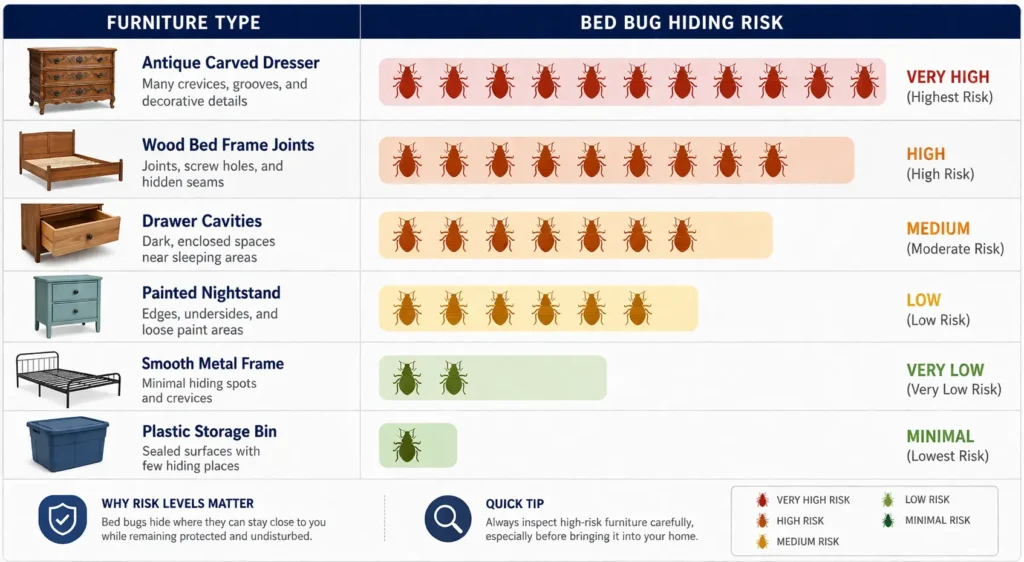
A carved antique dresser with deep grooves is a much harder rescue than a simple smooth chair frame. If the item is valuable, the decision is not always easy. But if the piece has multiple hiding zones, visible eggs, and signs that keep returning after treatment, tossing it may be the faster way to stop the infestation from keeping pace with your cleanup.
When Wood Furniture Is Usually Worth Saving
In most cases, wood furniture is worth trying to save if the infestation looks isolated, the piece has fairly simple construction, and you can fully inspect the joints, seams, screw holes, and hidden edges. Smooth chairs, basic nightstands, and simpler bed frames are usually much easier to treat than carved antiques or layered furniture with hidden voids.
When It Usually Is Not Worth Saving
If the piece has deep grooves, loose joints, unfinished hidden cavities, visible eggs in multiple areas, or signs that keep returning after treatment, it is often faster and more reliable to remove it. That is especially true when the furniture is low-value, badly damaged, or hard to move and inspect without spreading bugs.
Exception: High-Value or Antique Furniture
If the item is valuable, sentimental, or antique, it may still be worth trying to save, but this is usually where professional treatment makes the most sense. In those cases, the real question is not whether the furniture can be treated. It is whether it can be treated thoroughly enough to stop the infestation from restarting.
Hire A Professional Exterminator
When the infestation is more than a small, isolated issue, a licensed pest management professional is usually the most effective option. That is especially true when the bugs have spread beyond one furniture piece, when you live in an apartment or shared housing, or when the infested furniture is hard to inspect thoroughly. The CDC says bed bugs hide in furniture, cracks, and other small protected areas near where people sleep or rest, which is exactly why partial treatment so often fails.
That matters even more if the infestation is in more than one room, if you live in shared housing, or if the furniture is antique and hard to replace. A good exterminator can also tell you whether the piece is worth saving or whether removal is the smarter call. In real homes, that advice often saves time, money, and a lot of frustration.
How To Prevent This from Happening Again
The best prevention starts before furniture enters your home. Used beds, secondhand dressers, curbside finds, and alley pickups are all risky because bed bugs are excellent hitchhikers. Before bringing anything inside, inspect seams, cracks, crevices, the underside, drawer cavities, screw holes, and any rough or damaged wood. A magnifying glass helps, and so does a flashlight held low across the surface so tiny eggs and droppings cast a shadow.
If you do bring in a secondhand piece, keep it away from bedrooms and other resting areas at first, then inspect it again after a few days under good light. That simple quarantine step catches problems that are easy to miss on day one, especially when eggs, nymphs, or droppings are tucked into unfinished wood or hidden drawer hardware.
Quick Tip: Never accept furniture that the seller refuses to let you inspect. If you cannot look in the drawers, under the piece, and along the joints, walk away. A bad deal on a dresser is not worth a home infestation.
Also Read: Do Boxelder Bugs Bite or Are They Harmless?
Frequently Asked Questions
Final Thoughts
Bed bugs living in wood furniture are a real problem because wood gives them the cracks and hiding places they need, especially when the piece sits close to where people sleep. The key is not to panic and not to waste time on weak shortcuts. Inspect the piece closely, identify the signs, treat the hidden areas, and keep checking after cleanup. The biggest mistake is treating only the obvious surfaces while the real harborage stays hidden inside joints, screw holes, or nearby furniture.
If the infestation is deep, the furniture is too damaged to rescue, or the bugs keep showing up after treatment, a professional inspection is usually the fastest way to stop the spread. Early action matters here more than almost anything else. Once bed bugs get comfortable in furniture, they can keep rebuilding the infestation unless you remove the hiding place and the bugs together.