Most homeowners first notice plaster bagworms on walls, bathroom ceilings, closet corners, or behind framed pictures, where they look like tiny bits of lint or little gray seed cases stuck to the surface. If one of those little cases starts moving, you’re almost certainly dealing with plaster bagworms — also called household casebearers.
The good news is that plaster bagworms aren’t dangerous to people or pets, and they usually don’t signal total structural collapse. They’re mostly a nuisance and sanitation issue, but if you ignore them, they can keep showing up in the same rooms and slowly spread to other hidden areas.
I’ve spent years cleaning out infestations, and the fastest wins come from three things: remove the cases, eliminate what they’re eating, and seal up what’s letting new adults in. In this article I’ll walk you through exactly what plaster bagworms are, why they end up inside houses, and step-by-step actions you can take today to get rid of them quickly and keep them gone for good. I’ll also suggest the best DIY products, when to call a pro, and preventive steps that actually work.
Quick Answer
Plaster bagworms are small case-bearing moth larvae that live inside tiny gray, lint-like cases stuck to walls, ceilings, closets, and bathrooms. To get rid of plaster bagworms fast, vacuum all visible cases, remove spider webs and lint, reduce humidity, clean natural fibers, and seal entry points so adult moths can’t restart the infestation.
Fastest 3-Step Fix (For Most Homes)
- Vacuum every visible plaster bagworm case off walls, ceilings, corners, and closets
- Remove spider webs, lint, and dust so the larvae lose their food source
- Lower humidity and seal gaps so adult moths can’t restart the infestation
Also Read: How To Keep Coyotes Away
What Are Plaster Bagworms (Household Casebearers)?
In most homes, “plaster bagworm” is the common name homeowners use for the household casebearer, a small case-bearing moth larva in the Tineidae family that carries a portable silk case made from dust, fibers, and debris. The University of Florida IFAS identifies Phereoeca uterella as the species most commonly associated with indoor plaster bagworm sightings, especially in warm and humid areas.
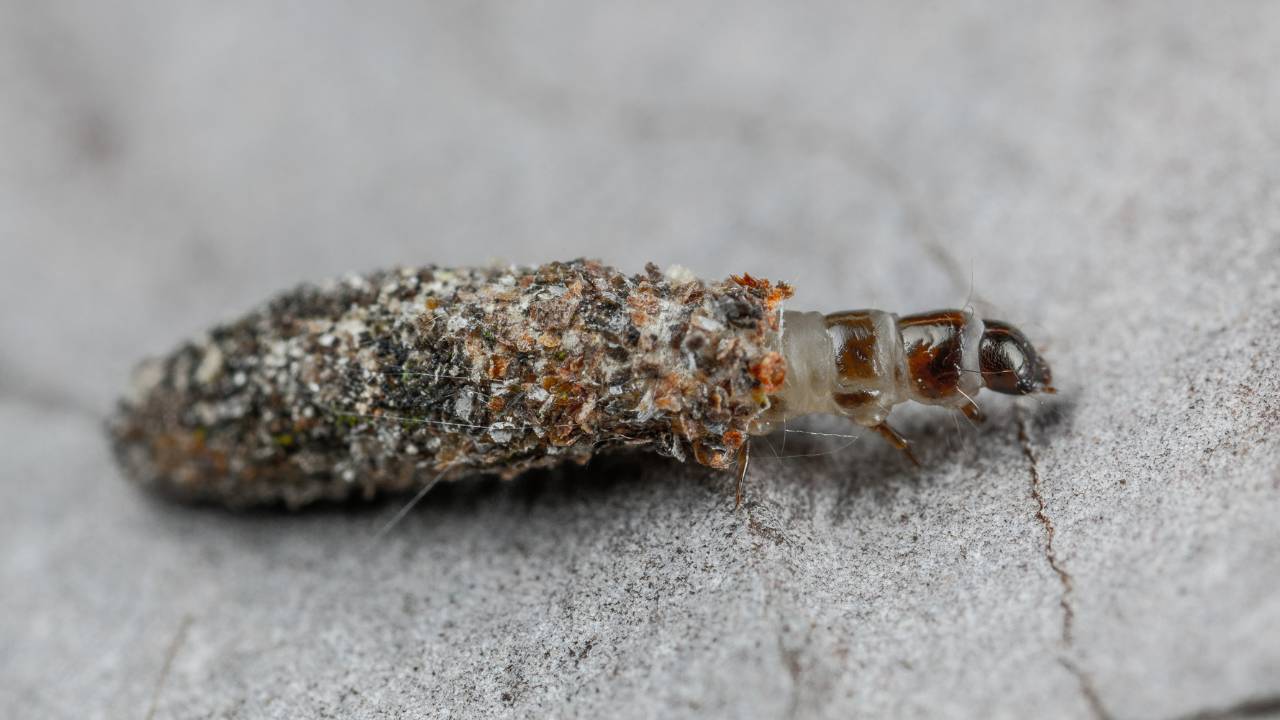
The larva lives inside a flattened, portable case made from silk and bits of debris — sand, lint, dried insect remains, and fibers. The case is what you normally see: a small, grayish-brown, oval or pumpkin-seed-shaped “bag” about a few millimeters to about 1 cm long. The caterpillar pokes its head out to crawl around while dragging this case, and it pupates inside the same shelter when it’s ready to become an adult moth.
Quick Tip: When you see a case, there’s almost always a small larva inside — treat the case as a live pest and remove it carefully. A single wall corner can hide multiple cases, so scan ceilings, corners, and behind furniture.
What Do Plaster Bagworms Look Like?
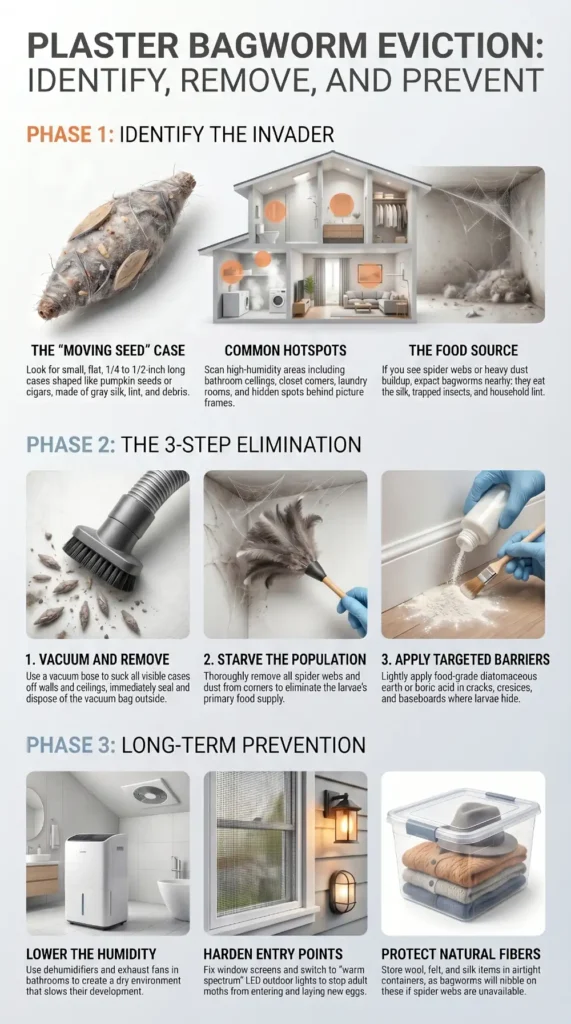
Plaster bagworms usually look like tiny gray, tan, or brown seed husks, lint clumps, or miniature cocoons stuck to a wall or ceiling. Many homeowners search for plaster bagworm pictures because the cases are easy to mistake for lint, tiny cocoons, or bits of wall debris. They’re also often described as a tiny cocoon on the wall, a lint bug on the wall, or a little seed-shaped bug that seems to move.
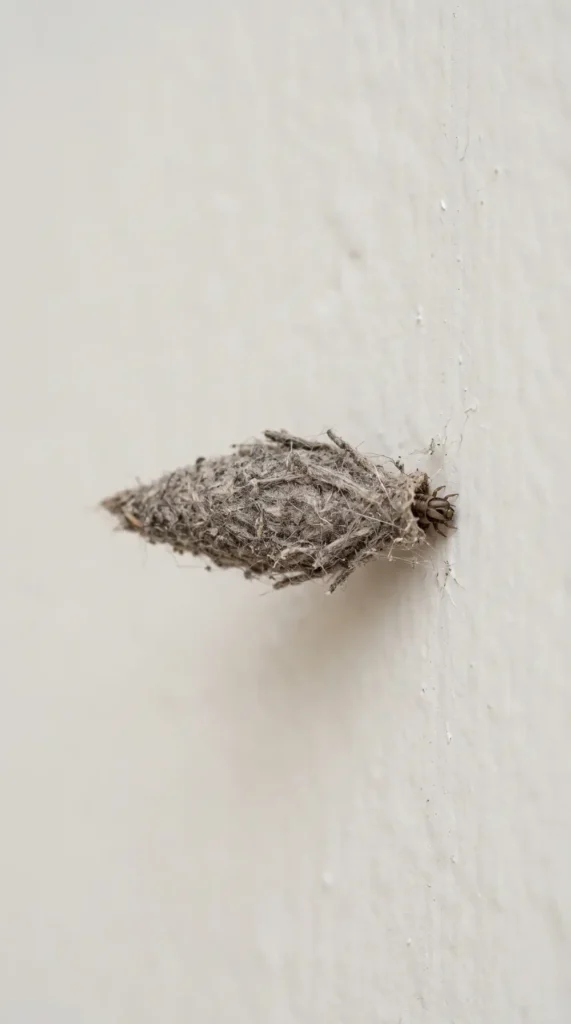
Most are about 1/4 inch to 1/2 inch long and shaped like a flattened oval or little cigar. If the larva is alive, the case may slowly move as it drags itself along the wall or ceiling. The adult moth is much less noticeable — usually a small dull tan or gray moth with narrow wings that tends to stay in hidden indoor areas.
Why Are Plaster Bagworms in Your House?
Plaster bagworms are drawn to the indoor environment because it concentrates their food sources: spider silk, shed hairs and dander, dead insects trapped in webs, and sometimes natural fibers like wool or felt. Because they often feed on old spider webs and the debris trapped in them, homeowners dealing with repeated plaster bagworms should also clean out cobweb-heavy corners and storage areas.
They’re especially common in warm, humid climates and in areas of the house that collect lint or aren’t disturbed — bathrooms, laundry rooms, closet tops, ceiling corners, and hallways. Adult moths lay tiny eggs in sheltered spots and the larvae hatch right where food and shelter are available, so once one generation finds a comfy nook, you can see more quickly.
That’s why plaster bagworms often show up in bathrooms, on walls, and near ceiling corners where humidity, dust, and spider webs build up.
Quick Tip: If you regularly find spider webs in a corner, expect to find casebearing larvae there too — remove webs and cases at the same time.
Where Plaster Bagworms Usually Hide in a Home
In real homes, plaster bagworms usually show up in the same overlooked spots: bathroom walls, ceiling corners, closet tops, behind picture frames, laundry rooms, baseboards, attic edges, and near stored fabrics.
Bathrooms are one of the most common trouble spots. If that’s where you keep finding them, check our plaster bagworms in bathroom guide for the exact hiding spots and cleanup steps that work best in humid spaces.
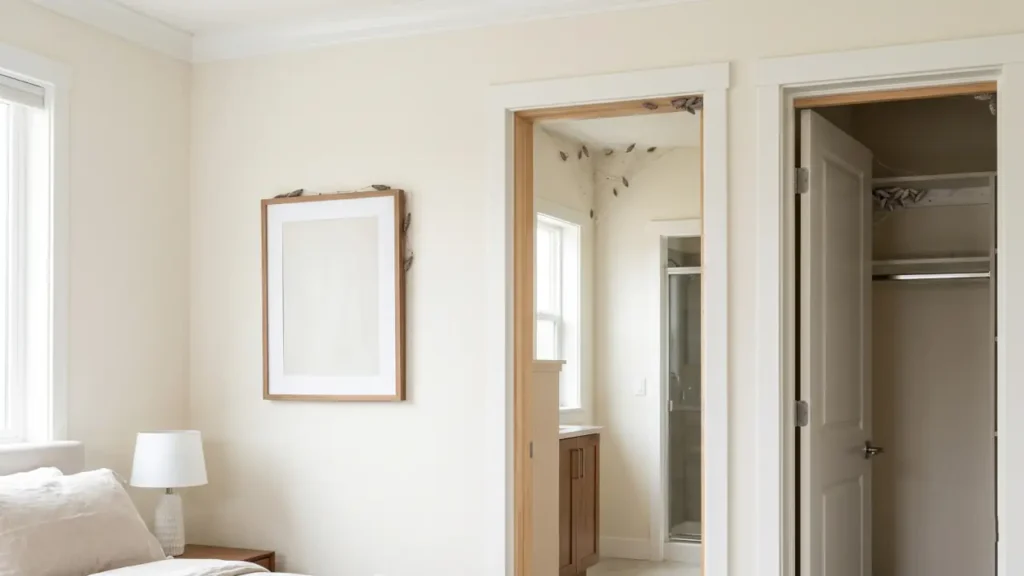
If you keep finding plaster bagworms on a wall or ceiling, check the nearest corner first. That’s usually where dust, lint, and spider webs collect — and where the larvae can feed without being disturbed.
In real homes, the heaviest activity is often in bathroom ceiling corners and the upper inside corners of closets, especially where cobwebs have been left alone for a while. If you keep finding plaster bagworms in the bathroom, check ceiling corners, above mirrors, behind towel shelves, and around exhaust fan covers first.
Plaster Bagworm Life Cycle (Why They Keep Coming Back)
Plaster bagworms start as eggs laid in quiet, sheltered spots indoors. After hatching, the larvae build a portable silk case and begin feeding on spider webs, lint, hair, dead insects, and sometimes natural fibers like wool. They eventually pupate inside that same case, then emerge as small moths that can lay a new batch of eggs. That’s why vacuuming visible cases helps, but deep cleaning and prevention are what actually stop the cycle. If you’re still seeing new cases after cleaning, it usually means you’re catching a later stage of the plaster bagworm life cycle rather than a brand-new infestation.
How to Get Rid of Plaster Bagworms in Your House (Step-by-Step)
If you want them gone fast, follow this order: find and remove, deep-clean to remove food, treat hidden spots, and harden your defenses. Do these consistently for at least a couple of weeks — that’s long enough to break the life cycle for most populations.
1) Inspect Carefully — Find Every Hotspot
Walk the house with a flashlight and check ceiling corners, behind picture frames, along baseboards, tops of door frames, inside closets, and around light fixtures. Use a stepladder to inspect ceilings and the top edge of walls. These cases are small and blend into dust, so take your time and move slowly; when you spot one, there may be others nearby. In real homes, the case itself is usually the most obvious sign of activity, so once you spot one, it’s worth checking the entire room — especially ceiling corners, closet tops, and behind furniture.
2) Remove Visible Cases by Hand or Vacuum
Use a vacuum with a hose attachment to suck up cases and larvae — this is the fastest visible reduction. After vacuuming, immediately empty the vacuum bag into a sealed trash bag and dispose of it outside. For delicate areas where a vacuum could damage paint or plaster, use a soft brush to coax cases into a jar or into the vacuum hose.
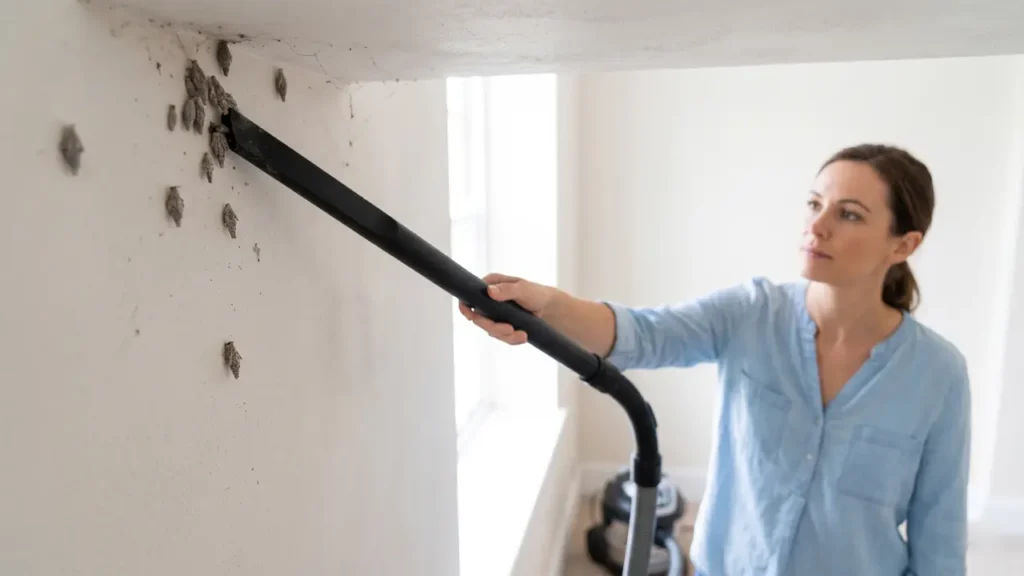
Wear gloves if you prefer; the bugs don’t bite, but it’s cleaner. Manual removal should always come first, because insecticides often can’t reach larvae tucked inside cracks or behind fixtures. Mississippi State University Extension also notes that physical removal and sanitation are the most practical first steps for homeowners.
Quick Tip: After vacuuming cases from walls and ceilings, wipe the area with a damp cloth to remove remaining dust and silk so larvae can’t reattach.
3) Deep Clean the Feeding Spots
Plaster bagworms feed heavily on spider webs and the detritus caught in them, as well as lint and skin flakes. Clean corners, remove cobwebs, and launder or clean textiles in affected areas. If you have wool rugs, wool clothing, felt hats, or other natural-fiber items stored in the area, clean and store them in sealed containers. If you’ve seen signs of fabric feeding, it’s also worth checking for related pests like clothes moths or carpet beetles in the same storage spaces. A dehumidifier in damp rooms helps, because these pests prefer humid spots.
4) Use Targeted, Safe Dusts Where Appropriate
For crevices, behind baseboards, and attic edges, consider applying diatomaceous earth (food-grade) or a light dusting of boric acid. These products are abrasive or toxic to the small larvae but have a low risk profile for humans and pets when used correctly. Apply lightly to voids and inaccessible cracks — don’t overdo it where people or pets are active. Natural dusts can give a slower but reliable reduction in populations over a few weeks.
5) Consider A Residual Insecticide for Heavy Infestations
If cases keep reappearing despite cleaning and vacuuming, a residual spray applied to skirting boards, ceiling corners, and other hiding spots will reduce numbers more quickly. Look for insecticides labeled for “crawling insects” or “occasional invaders” and follow label directions exactly. Professionals often rely on residual pyrethroid-based products in low concentrations for quick knockdown and longer residual action; however, for indoor use choose products intended for interior application and consider using a licensed pest technician if you’re unsure.
6) Track Progress and Repeat
Because the life cycle can be weeks long, check for new cases twice a week for several weeks. Remove what you find, continue the vacuuming and web removal routine, and reapply dusts or treatments only where necessary.
How to Prevent Plaster Bagworms from Coming Back
Once you get rid of the visible cases, prevention is what keeps plaster bagworms from returning. The goal is simple: make your home less attractive by removing their food sources, lowering humidity, and limiting new adult moths from getting inside.
Reduce Humidity in Bathrooms, Closets, and Laundry Rooms
Plaster bagworms prefer warm, humid environments. Lowering humidity and keeping the house cooler makes conditions less favorable for the larvae and reduces the speed of their development. Use air conditioning, run exhaust fans in bathrooms after showers, and deploy a dehumidifier in basements or other damp spaces. Not only does this slow the bagworm population growth, but it also helps protect fabrics and stored items that could otherwise attract them.
Limit Adult Moth Entry at Night
Many small moths are attracted to exterior lights and can be drawn toward windows and open entries at night. Turning off unnecessary outdoor lighting or switching to lower-attraction bulbs (warmer spectrum LEDs) cuts down the number of adult moths that find their way inside and lay eggs. Also check that screen doors and window screens are in good repair so fewer adults slip in when lights are on.
Remove Spider Webs, Dust, and Natural Fiber Food Sources
Bagworms often feed on the silk in spider webs, dead insects trapped in those webs, lint, and natural fibers. Remove spider webs and dust buildup regularly, wash or dry-clean woolens and delicate garments that could be eaten, and store seasonal clothing in airtight containers. If you have a storage closet with lint or old paper scraps, clean it out and keep it dry. The less attractive food you provide, the faster you starve the population.
Vacuum Walls, Ceiling Corners, and Baseboards Regularly
Vacuuming is arguably the single most effective and immediate step you can take. The vacuum’s suction removes both cases and the fine dust and webbing the larvae feed on. Vacuum ceiling corners, crown moldings, tops of door frames, curtain rods, and behind furniture. Always seal and dispose of the collected debris right away. Many homeowners see dramatic improvement within days simply by committing to rigorous, focused vacuuming.
Quick Tip: Use a crevice tool on the vacuum hose to reach edges and corners; a brush attachment helps dislodge cases from textured plaster.
Are Plaster Bagworms Dangerous?
Short answer: no, plaster bagworms aren’t dangerous to humans, pets, or the structure of your home in normal numbers. They don’t bite, sting, or spread disease. Their main impact is nuisance and occasional damage to natural fibers like wool, felt, rugs, or stored textiles if those materials are available.
But compared to termites, rodents, or wood-boring insects, plaster bagworms are low-risk. University extension resources point out that their presence is more an indicator of a food source (like spider webs or dust) than a sign of structural harm.
Can Plaster Bagworms Damage Clothes, Carpets, or Upholstery?
Yes — but usually only in light, localized ways. Plaster bagworms are much more likely to feed on spider webs, lint, hair, and dead insects than to destroy a whole carpet. But if they have access to undisturbed natural fibers, they can nibble on wool clothing, felt items, rugs, stored blankets, or fabric in closets and attics. Synthetic materials are usually much less attractive. If you’re seeing plaster bagworms near stored clothing or fabric bins, inspect those items closely while you clean the infestation.
Safety and Caution Notes
When using any dust or insecticide indoors, always follow the product label exactly — it’s the law and the safest way to apply it. Keep diatomaceous earth and boric acid out of reach of children and pets, and avoid applying dusts in active living areas where they can be disturbed and become airborne. If you have respiratory sensitivities, wear a mask when applying dusts or leave the area until it settles. When in doubt, or if you have pets that groom frequently, a licensed pest professional can apply treatments more safely and precisely.
When to Call a Professional
If you have persistent, large-scale infestation despite regular cleaning, if cases keep appearing after multiple weeks of treatment, or if you don’t want to use insecticidal products yourself, call a licensed pest professional. Pros can apply targeted residual treatments, treat voids and attic spaces safely, and identify any nearby entry points or environmental conditions that keep feeding the problem. For heavy infestations that involve valuable wool rugs or textiles, a pro can advise on conservation-safe treatments.
Simple DIY Steps That Work for Most Homes
If you want a list of practical, low-risk steps to take immediately, here’s the condensed action plan that works for most homes:
- Thoroughly vacuum all corners, ceilings, and the tops of doors and frames; empty the vacuum outside into a sealed bag.
- Remove spider webs and clean dusted areas — this removes their food at the source.
- Wash or launder any exposed fabrics and store wool/felt in airtight containers.
- Apply food-grade diatomaceous earth or boric acid lightly to voids and edges (avoid active living areas).
- Fix damaged screens and reduce outdoor lighting to lower adult moth entry.
Why This Method Works Better Than Just Spraying
I recommend an integrated approach: physical removal, sanitation, targeted dusts, and sealing entry points. Plaster bagworms usually don’t go away with just one tactic, which is why vacuuming alone or spraying alone often fails. Vacuuming gives immediate visible relief.
Cleaning removes the food source so new larvae starve. Dusts and residuals reach hidden spots where manual removal can’t. This layered approach attacks every stage of the pest’s life cycle and gives you both quick wins (visible reduction) and long-term control (fewer eggs and larvae surviving). University extension guidance supports combining sanitation with targeted treatment for the best results.
Also Read: How to Keep Away Raccoons Using Scents They Can’t Stand
Common Mistakes to Avoid
Many homeowners spray aerosols wildly and expect overnight results. Aerosol sprays may reduce adult moths briefly but do little to remove larvae inside cases or to stop re-infestation if food sources remain.
Another mistake is ignoring hidden spaces — attic edges, behind towel shelves, or the backs of closets — because those tiny, quiet corners are exactly where larvae thrive. Regular inspection and a disciplined cleaning routine beat scattershot spraying almost every time.
Frequently Asked Questions
Conclusion
Plaster bagworms may look strange, but they’re usually one of the easier indoor pests to control once you remove what’s keeping them alive. They show up because your home provides food and shelter: spider silk, dust, dead insects, and sometimes wool fibers.
The fastest and most reliable way to get rid of them is to remove the visible cases, deep-clean the feeding spots, use targeted dusts where needed, and make your home less hospitable with lower humidity, sealed screens, and less outdoor lighting.
If those steps don’t bring relief, a professional can apply precise treatments to voids and hard-to-reach spots. Do the inspection and vacuuming routine consistently for a few weeks and you’ll see the population collapse.