If you are staring at a mattress seam or checking a suspicious bug on your bed frame and wondering, “How big are bed bugs, really?” you are not alone. One of the biggest reasons infestations go unnoticed is that people expect bed bugs to be either microscopic or much larger than they actually are.
In reality, bed bugs fall into an awkward middle ground. They are small enough to hide in narrow cracks and fabric folds, yet large enough to spot without special equipment when you know where to look. Understanding their size at each stage of life can make it much easier to identify an infestation early and avoid confusing them with fleas, ticks, booklice, or other common household pests.
Also Read: Bed Bug Bites vs Flea Bites: Most People Misidentify Them, Do You?
Quick Answer
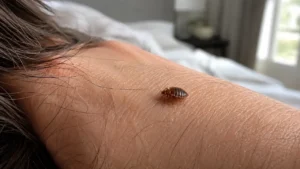
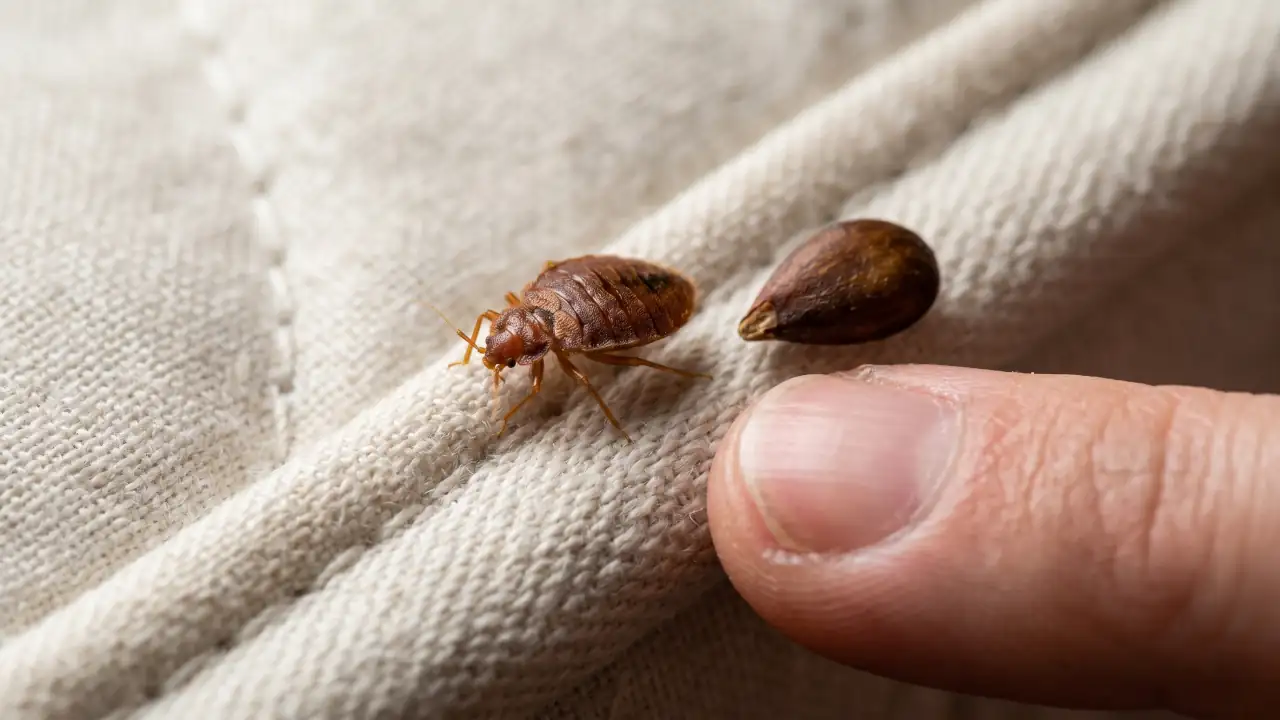
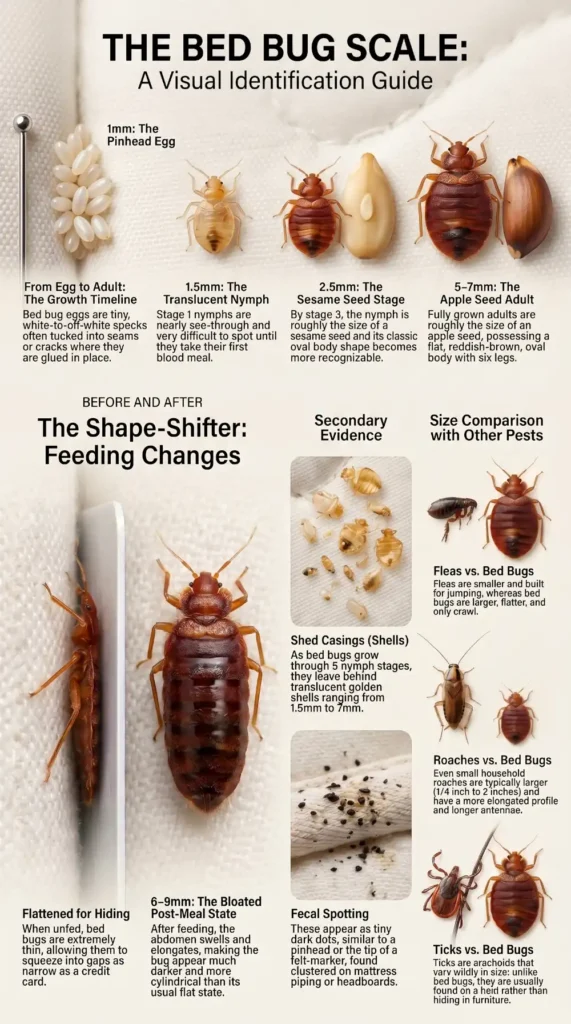
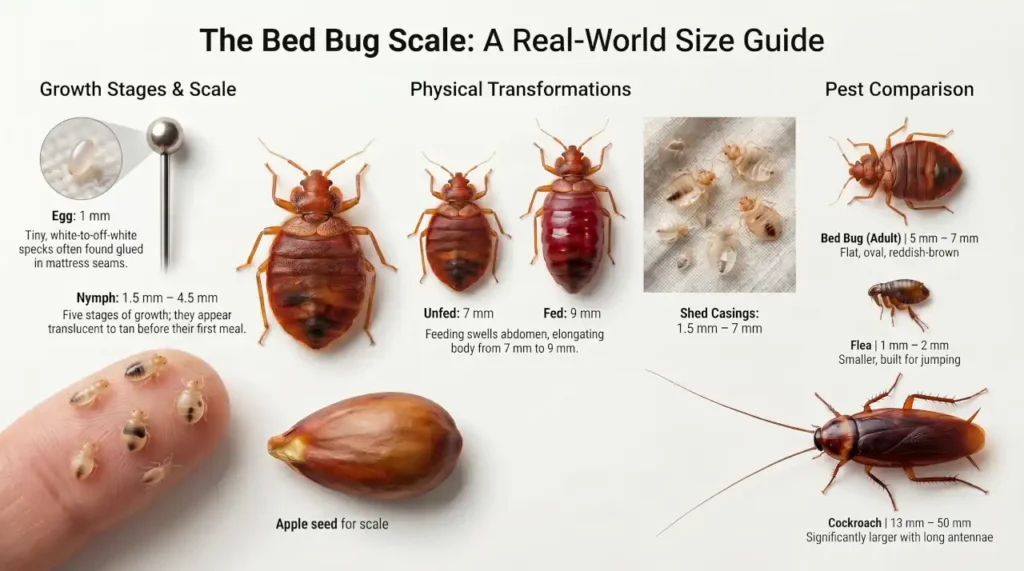
Adult bed bugs are typically 5 to 7 mm long (about 3/16 to 1/4 inch), making them roughly the size of an apple seed. Newly hatched nymphs can be as small as 1.5 mm, while bed bug eggs measure about 1 mm. Although bed bugs are small, they are visible to the naked eye and are commonly found hiding in mattress seams, bed frames, and nearby furniture.
How Big Are Bed Bugs?
Size is only part of the story. While bed bugs are small enough to hide in narrow cracks and fabric seams, their flattened bodies are what make them especially difficult to find. In real homes, where they hide is usually more important than how large they are.
The important thing is not just the length. Bed bugs are flat, oval, and built to squeeze into tiny hiding places, which is why they can be such a headache in real homes.
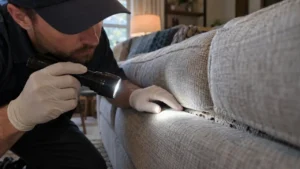
Quick tip: If you only remember one thing, remember this. Bed bugs are small, but they are not invisible. The fastest way to spot trouble is to check seams, corners, and cracks with a flashlight instead of relying on a quick glance. Bed bugs commonly hide in mattress seams, box springs, bed frames, headboards, and nearby cracks or crevices where they can stay protected during the day.
What Does a Bed Bug Look Like?
Size helps narrow down the possibilities, but shape is often what confirms the identification. Adult bed bugs have a flat, oval body with six legs, two antennae, and a broad abdomen. Their reddish-brown color becomes more noticeable after feeding. Although they have wing pads, bed bugs cannot fly. Their flattened shape allows them to squeeze into tight hiding spots that many other household pests cannot access.
Bed Bug Size at Each Stage of Their Life
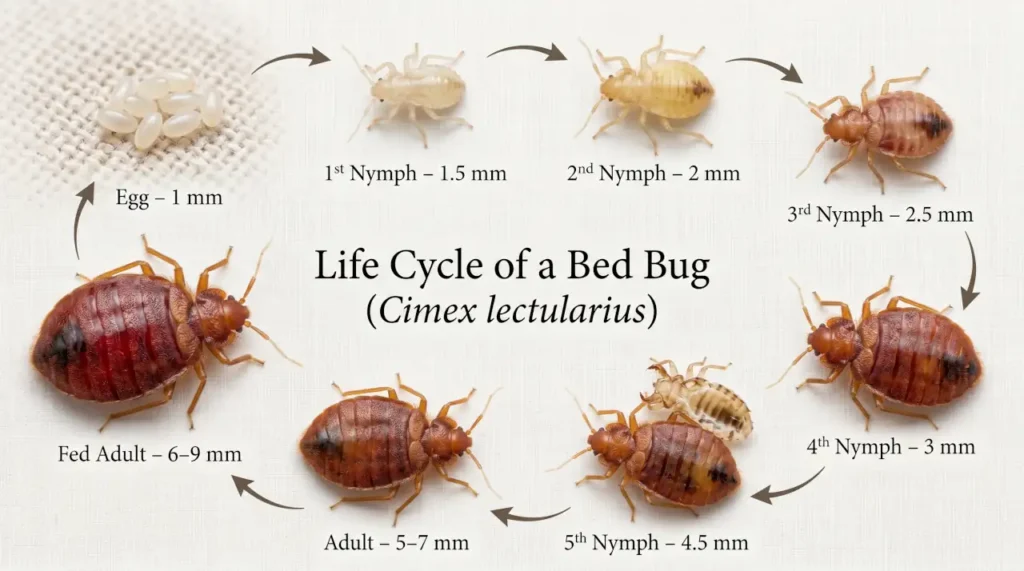
Bed bugs do not go from egg to giant overnight. They grow through five nymph stages before becoming adults, and they need blood meals before each stage can move forward. Bed bug eggs typically hatch within one to two weeks, and the insects pass through five nymph stages before reaching adulthood. The sizes below are the practical, real-world sizes most people see when they are trying to identify an infestation.
Eggs
Bed bug eggs are tiny. Think pinhead-sized eggs that are easy to overlook unless you’re inspecting carefully.
They are usually about 1 mm long, white to off-white, and easy to miss unless you are looking in the right place. They are often tucked into seams, cracks, and sheltered spots where the female can keep them safe. If you find a cluster of tiny white specks that look glued in place, that is a bad sign.
At this stage, eggs are not moving around, so people often overlook them. That is a mistake. Eggs are one of the biggest reasons bed bug infestations can spread so quickly, especially when early warning signs are missed. Once they hatch, the real mess begins. A single female can lay hundreds of eggs during her lifetime, which is one reason bed bug populations can grow surprisingly fast when early signs are missed.
Stage One
This is the moment most homeowners never see clearly, because the bug is so small and pale. Newly hatched bed bugs are very tiny, often around 1.5 mm long, and they are usually translucent or light in color until they feed. Babies are also known as nymphs, and they can bite just like adult bed bugs. As they grow, nymphs shed their exoskeletons before moving into the next developmental stage.
If you’re wondering how big bed bugs are when they hatch, newly hatched nymphs are usually about 1.5 mm long and appear pale or nearly translucent until their first blood meal.
Quick tip: If you find a tiny pale bug near a bed and it looks almost see-through, do not dismiss it as “just a baby bug.” Nymphs are often the first active stage in a home, and catching them early can save you a lot of trouble later.
Stage Two
By stage two, the bug is still small, but it is a little easier to notice. In the field, this is usually around the 2 mm mark. It may look a bit darker, especially if it has already fed at least once. A lot of people still miss them here because the body is so narrow and flat, and because they blend into fabric, wood, and shadows so well.
Stage Three
At stage three, bed bugs are closer to the size of a sesame seed or slightly larger, often around 2.5 mm. They are still immature, but the body shape becomes more recognizable. This is also when people start confusing them with other tiny household insects, especially if they are looking fast and under poor light.
Stage Four
Stage four bed bugs are larger again, usually around 3 mm. The color tends to darken more here, and the body starts to look more like a classic bed bug shape. If you see one at this stage, it is usually a sign that the infestation has been active long enough for several feeding cycles to happen.
Stage Five
This is the last nymph stage before adulthood. By now, the bug is often around 4.5 mm long, and it looks much more like a grown bed bug than a baby. The body is flatter, the color is stronger, and the insect is harder to ignore. People often spot stage five nymphs when they inspect bed seams, couch cushions, or cracks in wooden frames.
How Big Are Bed Bug Casings?
Bed bug casings, also called shed skins or shells, are usually about the same size as the bed bug that left them behind. Early-stage casings may be only 1.5 to 3 mm long, while adult shed skins can approach 5 to 7 mm. Finding these empty shells is often one of the first signs of an active infestation.
Adulthood
Adult bed bugs usually reach about 5 to 7 mm depending on age, feeding status, and species. In inches, that works out to roughly 3/16 to 1/4 inch long, which is why many people compare adult bed bugs to the size of an apple seed. They are flat, oval, and reddish-brown. Once they reach adulthood, they stop molting. Adult bed bugs are also surprisingly resilient and can survive for extended periods without feeding under the right conditions. From that point on, they keep the same basic body shape until they die.
If you are trying to identify them in your house, adult bed bugs are the easiest stage to recognize. They are dark enough to stand out more than nymphs, and their shape is more obvious. That said, “easier” does not mean “easy.” These insects are still very good at staying hidden.
Are They Big Enough to See?
Yes. Bed bugs are absolutely big enough to see with the naked eye. The problem is not that they are microscopic. The problem is that they are flat, shy, and great at hiding. Their flat bodies allow them to squeeze into tiny hiding spots near sleeping areas, including the harborages and nesting areas where bed bugs tend to gather, which is exactly why people often miss them until the infestation grows.
Many homeowners ask how big bed bugs are to the human eye. The answer is that adult bed bugs are easily visible without magnification. Even though they are small, most adults are large enough to spot during a careful inspection of mattress seams, bed frames, and nearby furniture.
A magnifying glass can help, but you do not need lab equipment to spot one. In fact, once you know the size and shape, a flashlight and a slow inspection usually matter more than anything else. Nymphs are harder to spot because they are smaller and paler, while adults are easier because they are darker and more defined. Nymphs look like smaller, paler versions of adult bed bugs, which makes them harder to notice during early infestations.
The real issue is timing. Bed bugs are active at night and rest in hidden spots during the day, including furniture, cracks, and even unexpected items such as books stored near sleeping areas. So even though they are visible, they often stay out of sight long enough to spread. That is why many people notice the bites before they ever notice the bug itself.
Quick tip: If you suspect bed bugs, inspect at night or right after you wake up. That is when you are most likely to catch them out in the open, especially near mattress seams, bed frames, and nearby furniture.
How Big Are Bed Bug Stains and Droppings?
Bed bug stains are usually much smaller than the insects themselves. Fecal spots often appear as tiny dark dots about the size of a marker tip or pinhead. Blood stains left on sheets are usually small smears or spots rather than large marks. While stain size varies, clusters of dark spotting around mattress seams, box springs, or bed frames are often a stronger sign of bed bugs than seeing a live insect.
What Bed Bug Size Looks Like During Real Inspections
In real inspections, size is often less important than location. Over the years, I’ve seen homeowners miss dozens of adult bed bugs that were fully visible because they were focused on the mattress surface instead of the seams, folds, and nearby wooden furniture where bed bugs naturally hide.
In many homes, homeowners are surprised to discover that fully grown adult bed bugs are visible without magnification, yet their habit of hiding in tight cracks and seams keeps them out of sight for weeks or even months.
One memorable inspection involved a homeowner who was convinced they had fleas because the insects seemed too small to be bed bugs. When we pulled back the mattress piping and examined the box spring corners with a flashlight, we found multiple bed bug nymphs ranging from about 2 mm to 4 mm long hiding along the fabric folds.
The lesson is simple: bed bugs are usually easier to find by searching the right hiding spots than by trying to judge their size alone.
How Their Size Changes After a Meal
A bed bug does not stay the same size all the time. After feeding, its abdomen swells, and the bug can look longer, wider, and much more bloated than it did before the meal. That is one reason people often mistake a fed bed bug for a different insect entirely. The body goes from flat and narrow to noticeably fuller.
Depending on how much blood they consume, a recently fed bed bug may reach roughly 6 to 9 mm in length before gradually returning to its normal size.
This change matters because a fed bed bug can look more obvious than an unfed one. Right after feeding, it may appear darker and more stretched out, especially in the abdomen. That swollen look usually fades as the insect digests the blood and returns to its flatter shape.
In actual infestations, recently fed bed bugs are often the ones homeowners notice first because they appear darker and more swollen than the flat insects shown in many identification photos. That difference in appearance causes a surprising amount of confusion during DIY inspections.
Quick tip: If you see a bug that looks unusually elongated, dark, and swollen near a bed or couch, do not assume it is “not a bed bug” just because it looks different from the clean, flat pictures online. Feeding changes the shape a lot.
How Big Are Nymphs?
Nymphs, often called baby bed bugs, are the immature stage of bed bug development and are usually the hardest stage for homeowners to identify. They start out tiny, pale, and almost translucent, then get bigger and darker as they molt through each stage. According to the CDC’s bed bug overview, bed bugs pass through five nymph stages and require a blood meal before molting into the next stage.
In everyday terms, nymphs usually run from about 1.5 mm at the first stage up to about 4.5 mm by the final stage before adulthood. That means the whole nymph phase covers a pretty wide size range, but the body plan stays the same. They still have that classic flat bed bug shape, just in miniature. If you ever see one, remember that tiny does not mean harmless. Nymphs bite too.
The easiest way to think about nymphs is this: they are baby bed bugs that gradually grow into adult-sized pests. They are not a different species, and they are not a harmless lookalike. They are just younger bed bugs that have not finished growing yet. Homeowners often refer to nymphs as baby bed bugs, but they are simply younger versions of the same insect. The main differences are size, coloration, and developmental stage.
By the final nymph stage, bed bugs typically reach about 4.5 mm long before becoming adults. For homeowners searching how big bed bug nymphs are, the answer ranges from roughly 1.5 mm to 4.5 mm depending on the developmental stage.
Why Homeowners Misjudge Bed Bug Size
One of the biggest misconceptions I see is that people expect bed bugs to be much larger than they actually are. Many homeowners imagine something closer to a small beetle, so they dismiss early-stage bed bugs because they seem too tiny to match what they expected.
In practice, size alone is rarely enough for identification. The combination of body shape, hiding behavior, location, and evidence such as shed skins or dark spotting usually provides a much more reliable answer than size by itself.
Bed Bug Size Comparison at a Glance
For quick reference, adult bed bugs are roughly the size of an apple seed. They are typically larger than fleas and booklice, similar in size to some bat bugs, and much smaller than common household cockroaches. Comparing size alone is not always enough for identification, but it can help narrow down the possibilities when combined with body shape and behavior.
The Size of Bed Bugs Compared to Other Pest Insects
Bed bugs get confused with a lot of other pests, and size is one of the best ways to sort them out. Fleas are usually smaller and built for jumping. Ticks are arachnids, not insects, and their size can change a lot depending on life stage and how much blood they have taken in.
Booklice are usually very small, often around 1 to 2 mm. Spider beetles are also small, but they tend to look rounder and more beetle-like. Bat bugs and swallow bugs are close relatives of bed bugs and can look almost identical at a glance.
Standard lice are small parasites too, but they live on hosts, not in mattress seams. Roaches are generally much larger overall, even when you are looking at smaller household species. While many homeowners wonder whether anything naturally controls bed bugs, the reality is that even their predators rarely eliminate an infestation once it becomes established indoors.
Fleas
If you’re comparing how big bed bugs are compared to fleas, most adult fleas are slightly smaller than adult bed bugs, though size can overlap depending on the life stage being compared. They’re built for movement, not hiding in flat seams. They are famous for jumping, which is one big reason they behave differently from bed bugs. Bed bugs crawl and hide. Fleas leap and move fast. That difference alone often helps you tell them apart.
Ticks
Ticks are not insects at all. They are arachnids. Their size depends heavily on the species and whether they have fed. A tick nymph can be tiny, but an engorged adult can look much bigger after a blood meal. If you are comparing a flat, reddish-brown bug near bedding to a tick, the body shape and leg count matter just as much as size.
Booklice
Booklice are very small and often pale, which is why people sometimes confuse them with bed bug nymphs. They are usually about 1 to 2 mm long. The difference is that booklice feed on molds, fungi, and other organic debris, not blood. So even though they may be tiny like bed bugs, the behavior and the location usually give them away.
Standard Lice
Standard lice are also tiny parasitic insects, but they live on a host rather than hiding in furniture seams. They are not the same thing as bed bugs, even though people sometimes lump them together because both are small and annoying. If the bug is coming from clothing, hair, or direct contact with a person, lice enter the conversation. If it is coming from the bed frame, mattress, or sofa, bed bugs move to the top of the list.
Spider Beetles
Spider beetles are another common bed bug lookalike. They are usually just a few millimeters long and can look creepy enough to cause panic, but they have a more rounded beetle shape. Some species are around 2.5 to 4.5 mm, and others are a little larger. If the body looks more domed than flat, that leans away from bed bugs.
Swallow Bugs
Swallow bugs are close cousins in the Cimicidae family, which is why they can look so much like bed bugs. They are associated with bird nests rather than human beds, but from a size and shape standpoint, they can be very similar. If you have birds nesting near the house, this is one reason to pay attention to what is actually hiding in the nesting area, not just in the bedroom.
Bat Bugs
Bat bugs are another Cimex relative, and they are one of the biggest reasons people misidentify bugs in homes, attics, and wall voids. They are close enough in appearance to bed bugs that a quick look is often not enough. The difference often comes down to the source of the infestation, such as bats in a structure rather than people sleeping in a room.
Roaches
Roaches are usually much larger than bed bugs. Even smaller household roaches can be around a quarter inch, and common larger species like the American cockroach can reach around 2 inches. Roaches also have a different body profile, longer antennae, and a more obvious oval shape. If you are deciding between a roach and a bed bug, size plus shape usually settles the question quickly.
Quick tip: If the bug is flat, small, reddish-brown, and hiding in mattress seams or bed frames, think bed bug first. If you are also finding dark pellet-like debris around bedding or furniture, compare it with cockroach droppings so you do not mistake one problem for another.
Also Read: Bed Bug Bite vs Mosquito Bite: How to Tell the Difference Fast
Safety Note When Inspecting for Bed Bugs
Avoid applying household pesticides directly to mattresses or sleeping areas unless the product label specifically allows that use. The same caution applies to common household disinfectants and cleaners that are often promoted online as bed bug solutions. Improper treatment can expose people and pets to unnecessary chemicals while doing little to solve the infestation. If an infestation is widespread or recurring, professional identification and treatment are often the safest approach.
Final Thoughts
So, how big are bed bugs? Small enough to hide, but not too small to see. Eggs are pinhead-sized, nymphs start tiny and grow through five stages, and adults usually land in the 5 mm to 7 mm range. That means bed bugs are easy to overlook when you are rushing, but not impossible to find when you slow down and inspect the right places. Bed bugs are flat, secretive insects that spend most of their time hidden near sleeping areas, which is why size alone never tells the whole story.
The bigger lesson is this: do not wait for a huge infestation before taking the problem seriously. If you can spot the bug early, you have a better shot at controlling it before it spreads through the room or the whole home. And once you know the size at each stage, the mystery gets a lot smaller.