You opened the cupboard for a bag of rice and a small moth fluttered out. Now you’re wondering how to get rid of pantry moths before they take over your kitchen. I’ve dealt with this call for more than 18 years, and the fix is simpler than most people expect. You just have to do it in the right order.
Also Read: Do Pincher Bugs Actually Pinch? What to Do If You Find One
Quick Answer
To get rid of pantry moths, discard visibly infested food, vacuum pantry shelves and cracks, and clean the shelves with soapy water. Store inspected dry goods in sturdy, airtight containers, and use pheromone traps to monitor remaining adult moths. Check nearby cupboards, pet food, and birdseed for hidden sources. Continue monitoring for six to eight weeks because moths may emerge from cocoons missed during the initial cleanup.
Key Takeaways
Types of Moths
Not every moth in your kitchen is a pantry moth. Some fly in from outside, drawn by the porch light. Others live in your closet and have nothing to do with your food. Two species cause nearly all the real pantry trouble in homes, so they’re the ones worth learning.
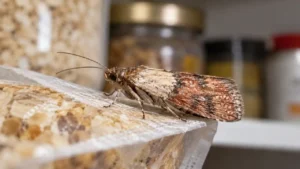
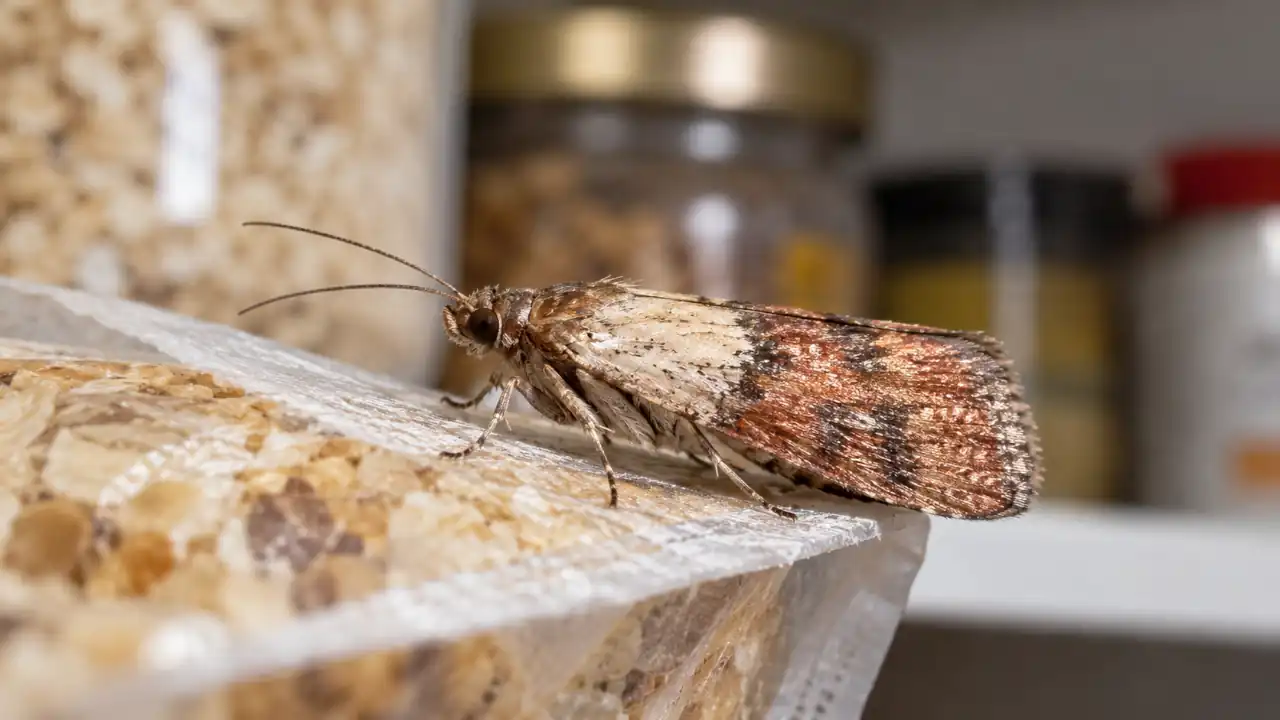
The first is the Indian meal moth, and it’s the one I see most often. It’s small, about the size of a grain of rice when it rests with its wings folded. The giveaway is the wing color. The half closest to its body looks pale gray or cream, and the outer half has a coppery, reddish-brown tint. Once you’ve seen one, you won’t mix it up with a random garden moth.
The second is the Mediterranean flour moth. This one is plainer. It’s a dull gray, with faint wavy lines across the wings, and it sits with its body slightly raised. It likes flour, cornmeal, and other milled products, but it will happily eat the same things the Indian meal moth does.
Both moths behave similarly. Adults fly, mate, and lay eggs, while the larvae feed on stored food. A moth flying around your kitchen may be the result of an infestation that started weeks earlier in a forgotten package.
Pantry moths also have nothing to do with clothes moths. Clothes moths go after wool, silk, and fur. Pantry moths go after food. If you’re finding holes in sweaters but never see webbing in your flour, you’re dealing with a different pest and a different plan.
What Are the Signs of a Pantry Moth Infestation?
Pantry moths often leave evidence in the food or packaging before you notice adults flying around the kitchen. Look for these signs:
You may also notice fine debris or unusual residue inside a package. Treat that as a reason to inspect the food more closely, not as proof of pantry moths on its own. Webbing, live larvae, and other insect evidence provide stronger confirmation.
Common Foods Pantry Moths Infest
Quick Tip: Check pet food and birdseed, especially bags stored in garages or utility closets. These products are easy to overlook during a pantry cleanout and can harbor pantry moth larvae.
How to Tell If You Have a Pantry Moth Infestation?
One moth doesn’t always mean you have a problem. A single moth can slip in through a door or ride in on a grocery bag. What matters is the pattern. If you keep seeing moths day after day, something in your kitchen is feeding them.
Pantry moths often enter homes in infested dry goods rather than appearing because a kitchen is dirty. Eggs or small larvae may already be present in flour, cereal, nuts, dried fruit, birdseed, or pet food when you buy it. Once the larvae develop, they can spread into nearby packages or crawl away from their food to pupate. That is why finding the original source matters more than simply killing the moths flying around the kitchen.
Pantry moths are not necessarily a sign of poor housekeeping; finding the infested product and stopping the larvae from spreading are what matter most.
Here’s how I check. I start with the open packages, because moths get into those first. I pour a little flour or cereal onto a white plate and look closely. Webbing, tiny worms, or lumpy grains tell me what I need to know. I also run my finger along the top inside edge of jars and boxes, since larvae like to crawl upward before they spin a cocoon.
Inspect the pantry one shelf at a time. Check opened packages first, followed by unopened cardboard boxes, thin plastic bags, and stored pet food. Separate any suspect products from unaffected food, and check shelf corners and nearby walls before returning items.
Then I look at the walls. Larvae leave their food when they’re ready to pupate, and they can travel a surprising distance. I’ve found cocoons on ceiling corners, behind canned goods, under shelf liners, and even in the crease of a cabinet door. If you see a caterpillar on the wall, the source is usually close by, but it may not be where you’d expect.

Check sealed packages too. Pantry moth larvae can chew through some thin packaging, and eggs or larvae may already be inside a product before you buy it. Cardboard boxes and thin plastic bags are not reliable barriers. If you find an infested item, inspect nearby dry goods and transfer unaffected food into sturdy, airtight containers.
How to Get Rid of Pantry Moths Step by Step
The most effective way to get rid of pantry moths is to remove infested food, clean hidden areas, and protect unaffected dry goods. Killing visible adults alone will not solve the problem if larvae remain in food or have already formed cocoons elsewhere.
1. Find the Infested Food and Throw It Out
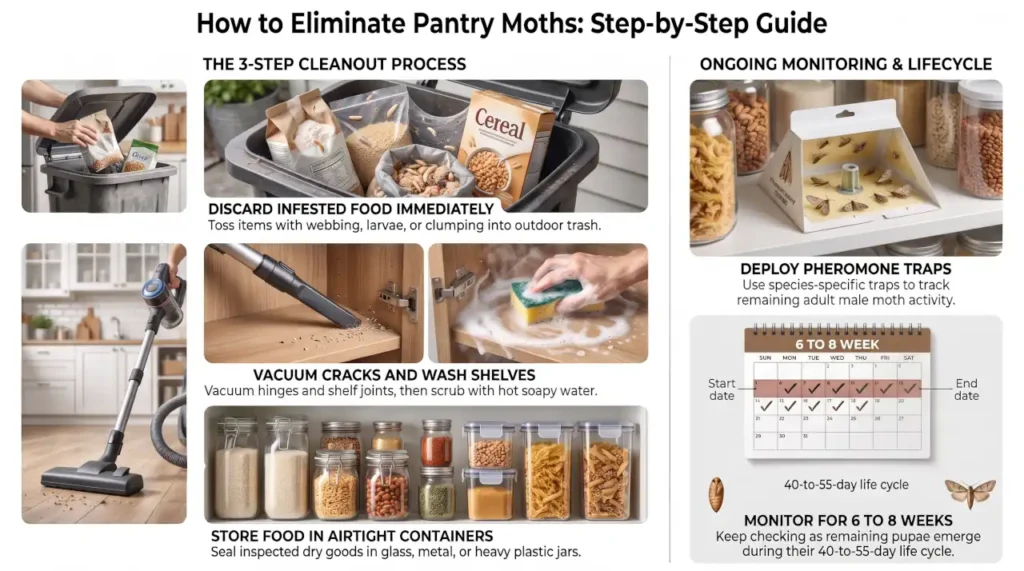
Take everything out of the pantry and inspect it, including packages you’re confident are fine. Open packages where practical, and check the seams, folds, and inner surfaces for webbing or larvae. Food containing live larvae, silk-like webbing, or obvious insect contamination should be discarded. If flour or grains are clumped together, look closely for webbing and other signs before deciding whether the product is infested, since moisture can also cause clumping.
Seal the bad food in a plastic bag before it goes in the trash. If you toss it loose, larvae can crawl out of the bin and right back into your house. Take the bag outside to the main trash can, not the one under your sink.
Throwing away expensive flour can be frustrating, but picking out visible larvae is not a reliable way to make the remaining food safe. Discard visibly infested products rather than trying to salvage them.
If you have a freezer with room, freezing may help treat dry goods that show no visible signs of infestation but that you suspect could contain pantry pests. A commonly recommended approach is to freeze the food at 0°F (-18°C) or colder for at least four days, allowing additional time for larger packages to reach that temperature throughout. Freezing does not remove contamination, so discard visibly infested food.
2. Empty and Vacuum the Pantry
Once the shelves are bare, grab your vacuum and the crevice tool. Larvae wander before they pupate, so they end up in places you’d never look at first glance. I always check the shelf pin holes, the gap where the shelf meets the wall, the door hinges, and the underside of each shelf.
Run the nozzle slowly along every seam and corner, checking for eggs, larvae, and cocoons that can be mistaken for dust or lint.
When you’re done, take the vacuum bag or canister outside right away and empty it into a sealed trash bag. If you leave it in the closet, you’ve just moved the problem somewhere else in your home.
3. Clean the Shelves and Pantry Interior
Now wash everything. Use hot water and dish soap on every shelf, the walls, the ceiling, the floor, and the door. Scrub the corners where crumbs collect. Dry the surfaces well after. Moisture invites other pests, and you don’t want to trade one problem for another.
Vinegar is not a reliable treatment for pantry moth eggs or larvae. Thorough cleaning removes food debris and helps you find hidden signs of infestation, but it does not replace removing infested food.
Also check nearby cabinets, the top of the fridge, and the areas behind your toaster or coffee maker. Remove any food debris that could attract or sustain pests.
4. Store Dry Foods in Airtight Containers
This is one of the most effective ways to prevent pantry moths from spreading again. Once the pantry is clean, transfer inspected dry goods into glass jars, metal tins, or sturdy plastic containers with secure, tight-fitting lids.
Inspect food before transferring it. Airtight containers help prevent new infestations and limit the spread between packages, but they cannot eliminate eggs or larvae already inside contaminated food.
You don’t need to buy a full set of fancy containers on day one. Start with the foods moths love most, like flour, cereal, rice, pasta, nuts, and pet food. Then work your way through the rest as you go.
Inspect new dry goods before storing them. If you buy in bulk, keep new products separate from existing supplies for a week or two so you can spot signs of infestation before they spread.
5. Use Pantry Moth Traps
Pheromone traps are useful for monitoring pantry moth activity, but they are not a substitute for removing infested food. Most pantry moth traps sold for household use attract males of a particular species, such as the Indian meal moth. They help you detect continued activity and judge whether your cleanup is working, but they won’t catch every adult or eliminate eggs and larvae inside food packages. Catching males may help reduce mating opportunities, but you should not rely on traps alone to control an established infestation. Choose a trap labeled for the moth species you’re dealing with, and follow the manufacturer’s placement and replacement instructions.
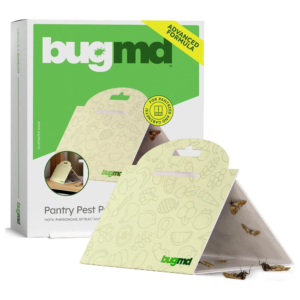
Place traps according to the manufacturer’s instructions, preferably near areas where moth activity has been observed. Check them weekly and replace them when directed or sooner if the sticky surface becomes covered with insects or dust. Continue monitoring for several weeks after cleaning.
A few catches after treatment may come from adults emerging from missed cocoons. Record weekly catches to see whether activity is declining. If catches continue or increase, inspect stored food and nearby cupboards again. An empty trap does not prove the infestation is gone, so continue checking for other signs.
Why Are Pantry Moths Still Appearing After Cleaning?
This is the most common question I get after a cleanup. Someone does everything right, and two weeks later a moth shows up again. It’s frustrating, but it doesn’t always mean you failed.
The first reason is timing. Some mature larvae may leave infested food and form cocoons in cracks, shelf joints, baseboards, or ceiling corners before you clean. Adults can emerge from those missed hiding places afterward. Occasional sightings soon after cleanup do not automatically mean it failed, but activity should decline. If sightings continue or increase, inspect the pantry and nearby storage areas again.
The second reason is a missed food source. Check pet food, birdseed, dried flowers, craft materials, and dry goods stored in garages, closets, or utility rooms. If sightings continue or stop declining, search beyond the kitchen rather than assuming the source is where you first noticed the moths.
The third reason is that larvae may have traveled away from the food before pupating. Check baseboards, window frames, door tops, and other nearby hiding places, and vacuum along room edges as well as pantry shelves.
The last reason is new arrivals. Inspect new groceries before storing them, and use airtight containers to limit the spread if a product is infested.
Should You Use Insecticide for Pantry Moths?
For most pantry moth infestations, insecticide sprays are unnecessary. The first priority is finding and removing the infested food, vacuuming hiding places, and cleaning the storage area.
The key issue is where the product is being applied. Never spray food, food packaging, utensils, or food-contact surfaces unless the product label explicitly permits that use. Even products intended for household pest control may be unsuitable for a pantry or kitchen storage area. Follow the label’s directions for permitted locations, food removal, ventilation, and re-entry.
Spraying visible moths will not reliably reach eggs or larvae inside food packages or larvae that have moved into cracks and corners to pupate. Removing the source remains essential.
If you’re interested in reducing unnecessary pesticide use around your home, our guide to eco-friendly pest control explains some lower-toxicity approaches and where they may be useful. For pantry moths, though, start by removing infested food and cleaning the places where larvae may hide.
When to Call a Professional for Pantry Moths
Most pantry moth infestations can be handled with a thorough food inspection, removal of infested products, and careful cleaning. Consider contacting a qualified pest control professional if moths continue appearing despite repeated cleanouts, you cannot locate the source, or activity persists in multiple rooms or storage areas.
Before arranging treatment, explain what you have already inspected and cleaned, including any pet food, birdseed, and dry goods stored outside the kitchen. Ask the professional to identify the likely breeding source and explain the proposed treatment, especially if pesticides may be used near food storage areas.
How Long Does It Take to Get Rid of Pantry Moths?
Plan on about four to eight weeks. I know that’s not what you want to hear, but it matches the pace of the moth’s life cycle.
Under good conditions, Indian meal moths can go from egg to adult in roughly a month and a half. Penn State Extension notes that a typical life cycle runs about forty to fifty-five days, and it can be shorter when the weather is warm. Cooler temperatures slow everything down, which stretches the timeline.
During the first week, you may still see adult moths after the main cleanup. Activity should generally decline over the following weeks if you have removed infested food and cleaned nearby hiding places. Some adults may emerge from missed cocoons, so judge progress by sightings, trap catches, and follow-up inspections.
Also Read:
Don’t stop monitoring just because you have a quiet week. Keep checking stored food, inspecting traps, and maintaining airtight storage for at least six to eight weeks after the main cleanup. This gives you time to detect moths emerging from missed sources or pupae that escaped the initial treatment.
If moths continue appearing after six to eight weeks, repeat the inspection and check overlooked food sources or nearby storage areas. Persistent activity may mean the source has not been fully removed.
Final Thoughts
Pantry moths are frustrating, but a thorough cleanup and continued monitoring can usually bring the infestation under control. The key is to remove the source, protect unaffected food, and check for signs of renewed activity.
Avoid unnecessary insecticide use around food storage areas. If moths persist despite repeated inspections and cleaning, consider having the infestation professionally assessed.