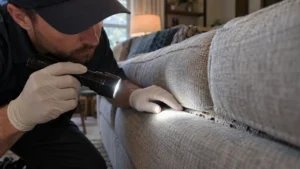
Can bed bugs make you sick? Yes. Although bed bugs are not known to spread diseases to people, their bites can cause itchy skin reactions, allergic responses, and secondary infections from scratching. A persistent infestation can also disrupt sleep and affect mental well-being. Anemia is a rare complication associated with severe, prolonged infestations.
The risk depends on the severity of the infestation and how your body reacts. Some people develop noticeable welts, while others show few or no visible signs. Here’s how to recognize the main health risks, when to seek medical care, and how to manage the problem safely.
Also Read: How To Check For Bed Bugs Before They Spread Further
Quick Answer: Can Bed Bugs Make You Sick?
Yes. Bed bugs can cause itchy skin reactions, allergic responses, secondary skin infections from scratching, and sleep disruption or anxiety. They are not known to spread diseases to people. Anemia is a rare complication associated with severe, prolonged infestations. Seek medical care for signs of infection or severe allergic reactions.
Key Takeaways
Bed bug bites can cause itchy bumps, localized swelling, and, in some people, more pronounced allergic skin reactions. Scratching can break the skin and increase the risk of a secondary infection. Increasing redness, warmth, pain, pus, or fever should prompt medical assessment. Anyone experiencing difficulty breathing or swelling of the tongue or throat should seek emergency medical care.
Dr. Raj Parekh, Dermatologist
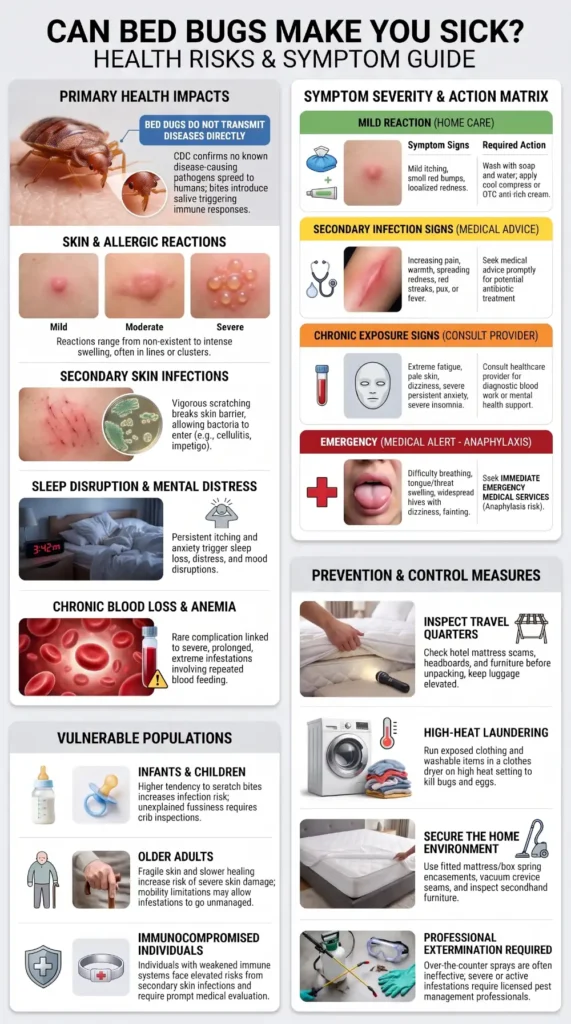
Do Bed Bugs Spread Diseases?
The reassuring news is that bed bugs are not known to spread diseases to people. The U.S. Centers for Disease Control and Prevention (CDC) explains that bed bugs can cause itching, allergic reactions, and other health problems, but they are not known to transmit diseases.
Finding microorganisms in a bed bug does not prove that the insect can transmit an infection through a bite. Researchers have investigated whether bed bugs can carry disease-causing organisms, but there is no established evidence that they transmit diseases to people under normal conditions.
If you’re worried about catching HIV or hepatitis from a bed bug bite, current evidence does not support treating bed bugs as a known route of transmission for these infections.
That does not make bed bugs harmless. Their bites can irritate the skin, scratching can lead to secondary infections, and an ongoing infestation can interfere with sleep and emotional well-being. Severe, prolonged infestations have also been associated with anemia, although this is uncommon.
Although bed bugs are not known to transmit diseases to people, a confirmed infestation still needs to be addressed. Treatment options vary, and any pesticide should be specifically labeled for bed bug control and used strictly according to its instructions. No single product should be presented as a guaranteed solution.

Health Risks of Bed Bugs
The most relevant health concerns fall into three broad categories:
Not everyone experiences these effects. Some people barely react to bites, while others develop significant symptoms. The severity of a skin reaction also cannot tell you how many bed bugs are present.
Bed Bug Bite Symptoms and Physical Health Risks
Bed bug bites affect people differently, ranging from mild itching and redness to more severe allergic reactions. Scratching can also lead to skin infections, while anemia is a rare concern in severe, prolonged infestations. Here’s how to recognize these problems and know when to seek medical care.
Skin Reactions and Allergic Responses
When a bed bug feeds, it introduces saliva into the skin. Proteins in that saliva can trigger an immune response, causing itching, redness, and swelling.
Typical reactions include small red bumps, raised welts, and localized swelling. Several bites may appear close together or in a line, often on exposed skin such as the arms, neck, face, shoulders, and legs. Bite patterns alone cannot confirm bed bugs because other insects and skin conditions can cause similar marks. If you’re comparing possible causes, this guide explains how to tell bed bug bites from flea bites.
People can react very differently to the same exposure. One person may develop noticeable welts while another has little or no visible reaction. Some reactions also appear after a delay, so the absence of immediate symptoms does not rule out bites.
More pronounced reactions can include large swollen welts, hives, burning, or fluid-filled blisters. Itching may last for days or longer. If symptoms are severe or persistent, seek medical advice rather than repeatedly trying new treatments.
Severe allergic reactions are uncommon but can be life-threatening. Get emergency medical help for difficulty breathing, swelling of the tongue or throat, fainting, or other signs of a rapidly developing whole-body reaction.
Remember that skin marks are not reliable proof of an infestation. Look for physical evidence such as live insects, shed skins, eggs, or characteristic spotting around the bed and nearby hiding places.
Secondary Skin Infections
Scratching can turn an itchy bite into a more serious skin problem. Breaking the skin allows bacteria to enter, potentially causing an infection.
An infected area may become increasingly red, warm, swollen, or painful. Pus, spreading redness, red streaks, or fever are additional warning signs. Secondary infections can include conditions such as cellulitis or impetigo, which may require medical treatment.
Seek medical advice if symptoms worsen or you suspect an infection. A clinician can assess the affected skin and determine whether antibiotics or another treatment is appropriate. Not every irritated bite needs antibiotics, but a worsening infection should not be ignored.
To reduce the risk, wash bites gently with soap and water, keep your fingernails short, and avoid scratching or picking at scabs. Treating the itch is safer than repeatedly damaging the skin.
Blood Loss and Anemia
Bed bugs feed on blood, but a few bites are not expected to cause anemia in a healthy adult. The concern is repeated blood loss over time in a severe, prolonged infestation.
Medical case reports have documented severe anemia in people exposed to heavy bed bug infestations. These reports show that repeated feeding can become a meaningful health concern under extreme conditions, but they do not establish how frequently anemia occurs among people with bed bugs. It remains a rare complication rather than an expected result of an ordinary infestation.
People who already have medical conditions affecting their health may have less reserve to cope with ongoing blood loss. However, age alone does not mean someone will develop anemia, and symptoms should not automatically be attributed to bed bugs.
Possible warning signs include unusual fatigue, weakness, dizziness, pale skin, shortness of breath, or a racing heartbeat. These symptoms have many possible causes. If they develop during or after a severe, prolonged infestation, tell a healthcare professional about the exposure. They can determine whether blood tests or other investigations are needed.
For most homeowners, anemia is not a likely consequence of bed bug bites. The practical priorities are to address a confirmed infestation and seek medical assessment for concerning symptoms.
Mental Health Effects
An infestation can affect more than the skin. Persistent itching, uncertainty about where bed bugs are hiding, and worry about being bitten again can make home feel less comfortable and safe.
Sleep Problems and Insomnia
Bed bugs commonly feed while people are resting, often at night, although their activity varies. The worry of being bitten can disrupt sleep even when a person does not notice the bites immediately.
Some people repeatedly inspect their bedding, wake up at every itch, or move to another room in an attempt to escape the problem. Over time, poor sleep can affect concentration, mood, patience, and everyday functioning.
If sleep disruption persists or interferes with work and family responsibilities, consider speaking with a healthcare professional while you work on resolving the infestation.
Anxiety and Depression
Anxiety is an understandable response to discovering bed bugs. People may worry about bringing bugs into other rooms, spreading them to friends or family, or facing another unsuccessful treatment.
Some homeowners repeatedly inspect their clothes and bedding, feel uneasy at bedtime, or avoid inviting visitors over because they feel embarrassed. Bed bugs can affect homes of any cleanliness level, so an infestation is not a reflection of someone’s hygiene.
When the problem continues, stress may contribute to low mood, isolation, or depression symptoms. If distress begins interfering with daily life, take it seriously and seek appropriate support. You do not need to wait until the infestation is resolved to ask for help.
Extreme Fear and Distress About Bed Bugs
You may encounter the term “bedbug psychosis” online. It is not a standard standalone psychiatric diagnosis, and intense fear about an infestation does not automatically mean someone has a psychotic disorder.
Some people become preoccupied with checking their bedding, experience crawling sensations, or remain convinced that bugs are present despite finding no physical evidence. These experiences can have different explanations, including anxiety, skin irritation, sleep deprivation, or other health conditions.
Severe distress can also lead to excessive cleaning, unnecessary furniture disposal, or unsafe pesticide use. If fear persists despite a careful inspection or significantly disrupts daily life, a qualified pest professional can investigate whether bed bugs are present, while a healthcare or mental health professional can help address the distress.
Who Is Most at Risk?
Anyone can experience health problems related to bed bugs, but some households may need extra care because of age, existing medical conditions, or difficulty managing an infestation.
Children and Babies
Children can develop itchy reactions and may scratch bites, increasing the risk of broken skin and secondary infection. Reactions vary, and some children may show little visible evidence of bites.
Babies cannot explain what is bothering them. New skin marks, unusual fussiness, or changes in sleep may prompt a closer look, but these signs are nonspecific and do not confirm bed bugs. Inspect the crib seams and nearby sleeping area for physical evidence.
Contact a pediatrician if a baby has a concerning skin reaction, signs of infection, persistent unusual sleepiness, or other symptoms that worry you. Unusual tiredness or pale skin should be medically assessed rather than automatically blamed on bed bugs. Breathing difficulties or swelling of the face or throat require emergency care.
Older Adults
Some older adults have fragile skin, slower wound healing, or medical conditions that complicate the management of skin problems. Mobility limitations or difficulty preparing a home for treatment can also allow an infestation to persist.
If you’re helping an older parent or neighbor, ask about itching, sleep disruption, or new skin marks. Offer practical assistance with arranging an inspection or treatment if needed. Avoid assuming that symptoms are caused by bed bugs without checking for other possible explanations.
People With Compromised Immune Systems
People whose immune systems are weakened by certain illnesses, cancer treatments, autoimmune conditions, or medications may need to be particularly careful about possible skin infections.
If you have a weakened immune system, seek medical advice for bites that become increasingly painful, swollen, warm, or infected-looking. Address the infestation promptly, but do not assume that every skin symptom is caused by bed bugs.
When Bed Bug Infestations Become Dangerous
Most bed bug-related skin reactions can be managed, but some symptoms need medical attention. A worsening bite, signs of infection, or unusual symptoms during a severe, prolonged infestation should not be ignored.
Symptoms That Need Medical Attention
| Symptom | What to do |
| Increasing redness, warmth, swelling, or pain around a bite | Seek medical advice, particularly if symptoms worsen |
| Pus, spreading redness, red streaks, or fever | Obtain prompt medical assessment |
| Unusual fatigue, dizziness, weakness, or pale skin after a severe, prolonged infestation | Contact a healthcare professional |
| Persistent anxiety, severe sleep disruption, or low mood | Consider healthcare or mental health support |
| Trouble breathing, tongue or throat swelling, or fainting after a suspected bite | Seek emergency medical help |
These symptoms do not prove that bed bugs are responsible. A healthcare professional can assess the likely cause and recommend appropriate treatment.
Emergency Situations
Get emergency medical help for difficulty breathing, swelling of the tongue or throat, fainting, or other signs of a severe allergic reaction. Widespread hives accompanied by breathing problems, dizziness, or collapse can indicate anaphylaxis. If you have a prescribed epinephrine auto-injector, use it as directed and call emergency services.
Seek urgent assessment for rapidly spreading skin redness, fever with a worsening skin infection, or severe weakness accompanied by other concerning symptoms. If infestation-related distress leads to thoughts of self-harm, seek immediate help through local emergency services or a crisis support service.
Treatment and Medical Care
Most mild bed bug bite reactions improve with simple skin care. Treatment can relieve symptoms, but it will not eliminate the infestation itself.
Managing Mild Bite Reactions
For mild itching and swelling:
Calamine lotion or an appropriate over-the-counter hydrocortisone product may help with itching. Oral antihistamines may also help some people, but they can cause side effects such as drowsiness.
Ask a pharmacist or healthcare professional if you are unsure which treatment is appropriate, particularly for children, pregnancy, existing medical conditions, or other medications.
Keep your nails short and avoid repeatedly applying new products if the reaction is not improving. A clinician can determine whether a more severe reaction needs prescription treatment.
Treating Infected Bites
If a bite becomes increasingly painful, warm, swollen, or begins producing pus, seek medical advice. A clinician can determine whether the skin is infected and whether antibiotics or another treatment is needed.
Do not use leftover prescription medication or antibiotics without professional guidance. Fever, red streaks, or rapidly spreading redness warrant prompt medical assessment.
Managing Anemia
If a healthcare professional suspects anemia, they may recommend blood tests to investigate the cause. Treatment depends on the findings. Iron supplements are appropriate for some types of anemia but are not a universal treatment for fatigue or weakness.
If ongoing bed bug exposure is contributing to blood loss, addressing the infestation is also important. Do not assume bed bugs are the cause of anemia without a medical assessment.
Getting Support for Sleep and Emotional Distress
If anxiety, low mood, or sleep problems persist, speak with a healthcare professional or counselor. Support can help you manage the emotional effects while the infestation is being addressed. There is no reason to feel embarrassed about asking for help.
Prevention Is Key
Preventing bed bugs from entering or spreading through your home can reduce the risk of a prolonged infestation.
When Traveling
Before unpacking in a hotel or other accommodation, inspect the mattress seams, headboard, and nearby furniture for live bed bugs, shed skins, or dark spotting. Keep your suitcase away from the bed and upholstered furniture while you inspect. A hard-sided luggage rack can help keep belongings off the floor, but inspect the rack before using it.
An inspection cannot guarantee that a room is free of bed bugs, so avoid placing luggage directly on beds or near likely hiding places.
When you return home, inspect your luggage and follow care-label instructions for clothing and washable items. A clothes dryer on a suitable high-heat setting can kill bed bugs and their eggs when items receive sufficient heat for long enough. Washing alone should not be relied on to eliminate them. Handle potentially infested belongings carefully to avoid spreading bugs to other rooms.
Protecting Your Home
Inspect secondhand furniture, mattresses, and other used items before bringing them indoors. If you find signs of bed bugs in an upholstered couch, follow a careful approach to getting rid of bed bugs in your couch without damaging it.
Reducing clutter around sleeping areas gives bed bugs fewer places to hide and makes inspection easier.

A properly fitted mattress and box spring encasement can reduce hiding places and make it easier to spot signs of activity. It is a useful part of prevention and monitoring, but it should not be treated as a complete solution to an existing infestation.
Recognizing Early Signs
Look for live bugs, pale eggs, shed skins, and dark spotting around mattress seams, bed frames, and nearby hiding places. Small blood stains on bedding can be another clue, but no single sign should be used in isolation. If you’re unsure whether the signs point to bed bugs, here’s how to check for bed bugs around your mattress, bed frame, and nearby furniture.
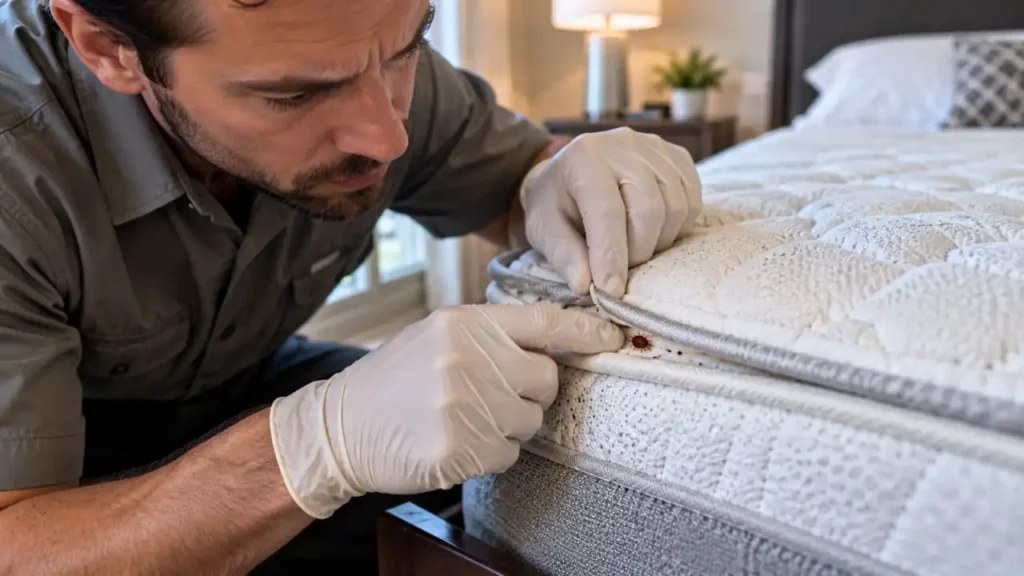
Bites alone cannot reliably confirm bed bugs. If you suspect an infestation, look for physical evidence and arrange a suitable inspection rather than waiting for more bites to appear.
Vacuuming can help remove visible bed bugs, shed skins, and other debris from mattress seams, bed frames, and nearby furniture, but it won’t eliminate an established infestation on its own. A vacuum with a suitable crevice attachment can help reach narrow gaps and seams. After vacuuming, carefully seal and dispose of the vacuum contents according to the manufacturer’s instructions.

When to Call a Professional
Bed bugs hide in narrow spaces, lay eggs in protected locations, and may survive treatments that fail to reach them. Some populations are also resistant to certain insecticides. Spraying visible bugs or combining store-bought products without a plan can leave hidden bugs behind, expose people or pets to unnecessary chemicals, or spread the infestation when belongings are moved.
If you find live bed bugs or credible signs of an infestation, consider contacting a licensed pest control professional with specific bed bug experience. Ask about the inspection process, treatment methods, preparation requirements, and follow-up visits. Act promptly if someone in the household needs extra assistance, such as a baby, an older adult with mobility limitations, or a person with a weakened immune system.
Final Thoughts
So, can bed bugs make you sick? Yes. Although they are not known to spread diseases to people, they can cause itchy skin reactions, allergic responses, secondary infections from scratching, and sleep disruption or anxiety. Anemia is a rare complication associated with severe, prolonged infestations.
Seek medical advice for worsening skin symptoms, possible infection, severe or persistent reactions, or other concerning symptoms. Get emergency help for breathing difficulties, throat swelling, fainting, or signs of a severe allergic reaction.
At the same time, address the infestation rather than focusing only on the bites. Look for physical evidence, handle potentially infested belongings carefully, and arrange appropriate treatment when needed.
Bed bugs can affect homes of any cleanliness level. An infestation is not a personal failure, and you do not have to manage its physical or emotional effects alone.