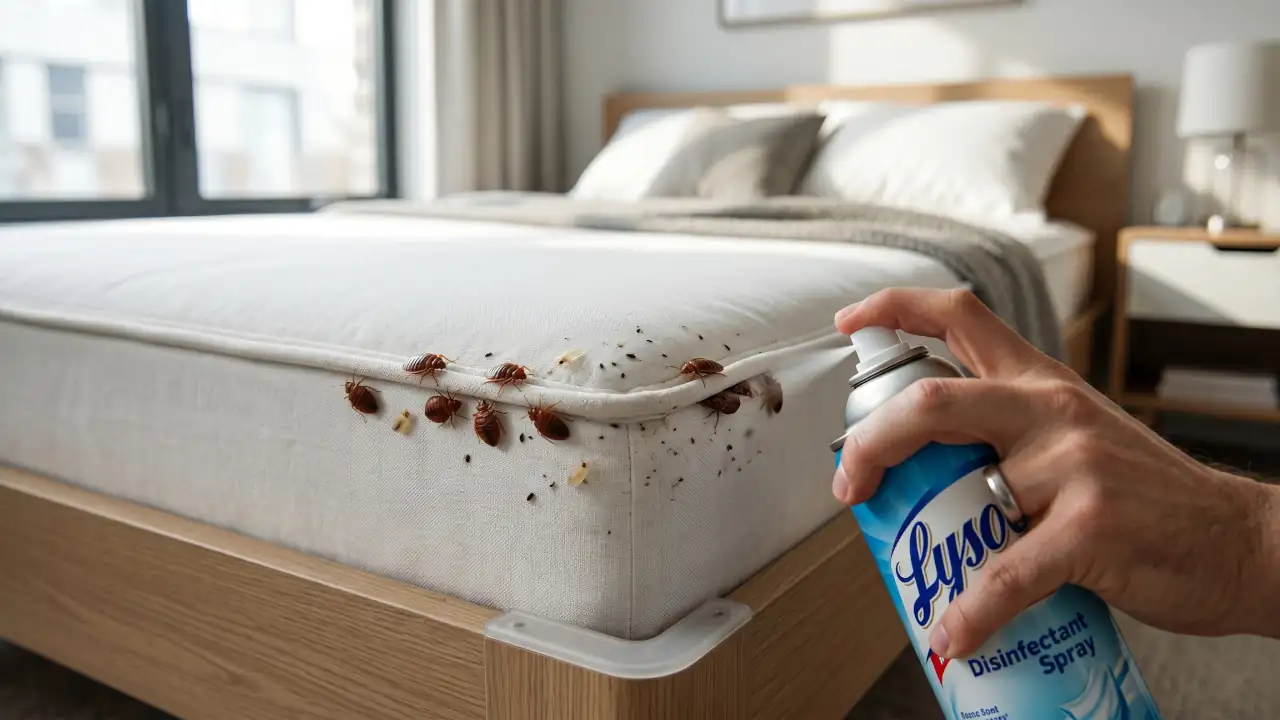
If you have bed bugs, it is normal to look around the house and grab the nearest spray that seems strong enough to wipe them out. One of the most common questions homeowners ask is, Does Lysol kill bed bugs? After all, it is already sitting in the cabinet and has a reputation for killing germs. But bed bugs are not germs on a countertop. They hide, spread, and survive in ways that make quick sprays a bad bet. Most homeowners are disappointed to learn that killing a visible bed bug and eliminating an infestation are two very different things.
Also Read: Most People Don’t Realize What Baby Bed Bugs Actually Look Like
Quick Answer: Can Lysol Kill Bed Bugs?
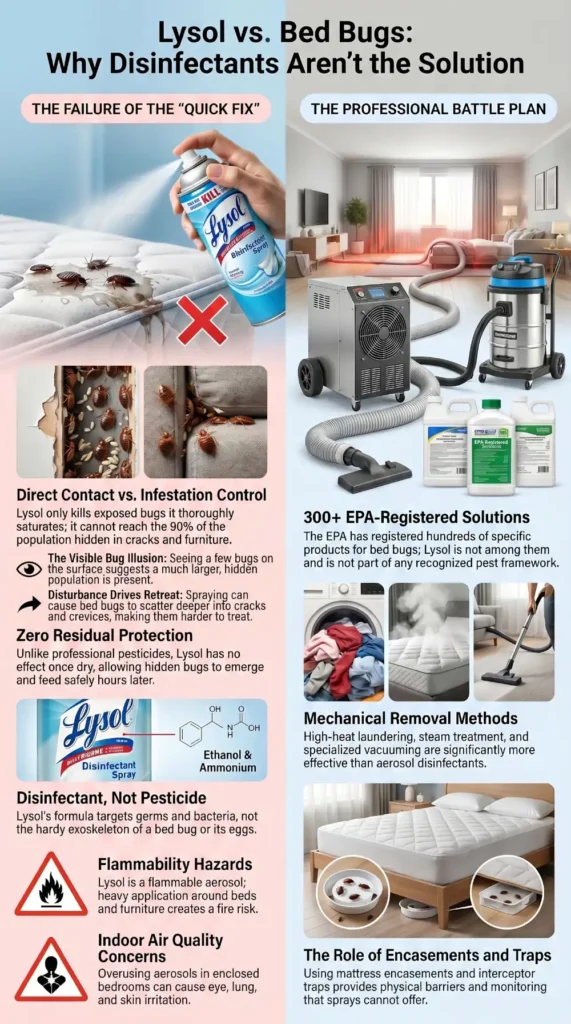
Yes, Lysol may kill a bed bug if the insect is sprayed directly, but it will not eliminate a bed bug infestation. Lysol is a disinfectant, not a registered bed bug treatment, and it does not provide residual control or reach bugs hiding in cracks, furniture, mattresses, or wall voids.
What Is in Lysol Spray?
The exact formula depends on the Lysol product, but the official ingredient listings for Lysol disinfectant spray show a disinfectant-focused formula, not an insect control formula. One official product listing includes ethanol and a quaternary ammonium antimicrobial, while the safety data sheet for a professional Lysol disinfectant spray lists ethanol, butane, and propane.
Depending on the specific Lysol formula, some products may also contain ingredients such as hydrogen peroxide or other disinfecting compounds designed to kill germs rather than insects. Some formulations also use alcohol-based ingredients such as ethanol or isopropyl alcohol to achieve their disinfecting effect. That tells you something important right away. This is an aerosol disinfectant built to help clean surfaces, not a bed bug pesticide built to track down insects inside a home.
From a pest-control standpoint, that distinction is critical because bed bugs are hard to control for a simple reason. They do not sit out in the open waiting for a spray can. They hide in protected areas, they can go long stretches without feeding, and treatment often takes repeated effort over weeks or even months.
Many homeowners are surprised by how long bed bugs can survive without a host, which is one reason infestations often return after incomplete treatment. A product made for surface disinfection is not designed for that kind of fight.
Does Lysol Kill Bed Bugs?
In my experience, Lysol can kill an exposed bed bug on direct contact, but that rarely affects the infestation itself. Its usefulness ends there. If a bed bug is fully exposed and gets soaked directly, the spray may kill it on contact. That does not mean the product works as a bed bug solution. It just means a direct hit on a visible bug can be lethal. The problem is that bed bugs are built to avoid that situation.
Even when direct exposure affects an individual bug, it does not meaningfully disrupt the larger infestation or its ability to continue reproducing in hidden areas.
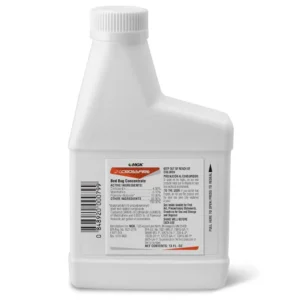
MGK Crossfire® Bed Bug Concentrate
Bed bugs also have a protective outer covering that helps shield them from brief exposure to many household liquids. In most cases, direct-contact sprays only work when the insect is thoroughly saturated, which is rarely how infestations are controlled in real homes.
The same limitation applies to bed bug eggs. Even if Lysol contacts an exposed egg, it is not designed or registered to penetrate the protective outer shell consistently. Most eggs remain hidden in cracks, seams, and protected areas where household disinfectants are unlikely to reach them.
They live in hidden spots and emerge when conditions are right, which is why contact sprays rarely solve the real issue. Based on how disinfectant sprays work and how bed bugs behave, this is not a realistic way to eliminate an infestation.
According to the U.S. Environmental Protection Agency’s bed bug control guidance, successful treatment requires identifying the infestation, containing its spread, preparing the affected areas, applying effective control methods, and monitoring for ongoing activity.
That process is far more involved than spraying a household disinfectant. EPA also notes that it has registered more than 300 products for bed bugs, and those products fall into specific pesticide classes used for bed bug control. Lysol is not part of that bed bug pesticide framework. That is the key point most people miss.
So, if you are asking, “Does Lysol kill bed bugs?” the practical answer is this: it may kill one bug that you can see, but it does not solve the infestation. In fact, many homeowners underestimate how fast bed bugs can spread through a home, which is one reason small problems often become major infestations. It is not the kind of product you can rely on when the bugs are nesting in seams, hiding in furniture, or spreading into nearby rooms.
Why It’s Not the Ideal Method
The biggest problem with Lysol is not that it is useless in every situation. The problem is that it gives people a false sense of progress. Bed bugs are also quick to retreat into hiding places when disturbed, making it difficult to reach more than a small percentage of the population with any contact spray.
You spray a few visible bugs, the room smells clean, and it feels like you have done something meaningful. Meanwhile, the bed bugs you did not see are still there. That is how infestations linger. Bed bug treatment often takes weeks or even months because hidden populations continue emerging after initial treatment.
Lysol also does not give you residual control. Residual control means a product continues working after application and can affect bed bugs that emerge later. Lysol provides no meaningful residual control, so hidden bugs that emerge after the spray dries remain unaffected.
That means once it dries, it is done. Bed bugs that walk across the same area later are not affected in any meaningful pest-control sense. They are not standing around in your room breathing in disinfectant vapor all day. They are hiding, waiting, and reappearing later. That is why quick contact sprays almost always disappoint people.
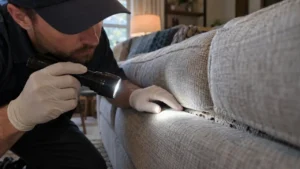
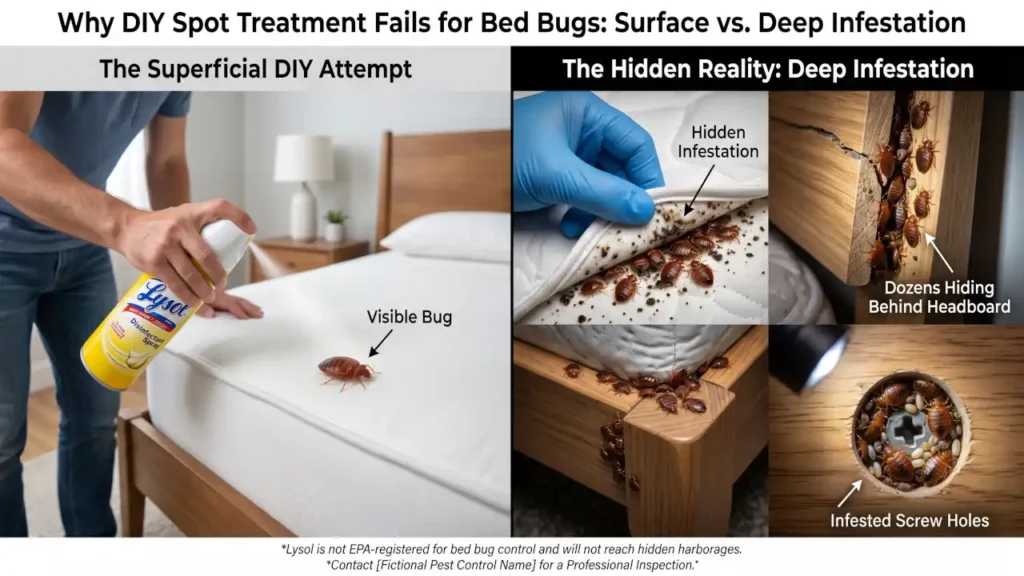
Another issue is reach. Bed bugs do not live only on the top of the mattress. They often gather in hidden bed bug harborages and nesting areas that homeowners rarely inspect. They hide in seams, joints, cracks, screw holes, baseboards, furniture edges, and clutter. Many infestations are eventually traced back to bed bugs hiding inside wood furniture and bed frames.
Successful bed bug control depends heavily on reducing clutter, locating hiding spots, and treating all affected areas consistently. Practical tools such as mattress encasements, traps, laundering, steam treatment, vacuuming, and sealed storage containers are often far more useful than relying on household sprays alone. A can of Lysol does not replace any of that.
There is also a safety angle. Lysol disinfectant spray is a flammable aerosol and can irritate the eyes. The safety data sheet warns to keep it away from heat, sparks, open flames, and other ignition sources. Heavy spraying in a bedroom is not a smart trade just to chase a few bugs that a proper treatment plan would handle more reliably.
What I’ve Seen in Real Homes
One of the most common mistakes I see is homeowners reaching for whatever spray is already under the kitchen sink. I’ve visited homes where people emptied multiple cans of disinfectant sprays, air fresheners, and even rubbing alcohol trying to stop bed bugs.
In nearly every case, the infestation continued because the bugs hiding inside mattress seams, bed frames, furniture joints, and wall voids were never reached.
In one apartment infestation I worked on, the homeowner believed the problem was nearly solved because they were finding fewer visible bugs after spraying household products around the bed. Once we performed a full inspection, we found dozens of bed bugs hidden behind the headboard and inside screw holes in the frame. The visible bugs represented only a small fraction of the population.
The lesson is simple: if you’re only treating the bugs you can see, you’re usually missing the bugs that are causing the problem.
One thing I’ve learned over the years is that bed bugs rarely behave the way homeowners expect. Most people focus on the mattress, but some of the worst infestations I’ve encountered were concentrated behind headboards, inside upholstered furniture, and along baseboards near sleeping areas.
Ways To Incorporate Lysol into Your Bed Bug Removal Strategy
This is the part where a lot of people expect me to say “never use it at all.” That is not quite the point. The real point is to keep it in the right lane. If you already have a can of Lysol, think of it as a minor cleanup aid, not as the main attack. It is not the thing that wins the war. At most, it can be a stopgap for a bug you can actually see while you are setting up the real work.
A better way to think about your bed bug plan is this. First, contain the infestation. Bag laundry, reduce clutter, and isolate items that may be carrying bugs. Household belongings such as books, storage boxes, and personal items often require special attention because bed bugs can spread through unexpected hiding places.
MGK Crossfire® Bed Bug Concentrate
Effective bed bug management usually starts with identifying the problem, preventing further spread, preparing affected areas, treating active bugs, and monitoring for recurring activity. Effective bed bug management typically involves a combination of mattress encasements, bed bug traps, hot laundering, heat treatment, steam, freezing small items, and thorough vacuuming.
If Lysol is used at all, use it only on an exposed bug or a visible spot that you are already cleaning, and do not let that become the whole strategy. A visible bug is not the infestation. The infestation is the hidden population you have not reached yet. That is where people get stuck. They confuse “I sprayed something” with “I solved the problem.” Those are very different things.
I would also avoid spraying it across bedding, mattress seams, or the whole room as a substitute for bed bug treatment. That approach wastes product, increases fumes, and still leaves the hidden bugs untouched. If your goal is to reduce bed bugs, physical removal and proven control methods are far more useful than trying to turn a household disinfectant into a pest solution.
My Professional Take
After years of dealing with bed bug infestations, I consider Lysol one of those products that can create the illusion of progress without producing meaningful control.
Could it kill an exposed bed bug? Yes.
Would I ever recommend it as part of a primary treatment plan? No.
When homeowners ask me what works best, I always recommend focusing on methods specifically designed for bed bugs, including inspection, heat, laundering, vacuuming, encasements, and EPA-registered bed bug products. Those approaches address the infestation itself rather than a few visible insects.
Common Mistakes Homeowners Make
When people discover bed bugs, they often focus on finding the strongest spray available. Unfortunately, that approach creates several common mistakes:
In my experience, most failed bed bug treatments can be traced back to one of these mistakes. The bugs that survive are usually the ones homeowners never find.
Effective Alternatives
This is where the real progress happens. Modern bed bug control relies on several specialized treatment categories, including desiccants such as diatomaceous earth, biochemicals, certain plant-based products such as neem oil, pyrroles, neonicotinoids, and insect growth regulators. That matters because it shows bed bug control is a specialized area. You want products and methods that were actually built for the job.
Non-chemical methods can be very effective when used correctly. While some homeowners look into natural predators that eat bed bugs, those predators rarely eliminate an infestation on their own. Hot laundering and drying, steam treatment, vacuuming, mattress encasements, freezing certain items, and reducing clutter can all play an important role in controlling bed bugs. Successful control usually requires a complete treatment plan rather than a single quick fix. Those are the tools that make sense in a real home with a real infestation.
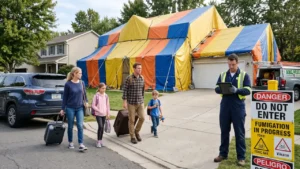
Professional help is often the fastest route when the problem is larger or keeps coming back. The sooner an active infestation is identified, the easier and less expensive it usually is to control. Professional pest control services are often more effective because trained technicians understand bed bug behavior, treatment limitations, and follow-up procedures. That does not mean every homeowner must hire a pro for a single stray bug, but it does mean a recurring infestation is not the kind of problem you want to keep guessing at with household sprays.
There is also a lesson here about the “cheap fix” mindset. Many homeowners try rubbing alcohol, household cleaners, foggers, and miscellaneous sprays because they seem convenient. Unfortunately, these approaches often fail to reach hidden bed bugs and rarely solve the infestation. That is why people spend money, time, and energy on the wrong path and then wonder why the infestation keeps growing.
Safety Considerations When Using It
Lysol disinfectant spray is not dangerous in the same way as a weapon or a poison, but it still needs respect. The safety data sheet classifies the product as a flammable aerosol, notes that it contains gas under pressure, and says it can irritate the eyes. It also warns not to spray on an open flame or other ignition source, and to store it in a well-ventilated place away from heat. Those warnings matter a lot when people start spraying heavily around bedding and furniture.
Ventilation matters too. Aerosol sprays are easy to overuse because the can makes it feel harmless. In a closed bedroom, that can add odor, vapor, and irritation without fixing the bug problem. If a product makes your room harder to breathe in, that is a sign to stop and step back. Bed bug control should make your home safer over time, not create a second issue while the first one is still active.
Also Read: Bed Bug Bites vs Flea Bites: Most People Misidentify Them, Do You?
One more safety note. Bed bugs are a public health pest because they bite and disturb sleep, but they are not known to spread disease. That does not make them harmless. It just means the response should be practical, calm, and focused on effective control instead of panic spraying.
Households with children, pets, asthma sufferers, or individuals sensitive to fragrances should be especially cautious with excessive aerosol use. Overapplying disinfectant sprays can create indoor air quality concerns without improving bed bug control results.
Final Thoughts
So, does Lysol kill bed bugs? Sometimes, yes, on direct contact. But does it solve the problem? No. Not even close. Bed bugs are hidden pests, and hidden pests need a treatment plan, not a cleaning spray. If you use Lysol at all, treat it as a minor stopgap, not the main event. The real path forward is inspection, containment, heat, laundering, vacuuming, encasements, traps, and, when needed, a proper bed bug treatment product or a professional pest control visit.
The biggest takeaway is that bed bug control is rarely about finding a stronger spray. Success usually comes from locating hiding spots, reducing clutter, using proven control methods, and staying consistent throughout the treatment process.
The homeowners who solve bed bug problems fastest are usually the ones who focus on finding hiding spots rather than searching for stronger sprays. Inspection and persistence almost always matter more than the product itself.
If you are dealing with bed bugs right now, the smartest thing you can do is stop chasing single bugs and start looking for the source. That is where the infestation lives. Once you find that, the rest becomes much easier to control.