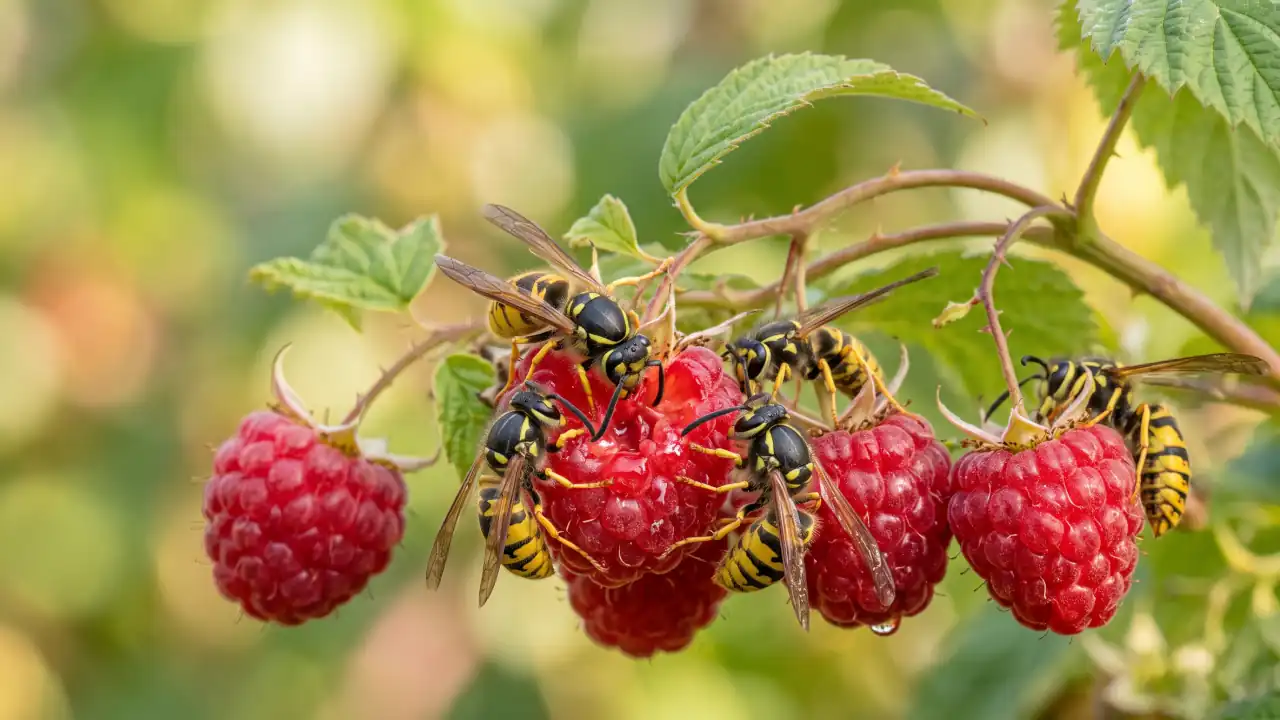
If you’ve been swatting away wasps every time you step into your backyard, you’re not imagining things. Something in your yard is calling them in. The good news is that wasps aren’t random visitors. They show up because your home offers exactly what they’re looking for: food, water, shelter, or a place to build. Once you know what attracts wasps, you can take that appeal away and get your yard back.
In nearly two decades of inspecting homes for stinging insect activity, I’ve found that most recurring wasp problems aren’t caused by “too many wasps.” They’re caused by everyday conditions around the property that homeowners don’t realize they’re providing. Fix those conditions first, and you’ll often see wasp activity decline naturally.
Also Read: Spadepestcontrol blog
Quick Answer
Wasps are attracted to food, water, shelter, and places to build nests. Common attractants include sugary drinks, meat, garbage, standing water, fallen fruit, untreated wood, flowering plants, and gaps around your home. Removing these attractants is one of the most effective ways to reduce wasp activity.
Here’s a closer look at the most common things that attract wasps and what you can do to make your property less inviting.
What Attracts Wasps?
While different wasp species have slightly different habits, most backyard wasps are attracted by the same basic needs: food, water, shelter, and nesting sites.
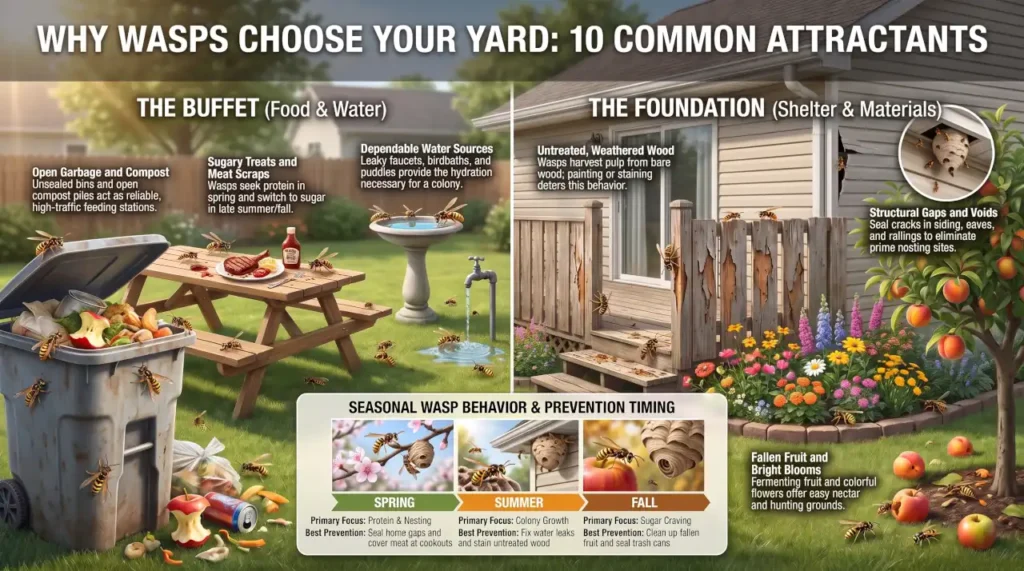
Wasps are attracted to properties that consistently provide shelter, food, water, or nesting materials. In most cases, the problem isn’t a single attractant but several conditions working together. Below are the most common reasons wasps choose one yard over another.
1. Protection & Safety
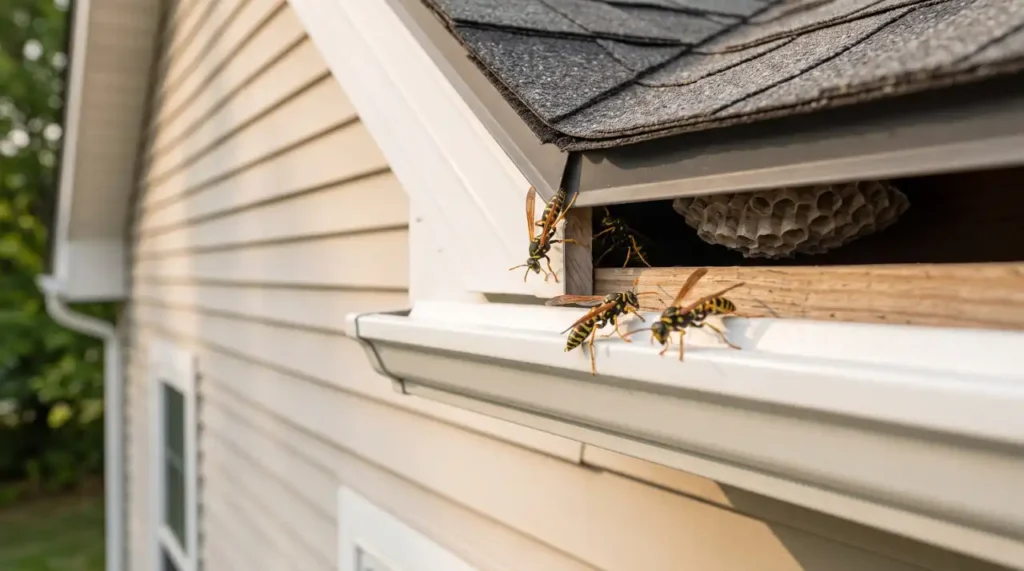
Before a wasp ever thinks about your leftover barbecue, it’s thinking about shelter. A wasp colony needs somewhere safe to raise its young, away from wind, rain, and hungry birds. That’s why the first thing I check on a property inspection isn’t the trash cans, it’s the gaps.
Wasps are opportunists when it comes to real estate. They’ll tuck a nest into a crack in your siding, behind a loose shutter, under the eaves, inside a porch railing, or in a hollow spot in an old tree stump. Given the chance, some species will even work their way into your attic or wall cavities, where it’s warm, dry, and mostly undisturbed. Once they’ve settled in, they’ll defend that nest aggressively if they perceive a threat, because that’s where their colony lives.
This nesting behavior is consistent with guidance from the University of Maryland Extension, which explains that social wasps commonly establish nests in protected locations such as wall voids, attics, trees, shrubs, and under eaves where colonies are sheltered from weather and predators.
Here’s the mistake most homeowners make: they spot a nest and decide to handle it themselves with a can of spray from the hardware store. I get the instinct, but I’d steer you away from it. A disturbed nest can send dozens of defensive wasps your way in seconds, and if you’re allergic or you misjudge the size of the colony, that DIY moment turns into an ER visit. If you find a nest on your property, back away slowly, keep kids and pets clear of the area, and call a professional who knows how to remove it safely.
If anyone who has been stung develops difficulty breathing, widespread hives, facial swelling, dizziness, or signs of an allergic reaction, seek emergency medical care immediately.
2. Sweet & Sugary Treats
If you’ve ever had a wasp dive-bomb your soda can at a cookout, you already know this one firsthand. Wasps have a serious sweet tooth, and they will find sugar fast, whether it’s an open juice box, a dropped popsicle, or a bowl of fruit left out on the counter.
What surprises most people is that this craving gets worse as the year goes on. During summer, the wasp larvae back at the nest actually produce a sugary secretion that adult worker wasps feed on. It’s practically a built-in dessert. But once fall arrives and the queen stops laying eggs, that supply dries up completely. Suddenly the entire colony is searching for a replacement sugar source, and that’s you and your patio table.
This seasonal shift is why many homeowners believe wasps become “more aggressive” in the fall. In reality, they’re spending much more time searching for food, which naturally increases encounters with people.
This is exactly why late-summer and early-fall picnics tend to turn into wasp battles. The colony is larger than it’s been all year, and every worker is hunting for sweets at the same time. If you’re hosting anything outdoors during this stretch, keep drinks covered, wipe up spills right away, and don’t leave sugary snacks sitting in the open.
3. Accessible Water
Wasps need water just like every other living creature, and they are not particular about where they get it. A dripping outdoor faucet, a birdbath, a kiddie pool, even a puddle that’s been sitting for a day or two, all of it works fine for them.
I’ve walked properties where the owner couldn’t figure out why wasps kept hanging around one corner of the yard, and it turned out to be a slow leak in an irrigation line. Nothing dramatic, just a steady trickle that had turned into a reliable water source. Wasps will keep coming back to a spot like that day after day because it’s dependable, and dependable is exactly what a colony needs.
One thing I’ve noticed during inspections is that homeowners often focus on obvious water sources like birdbaths while completely overlooking leaking irrigation fittings or outdoor faucets. Those tiny leaks often stay active for weeks and become dependable watering spots for nearby colonies.
Walk your yard and look for anything holding water that doesn’t need to. Fix leaky hose bibs, empty out anything that collects rain, and skim standing water from low spots after a storm. It’s a small habit, but it removes one more reason for wasps to stick around.
4. Bright Flowers
Anyone with a flower garden already knows wasps show up right along with the bees. It’s not your imagination, and it’s not bad luck either. Wasps are drawn to bright, bold colors, especially blues, purples, yellows, and whites, because those shades usually signal a good nectar source nearby.
There’s more going on than just color, though. Wasps are picking up on the scent too, and a blooming garden is also a buffet of smaller insects that wasps like to hunt. So a flower bed is really pulling double duty for them: food from the nectar and food from the bugs crawling around the petals.
This is also why wasps sometimes seem weirdly interested in a person wearing a floral shirt or dress. From a distance, bright floral patterns can read as “flower” to a wasp, at least enough to draw a closer look.
Fortunately, curiosity doesn’t necessarily mean aggression. A wasp investigating a bright color or scent will often fly away on its own if it doesn’t find food or feel threatened.
Expert Tip: If you’re heading outside for yard work or a get-together, skip the floral perfume or scented lotion. Wasps respond to those sweet floral fragrances almost the same way they respond to real flowers. If you’re looking for a more natural way to make your yard less inviting, consider adding a few wasp repellent plants around patios, decks, and entryways instead.
5. Other Insects
A lot of people forget that wasps aren’t just after sugar, they’re predators too. Many species hunt smaller insects to feed their larvae back at the nest, which means a yard full of bug activity is basically a wasp’s grocery store.
Aphids, caterpillars, certain beetles, crickets, and small spiders are all fair game. If your garden has a healthy population of these insects (which, admittedly, is often a sign of a healthy garden), you’re going to see more wasp traffic as a result. Ironically, this is one of the beneficial sides of wasps. They help control populations of caterpillars, aphids, and other plant pests, even though most homeowners only notice them when they become a nuisance. It’s a bit of a trade-off: the same conditions that make your plants thrive can also make your yard more attractive to wasps looking for a meal.
This doesn’t mean you need to eliminate every bug in your garden. It just helps to understand the connection so you’re not caught off guard when wasp activity picks up right as your garden starts thriving.
6. Garbage
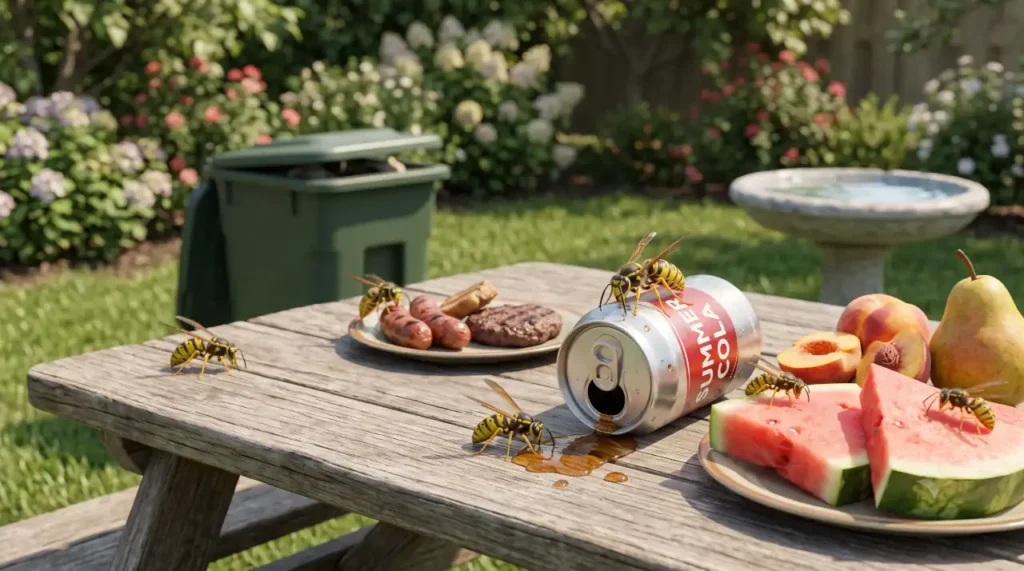
Flies get blamed for trash-can problems constantly, but wasps are just as guilty. An uncovered garbage can is basically a reliable food source for them. Empty soda cans with a little syrup left inside, fruit peels, yogurt cups, greasy pizza boxes, candy wrappers, all of it sends a signal that there’s an easy meal nearby. Interestingly, many of these same food sources also explain what attracts ants, making good outdoor sanitation one of the easiest ways to discourage multiple pests at once.
Compost piles deserve a mention here too. If you’re composting food scraps in an open bin, don’t be surprised when wasps start showing up regularly. Foraging workers will investigate it the same way they pick through your trash.
The fix is straightforward, even if it takes a little discipline. Use trash cans with tight-fitting lids, take the bags out before they get too full, and rinse containers that held anything sweet or sticky before tossing them in. If possible, keep outdoor garbage bins several feet away from patios, decks, or children’s play areas. Even when lids stay closed, food odors can attract foraging wasps to the general area. If you compost, use a bin with a secure cover rather than an open pile. It won’t eliminate wasps entirely, but it takes away one of their most reliable food sources.
7. Food
Food is ultimately what keeps wasps returning to a property, even if shelter or water attracted them initially. At the end of the day, wasps come into your yard because it offers a menu: nectar from flowers, insects to hunt, rotting fruit on the ground, and open garbage cans full of sweet or protein-rich scraps.
If your yard is stocked with several of these at once, you’re not dealing with a one-off visit. You’re dealing with a returning problem, because wasps remember reliable food sources and will keep coming back to check them. I often tell homeowners to think of their property the way a wasp does. If every visit ends with an easy meal or dependable water source, they’ll continue checking that location throughout the season. This is also why simply swatting at the wasps you see rarely solves anything. You have to look at what’s drawing them in the first place, not just the wasps themselves.
Think of it less as “getting rid of wasps” and more as “removing their reasons to stay.” Once the food dries up, most wasps will move on to hunt somewhere else.
8. Fruit Trees
If you’ve got apple, pear, peach, or plum trees in the yard, you’ve probably already dealt with wasps swarming the fallen fruit underneath. Overripe fruit on the ground ferments a little as it breaks down, and that fermentation seems to make it even more appealing to wasps.
This can escalate quickly during peak fruit-drop season. What starts as a few wasps checking out a bruised apple can turn into a dozen or more within a day or two, especially in warm weather. I’ve seen yards where the wasp activity around a fruit tree got so heavy that homeowners couldn’t safely get close enough to clean up the mess themselves. Wearing shoes while picking up fallen fruit is also a good idea. Wasps frequently feed underneath fruit lying on the ground, making accidental stings surprisingly common.
The best approach is to stay ahead of it. Pick up fallen fruit regularly, ideally every day or two during harvest season, rather than letting it accumulate. If the wasp activity has already gotten out of hand, it’s worth calling in a professional rather than trying to clear a yard full of defensive wasps on your own.
9. Untreated Wood
This is one that catches a lot of homeowners off guard. Wasps don’t eat wood, but many species chew it up, mix it with saliva, and use the resulting pulp to build their papery nests. Untreated, weathered wood is much easier for them to gnaw on than wood that’s been sealed, painted, or stained.
While wasps use wood to build their nests rather than as a food source, untreated wood can also become attractive to several wood-boring insects, making regular maintenance worthwhile for more than one reason.
If you’ve got a bare wood fence, an untreated deck, a wooden play set, or an old gazebo, don’t be surprised if you start noticing small chew marks or a rasping sound on quiet afternoons. Fresh scrape marks often look lighter than the surrounding wood because the outer weathered layer has just been removed. That’s one of the easiest early signs that paper wasps or hornets are collecting nest material nearby. Over time, this can genuinely damage the wood, on top of practically inviting a nest to form nearby.
Expert Tip: If your wooden structures haven’t been touched by wasps yet, get ahead of it. A coat of paint or exterior stain does more than protect against weather, it makes the wood far less appealing for nest-building material. It’s a cheap, one-afternoon project that can save you a bigger headache later.
10. Meat
Wasps have a reputation as sweet-loving pests, but they’re serious carnivores too. Adult wasps hunt protein, largely to feed it to the larvae back at the colony, and they’re not picky about the source.
That means any meat scraps in your trash can, from chicken bones to leftover burger patties, are fair game. It also explains why wasps seem to appear out of nowhere the moment you fire up the grill or unpack a sandwich for a picnic. The smell of cooking or grilled meat travels, and wasps are good at following it straight to the source.
Also Read:
Protein cravings tend to run highest in spring and early summer, when colonies are growing and there are more larvae to feed. This is why spring cookouts sometimes attract wasps even when sugary foods aren’t present yet. At that stage of colony development, protein is often a higher priority than sweets. If you’re grilling or eating outside during these months, keep meat covered until you’re ready to eat, and clean up scraps immediately once you’re done.
One pattern I’ve seen repeatedly during inspections is that homeowners usually have two or three attractants working together. Successful wasp prevention rarely comes down to one quick fix. Instead, it’s about removing as many attractants as possible before a colony decides your property is worth revisiting. Fixing only one often reduces activity, but addressing all of them produces much better long-term results.
Conclusion
Once you understand what attracts wasps, the pattern becomes pretty clear. They’re not targeting you out of spite. They’re following food, water, shelter, and building material, the same things every creature needs to survive. The more consistently you remove those attractants, the less likely your property is to become part of a wasp’s regular foraging route.
If you’re wondering how to keep wasps away long term, removing the food, water, and shelter they depend on is far more effective than relying on sprays or temporary repellents alone. These preventive steps are also some of the most effective eco-friendly pest control methods homeowners can use.
Tighten up those attractants around your home, sweets, standing water, garbage, fallen fruit, bare wood, meat scraps, and you take away most of the reasons wasps had for showing up in the first place.
While you may never eliminate every wasp from your property, reducing the resources they depend on makes your yard far less attractive and can significantly reduce repeat activity over the course of the season.
If you’ve already got an active nest on your property, or the wasp activity in your yard feels like more than you can manage safely, don’t push your luck. Reach out to a pest control professional who can assess the situation and remove it without putting you or your family at risk.