If ants keep showing up in your home, they are not there by accident. They are looking for something specific, usually food, water, or a safe place to settle. Once one scout ant finds a good spot, the rest can follow fast. That is why a tiny ant problem can turn into a full-blown trail before you know it. Ants are also a nuisance because they can contaminate food and establish persistent foraging trails throughout the home once they find a reliable resource.
Also Read: Is Terro Safe for Pets? The Risk Depends on Where You Put It
Quick Answer: What attracts ants to your house?
In most cases, the answer comes down to food, water, shelter, or a combination of all three. A few crumbs, a hidden plumbing leak, damp soil around houseplants, or small gaps around the home can be enough to attract scouting ants. Once they find a reliable resource, they leave scent trails that can quickly turn a few ants into a noticeable infestation.
What Makes Your Home Attractive to Ants
The short answer is simple. Ants are attracted to the same basic things most living creatures need: food, water, and shelter. But in a house, those needs can show up in surprising ways. A few crumbs on the counter, a small leak under the sink, damp soil around houseplants, or even clutter in a quiet corner can all make your home more appealing to ants.
According to the U.S. Environmental Protection Agency (EPA), removing access to food, water, and shelter is the foundation of effective pest prevention. That is why homeowners who only clean visible ants often see the problem return. Unless the underlying attractants are removed, new ants will continue finding their way inside.
Most people think ants are only chasing sugar, but that is only part of the story. Different species behave differently, and while most ants are primarily a nuisance, some homeowners also worry about whether they can spread potential disease after contaminating food or traveling through unsanitary areas.
Some ants are drawn to sweets, some prefer greasy or protein-rich foods, and others are mainly following moisture or nesting opportunities. Species preferences vary. Some ants are attracted to sugary foods, while others actively seek fats and proteins. If you’re dealing with kitchen-invading grease ants, our guide on how to get rid of grease ants explains why these pests are often drawn to oily and protein-rich foods.
Outdoor ants may also be lured by flowering plants or by honeydew from aphids living on the plants. So if you are trying to figure out what is attracting ants to your house, you have to look at the whole picture, not just the visible trail on your floor.
In nearly two decades of pest-control work, I have found that most recurring ant infestations are tied to one overlooked condition rather than a major sanitation problem. A homeowner may keep a spotless kitchen but still have ants returning because of a slow plumbing leak, damp wall void, or an unnoticed food source near a pet-feeding area. The ants themselves are usually the symptom. Finding what attracted them in the first place is what solves the problem long term.
Water
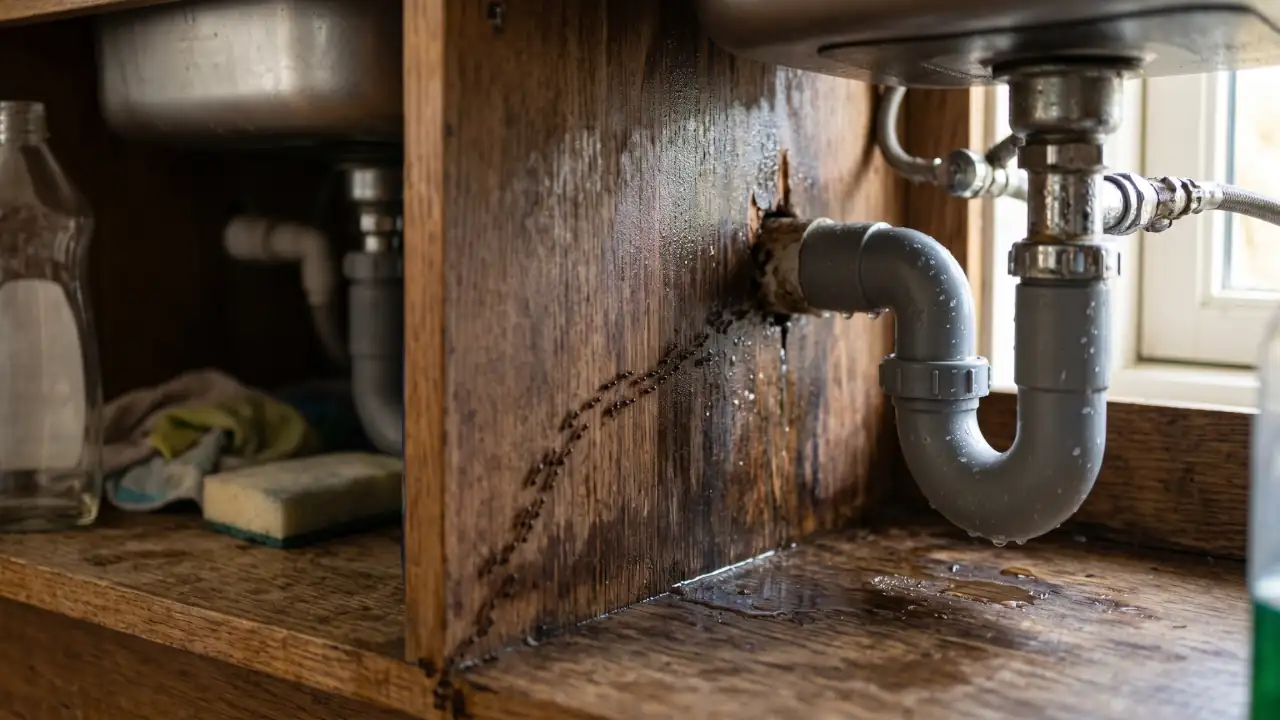
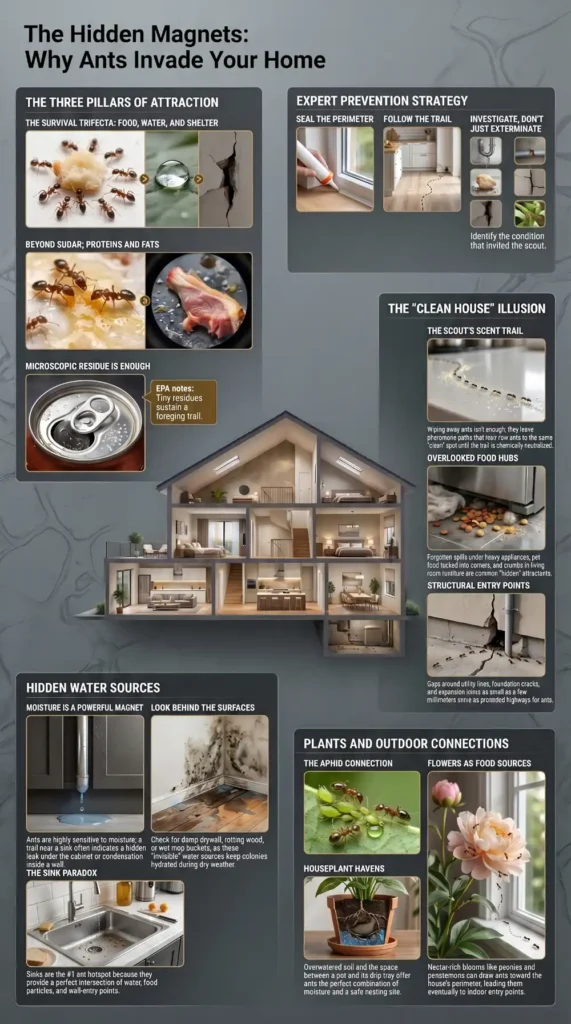
Water is one of the biggest reasons ants enter homes, especially when the weather is hot or dry. Ants need moisture to survive, and they are very good at finding it. A small leak, condensation around pipes, a wet mop bucket, a drip under a sink, or water left in a tray under a plant can become enough to keep a colony interested. In real homes, the problem is often not a big puddle, but a hidden moisture source behind a wall, under a cabinet, or under the floor. That is why an ant trail near a bathroom or kitchen can sometimes point to a leak you have not noticed yet.
A damp area around kitchen sinks is especially common, because sinks combine water, food residue, and access points all in one place. Even if you keep the sink clean, ants can still be attracted to the moisture around the plumbing, the cabinet below, or a small crack where the pipe enters the wall. The EPA recommends fixing leaks, not letting water accumulate in the home, and drying out areas where pests can breed or hide. That advice is basic, but it works because ants cannot stay long where water is consistently removed.
One situation I encounter frequently involves homeowners treating ant trails around a kitchen sink for weeks without success. During inspection, the actual problem often turns out to be a slow leak under the cabinet that has been dampening wood or drywall for months. Once the moisture issue is corrected, the ant activity usually drops dramatically because the colony loses the resource that brought them inside.
If ants keep returning to the same sink, bathroom, or laundry area, do not just wipe the surface and move on. Check the plumbing, the caulk, the cabinet base, and any damp wood or drywall nearby. A trail that comes back again and again usually means the colony has found a dependable moisture source. If you cut that off, you often cut off the reason they came inside in the first place.
Food
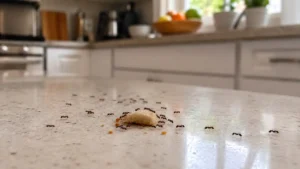
Food is the most obvious ant attractor, but it is also the one people underestimate the most. Ants do not need much. A few crumbs, a drop of syrup, a sticky soda ring, a smudge of peanut butter, or pet food left out too long can be enough to start a trail. The EPA notes that even tiny residues can support pests, and that soft drink cans and food containers with residue are especially attractive to foraging ants. Once scout ants find a reliable food source, they leave a chemical trail so the rest of the colony can follow. That is why you may see one ant at first, then ten, then a full line a little later.
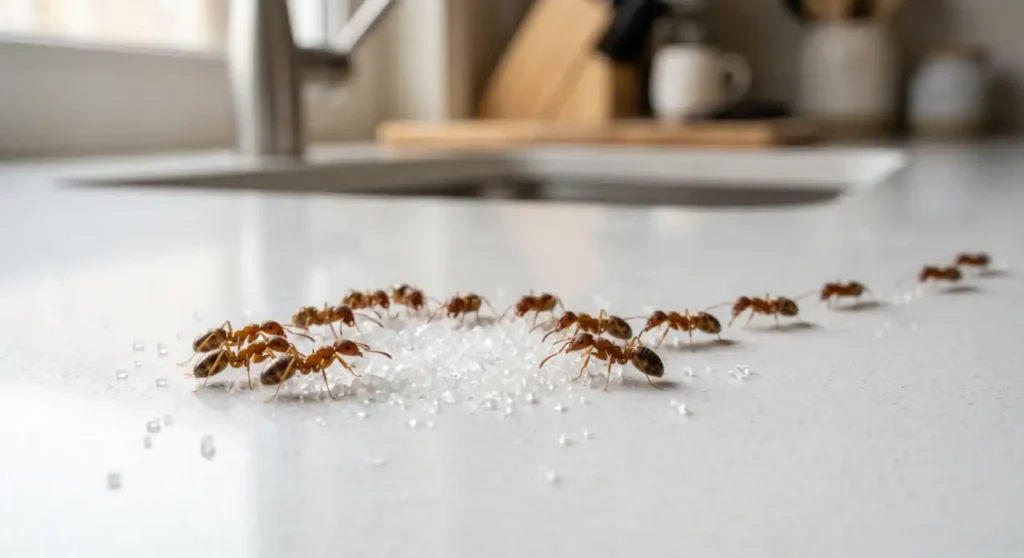
This is why kitchens are the most common place to find them. Kitchens give ants exactly what they want, food, water, heat, and hiding spots. But they are not limited to the kitchen. If people eat in the living room, around the TV, or even in the bedroom, ants can follow the crumbs and spills there too.
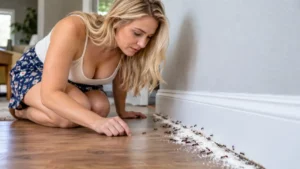
In other words, wherever food goes, ants can go too. That is why a trail of ants on a nightstand or along the baseboard is often tied to snack crumbs, drink spills, or trash that was left open somewhere nearby.
One pattern I see regularly is ants appearing in a “clean” kitchen where homeowners are convinced there is no food available. After a closer inspection, the real attractor is often a forgotten spill under an appliance, residue around a trash can, or pet food tucked into a corner. Ants are remarkably efficient at finding food sources people overlook.
The best way to break this pattern is not just to kill the ants you can see. You need to remove the food source that is drawing them in. Wipe up spills quickly, sweep under appliances, rinse recyclables, store pantry food in sealed containers, and do not leave pet bowls out overnight unless necessary. If you keep giving ants easy calories, they will keep sending scouts. And once they find a dependable source, they tend to return until that source is gone.
Protection
Ants are not only looking for food and water. They are also looking for a place that feels safe. That is one of the reasons homes are so attractive to them. Your walls, baseboards, crawl spaces, basements, cabinets, and foundation cracks can give ants a protected route or a place to nest.
Some species nest outdoors and only come inside to forage, while others establish satellite nests inside wall voids, crawl spaces, basements, or other protected areas near the structure. Many of the colonies responsible for indoor ant activity actually begin outside the home. If you’re noticing ant hills around the property, our guide on how to get rid of ants in your lawn and yard can help identify and reduce outdoor nesting activity. These secondary nesting sites help colonies stay closer to reliable food and moisture sources.
Once a nesting location provides safety and access to food or moisture, ants often return to the same area repeatedly until those conditions change.
Many common household ant species are attracted indoors by food, moisture, and protected nesting areas near the structure. Foundation cracks, wall voids, and similar sheltered locations can provide ideal conditions for long-term activity. Foundation cracks, wall voids, and similar protected areas can provide ideal conditions for long-term activity.
This is where many homeowners miss the real issue. They kill a few visible ants on the counter, but the colony is still tucked away in a crack, wall void, or damp cavity nearby. During structural inspections, I often find ants using tiny expansion joints, utility penetrations, or gaps around plumbing lines that homeowners never notice. The opening may only be a few millimeters wide, but it provides a protected route directly into cabinets and wall spaces. In many cases, sealing those access points produces better long-term results than repeatedly applying over-the-counter sprays.
Expert Tip: Follow the trail, not just the visible ants. Watch where they enter, where they disappear, and whether the trail keeps returning after cleaning. Then seal the entry points with caulk, repair gaps around pipes, and remove anything nearby that offers cover. A clean surface helps, but a sealed home helps more. That one habit often does more to stop repeat infestations than spraying random spots ever will.
Flowers
Flowers can absolutely attract ants, and this surprises a lot of people. Many flowers produce nectar, and nectar is basically a sweet reward. Ants are drawn to that sweetness, especially when blooms are low to the ground and easy to reach. If you have ant activity near flower beds, patio planters, or garden edges, the plants may be part of the reason. Some flowers also attract other insects that leave behind sweet residue, which makes the area even more appealing to ants.
Some flowering plants, including peonies and penstemons, are especially known for attracting ants because their nectar is easy to access and highly appealing to foraging workers.
Another thing to know is that ants do not always care about the flower itself. Sometimes they are there because of the insects living on the plant. Aphids are the big example. Aphids feed on plants and excrete honeydew, which is a sugar-rich substance that ants love. Ants commonly feed on honeydew produced by aphids and other sap-feeding insects. While ants have plenty of food sources available in nature, they also have many natural predators. If you’re curious about the insects and animals that hunt ants, see our guide on what eats ants.
In many landscapes, ants actively protect aphids from predators in exchange for a steady supply of honeydew. This relationship can keep ant activity around a plant going long after homeowners assume the flowers are the problem.
In many landscapes, this sweet residue becomes a more powerful attractant than the flowers themselves. So if ants are hanging around your flowers, the real attraction might be the honeydew problem, not the blossoms alone.
If you see ants on flowers, look for sticky leaves, curled plant growth, or clusters of tiny insects on stems and undersides of leaves. Those are all clues that aphids or other sap-feeders may be involved. Clearing the aphids usually does more than chasing the ants themselves, because it removes the sweet food source that kept them coming back.
Plants
Houseplants and garden plants can attract ants for a few different reasons. First, moist soil is appealing, especially if you water regularly and the top layer stays damp. Second, some plants offer easy access to nectar, sap, or honeydew-producing insects. Third, the pots themselves can give ants a sheltered space to nest, especially if the soil is loose, the pot sits against a wall, or there are cracks around the base. Once ants discover that a plant area gives them moisture plus shelter, they often keep using it.
If the ants are indoors, look closely at the bottom of pots, drip trays, and the soil line. If you are overwatering or leaving standing water in trays, that is a direct invitation. If the ants are outdoors, inspect the plant for aphids or other sap-feeding insects. Large black ants around trees or landscaping may indicate nearby carpenter ant activity. If that sounds familiar, our guide to carpenter ants in a tree explains the warning signs to watch for. The honeydew those pests produce can keep ants coming back for weeks. In many cases, the plant is not the true problem. The moisture and the insect activity around it are.
One practical move is to reduce the “extras” around the plant. Empty drip trays, trim plant material away from the wall, and check nearby cracks or mulch beds. If the ants are using the plant as a bridge to enter the house, the goal is to remove the bridge, not just the ants crossing it.
Why Ants Suddenly Appear in a Clean House
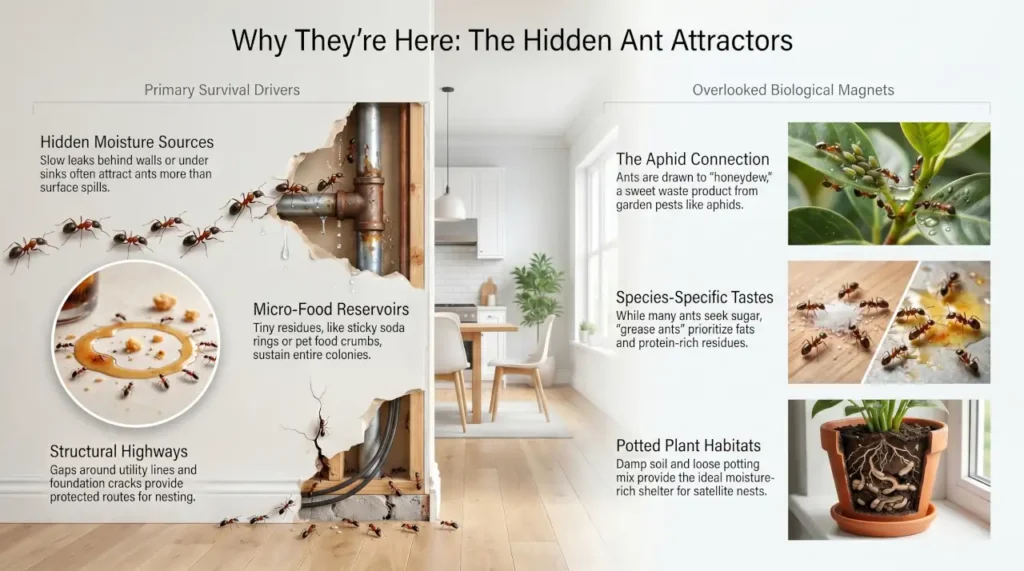
Many homeowners assume ants only invade dirty houses. In reality, some of the worst ant infestations I have encountered were in homes that looked spotless. Ants are not attracted to dirt itself. They are attracted to food, moisture, shelter, and other resources that are often hidden from view.
A home can appear clean while still offering everything a colony needs. A small leak behind a wall, condensation around plumbing, a forgotten spill under an appliance, pet food tucked into a corner, or even a damp crawl space can provide enough food or moisture to attract foraging ants. Once a scout discovers one of those resources, it leaves behind a scent trail that helps other ants find the same location.
In many cases, the ants are not even nesting inside the house. They may be entering from outdoors and using tiny gaps around doors, windows, utility lines, or the foundation to reach a reliable food or water source. That is why homeowners are often surprised when ants suddenly appear despite regular cleaning.
If ants show up in an otherwise clean home, think beyond surface cleanliness. Look for hidden moisture, overlooked food residue, and possible entry points. Finding the condition that attracted the first scout ant is usually the key to stopping the problem long term.
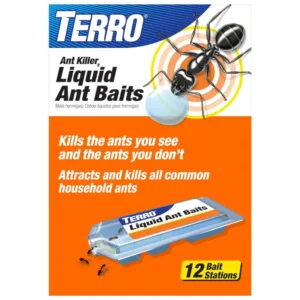
If you’ve identified what’s attracting ants to your home but still need to eliminate the active trail, a slow-acting liquid bait can often work better than contact sprays because foraging ants carry it back to the colony. One option many homeowners use is Terro Liquid Ant Baits, which are designed to attract worker ants and help target the source of the infestation.
Are Ants Attracted to Urine?
Sometimes, yes, but this is a very specific situation. Ants are not usually attracted to normal healthy urine in the way they are drawn to sugar, crumbs, or moisture. The reason this topic comes up is historical. For a long time, people noticed ants gathering around urine from people with undiagnosed diabetes, which can contain glucose. That is where the old observation came from.
Historically, people observed ants gathering around urine that contained elevated glucose levels, which helped contribute to early observations about diabetes before modern testing methods existed.
So the real answer is this: ants may be attracted to urine if it contains sugar, but urine by itself is not a normal ant magnet. In a home, what usually matters more is cleanup. A bathroom floor, a litter area, a diaper pail, or an outdoor spot where urine has soaked into soil can attract ants indirectly because of moisture and residue. In short, the moisture and the sugars, not the urine as a whole, are the key factors.
If urine odors or repeat ant activity around a bathroom seem unusual, the safer move is to clean the area thoroughly and, if there is any health concern, treat that as a health issue rather than an ant-control trick. The old ant-and-urine test is historical, not a modern diagnostic method.
Ant activity should never be used as a way to assess a medical condition. Anyone concerned about diabetes or other health issues should rely on proper medical evaluation rather than household observations.
Also Read: How to Get Rid of Ants in Carpet: Simple Steps That Work Fast
Are Ants Attracted to Salt?
Sometimes they are, yes. This surprises a lot of people because ants are usually associated with sugary foods. However, some ant species also seek minerals such as sodium, especially when those nutrients are limited in their environment. As a result, certain ants may investigate salty foods, seasoning residue, or other sodium-rich sources that homeowners would not normally consider attractive.
That said, salt is not the first thing most homeowners should obsess over. In the real world, ants are still usually responding to food residue, moisture, or shelter first. Salt becomes more relevant when you are dealing with a particular ant species, a very dry environment, or a home where food residues with sodium are left behind. So while salt can matter, it is usually part of the bigger food picture, not the only thing driving the infestation.
The simple takeaway is this. Do not assume “no sugar means no ants.” Some ants are much more flexible than people think. If a salty snack, seasoning spill, or crust on a dish is left out, it can still help feed a foraging trail. Cleaning up all food residue is still the safer habit.
Conclusion
If you want to know what attracts ants, the answer is usually one of five things: food, water, shelter, plant-related sweetness, or a hidden nesting spot. Sometimes all five show up together. That is why ants can seem stubborn. You are not dealing with a random visitor. You are dealing with an insect that found a reason to stay. The smartest way to stop them is to remove that reason, not just the ants you can see today.
The homeowners who have the most success controlling ants are usually the ones who think like investigators instead of exterminators. Rather than focusing only on the insects they can see, they focus on identifying the condition that attracted the ants in the first place. That shift in approach often makes the difference between a temporary reduction and a lasting solution.
Start with the basics. Clean up crumbs and spills. Fix leaks. Empty standing water. Seal cracks. Check potted plants and garden plants for aphids. Then keep an eye on the areas where ants show up most often, like sinks, counters, pantry shelves, baseboards, and hidden gaps near plumbing. When you remove food, water, and shelter, you make your home much less attractive to ants. That is the part that really changes the problem long term.