Grease ants are one of those problems that seem small at first and then suddenly take over a kitchen. You spot a few tiny ants near the sink, wipe them away, and think the issue is over. Then they come back the next day, and the next. That is what makes grease ants so frustrating. They are tiny, stubborn, and very good at finding food you did not even realize was there.
The good news is that grease ants are usually manageable once you identify what is attracting them indoors and where they are nesting. When you understand why they keep returning and why sprays alone usually fail, it becomes much easier to stop the infestation before it turns into a larger problem. In this guide, I will walk you through How to Get Rid of Grease Ants in a way that is practical, safe, and easy to follow at home.
Also Read: How To Get Rid of Ants in Your Lawn & Yard Naturally Before It Gets Worse
Quick Answer: Best Way to Get Rid of Grease Ants
The best way to get rid of grease ants is to follow their trail, place a protein- or grease-based bait near active routes, eliminate food residue, and seal entry points around the home. Sprays may kill visible ants temporarily, but baiting the colony and removing attractants usually provides longer-lasting control.
What Are Grease Ants?
Grease ants are tiny household ants commonly associated with thief ants and other small indoor ant species that prefer greasy or protein-rich foods. People usually notice them because they show up around kitchens, pantry shelves, baseboards, and other places where food is handled. They are small enough to squeeze into places most people would never think to check, and that is part of what makes them so sneaky.
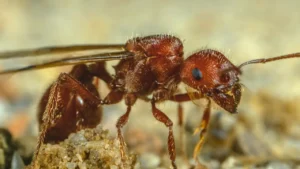
Most grease ants are extremely small, usually around 1.5 to 2 millimeters long, with pale brown to yellowish coloring. Their tiny size is one reason infestations often go unnoticed until trails become more active in kitchens or pantries.
They are known for liking greasy, oily, protein-rich foods, which is where the name comes from. In many homes, they are not chasing sugar first. They are more likely to go after cooking grease, meat scraps, peanut butter, cheese, pet food, and other rich foods that leave behind strong smells.
The tricky part is that grease ants often build their nests in hidden areas. That means the ants you see in the open are usually only a small part of the full colony. If you wipe away the visible trail without dealing with the nest, the problem usually comes back.
Quick Tip: If the ants are tiny and keep appearing in the same kitchen route, do not assume they are random strays. Follow the trail. With grease ants, the trail usually tells you where the real problem starts.
What They’re Attracted To
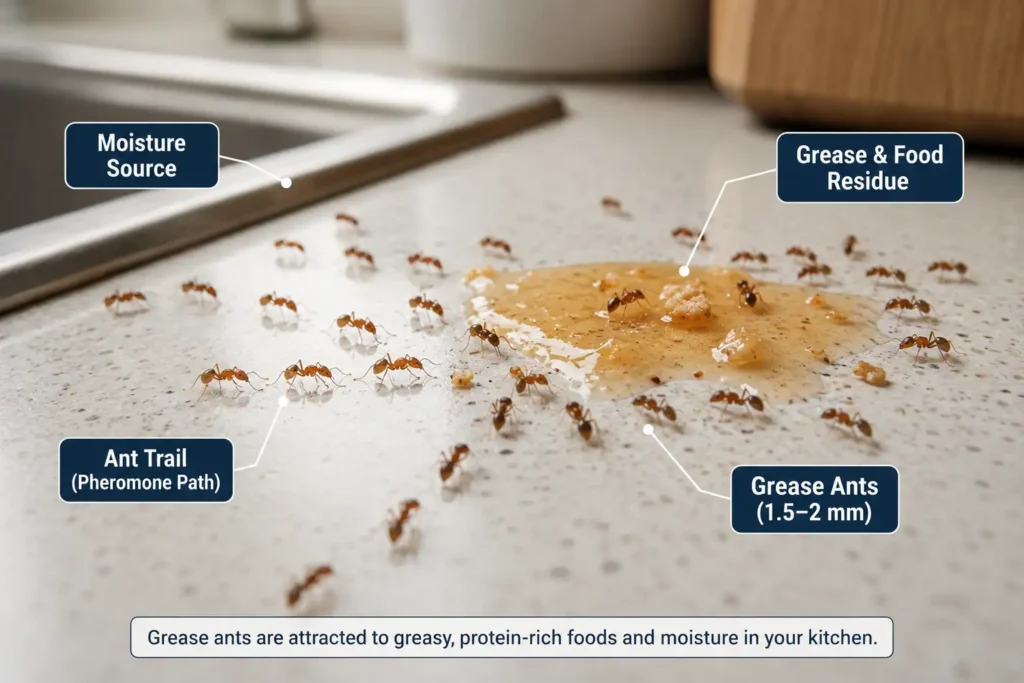
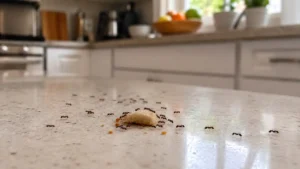
Grease ants are drawn to food that leaves a strong scent, especially oily or protein-heavy items. Think of the stuff that tends to linger after cooking. Bacon grease on a stovetop, crumbs under a toaster, pet food in a bowl, or a sticky residue around a trash can can all keep them interested.
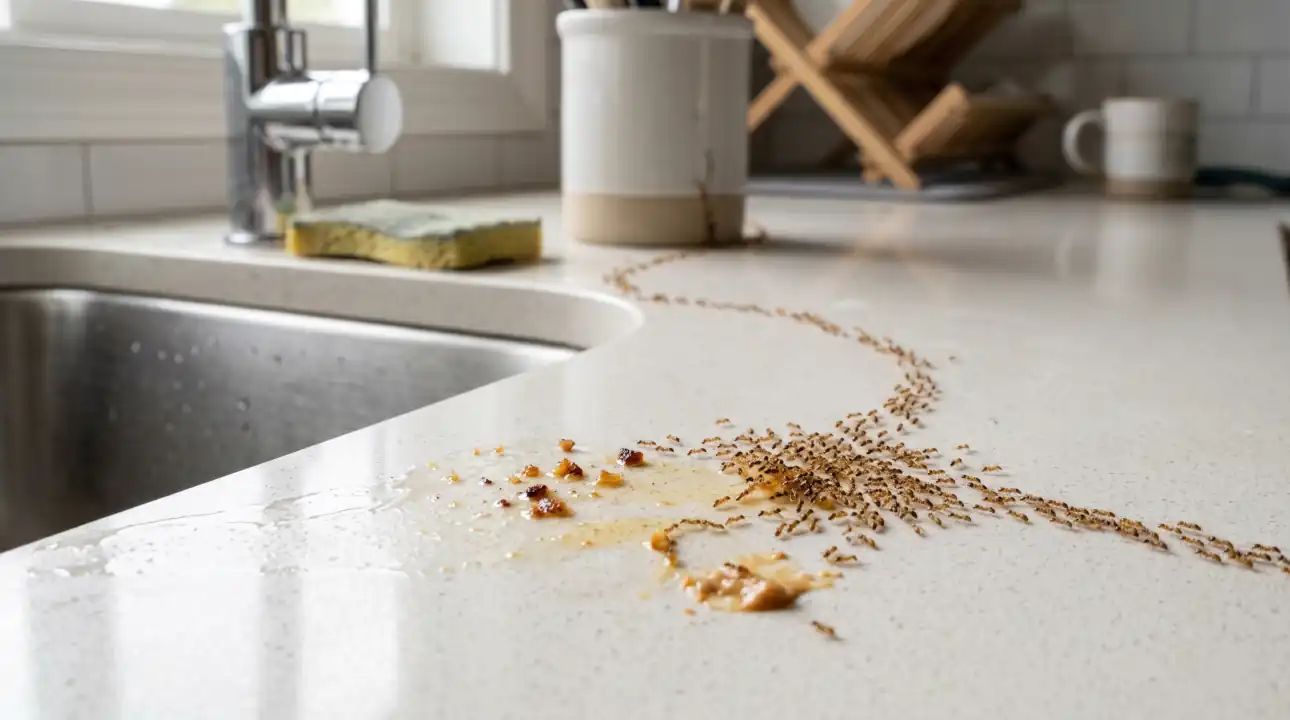
They are also attracted to moisture. That is why you often see them around sinks, dish drains, leaking pipes, damp cabinets, and other areas where water and food residue overlap. A kitchen gives them both of the things they want most, which is why it becomes such a popular place for them.
Another thing that pulls them in is easy access. Even if the food is not sitting out in plain sight, a few crumbs under an appliance or a greasy film on a counter can be enough to keep a trail active. Once a scout ant finds a good source, the rest of the colony usually follows.
Ways They Get into Your Home
Grease ants do not need much space to get inside. A tiny crack around a window, a gap near a pipe, a loose baseboard, or an opening around a door frame can be enough. They are built to exploit weak points in a house.
They often come in from outside nests and travel along protected routes until they reach food. In some homes, they move through wall voids, under cabinets, behind appliances, or along hidden edges where people rarely look. That is why the problem can feel sudden even when the ants have actually been active for a while.
They may also enter near foundation cracks, damaged caulking, utility lines, and plumbing penetrations. In some homes, they also move through foundation voids, gaps near concrete slabs, or tiny openings around exterior utility connections. If your kitchen or pantry has even one or two small openings, the ants will usually find them eventually. That is why sealing the home matters just as much as killing the visible ants.
How To Get Rid of Grease Ants
The main goal is not to kill a few wandering ants. The real goal is to shut down the colony, remove the food source, and make your home a bad place for them to live. That is the difference between a short-term fix and a long-term solution.
It also helps to remember that ants can spread contamination as they move across counters, floors, and food prep areas. Ants can move through drains, trash areas, and contaminated surfaces before crossing kitchen counters or food-prep areas. According to the CDC, pests that travel through unsanitary environments can contribute to contamination concerns inside homes, which is one reason it makes sense to handle an infestation quickly instead of waiting.
Locate Nests & Pheromone Trails
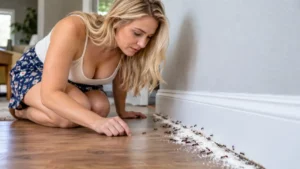
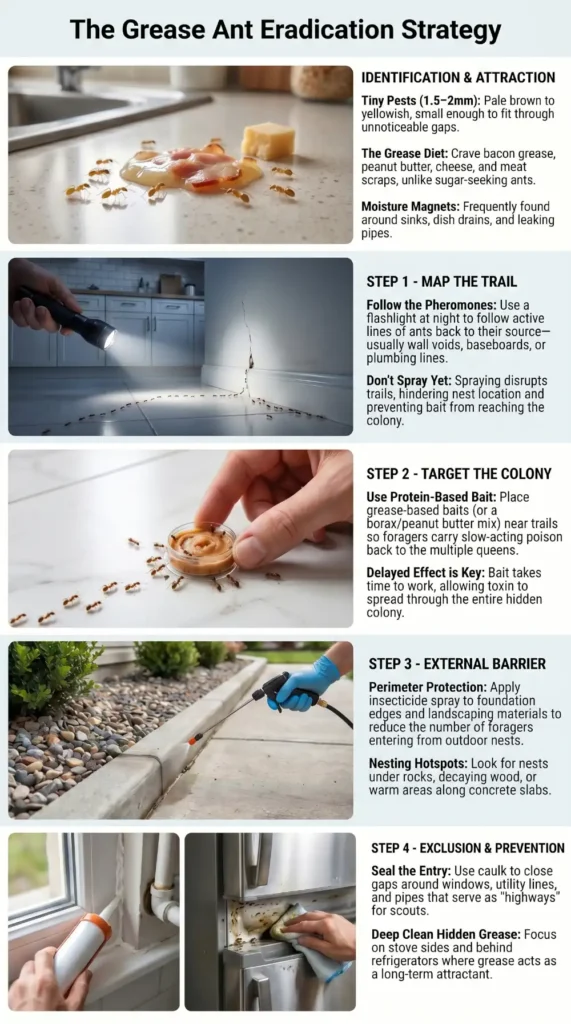
Start by watching where the ants are going. Do not rush to spray everything immediately. The trail is your map, and it can show you exactly where the colony is working from.
Grease ants leave chemical scent trails that help other ants follow the same path to food. If you see a line of ants moving in and out of a baseboard, cabinet, wall edge, or around a pipe, stop and study that area. Follow the line as far as you can. Even if you never find the full nest, you may discover the main travel route or the likely entry point.
If the trail leads outdoors, that usually means the colony may be nesting outside and sending foragers in. If the ants keep circling one indoor area, there may be a hidden nest in the wall, cabinet void, or behind an appliance. Both situations need attention, but they are handled a little differently.
The reason this step matters so much is simple. If you know where the ants are coming from, you can target the treatment. If you do not, you end up treating only the symptom.
In real homes, grease ant trails often lead behind refrigerators, under dishwashers, or into small wall gaps near plumbing lines. One pattern I have seen repeatedly is homeowners cleaning the visible trail every day without realizing the colony is nesting inside a warm wall void nearby. Once the nesting area is identified and baited correctly, activity usually drops much faster.
Quick Tip: Use a flashlight at night or early morning when the house is quiet. Grease ants are easier to trace when the room is still and the trail is uninterrupted.
Place Bait
Bait is usually the smartest first move because it helps reach the colony, not just the ants you can see. That is the key difference. A spray may kill a handful of workers, but bait can travel back to the nest and affect more of the colony.
For grease ants, the bait has to match what they actually like to eat. A sweet bait often works for some ant species, but grease ants are more likely to respond to oily or protein-rich bait. This is why a grease-based formula often works better than a sugar mix.
A simple homemade option is to kill ants with borax by mixing it with a greasy attractant such as peanut butter, bacon grease, or edible oil. The idea is not to flood the area with the mixture. It is to place a small amount where the ants are already traveling so they will feed on it and carry it back to the colony.
Bait only works when the ants actually eat it, so placement matters. Put it near the trail, but not in the middle of a messy cleanup zone. You want the ants to find it naturally. This is also why it helps to know what attract these insects in the first place. The better the bait matches their food preference, the better your odds of clearing the colony.
Commercial ant baits can work very well when the food base matches what the colony is actively seeking. In kitchens, I have generally seen protein- or grease-based baits outperform sweet formulas for grease ants because these ants are usually hunting fats and proteins rather than sugar. The best bait is the one the ants willingly visit. If they ignore one bait type, try a different one with a more appealing food base.
One important note here is patience. Bait does not usually work instantly, and that is actually a good sign. You want the ants to share it before the active ingredient finishes them off. That delayed effect is what helps reach the colony.
Some grease ant colonies contain multiple queens, which is one reason infestations can grow quickly once workers establish a stable indoor food source.
Use Insecticide Spray Outside
If the ants are coming in from outdoors, then it often makes sense to treat the outside source as well. Insecticide spray can help reduce the number of foragers entering the structure, especially around visible trails, nest openings, foundation edges, and known entry points.
This is where outdoor treatment is useful. If the infestation starts near the yard, foundation line, driveway edge, or landscaping materials, you may need to get rid of ants in their lawn before you see a real difference indoors. If the outside colony keeps producing new foragers, the kitchen problem will keep coming back.
Outdoor grease ant nests are commonly hidden beneath rocks, landscaping materials, loose soil, decaying wood, or warm areas along the foundation.
Use spray where ants are active, but do not rely on it as your only fix. Sprays are best for contact control and perimeter reduction. They are not the best way to solve a hidden colony problem on their own. Use them as part of the bigger plan, not as the whole plan.
Also, be careful with overuse. More spray is not always better. Follow the label, keep it away from food contact surfaces, and use it only where it makes sense. If you can handle the issue with bait and exclusion first, that is usually the cleaner route.
Safety Notes When Treating Grease Ants
If you use bait stations or insecticide sprays, keep them away from food-prep surfaces, children, and pets. Avoid spraying kitchen counters directly, and never mix multiple pesticides together. More product does not mean better control. In many homes, overapplying spray actually makes bait programs less effective because it disrupts the ants before they carry bait back to the colony.
How To Get Rid of Grease Ants Naturally
A lot of homeowners prefer to start with natural options, especially in kitchens, around kids, or around pets. That is completely understandable. You can get useful results with natural methods, as long as you understand what they do well and where they fall short.
Natural control methods tend to work best when the infestation is still small and the ants have not fully established multiple active trails indoors. It is less reliable when the colony is already well established. In other words, it can be part of the answer, but it is not always the whole answer.
If you are looking for an eco-friendly form of pest control, start with a few simple tools. A vinegar-and-water spray can help erase scent trails. Soapy water can knock down ants on contact. Peppermint oil may also discourage activity around certain entry points.
These methods are useful because they make the area less attractive and less navigable for the ants. They are especially handy around counters, sink edges, cabinet fronts, and baseboards. Just remember that natural repellents are not the same thing as colony elimination.
Diatomaceous earth is another common natural option. It can help with ants that cross treated areas, but it needs to be used carefully and in dry spots where it stays effective. If it gets wet or disturbed too much, it loses impact.
Quick Tip: Natural sprays work best when you clean first and spray second. If grease or food residue stays behind, the ants may still return even if the scent trail is interrupted.
Preventing Them from Coming Back
Once you have reduced the infestation, the next step is to make your house harder to enter and less appealing to feed in. This part matters just as much as the treatment itself. A lot of ant problems come back because the cleanup stops too early.
Start with the kitchen. Wipe counters, sweep floors, clean around the stove, and do not forget the hidden spots behind appliances. Grease and crumbs collect where people rarely look. In apartments and older homes, grease ants may also travel between shared wall voids, which is why some infestations seem to return even after one kitchen is cleaned thoroughly.
Pay especially close attention to the edges of cabinets, the gap behind the fridge, and the area under the sink. If you want a place to double-check, focus on kitchen sinks because they often hide both moisture and food residue.
Store food in sealed containers. Take trash out regularly. Rinse pet food bowls and do not leave sticky dishes in the sink overnight. Even a small amount of residue can keep a colony interested.
One thing I have noticed in recurring grease ant infestations is that homeowners often clean visible counters while missing hidden grease buildup beside stoves, underneath microwaves, or around the sides of refrigerators. Those overlooked areas are often enough to keep foragers returning.
Now look at the outside of the home. Seal cracks, repair damaged caulk, and close gaps around pipes, vents, windows, and doors. If ants can keep entering, they can keep scouting.
Finally, keep an eye on recurring trouble spots. If ants keep showing up in the same corner of the kitchen or near the same wall, that is a sign you have not fully cut off the source yet. The earlier you catch the pattern, the easier the fix becomes.
Why This Approach Works Better Than Random Spraying
A lot of people start with the fastest-looking solution, which is usually spray. That is understandable. Seeing ants on a counter is annoying, and most people want them gone right away. The problem is that spray only handles what you can see in that moment.
Grease ants are a colony problem, not a single-ant problem. If you only knock down the foragers, the nest keeps sending out replacements. One of the biggest mistakes homeowners make is spraying directly over bait placements. Strong repellent sprays can interrupt pheromone trails and reduce the chances of workers carrying bait back to the colony. That is why bait, source tracing, and exclusion work so much better together.
Think of it like this. Bait goes after the colony. Spray helps reduce active traffic outdoors. Cleanup removes the food signal. Sealing blocks entry. When all four pieces work together, the infestation loses its foothold.
Most homeowners get better long-term results when they combine cleanup, baiting, and exclusion instead of relying on quick spray treatments alone. It does not depend on luck. It depends on removing the ants’ reason for being there.
When To Call a Professional
Some grease ant infestations become difficult to control without professional help, especially when colonies are hidden deep inside wall voids, spreading between apartment units, or repeatedly returning after multiple baiting attempts.
If you continue seeing heavy activity after several weeks of treatment, there may be multiple nesting sites that are difficult to reach without specialized equipment and inspection methods.
Professional pest-control technicians can often identify hidden nesting areas, moisture problems, and structural entry points that homeowners overlook during DIY treatment.
Also Read: Carpenter Ants in a Tree Could Mean Bigger Problems Around Your Home
Final Thoughts
If you are trying to figure out how to get rid of grease ants, do not make the mistake of treating only the trail in front of you. That may feel productive, but it rarely solves the real issue. Grease ants keep coming back when the nest is still active, food is still available, and entry points are still open.
Even though grease ants are tiny, recurring infestations can still create ongoing food-contamination concerns in kitchens and pantry areas if active trails are ignored.
The quickest way to get lasting results is to follow the trail, bait the colony, use outdoor spray where needed, and clean up the conditions that brought the ants inside in the first place. If you stay consistent with those steps, you give yourself a much better chance of getting control of the problem without turning your home into a chemistry experiment.