Most homeowners do not realize they have termites until the damage is already noticeable. The challenge is that termites work behind walls, under floors, and inside wooden structures where they can remain hidden for months or even years. After inspecting termite problems in homes for nearly two decades, I’ve found that recognizing a few early warning signs often makes the difference between a minor treatment and a major repair bill.
Also Read: Termite Tenting Costs, Preparation, and What Homeowners Should Know
Quick Answer: What Are the Signs of a Termite Infestation?
If you only remember one thing, remember this: termites usually hide before homeowners notice real damage. That means the first signs are often small, easy to miss, and scattered around different parts of the house. You might spot a little frass near a frame, a line of mud on the foundation, or a door that suddenly does not close the way it used to. Any one of those signs is worth a closer look, especially if you own an older home or live in a warm, humid area.
This guide breaks down the 9 signs of termites in plain language, the way I would explain it to a homeowner standing in the hallway with a flashlight. No scare tactics, just the things that actually matter.
Common signs of termites include:
- Clicking or tapping sounds inside walls
- Hollow-sounding wood
- Termite droppings (frass)
- Discarded wings
- Visible termite bodies
- Mud tubes
- Warped doors and windows
- Blistered wood
- Termite swarms
Common Signs of Termites Homeowners Should Never Ignore
Most termite infestations reveal themselves through a handful of warning signs, and recognizing them early can help you avoid extensive structural damage and costly repairs. Many of these early signs of termites appear long before homeowners notice obvious structural damage.
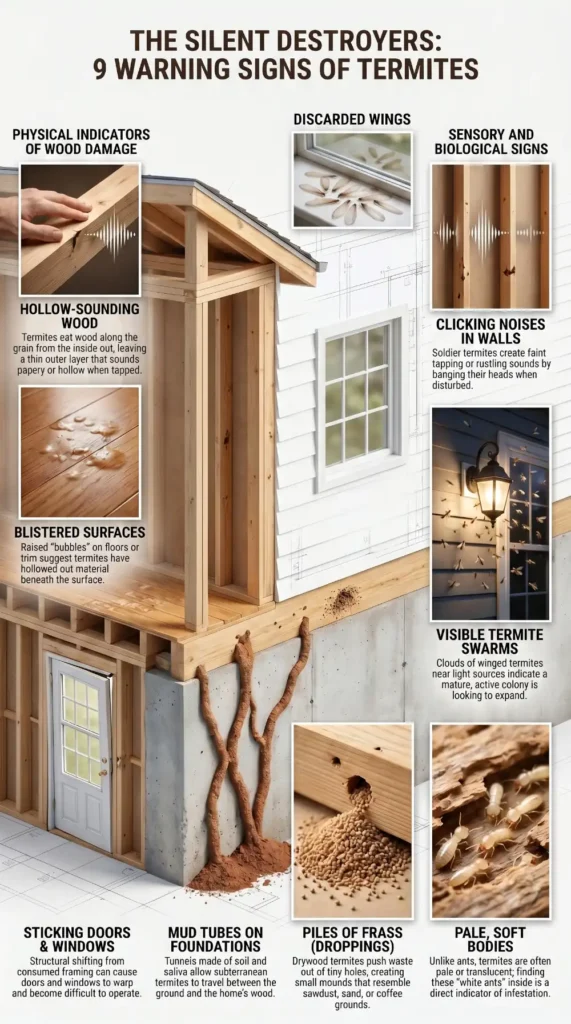
1. Hollowed Out Wood
Hollowed out wood is one of the clearest signs of termites, but it is also one of the easiest to overlook. Termites eat wood from the inside out, so a board, trim piece, or floor section can look fine on the surface while the inside has already been turned into a maze of galleries.
These galleries often follow the grain of the wood, allowing termites to feed while leaving the outer surface looking surprisingly normal. That is why you may notice a piece of wood sounding thin, papery, or hollow when you tap it. In bad cases, the wood can even crumble a little under light pressure.
The biggest mistake homeowners make is assuming the wood has to look rotten or obviously broken before termites are involved. It often does not. Sometimes the finish is still intact while the structure underneath is already weak. Pay close attention to baseboards, beams, window trim, subfloor edges, and any wood that sounds different from the rest of the house.
While termites are one of the most destructive wood-damaging pests, they are not the only ones. Several types of wood-boring insects can tunnel through structural wood and create damage that homeowners sometimes mistake for termite activity.
If you find hollowed wood, do not just patch the surface and move on. Find out how far the damage spreads first. A small-looking problem can turn into a structural repair if you ignore the hidden part.
2. Droppings
Termite droppings, also called frass, are another important clue. Drywood termites push their waste out of tiny holes, and it often lands in little piles that look like sawdust, coffee grounds, or fine wood-colored dust. Because the pellets are so small, many homeowners think the dust came from sanding, drilling, or normal wear. Then the pile comes back, and that is when the alarm bells should go off.
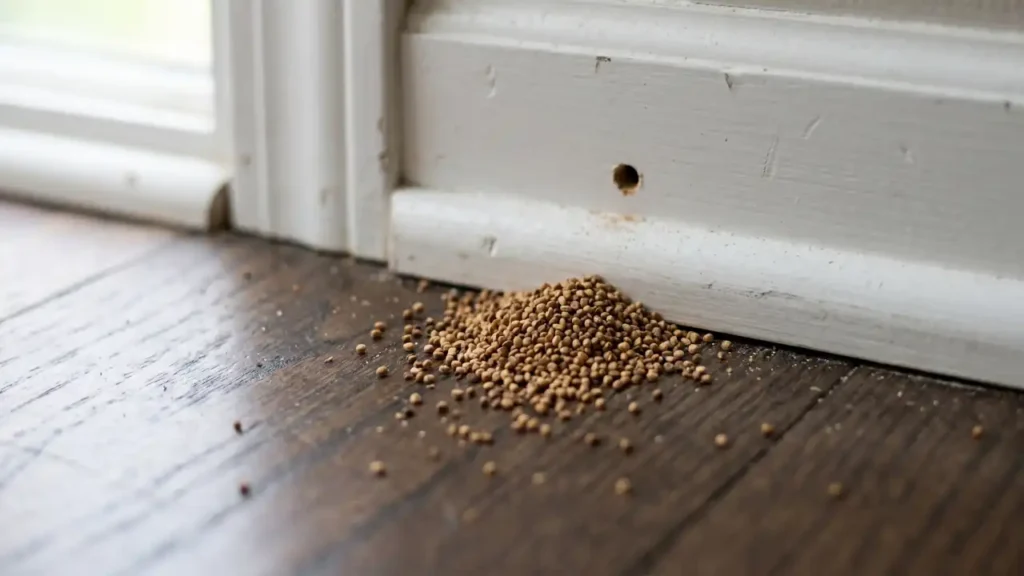
Because termites feed on cellulose found in wood and other plant materials, their droppings often match the color of the material they are consuming.
Look around sills, baseboards, cracks in furniture, and the edges of wooden frames. If you keep sweeping up the same powdery material in the same spot, there is a reason for it. Frass does not usually show up randomly all over the room. It tends to collect below the active area, which is why the source is often directly above the pile.
This is one of those signs where timing matters. Fresh droppings mean active termites may still be inside the wood. Older dust does not always mean the problem is over. You want to check for current activity, not just assume the issue is in the past.
3. Wings That Have Been Discarded
Discarded wings are a strong clue that termites have already moved into the area and are looking for a new place to start a colony. Window sills and door frames are some of the most common places homeowners discover these discarded wings. Swarming termites, also called alates, shed their wings after they land and pair off. That means a little pile of wings near a window, door, or light source can be a real warning sign, not just random insect debris.
Quick Tip: Compare the wings closely. Termite wings are usually equal in size, while flying ants have larger front wings and smaller rear wings. If you’re finding winged termites around windows or light fixtures, learning more about flying termites can help you determine whether a nearby colony is active.
You will often find the wings in spider webs, on windowsills, or in corners where the bugs got trapped after swarming. If the wings keep appearing, that is not something to brush off. It usually means termites are active nearby.
4. Bodies
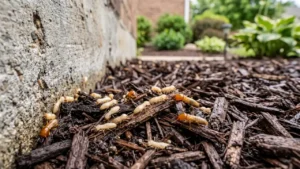
Seeing actual termite bodies is less common than finding damage, but it matters a lot when it happens. Dead termites, live workers, or swarmers inside the home can all point to a colony that is already established or very close by. A lot of homeowners mistake them for tiny ants or pale flies and keep walking. That is a mistake.
Termites are usually pale, soft-bodied, and easy to confuse with other insects if you only see them for a second. Swarmers may show up around windows, doors, ceilings, or lights, especially during warm weather. If you are not sure what you are looking at, it helps to compare the body shape and the wings instead of guessing.
When bodies show up indoors, the important question is not just what they are. The question is why they are there. That usually means a pathway into the home is open, or the colony is already feeding close by. If that happens, inspect the room, the walls around it, and the wood beneath it as soon as possible.
5. Mud Tubes
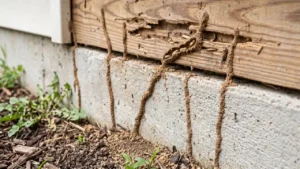
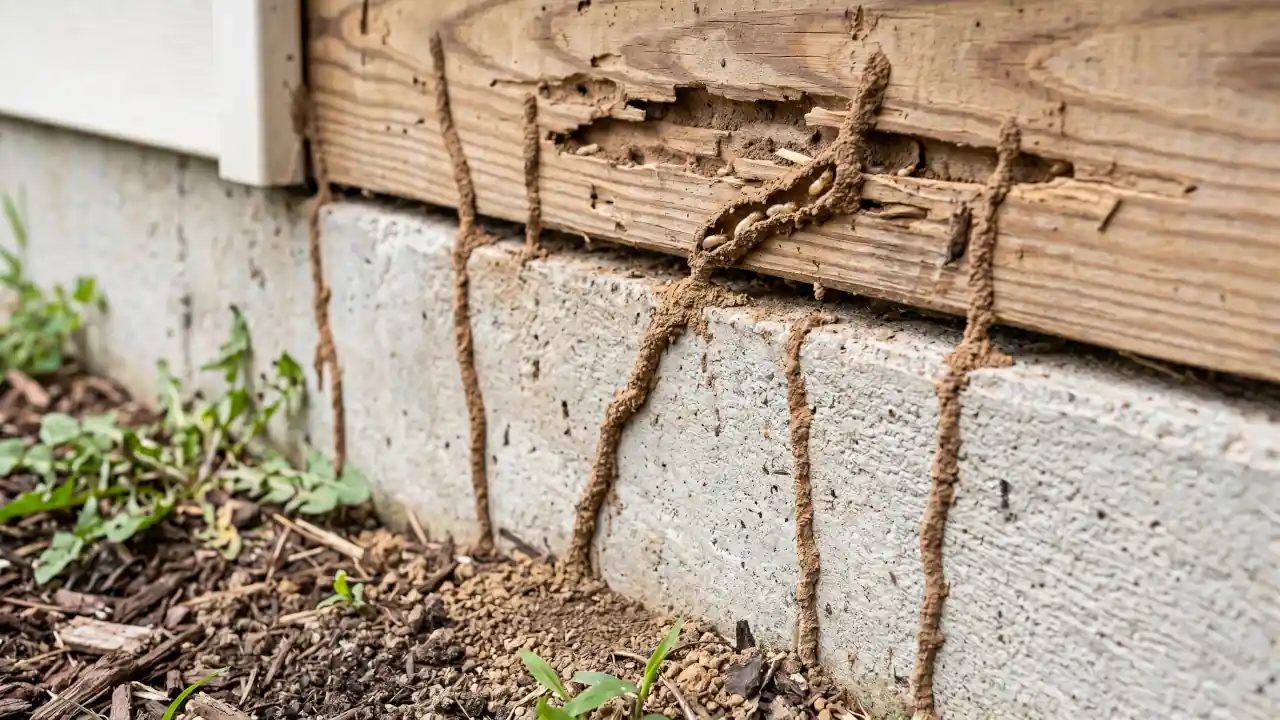
Mud tubes are one of the classic signs of subterranean termites. These narrow tunnels are made from soil, saliva, and tiny wood particles, and termites use them like protected highways between the nest and the wood they are eating. You will usually find them along foundations, crawl spaces, pier supports, or other shaded spots where termites can stay hidden.
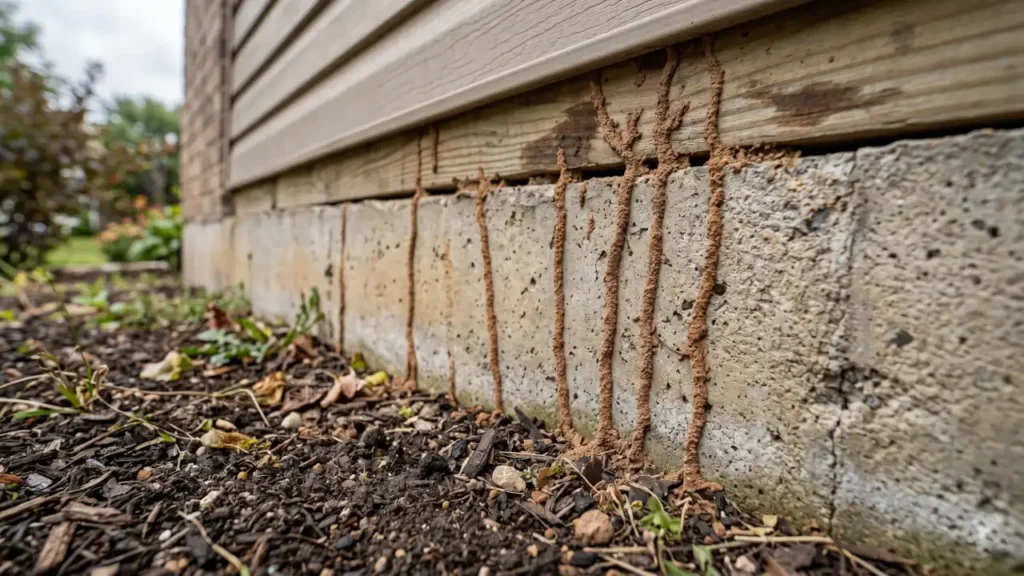
Homes with crawl spaces and pier-and-beam foundations often provide termites with multiple hidden routes into structural wood.
A mud tube can look small and unimportant, but it tells you a lot. In my experience, mud tubes are often the sign that finally gets a homeowner’s attention because they are one of the few termite clues that are easy to spot without opening a wall. It means termites are moving from the ground into the structure without being exposed to light or dry air. That is exactly how they like it. They need moisture to survive, so the tube helps them stay protected while they feed.
According to the U.S. Environmental Protection Agency (EPA), mud tubes are one of the most recognizable signs of subterranean termite activity and should always be investigated further.
Check the foundation carefully, including corners, utility entry points, porch supports, and any place where wood meets soil or concrete. If you break a tube open and it gets rebuilt later, that is usually a strong sign of current termite activity. Do not ignore that. Repaired tubes often mean the infestation is still active.
6. Warped Doors & Windows
Doors and windows that suddenly stick, swell, or stop fitting the frame the way they used to can be a termite clue. Homeowners usually blame humidity first, and sometimes that is fair. But when the problem is paired with other warning signs, termites should move high on the suspect list.
As termites feed through framing, trim, and surrounding wood, the structure can shift. The result may be a door that rubs, a window that jams, or paint that starts cracking around the edges. What makes this tricky is that the change happens slowly. You may get used to it before you realize it is not normal.
If one room starts acting different from the rest of the house, do a close check of the nearby wood. Look at the jamb, trim, sill, and floor area below the problem spot. Warping is often a symptom, not the root cause.
7. Blistered Wood
Blistered wood can look like a tiny bubble or raised patch on the surface. It is easy to dismiss because it often starts small, almost like a paint defect. The problem is that termites can hollow out the wood underneath while leaving the outer layer looking mostly intact for a while.
When the surface starts to blister, the wood underneath may already be thin or damaged. You might see this on flooring, furniture, trim, or subfloor areas. If the spot feels soft, sounds hollow, or shows a change in color or shape, take it seriously.
This sign matters because people often think the issue is cosmetic. It usually is not. A blister is the home trying to tell you that something underneath has changed. That is the time to inspect, not the time to paint over it and hope for the best.
8. Swarms
A swarm is one of the most dramatic signs of termites. It happens when winged termites leave the colony to mate and start new colonies. People often notice a cloud of small flying insects near a window, porch light, or doorway, then later find wings scattered nearby.
Swarms are a warning, not a minor annoyance. If termites are swarming inside or right next to your house, the colony is active and mature enough to produce reproductives. That usually means the infestation has been around long enough to do hidden damage.
The swarming stage can be easy to miss because it may happen quickly. By the time you notice the aftermath, the insects may already be gone. That is why wings, windowsills, and light fixtures matter so much. They often tell the story after the swarm has ended.
9. The Sound of Head Banging
Yes, termites can make noise. If you hear light tapping, clicking, or faint knocking inside a wall, it may not be your imagination. Homeowners who want to understand these sounds in more detail can learn more about the different noises termites make and what they may indicate.
Worker termites chew wood constantly, and soldier termites may bang their heads or shake their bodies when the colony is disturbed. That is why the sound often seems more noticeable at night, when the house is quiet and background noise drops. It is usually subtle, but once you know what to listen for, it can be a real clue.
Do not expect it to sound like a loud banging from a movie scene. In real homes it is usually much lighter than that. People describe it as soft clicking, rustling, or a tapping sound that seems to come from inside the wall. If you hear it more than once, especially in the same area, inspect that wall and the wood around it.
What To Do Right After You Spot Signs of Termites
If you’re wondering how to tell if you have termites, the key is to look for multiple signs rather than relying on a single clue. The best next step is to slow down and verify what you found. Take photos, check the surrounding wood, and look for a second or third sign in the same area. One clue can be misleading. A few clues together usually tell the truth. For example, hollowed wood plus droppings points in a much different direction than a warped door by itself.
After that, inspect the foundation, crawl space, windowsills, and any damp wood nearby. If you can safely remove a piece of trim or look behind an access panel without causing damage, that can reveal whether the problem is minor or much bigger than it looked. Do not spray blindly at random spots and call it done. That can hide the evidence without fixing the source.
If the signs keep stacking up, schedule a termite inspection quickly. In some cases, particularly with widespread drywood termite infestations, homeowners may eventually need to consider termite tenting and other professional treatment options. The goal is not to panic. The goal is to stop the damage while it is still manageable. That simple timing difference can save a homeowner a lot of money and a lot of repair work.
Also Read: Does Mulch Attract Termites? What Pest Pros Recommend to Keep Them Away
Final Thoughts
Termites are one of those pests that reward early attention and punish delay. The earlier termites are discovered, the easier and less expensive they are to control. The hard part is that the first signs are often easy to miss, and by the time the damage becomes obvious, the colony may have been feeding for months or even longer. That is why these signs of termites and signs of termite damage matter so much. They give you a better chance to catch the problem before repairs get expensive.
If you notice one sign, do not stop there. Check for the others. Hollowed wood, droppings, discarded wings, mud tubes, and swarms often show up together. Even something as small as a stuck door or a faint clicking sound can be the piece that ties the whole picture together.
I’ve inspected homes where a homeowner initially called about a sticking window, only to discover a hidden termite problem that had been active for much longer than expected.
My advice is simple. Inspect carefully, move quickly, and do not rely on guesswork. If you are seeing multiple warning signs, the safest move is to bring in a termite professional and confirm what is happening inside the walls.