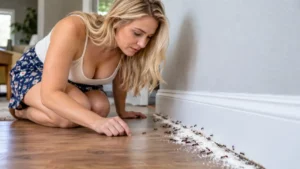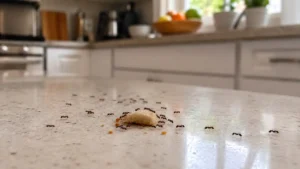
You walked into your kitchen for a glass of water and there they were, a thin line of tiny ants marching straight to a spot on your counter you swear you already wiped down. Sugar ants have a way of showing up out of nowhere and multiplying overnight. The good news is that getting rid of them isn’t complicated once you know what actually works and why most quick fixes fall short.
Also Read: How to Get Rid of Ant Hills Before They Take Over
Quick Answer
The fastest way to get rid of sugar ants is to use a slow-acting, non-repellent ant bait that worker ants carry back to the colony. Pair baiting with daily cleaning, sealing food in airtight containers, fixing moisture problems, and closing entry points. While sprays kill visible ants quickly, they rarely eliminate the nest.
Why They’re in Your Home
If you’re wondering where sugar ants come from, they usually enter homes while searching for food, water, or both. Sugar ants don’t wander into your house by accident. They usually enter while searching for food or water. If you’d like to understand what draws ants indoors in the first place, our guide on what attracts ants to your house explains the biggest triggers homeowners often overlook. Once they find either one, they’ll keep returning until the source is gone.
Here’s how it usually plays out. A colony sets up somewhere outside your home, often in a mulch bed, under a slab of concrete, inside a tree stump, or tucked into a gap in your siding. If you’ve noticed heavy ant activity around your yard, reducing outdoor colonies can also help limit the number of ants finding their way indoors.
The colony then sends out scout ants whose entire job is to explore and hunt down a reliable food source. These scouts are relentless. They’ll squeeze through a gap around a window, follow a wire into your wall, or slip under a door that doesn’t seal quite right. In some homes, they even emerge from electrical outlets after traveling through wall voids in search of food.
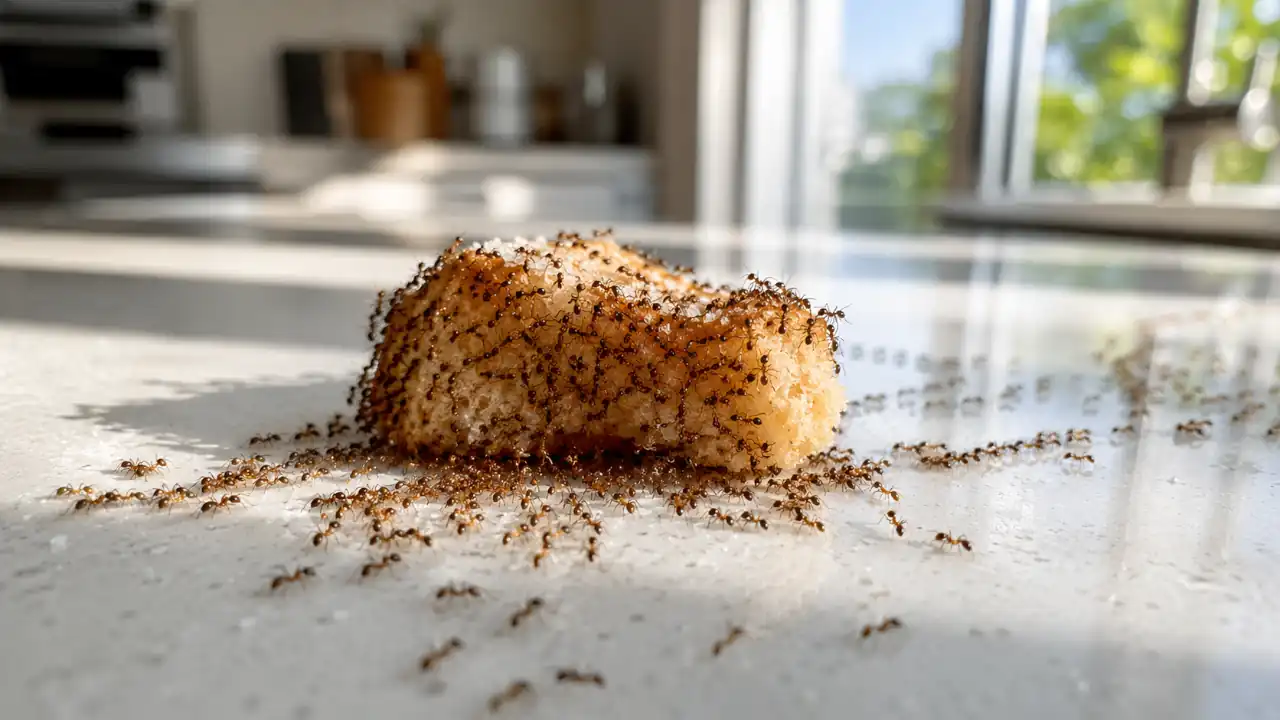
Once a scout finds something worth eating, whether that’s a drop of spilled juice or a few crumbs behind the toaster, it heads back to the colony and lays down a pheromone (chemical scent) trail so other workers can follow the exact same path. Within hours you can go from spotting one or two ants to watching a full line of them moving in formation across your countertop. That’s the moment most homeowners panic, but it actually tells you something useful: it means the nest is close enough and motivated enough to keep sending reinforcements.
Sugar ants are also drawn in by moisture. If you’ve got a leaky pipe under the sink, condensation around a window, a leaking dishwasher, or a bathroom that stays humid, that’s an open invitation even if there’s no food around at all.
Quick Tip: If the ants are marching in a straight line to the same location every day, you’re likely seeing an established foraging trail rather than random scout ants. Following that foraging trail often helps you locate the entry point or the food source that’s keeping the colony active.
How To Get Rid of Sugar Ants
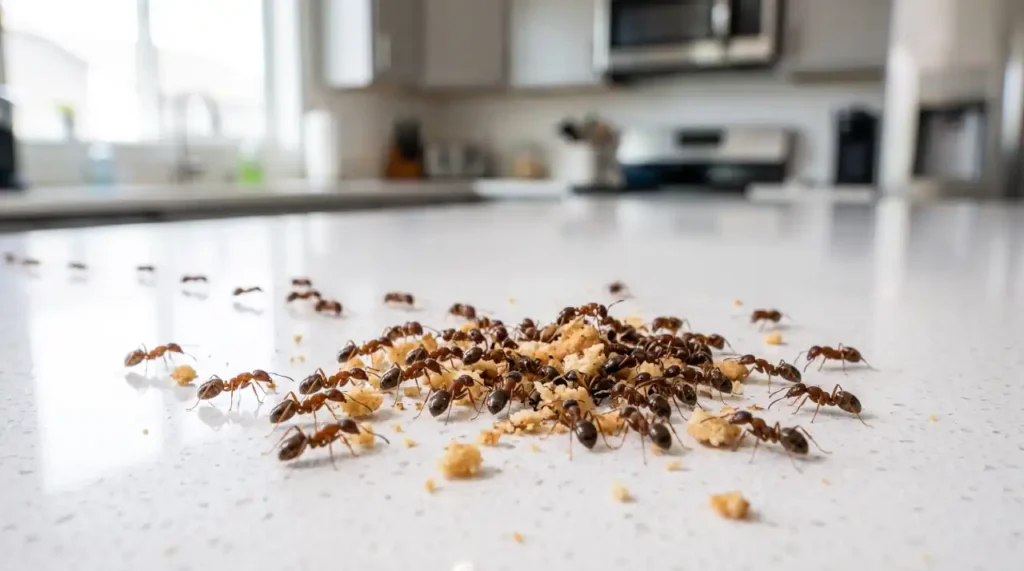
There’s no single trick that wipes out every sugar ant problem. One pattern I’ve seen repeatedly is homeowners killing every visible ant with spray while ignoring the trail leading back to the nest. The kitchen looks clear for a day or two, but the colony simply replaces those workers. Homes that combine baiting with sanitation and moisture control almost always resolve the problem faster than homes relying on sprays alone.
I’ve dealt with infestations that cleared up in a week with one method, and others that needed two or three approaches stacked together before the colony finally gave up. It really comes down to how established the colony is, where the nest is hiding, and how consistent you are with follow-through. Let’s go through the methods that actually move the needle.
Set Up Ant Bait
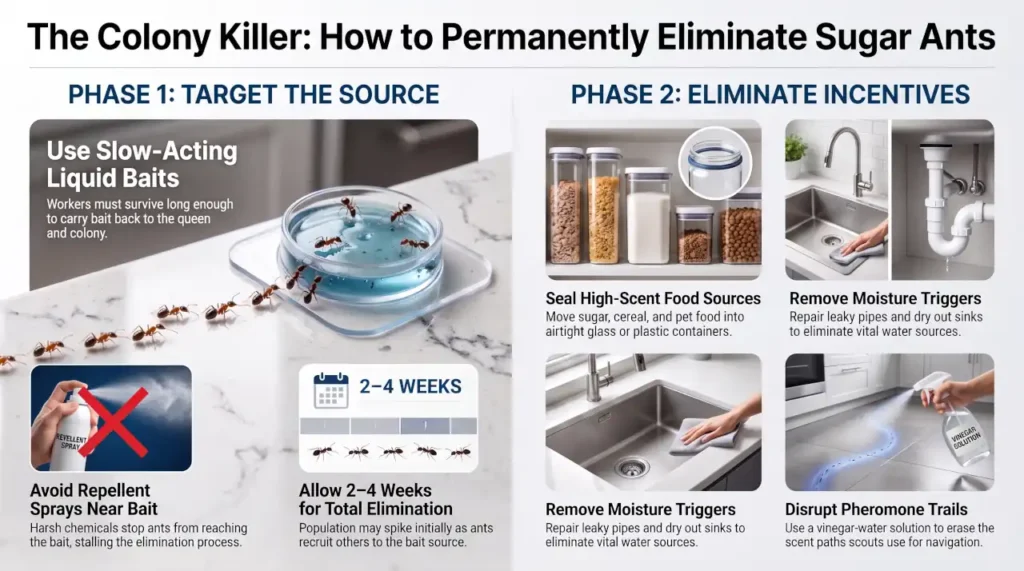
If you want to eliminate the colony instead of just the ants you can see, bait is usually the most effective place to start. Unlike contact sprays, slow-acting bait gives worker ants time to carry the active ingredient back to the nest.
If you’re looking for an easy option, a ready-to-use liquid bait station is one of the simplest ways to start treating a sugar ant infestation. One product many homeowners use is Terro Liquid Ant Killer, which uses a slow-acting bait designed to be carried back to the colony.
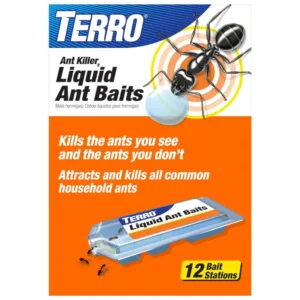
The specific brand matters less than choosing a slow-acting, non-repellent bait and giving the ants enough time to carry it back to the colony.
Most homeowners begin seeing fewer ants within one to two weeks, although complete colony elimination can take several weeks depending on colony size, species, and whether multiple nests are present.
Be patient and avoid moving or replacing the bait too quickly. Interrupting the process before worker ants have time to share the bait with the colony can delay results. The worker ants find it, feed on it, and carry a portion back to the nest to share with the rest of the colony, including the queen.
Don’t be alarmed if you notice more ants around the bait during the first few days. That’s usually a good sign that worker ants have found the bait and are recruiting others to carry it back to the colony. Disturbing or removing the bait too early can interrupt the process. Since the poison is slow acting, the ants don’t realize anything is wrong until it’s too late, and allowing the bait to spread through much of the colony over time, including the queen in many cases.
Expect this to take some time. In a lot of cases it’s a few weeks before you notice a real drop off, and full elimination can stretch closer to a month or two if the colony is large. One thing to watch for is something called budding, where the queen senses trouble in the nest and relocates with a group of workers to start over somewhere else in your house. When that happens you basically end up chasing a moving target.
Quick Tip: Stick with a slow-acting bait that ants readily feed on and carry back to the colony. Avoid spraying repellent insecticides around bait placements because strong repellents can cause ants to avoid the bait or alter their foraging patterns before enough bait reaches the nest.
Use A Contact Killing Spray
This is the method almost everyone reaches for first because it’s what we all grew up seeing our parents use. You spot ants, you grab the spray, you kill them. Problem solved, at least for the moment.
The catch is that contact sprays only kill the ants they directly touch and generally don’t eliminate the colony hidden inside walls, beneath slabs, or outdoors. That’s why sprays work best as temporary relief while bait targets the source of the infestation.
You’re essentially mowing the lawn instead of pulling the weed out by the root. On top of that, many contact sprays contain chemicals you probably don’t want lingering around children, pets, or anyone with respiratory sensitivities. The fumes aren’t something you want lingering around kids, pets, or anyone with respiratory sensitivities, and a thorough job usually means clearing the room and airing it out afterward.
Sprays have their place if you need immediate relief from a visible trail, but don’t expect them to solve an actual infestation on their own. Homeowners also ask whether household cleaners can solve the problem. Our article on whether bleach kills ants explains why it may kill ants on contact but rarely eliminates the colony.
Place Traps
Most enclosed ant traps contain a slow-acting bait that worker ants carry back to the colony. The ants feed on the bait and carry it back to the colony, making these traps a cleaner and more contained alternative to applying bait directly, especially in kitchens or around pets when used according to the label.
These traps are effective at reducing the number of ants you’re seeing day to day, but they don’t eliminate the colony on their own. Think of them as damage control rather than a cure. They’re great for keeping the visible problem down while you tackle the source with bait or another method.
Keep Your Food Sealed
This one sounds obvious, but it’s the step people skip the most, and it’s a big reason sugar ants keep invading your kitchen in the first place. Ants are scent driven, and an open box of cereal or a loosely closed bag of sugar is basically a flashing sign pointing them straight to your pantry.
Get in the habit of transferring anything ant-bait-worthy into sealed plastic containers or resealable bags. That includes sugar, flour, rice, pasta, cereal, pet treats, and honestly, anything with a hint of sweetness or starch. Sticky bottles like syrup, honey, and ketchup deserve extra attention too, since even a dried drip around the cap can pull ants in from surprisingly far away.
Clean Up Your Home
A tidy kitchen won’t guarantee you never see another ant, but it removes a huge chunk of the incentive for them to stick around. This is one of those methods that feels tedious in the moment but pays off enormously over time.
Wipe down counters and sweep up crumbs daily, not just when you remember to. Dirty dishes sitting in the sink overnight are basically a buffet, and don’t forget that ants are drawn to water too, so a wet sink after washing dishes can attract them just as much as leftover food scraps. Empty the trash regularly rather than letting it sit for days, since food residue in the bin is one of the biggest ant magnets in any house.
Quick Tip: If you’ve got a dog or cat, their food and water bowls are prime real estate for sugar ants. Pick up bowls and wipe the feeding area once your pet is done eating rather than leaving food out all day.
Mopping your floors regularly also helps, and a water and vinegar mix works especially well since the smell disrupts the scent trails ants rely on to navigate. It won’t solve a serious infestation by itself, but paired with the other steps here it makes a real difference.
Where Sugar Ants Hide in Your Home
The kitchen is the obvious hotspot, and for good reason. Between cooking, snacking, and general daily life, it’s nearly impossible to avoid leaving behind some trace of food, even if you’re generally tidy. Sugar ants are remarkably good at picking up on scents you’d never notice yourself, so a few crumbs behind the stove or a sticky spot under the fridge can be enough to draw a scouting party in.
Bathrooms are another spot worth checking. Ants need water just as much as food, and a bathroom with regular condensation or a slow drip under the sink can become a steady water source that keeps a colony coming back. Keeping that area as dry as reasonably possible cuts down on the appeal.
Beyond that, any room where you eat is fair game. If you’re snacking on the couch or eating breakfast in bed on lazy mornings, there’s a decent chance a stray crumb has ended up somewhere you wouldn’t expect. Bedrooms, living rooms, home offices, none of them are automatically safe just because they’re not the kitchen. If the ants have already spread into carpeting, you’ll need a slightly different approach than treating hard floors.
Quick Tip: Check under and behind large appliances like the refrigerator, stove, and dishwasher. Food debris and moisture often collect in these areas, making them attractive to foraging ants.
How To Get Rid of Sugar Ants Naturally
Not everyone wants to spray chemicals around their living space, especially if there are kids or pets underfoot, and that’s a completely reasonable thing to want to avoid. The tradeoff is that natural methods tend to work as a deterrent rather than a true fix, meaning they’ll push ants away temporarily but usually won’t eliminate an established colony on their own.
White vinegar is probably the most accessible option most people already have at home. Mix equal parts vinegar and water in a spray bottle and apply it wherever you’re seeing ant activity, along baseboards, on countertops, or right at their entry point if you can find it. The strong smell throws off the scent trails they rely on, so it disrupts their navigation even if it doesn’t touch the nest itself. Once the vinegar dries, the scent-disrupting effect fades, which is why repeated cleaning is necessary if you’re relying on it as a temporary deterrent.
Coffee grounds sprinkled around entry points or along the perimeter of your home can act as a mild repellent too, though be careful using them on light-colored surfaces since they can leave stains behind. If you’re considering this approach, we’ve taken a closer look at whether coffee grounds actually repel ants and when they may or may not help.
Essential oils like peppermint, tea tree, cinnamon, or orange are another popular route, and honestly they smell a lot better than vinegar if that matters to you. Add about 20 drops to a spray bottle of water and apply it the same way you would the vinegar solution. Some people toss in a pinch of cayenne pepper for extra strength.
Quick Tip: Reapply natural repellents every few days, especially after mopping or rain, since the scent fades and ants will test the same entry points again once it does.
Food-grade diatomaceous earth can help kill ants that crawl through it, but it only works while the powder remains dry. Moisture greatly reduces its effectiveness, making it less reliable in damp kitchens or bathrooms. None of these are permanent solutions, but they’re worth combining with the methods above while you work on a longer-term fix.
Removal Methods That Don’t Work for Serious Infestations
It’s worth being upfront about what doesn’t hold up once you’re dealing with a real infestation rather than a handful of stray ants. Most of the natural remedies mentioned above fall into this category. Vinegar, essential oils, and similar sprays will knock back the ants you can see, but they don’t reach the nest, so the colony keeps producing new workers behind the scenes.
Contact sprays run into the same wall. They’re satisfying in the moment because you see immediate results, but they’re not built to solve a colony-sized problem. Cinnamon sprinkled around cabinets, sealing up visible cracks without addressing the actual nest, and homemade boric acid mixtures are often mixed too strong, causing worker ants to die before carrying enough bait back to the colony.
If you’re planning to make your own bait, our guide on how to kill ants with borax explains the proper ratios and common mistakes that can prevent the bait from reaching the colony. Commercially formulated ant baits are generally more reliable because the active ingredient is carefully balanced for slow transfer through the colony.
In some cases these half measures can actually backfire by triggering the colony to bud and split into multiple smaller nests, which turns one problem into two or three.
Safety Tips When Treating Sugar Ants
Always place ant baits where children and pets cannot access them. If you’re using Terro bait stations around dogs or cats, our guide on whether Terro is safe for pets covers what to know before placing them around your home. Never mix cleaning products like bleach with vinegar or other household chemicals, and avoid applying insecticides directly to food preparation surfaces unless the label specifically allows it.
If using any pesticide, carefully follow the manufacturer’s instructions for safe application and storage. If you’re unsure whether a product is safe to use around children, pets, or food preparation areas, choose a treatment specifically labeled for indoor residential use and follow all application directions.
Ways To Prevent Them from Entering Your Home in the Future
Getting rid of the ants you have right now is only half the job. The other half is making your home a lot less appealing so a new colony doesn’t just move in a few months later.
Keeping a consistent cleaning routine is the single biggest thing you can do here. Sweeping, wiping counters, and taking the trash out regularly all add up over time, even if no single task feels like a big deal on its own. Storing pantry staples in sealed containers rather than their original packaging removes a lot of the scent cues that draw scouts in during the first place.
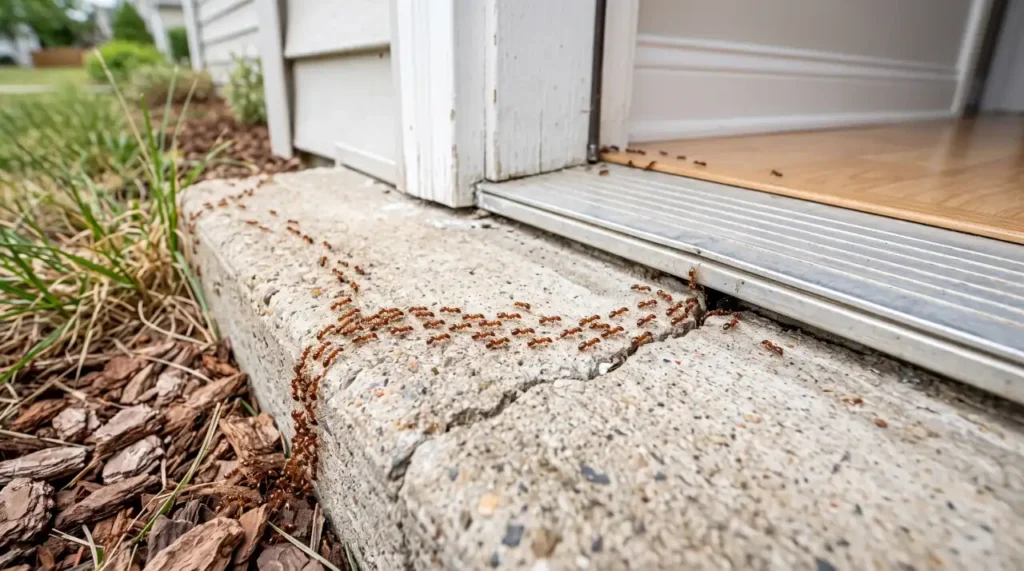
Outside your home, take a walk around the perimeter and look for small gaps, cracks in the foundation, spots where utility lines enter the house, or worn weatherstripping around doors and windows. Sealing these up with caulk or weatherstripping closes off a lot of the easy entry points ants would otherwise use.
Quick Tip: Trim back tree branches and shrubs that touch your house. Ants use these as natural bridges straight onto your roofline or siding, and cutting that contact point off makes your home a much less convenient target.
A Common Misconception About Sugar Ants
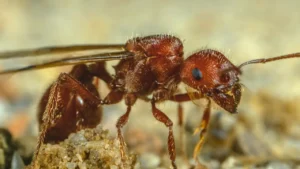
Here’s something that surprises a lot of people. The ants you’re calling sugar ants in your kitchen probably aren’t a species actually named that. The name “sugar ant” is really just a nickname people apply to whatever small ant species shows up going after sweets, and depending on where you live that could mean several different things.
In many homes across the country, what people call sugar ants turn out to be pavement ants or odorous house ants, both of which have a strong sweet tooth and a knack for finding their way indoors. In other regions, the culprit might be crazy ants, easily identified by their erratic, fast moving trails that look almost frantic compared to the neat lines other species follow.
Ghost ants, white footed ants, and acrobat ants get lumped into the same nickname too. The only ant species with an official common name of sugar ant is found exclusively in Australia, so if you’re dealing with one in a home anywhere in North America, it’s almost certainly one of these other lookalikes.
Why does this matter beyond trivia? Because identifying the actual species can change your approach. Some of these ants nest exclusively outdoors and only come inside to forage, while others are perfectly happy setting up a permanent nest inside your walls. Washington State University Extension notes that odorous house ants commonly travel along structural features such as walls, pipes, and cabinet edges while searching for food, helping explain why homeowners often see the same trails appear in consistent locations despite repeated cleaning. This also helps explain why one infestation may disappear within a couple of weeks while another takes much longer to eliminate depending on colony size and nesting location.
Also Read: How To Get Rid of Ants in the Kitchen: Safe Steps That Work
When Should You Call a Pest Control Professional?
Most sugar ant problems can be handled with bait, good sanitation, and a little patience. However, if you’ve been using a quality bait consistently for two to three weeks and ant activity hasn’t slowed, the colony may be hidden inside a wall, beneath a slab, or in another hard-to-reach location. A licensed pest control professional can identify the ant species, locate the nest, and apply targeted treatments that are often more effective for persistent or recurring infestations. If you’re wondering what a professional actually does differently, our guide explains what an ant exterminator looks for and why certain treatments work better than others.
Final Thoughts
Sugar ants are frustrating, but they’re not unbeatable. The real key is matching your method to the size of the problem. If activity continues after several weeks of consistent baiting and cleaning, don’t assume the treatment failed. Multiple colonies, hidden nests, or a different ant species may require a different bait or professional inspection. Stack a few of these methods together, stay consistent, and focus on eliminating the colony rather than just the ants you can see. With a little patience, most sugar ant infestations can be brought under control without long-term problems.