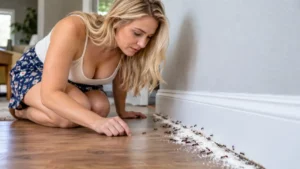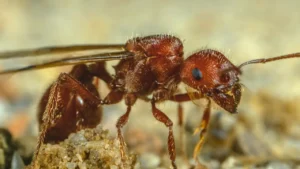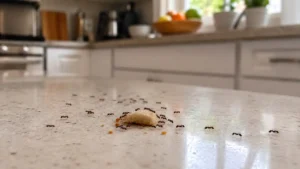

If you have ants crawling across your counter, the appeal of bleach is obvious. It is already under the sink, it smells strong, and it feels like the kind of thing that should wipe pests out fast. And yes, bleach can kill ants on contact. But that is only half the story. The part most people get wrong is thinking that killing the ants they can see is the same as solving the ant problem. It usually is not.
Ants are colony insects, so unless you interrupt the trail, find the source, or use a method that reaches the nest, they often come right back. This article breaks down what bleach really does, what it does not do, and how to use it without making your home smell like a chemical spill.
Quick Answer: Does Bleach Kill Ants?
Bleach can kill ants on contact, but it does not usually eliminate the colony. It may temporarily remove ant trails and discourage activity, but long-term control usually requires baiting, sanitation, sealing entry points, and targeting the nest itself.
Also Read: What Do Ant Bites Look Like? These Red Bumps Can Be Easy to Miss
Why Bleach Only Works Temporarily Against Ants
Yes, bleach can kill ants, but it is a contact kill, not a colony solution. Household bleach is a sodium hypochlorite product, and the CDC explains that it is fast acting and commonly used as a disinfectant while also being corrosive and capable of causing irritation and burns at household concentrations.
That same harshness is why it can kill ants it touches, but it does not magically erase an entire infestation. Bleach also does not reliably kill an entire ant colony unless the nesting area itself is directly affected.
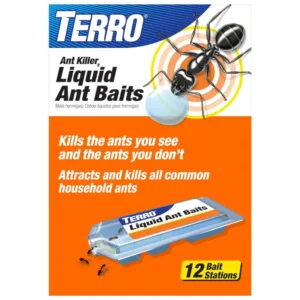
In real homes, bleach is mainly useful when you can reach the ants directly or disrupt the trail they are using to move back and forth.
The important thing to understand is that ants are not wandering around randomly. They move as a colony and follow pheromone trail signals. Once scout ants find food, others can follow that trail right back to the source. Eliminating common items that attract ants is one of the most important long-term prevention steps. Otherwise, you may wipe up a line of ants in the kitchen only to see a new line the next day. Bleach can kill the foragers you see and may scrub away part of the trail, but that alone does not usually stop the nest from sending more workers.
Does Bleach Repel Ants and Keep Them Away?
Sometimes, temporarily. Strong odors and wiped-away trail chemicals can make a treated area less attractive for a while, so bleach may seem like it is repelling ants. But that effect is usually short-lived. Simple cleanup methods like soapy water or vinegar solutions can temporarily disrupt ant trails, but trail wiping alone is usually temporary unless you also address entry points, food sources, and the nest itself. Bleach can do a similar kind of cleanup, but it is not a true long-term barrier.
Here is the plain-English version: bleach may confuse ants, irritate them, and clear the scent path they were using, but ants are persistent. If the colony still has food, moisture, and access into your home, they will often rebuild the route or create a new one. So yes, bleach may help keep them away for a little while. No, it is not a reliable permanent repellent. That conclusion follows from how ants use scent trails and from the fact that colonies continue sending workers as long as food, moisture, and nesting sites remain available.
How To Use It
If you are going to use bleach against ants, the main goal is to use it in a controlled, limited way. Do not treat it like a magic fog you can blast around the house. Think of it as a harsh cleanup tool that can kill on contact and help remove the path ants are following. The safest and most useful ways are direct spot treatment, trail wiping, or carefully treating an outdoor nest entrance when the surface can handle it. Bleach is corrosive, can discolor fabrics, can irritate the skin and eyes, and can create toxic gas if mixed with ammonia or acids, so the way you use it matters just as much as the fact that it works.
1. Take The Right Safety Precautions
Before anything else, protect yourself. Wear gloves, keep the room ventilated, and avoid breathing fumes in a closed space. Bleach can irritate or burn skin and eyes, and the fumes can become overwhelming in enclosed spaces. That is not the kind of chemical you want to handle casually.
Quick Tip: Open windows and run a fan before you spray or wipe with bleach. If the smell feels sharp enough to make your eyes water, the room needs more airflow, not more bleach. And never mix bleach with ammonia, vinegar, or other cleaners because dangerous fumes can form very quickly.
2. Spray Solution
A spray can work when you are dealing with a visible line of ants on a hard, bleach-safe surface. The idea is simple. Hit the ants directly, then clean the path they were following. Household bleach is already strong at low concentrations, so you do not need some extreme homemade mix to make it useful. In many cases, a diluted solution is easier to control and less harsh on your nose, though you should still treat it as a corrosive cleaner, not a gentle household spray. Many homeowners dilute bleach with water to reduce fumes and surface damage indoors.
Spraying mainly works as a short-term cleanup method for visible ant activity. Soapy water and basic surface cleaning can also help disrupt the trail ants are following, and bleach can serve a similar cleanup role on suitable surfaces. That said, spraying alone usually buys you time rather than solving the infestation. This is especially true with common indoor sugar ants, where visible workers are often only a small fraction of the active colony. If you do not remove the attraction and entry point, more ants may appear later.
3. Direct Pour
Direct pouring makes more sense outdoors than indoors. If you can clearly see an ant mound, nest opening, or active soil entrance outside, a targeted pour may kill exposed ants and disturb the nest entrance. Homeowners often try bleach on visible ant hills outdoors because the entrance is easy to spot. Even then, it is not always the best first choice, because colony structure matters. Direct nest treatments can sometimes work better for outdoor colonies when the nest location is clearly visible, especially with soil-nesting ants, while baiting can be better for species with multiple queens or hidden cavities. In other words, direct pouring is blunt force, not precision control.
A lot of homeowners assume that if a liquid is strong enough, more of it must be better. With ants, that is not always true. If you soak a spot but miss the queen, miss the main nesting zone, or fail to stop a nearby trail, the colony may simply shift activity or recover. Targeted nest treatment can help in some cases, but broad soaking is not the same thing as long-term elimination.
This is especially true with outdoor ant hills. Bleach may kill ants near the entrance, but many colonies extend deep underground through tunnels and chambers that the liquid never reaches. As a result, activity often returns even when the mound initially appears inactive.
4. Bleach Wipe
This is one of the most practical uses. If ants are crossing a countertop, backsplash, baseboard, or hard floor, wiping the path can reduce visible activity while removing the trail marker they were following. Cleaning the area with soapy water can also help remove the trail ants are following. Bleach can do a similar job on hard surfaces that can safely handle it.
In one kitchen infestation I dealt with, the homeowner had been spraying bleach across the counters several times a day because the ants kept reappearing near the coffee maker. The bleach killed the visible ants, but the colony was actually nesting behind an exterior wall where a small plumbing gap allowed constant access. Once the entry point was sealed and bait was placed near the wall void, the activity dropped within days. The bleach itself was never solving the root problem.
Quick Tip: After the ants are gone, clean the same area again with plain water or your normal surface cleaner so no bleach residue is left behind. Bleach is meant to disinfect and clean, not sit on food-prep surfaces all day. Always follow the product label carefully and avoid leaving bleach residue behind on food-prep surfaces.
5. Bleach Bait
This is the trickiest method, and honestly, it is usually not my first recommendation. The reason bait works well for ants is that workers carry the bait back to the colony, where it can affect more than just the ants you see. Proper ant baits work because workers carry the bait back into the nest before the active ingredient takes effect. Bleach does not behave like a normal bait ingredient, and its smell can overwhelm the attractant and discourage feeding. That means bleach bait is far less reliable than proper ant bait.
If you try this at all, keep expectations low. Most commercial ant killer baits work far better than improvised bleach mixtures. Bleach is more likely to repel than attract, and a bait only works when ants are willing to eat it and carry it home. In practice, sweet or protein baits formulated for ants are much more dependable than a DIY bleach mixture. For homeowners considering DIY baiting methods, borax-based ant bait strategies are generally far more effective than trying to turn bleach into a bait. That is why properly formulated ant baits are usually more dependable than improvised chemical mixtures.
6. Mind The Fumes
Do not ignore this part. Bleach fumes are one of the biggest reasons it is a poor long-term ant solution indoors. Even at household concentrations, overuse can irritate the eyes, throat, and lungs. Direct skin contact can also lead to irritation after repeated exposure. So even when bleach helps with ants, it comes with a real safety cost.
If kids, pets, or anyone with asthma or respiratory sensitivity is in the home, bleach use needs even more care. Keep the area ventilated, keep people away until surfaces are dry, and avoid overdoing it. Stronger does not mean safer, and in ant control it does not even mean more effective.
Why Bleach Seems to Work Better Than It Actually Does
One reason homeowners overestimate bleach is because ants die visibly and quickly after contact. That immediate result creates the impression that the infestation itself is collapsing. In reality, most ant colonies are hidden behind walls, under slabs, inside mulch beds, or beneath exterior foundations. Killing the workers you can see often leaves the queen and most of the nest untouched. In the field, this is one of the most common reasons temporary ant treatments fail.

The Downsides of Using Bleach to Get Rid of Ants
Bleach has several downsides that homeowners often underestimate. It can damage finishes, discolor fabrics, irritate skin, and create strong fumes when overused indoors. Dirty surfaces, delicate materials, unfinished wood, and porous stone are especially vulnerable to bleach damage.
The potential for damage is real. On tile or many hard surfaces, bleach may be workable. On wood, delicate stone, grout that is already weak, or painted surfaces, it can create more problems than ants ever did. The same goes for carpets, upholstery, clothing, and towels. A tiny splash can leave a permanent pale spot on darker material. Once that happens, you are not just dealing with ants anymore. You are dealing with damage you caused while trying to solve the ants.
Ruined clothing is another common complaint. If you spray or wipe bleach while wearing something you care about, the odds of a stain are high. That is because bleach is literally used to remove color. It does not discriminate between the ant trail on the floor and the shirt on your back. Keep that in mind before reaching for a bottle with one hand and a dish towel with the other.
Harsh fumes are probably the most immediate downside. The smell is hard to miss, and for some people it triggers coughing, eye sting, or a headache right away. If a method makes your house feel unsafe for your family for several hours, that is a strong sign it should stay in the “backup option” category, not the “go-to prevention plan” category.
Skin irritation is another common issue, especially with repeated exposure or accidental splashes during cleanup. Even if you do not feel anything immediately, repeated exposure is not something to shrug off. Gloves are a basic requirement, not an optional extra.
Why Ant Colonies Keep Coming Back

One of the frustrating things about ants is that eliminating the visible trail does not always affect the nest itself. Many colonies contain thousands of workers, multiple nesting zones, or hidden moisture sources that continue supporting activity long after the kitchen counter looks clean again.
Alternative Methods to Consider
For most homes, there are better ant control options than bleach. Some homeowners also use diatomaceous earth for ant control because it damages the insects’ outer protective layer and can dehydrate them over time. If you are comparing DIY ant remedies, homeowners also commonly look at methods like using baking soda for ants or whether coffee grounds actually repel ants, though both approaches have important limitations.
Carpenter ants present an additional challenge because colonies may be hidden inside wall voids, damp wood, crawl spaces, or structural cavities. Even if bleach kills visible carpenter ants, it rarely reaches the nesting area where the colony is actually established.
- The first one is simple cleanup. Wipe the trail, remove the food source, and make the area less attractive. Simple cleanup, sealing entry points, and removing food access are some of the most effective long-term prevention steps. That is the kind of practical, low-risk step that actually fits long-term ant control.
- The second option is baiting. This is often the most effective long-term route because worker ants carry the bait back to the colony. The University of California IPM program explains that properly formulated ant baits are designed to reach the nest and eliminate the colony, including queens, provided the bait is slow acting enough. That is a much better colony-level strategy than a spot spray that only kills the ants marching across your counter.
- The third option is sealing and sanitation. Sealing cracks around doors, windows, pipes, and foundations can dramatically reduce indoor ant activity over time. This is boring advice, but it works because it removes the reasons ants keep coming back. Reducing food access, moisture, and entry points makes the home much less attractive to ants.
- The fourth option is species-aware treatment. Some ants respond better to nest treatments, some to baits, and some to a combination. Some ants nest outdoors near foundations, while others may establish activity inside walls or damp wood areas. That means the best fix depends on what kind of ant you have and where it is nesting. When the infestation keeps returning despite cleanup and baiting, the problem usually extends beyond what surface treatments can solve.
Does Clorox Bleach Kill Ants?

Yes. Clorox bleach can kill ants the same way other household bleach can, because it is still a household sodium hypochlorite bleach product. Household bleach products work similarly regardless of the brand name on the bottle. The same limitations apply whether you are dealing with sugar ants, carpenter ants, pavement ants, red ants, or outdoor fire ants. Bleach may kill exposed workers, but it usually does not eliminate the colony itself.
So the brand name does not change the basic answer. If it is household bleach, it carries the same limitations and safety concerns regardless of the brand.
The brand name matters less than the use case. Clorox bleach is not a colony killer by itself, not a safe all-purpose ant barrier, and not a substitute for baiting, sealing, and cleaning up the source of the infestation. It is just one harsh tool in a much bigger pest-control toolbox.
Also Read: How To Get Ants Out Of Electronics Before They Ruin Everything
Conclusion
Bleach can kill ants on contact, but it rarely solves the underlying infestation. In most homes, the colony, queen, and food sources remain untouched, which is why ant activity often returns. It kills on contact, may disrupt trails, and can discourage ants from crossing a treated area for a while. But ants live in colonies, and colonies keep sending more workers as long as the nest is alive and the home stays attractive. That is why bleach feels effective at first and disappointing later. In practical residential pest control, bleach is best viewed as a temporary cleanup tool rather than a reliable elimination strategy.
The best long-term approach is usually a combination of trail cleanup, sealing entry points, better sanitation, and a bait or nest treatment matched to the ant species. Understanding the local ant species and even knowing what naturally eats ants outdoors can also help homeowners understand why some infestations persist longer than others. Use bleach carefully, if at all, and view it mainly as a cleanup tool rather than a standalone ant-control strategy.
When Bleach Is Probably the Wrong Choice
If the infestation keeps returning every few days, if ants are emerging from walls, or if multiple rooms are affected, bleach is usually the wrong tool. Persistent infestations often point to hidden nesting areas, moisture issues, or structural entry points that require targeted baiting or direct nest treatment instead of repeated surface cleanup. If the infestation keeps spreading despite cleanup and baiting efforts, a professional inspection can help identify hidden nesting sites or moisture conditions that homeowners usually cannot see.