

A garage can turn into a spider magnet faster than most people expect. It starts with a few webs in the corners, then a couple of spiders behind boxes, and before long the whole space feels like it belongs to them. Garages attract spiders because they offer exactly what they need: shelter, insects, and quiet corners that rarely get disturbed.
The good news is that you do not need to live with it. How to Remove Spiders From Your Garage comes down to a few simple habits done consistently, not one magic spray. The real fix is making the garage less attractive by cleaning smarter, sealing entry points, removing insect activity, and reducing the hiding spots that let spiders settle in.
This guide walks you through what actually works, what to do about webs, which garage spiders matter most, and how to keep the problem from coming back. If you want to keep spiders out of your garage for good, the key is fixing the conditions that attracted them in the first place.
Also Read: Does Peppermint Oil Repel Spiders? The Truth Revealed
Quick Answer: Get Rid of Spiders in Your Garage
To get rid of spiders in your garage, remove webs and egg sacs, reduce clutter, replace cardboard with sealed plastic bins, seal gaps around the garage door and walls, reduce the insects they feed on, and keep the space dry. Sprays and natural deterrents can help, but long-term garage spider control comes from exclusion, cleaning, and removing the food source.
Quick Steps to Get Rid of Spiders in Your Garage
- Remove webs and egg sacs
- Replace cardboard with sealed plastic bins
- Seal gaps around the garage door, windows, and wall penetrations
- Reduce insects by turning off lights and removing food sources
- Keep the garage dry and fix leaks
- Use a residual spider treatment only if needed
- Recheck weekly until activity stops
If you want the whole garage spider cleanup plan at a glance, this 4-step visual guide shows the exact system that works best in real garages.
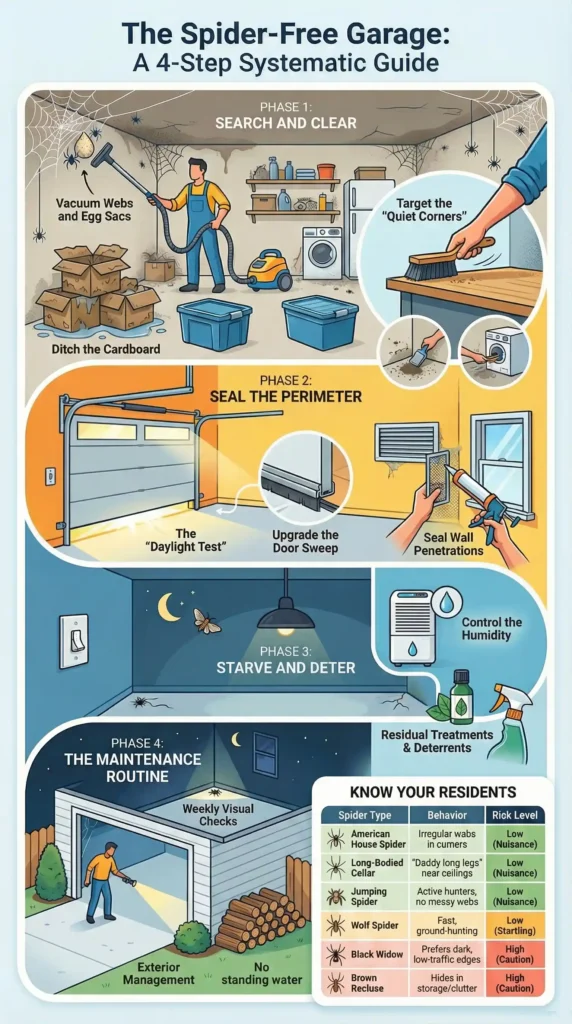
In real garage spider problems, the pattern is usually the same: clutter in the corners, gaps under the garage door, and enough insect activity at night to keep spiders fed. Most homeowners focus on the webs first, but the real fix is almost always the same combination of cleanup, sealing, and cutting off the insect activity that made the garage attractive in the first place.
Why Do Spiders End Up in Garages?
Spiders do not move into garages because they are trying to annoy you. They move in because the space checks a lot of boxes for them. Most garages are dark, still, and cluttered. That matters because spiders prefer places where they can hide, wait, and hunt without being disturbed. A garage also tends to stay closed for long stretches, which means fewer people moving around and fewer reasons for a spider to be chased off.
Another big reason is food. Spiders are predators. They follow insects. If your garage has flies, moths, ants, roaches, or other small bugs, spiders will not be far behind. Any place that gives them a steady food supply becomes a good hunting ground. If the garage light stays on at night, it can attract even more insects, which in turn attracts even more spiders.
Moisture can play a role too. Many garages have small leaks, damp floors, condensation, or puddles left behind by wet cars, rainwater, or stored items. That extra moisture helps insects survive, and where insects go, spiders usually follow. Add in cardboard boxes, old storage bins, piles of tools, and forgotten corners, and you have a perfect spider shelter.
If you want to understand the problem clearly, think of it this way: spiders are not random visitors. They are looking for three things. They want shelter, food, and a place that does not bother them. Garages provide all three when they are messy, dim, and unsealed.
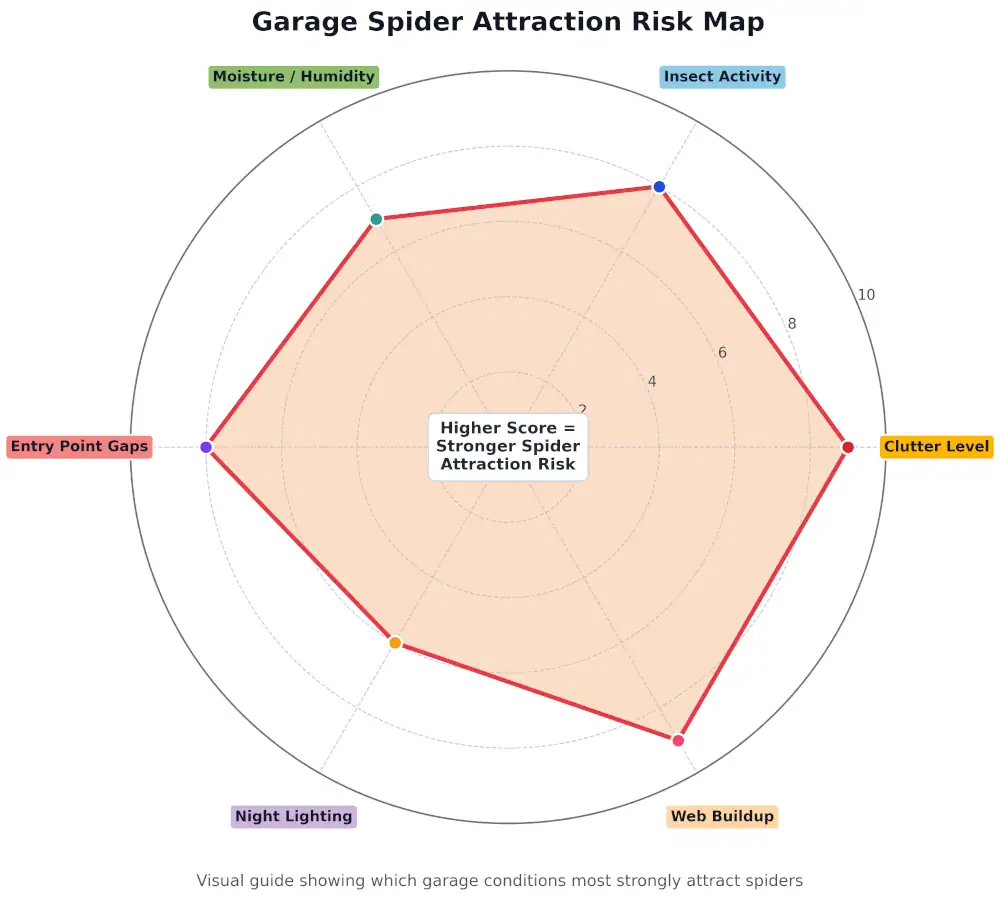
This visual shows the six garage conditions that usually drive spider activity, so you can see exactly what needs to change before the problem gets better.
How To Get Rid of Spiders in Your Garage
The fastest way to reduce spiders is to attack the conditions that support them. A spider spray alone might kill a few visible ones, but it will not solve the root problem. The smarter approach is to treat the garage like a system. Remove the spiders you can see, remove the webs and egg sacs, remove the insects they feed on, and close off the entry points that let them in.
What Actually Solves Garage Spider Problems in Real Homes
In real garage spider problems, the webs are usually just the visible part of the issue. The garages that keep having spider problems almost always have the same pattern: clutter along the walls, cardboard storage, gaps under the garage door, and enough insect activity at night to keep spiders fed.
Most homeowners want to start with a spray, but the garages that improve fastest are the ones where the door sweep gets fixed, the cardboard gets replaced, and the insect activity gets cut down first. In most garages, you do not need heavy chemical treatment if you fix the door gaps, reduce the insect activity, and stop giving spiders quiet places to hide. What usually does not work well is relying on one spray, one natural remedy, or one cleanup day and expecting the problem to stay gone.
Use a Residual Spider Treatment
A residual spider treatment can help, but it should be a support step, not the main solution. In garages, the best results usually come from applying a labeled residual product to cracks, corners, baseboards, garage door edges, window frames, and other hidden travel routes. Broadly spraying the middle of the garage usually does very little.
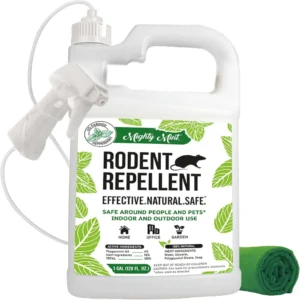
Focus on edges, seams, and dark places where spiders actually move. Reapply only as the label directs, especially after cleaning or heavy dusting. Always follow the label, and only use products approved for garage or indoor crack-and-crevice use if the treatment area is enclosed.
Quick Tip: Apply a residual spider treatment after you have vacuumed and dusted, not before. That way, you are not removing the product before it has a chance to stay in the cracks, edges, and travel routes where spiders actually move.
Seal Up the Garage
If spiders can enter, they will eventually return. That is why sealing the garage is one of the most important steps in the whole process. Spiders can squeeze through very small gaps, especially around garage doors, wall joints, vents, window frames, utility lines, and cracks near the foundation. A garage does not need to be visibly damaged to have enough openings for spiders to get inside.
If you want to prevent spiders from getting into your garage again, sealing those small gaps matters more than most sprays.
Start with the big opening first, which is the garage door itself. Check the bottom seal and the side weather stripping. If light is visible under the door, bugs can usually get through too. Then look at the edges of windows, the frame around the service door, and any cracks where pipes or wires enter the wall. Use caulk, weather stripping, or door sweeps where needed. For vents that must stay open, use fine mesh screening so air can pass but pests cannot.
Quick Tip: Shut the garage door and look for daylight from inside the garage. Any line of light you can see is a gap that should be sealed.
Turn Off the Lights at Night
This is less about spiders liking darkness and more about what light attracts. Bright garage and exterior lights pull in moths, flies, and other insects, and spiders follow the food. If you do not need the garage light on overnight, keep it off. If you need exterior lighting for safety, use it only where necessary and consider warmer, less bug-attracting bulbs.
Remove Their Source of Food
This is where a lot of people miss the real problem. If spiders are showing up in your garage, there is usually something else there for them to eat. That might be flies, beetles, ants, roaches, mosquitoes, or tiny moths. Remove those pests, and the spiders lose their incentive to hang around.
Start by checking for trash, spilled pet food, bird seed, stored snacks, or anything else that attracts insects. Clean up dead bugs when you see them. If the garage has a bigger insect problem, deal with that first.
Also look at what is happening outside the garage. Shrubs, woodpiles, compost, stacked debris, and standing water can all increase insect activity near the door. Managing the area around the garage matters just as much as what happens inside it.
Quick Tip: Check the garage floor with a flashlight at night. If you see insect activity after dark, that is a strong sign the spiders are there because the food source is active.
Keep It Dry
Spiders do not need much water, but a damp garage supports the insects they feed on. Wet floors, leaks, condensation, and standing water all make the space more attractive. Look for leaks around the roof, windows, hoses, and plumbing lines, and check whether rainwater is being tracked in from the driveway or vehicle tires. If you live in a humid area, a dehumidifier and better airflow can make a real difference.
Use Peppermint Oil as a Light Deterrent
Natural solutions can help a little when you use them the right way, and peppermint oil is one of the most common homeowner options. It is not a reliable fix for an established garage spider problem, but it may help discourage light activity in already-clean areas. Many homeowners also try peppermint oil to repel spiders, but it works best as a light deterrent after the garage has already been cleaned and sealed.
Peppermint oil works best as a light deterrent around corners, door frames, window trim, and entry points. You can mix it into a spray bottle with water and a small amount of liquid soap so it disperses more evenly. It is most useful after a deep clean, when the garage has already been cleared of webs and clutter. Think of it as a finishing step, not the main event.
Do Some General Cleaning
General cleaning matters more than most people think. Sweep the floor, wipe the shelves, vacuum the corners, and clear dust from around boxes and storage racks. Pay attention to ceiling corners, behind appliances, under workbenches, and along the wall-floor seam. Cleaning removes hiding places and makes it much easier to spot fresh activity.
Get Rid of Cardboard Boxes
Cardboard is one of the most common spider shelters in a garage. It gives spiders places to hide, lay eggs, and move around unnoticed, and it also absorbs moisture that attracts insects. Break down old boxes and replace them with sealed plastic bins whenever possible. If you must keep cardboard temporarily, store it off the floor and away from walls.
Try Diatomaceous Earth
Diatomaceous earth (DE) can help in a garage when it stays dry and undisturbed. It works best in cracks, corners, and hidden edge areas where spiders and insects travel. Use it lightly and follow label directions. A thin application in the right places works better than a heavy pile of dust.
Use DE carefully in enclosed spaces. Avoid airborne dust, wear a dust mask if needed, and keep it out of open areas where kids or pets may disturb it. In most garages, it works best in dry cracks, behind storage edges, or along low-traffic wall lines rather than across the open floor.
Use Vinegar for Light Clean-up, Not Full Control
A vinegar spray is a low-cost cleanup tool, not a professional-grade spider treatment. Mix equal parts white vinegar and water and use it on corners, entry points, and repeat webbing spots after removing webs. It can help with light cleanup, but it is not dependable for ongoing infestations by itself.
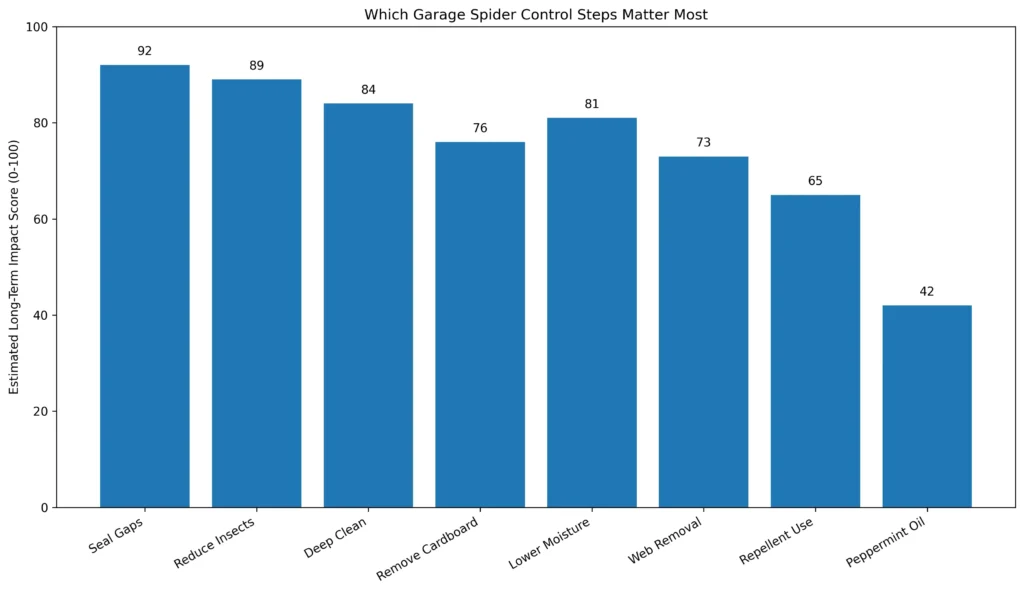
Not every spider-control step matters equally. This quick comparison shows which garage spider prevention actions usually make the biggest long-term difference.
Best Ways to Get Rid of Spider Webs in Your Garage
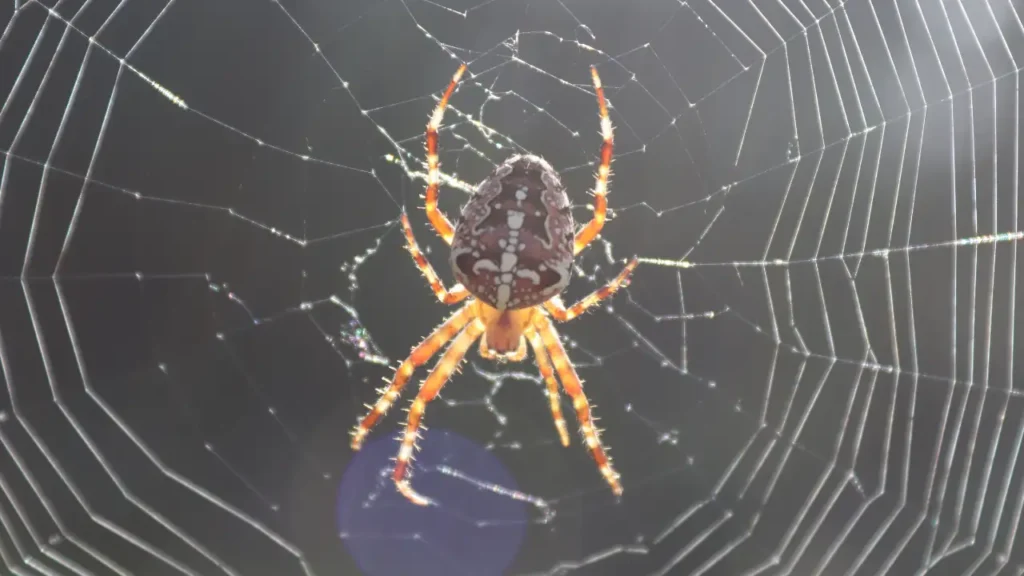
Start by removing old webbing, egg sacs, and dust so you can spot fresh activity faster. Spider webs are a signal, not just a nuisance. Removing them regularly will not solve the whole problem by itself, but it makes it easier to track fresh activity and remove egg sacs before they hatch.
The easiest way to remove webs is with a long-handled broom, a duster, or a vacuum with a hose attachment. Start in the corners, move along ceiling lines, and work down the walls. Do not forget behind shelves, around lights, and along garage door tracks. Webs tend to build in places that do not get disturbed much.
If the garage has a lot of webbing, a vacuum is often cleaner than a broom because it pulls away the silk, egg sacs, and dust in one pass. Once the webs are gone, it is much easier to treat the area with a residual spider treatment or wipe down repeat webbing spots if you are using one.
Quick Tip: Remove webs at night or early morning before spiders become active. That makes it less likely you will miss fresh webbing or disturb a spider that is still inside it.
Safety Tips When Removing Spiders from a Garage
Garage spider control is usually a simple DIY job, but it still pays to be careful. Wear gloves when moving boxes, bins, or stored items, especially if they have been sitting undisturbed for a long time. Use a flashlight before reaching behind shelves or into dark corners. If you are removing webs from ceiling lines or upper corners, make sure your ladder is stable and avoid overreaching.
If you are vacuuming heavy dust or applying products like diatomaceous earth, eye protection and a dust mask can help in enclosed spaces. Keep sprays and powders away from pet areas, kids’ items, and anything stored for food use. If you suspect a brown recluse, black widow, or any spider you cannot confidently identify, do not handle it bare-handed. In that case, it is safer to capture it carefully for identification or call a local pest professional.
Types Of Spiders You’ll Typically Find in Garages
Not every spider in a garage is a serious threat. In many cases, the spider is just a nuisance. Still, it helps to know what you are looking at so you can decide whether to handle it yourself or call a professional. In many parts of the U.S., the most common garage spiders are harmless nuisance species, but black widow or brown recluse concerns can vary by region, which is why proper identification matters.
Jumping Spiders
Jumping spiders are small, active hunters that do not build the messy webs most homeowners notice in garages. Instead, they chase prey and rely on movement and eyesight. They are usually not the spiders causing a long-term web problem, but they can still show up in garages that attract insects.
American House Spider
The American house spider is one of the most common garage spiders because it likes corners, clutter, and sheltered spaces. It builds irregular webs in quiet areas and is usually more of a nuisance than a danger. In most garages, its presence is a sign the space has plenty of insect prey and hiding spots.
Long-Bodied Cellar Spiders
Long-bodied cellar spiders are the classic daddy long legs many people find in garages and basements. They hang upside down in loose webs near ceilings and corners. They are usually harmless, but they still signal that the garage offers plenty of shelter and quiet space.
Black Widow Spiders
Black widows are one of the more important spiders to watch for in garages, especially in cluttered corners, around stored items, and near low-traffic edges. They prefer quiet, protected spaces, so use caution when reaching into dark storage areas. If you suspect one, identify it carefully or call a professional rather than handling it casually.
Wolf Spiders
Wolf spiders are fast, ground-hunting spiders that do not rely on webs the way web-building species do. They often wander into garages looking for prey or shelter. They can look large and be startling, but their presence usually points to food and cover in the garage.
Sac Spiders
Sac spiders are small hunters that often move through corners and wall edges. They may not build large webs, but they can still hide in garages and come out at night. While they are not usually the main concern in a garage, it is still smart to avoid handling any unidentified spider directly and keep storage areas clean and easy to inspect.
Brown Recluse
Brown recluse spiders deserve extra caution, but they are often misidentified. If you think you have found one, confirm it with a local extension office or pest professional rather than guessing. If a spider looks suspicious and you are not sure what it is, do not handle it bare-handed. For a reliable identification reference, see the University of Kentucky’s brown recluse spider guide.
A Simple Garage Spider Control Routine That Actually Works
The best results come from repetition. A one-time cleanup helps, but a routine keeps spiders from building back up again. Once the garage is cleaned, sealed, and dried out, keep it that way. Sweep it on a schedule. Remove new webs as soon as you see them. Keep storage off the floor. Check the door seals every few months. Fix leaks quickly. Reapply deterrents when needed.
That routine may sound simple, but it is the difference between a garage that stays spider-free and one that slowly drifts back into the same problem.
Also Read:
When DIY Is Enough — and When to Call a Pro
Most garage spider problems can be handled without professional treatment if you stay consistent with cleaning, sealing, and reducing insect activity. But there are times when it makes sense to call a pest control professional.
It is worth getting help if you keep seeing spiders after sealing obvious gaps and reducing clutter, if you suspect brown recluse or black widow spiders, if you are finding repeated egg sacs in hard-to-reach areas, or if the garage also has a larger insect problem that is feeding the spiders. In real homes, spiders often turn out to be a symptom of a broader pest issue, not the main problem by themselves.
Conclusion
How To Get Rid of Spiders in Your Garage is not about finding one perfect spray. It is about removing what attracts spiders in the first place and keeping those conditions from returning. Clean the clutter, reduce the insects they feed on, seal the entry points, turn off unnecessary lights, and keep the space dry. Use sprays or natural deterrents only as support, not as the whole plan.
In most garages, spiders are a symptom, not the root problem. Once you fix the insect activity, clutter, moisture, and entry gaps, the spider pressure usually drops much faster than most homeowners expect. That is the honest truth behind How to Remove Spiders from Your Garage: it is not complicated, but it does take consistency.