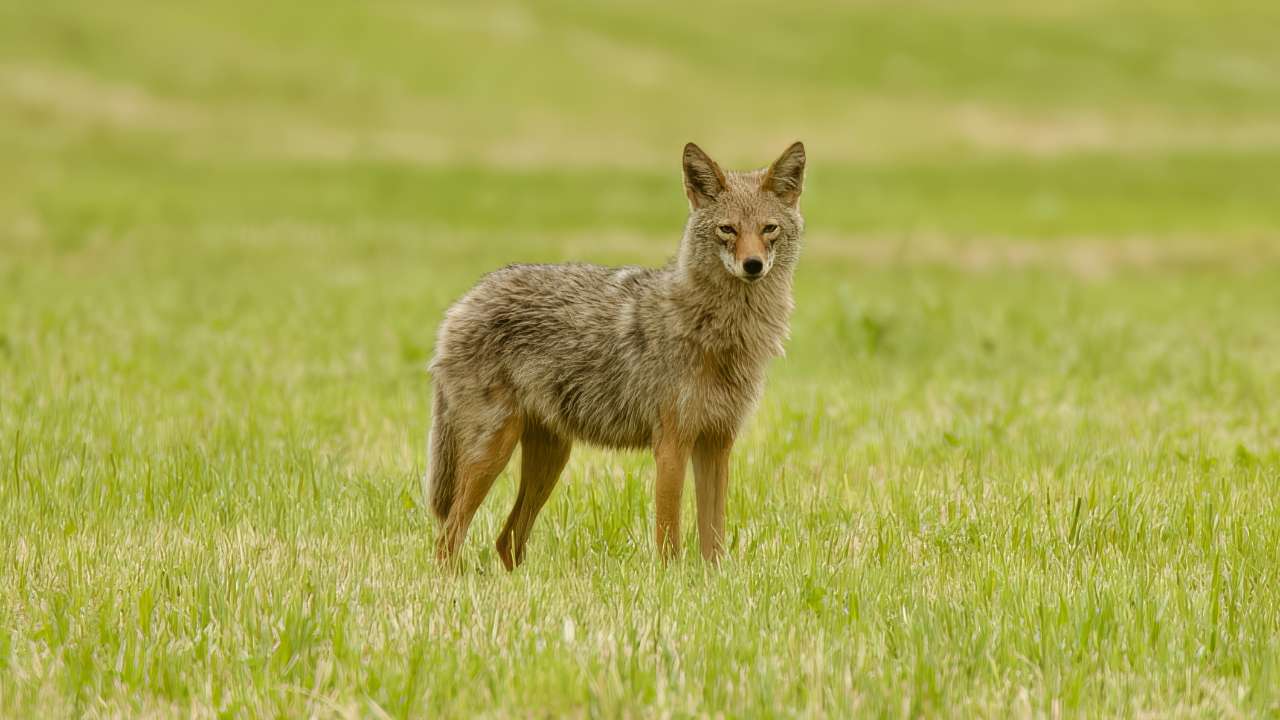
If you live near open land, wooded edges, farmland, or even a growing suburb, chances are you’ve either seen a coyote or heard one at night. That high-pitched yipping and howling can be unsettling—especially when it sounds close. For many homeowners, the concern isn’t just noise. It’s pets, children, and a sense that something wild is getting too comfortable near the house.
Coyotes aren’t just rural animals anymore. Over the last two decades, they’ve adapted extremely well to human environments. I’ve seen them behind shopping centers, crossing residential streets at dusk, and patrolling fence lines in broad daylight. Homeowners often assume coyotes only show up if you live “out in the country.” That’s no longer true.
The good news? Coyotes are naturally cautious animals, and most problems happen when human behavior accidentally teaches them it’s safe—or rewarding—to be nearby. I’ve helped homeowners deal with coyotes around livestock pens, suburban backyards, and even school-adjacent neighborhoods. In almost every case, the solution didn’t involve traps or removal. It involved changing conditions that made the property attractive in the first place.
This guide explains what actually works, what doesn’t, and how to make your property unappealing to coyotes—without panic, myths, or unsafe advice.
Also Read: Spadepestcontrol blog
How To Keep Coyotes Away?
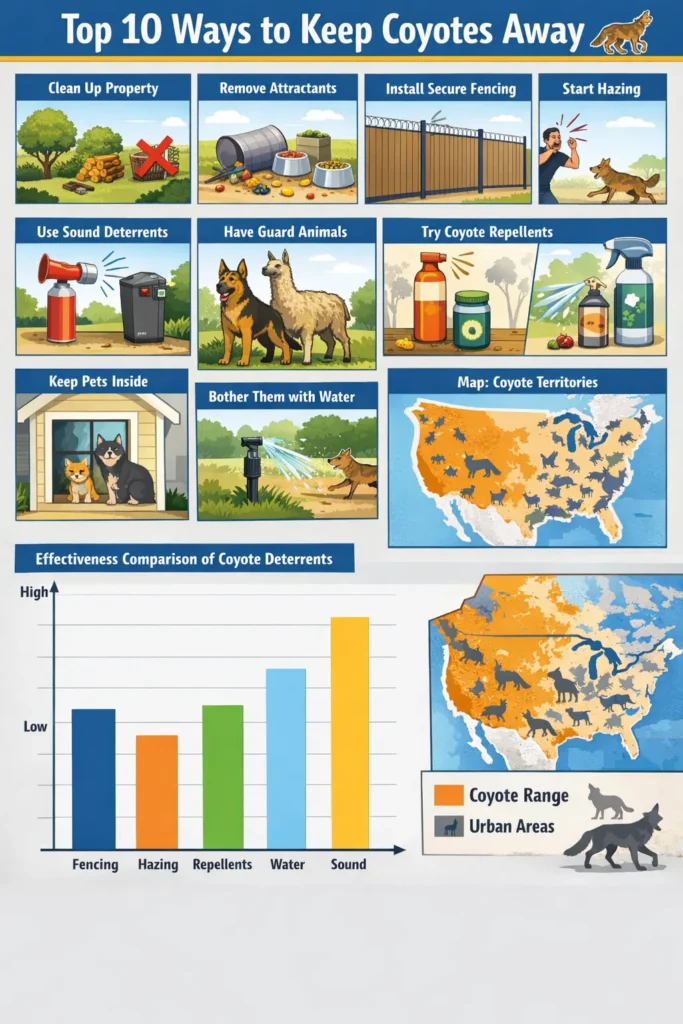
Coyotes stay away from homes that offer no food, no cover, and no sense of safety. Secure trash and pets, eliminate shelter, install proper fencing, use motion-activated deterrents, and haze coyotes consistently when seen. Coyotes avoid areas that feel loud, unpredictable, and actively defended.
In my experience, most coyote problems are caused by human behavior—not aggressive animals—and prevention almost always works when it’s applied consistently.
Understanding the Coyote: Your First Step to Coexistence
Before you can effectively keep coyotes away, you need to understand what drives them. The modern coyote is a highly adaptable and intelligent predator. They are not inherently aggressive toward humans but are supreme opportunists. Your home, farm, or suburban yard becomes attractive to them for three primary reasons: food, water, and shelter.
Coyotes are primarily nocturnal but can be active during the day, especially when raising pups. They have an exceptional sense of smell and are curious by nature. A key concept in managing them is habituation—when they lose their natural fear of humans due to consistent, non-threatening contact, often because they find reliable food sources in our spaces. The goal of all strategies in this guide is to reverse habituation and make your property an unwelcome, resource-scarce zone.
Clean Up Your Property
The most critical and often overlooked step is making your property unattractive. This isn’t just about tidiness; it’s about removing the fundamental incentives for a coyote to visit.
Why Coyotes Come Near Homes
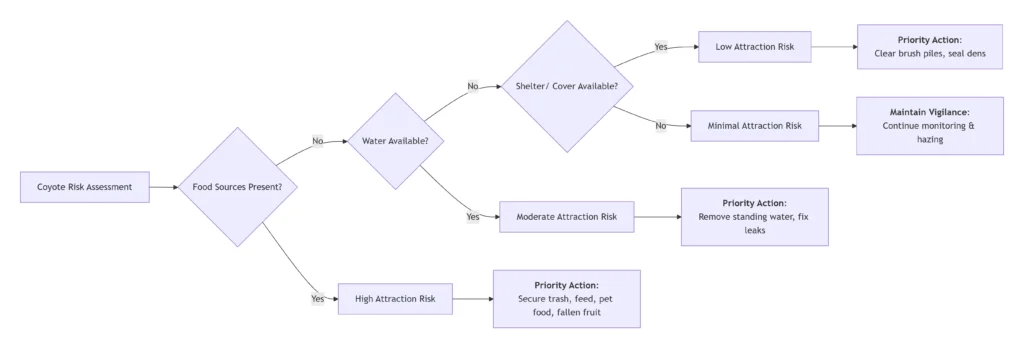
Coyotes don’t wander into neighborhoods randomly. They are opportunistic, not aggressive by nature. When coyotes show up repeatedly, it’s because something nearby is working in their favor.
What Coyotes Are Looking For
Coyotes come around homes for three primary reasons:
Food | Water | Shelter & Safety |
|---|---|---|
Unsecured trash | Pet water bowls | Brush piles |
Pet food left outside | Ponds | Overgrown yards |
Fallen fruit | Irrigation runoff | Easy fence gaps |
Outdoor bird feeders (which attract rodents) | Quiet night time | |
Small pets or livestock | Neighbourhoods |
Coyotes are intelligent and learn quickly. If they find an easy meal once, they’ll return—and they may bring others.
Coyotes vs. Wolves vs. Dogs
A common mistake is treating coyotes like stray dogs. Coyotes behave very differently:
Real-World Experience
Several years ago, I worked with a homeowner whose small dog was nearly grabbed in their backyard at dusk. The yard was fenced, but the fence had a decorative top rail with gaps large enough for a coyote to squeeze through. On top of that, the homeowner was feeding feral cats behind the garage.
The coyote wasn’t aggressive—it was patterned. It showed up every evening around the same time, walked the fence line, and waited.
Instead of recommending removal, we:
Within ten days, sightings stopped completely. No traps. No relocation. Just breaking the reward cycle.
That’s how most successful coyote prevention works.
Put Up a Good Fence: A Physical Barrier That Works
A fence is your most reliable physical deterrent, but it must be built to coyote specifications. They are excellent climbers and can jump up to 6 feet, and they are determined diggers.
- Height is Critical: Your fence should be at least 6 feet tall. For complete assurance, 8 feet is recommended.
- Prevent Digging (The Apron): Extend wire mesh (chain-link or woven wire) at least 12-18 inches outward from the bottom of the fence, laying it on the ground (an “L-foot” or apron). Cover it with soil, mulch, or gravel. Alternatively, bury the mesh 12+ inches straight down.
- Prevent Climbing: Coyotes climb by gripping the top of a fence and pulling themselves over. Install coyote rollers (free-rolling bars on top of the fence) or a 2-foot outward-angled extension made of smooth material to the top.
- Electric Fencing: Adding one or two offset electric wires is highly effective. Place one wire 6-8 inches off the ground and 8-10 inches outside the fence to deter digging. A second wire at the top can deter climbing. The brief, sharp shock teaches a powerful lesson.
Comparing Fence Design Effectiveness
| Feature | Standard 4-ft Chain Link | 6-ft Wooden Privacy Fence | 6-ft Wire Mesh with Apron | 6-ft Fence with Coyote Rollers & Electric Wire |
| Jumping Deterrence | Poor | Good | Good | Excellent |
| Climbing Deterrence | Poor | Fair (if smooth) | Fair | Excellent |
| Digging Deterrence | Poor | Poor | Excellent | Excellent |
| Cost & Complexity | Low | Medium | Medium-High | High |
| Best For | Basic boundary | Visual privacy, moderate risk | High-risk residential areas | Farms, livestock, persistent coyotes |
Start Hazing
Hazing is the practice of using deterrents to scare coyotes away and reinforce their natural fear of humans. It is safe, humane, and essential for urban/suburban coexistence.
Pro Tip
Hazing should never involve physical contact, chasing with vehicles, or actions that could injure the animal or put people at risk.
Use Sound to Your Advantage
Beyond hazing, you can use sound to make your property seem unpredictable and threatening.
- Motion-Activated Devices: Install motion-activated sprinklers (like ScareCrow) or alarms/strobe lights. The sudden burst of water, sound, and light startles coyotes and conditions them to avoid the area.
- Radios & Variable Noise: Leaving a talk radio station on in a barn or coop can create the illusion of human presence. Change the station and volume regularly to prevent coyotes from becoming accustomed to it.
Have Some Guard Animals
For farms and homesteads, certain livestock guardian animals can be highly effective as a 24/7 deterrent.
- Livestock Guardian Dogs (LGDs): Breeds like Great Pyrenees, Anatolian Shepherds, and Maremmas are bred to live with flocks and actively patrol and confront predators. They require proper training and commitment.
- Donkeys and Llamas: These animals have a natural hostility toward canids. A single guard donkey or llama placed with a herd of sheep or goats can be very effective at chasing off and even attacking coyotes.
Try Coyote Repellent
The effectiveness of repellents is often debated, as coyotes can become habituated to smells. They work best when used in rotation with other methods.
Important Note
There are no registered toxicants for general public use against coyotes. Poisonous baits are illegal, dangerous to pets and children, and cause immense suffering to wildlife.
Keep Pets & Animals Inside
Your pets are vulnerable, and their safety is your responsibility.
Bother Them With Water
A simple garden hose is a powerful and immediate hazing tool in your yard. If a coyote is in your yard, turn on the hose and spray it directly with a strong jet of water. Pair this with loud yelling for maximum effect. Moreover, devices such as motion-activated sprinklers provide an automatic, surprising blast that works even when you’re not home
Also Read: Plaster Bagworm: How To Get Rid Of Them Quickly
Common Mistakes Homeowners Make
When to Call a Professional
If a coyote shows daytime boldness, follows people, or refuses to retreat when hazed, contact your state wildlife agency or a licensed wildlife control professional.
Frequently Asked Questions
Conclusion
There is no single solution that works on its own. Successful coyote prevention always combines cleanup, barriers, and active deterrence. Their intelligence and adaptability demand a comprehensive, layered strategy. Start with the foundation: rigorously clean up your property and eliminate all food attractants.
Then, build your physical fortress with a properly designed fence. Finally, empower yourself and your community with active, consistent hazing to teach every coyote that human spaces are off-limits.
By combining these methods, you protect not only your pets and property but also the coyotes themselves. A coyote that remains wary of humans is a coyote that avoids dangerous conflicts and lives a longer, more natural life. For persistent problems or if a coyote acts aggressively (which is extremely rare), contact your local state wildlife agency or a professional wildlife control operator—do not call animal control for normal coyote presence.