If you’ve got squirrels in or around your home, getting bitten is one of those things most people don’t think about until it actually happens. Then suddenly the questions start flying. Is it serious? Can squirrels carry rabies? What should I do right now? Does my pet need a vet? That kind of panic is normal, especially when the bite happens fast and catches you off guard.
The truth is, squirrel bites are not the most common wildlife injury, but they absolutely happen. I’ve seen it in attics, garages, backyards, and even when people try to “help” an injured or baby squirrel with bare hands. Most bites happen because the squirrel feels trapped, scared, cornered, or thinks your hand is food. And while many squirrel bites are minor, they should never be ignored. Even a small puncture can get infected, and in some situations, the risk goes beyond a simple skin wound.
This guide will walk you through exactly what squirrel bites look like, whether they’re dangerous, what health risks are real, what to do right after a bite, how to protect pets, and how to keep this from happening again. I’ll keep it practical and straight, just like I would if we were standing in your driveway looking at the problem together.
Also Read: Will Rat Poison Kill Squirrels? The Answer Might Shock You
Quick Answer About Squirrel Bites
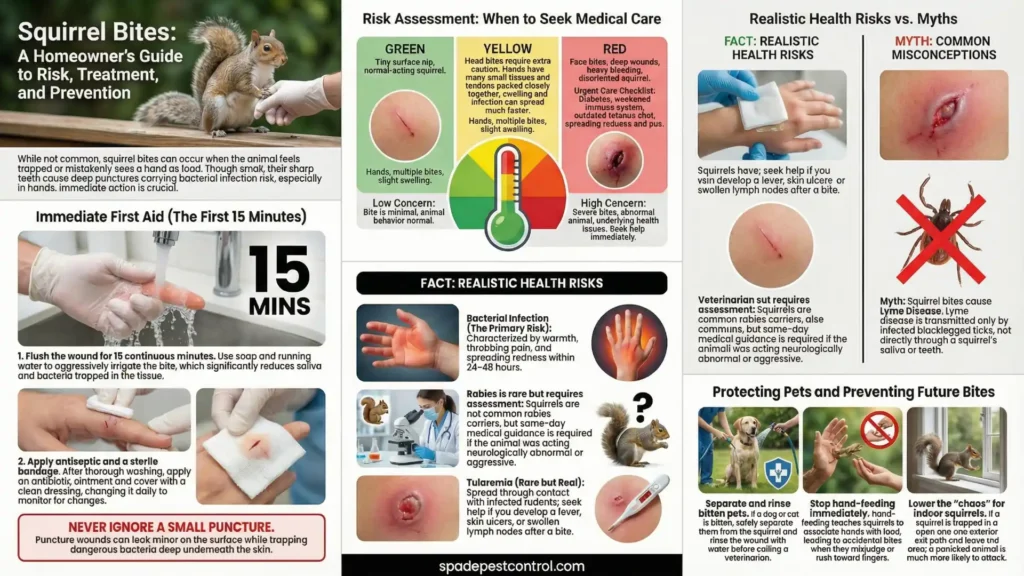
Squirrel bites are usually minor, but they can still be dangerous if the skin is broken, the wound gets infected, or the squirrel was acting abnormally. Wash the bite right away with soap and running water for 15 minutes, cover it with a clean bandage, and get medical care the same day if the bite is deep, on the hand or face, or shows signs of infection.
When a Squirrel Bite Is a Bigger Deal
- Low concern: tiny surface nip, no swelling, squirrel acted normally
- Moderate concern: puncture wound, hand bite, redness or tenderness
- High concern: face bite, deep wound, heavy bleeding, abnormal squirrel behavior, worsening swelling or fever
Do Squirrels Bite?
Yes, squirrels do bite, and they can bite surprisingly hard for such a small animal.
Most squirrels are not naturally aggressive toward people. In normal situations, they’d rather run than fight, which lines up with how state wildlife agencies describe squirrel behavior in human spaces. But when a squirrel feels cornered, injured, startled, trapped in a room, or is protecting a nest, it may bite as a defense move.
I’ve also seen bites happen when homeowners try to hand-feed squirrels, remove one from a chimney or attic, or pick up what they think is a harmless baby squirrel. In homes, I see this most often when a squirrel gets trapped in a laundry room, garage, attic access area, or chimney space and someone tries to force a quick catch.
A squirrel’s front teeth are strong, sharp, and built for gnawing through nuts, bark, and even softer wood. So when they bite skin, they can leave more damage than people expect. Sometimes it’s a quick puncture. Sometimes it’s a jagged cut or tearing injury if the squirrel clamps down and twists away.
Expert Tip: Never try to pick up a squirrel with bare hands, even if it looks weak, slow, or injured. A squirrel that seems calm can switch to panic mode in a split second. Use thick gloves, a towel, or better yet, call a wildlife removal professional.
What Does a Squirrel Bite Look Like?
A squirrel bite usually looks like one or more small puncture wounds, but it can also look like a shallow cut, torn skin, or a pair of close-set tooth marks. It depends on how hard the squirrel bit and whether it snapped and released or actually latched on.
In many cases, the bite site will show immediate redness, pain, and a little bleeding. If the bite is on the fingers, hand, wrist, or forearm, swelling can show up pretty quickly because those areas have lots of small tissues and tendons packed close together. Some people also notice bruising around the puncture, especially if the bite was forceful.
What worries me more is not always how dramatic the wound looks in the first hour. It’s what happens later. Even a small puncture can trap bacteria below the skin. That’s when you may start seeing warmth, throbbing pain, spreading redness, pus, or swelling that gets worse instead of better.
If the bite is on the face, near the eyes, over a joint, deep in the hand, or bleeding heavily, that’s not a “watch and wait” situation. That needs medical evaluation.
Are Squirrel Bites Dangerous?
They can be, depending on the situation.
A lot of squirrel bites are minor and heal fine after proper cleaning. But there are two big reasons I never tell people to shrug one off.
First, infection is the most immediate and realistic risk. Any wild animal bite can introduce bacteria into the skin. Puncture wounds are especially tricky because they can look small on the surface while bacteria gets pushed deeper into tissue.
Second, the real danger often comes from how the bite happened. If the squirrel was acting strangely, seemed sick, was easy to approach, was circling, twitching, unusually aggressive, or bit without being provoked, that raises the concern level.
While squirrels are not considered a common rabies source compared with bats, raccoons, foxes, or skunks, any wildlife bite that breaks the skin still deserves a careful risk assessment, especially if the animal was acting strangely or the wound is on the hand, face, or near a joint.
So yes, squirrel bites are often manageable. But “manageable” is not the same as “ignore it.”
Real-World Example from the Field
One of the more common squirrel bite situations I’ve seen is when a homeowner tries to “help” a squirrel that got trapped inside. A squirrel gets into a laundry room, attic hatch area, or garage, someone throws a towel over it, and the animal panics. Even when the bite looks minor at first, the bigger concern is usually a puncture wound on the hand that wasn’t cleaned deeply enough. In real life, the wound itself often looks less dramatic than the infection risk 24 to 48 hours later.
Potential Health Concerns If You Get Bitten by a Squirrel
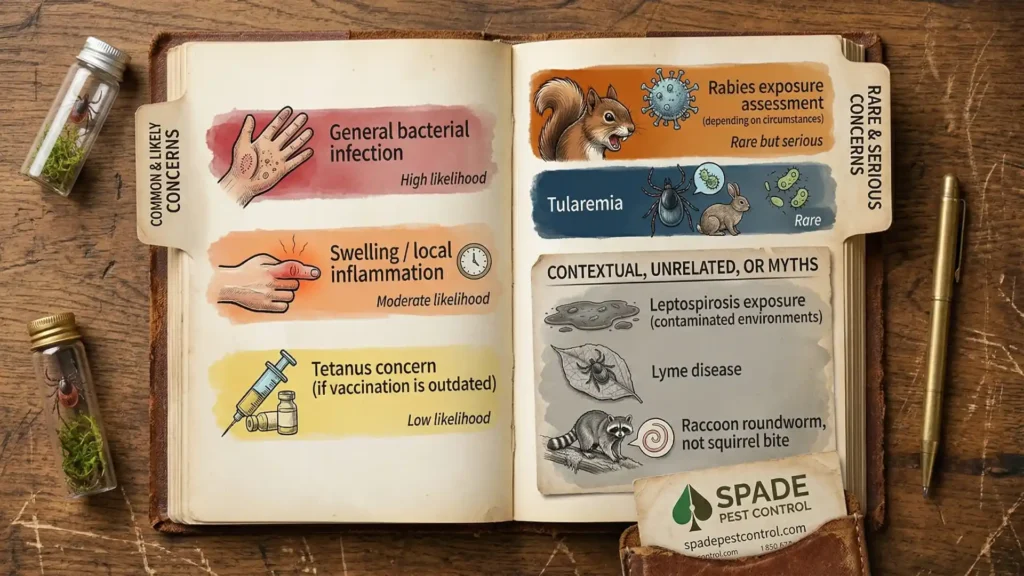
This is the section most people care about, and it’s also where a lot of bad information floats around online. So let’s separate the realistic risks from the exaggerated ones.
Rabies
This is always the first question: Can squirrels carry rabies?
Technically, any mammal can get rabies. But in practical, real-world terms, squirrels are not considered a common rabies source compared with bats, raccoons, skunks, and foxes. Rabies spreads through bites or saliva exposure from infected animals, which is why any abnormal squirrel behavior still deserves same-day medical guidance.
That said, if the squirrel was acting neurologically abnormal, attacked without provocation, appeared disoriented, was unusually aggressive, or there was known exposure to a rabid animal in the area, you should still speak with a doctor or local health department the same day. Rabies is rare in squirrels, but it’s never something to guess about. If the animal was acting abnormally, get same-day medical guidance rather than trying to judge the risk on your own.
Leptospirosis
Leptospirosis is a bacterial disease spread mainly through the urine of infected animals, and rodents are well-known reservoirs. In real-world terms, it’s much more commonly tied to urine-contaminated water, surfaces, or nesting areas than to a squirrel bite itself.
It’s worth understanding, but it needs to be framed correctly. If a squirrel bite happens in a filthy attic, crawlspace, or nesting area with droppings and urine contamination, the broader rodent exposure matters. The bite itself is not the most likely route, but the surrounding conditions can still raise concern.
Tularemia
Tularemia is rare but real. It’s caused by Francisella tularensis and can spread through contact with infected animals, including rodents, as well as ticks and deer flies. People can become infected through contact with infected animals, especially rodents and rabbits, although it’s still a rare concern in normal homeowner bite situations.
This is not the most common consequence of a squirrel bite, but it belongs on the list because wildlife handlers, hunters, and people who handle sick or dead animals can be exposed. If someone develops fever, swollen lymph nodes, skin ulcers, or flu-like symptoms after a squirrel bite or handling a sick squirrel, that needs medical attention fast.
Salmonellosis
Salmonellosis is usually thought of as food poisoning, but Salmonella can also spread through contact with animals or contaminated surfaces. In squirrel situations, this is more of a hygiene and contamination issue than a classic bite-transmitted problem, especially around droppings, feeders, nests, and dirty attic spaces. That matters most for kids or anyone who handles contaminated materials and then touches their face or food.
Lyme Disease
This one needs a reality check.
A squirrel bite itself does not cause Lyme disease. Lyme disease is primarily transmitted through the bite of infected blacklegged ticks, not directly from a squirrel’s teeth. If a squirrel has ticks on it, that’s a separate issue, but the bite itself is not how Lyme spreads. This belongs here as a myth-busting clarification, not as a direct squirrel bite risk.
Roundworm Brain Parasite
The scary “roundworm brain parasite” people usually mean is Baylisascaris, also called raccoon roundworm. That parasite is classically associated with raccoons, not squirrels, and human infection happens through accidental ingestion of contaminated material, not through a squirrel bite. This is best handled as a myth-busting clarification so homeowners don’t focus on the wrong risk.
General Infection
This is the most likely and most practical concern.
Even if none of the “headline diseases” are involved, a basic bacterial infection is the thing I see people underestimate most. Redness that spreads, increasing tenderness, swelling, pus, warmth, fever, and pain that gets worse after the first day are all warning signs.
Bites on the hand are especially concerning because puncture wounds can trap bacteria deep in tissue, and infection can spread into tendons or joints faster than people expect. That’s one of the main reasons hand bites often need closer medical attention.
Squirrel Bite Treatment: What to Do Right Away
If you get bitten, don’t panic. But don’t delay either.
Clean the Wound
The first step is simple and important: wash the bite immediately with soap and running water. Don’t do a quick rinse and call it done. Really flush it out. For wildlife bites that break the skin, the CDC recommends washing the area thoroughly with soap and water for at least 15 minutes before you do anything else.
This step matters more than people think. Good irrigation reduces the chance that saliva, dirt, and bacteria stay trapped in the wound.
Apply Antiseptic Ointment
Once the area is clean, pat it dry and apply an antiseptic or antibiotic ointment if you have one. This is not a magic shield, but it can help reduce superficial bacterial growth while you monitor the wound.
If the wound is deep, gaping, or still actively bleeding, don’t rely on ointment alone. That needs a proper medical look.
Bandage the Bite
Cover the bite with a clean bandage or sterile dressing. Change it daily or sooner if it gets wet or dirty. Keep an eye on how the wound changes over the next 24 to 72 hours.
If the bandage sticks, wet it before removing it so you don’t tear the wound back open.
Seek Medical Attention If Necessary
If the bite is deep, on the hand or face, near the eye or a joint, or if the squirrel was acting strangely, get same-day medical care. The urgent care checklist below covers the situations where it makes the most sense to stop monitoring and get seen.
Depending on the bite, a doctor may recommend a tetanus booster, antibiotics, or a rabies exposure assessment. Hand bites, deep punctures, and bites near joints tend to get more medical attention because they’re more likely to become complicated.
When to Go to Urgent Care Right Away
What Not to Do After a Squirrel Bite
Ways to Avoid Squirrel Bites in the Future
Most squirrel bites are preventable, and in my experience, prevention is mostly about changing behavior, not just removing the animal.
If you see a squirrel in your attic, garage, soffit, chimney, or crawlspace, resist the urge to chase it with your hands, corner it with a broom, or block it into a small space. That’s exactly how bites happen. The squirrel panics, feels trapped, and defends itself.
The same goes for backyard squirrels. Hand-feeding is one of the biggest bite triggers. Once a squirrel starts associating hands with food, it may rush toward fingers and misjudge. That’s especially risky around kids.
Keep your home sealed up. Trim tree limbs away from the roofline. Secure attic vents, gable vents, soffits, roof returns, and chimney caps. Store pet food, birdseed, and fallen nuts properly. If you have an active squirrel problem indoors, use professional exclusion rather than DIY grabbing or trapping mistakes.
Expert Tip: If a squirrel is inside the home, lower the chaos before you try anything. Close interior doors, keep kids and pets out, open one exterior exit path if possible, and do not crowd the animal. A panicked squirrel is far more likely to bite than one that sees a clear escape route.
Steps to Take If Your Pet Gets Bitten by a Squirrel
If your dog or cat gets bitten by a squirrel, treat it seriously even if the wound looks small.
First, safely separate your pet from the squirrel. Don’t jump in bare-handed if the squirrel is still active. You don’t want a second bite victim.
Next, check your pet for puncture wounds, bleeding, limping, facial swelling, or signs of pain. Squirrel bites often happen around the muzzle, lips, paws, or front legs because that’s where pets make contact first.
If your pet will tolerate it, gently rinse the area with clean water. Do not pour harsh chemicals or human antiseptics into the wound unless your vet specifically says to. Then call your veterinarian, especially if the bite broke the skin.
Your vet may want to examine the wound, prescribe antibiotics, check for deeper tissue injury, and verify rabies vaccination status. That’s especially important because even small puncture wounds can hide deeper damage, which is why veterinary references like the Merck Veterinary Manual recommend taking bite wounds seriously even when they look minor on the surface.
If your pet is overdue on rabies vaccination, tell the vet immediately. Even though squirrels are not the classic rabies source, your vet will make the right call based on local risk and exposure details.
Also watch your pet for swelling, lethargy, loss of appetite, discharge from the wound, or fever in the next few days. Pets often hide pain better than people think.
Also Read:
Do Baby Squirrels Bite?
Yes, baby squirrels can bite, especially if they’re old enough to have teeth and are scared.
A lot of people assume a baby squirrel is harmless because it looks small, weak, or “cute.” That’s exactly how bites happen. Even juvenile squirrels can clamp down when handled, especially if they’re injured, dehydrated, or being separated from a nest.
The younger the squirrel, the less forceful the bite may be, but the same rule applies: if the skin is broken, clean it and treat it like any other wildlife bite.
If you find a baby squirrel, the safest move is not to handle it unless absolutely necessary. Keep kids and pets away, observe from a distance, and contact a licensed wildlife rehabilitator or wildlife removal expert if the mother doesn’t return or the baby is clearly injured.
Final Thoughts
So, are squirrel bites dangerous?
Sometimes they’re minor. Sometimes they’re more serious than they look. That’s the honest answer.
The biggest mistake homeowners make is assuming a tiny puncture means a tiny problem. In real life, the main danger is usually infection, not dramatic Hollywood-style disease. But that doesn’t mean the bite should be ignored. Clean it immediately, monitor it closely, and get medical advice if the bite is deep, on the hand or face, or if the squirrel was acting abnormally.
And if squirrels are inside your home, the bigger issue isn’t just the bite risk. It’s the nesting, droppings, urine contamination, insulation damage, chewed wiring, and the repeat encounters that keep putting your family and pets at risk. The smartest move is to solve the wildlife problem at the source, not just react after someone gets hurt.
What most people really need in this situation is simple, practical guidance. They want to know what to do in the next 5 minutes, what’s actually worth worrying about, and how to make sure it doesn’t happen again. That’s what matters most after any squirrel bite.
Medical and veterinary note: This article is for informational purposes only and does not replace professional medical or veterinary advice. If a squirrel bite breaks the skin—especially on the hand, face, or near a joint—contact a healthcare provider or veterinarian for guidance.