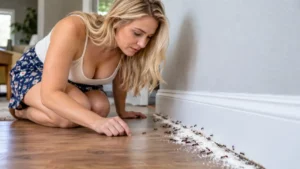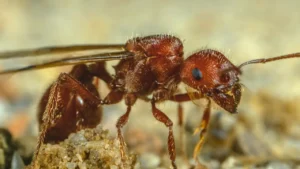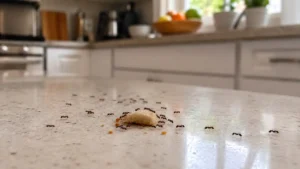
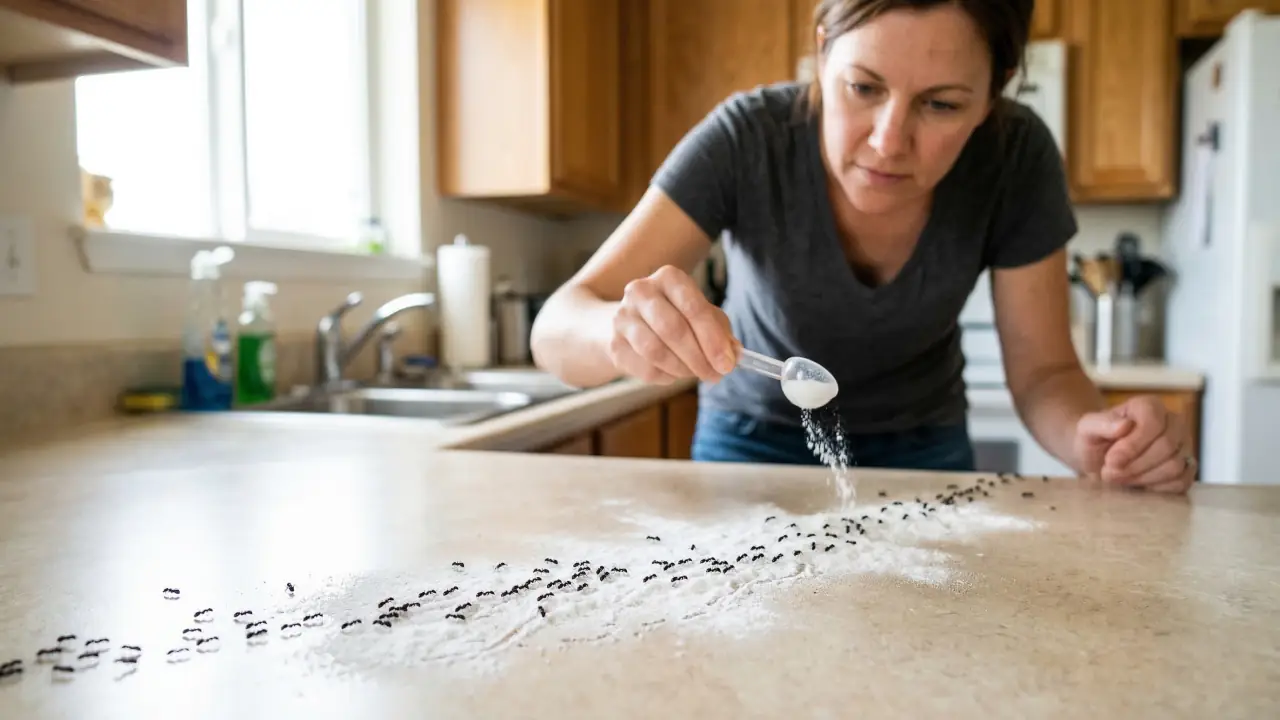
If you’ve ever seen a tight line of tiny visitors marching across your kitchen counter, you know the panic: wipe up crumbs, spray, and still they come back. Baking soda is one of those home remedies people swear by in online threads and family tips. Mix it with sugar, sprinkle it around, and the myth goes that ants will eat it, explode, or “poison” the whole colony.
I’ve worked 18 years in pest control, and I want to be straight with you. Baking soda can sometimes kill ants, but it is not a reliable colony killer in most real-world situations. It helps in specific ways and with certain mixes, but it also has important limits compared to professional baits, borax, or targeted treatments.
In plain terms: baking soda is a useful household tool for small, opportunistic fixes, not a guaranteed full-house solution. I’ll walk you through what it does, why it can work, what mixtures actually help, how to use it properly, and whether you should rely on it or call in backup.
Also Read: Do Coffee Grounds Repel Ants? Here’s What Actually Happens
Quick Answer: Does Baking Soda Kill Ants?
Yes, baking soda can kill some ants that eat it, especially when it is mixed with sugar or a grease-based bait. But in most real homes, it does not reliably eliminate the entire colony. It is best used as a short-term DIY option for small trails, not as a dependable long-term ant control method. Results vary a lot by species, too — a small trail of odorous house ants is a very different problem from a recurring carpenter ant, pharaoh ant, or Argentine ant infestation.
If you’re specifically wondering whether baking soda kills ant colonies, the honest answer is that it usually does not do so reliably in real homes.
If you want the short version, this quick infographic shows exactly where baking soda helps, where it falls short, and which bait mixes are actually worth trying.
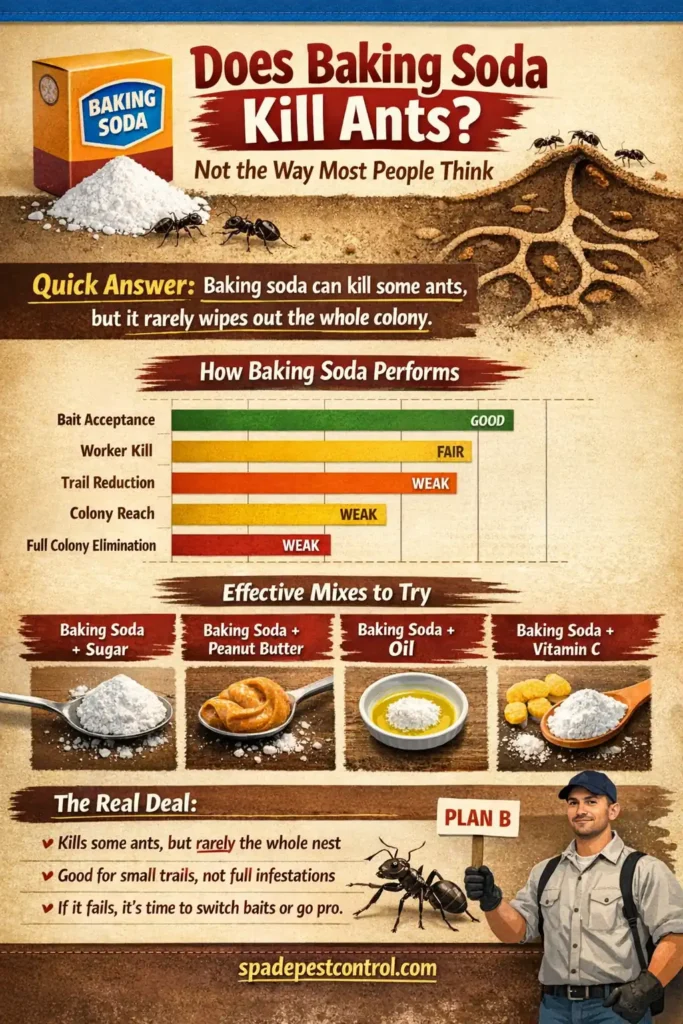
How Baking Soda Affects Ants in Real Homes
People often say baking soda makes ants “explode” inside. That story is exaggerated. In real homes, the better way to think about it is this: baking soda may harm ants if they eat enough of it, but it is not a dependable colony killer just because of some dramatic chemical reaction.
Some lab evidence suggests sodium bicarbonate can increase mortality in certain pest ant species under controlled conditions. For example, a study published in Florida Entomologist found higher mortality in some ants exposed to sodium bicarbonate under test conditions. But lab results do not always translate into reliable kitchen-counter results, especially when bait acceptance, food competition, and colony size all come into play.
In the field, the bigger issue is simple: if the ants don’t eat enough of it, or don’t carry enough back, it won’t matter why it could work in theory.
If your ants are only the small scouts you see occasionally, a baking soda and powdered sugar bait can kill some of them and reduce visible activity. If you have a deeper infestation, you will likely only see temporary changes.
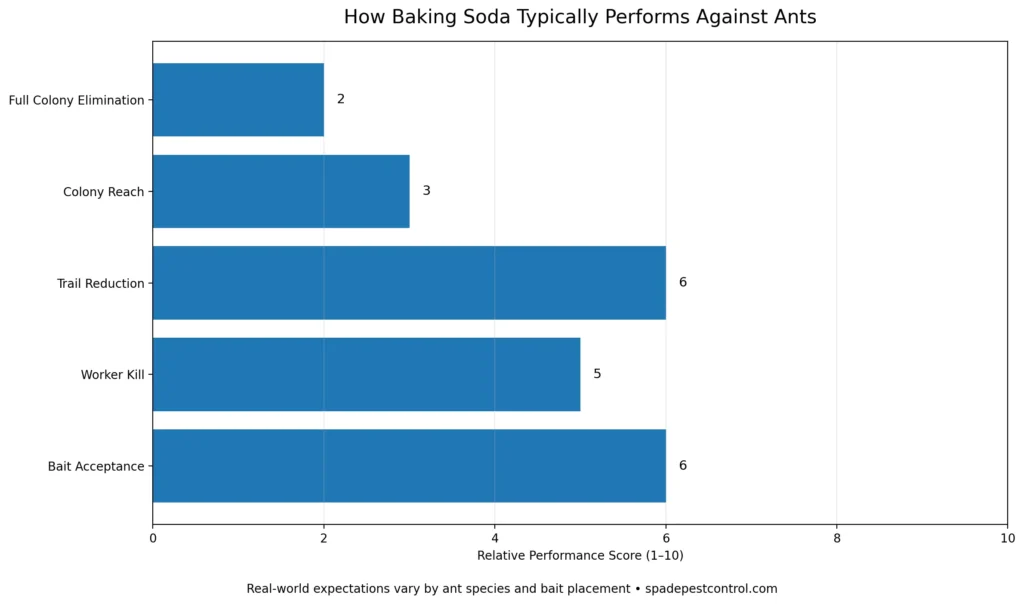
If you’re going to try it, use powdered sugar instead of granulated sugar. It mixes more evenly, and ants are less likely to separate the sweet part from the baking soda.
Why It Sometimes Works
There are two reasons baking soda gets talked about as an ant remedy.
First, some people believe it can disrupt the ant internally after ingestion. Second, some homeowners see short-term success simply because the baking soda is hidden inside a bait the ants are willing to take. In practice, the second factor matters much more than the first.
That is why bait choice matters so much. Sweet-seeking ants may respond to powdered sugar, while protein- or grease-seeking ants may respond better to peanut butter or oily foods. If the ants ignore the bait, the treatment fails no matter what the ingredient is supposed to do.
Advantages of Using Baking Soda for Ants
Baking soda has a few real perks that make it attractive as a DIY approach:
- It is cheap, easy to find, and generally low-risk around the home when used in small amounts.
- It is less toxic to humans and pets than many commercial insecticides when used carefully.
- It can work as a short-term spot treatment for small trails or visible workers.
- It is easy to mix with different attractants to target sugar-loving or protein-loving ant species.
Those positives make it a sensible first step for homeowners who prefer lower-toxicity approaches. But keep expectations realistic: success depends on ant species, how the bait is formulated, and whether worker ants carry the bait back to the nest.
For homeowners looking for a natural ant killer, baking soda can be a reasonable first step — as long as you understand its limits.
How Long It Typically Takes for Baking Soda to Kill Ants
Timing is variable. If an ant eats a high enough dose, death might occur within hours to a few days in lab settings. In homes, where baits are diluted or only eaten by some workers, you might see dead workers within a day or two, but colony reduction can take much longer — or not happen at all.
If you rely on baking soda mixed with a sweet bait, expect to wait several days to see whether the worker population declines. If no change occurs after one week, the bait is probably not reaching the nest or the species is not taking it.
Be patient, but watch what happens. Leave small bait spots out for 3–7 days. If the ants ignore them or activity returns at the same level, switch strategies.
What I’ve Seen in Real Homes
In actual service calls, baking soda usually works best when the problem is still small — for example, a short trail of odorous house ants or little black ants around a sink, or a few pavement ants coming in under a back door.
But once the colony is established behind a wall, under a slab, or in multiple rooms, baking soda almost always turns into a temporary slowdown instead of a real fix. That’s usually the point where a slow-acting bait or a more targeted treatment starts making a bigger difference.
Effective Mixtures to Try
These are the only baking soda mixes I’d consider worth testing at home — and even then, I’d treat them as trial baits, not guaranteed fixes. If you want to try a homemade ant bait first, these are the combinations I’d test before moving to a stronger slow-acting option.
Baking Soda + Powdered Sugar
Mix equal parts powdered sugar and baking soda. Powdered sugar attracts sugar-seeking ants and mixes more evenly than granulated sugar. Place small amounts in bottle caps, jar lids, or other shallow containers where ants are actively foraging. This simple mix works best as a small homemade bait trap placed near an active trail, not when it is scattered loosely around the room.
For homeowners searching for a simple baking soda and sugar for ants remedy, this is usually the most practical version to test first.
This is the classic home remedy. It can kill workers that eat it and sometimes reduce visible trails, but it often fails to eliminate the queen or wipe out the colony.
Baking Soda + Peanut Butter
For protein- or grease-preferring ants, mix baking soda into peanut butter. The sticky texture helps hold the powder in the bait and makes it more appealing to ants that are ignoring sweets.
This is useful when you see ants attracted to kitchen scraps, meats, or pet food. If that sounds familiar, it may help to read more about grease ants and how their feeding habits differ from sweet-seeking species. Place small amounts on jar lids or shallow bottle caps so pets cannot access them.
Baking Soda + Vitamin C (Ascorbic Acid)
This idea comes up occasionally because vitamin C is acidic. The theory is that it may help trigger a stronger internal reaction after the ant eats it. In practice, results are hit-or-miss, and I would not treat this as a proven method. If you test it, use only small amounts and watch whether the ants actually take it.
Baking Soda + Cooking Oil (Grease Bait)
Mix a little baking soda into an oil or fatty bait for grease-loving ants. The oil helps mask the powder and can make the bait more appealing to species that are not interested in sugar.
Again, the key is whether ants carry the bait back to the colony. Avoid placing oil-based baits where children or pets can reach them. If you are seeing activity both indoors and around the foundation, it’s worth learning how to get rid of ants in your yard so you’re not only treating the foragers you see inside.
Baking Soda + Vinegar (Not a Bait)
Spraying vinegar and baking soda together is a popular internet stunt, but it is not a good bait strategy. Vinegar by itself can disrupt scent trails and temporarily repel ants. The fizz from mixing it with baking soda is short-lived and usually just scatters ants rather than killing them effectively.
Use vinegar to clean trails and remove scent lines — not as a reliable lethal bait.
A good general breakdown of common DIY ant-control myths also appears in Western Exterminator’s myth-busting discussion of baking soda and sugar remedies, which reaches the same practical conclusion: some home fixes may affect foragers, but they often fall short at the colony level.
How To Use Baking Soda to Kill Ants
If you want to test baking soda, placement matters more than the recipe.
1) Choose the Right Bait
Pick a formula that matches what the ants are eating. For sugar ants, go with powdered sugar and baking soda. For grease-loving ants, use peanut butter or a bit of oil with baking soda. Use equal parts to start and adjust based on how the ants react.
Always test baits in a small area first so you can see whether the ants actually accept them.
2) Put It Where the Ants Are Actually Feeding
Ants follow scent trails. Place bait directly on the trail or next to where you see the heaviest activity. Use small containers like jar lids, bottle caps, or loosely folded paper so the bait stays contained and pets cannot easily knock it over. Think of these as small bait traps placed exactly where the ants are already feeding.
Focus on foraging paths, near baseboards, behind appliances, and at points of entry. Avoid placing baits where they will get wet, be swept away, or sit in direct sun.
One mistake homeowners make is spraying vinegar, disinfectant, or contact insecticide directly over the same trail they are trying to bait. If you erase the trail too early, the ants may stop feeding before enough bait gets back to the nest.
Many ant species also forage heavily after dark, so if daytime activity looks light, check the same area again at night.
3) Leave It Alone Long Enough to Work
If ants take the bait, leave it alone. Don’t kill every worker you see near the bait — they need time to carry it back to the colony.
If activity increases or the bait is gone, replace it with fresh bait. If nothing changes after 3–5 days, switch bait types. If the trail still looks strong after a week, you’re probably not getting meaningful colony impact.
At that point, many homeowners move to a better-performing slow-acting bait. If you want a stronger DIY option, this guide on killing ants with borax is usually the next logical step.
Common Mistakes When Using Baking Soda for Ants
A lot of homeowners try baking soda once, see a few ants disappear, and assume the problem is solved. In real homes, the mistakes usually happen in the setup.
The most common ones I see are:
If you avoid those mistakes, baking soda has a better chance of helping — but it still works best as a small-problem tactic, not a guaranteed colony solution.
How To Prevent Ants from Coming Back
Baking soda is more useful in a cleanup-and-bait role than as a true prevention barrier. In most homes, you’ll get better results by wiping up trails, removing food access, fixing moisture issues, and sealing obvious entry points than by sprinkling powder around baseboards.
Store food in sealed containers, clean crumbs and sticky residue, fix leaky pipes, and check around windows, door sweeps, and utility penetrations. If ants are entering from mulch beds, patio edges, or lawn areas near the house, you may also need to get rid of ants in your yard so outdoor pressure stops feeding the indoor problem.
Is Baking Soda Better Than Other Ant Control Methods?
Baking soda is less effective than properly formulated borax baits, professional slow-release baits, or targeted insecticides that technicians use. Borax and boric acid are slower acting, which is exactly what makes them more useful: workers have time to carry the bait back to the nest and share it before they die.
Studies and field experience both suggest that borax-based baits usually outperform baking soda when your goal is colony suppression rather than just killing a few visible foragers.
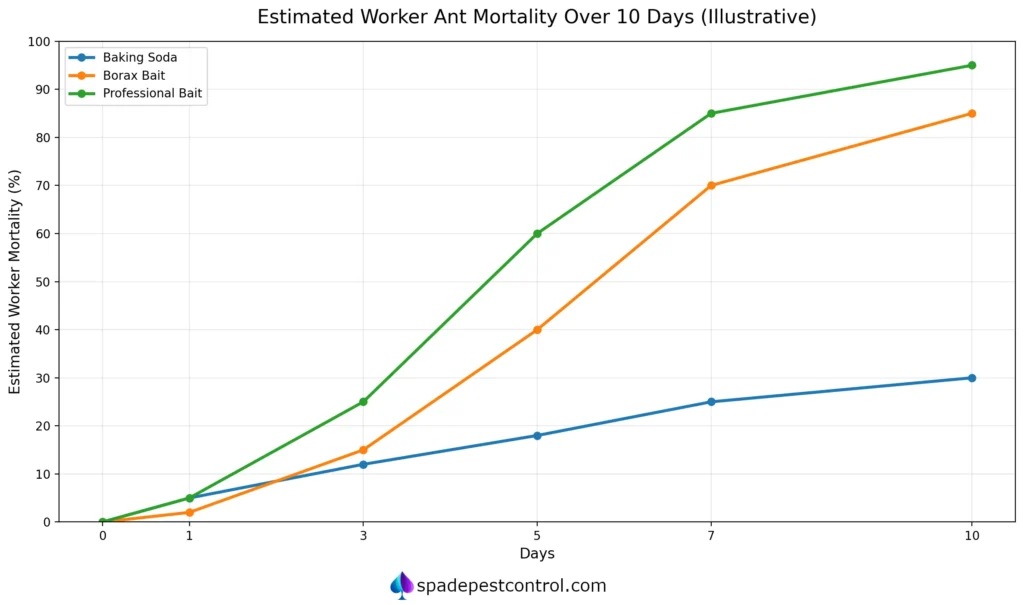
That said, baking soda can sometimes kill enough workers to reduce visible activity, and it appeals to homeowners who want a lower-toxicity starting point. But if you want a DIY method with a better chance of reaching the nest, this is exactly why many people end up killing ants with borax instead.
If you see no colony-level improvement within a week, baking soda has probably done all it is going to do.
When Baking Soda Is the Wrong Tool
Baking soda is not the right answer for every ant problem. I would not rely on it if you are dealing with:
If the problem keeps coming back, the issue is usually bigger than the kitchen trail you can see.
How Safe Is It?
Baking soda is generally low-risk around humans and pets in normal household amounts. Small accidental exposure is usually not a serious concern, but bait placements should still be treated carefully because the attractant food itself can draw pets and children.
Pet ingestion of large quantities of any powder can cause digestive upset. Always place baits on high ledges, inside protected spots, or in enclosed bait stations if you have pets or small children.
If you have pets that lick counters or get into open garbage, use sealed bait stations or skip open baiting entirely. For outdoor use, avoid overapplying powders around areas where runoff, wildlife, or curious pets may be an issue.
Also Read: How to Kill Ants with Borax (DIY Baits That Actually Work)
Final Thoughts
Baking soda is reasonable for a small, early ant trail, but I would not treat it as a dependable colony-control method. It works best as one piece of a layered approach: baiting to reduce foragers, cleaning trails, sealing entry points, and switching to a better slow-acting bait if the problem keeps going.
If you only have a few ants in one localized area, a baking soda and powdered sugar mix or a grease-based bait may be worth testing for a few days. But if the trail stays active, spreads to multiple rooms, or keeps coming back after cleanup, you’ll usually get better results with a proven bait or a more targeted treatment plan.
If you’re seeing ants daily in multiple rooms, finding frass or damaged wood, or dealing with recurring infestations after repeated baiting, that’s usually the point where a professional inspection saves time.