If you have ever brushed past an ant trail, felt a quick sting, and then looked down at a tiny red bump, you already know how confusing ant bites can be. Some are so small they barely register. Others itch, burn, swell, or turn into those stubborn white blisters that make people panic a day later. That is why so many homeowners search for what do ant bites look like after the fact. The mark often becomes more obvious after the ant is gone, which is why homeowners misidentify it so often.
The tricky part is that not all ants cause the same reaction. Some leave a tiny mark you barely notice, while others can cause painful clusters, swelling, or delayed pustules. There is no single “classic” ant bite image because the reaction depends on the species, whether the ant bit or stung, and how your skin reacts.
In this guide, I’ll show you what common ant bites look like, how different species compare, how the reaction changes over time, how to tell ant bites from other bug bites, and when a bite needs more than basic home care.
Also Read: How to Kill Ants with Borax (DIY Baits That Actually Work)
Quick Answer: What Do Ant Bites Look Like
Most ant bites look like small red bumps, tiny itchy welts, or mild raised spots that can be easy to miss at first. Fire ant stings are the easiest to recognize because they often burn right away and may later form small white or yellow pustules. Mild species usually leave a faint red bump, while more aggressive ants can cause clusters, swelling, or blister-like reactions. If you had to picture the most common version, think small red bumps for mild ants and red bumps that turn into white pustules for fire ants.
Ant bites are often called “bites” by homeowners, but in real life, many of the more painful reactions people notice are actually stings, especially with fire ants and harvester ants. That distinction matters because a true bite may leave a small irritated bump, while a sting is more likely to cause burning, swelling, and, in the case of fire ants, the classic pustule that shows up later.
What Ant Bites Usually Look Like
Most ant bites do not start out dramatic. A lot of them begin as a tiny red bump, a raised pinprick, or a spot that feels more irritating than painful. The skin may turn a little warm, itchy, or tender. On lighter skin, the area may look bright red. On darker skin, the bump can look more like a darker raised spot, a brownish patch, or just an area that feels swollen before it looks obviously red.
The main thing people miss is timing. Ant reactions do not always show up the second the ant touches the skin. Sometimes the sting or bite is felt first and the mark appears a little later.
A simple way to think about ant bites is this: mild species usually leave a small mark that fades quickly, while more defensive ants can cause clusters, swelling, or blisters. Where you were when it happened is often one of the best clues.
In practice, the most useful clue is not just the bump itself. It is the combination of pain level, timing, and location. A tiny itchy bump after a few ants crawled across your counter is usually minor. A burning cluster that showed up after stepping near a mound in the yard deserves a closer look, especially if the bumps start changing over the next 6 to 24 hours.
Common Types of Ant Bites and Stings
Not all ants leave the same kind of skin reaction. Some cause a mild pinch or tiny red bump, while others are much more likely to leave burning, swelling, or a delayed pustule.
1. Fire Ant Bites
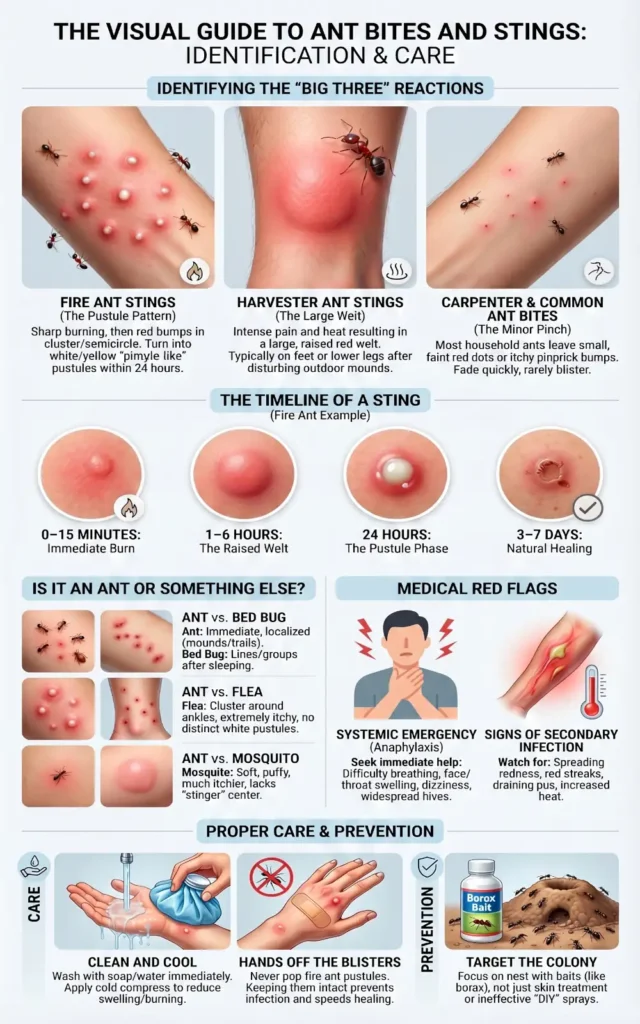
Fire ant stings are the classic ant reaction most people picture. They usually sting fast, and the first feeling is often a sharp burn or a hot sting rather than a mild itch. Within a short time, the skin can show a red bump or welt. If several ants get involved, the bites may appear in a cluster or a rough semicircle because fire ants often attack repeatedly when their mound is disturbed.
What makes fire ant bites easy to recognize is what happens next. Over the next several hours, the bump can develop into a small white or yellow pustule. People often describe it as a pimple-like blister with a pale center and a red ring around it. That delayed pustule is one of the clearest clues of a fire ant sting, and it lines up with the reaction pattern described by the Cleveland Clinic’s fire ant bite guide. Some people describe that look as a small bullseye-like reaction, which is one reason fire ant stings stand out from milder ant bites.
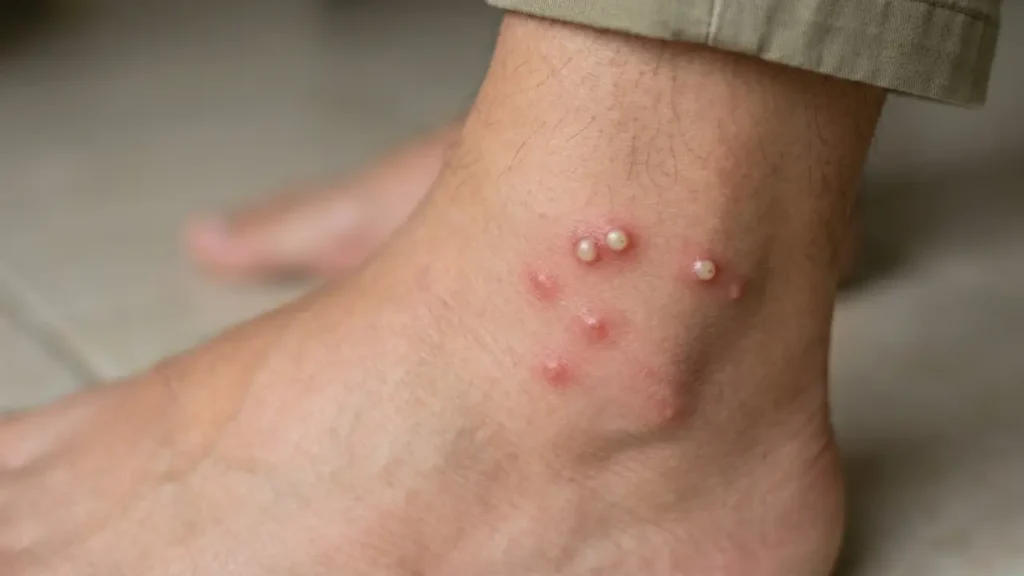
Try not to squeeze or pop those blisters. That only raises the risk of infection and slows healing. In the field, I have seen plenty of people scratch them open because they assumed it was just a bug bite. That usually makes the situation worse, not better.
2. Carpenter Ant Bites
Carpenter ants are much less dramatic on the skin than fire ants. Most of the time, they are more of a pinch-and-retreat ant than a true sting problem. If a carpenter ant does bite, the mark is usually small and may look like a red bump, a tiny scratch, or a pimple-sized spot that is mildly irritated.
The bigger concern with carpenter ants is not the skin reaction itself. It is the fact that seeing them indoors often points to a nesting or moisture issue somewhere in the structure. So if you have a few small marks and you are also seeing large black or reddish-black ants in kitchens, bathrooms, or near windows, the ant problem may be coming from inside the home or from wood close to the structure.
Most carpenter ant marks settle down fairly quickly with basic first aid. They are usually more annoying than dangerous unless the person has an allergic reaction or the skin gets infected from scratching.
3. Harvester Ant Bites
Harvester ants are a different story. These ants are known for a painful sting, and the reaction can be much more noticeable than the tiny marks left by many household ants. A harvester ant sting often leaves a raised red welt that feels hot, sore, or intensely painful. The sting site may swell more than you expect from such a small insect.
These ants are most often a problem outdoors, especially in sandy or open areas where their mounds are easy to miss until you step too close. People often get stung on the feet, ankles, or lower legs after accidentally disturbing a nest. The pain can be strong enough that you immediately remember where you were standing when it happened.
Depending on the species and the person’s sensitivity, the skin can stay irritated for a while. The main clue is the combination of a painful sting, outdoor mound exposure, and a larger-than-average welt.
4. Little Black Ant Bites
Little black ants usually leave very small marks, if they leave any obvious mark at all. When people do react, it is often just a tiny red dot, a slight itch, or a barely raised bump that fades quickly. If you are seeing them around sinks, counters, or pet food, the bigger issue is usually the food source or entry point, not the bite itself.
5. Field Ant Bites
Field ants can cause more irritation than people expect. Their bites or stings often show up as a raised red bump with a strong burning feeling, along with mild swelling or warmth. These reactions are often noticed during yard work or gardening. If the skin reaction is larger than a simple pinprick and stays hot or irritated for hours, field ants are one possibility to consider.
6. Sugar Ant Bites
“Sugar ant” is a homeowner label, not a precise species name, so the skin reaction can vary. In most homes, the marks people blame on “sugar ants” are usually tiny and mild — often just a faint red dot, a small itchy bump, or no obvious mark at all. If the ants were around sweet food or kitchen spills, that usually tells you more than the bite itself.
7. Argentine Ant Bites
Argentine ants usually cause very mild skin reactions. If they leave a mark at all, it is often a tiny red or brownish spot with slight itching. If the ants are small, brownish, and moving in heavy indoor trails, Argentine ants are one reasonable possibility — but the colony behavior is usually a better clue than the skin mark alone.
8. Pavement Ant Bites
Pavement ants nest under sidewalks, driveways, patios, and foundation edges. If they bite or irritate the skin, the mark is usually a small red or dark bump that is more annoying than painful. These bites often show up on the feet or ankles and usually fade quickly.
9. Flying Ant Bites
Flying ants are not a separate biting species. They are simply the winged reproductive form of other ant species, so the skin reaction depends on the type of ant, not the wings.
What makes flying ant encounters confusing is the timing. They often appear during warm, humid weather, especially after rain. Homeowners notice them swarming near lights, windows, or patios and then worry that the flying form means a more dangerous bite. Not necessarily. The useful clue is the species behind the swarm, because winged ants don’t create a new type of bite pattern.
If a winged ant left a mark, judge it the same way you would the ground-dwelling form. The wings do not create a new kind of bite pattern.
10. Bull Ant Bites
Bull ants are mainly an issue in Australia, but they are worth mentioning because their sting can be unusually painful and may trigger serious allergic reactions in sensitive people. If someone is stung by a large aggressive ant and symptoms spread quickly or affect breathing, treat it as a medical issue rather than a routine bug bite.
How Ant Bites Change Over Time
One of the best ways to identify ant bites is to watch how they change over time. In the first few minutes, you may feel an immediate sting, pinch, or burning sensation. Some bites also become itchy right away. During the first hour, the area may turn into a raised red bump or welt.
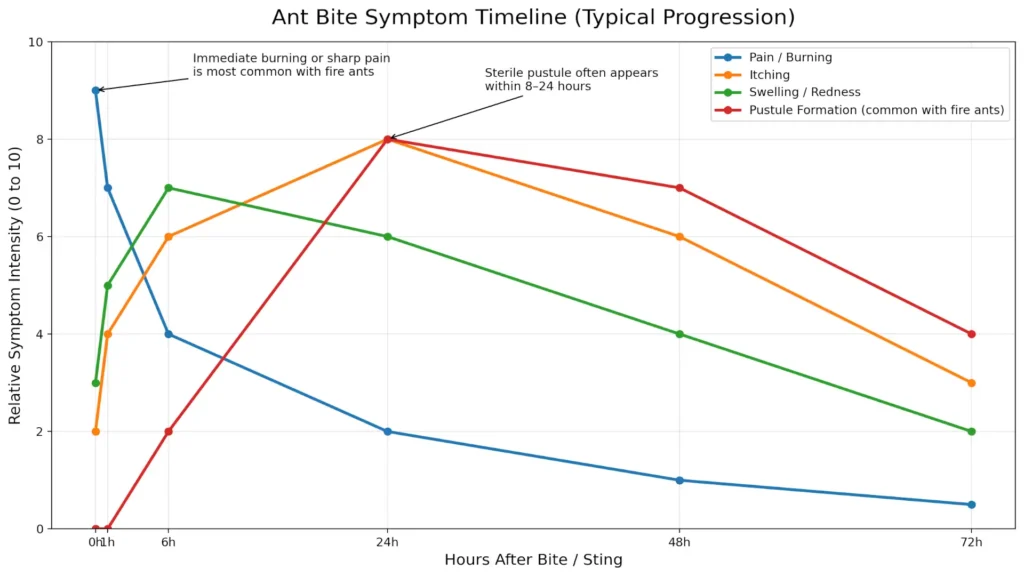
Over the next several hours, more distinctive patterns can appear. Fire ant stings may begin forming a blister or pustule, and by the next day the skin can look much more obvious than it did at first. That delayed change is one reason people often miss the connection.
Most uncomplicated reactions should start calming down over several days. If the mark keeps getting bigger, becomes very warm, drains pus, or starts to streak, that is no longer a simple timeline. That is a sign to pay closer attention.
Ant Bites vs Mosquito, Flea, Bed Bug, and Spider Bites
Ant bites and stings are often confused with mosquito bites, flea bites, bed bug bites, and even spider bites. The pattern helps. Ant reactions often begin as a single bump or a small cluster, especially after outdoor exposure or contact with a mound. Fire ants are the exception because they can leave multiple clustered pustules.
Bee stings can also confuse people, but they are more likely to leave a single painful sting site rather than the small clustered pattern you often see when several ants get involved.
In real homes, I see this confused most often with flea bites and bed bug bites. Homeowners notice a few itchy spots and assume “ants,” but the timing usually tells the truth. If the marks showed up after yard work or stepping near a mound, ants stay high on the list. If they showed up after sleeping or cluster around the ankles with pets in the house, I start looking harder at other pests first.
Mosquito bites are usually itchier than painful and often show up as soft, swollen bumps. Flea bites tend to cluster around the ankles and lower legs, but they usually do not form the same blister-like pustules fire ants can create. Bed bug bites often appear in groups or lines on exposed skin after sleeping. Spider bites are less common and may have a different center or a more painful progression.
If the reaction showed up right after you disturbed ants, stood on a mound, or brushed against a trail, ant bites move much higher on the list. If the pattern shows up overnight in a line or cluster after sleeping, look harder at bed bugs or fleas instead.
When an Ant Bite Needs Medical Attention
Most ant bites can be handled at home, but some reactions need medical attention fast. If you have trouble breathing, swelling in the face or throat, dizziness, chest tightness, faintness, or widespread hives, treat it as an emergency. Those are warning signs of a serious allergic reaction.
You should also get medical help if the bite area keeps spreading, becomes more painful instead of less painful, develops red streaks, drains pus, or feels hot and infected. A bite that looks minor at first but gets worse over 24 to 48 hours deserves a closer look.
Children, older adults, and anyone with a known insect allergy should be watched more carefully. When in doubt, get checked.
If you are unsure whether the reaction is still normal or is turning into something more serious, the Mayo Clinic’s insect bite first-aid guidance is a solid baseline for deciding when home care is enough and when a doctor should take a look.
Prevention and Treatment
The best treatment starts with simple first aid. Wash the area with soap and water, then use a cold compress to calm the swelling and burning. If the skin is itchy, an over-the-counter antihistamine or hydrocortisone cream may help, assuming the person can safely use it. Try not to scratch. Scratching is what turns a minor reaction into an irritated, infected one.
What usually does not help much is throwing random home remedies at the skin. Toothpaste, essential oils, and “dry it out” tricks are common, but they often irritate the area more than they help. For most mild reactions, gentle cleaning, cold compresses, and avoiding scratching work better than DIY skin hacks.
And if you are trying to solve the ant problem itself, be careful with random DIY ant remedies too — a lot of popular fixes sound good but do very little, which is exactly why so many homeowners misuse things like baking soda for ants.
If there is a fire ant pustule, leave it alone. Do not pop it. Keep it clean and dry and let it heal on its own. If the skin breaks, cover it lightly and watch for infection. If swelling is strong, follow the instructions on the medicine label or get medical guidance.
Prevention is mostly about avoiding ant contact in the first place. Stay clear of visible mounds, keep grass trimmed, seal cracks around the foundation, clean up crumbs and spills, and take the nest seriously if ants keep showing up in the same area. When a home keeps producing ants, the colony is usually close enough to find its way back.
If the same ants keep showing up indoors, it usually makes more sense to target the colony than keep treating random strays, and a properly placed bait is usually more effective than sprays — especially if you’re using a method like borax ant bait that actually reaches the nest.
Also Read: Does Bleach Kill Ants Permanently? Most People Get This Wrong
Common Mistakes Homeowners Make with Ant Bites
Conclusion
So, what do ant bites look like? Most of the time, they look smaller and less dramatic than people expect. A lot of them are just red bumps, tiny welts, or mild itchy spots that fade quickly. Fire ants are the big exception because they can leave painful, clustered stings that turn into pustules. Bull ants and harvester ants can also create more serious reactions, while carpenter ants, little black ants, sugar ants, Argentine ants, and pavement ants usually cause much milder marks.
The real trick is paying attention to the pattern, the timing, and the setting. Were you near a mound? Were you in grass, along a sidewalk, or in a kitchen? Did the bump burn right away, or did it show up later? Did it stay tiny, or did it swell, blister, or spread? Those clues tell the story better than the bump alone.
If the reaction is mild, treat the skin, leave blisters alone, and watch the area for a day or two. If the symptoms are severe, spreading, or tied to breathing trouble or facial swelling, get medical help right away. And if ants are a repeat problem around your home, focus less on the bump and more on the colony. In most cases, the skin irritation fades faster than the infestation does.