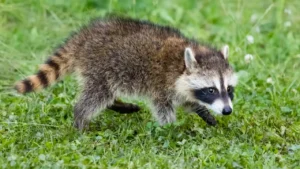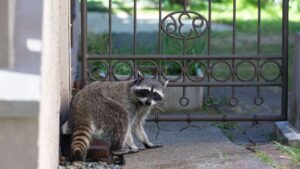
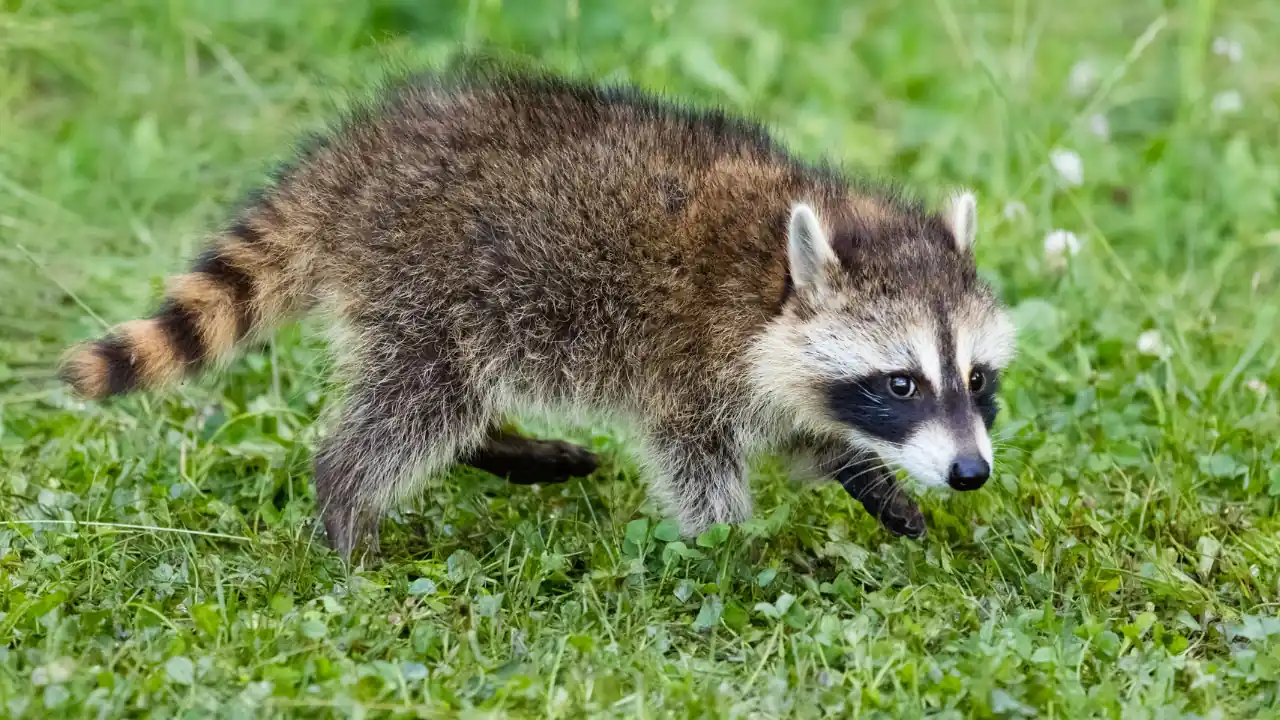
If you have raccoons showing up in your yard, you already know they are not picky. One night they are flipping over a trash can, the next they are poking around a pond, a garden bed, or a chicken coop. That is why the question what animals do raccoons eat matters so much for homeowners. Once you understand what is actually on their menu, it becomes a lot easier to figure out why they keep coming back and what is drawing them in.
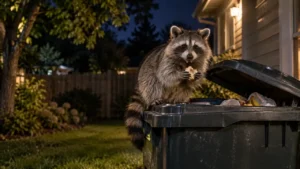
Raccoons are opportunistic omnivores, which means they eat whatever is easy to find and easy to catch, and that can include both small animals and human food scraps. They are especially good at taking advantage of property where food is left out, trash is accessible, or natural prey is abundant. That same habit is why the raccoon as an animal that ransacks trash cans image is not just a stereotype, it is a real part of how they survive in the wild and around homes.
Also Read: How to Keep Away Raccoons With Scents They Hate
Quick Answer: What Animals Do Raccoons Eat?
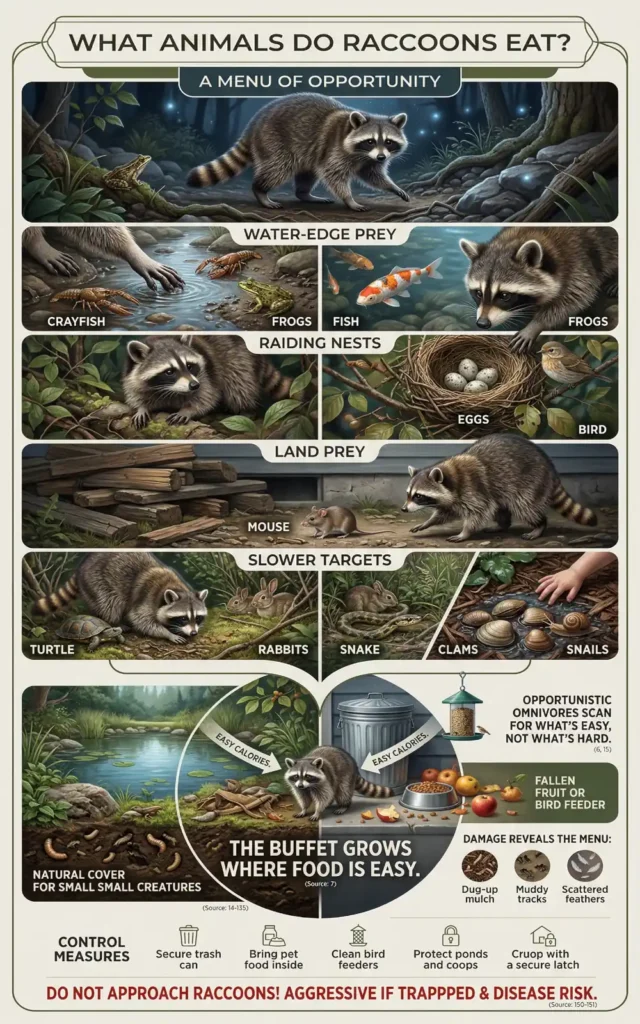
Raccoons eat a wide range of animals, including mice, rats, squirrels, fish, frogs, crayfish, birds, eggs, chickens, turtles, snakes, rabbits, clams, and snails. Around homes, they also switch quickly to trash, pet food, chicken feed, fruit, garden crops, and even dead animals when those are easier to reach.
What Raccoons Really Eat Before We Get into the Animal List
Before we go animal by animal, it helps to understand the pattern. Raccoons are not true specialists. They do not wake up thinking, “Today I am only hunting fish” or “I am only eating mice.” They look for the easiest calorie source in their environment. In wooded or wet areas, that might mean crayfish, clams, frogs, fish, and other small creatures near the waterline. In suburban neighborhoods, it may mean bird feeders, pet food, garbage, fallen fruit, garden vegetables, or a careless chicken coop. That flexibility is exactly why raccoons do so well near people.
In real residential pest calls, raccoons rarely show up because of just one food source. More often, the property is offering several easy rewards at once — unsecured trash, spilled bird seed, fallen fruit, pet food, shallow water, or a coop with weak latches. Once a raccoon finds two or three easy meals on the same property, that yard can become part of its regular nighttime route.
This matters for homeowners because raccoon damage often tells you what they are eating. If they are tipping trash cans, they are using the same opportunistic feeding style that lets them raid nests and ponds. If they are digging in the yard, they may be after insects, grubs, or small animals hiding in the soil. If they are hanging around water, they may be hunting crayfish or fish. If they are raiding a chicken run, the issue is no longer “cute wildlife.” It is a direct food source problem.
Mice
Yes, raccoons do eat mice. They are not built like a cat, so they are not chasing every mouse they see across an open yard, but if a mouse is small, slow, trapped, nesting, or exposed, a raccoon can absolutely take it. In real conditions, that usually means young, weak, or easily cornered mice rather than a true rodent-hunting pattern.
For homeowners, this is important because it works both ways. If raccoons are showing up, there is often already a food chain problem on the property. A yard with spilled seed, unsecured garbage, pet food, or gaps under sheds can attract mice first, then raccoons notice the same food source later. So when people ask what animals do raccoons eat, the real answer is often tied to whatever small prey or leftovers are easiest to reach in that moment.
Rats
Raccoons do eat rats, especially in urban and suburban areas where both animals are drawn to the same food sources. In most cases, raccoons are not actively hunting healthy adult rats for sport. They are more likely to take young rats, injured rats, nestlings, or rats caught in a bad position near trash areas, sheds, crawl spaces, or feeding spots.
For homeowners, this matters because rats and raccoons often show up for the same reason: easy food. If you have overflowing garbage, spilled bird seed, pet food, compost, or gaps under structures, the rat problem and the raccoon problem may be connected.
Squirrels
Raccoons can eat squirrels, especially young squirrels or squirrels caught in a vulnerable spot. They are not as agile as a dedicated tree predator, so this usually means baby squirrels, injured squirrels, or squirrels caught on the ground, near a nest, or in a bad escape position.
This is one reason raccoons are such a headache in yards with mature trees, bird feeders, and attic access points. The same yard that feeds squirrels can also feed raccoons. Once raccoons learn where the easy food is, they often return night after night. They are very good at turning a backyard into a regular route.
Fish
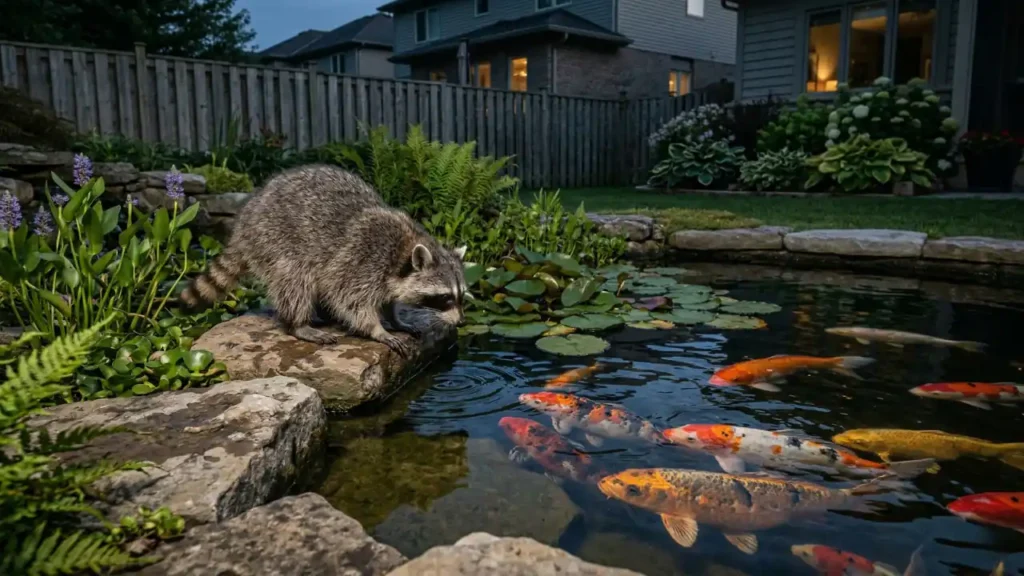
Fish are a classic raccoon food, especially in areas near streams, ponds, marshes, drainage ditches, or backyard water features. Fish are a normal part of the raccoon diet, and that includes koi in backyard ponds when the water is shallow enough and the fish are easy to reach. If there is shallow water and easy access, raccoons will take advantage of it.
This is why koi ponds and decorative backyard water features are so often targeted. Raccoons are not trying to be dramatic. They are following the easiest food. Small fish, slow fish, or fish near the surface are simply too tempting if a raccoon can reach them. If your property has water, the food chain extends there too.
Snakes
Yes, snakes can be on the menu too. Raccoons are not famous snake hunters, but they do eat reptiles, and smaller snakes can become prey when they are exposed, nesting nearby, or caught without a clean escape route. That does not mean every raccoon is out hunting snakes. It just means the opportunity is there when conditions are right.
For people with snake concerns, the bigger lesson is habitat. If your yard has rodents, hiding places, and water, you may attract both snakes and raccoons because the prey base is there. So when raccoons show up in a yard that also has snake activity, they are usually responding to the same conditions, not causing the whole problem alone.
Rabbits
Rabbits are also part of the raccoon diet, especially young rabbits and nestlings, which are much easier to catch than healthy adults. Raccoons are opportunists, not specialists, so they take what they can get.
If rabbits are nesting in your yard, raccoons may notice. That is another reason why dense brush, hidden corners, and food-rich gardens can become trouble spots. The same cover that helps rabbits hide can also help raccoons hunt. If you are seeing both, you are looking at a property that is offering shelter and food at the same time. That risk is even higher with pet rabbits kept in outdoor hutches, especially if the wire, latches, or flooring are not strong enough to stop a raccoon from reaching in.
Clams
Clams are one of the more surprising items on the list, but they are definitely there. Raccoons are especially fond of water-edge foods, and clams fit that pattern perfectly because they are slow, accessible, and often found where raccoons already hunt along shorelines. In wet habitats, raccoons use their paws very well to work along shorelines, dig, and probe for food.
This is one reason raccoons are so successful around marshes, ponds, lakes, and coastal areas. They are not limited to one kind of prey. They will take a soft-shell opportunity, a shoreline shellfish, or a small aquatic animal if it is easy enough to grab. That flexibility is a big reason raccoons do so well around ponds, marshes, shorelines, and suburban yards.
Frogs
Frogs are another common raccoon food. Frogs are normal raccoon prey, and that fits the raccoon’s habit of hunting near water, drainage edges, wet lawns, and pond margins. Frogs are small, abundant in the right habitat, and often active at the same times raccoons are moving around.
If your yard has a pond, drainage ditch, or low wet area, frogs may be part of the food chain that draws raccoons in. This is why it is a mistake to think raccoons only care about trash. In many settings, the real draw is the natural food around the property. Trash is just the bonus.
Birds and Eggs
Raccoons do eat birds and bird eggs, especially ground-nesting birds and nestlings. That is one of the reasons they can be such a problem in rural yards, garden spaces, and poultry areas. If a nest is reachable, raccoons are smart enough to find it and persistent enough to keep checking.
This is also why backyard chickens are so vulnerable. Raccoons are known to raid poultry areas and chicken coops, especially when the latches are weak or feed is left nearby. They may not always eat every bird they kill, but they often leave serious damage behind, which is bad enough for any homeowner. That same risk can apply to ducks and geese in backyard poultry setups, especially if birds are left in lightly protected pens overnight.
Turtles
Turtles are also on the raccoon menu, especially small turtles, turtle eggs, and hatchlings in vulnerable nesting areas. Around ponds, marshes, and nesting areas, raccoons can do a lot of damage very quickly.
For backyard owners, this is another reminder that raccoons are not just trash can thieves. They can be serious predators near water and nesting areas. If you keep turtles or tortoises, have a pond, or live near a nesting beach or wetland, raccoon control is not optional. It becomes part of protecting the animals already on your property.
Crayfish
Crayfish are one of the raccoon’s favorite natural foods. They are one of the classic foods raccoons take because raccoons are so good at working shorelines, streams, marshes, and wet ground with their paws. In some habitats, crayfish may be one of the most important foods they eat.
This is a big reason raccoons are so tied to water. If there is a creek behind your property, a drainage swale, or a pond edge with cover, raccoons often move along those places looking for crayfish and other easy aquatic prey. In other words, the water itself may be the buffet.
Snails
Snails are another water and garden food raccoons will eat. Snails fit the same pattern as clams, crayfish, frogs, and fish: slow, accessible prey in damp areas where raccoons already like to forage. That means a damp yard, mulched area, garden bed, or pond edge can all become raccoon feeding spots.
Snails may seem harmless, but they are part of the same larger picture. Raccoons are not hunting a single prey species. They are scanning for the easiest available food, and small soft-bodied animals near moisture are attractive to them.
What I See Most Often in Real Backyards
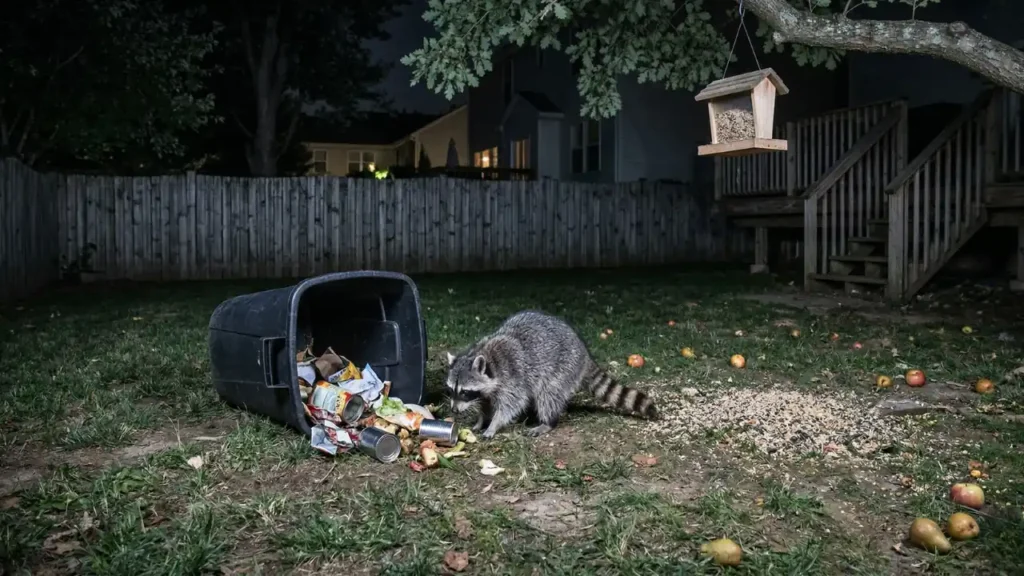
In real backyard situations, the biggest mistake homeowners make is assuming raccoons are there for only one thing, usually the trash cans. Sometimes that is true, but just as often the real draw is a combination of easy food sources: a shallow koi pond, fallen fruit under a tree, spilled bird seed, pet food left out overnight, or chicken feed near a coop. Once raccoons learn a property pays off in more than one place, they often return on a very predictable route.
That is why one small fix rarely solves the whole problem. If you lock the trash down but leave pet food out, they stay. If you protect the coop but ignore spilled feed, they stay. If you scare one off but keep the pond easy to reach, another raccoon usually figures it out later. The property conditions matter more than the individual animal.
How To Tell What Raccoons Are Eating in Your Yard
If you are trying to figure out why raccoons keep visiting, the damage pattern usually tells the story.
Look for clues like:
- Tipped trash cans or scattered garbage → food scraps and leftovers
- Wet muddy tracks around a pond → fish, frogs, or crayfish
- Dug-up mulch or soft soil → grubs, insects, or small prey hiding in the ground
- Broken eggshells or disturbed nesting areas → birds or eggs
- Feathers, coop damage, or torn wire → chickens or other poultry
- Spilled bird seed under feeders → a food chain issue that may be attracting both rodents and raccoons
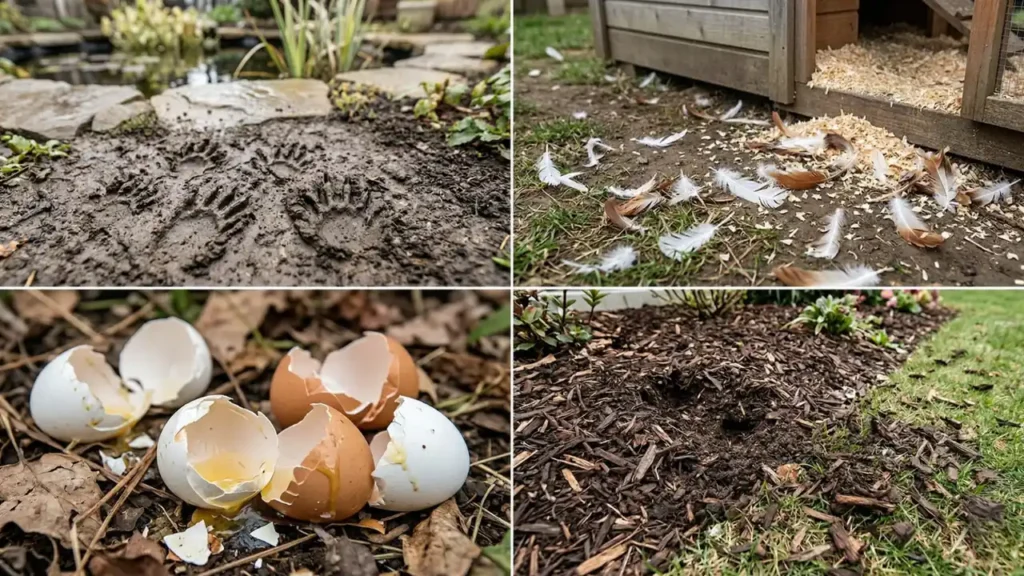
In real backyard cases, the feeding signs usually matter more than the animal list. Once you know what is rewarding the raccoons, prevention gets a lot easier.
What All of This Means If Raccoons Are in Your Backyard
Once you look at the full list, the pattern becomes obvious. Raccoons eat small mammals, fish, frogs, turtles, crayfish, clams, snails, birds, eggs, and plenty of human food when it is available. They are not picky, and that is exactly why they thrive near homes. If your backyard offers water, nesting cover, pet food, trash, fruit, bird seed, or an easy climb into a roof or coop, raccoons will notice.
That is also why the best raccoon control starts with food removal, not panic. Secure trash, bring pet food inside, clean up fallen fruit, shut down access to bird seed, close gaps under structures, and protect ponds or coops. The University of Maryland Extension’s raccoon guide makes the same point in practical terms: raccoons stay where the reward is high and the effort is low. Make your property harder to use, and most of them will move on.
Common Mistakes Homeowners Make with Raccoons
One of the biggest mistakes is focusing only on the animal and not the food source. If raccoons are coming back, the property is usually still rewarding them somewhere.
Common mistakes include:
- Securing the trash cans but still leaving pet food outside overnight
- Protecting the chicken coop but ignoring spilled feed around it
- Blaming the pond without cleaning up fallen fruit or bird seed
- Assuming raccoons are “just passing through” when they are already using the yard on a repeat route
- Trying to scare them off without removing what keeps attracting them
In most cases, raccoon control works best when you remove the easy calories first. The goal is not to outsmart a raccoon once. The goal is to make your property stop paying off every night.
Also Read: Why Do Raccoons Eat Trash? How to Stop Attracting Them
Safety Note for Homeowners
Do not approach, corner, or try to hand-remove a raccoon. Raccoons can carry rabies, roundworms, and other diseases or parasites, and they can become aggressive if they feel trapped. Keep children and pets away from active raccoon areas, especially around attics, crawl spaces, sheds, decks, and known latrine spots.
If raccoons are denning inside a structure, avoid direct cleanup or DIY removal until you know whether young are present. In many areas, trapping, relocation, or exclusion can also be regulated by local wildlife laws. The UC IPM raccoon pest notes are a solid reference on safe exclusion and prevention, but if raccoons are inside the home or acting unusually bold, a licensed wildlife professional is usually the safest next step.
Conclusion
So, what animals do raccoons eat? More than most people expect. Mice, rats, squirrels, fish, snakes, rabbits, clams, frogs, birds, turtles, crayfish, and snails can all be part of the raccoon diet, depending on where the raccoon lives and what is easiest to catch. In the wild, they feed near water and along natural edges. Around homes, they shift fast to trash, pet food, bird feeders, chicken coops, gardens, and ponds. That flexibility is the reason they are so successful, and also the reason they cause so many backyard headaches.
If you are dealing with raccoons right now, do not focus only on what they are eating. Focus on what your property is making easy. In most backyard cases, the raccoon is not the mystery — the food source is. Once you identify the easiest meals in the yard and shut those down, raccoon activity usually starts making a lot more sense, and control becomes much more effective.