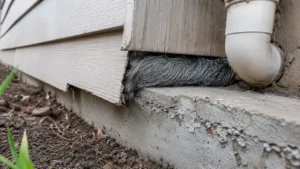

If you have mice in the house, you are probably looking for anything that might help right now. That is normal. Nobody wants to hear scratching in the walls, find droppings in a kitchen cabinet, or catch a mouse running across the floor late at night. When that happens, the first question is often simple: what scents do mice hate?
Yes, mice do dislike some strong smells. Vinegar, peppermint oil, chili pepper, cloves, cinnamon, eucalyptus, cedarwood, mint toothpaste, ammonia, and mothballs can all make an area less comfortable for them for a short time. But here is the part many people miss: scent alone is not a full mouse control plan. Strong odors may help discourage mice from lingering in small spots, but they will not fix the real problem if mice already have food, shelter, and easy entry points. That is why the best results come from using scents as a support tool, not as the whole strategy.
In this guide, I will walk you through the scents mice dislike most, how each one works, where people usually go wrong, and what actually matters if you want those mice gone for good. I will keep it practical and plain, the way I would explain it to a homeowner standing in a messy kitchen asking what to do next.
Also Read: Spadepestcontrol blog
Quick Answer: What Scents Do Mice Hate?
Mice tend to dislike strong odors like peppermint oil, vinegar, chili pepper, cloves, cinnamon, eucalyptus, cedarwood, ammonia, mint toothpaste, and mothballs. But scents alone do not reliably solve a mouse problem. They work best as a short-term deterrent while you seal entry points, remove food sources, and use traps where mice are active. If you are looking for what keeps mice away naturally, strong scents can help as a short-term deterrent, but sealing entry points and trapping are still what solve the problem.
How Smell Affects Mouse Behavior
Mice rely heavily on smell. They use it to find food, avoid danger, and move safely through a home. That means powerful odors can throw them off a little, especially when the smell is sharp, irritating, or unusual. The catch is that mice are not repelled by scent in the same permanent way people sometimes imagine. A smell may bother them, but if the house offers crumbs, water, warmth, nesting material, and holes to squeeze through, many mice will push through that discomfort anyway.
That is why extension services generally treat repellents as only a small part of mouse management. North Carolina State Extension notes that repellents such as peppermint, mothballs, and ammonia may have some effect, but they are not considered reliable stand-alone mouse control. That lines up with what most pest pros see in real homes: strong smells may slow mice down for a while, but they do not beat food, shelter, and easy access.
So when we talk about scents mice hate, think of them as a way to make certain areas less attractive, not as a magic wand. That mindset will save you time, money, and a lot of disappointment.
Vinegar
Vinegar is one of the easiest scents to try because most people already have it in the kitchen. It has a sharp, sour smell that can be intense enough to make a mouse avoid a spot for a while. White vinegar is usually the first choice because it is cheap, strong, and easy to spray into corners, along baseboards, around trash areas, or near entry points.
The main appeal of vinegar is not that it kills mice or wipes out an infestation. It simply creates an odor that many mice dislike. A homemade spray made with equal parts white vinegar and water is a common way to use it. Some people use it on cotton balls, but sprayed vinegar tends to cover a wider area. Once the smell fades, the effect fades too, so it has to be reapplied often.
Vinegar is best used in spots where mice travel, especially if you are trying to discourage them from using a path repeatedly. It can also help as a cleaner, which is useful because food residue is one of the reasons mice keep coming back. If you clean a surface and leave behind a strong vinegar smell, you are doing two helpful things at once: removing the food scent and replacing it with a smell mice do not love.
Still, vinegar is temporary. If a mouse has already nested in your walls or pantry, vinegar will not solve that on its own. It is more of a helper than a fix.
Peppermint Oil
Peppermint oil is probably the most famous mouse scent repellent, and for good reason. It has a strong, cool, minty smell that people often find fresh and pleasant, but mice tend to dislike it. The intensity matters here. A light mint smell may not do much, but concentrated peppermint oil can be strong enough to bother mice in a small enclosed area.
A common method is to put a few drops of peppermint oil in water and spray it around baseboards, under sinks, behind appliances, near holes, and other active routes. Another method is to soak cotton balls and place them where mice travel. This can be useful in enclosed spaces such as cabinets, closets, attics, or storage areas.
There is a reason peppermint shows up so often in mouse discussions, but it is also where expectations get unrealistic. The smell does not stay strong forever. Once the oil dries out or the scent disperses, the effect drops quickly. That means it needs frequent reapplication if you want it to keep doing anything useful.
That lines up with what many pest pros see in the field. Peppermint may help make a space less appealing for a short window, especially in a cabinet, pantry corner, or utility closet, but it will not override an active infestation if mice already have food, nesting cover, and an easy route back in.
Chili Pepper
Chili pepper works differently from a pleasant-smelling essential oil. It is not just about scent. Chili pepper contains capsaicin, the compound that makes peppers feel hot and irritating. That same irritation can make mice avoid treated areas because the smell and residue can be unpleasant to them.
People often use chili pepper in powder form, flakes, or oil. Dry powder can be sprinkled in places where mice travel, while a diluted spray can be used around outdoor problem areas or entry points. Some homeowners mix it with other ingredients, but the key is to keep it in places where it will not be wiped away instantly.
One thing to remember is that chili pepper is messy. It can irritate your own nose, eyes, or skin if you are careless with it. It is also not something you want near food prep surfaces. So while it can help in some places, it has to be used carefully. If you have curious pets or small children, avoid using loose chili powder in easy-to-reach indoor areas where it can get kicked up, touched, or inhaled.
If I were choosing a spice-based deterrent for a quick test, chili pepper would be one of the stronger options simply because it is so irritating. But again, this is about discouraging activity, not eliminating the underlying mouse problem.
Mothballs
Mothballs are one of the most misunderstood mouse deterrents out there. People often hear that mothballs keep rodents away and assume that means they are a safe all-purpose fix. They are not. Mothballs contain chemicals that produce a powerful odor, and that smell can repel some pests. That is why they are often mentioned in discussions about rodents and, like roaches, other unwanted household pests.
The problem is that mothballs are not meant to be used casually around a home. The U.S. Environmental Protection Agency warns that mothballs are a pesticide, and using them for pests or situations not listed on the label can be unsafe, especially in homes with children or pets. That is a big reason they are a poor first choice for mouse control, even if the smell seems strong enough to bother rodents.
In practical terms, mothballs are not a smart first choice for mouse control. They can create strong fumes, they can linger, and they can introduce safety concerns that outweigh the benefit. Some people place them in attics or crawl spaces, but that usually creates a strong lingering odor without solving the actual infestation. If a product makes your house smell terrible and still does not stop mice from moving through wall voids or nesting areas, it is hard to call that a win.
So yes, mothballs have a smell that mice often avoid, but they are not a clean or reliable answer. I would treat them as a last-resort idea to discuss carefully, not as a recommended home remedy.
Mint Toothpaste
Mint toothpaste works for the same basic reason peppermint oil works: mint is strong, cool, and sharp. The odor is familiar to us, but to mice it can be harsh and unpleasant, especially in a small space. Toothpaste is convenient because most people already have some on hand, and it can be smeared in tiny amounts along cracks, cabinet edges, or hidden corners.
That said, toothpaste is not a professional-grade repellent. It dries out, loses strength, and is easy to wipe away. It also tends to work best in very small spots, not across a whole room. If you are testing a quick idea in a cabinet or along a narrow gap, mint toothpaste may be worth trying. If you are hoping it will protect an attic, garage, or whole kitchen, it will disappoint you.
Mint toothpaste belongs in the same category as other smell-based home remedies: useful as a small temporary tactic, but not enough on its own.
Cloves
Cloves have a very strong, warm, spicy smell. That aroma comes from eugenol and other volatile compounds that people either love or find overwhelming. Mice tend to dislike that intensity. Cloves can be used whole, crushed, or as clove oil, depending on the area and how strong you want the odor to be.
Whole cloves are often placed in drawers, cupboards, pantry corners, or small storage spots. Clove oil is stronger, but it needs to be handled carefully because concentrated oils can be irritating to people too. The best use for cloves is in enclosed spaces where the smell can build up a bit, such as a closed cabinet or a sheltered shelf area.
The advantage of cloves is that they are simple and familiar. They are also easy to combine with other odors if you are trying to build a stronger scent barrier in a problem spot. The drawback is the same as always: the smell fades. Once it fades, the repellent effect fades with it.
Cinnamon
Cinnamon is another spice that many mice dislike because it has a powerful, warm, unmistakable smell. Some homeowners use cinnamon sticks, while others use ground cinnamon or cinnamon oil. It can be placed in pantry spaces, along likely travel paths, and near garbage areas if those places are not being disturbed constantly.
Cinnamon is one of those scents that can make a space feel cleaner and fresher to people while also making it less inviting to mice. That is useful. But cinnamon alone does not address the reason mice are there. If they are finding food in the pantry, nesting material in storage boxes, or holes around pipes, cinnamon will only be a short-lived nuisance to them.
This is where people often get stuck. They focus on what smell mice hate instead of asking why the mice felt comfortable enough to stay. The answer to that second question matters more.
Eucalyptus
Eucalyptus has a strong, sharp, slightly medicinal smell that many people associate with cough drops, rubs, and essential oils. That same intensity is why mice tend to avoid it. Like peppermint oil, eucalyptus is usually used as an essential oil spray or on cotton balls placed in specific locations.
Eucalyptus can be helpful in closets, cabinets, storage areas, and similar spaces where the smell can remain concentrated for a short time. It is not usually the first smell people think of, but it absolutely belongs in the list of scents mice hate. The smell is distinct enough to create an uncomfortable environment for them.
The same limitation applies here too. Eucalyptus oil disperses, dries out, and loses power over time. It can support your mouse control plan, but it cannot replace proper sanitation, sealing, and trapping where needed.
Ammonia
Ammonia has a strong, irritating smell that many people associate with harsh cleaners. Mice dislike it because it can resemble the smell of predator urine, which can make a space feel unsafe. For that reason, ammonia often comes up in mouse control conversations.
But ammonia also comes with a big warning label. It is not something to use casually. In pest control discussions, ammonia gets mentioned because the odor is harsh and irritating, but in a real home, the fumes can create as many problems as they solve. Safety matters just as much as effectiveness, especially around pets, children, and enclosed spaces with poor airflow.
If you are researching ammonia for mice, the important thing to know is that it may create a smell rodents dislike, but it is not a simple home remedy you should use without caution. The fumes can be irritating to people and pets, and the smell can spread more than you expect. In other words, yes, mice may hate it, but so might your nose, your lungs, and your family.
That is why ammonia should be approached very carefully. It belongs in the “use only if you fully understand the risk” category, not the “spray it around and hope for the best” category.
Cedarwood
Cedarwood gives off a woodsy smell that many people actually enjoy. Closets, drawers, and storage areas often use cedar products because the scent feels clean and natural. Mice, however, generally do not like it. Cedarwood oil and cedar blocks are popular because they create a strong smell that can make enclosed spaces less appealing.
Cedar is a good example of why mouse repellents are more about discomfort than danger. The goal is not to poison mice. It is to make them feel like the area is not worth staying in. Cedarwood can do that in some settings, especially small enclosed spaces like closets, utility areas, and storage cabinets.
The catch is that cedar scent does not stay strong forever. Once the smell fades, the effect fades. Cedar products are better thought of as part of a layered approach. They can help with prevention in a clean, dry, sealed space, but they are not a fix for a living infestation.
Which of These Scents Work Best?
If you want the practical answer, here it is: peppermint oil, vinegar, ammonia, chili pepper, cloves, cinnamon, eucalyptus, cedarwood, mint toothpaste, and mothballs can all bother mice in different ways, but none of them is reliable enough to solve a mouse problem by itself. Some are safer than others. Some smell better to people than others. Some work only in tiny spaces. Some, especially mothballs and ammonia, come with safety issues that make them poor choices for casual use.
Among the safer home options, peppermint oil, vinegar, cloves, cinnamon, eucalyptus, and cedarwood are often the easiest places to start. They may help you discourage movement in a small area. They may also make a room less appealing while you handle the real issue. Chili pepper can be stronger, but it needs careful use because it can irritate humans too. Mint toothpaste is a small-space trick at best.
The important thing is to be realistic. The goal is not to scent your way out of a mouse infestation. The goal is to use odors as one part of a bigger plan.
If you want the quick visual version, this breakdown shows which scents are worth trying, which ones need caution, and why smell only works when it supports a real mouse control plan.

Other Scents People Try (But I Wouldn’t Prioritize First)
Homeowners also ask about dryer sheets, used tea bags, and cayenne pepper. Those can create a noticeable smell, and in some cases they may make a small area less appealing for a short time. But I would not put them in the same tier as peppermint oil, vinegar, cloves, cinnamon, or even chili pepper.
Dryer sheets fade fast and are inconsistent. Tea bags are usually too mild unless the scent is very concentrated. Cayenne pepper can work similarly to chili pepper, but it comes with the same mess and irritation issues indoors. If you want to experiment, fine, but these are backup ideas, not the first tools I would reach for.
What I’ve Seen in Real Homes
In real homes, the pattern is usually the same. A homeowner tries peppermint oil first because it smells clean and feels safer than traps or chemicals. For a few days, the kitchen smells better, and sometimes activity seems lighter. Then the droppings show up again behind the toaster, under the sink, or near the pantry wall.
The reason is simple: the scent may have made one small area less comfortable, but it did not remove the food source or block the entry point. In the field, the houses that actually turn the corner are the ones where the homeowner uses scent only as a short-term pressure tactic while sealing gaps, tightening food storage, and setting traps in the active travel routes.
What Actually Works Better Than Scent Alone
This is the part most people skip, and it is the part that matters most. In practical mouse control, the order matters: first remove easy food and nesting access, then seal the entry points, then place traps where the mice are already traveling. If you reverse that order and rely on smell first, you usually waste time. A mouse problem gets solved when the house becomes harder to use, not when it simply smells different.
If you want the quick side-by-side view, this chart shows exactly why scent repellents are a short-term tool while sanitation, sealing, and trapping do the real long-term work.
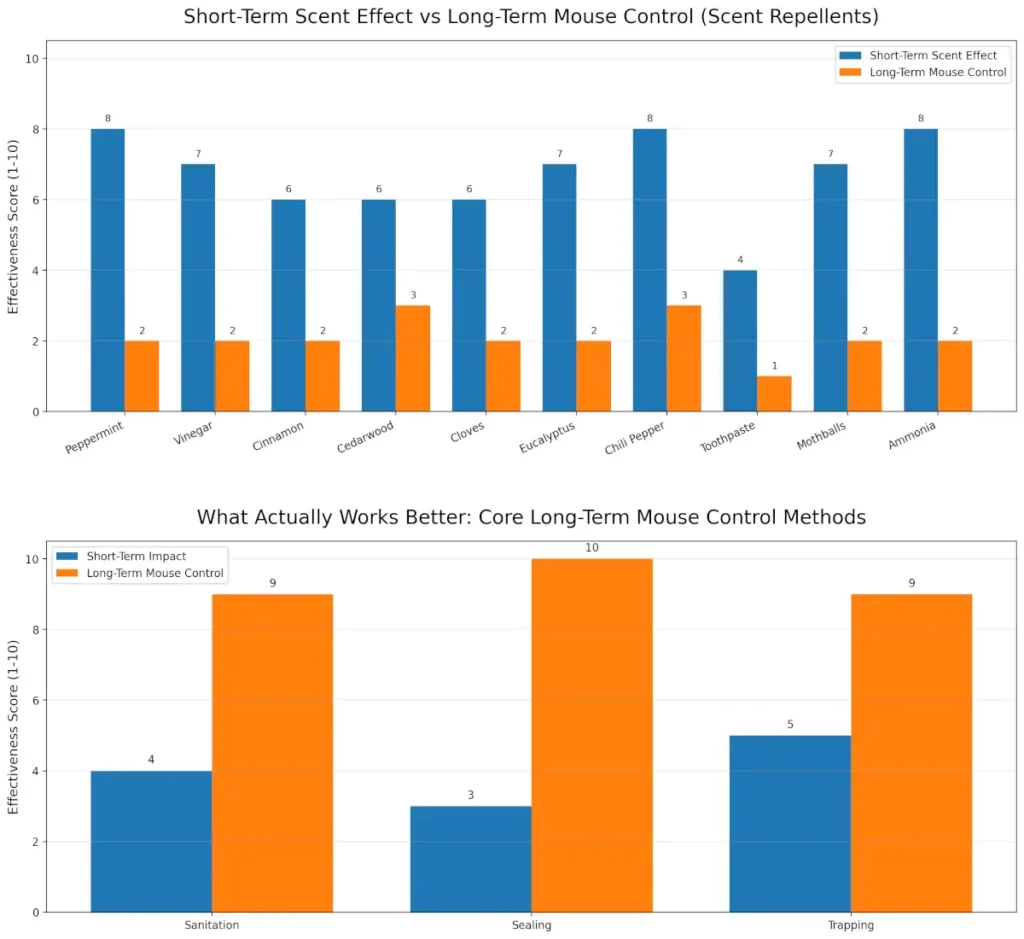
That means you need to think in layers. First, remove food access. Put away pet food. Clean crumbs. Store dry goods in hard containers. Fix garbage habits. Then, seal holes around pipes, vents, and the foundation. A mouse can fit through surprisingly small gaps, so do not assume a tiny crack is harmless. After that, use traps where the activity is happening. That is how you actually reduce the population.
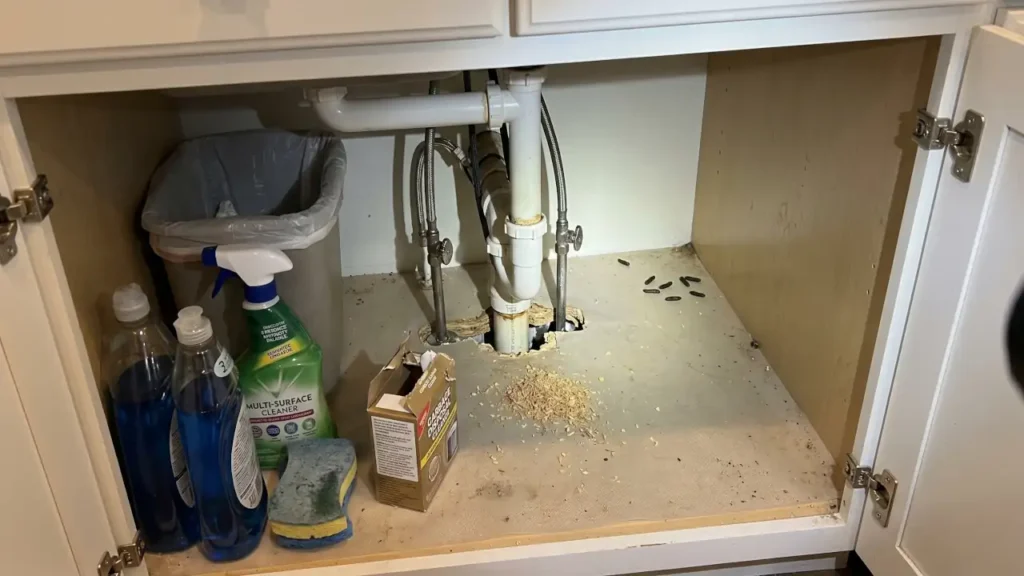
Scents can help in this plan, but they are not the plan. They are the background music, not the entire show.
Why Some Smells Seem to Work at First and Then Fail
A lot of people try a scent repellent and swear it worked at first. Then a week later they see droppings again. That happens because smells fade, and mice adapt. A strong odor may discourage a mouse from entering a spot for a short time, but once the odor drops off, the mouse may return. Even before the smell fades, a hungry mouse may still take the risk if the payoff is food or shelter.
This is why repellents often create a false sense of progress. You spray peppermint oil, the room smells fresh, and for a while you feel like the problem is under control. But if mice are still nesting behind the refrigerator or entering through a gap under the siding, the real issue is untouched.
That is also why pest pros usually treat scent deterrents as support tools only. They may help in a closet, attic, garage, or pantry while you work through the bigger job, but they should not be the thing you rely on most.
Best Way to Use Mouse-Repelling Scents
Use them as a short-term pressure tactic. If mice are getting into a pantry, you can clean the space, remove food sources, and add a strong scent like peppermint, vinegar, cinnamon, or cloves to make the spot less comfortable. If mice are moving through a garage corner, a scent barrier might help slow them down while you seal gaps and set traps.
The key is placement. You want the smell where mice travel, nest, or enter. That usually means baseboards, cabinet corners, under sinks, behind appliances, storage shelves, attic edges, and around entry points. You also want to reapply often. A scent that worked yesterday may be almost gone today.
And do not overload the space. More is not always better. Sometimes too much odor makes the house unpleasant for people without adding much extra benefit against mice.
When to Skip Scents and Go Straight to Traps
If you are seeing fresh droppings every day, hearing scratching at night, finding gnaw marks on food packaging, or spotting mice in daylight, skip the scent experiments and go straight to a real control plan. Those are signs the activity is established, and established mouse activity usually means you need trapping, sanitation cleanup, and entry-point sealing right away. Scent repellents are most useful when activity is light or when you are trying to make a cleaned-up area less attractive after the main control work is already underway.
Also Read: Ammonia For Mice: Why It Doesn’t Work Like You Think
What Not to Do
Do not spray random chemicals everywhere and hope the mice disappear. Do not count on one scent to protect a whole house. Do not assume that because a smell is strong to you, it will be strong enough to drive mice away permanently. And do not use harmful products like mothballs or ammonia without understanding the risks first.
Also, do not ignore droppings, grease marks, gnawing, or scratching sounds while you focus on scent solutions. Those signs mean the infestation is active. If you are seeing fresh evidence, you need a control plan, not just a nicer smell.
Conclusion
So, what scents do mice hate? The strongest answers are vinegar, peppermint oil, chili pepper, mothballs, mint toothpaste, cloves, cinnamon, eucalyptus, ammonia, and cedarwood. Each one can make an area less welcoming to mice for a while. Some are better for small enclosed spaces. Some are better for quick testing. Some, like mothballs and ammonia, should be handled with real caution because safety matters just as much as pest control.
The bigger lesson is simple. Smells can help, but they do not solve a mouse problem by themselves. If you are seeing daily droppings, hearing regular wall activity, or finding signs in multiple rooms, that usually means the infestation is established and a more aggressive trapping plan or professional inspection is the smarter next step.
If mice are inside your home, they are there because they found a way in and found something worth staying for. That means the real fix is still the classic one: remove food, seal entry points, reduce shelter, and use traps or professional help when needed. Use scent repellents as support, not as the whole strategy.
If you think of it that way, the whole subject gets much clearer. You are not trying to trick mice with perfume. You are making your home less useful to them, one layer at a time.