If you’ve been finding daddy long legs hanging out in your basement corners or garage ceiling, you’re not alone, and you don’t need to panic. These leggy little arachnids look creepy to a lot of people, but learning how to get rid of daddy long legs is actually one of the easier pest problems to solve once you know what draws them indoors. Here’s everything you need to know, explained the way I’d tell a friend.
Also Read: Are House Centipedes Dangerous? The Bite Risk Homeowners Often Ignore
Quick Answer
The fastest way to get rid of daddy long legs (harvestmen) is to reduce indoor moisture, remove clutter, vacuum visible harvestmen, eliminate the insects they’re feeding on, seal entry points, and keep damp areas dry. Because they don’t reproduce indoors, most homeowners see a noticeable reduction within one to two weeks after addressing these conditions.
What Are Daddy Long Leg Spiders?
Let’s clear something up right away. Daddy long legs aren’t technically spiders at all. People call them that because of the eight legs, but they actually belong to a completely different group of arachnids called Opiliones, which most folks know as harvestmen. If you’ve heard the name “cellar spider” tossed around too, that’s usually a different critter, though the two get mixed up constantly. The confusion is understandable because both have eight legs and are commonly found around homes, but they belong to different arachnid groups and behave very differently.
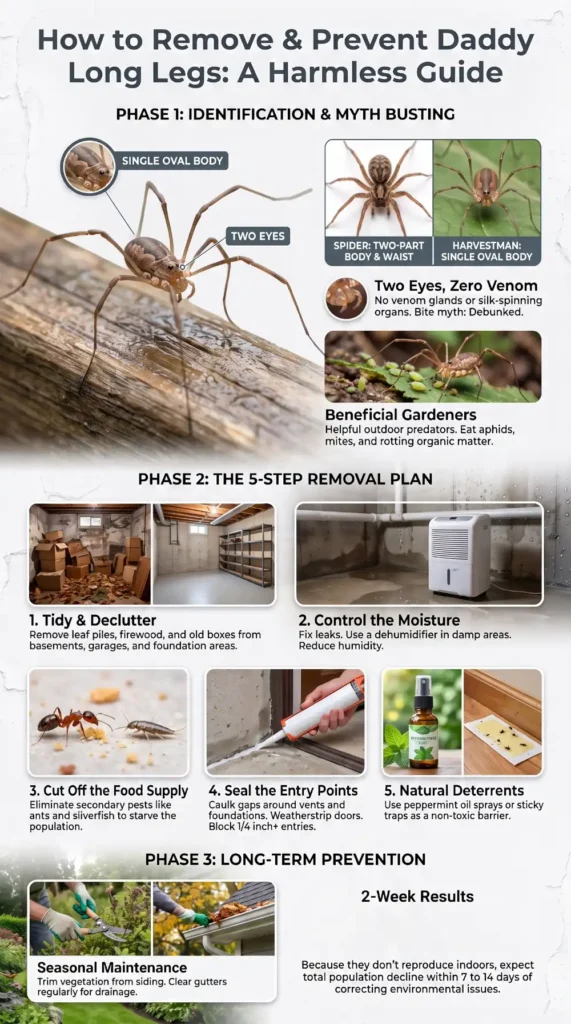
Here’s the biggest giveaway that separates a daddy long legs from a real spider: body shape. A true spider has two distinct body sections joined by a narrow waist, kind of like a figure eight. A daddy long legs has one single, oval-shaped body with no waist at all. Spiders also have up to eight eyes arranged around the head. Daddy long legs only have two.
Then there are the legs themselves, which is obviously where the name comes from. They’re absurdly long compared to the body, sometimes stretching out to two inches even though the body itself might only be a quarter-inch wide. Those legs aren’t just for looks. They function as highly sensitive sensory organs, helping harvestmen detect vibrations and navigate their surroundings despite their limited eyesight.
Most of the ones you’ll run into around the house are brown, tan, or grayish, sometimes with faint mottled patterning if you look closely enough. They often move with a jerky, bobbing motion that a lot of people find unsettling, which is honestly half the reason people want them gone even though they’re harmless.
Quick Tip: If you want to know for sure what you’re dealing with, get down at eye level and look at the body shape. One oval blob with no pinch in the middle means it’s a daddy long legs, not a house spider.
Are They Dangerous?
No, and this is worth repeating because the myth around daddy long legs refuses to die. You’ve probably heard some version of the story that these arachnids carry the world’s most potent venom, but their fangs are too short or too weak to break human skin. It sounds dramatic, and that’s exactly why it’s stuck around for decades. It’s also completely false.
Daddy long legs don’t have venom glands or the specialized fangs that true spiders use to inject venom, so they pose no venom-related risk to people. According to Ohio State University Extension, harvestmen don’t produce venom or silk, making the long-standing myth that they’re “highly venomous” completely false. That means there’s no bite risk, no sting, and no toxin to worry about, even if one crawls across your arm while you’re doing laundry.
They also can’t spin webs. If you’re seeing actual webbing in the corner where the daddy long legs is sitting, that’s a different spider that happened to move into the same spot, or it’s an old web that was already there.
Outdoors, these guys are genuinely helpful to have around. They eat aphids, mites, small caterpillars, and other soft-bodied pests that damage garden plants, and they’ll scavenge dead insects and rotting plant matter too. A healthy population in your yard is doing you a favor. For most homeowners, the issue only starts once they wander from the yard into your living space, where most people would rather not share a bathroom with an arachnid, harmless or not.
Where They’ll Hide in Your House
Daddy long legs are creatures of habit, and their habits revolve around darkness and moisture. Eggs get laid in soil during the fall, and once spring arrives and those eggs hatch, the young harvestmen begin searching for cool, damp places to shelter. If your home is nearby, they’ll often wander indoors through small openings around doors, vents, or the foundation.
Basements top the list almost every time. They’re dark, they’re often humid, and they usually have plenty of undisturbed corners, boxes, and shelving units where a daddy long legs can settle in without being bothered. Crawl spaces are just as attractive for the same reasons, especially if there’s any standing moisture or poor airflow.
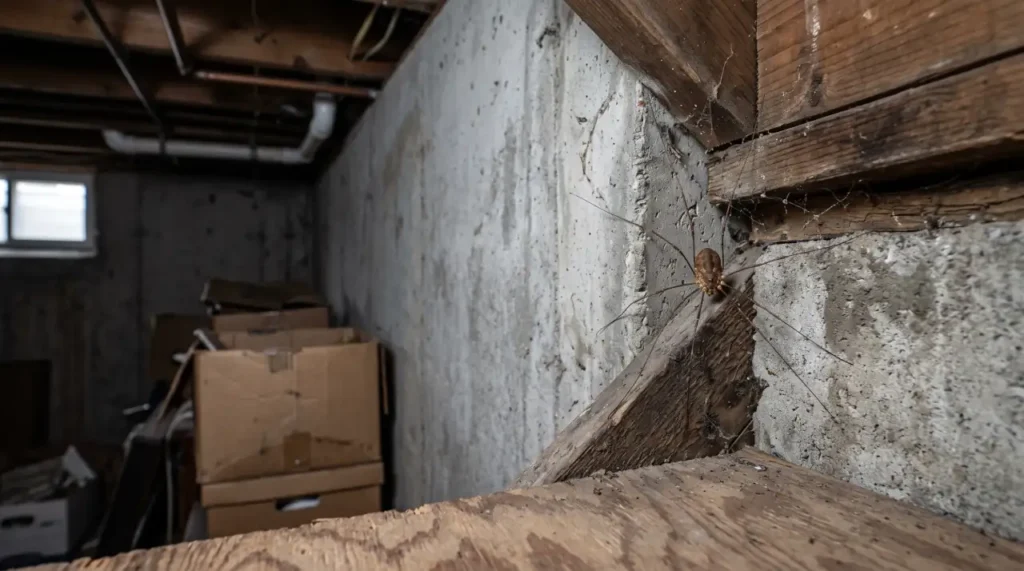
Garages are another favorite location and one of the places homeowners mention most often during inspections. They usually have cluttered shelving, stored items, cool concrete floors, and gaps around the overhead door, creating an ideal place for harvestmen to wander inside and remain undisturbed.
Beyond those three big spots, keep an eye on any room with poor ventilation or a chronic moisture issue. Bathrooms with a leaky pipe under the sink, laundry rooms where the dryer vent isn’t sealed properly, and unfinished storage rooms are all places I’ve personally pulled daddy long legs out of during inspections.
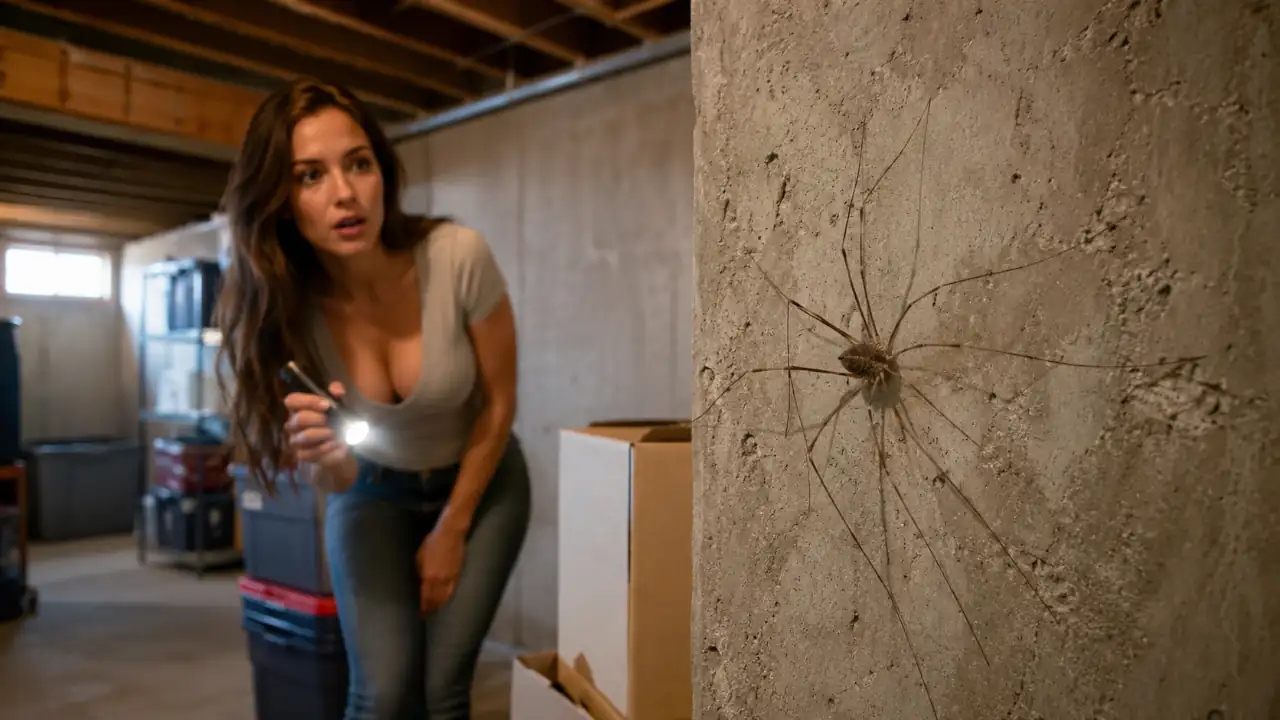
Quick Tip: Walk through your home with a flashlight at night and check along baseboards, in closet corners, and behind stored boxes. Daddy long legs tend to freeze in place when light hits them, which makes them easy to spot and remove once you know where to look.
What Attracts Daddy Long Legs?
Like many household pests, daddy long legs are looking for three basic things: food, water, and a safe place to hide. Understanding which of those three is drawing them in makes the whole removal process a lot more targeted instead of just guessing.
Outdoors, they naturally gravitate toward messy, debris-heavy areas. Piles of leaves, stacked firewood, mulch beds, rock piles, and compost piles all give them plenty of cover from predators and the sun. Because harvestmen live close to the ground and don’t travel far on their own, a cluttered yard right up against your house’s foundation is basically an invitation for them to wander a few extra feet and slip inside through a gap in the siding or a torn screen.
Once they’re indoors, moisture becomes the priority. Harvestmen lose moisture relatively quickly through their bodies fairly quickly since they don’t have the protective waxy coating some other arachnids have, so they need consistently humid air or a nearby water source to survive for long.
That’s consistent with what I’ve seen during inspections. Homes with damp crawl spaces, poor ventilation, or elevated humidity almost always have more moisture-loving pests—not just harvestmen, but also sowbugs, millipedes, and springtails. Solving the moisture problem usually reduces several pest issues at once instead of treating each one individually. That’s exactly why basements, crawl spaces, and rooms with plumbing leaks show up again and again as hot spots.
Food plays an important role too, although the connection is a little less obvious. Daddy long legs eat small insects and other invertebrates, including ants, aphids, silverfish, small spiders, and occasionally young centipedes. They’ll also scavenge dead insects when the opportunity arises. One thing I’ve noticed is that homeowners often focus on the harvestmen themselves while overlooking the insects attracting them. If you remove the food source first, the harvestmen usually disappear without much additional effort.
If your home already has an ant trail, a few silverfish, or gnats hanging around, you’re unintentionally running a small buffet that daddy long legs will happily take advantage of. Getting rid of a secondary pest problem often clears out the food supply that was keeping the daddy long legs population fed in the first place.
Why Do I Suddenly Have So Many Daddy Long Legs?
If it feels like daddy long legs appeared overnight, there’s usually a simple explanation. Most homeowners notice a sudden increase during late spring and early summer after eggs hatch outdoors. Young harvestmen begin searching for cool, shaded places to shelter, and homes with damp basements, garages, or crawl spaces are an easy target.
Weather can play a role too. Heavy rain may drive them out of flooded hiding spots, while hot, dry conditions can send them indoors looking for cooler, more humid environments. It’s also common to notice more activity in early fall as nighttime temperatures begin to drop.
One inspection I remember involved a homeowner who thought the harvestmen were multiplying inside the basement because dozens seemed to appear within a few days. The real problem wasn’t breeding indoors at all. A slow foundation leak had kept the basement unusually damp throughout the summer, making it an ideal shelter for harvestmen wandering in from outside. After repairing the leak, running a dehumidifier, and sealing a few gaps around the garage door, sightings dropped dramatically over the next couple of weeks without using any pesticides.
A sudden increase almost always points to favorable conditions around your home rather than an indoor infestation. Once those conditions are corrected, the population usually declines just as quickly as it appeared.
How To Get Rid of Daddy Long Legs
Now let’s look at the most effective ways to remove them. The good news is that daddy long legs are one of the least stubborn pests to deal with because they don’t reproduce indoors the way roaches or ants do, and they don’t hide as deeply in wall voids. Handle the conditions that are drawing them in, and most homeowners see the population drop within a week or two.
Tidy Up
Start with a real cleaning pass, not just a quick tidy. Daddy long legs rely heavily on clutter for cover, both outside and in. In the yard, that means clearing out leaf piles, stacking firewood away from the house instead of against the wall, and trimming back any mulch beds that touch the foundation directly.
Inside, focus on the same dark, undisturbed spots we talked about earlier. Clear out boxes that have been sitting untouched in the basement for years, vacuum along baseboards and in closet corners, and knock down any cobwebs (even old, abandoned ones, since a daddy long legs will happily move into a web another spider left behind). Vacuum floors regularly as well, especially in basements, garages, and storage areas where insects and debris tend to accumulate.
The goal is to remove every comfortable hiding spot you can find. Fewer hiding spots means fewer places for them to feel safe, which pushes them right back outside where they came from.
Remove Sources of Food & Water
This is the step that makes the biggest long-term difference. Fix that dripping pipe under the bathroom sink. Check your water heater and washing machine hoses for slow leaks. Also look for condensation collecting on cold water pipes or HVAC equipment, since constant moisture can create the humid conditions harvestmen prefer. If your basement or crawl space runs humid, a dehumidifier is one of the best investments you can make, since it tackles the exact condition daddy long legs need to survive indoors.
On the food side, remember that these arachnids are feeding on other small insects and invertebrates, so cutting off their food supply usually means dealing with whatever secondary pest problem you’ve got going on. If you’ve noticed ants trailing along your kitchen counter or cockroaches scurrying when you flip on the basement light, handling those infestations does double duty. You get rid of the pest you were originally worried about, and you starve out the daddy long legs population at the same time.
Sweep up crumbs, store pantry food in sealed containers, and don’t let dirty dishes sit overnight. These habits help reduce ants, flies, and other small insects that can become a food source for harvestmen.
One inspection stands out in particular because the homeowner was convinced the harvestmen were breeding inside the house. After checking the space, it became clear they were simply entering through small gaps around the garage and basement while a damp crawl space kept the environment comfortable for them. Once the moisture issue was corrected and the entry points were sealed, the harvestmen disappeared without any insecticide treatment. Situations like that are a good reminder that fixing the conditions attracting them is usually far more effective than relying on sprays alone.
Use A Natural Spray
If tidying up and cutting off resources hasn’t fully solved things, a natural repellent spray is a solid next step, and it’s a lot friendlier to your household than chemical pesticides, especially if you’ve got kids or pets running around. Harsh insecticide sprays can also be overkill for a pest that isn’t dangerous to begin with.
Certain essential oils work well because their strong scent overwhelms the sensory hairs daddy long legs use to navigate. Peppermint is the most popular choice, and for good reason. Peppermint oil is commonly used as a home repellent for spiders and other crawling pests because of its strong odor. While research on essential oils shows promising repellent effects for some arthropods, results can vary in real homes. In my experience, essential oil sprays work best as a short-term deterrent after you’ve already reduced moisture and sealed entry points.
Citrus oils, eucalyptus, and tea tree oil work similarly and can be mixed together for a stronger blend.
To make your own spray, fill a spray bottle with water and add roughly fifteen to twenty drops of your chosen oil. Shake it well before every use since oil and water separate quickly. Spray it along baseboards, window sills, door frames, and any corner where you’ve spotted activity. It’s worth treating the exterior perimeter of your house too, right where the foundation meets the ground, since that’s the main entry route.
Tip: If you’re using essential oils around pets, check that the specific oil is considered safe for your household. Some oils, particularly tea tree oil, can be toxic to cats and dogs if used improperly. Always follow the product label and keep pets away until treated surfaces have dried.
Place Sticky Traps
Sticky traps are cheap, easy to find at any hardware store, and surprisingly effective against daddy long legs specifically. Because their legs are so long and spread out so wide, they have a hard time avoiding a flat sticky surface once they wander onto it.
Set traps flat along baseboards in the rooms where you’ve seen activity, and place a few near doorways, window frames, and any gaps you’ve noticed around pipes or vents. Basements and garages usually benefit from having several traps down at once since those rooms tend to have the highest daddy long legs traffic in most homes.
Check the traps every few days and replace them once they’re covered in dust or debris, since a dirty trap loses its stickiness fast. This method works best paired with the cleaning and moisture control steps above rather than as a standalone fix, since traps catch what’s already inside but don’t address why they showed up in the first place.
Sticky traps are also useful as monitoring tools. If traps continue catching harvestmen week after week, it’s usually a sign that moisture, entry points, or another insect population still needs attention rather than simply indicating that more traps are needed.
How To Keep Them Out of Your House
Getting rid of the current batch is only half the job. Keeping daddy long legs from coming back means making your home consistently unappealing to them, which takes a bit of ongoing effort rather than a one-time fix.
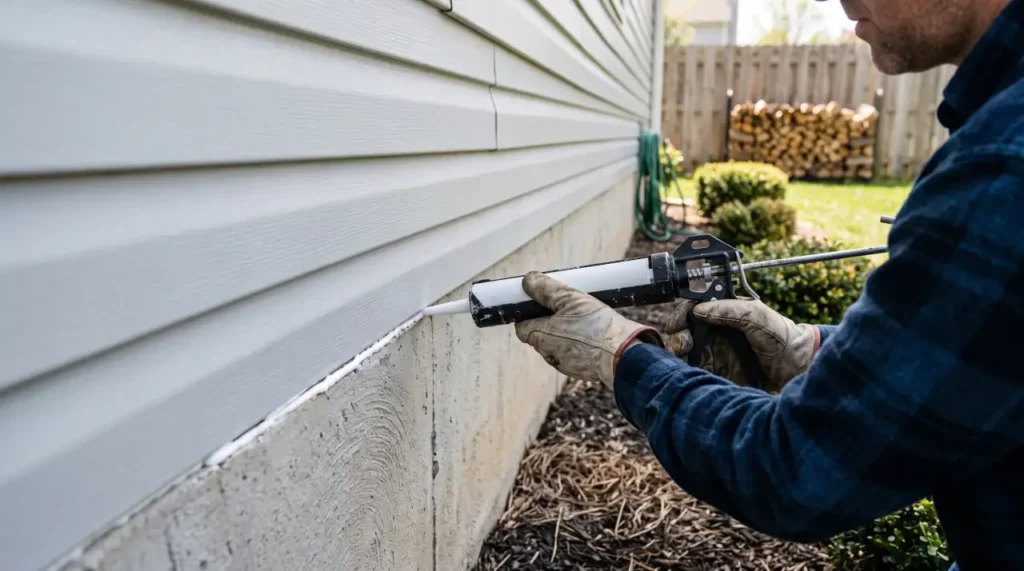
Seal up obvious entry points first. Check weatherstripping around exterior doors, look for gaps under the garage door, and inspect window screens for tears. Daddy long legs are small enough to squeeze through surprisingly tiny openings, so even a quarter-inch gap under a door is enough for them to wander through.
Keep up with yard maintenance year-round, not just in spring. Trim back plants and shrubs that touch your siding, move firewood piles at least a few feet from the foundation, and clear fallen leaves regularly instead of letting them build up against the house. The less cover they have right next to your walls, the less likely they are to find their way inside.
Don’t forget the moisture piece either. Make sure gutters are draining away from the foundation, fix any drainage issues that leave standing water near your house, and keep your basement or crawl space as dry as reasonably possible.
One last thing worth mentioning: if you’re managing an ant problem outdoors, daddy long legs are actually one of several natural predators of ants, along with birds and other beneficial insects. Letting a healthy population live undisturbed in your garden beds, away from the house itself, can genuinely help keep other pest numbers down. There’s a real difference between having them in your yard, where they’re doing useful work, and having them in your bathroom, where they’re just unwelcome company.
Do Daddy Long Legs Come Back Every Year?
Daddy long legs often seem to return every year because new harvestmen hatch outdoors each spring and naturally explore nearby sheltered areas. That doesn’t necessarily mean the same individuals are returning or that they’re breeding inside your home. Homes with recurring moisture problems, foundation gaps, or heavy vegetation around the exterior simply remain attractive year after year. Keeping up with seasonal yard maintenance, sealing entry points, and controlling indoor humidity greatly reduces the chances of seeing the same seasonal influx again.
Also Read: How To Get Rid of Carpet Beetles Before They Ruin Your Rugs
When Should You Call a Professional?
Most homeowners can handle daddy long legs without professional pest control. Because harvestmen don’t reproduce indoors or damage property, improving moisture control, reducing clutter, and sealing entry points usually solves the problem.
However, it’s worth scheduling an inspection if you continue seeing large numbers for several weeks after making those changes. In my experience, persistent harvestmen are often a symptom of another issue rather than the problem itself. Excess humidity, hidden leaks, poor drainage around the foundation, or an existing insect infestation can all provide the conditions that keep attracting them indoors.
Professional inspections can also be worthwhile if you’re finding daddy long legs alongside ants, cockroaches, silverfish, or other moisture-loving pests. Addressing the underlying issue usually reduces all of those pest problems at the same time instead of treating each one separately.
Final Thoughts
Daddy long legs get a bad reputation they don’t really deserve. They’re not dangerous, they’re not aggressive, and honestly, they’re doing you a favor by eating garden pests. The reason people want them gone usually comes down to the creep factor rather than any actual risk, and that’s completely fair. Nobody wants to walk into a dark basement and get startled by something with legs that long.
The fix isn’t complicated because you’re usually changing the conditions that attracted them rather than fighting an indoor infestation. Unlike ants or cockroaches, harvestmen don’t establish breeding colonies inside homes, so once moisture, shelter, and food sources are reduced, most populations disappear naturally over time.
Clean up the clutter, dry out the damp spots, cut off their food supply, and seal up the gaps they’re using to get inside. Add a natural spray or a few sticky traps if you need a bit of extra help, and stay consistent with yard maintenance so new harvestmen don’t simply wander in to replace the ones you removed. Stay consistent with those basic steps, and most homeowners see the problem disappear within a couple of weeks without needing chemical treatments.
If you’re still seeing large numbers after working through all of this, or if daddy long legs keep showing up alongside other pests like ants or cockroaches, it might be worth getting a professional inspection to identify the underlying moisture, structural, or insect issue that’s attracting them so the problem can be solved at its source.