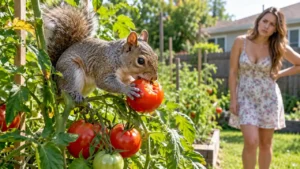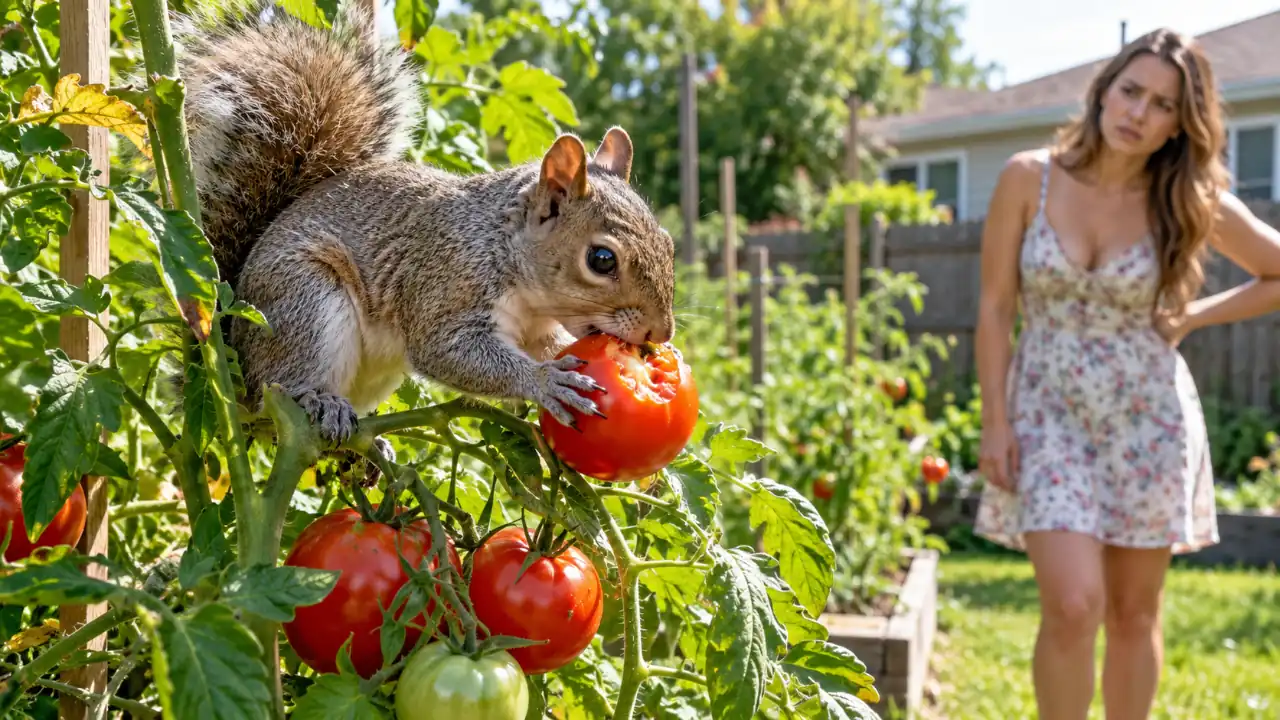
Wondering how to stop squirrels from eating tomatoes? After months of watering and caring for your plants, finding a half-eaten ripe tomato is frustrating. With more than 18 years around pest problems, I’ve learned that protecting the fruit works better than trying to scare squirrels away. Here are five practical fixes, three products worth considering, and a couple of tricks you can skip.
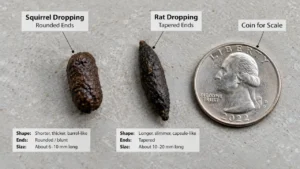
Also Read: Squirrel Poop vs Rat Poop: How to Tell in 10 Seconds
Quick Answer
The most reliable way to stop squirrels from eating tomatoes is to cover plants with secured garden netting or a fully enclosed wire cage. Harvest tomatoes as soon as they begin to change color, remove spilled birdseed and other food sources, and consider providing water away from the garden. Scent repellents may help in some yards, but physical barriers offer the most dependable protection.
Key Takeaways
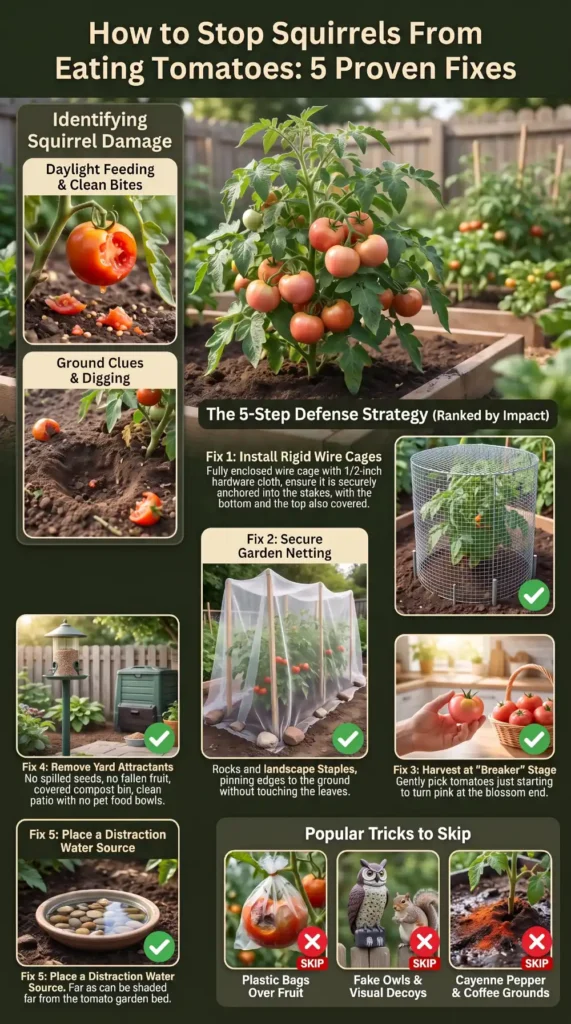
Why Are Squirrels Eating Your Tomatoes?
Squirrels eat tomatoes for both food and moisture. A ripe tomato offers soft flesh, seeds, and plenty of water, making it an easy target when fruit is available. In a dry summer, that moisture may be especially appealing, but thirst isn’t the only reason squirrels raid a garden.
Hot weather can make tomato damage more noticeable, particularly when other food and water sources are limited. Squirrels may also return to a bed they’ve learned is a reliable food source. If they keep finding ripe fruit, the habit can continue even when water is available elsewhere.
That’s why I wouldn’t rely on a water dish alone. A separate water source may be worth trying during hot, dry weather, but it won’t necessarily stop squirrels from eating tomatoes.
Squirrels can also learn where food is easy to find and return throughout the season. If you notice repeated damage, protect the fruit early rather than waiting for the problem to get worse.
Partly eaten tomatoes can be frustrating, especially when several fruits are damaged at once. But bite marks alone don’t confirm that squirrels are responsible. Check for other signs of activity before choosing a control method.
Why Tomato Covers Sometimes Fail
One detail that’s easy to overlook is the gap between the bottom of a cover and the soil. A frame can look secure from the front while leaving an opening at a corner or along one side. Before replacing the whole setup or buying another deterrent, inspect the edges, corners, and top of the enclosure. A loose panel or missed gap may be all that’s allowing squirrels to reach the fruit.
Signs Squirrels Are Damaging Your Tomato Plants
Before spending money on deterrents, try to confirm what’s damaging your tomatoes. Squirrels are one possibility, but birds, rats, and raccoons can also damage garden fruit. Look for a combination of clues rather than relying on one sign:
No single sign confirms that squirrels are responsible. Look for the combination of fresh bite marks, daytime activity, and repeated damage to ripening fruit. If you can, watch the garden briefly in the morning or late afternoon, or use a motion-activated camera to identify the visitor. Damage that appears overnight, especially alongside droppings or tracks, deserves a closer look before you assume squirrels are to blame.
Not sure whether the droppings are from squirrels or rats? Our guide to squirrel poop vs. rat poop can help you tell the difference. Identifying the animal first makes it easier to choose the right way to deal with the problem.
How to Stop Squirrels From Eating Tomatoes
These are the five fixes I’d start with in a real garden. If you want to keep squirrels away from tomato plants, focus first on protecting the fruit with a secure cover, then harvest tomatoes as they begin to change color and clean up nearby food sources. A fully enclosed wire cage or properly secured garden netting is the closest you’ll get to squirrel-proof tomato plants.
1. Cover Plants with Garden Netting
If I could only pick one fix, it would be a physical barrier. Squirrels learn to ignore smells, sounds, and decoys. They can’t ignore a wall.
Drape bird netting over your tomato cages or a simple frame, then pull the edges down to the ground and secure them. This is the step people skip. A squirrel will happily squeeze through a gap at the bottom that looks too small to you. Weigh the edges with rocks, bricks, or landscape pins so nothing flaps loose.
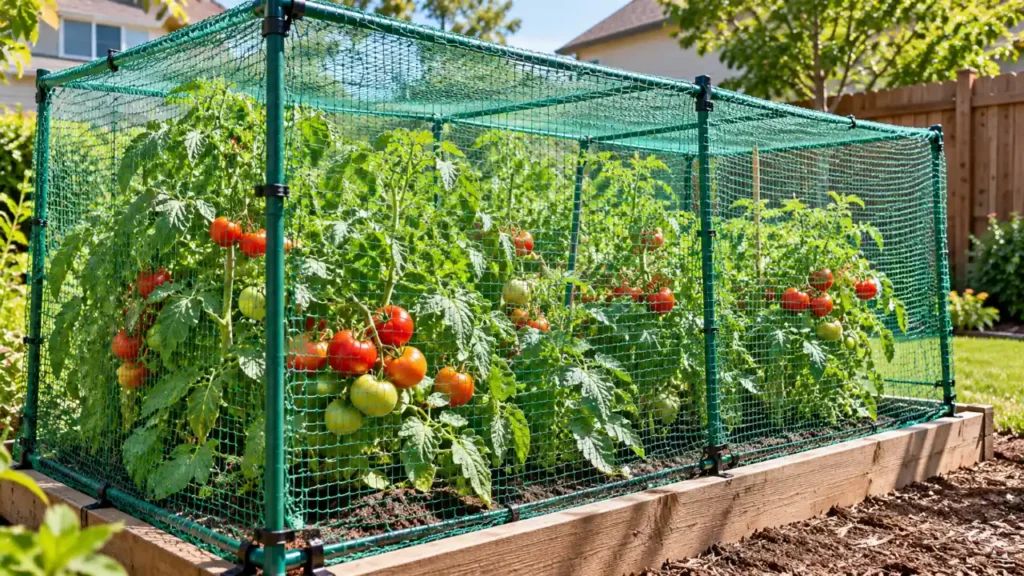
Choose sturdy garden netting with openings small enough to prevent squirrels from reaching through, and support it on a frame rather than laying it directly against the plants. Secure the edges and corners, and check the cover regularly for tears, loose sections, or trapped wildlife—especially after windy weather. A rigid frame with a closable access panel makes harvesting easier than a loose sheet draped over the plant. Keep the netting properly supported and inspect it often to reduce the risk of animals becoming entangled.
The downside is that netting is a little fiddly when you want to harvest. I just unclip one side, pick, and clip it back. It takes ten seconds, and it beats losing your crop.
2. Install Wire Cages Around Tomato Plants
Wire cages are the stronger version of netting. A sturdy cage with small openings holds the plant up and keeps squirrels from reaching the fruit. The key is the size of the holes. Those cheap cone cages from the big box store have gaps large enough for a squirrel to push an arm through, and that’s all it needs.
Look for sturdy welded wire or hardware cloth with openings small enough to keep squirrels from reaching through to the fruit. Openings around 1/2 inch are a practical starting point for a close-fitting enclosure, although the overall design matters as much as the mesh size. Chicken wire can help close large gaps in an existing cage, but thin, flexible mesh is easier to bend and may not provide the same protection as rigid hardware cloth.
Secure the bottom edge so squirrels can’t slip underneath, and use a hinged or removable panel for harvesting. If you’re building an enclosure for a raised bed, cover the top as well as the sides. Squirrels climb readily, so a cage with an open top isn’t dependable protection simply because its sides are tall.
Cages cost more than netting up front, but they last for years. For a small tomato patch, they’re my first pick.
3. Harvest Tomatoes Early
This is the cheapest fix on the list, and the one some gardeners hesitate to try. But harvesting at the right stage can help protect fruit before it turns fully red.
Tomatoes can finish ripening indoors once they reach the mature-green stage or begin showing their first color change, known as the breaker stage. Fruit picked too early, before it has matured enough to ripen normally, may never develop good color or flavor.
Check your plants daily during peak season. Harvest tomatoes as soon as they begin to blush, then leave them at room temperature out of direct sunlight until they ripen. This won’t protect every fruit if squirrels are willing to chew green tomatoes, but it removes the bright-red targets that often attract attention.
For cherry tomatoes, check the clusters frequently and pick individual fruits as they start changing color. That takes a little more effort, but it’s often easier than trying to protect every small tomato with a separate cover.
Some gardeners cut the whole truss with the stem still attached and let it ripen that way. That works well with cherry tomatoes, which squirrels seem to love.
4. Provide a Separate Water Source
A separate water source is worth trying during hot, dry weather, but treat it as a supporting measure rather than a guaranteed fix. Place a shallow, stable dish or birdbath away from the tomato bed, somewhere squirrels can reach without crossing the garden. Keep it filled with clean water and refresh it regularly.
An Ask Extension response discusses water availability as one possible factor in squirrel damage to tomatoes. That makes a separate water source a reasonable measure to try during dry weather, but it doesn’t establish thirst as the cause in every garden.
Place the dish away from the tomato bed, keep it clean, and don’t add food to attract squirrels. Even if they use the water, leave your netting or cage in place. The barrier—not the water dish—is what protects the fruit.
5. Remove Nearby Food Sources
Food availability can make a garden more attractive to squirrels. If your yard has spilled birdseed, fallen fruit, or accessible pet food, squirrels may have more reasons to keep visiting. Reducing those easy food sources can help, although it won’t guarantee they’ll leave your tomatoes alone.
Walk your yard and look for the usual suspects. Spilled birdseed under the feeder is the big one. Then check for an open compost pile, fallen fruit or nuts under trees, pet food left outside, and unsecured trash cans. Clean up what you can, switch to a squirrel-resistant feeder, and keep compost covered or in a closed bin.
If low branches touch a fence or roof, trimming them back may reduce some easy routes into the garden, although squirrels can still climb and jump. The goal isn’t to eliminate every squirrel from your yard. It’s to reduce easy food sources while keeping the tomatoes physically protected. Cleanup helps, but a secure enclosure remains the main defense.
Why This Combination Works
The five fixes don’t carry equal weight. Netting and enclosed cages physically block access to the fruit, so they’re the best place to start. Early harvesting reduces the number of ripe tomatoes available, while cleaning up spilled birdseed and other food sources helps make the yard less attractive.
Water provision and scent repellents are secondary measures. They may help in some circumstances, but neither guarantees that squirrels will stop visiting the garden.
If you’re dealing with repeated damage, start with a secure barrier, then add the low-cost changes you can maintain. That’s a more dependable plan than buying several deterrents and hoping one of them works.
The Popular Tricks That Don’t Work
A few ideas get shared constantly, and I’d save your time.
Fake owls are a common suggestion, but they aren’t dependable protection for a tomato garden. A stationary decoy may initially make some squirrels wary, but they can become accustomed to objects that pose no real threat. Moving the decoy occasionally may delay that process, but I’d still prioritize closing gaps in your netting or cage. A physical barrier protects the fruit instead of relying on a squirrel to stay frightened.
The plastic bag trick is another one I’d skip. Sliding a shopping bag over a cluster of tomatoes can restrict airflow and trap moisture, particularly in hot, humid weather. Depending on the bag, exposure, and how tightly it’s fitted, that can create conditions for overheating, condensation, and fruit deterioration. It also doesn’t provide a dependable squirrel-proof barrier. Use a supported, purpose-made garden cover or an enclosed cage instead.
Shiny pie tins and old CDs may startle squirrels briefly, but they often get used to them. Coffee grounds are another popular home remedy, but I wouldn’t rely on them to protect a tomato crop.
Squirrel Repellents: What to Know Before Buying
Some homeowners try scent-based repellents to discourage squirrels from visiting their tomato plants. These natural or plant-based products may help in certain situations, but results vary with weather, placement, and the availability of other food. Treat them as optional additions to your protection plan, not substitutes for physical barriers. Here are two products to consider, along with the limitations worth understanding before you buy. Check each product’s label before using it outdoors or near edible plants.
AUDQQM Squirrel Away Repellent
AUDQQM Squirrel Away Repellent uses ready-to-place scent pouches designed to discourage squirrels and chipmunks from digging, chewing, and disturbing outdoor spaces. You can position them near garden borders, potted plants, or other areas where you notice activity. The manufacturer claims each set of eight pouches covers approximately 120–150 square feet and lasts 60–90 days. Those figures are useful for planning placement, but actual results can vary with weather, location, and how attractive your garden remains to squirrels.
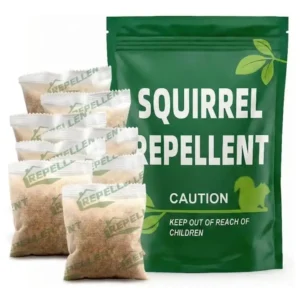
I’d consider these pouches if you want a low-maintenance deterrent to try alongside netting or a wire cage. There’s no spraying or mixing, and the pouches are easy to reposition as needed. Just don’t expect a scent to stop a determined squirrel from reaching ripe tomatoes. Check the product label for approved placement and precautions around children, pets, and edible plants before using it in your garden.
PestXDrops Moth Balls For Rodent Control
PestXDrops Moth Balls for Rodent Control are marketed as ready-to-use scented repellent balls containing eucalyptus, cinnamon, and peppermint oils. The manufacturer claims the scent lasts approximately 30–60 days, with replacement recommended when the smell fades. The pouches are intended for use in various areas, including sheds, garages, storage spaces, and other locations where pest activity occurs. However, the listing’s claims about effectiveness against squirrels and other animals shouldn’t be treated as a guarantee.
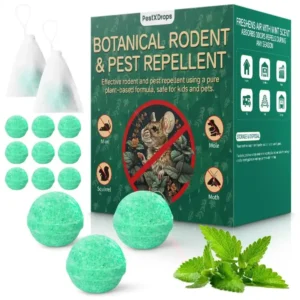
I’d consider this product only after checking its actual packaging and label. Despite the name, don’t assume these are harmless simply because the listing describes plant-based ingredients. Traditional pesticide mothballs are not intended for casual placement around vegetable gardens, and a product should only be used outdoors or near edible plants when its labeling specifically permits that use. If the label checks out, treat it as an optional deterrent—not a replacement for a secure tomato enclosure.
Metal Plant Cages for Outdoor Plants
If you’d rather block squirrels from reaching your plants than rely on scents, these metal wire plant cloches are the more practical option. Each cage measures 13.2 inches long, 13.2 inches wide, and 16.7 inches tall, with an openable top, connecting clips, and U-shaped ground stakes. The package includes two cages, along with connecting clips and ground stakes, so check the listing for the current package contents before ordering.
The rigid mesh allows sunlight and rain to reach the plant while creating a physical barrier against animals that might otherwise chew leaves or damage fruit. The manufacturer also describes the cages as reusable and designed to fold flat for storage.
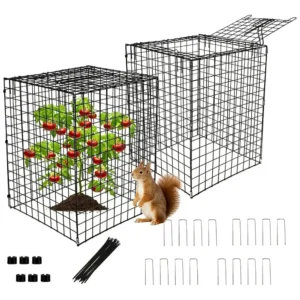
These cloches are worth considering for young tomato plants, compact varieties, or individual plants that fit comfortably inside the 13.2-inch-wide, 16.7-inch-tall enclosure. Before buying, measure your plant and allow room for growth—the cages are too small for many mature, sprawling tomato plants. Secure the stakes firmly, close the top after harvesting, and check that the mesh prevents squirrels from reaching through to the fruit. For larger tomato plants, a taller, wider enclosure made from hardware cloth is the better choice.
Also Read:
When to Call a Wildlife Control Professional
Most tomato problems can be solved with netting, cages, and a little patience. But sometimes the problem is bigger than the garden.
Call a licensed wildlife control professional if squirrels are digging up whole beds, chewing on wires, siding, or irrigation lines, or getting into your attic or walls. Scratching or running sounds overhead, chewed insulation, and squirrels going in and out of a roof vent all point to a nesting problem. That’s a different job from protecting tomatoes. It needs proper exclusion work, which means sealing entry points so animals can’t return, and it’s often best handled by someone trained.
Also call someone if you’ve tried several fixes over a full season and the damage keeps getting worse, or if you’re not sure whether you’re dealing with squirrels, rats, or something larger like raccoons.
Check that any company you hire is licensed and insured in your area, and ask how they handle entry points and removal before you agree to anything. For more help sorting out your options, browse our squirrel control articles.
Final Thoughts
If squirrels keep raiding your tomato plants, focus on protecting the fruit rather than trying to make the entire yard squirrel-free. The most dependable way to protect tomatoes from squirrels is to use secured garden netting or a fully enclosed wire cage. Harvest tomatoes as they begin to change color, clean up spilled birdseed and fallen fruit, and remove other easy food sources around the garden.
A separate water source or a labeled repellent may be worth trying as a supporting measure, but don’t expect either one to replace a barrier. If the damage continues, check for gaps in your enclosure and make sure squirrels can’t reach the fruit through the mesh or jump in from nearby structures.
You don’t need to buy every deterrent or overhaul your yard. Start with the measure that physically protects your crop, observe what happens, and adjust from there.