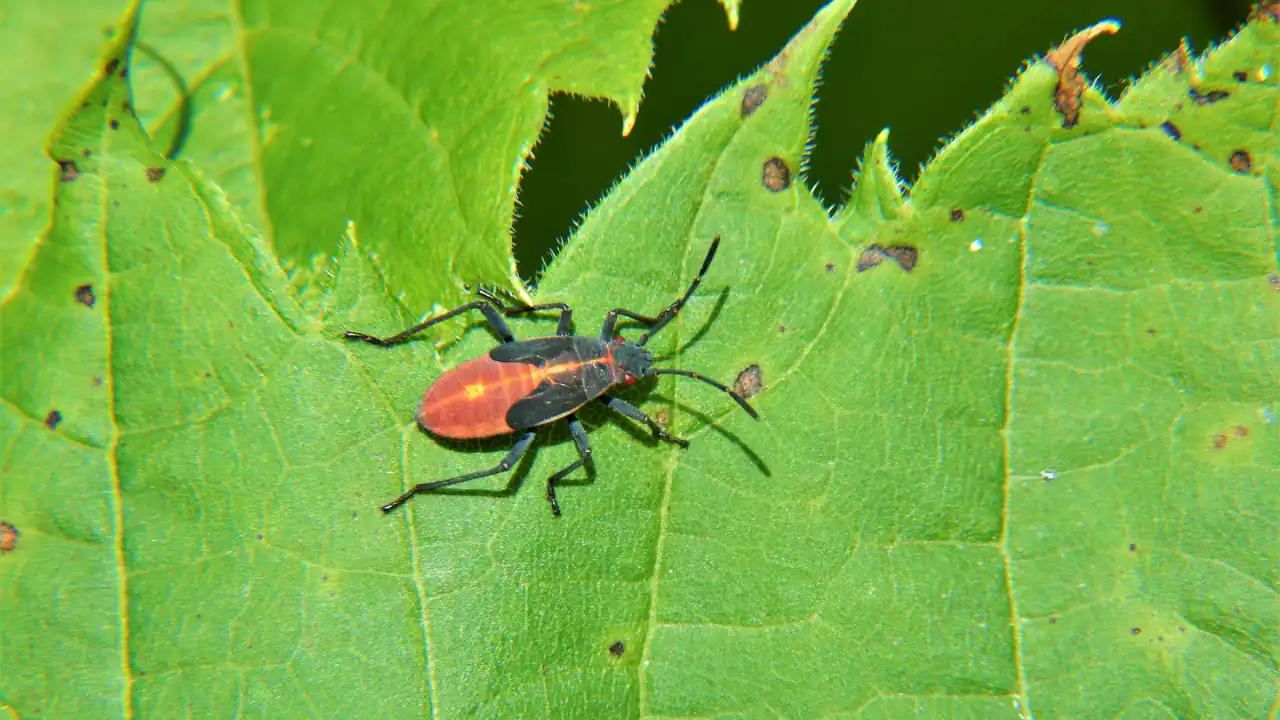
If you have boxelder bugs all over your porch, siding, window screens, or even inside your house, it is normal to wonder: Do boxelder bugs bite? They show up in large numbers, gather on sunny walls, and can leave behind odor or stains when crushed, which makes a lot of homeowners assume they are dangerous.
Here is the honest answer from the field: boxelder bugs are nuisance pests, not true biting pests. In real homes, the biggest complaints are usually the same — swarms on sunny exterior walls, bugs slipping indoors in fall, and stains on curtains or trim after someone crushes them. In this article, I’ll explain whether boxelder bugs bite, what a bite-like reaction may look like, whether pets are at risk, and how to keep them out of your home.
Quick Answer: Can Boxelder Bugs Bite Humans?
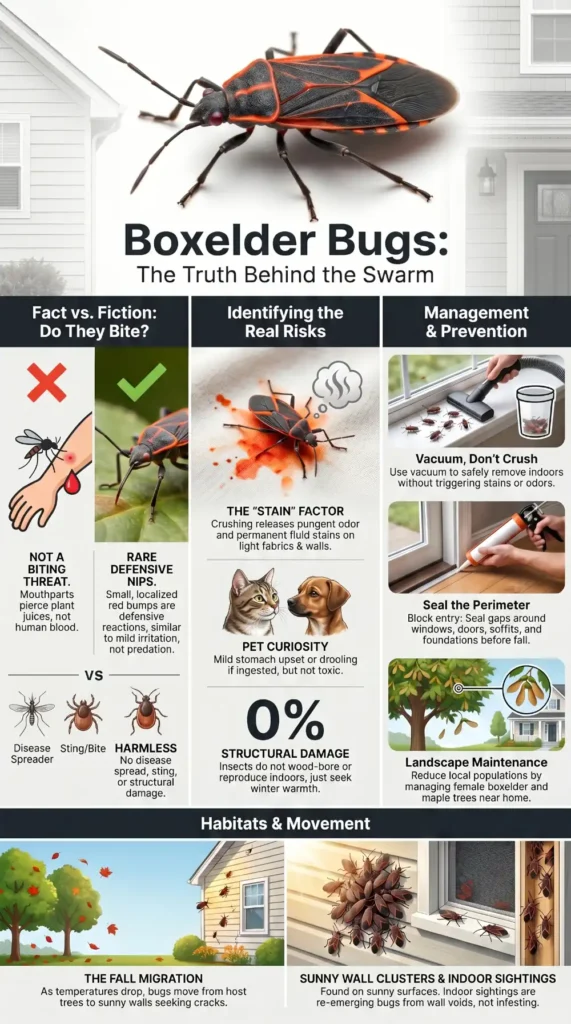
In normal situations, no. Boxelder bugs are not considered a true biting pest. Most university and extension sources say they do not bite humans or pets under normal conditions, though rare defensive reports exist. For homeowners, they are best treated as a nuisance insect, not a dangerous one.
Also Read: Plaster Bagworms in Bathroom: Why They Show Up and How to Get Rid of Them
Do Boxelder Bugs Bite?
Most of the time, no. Boxelder bugs are not considered a biting pest, and several university and extension sources say they do not bite humans or pets. According to the NPIC, they are generally not known to bite, though rare defensive biting reports do exist. That is why most people who think they were bitten by a boxelder bug are usually dealing with something else, or with a skin reaction that has another cause.
Boxelder bugs have piercing-and-sucking mouthparts because they feed on plant juices, not on people. They are “true bugs,” which means they are built differently from biting insects like mosquitoes or fleas. In homes, they are much more likely to crawl around windows, siding, and curtains than to feed on skin. That is why the phrase “boxelder bug bite” is usually a search term people use when they are trying to figure out what is crawling around their property, not because boxelder bugs are a common human biter.
There are rare defensive bite reports in the literature, but they are not the normal behavior of this insect. In real life, the common pattern is nuisance, not injury. If you have one crawling on you, the bigger problem is usually the odor it can release when crushed and the stain it can leave behind, especially on light-colored surfaces and fabrics.
Expert tip: if you find one boxelder bug on your skin, do not panic and assume it is biting you. Brush it off gently and check the larger picture. If you are seeing clusters on the sunny side of your home, you are probably dealing with an overwintering nuisance problem, not an active biting threat.
Are Boxelder Bugs Dangerous?
No, boxelder bugs are not considered dangerous to people, and they are not known to spread disease. They also are not known to harm pets, damage food, or cause structural damage inside homes. What they do cause is frustration. They gather in numbers, wander indoors through cracks, and can leave stains or odor when crushed. That is why homeowners often treat them as a serious nuisance even though they are not a serious health threat.
They are not poisonous, not venomous, and are not known to carry parasites that create a household health risk.
A home invasion of boxelder bugs can still be a real problem if the population is large. They often show up on sunny exterior surfaces, then move toward cracks, window frames, door frames, soffits, siding gaps, and attics when temperatures change.
On warm winter days, they can become active again and move around inside walls or living spaces, which makes people think the problem is getting worse than it is. That seasonal movement pattern is consistent with what the University of Minnesota Extension describes: they cluster on warm exterior surfaces and then look for protected places to overwinter.
In the field, that’s one of the most common homeowner misunderstandings. The infestation usually is not “growing” indoors — the bugs were already inside the wall voids or attic areas and are simply becoming active again when temperatures shift.
Expert tip: the danger is not the bug itself. The real risk is doing the wrong thing, like crushing them all over curtains, fabrics, or walls. That can leave stains and a strong odor. If you see a lot of them indoors, vacuum them up carefully and focus on sealing entry points instead of chasing each one by hand.
What Boxelder Bugs Do Not Do
Boxelder bugs do not damage the structure of your home, they do not reproduce indoors, and they are not known to spread disease. That matters because homeowners often assume a large swarm means a dangerous infestation. In reality, the problem is usually nuisance pressure and seasonal indoor movement, not property damage or a health threat.
What Do Boxelder Bug Bites Look Like?
If a boxelder bug ever did cause a defensive bite, there is no classic, instantly recognizable “boxelder bug bite” pattern that separates it from other insect reactions. If a boxelder bug bite ever did happen, there is no classic, instantly recognizable pattern that clearly separates it from other mild insect reactions. Most bite-like reactions people notice are small red bumps, mild swelling, itching, or localized redness. Those are general insect reaction symptoms, not something unique to boxelder bugs.
If a defensive bite did happen, the mark would usually be small and localized rather than a spreading rash. Some people describe it more like a tiny puncture point or a single irritated bump than a classic “bite pattern.” Since these bugs are not normally biting pests, a skin mark alone does not prove they were the cause.
This is where people get tripped up. A bump on the skin can be caused by any number of things, from another insect to irritation from scratching. If you were outside near a swarm of boxelder bugs and you notice a red itchy spot later, that does not automatically mean the bug bit you. The bug may have simply crawled across the skin, or the spot may be unrelated. Because boxelder bugs are usually harmless to humans, it is smarter to think in terms of “possible irritation” rather than assuming a true bite every time.
Expert tip: the key clue is context. If you are seeing boxelder bugs on sunny walls, porch rails, window screens, and around cracks in the home, the bigger issue is probably a seasonal infestation. If the skin mark is the main concern, treat it like a mild insect reaction and watch for changes. Do not spend too much time trying to identify the insect from the bump alone.
Boxelder Bug Bite Treatment
If you think a boxelder bug caused a mild skin reaction, boxelder bug bite treatment is usually simple and conservative, similar to basic care for a minor insect bite.
1. Clean the area
Wash the spot gently with soap and water to remove dirt and reduce the chance of irritation or secondary infection.
2. Apply a cool compress
Use a cold compress or ice wrapped in a cloth for 10 to 20 minutes to calm swelling and discomfort.
3. Elevate the area if needed
If the reaction is on an arm or leg, elevating it can help reduce swelling.
4. Use an over-the-counter antihistamine if needed
If itching is bothersome, an over-the-counter antihistamine may help when used as directed on the label.
5. Do not scratch
Scratching can worsen irritation and increase the risk of infection.
Safety note: Because boxelder bugs are not typical biting pests, a worsening skin reaction should make you consider other causes too — including a different insect, plant exposure, or an unrelated skin irritation.
Can They Harm Your Pets?
Boxelder bugs are not known to harm pets in normal circumstances. In normal household situations, they are not considered a meaningful pet risk and are not known to transmit disease in the home. The bigger issue for pets is usually curiosity. In some cases, the bigger problem is the bad taste or odor after a pet mouths the bug, which can briefly trigger drooling or mild stomach upset. A dog or cat may bat at one, mouth it, or swat it across the floor, but that is different from the bug being truly dangerous.
If your pet seems uncomfortable after chewing any insect, watch for drooling, vomiting, swelling, or unusual behavior and call your vet. That advice is just good common sense. But based on extension and university guidance, boxelder bugs themselves are not a normal pet hazard.
In most homes, the more realistic issue is mild stomach upset after a curious pet mouths or chews a few bugs, not a true toxic reaction from the insects themselves. If vomiting continues, drooling is excessive, or your pet seems lethargic, call your veterinarian. The goal is not to panic — it is simply to watch for symptoms that last longer than a brief nuisance reaction.
Expert tip: if you have a pet that likes to chase insects on windows or patios, the real win is reducing the bug count around the home. Fewer bugs on the siding means fewer on the floor, fewer mouthfuls of “something crunchy,” and less chance of your pet turning them into a game. Focus on prevention at the building edge, not just inside the room.
Where Can These Insects Be Found?
Boxelder bugs are strongly associated with boxelder trees, maple trees, and places where those trees produce seeds. They are also commonly found around ash trees and other seed-producing maples, especially in spring and summer when they are feeding outdoors before fall overwintering pressure begins.
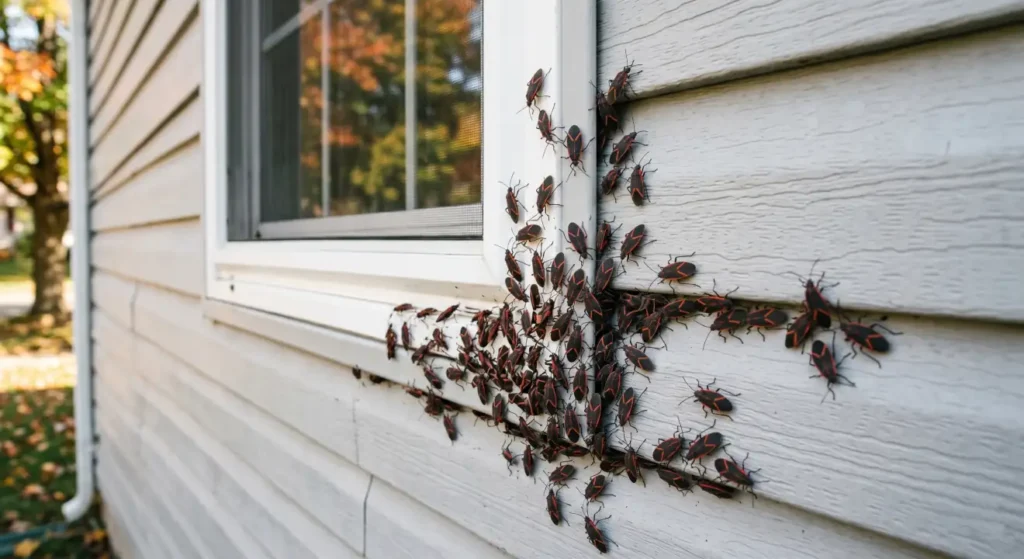
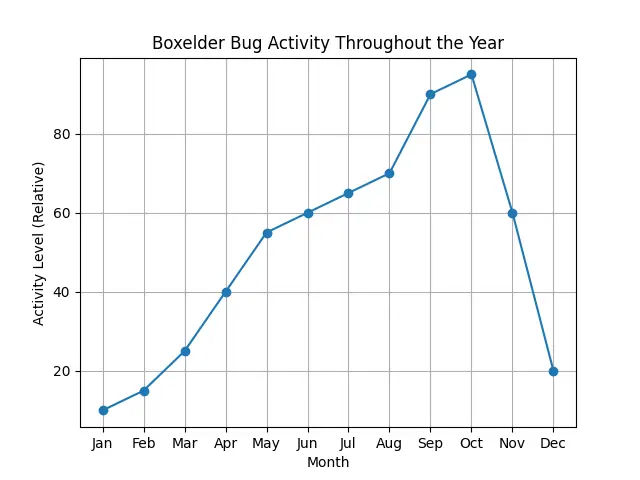
Outdoors, they often gather on the sunny sides of buildings, especially on porches, siding, window screens, door frames, and other warm surfaces. When temperatures begin to drop, they search for protected cracks and crevices so they can overwinter. That is why homeowners often notice them in fall, and again on warm winter days when the bugs become active.
Inside a home, the usual hiding spots are cracks around windows, doors, foundation gaps, attic spaces, wall voids, soffits, and other entry points where the bugs can squeeze in and settle down for the winter. They do not reproduce indoors, but they can remain trapped there for a long time and become active whenever the temperature changes. That makes it feel like the infestation is “coming back,” when in reality the insects were already inside.
In real homes, the first indoor sightings are often around sunny windows, upper-floor bedrooms, and light-colored walls where they stand out and homeowners notice them quickly.
If you have a female boxelder tree or another nearby host tree, the problem can be worse. Some extension guidance also notes that removing or reducing host trees near the home can help reduce bug habitat, especially when the trees are planted too close to windows, siding, or foundation lines.
How to Keep Boxelder Bugs Out of Your Home
The best control starts before the bugs get inside. Sealing cracks and entry points around the foundation, siding, windows, doors, pipes, and roofline is one of the strongest prevention steps. That simple step matters because boxelder bugs are famous for slipping into tiny openings to wait out colder weather. If they cannot get in, they cannot turn your walls into a winter shelter.
Yard cleanup helps too. Keep the area around the home tidy, reduce clutter, and pay attention to sunny walls where large numbers tend to cluster. If you have boxelder trees close to the home and they are part of the attraction, consider whether they should stay where they are. Extension guidance shows that reducing nearby host trees can reduce pressure around the house.
Also Read: How To Get Rid of Centipedes in Your House
Inside, vacuuming is safer than crushing. That keeps stains and odor to a minimum. It also helps remove the insects quickly when they do get in. You are not trying to “fight” each bug one by one. You are trying to make the home less attractive and less accessible. That is how you win this problem over time.
What usually fails: Spraying random indoor bugs without sealing entry points. Homeowners often waste time and money treating visible stragglers while the real problem is gaps around windows, soffits, siding transitions, and roof penetrations.
When to Call Pest Control
Conclusion
So, do boxelder bugs bite? In normal situations, no. They are mainly nuisance pests that cluster on sunny walls, slip into cracks, and try to overwinter inside buildings. Reliable extension and pest information sources say they do not bite humans or pets in the usual sense, and they do not sting or spread disease. Rare defensive biting reports exist, but they are not the standard behavior homeowners should expect.
If you think you had a mild skin reaction, treat it conservatively: clean the area, cool it, elevate it if needed, consider an over-the-counter antihistamine if appropriate, and do not scratch. If the reaction looks severe or starts to worsen, get medical help. And if the real issue is the bug problem itself, focus on sealing entry points, reducing host trees near the house, and vacuuming the insects instead of crushing them. That is usually the smartest long-term fix.