
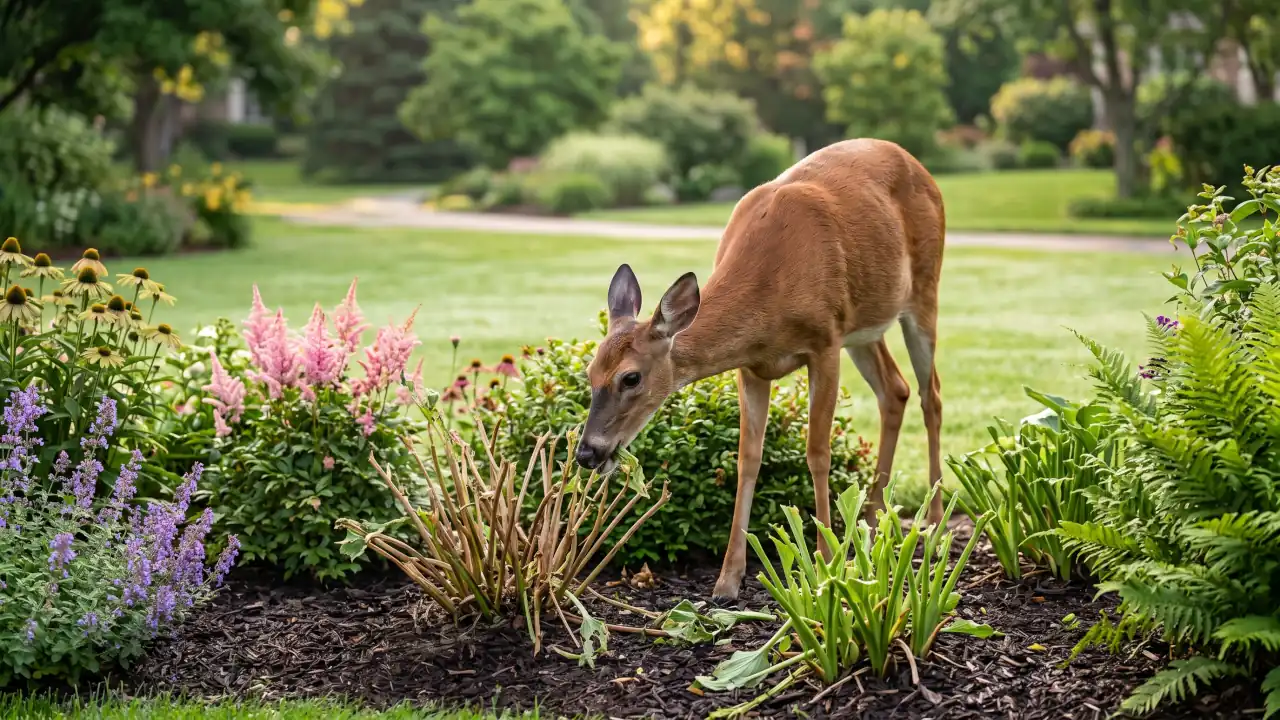
You spend weeks getting your garden just right, and then one morning you walk outside and half your hostas are stripped down to stubs. Sound familiar? After years of dealing with wildlife complaints from homeowners, I can tell you deer browsing damage is one of the most frustrating problems a gardener can deal with because deer are patient, they’re smart, and they’ll test your defenses until they find a gap.
Once deer start browsing on your plants, they’ll often keep returning until something convinces them the area isn’t worth the risk. The good news is you don’t need a fortress to stop them. You just need the right combination of tactics. Let’s get into what actually works.
Also Read: Spadepestcontrol blog
How to Keep Deer from Eating Plants
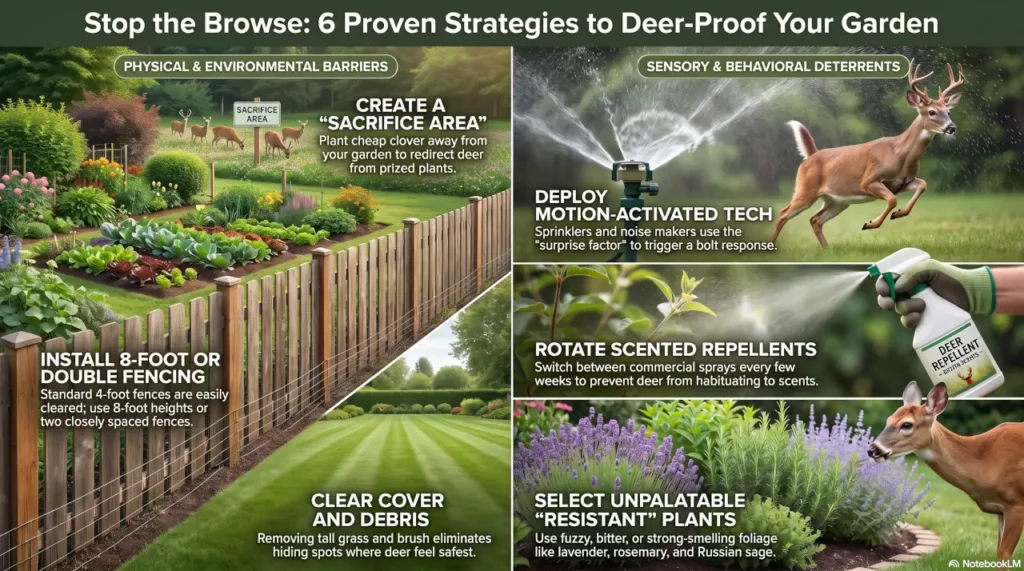
The best way to keep deer from eating plants is to combine several deterrents instead of relying on just one. The nine methods below—including tall fencing, deer-resistant plants, repellents, motion-activated sprinklers, and good garden maintenance—work together to make your property much less appealing to deer.
Why Deer Keep Coming Back to Your Yard
Before we get into the fixes, it helps to understand what you’re up against. Deer aren’t randomly wandering into your yard. They’re following food, and once they find a reliable source, they’ll remember it and keep coming back, often at the same time each evening. A single deer can eat several pounds of vegetation a day, and during late fall through early spring, when natural food is scarce, they get a lot less picky about what they’ll chew on.
Deer are also creatures of habit. Like many wild animals, they tend to follow the same travel routes around residential properties once they find food. If you regularly deal with multiple types of wildlife, many of the same prevention principles also apply when trying to keep coyotes away from your property.
Once they identify a reliable food source, they often follow the same travel routes and feeding schedules until something makes the area feel unsafe. According to the Penn State Extension, deer quickly become conditioned to dependable food sources, which is why early prevention is much easier than breaking an established feeding pattern.
That’s the main reason a plant that was “deer resistant” for years can suddenly get hammered during a rough winter. Hunger changes their behavior, and no method is completely bulletproof once a deer is desperate enough.
That’s exactly why the smartest approach isn’t picking one trick and hoping it holds. It’s layering several of these methods together so that even if deer push through one line of defense, they run into another.
9 Ways to Keep Deer from Eating Plants
Now that you know why deer keep coming back, let’s look at the methods that consistently work. The best results come from combining several of these strategies rather than relying on just one.
1. Put Up a Tall Fence
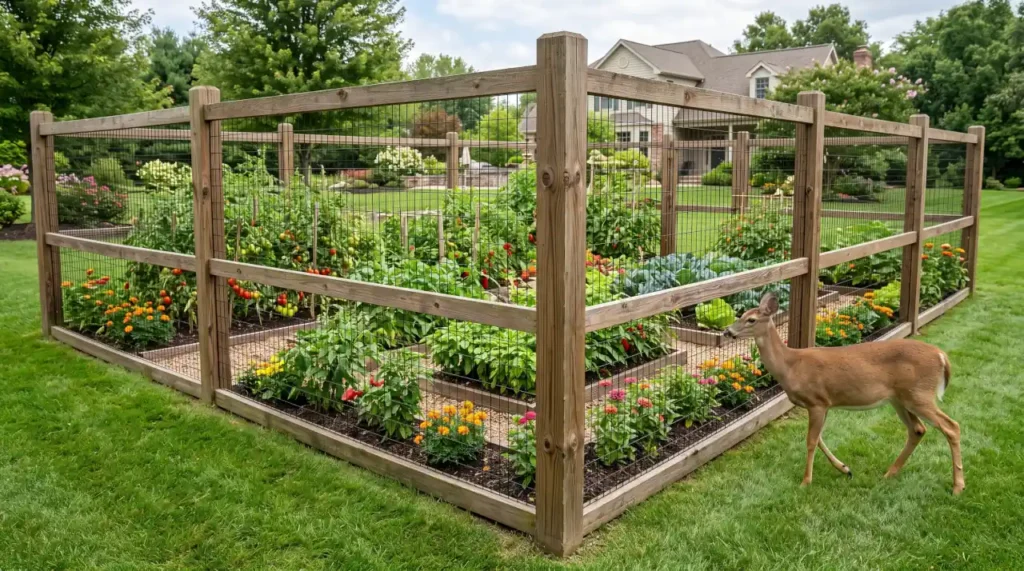
If you want the closest thing to a guarantee, fencing is it. Deer are surprisingly athletic. A healthy adult can clear 6 feet without much effort and will push for 8 feet if there’s something worth eating on the other side. That means a standard 4-foot garden fence is basically a suggestion to them, not a barrier. For real protection, you’re looking at a fence height of 8 feet minimum.
If an 8-foot fence isn’t realistic for your property or your budget, there’s a clever workaround. Deer aren’t great at judging depth, so two shorter fences spaced roughly 4 to 5 feet apart will often stop them cold, even if neither fence alone is very tall. They don’t like jumping into a space they can’t clearly see the other side of, so the double-fence trick messes with their depth perception in a way a single fence can’t.
A few small additions make any fence work harder. Angling the top section outward, away from the garden, makes the jump feel riskier to a deer. Burying the bottom few inches of fencing or adding a mesh skirt along the base stops deer that try to muscle their way under rather than over. And if you’ve got a particularly stubborn local herd, running a strand of electric tape a few feet in front of your main fence adds one more layer they have to think about before committing to a jump.
2. Use Plants Deer Don’t Like
Fencing everything isn’t always practical, especially for larger yards or open landscaping. This is where smart plant selection earns its keep. Deer rely heavily on smell and texture to decide what’s worth eating, so plants with strong scents, fuzzy leaves, or bitter oils tend to get skipped in favor of easier options nearby.

Lavender, rosemary, catmint, Russian sage, yarrow, and daffodils are all solid choices that deer generally leave alone, and they double as attractive, low-maintenance additions to an ornamental landscape. Interestingly, several of these also appear on our list of wasp repellent plants, making them a smart choice if you’re looking to discourage multiple backyard pests with the same landscape design. Planting a border of these around the perimeter of your garden acts almost like a natural fence, since deer often browse the edges first before deciding whether to go further in.
One thing worth being upfront about: no plant is truly deer-proof. Even plants that are widely considered deer resistant can still get eaten when deer populations are high or natural food is scarce. Treat deer-resistant plants as one layer of your strategy, not a standalone fix.
3. Spray Commercial Deer Repellents
Store-bought repellents are the fastest way to get protection up and running, and there’s a reason they’re so widely used. Most work by making your plants smell or taste unpleasant using ingredients like putrescent egg solids, garlic, dried blood, or capsaicin. Brands like Deer Out, Liquid Fence, and Plantskydd are common choices, and the better formulations can significantly reduce deer browsing when they’re applied correctly and reapplied as directed.
A couple of things make repellents work better in practice. First, reapply after heavy rain or once new growth appears, since fresh leaves haven’t been coated yet. Second, rotate between two or three different repellents every few weeks. Deer can get used to a consistent smell over time the same way you’d stop noticing a candle burning in your own house, so switching things up keeps them on edge.
I also recommend starting repellent applications before deer begin browsing regularly. Once deer learn your garden is a dependable food source, they’re usually much harder to discourage.
4. Make Your Own Deer Repellent
If you’d rather not keep buying bottles, a homemade spray works nearly as well for a fraction of the cost. One of the most consistently effective homemade options is a simple egg-based spray. A basic version is a few whole eggs blended thoroughly, strained, and mixed into about a gallon of water before being sprayed directly onto leaves until they’re visibly coated.
You can adjust the formula with garlic powder, cayenne pepper, or a splash of hot sauce to add an extra layer of “no thank you” for deer. Just know that homemade sprays wash off faster than commercial products and typically need reapplying every couple of weeks, or sooner after a downpour. It’s a bit more upkeep, but it’s cheap, it’s easy to mix in bulk, and it doesn’t involve anything toxic to your plants or your pets.
If you’re trying to reduce deer damage without relying heavily on chemicals, you’ll also find these approaches fit well with other eco-friendly pest control strategies around the home.
5. Try Smelly or Strange Items
This one sounds a little unconventional, but it’s stuck around for a reason: deer are naturally cautious animals, and anything that smells off or feels out of place makes them hesitate. Bar soap hung from string near vulnerable plants, mesh bags stuffed with human hair, or dryer sheets clipped to stakes all introduce smells that deer don’t associate with a safe feeding spot.
While homeowners often report mixed success with soap, hair, and dryer sheets, these deterrents tend to work best as temporary hesitation tactics rather than long-term solutions because deer usually become accustomed to stationary objects over time.
Reflective and moving objects work on a similar principle. Old CDs, strips of foil, or pinwheels catch light and move unpredictably, which unsettles deer more than you’d expect. The catch is that these tricks lose their power fast if you leave them in one place too long. Deer figure out pretty quickly that a stationary object isn’t actually dangerous. Moving these items to new spots every week or so keeps deer from getting comfortable enough to ignore them.
6. Use Motion-Activated Tools
For a more hands-off approach, motion-activated tools do the work without you having to remember to reapply anything. Motion-triggered sprinklers are one of the most effective options here. They sit quietly until a deer walks into range, then fire off a sudden burst of water that sends most animals bolting.
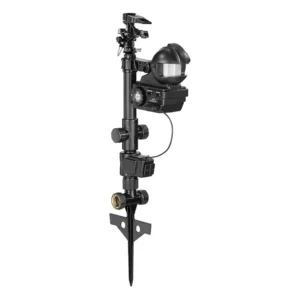
A quality motion-activated sprinkler is most effective when you position it where deer typically enter your yard rather than directly beside the plants you’re trying to protect.
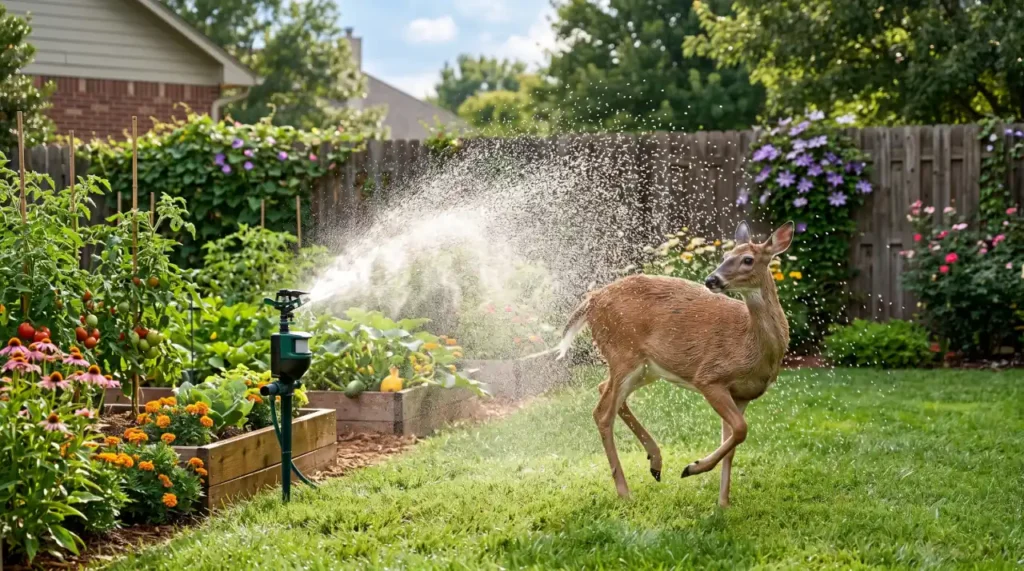
It doesn’t hurt them, but the surprise factor is usually enough to make them think twice about coming back to that spot.
In my experience, sprinklers work especially well on deer that are just beginning to visit a property. Once deer have been feeding comfortably in the same yard for weeks or months, combining sprinklers with fencing or repellents produces much better results than relying on the sprinkler alone.
7. Clean Up Around the Garden
This step gets overlooked constantly, but it matters more than people think. Deer feel safest approaching areas that offer cover nearby, whether that’s overgrown shrubs, tall grass, or brush piles they can retreat into if startled. A cluttered yard essentially rolls out the welcome mat. Trimming vegetation around the garden also improves visibility, making deer feel more exposed to predators and less comfortable lingering to feed.
Keeping grass trimmed, clearing fallen branches, and picking up dropped fruit or vegetables removes both the hiding spots and the easy snacks that draw deer in close enough to notice your garden in the first place. Some gardeners also set up a small “sacrifice area” farther from the house, planted with cheap, deer-favorite plants like clover, to give deer an easy meal that isn’t your prized tomatoes. It won’t solve the problem entirely, but it can redirect a good chunk of the damage away from what actually matters to you.
8. Try Electric or Wireless Fencing
If a full 8-foot fence isn’t in the budget, electric fencing offers a middle ground that trains deer to avoid your yard over time. A mild shock isn’t dangerous to the animal, but it’s memorable enough that most deer won’t test the same spot twice. You can run a single strand around your garden’s perimeter or pair it with a shorter physical fence for extra reinforcement.
Wireless scent-based systems are a newer option worth mentioning too. These use posts baited with an attractive scent, so when a deer leans in for a sniff, it gets a small static correction right on the nose, which tends to be a fast and effective lesson. Whichever version you go with, check the system regularly. A fence that’s lost power or a battery that’s died defeats the whole purpose, and deer notice fast when the “danger” disappears.
9. Use Scare Tactics
Scare tactics work on the same psychology as the smelly-item trick: deer avoid anything that feels unpredictable or risky. Motion-activated noise makers, fake owls, reflective tape, and even a radio set to talk radio on a timer can all convince deer that your yard isn’t worth the risk.
Also Read: Do Coffee Grounds Keep Deer Away? What Really Works
The catch, again, is consistency kills effectiveness. Deer are quick learners, and a fake owl that never moves becomes background scenery within a couple of weeks. Rotate positions, swap out which scare tactic is active, and combine this with at least one or two other methods on this list. Used alone, scare tactics tend to buy you a few weeks of peace at best. Used alongside fencing or repellents, they become a genuinely useful part of a bigger strategy.
Final Thoughts
After years of seeing deer problems on residential properties, one pattern shows up again and again: homeowners who combine multiple deterrents consistently have better long-term success than those relying on a single solution. Deer adapt quickly, but every additional obstacle forces them to spend more time, more energy, and accept more risk. Eventually, many deer will move on to an easier food source.
Start with whatever fits your property, your landscape, and your budget, whether that’s a repellent spray this weekend or a fencing project next month, and build from there. Deer pressure changes with the seasons, so don’t be surprised if you need to adjust your approach come late fall when natural food gets scarce and deer get bolder. A little consistency goes a long way here.