If you’ve been pulling weeds or checking on your roses and felt a tiny pinch, then spotted a cluster of little green bugs nearby, you’re probably wondering if an aphid just bit you. It’s a fair question, especially if you’ve got a bigger infestation going on and you’re already on edge about what’s crawling around your plants. And if you’ve been searching “do aphids bite,” you’re probably looking for a simple answer: should you actually be worried about that little green bug on your arm?
Also Read: How To Get Rid of Carpet Beetles Before They Ruin Your Rugs
Quick Answer
The short answer is that aphids are plant-feeding insects and do not normally bite people. Their needle-like mouthparts are designed to probe plants for sap, although some aphids have been reported to pierce human skin accidentally. When that happens, the irritation is generally minor. Here’s what you need to know—and what you don’t need to worry about.
Do Aphids Bite? (Here’s The Real Answer)
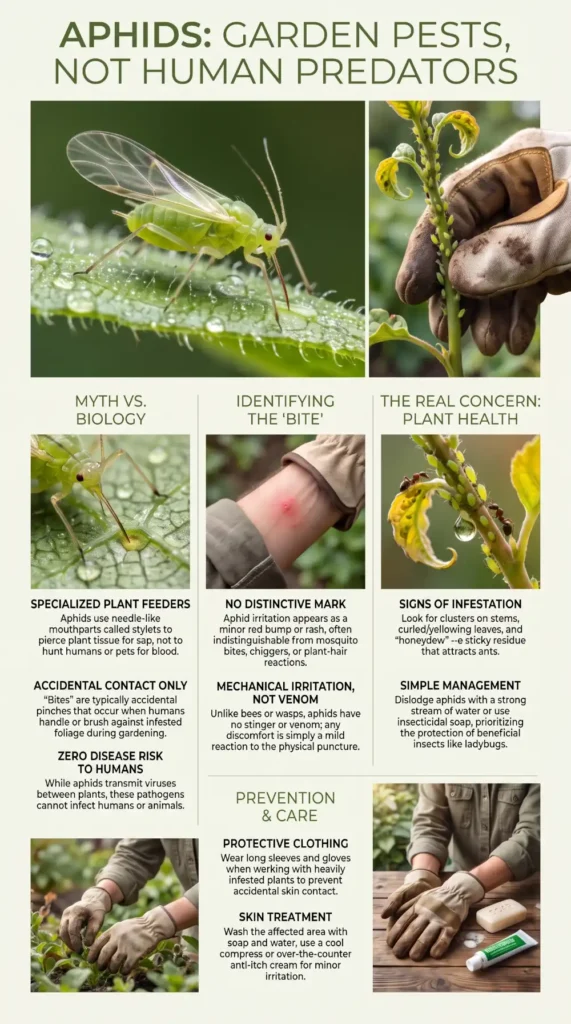
Aphids don’t bite in the same way mosquitoes, fleas, or other insects with biting mouthparts do. Instead, they have a specialized, needle-like mouthpart called a stylet that they use to pierce plant tissue and feed on plant fluids.
Aphids use these specialized mouthparts to probe plant tissue and feed on plant fluids. University of Minnesota Extension explains that aphids feed on plant sap using their specialized piercing-sucking mouthparts. Their normal food source is plant fluid, not blood. They’re not seeking people out as a food source.
If an aphid ends up on your skin, it is much more likely to be accidental contact while you’re handling or brushing against an infested plant. An aphid may crawl across your hand or arm while searching for a suitable plant surface, but that doesn’t mean it is deliberately trying to feed on you. Human skin is not an aphid’s normal food source.
I’ve been doing pest control for close to two decades now, and here’s the thing I tell homeowners every single time this comes up: “An aphid on your skin isn’t hunting you. It most likely got there accidentally while you were working around an infested plant.” That one sentence tends to put people at ease more than anything else I can say, because it reframes what’s actually happening. You’re not dealing with a bug that wants a piece of you. You’re dealing with a plant pest that wandered somewhere it doesn’t belong.
Do Certain Aphid Species Bite People?
Aphids are a large and varied group of insects, and most species are specialized plant feeders. Homeowners may encounter green peach aphids, potato aphids, pea aphids, melon aphids, and many other species depending on the plants and region.
Reports of aphids piercing human skin are unusual, and identifying the exact species from a skin mark alone isn’t realistic. Unless you actually collected or photographed the insect, there’s no reliable way to determine that an irritated spot came from a particular aphid species.
One unusual example is the gall-forming aphid Ceratovacuna styracicola, which is associated with snowbell trees in Taiwan and has been reported in connection with human skin piercing. It’s a highly localized example, though, and isn’t something most North American gardeners will encounter.
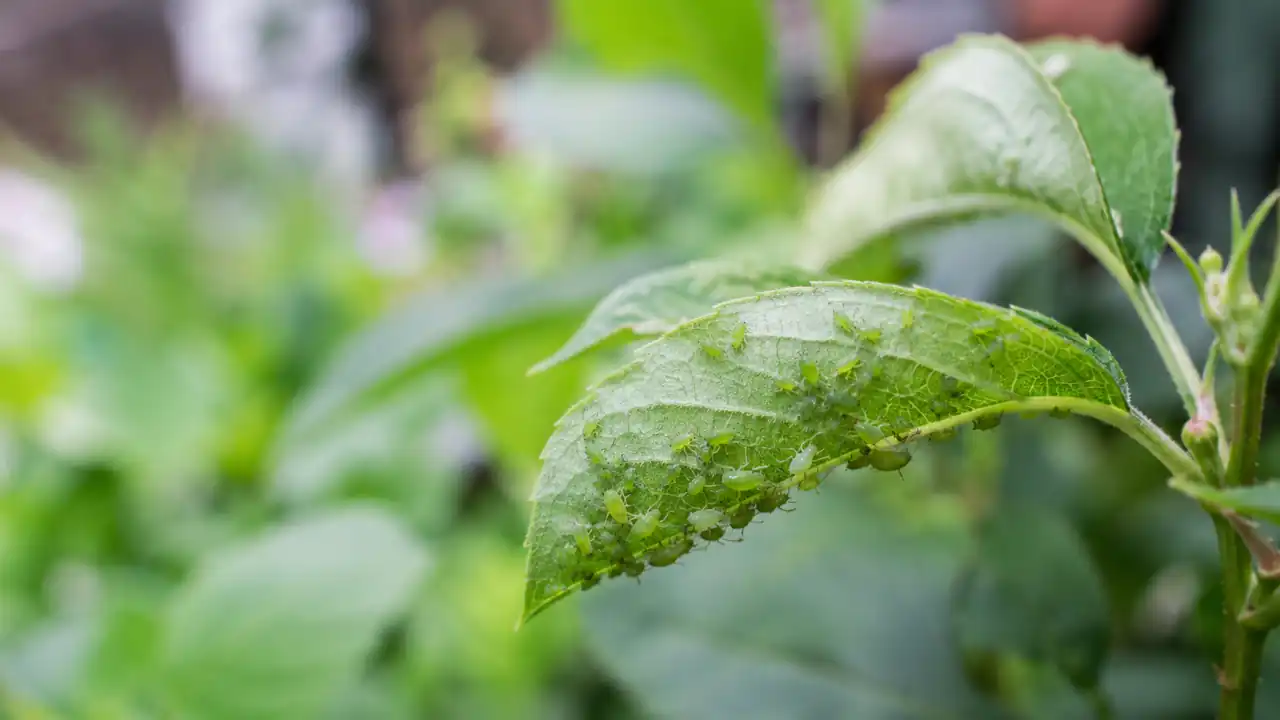
For homeowners, the more useful question is usually whether the insect is causing a problem on the plant. Look for clusters of small insects on tender stems and the undersides of leaves, along with curling leaves, sticky honeydew, or increased ant activity.
Signs Of an Aphid Bite
There isn’t a reliable skin pattern that lets you identify an aphid as the culprit. In other words, there is no distinctive aphid-bite mark that you can look at and identify with confidence. A red bump after gardening is evidence of a skin reaction, not proof that an aphid caused it. If an aphid does puncture skin, the area may develop a small red spot, bump, localized irritation, or mild rash, but those signs overlap with many other insect bites and skin reactions.
If an aphid does make contact with skin, any discomfort is generally expected to be minor rather than the sharp pain associated with a sting.
If a skin reaction occurs, it may be temporary and localized, but the timing and severity can vary. A small red or irritated area can have many possible causes, so the appearance alone isn’t enough to identify an aphid. A mild skin reaction may fade on its own, but the timing and severity can vary. The appearance of the mark alone isn’t enough to confirm that an aphid caused it. There’s no stinger involved, so you won’t see the kind of swelling you’d get from a bee or wasp, and there’s no venom being injected, so you’re not looking at anything systemic.
One thing that trips people up is that aphid marks look a lot like other minor bug bites. If you’ve been in the yard, you could just as easily be dealing with a chigger, a mosquito, or even a mild allergic reaction from brushing against a plant. Unless you actually saw the aphid on your skin, it’s genuinely hard to say for certain that’s what caused the mark. My honest advice after years of fielding these questions is not to lose sleep over identifying the exact culprit. Treat the symptom, and if the reaction is mild and improving on its own, it’s generally less concerning.
Are Aphid Bites Harmful to Humans?
For most people, an accidental encounter with an aphid is not a significant health concern. Aphids are plant-feeding insects, and although they can transmit many viruses between plants, those plant pathogens are not known to infect humans.
Aphids are important vectors of plant diseases, but their role in spreading plant viruses is a concern for crops and gardens rather than a typical human health concern. An ordinary encounter with an aphid is therefore not a reason to worry about catching a plant disease.
Aphids are not venomous stinging insects, and an accidental skin piercing is generally limited to localized irritation when it occurs. If an aphid does irritate human skin, the reaction could simply be related to mechanical irritation from the mouthpart. It’s better not to assume that a particular skin reaction was caused by aphid saliva, especially when the exact cause of the mark is uncertain.
If you have a minor irritated spot after gardening, wash the area with soap and water and avoid scratching it. A cool compress can help with temporary irritation or swelling. If you normally use an over-the-counter anti-itch product safely, follow the product label directions. Seek medical care if the reaction becomes severe, rapidly worsens, involves significant swelling, causes trouble breathing, or produces other concerning symptoms.
Will They Bite Other Animals?
This question comes up almost as often as the human version, especially from people with dogs or cats that spend time in the garden. The practical answer is similar: aphids are plant feeders, not animals that seek out pets as a food source. Aphids aren’t interested in animals as a food source, and there’s nothing in their biology that draws them toward pets. If your dog is lying in the grass near an aphid-covered rose bush, the aphids aren’t going to swarm over for a taste.
If your pet is scratching after spending time outdoors, aphids would be an unlikely explanation. Fleas, mites, ticks, environmental allergies, and contact with irritating plants are generally more useful possibilities to consider. If the scratching is persistent or your pet develops redness, hair loss, sores, or other skin problems, a veterinarian can help determine the cause.
Why Are Aphids on Your Skin in the First Place?
Aphids end up on people’s skin primarily through accidental contact with infested plants. When you’re pruning, weeding, harvesting, or brushing against foliage, aphids can easily transfer from leaves and stems onto your clothing or skin. They may also crawl around after being disturbed. That doesn’t mean they’re attracted to humans or using people as a food source.
This is also why aphid contact tends to happen most during active gardening work. If you’re weeding, pruning, or just brushing past heavily infested plants, you’re far more likely to have one land on you or get pressed against your skin than if you’re simply standing near a plant from a few feet away.
How to Avoid Aphids Getting on You
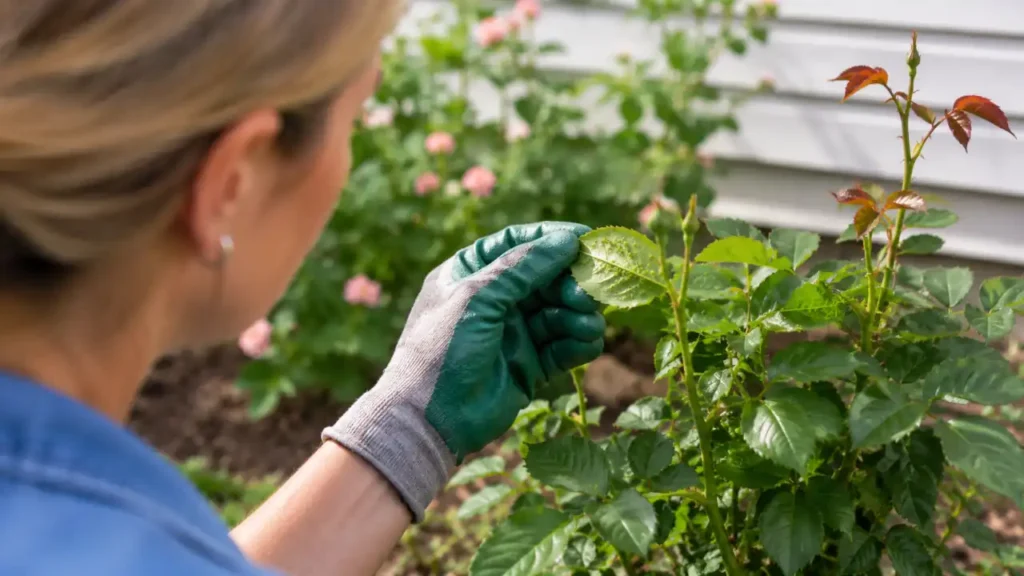
If aphids are crawling onto you while you’re gardening, the simplest solution is to reduce direct contact with infested foliage. Wear gardening gloves and long sleeves when working around heavily infested plants, avoid brushing against affected leaves, and wash your hands and arms after gardening. There’s generally no reason to use an insect repellent specifically for aphids; reducing direct contact with infested foliage is the more practical approach.
When An Aphid Bite Signals a Bigger Problem
There are really two separate things to treat here: the skin irritation, if you have one, and the aphids on the plant. The skin usually needs little more than basic care; the plant infestation is where your attention is better spent.
Aphid populations can increase rapidly under favorable conditions, particularly during periods when wingless females are reproducing without mating. As numbers build, you’ll usually start seeing obvious signs on the plant, such as clusters of aphids, curled leaves, honeydew, or increased ant activity.
Look for curling or yellowing leaves, a sticky residue called honeydew coating your plants or the ground beneath them, and small white or pale skins scattered around, which are shed exoskeletons left behind as aphids molt. Ants showing up in unusually high numbers on a particular plant is another giveaway, since ants are drawn to the honeydew aphids leave behind and will sometimes even protect aphid colonies from natural predators in exchange for the sugary reward.
If you’re seeing these signs, deal with the aphid infestation rather than focusing on the occasional skin irritation. For a manageable garden infestation, a strong stream of water can dislodge aphids from plants and may need to be repeated. Insecticidal soap can also be useful when applied according to the product label and when the plant is known to tolerate it. Avoid treating during conditions that can increase plant injury, and remember that broad-spectrum insecticides can also kill beneficial insects such as lady beetles, lacewings, and pollinators.
Also, don’t assume every aphid colony needs to be eliminated immediately. Small populations are often kept in check by predators and may cause little meaningful damage, particularly on established plants. Look at the amount of plant damage and whether the population is continuing to build before reaching for stronger treatment.
For persistent plant problems, your local university extension service or a qualified horticultural professional can help identify the aphid species and recommend an appropriate treatment for the specific plant.
Also Read: How To Keep Bats Away & Deter Them: 8 Proven Tricks
What I Would Worry About Instead
After years of dealing with pest questions, I would put an aphid on someone’s arm very low on the list of concerns. The plant damage is the real issue. If you are seeing dozens or hundreds of aphids, curling new growth, honeydew, or ants repeatedly tending the same plant, that’s when I’d spend my time looking at the garden rather than the skin mark.
In other words, don’t turn a minor skin irritation into a major pest emergency. Identify what is happening on the plant first. That’s usually where the useful answer is.
Final Thoughts
Aphids don’t normally feed on people, and accidental contact with one is generally not a significant health concern. If an aphid does irritate your skin, the resulting mark is difficult to distinguish from other minor outdoor skin reactions. The important point is that an aphid encounter is not a reason to panic. The bigger takeaway is that if aphids are getting onto your skin while you’re gardening, it’s worth checking the plants you’ve been working around for a larger population.
Deal with the infestation, keep an eye on your plants for the telltale signs, and you’ll rarely have to think about the occasional pinch again. If the problem is persistent or the plant is valuable and declining despite reasonable treatment, get help identifying the aphid and the underlying plant problem. A local university extension service, master gardener program, or qualified horticultural professional can often tell you whether treatment is actually necessary and which approach is least likely to harm the plant or beneficial insects.