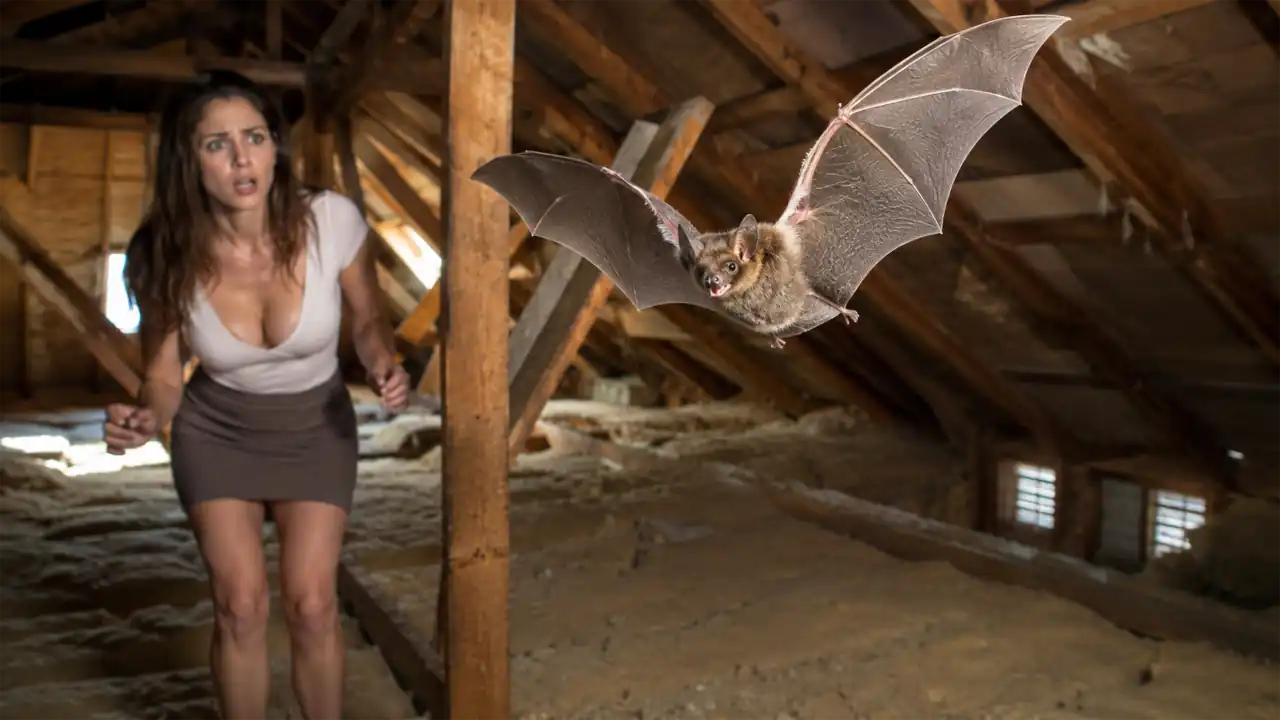
If you’ve ever stepped outside at dusk and watched a bat swoop past your porch light, you know that unsettled feeling. One bat hunting insects over your yard is usually nothing to worry about, but a colony roosting in your attic or soffits is a different story. If you’re wondering how to keep bats away, the answer isn’t one magic repellent. After spending close to two decades crawling through attics and standing on ladders staring into eaves, I’ve learned that a handful of practical tactics can make a real difference—and plenty of popular bat deterrents don’t. Let’s look at what actually moves the needle.
Also Read: Do Aphids Bite? Signs, Risks & Treatment Explained
Quick Answer
The best way to keep bats away is to make your home and the areas around it less attractive while blocking access to potential roosts. The eight tricks below include strong scents, netting, bat houses, foil, reduced insect activity, lighting, noise, and repellents. If bats are already inside, however, proper exclusion is the key to keeping them out.
How To Keep Bats Away From Your House
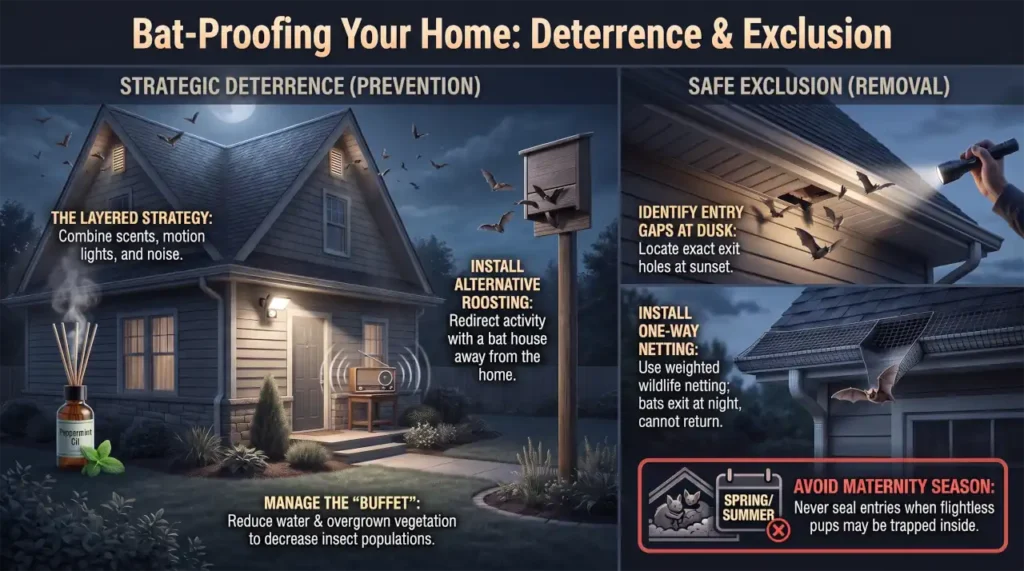
Before I get into individual tricks, I want to set expectations. Bats are smart, resourceful, and incredibly good at finding the one gap in your defenses you forgot about. Deterrents work best as a layered strategy, not a single fix. Combine two or three of these methods and you’ll have a much better shot at keeping bats from settling into the parts of your property where you don’t want them.
I also want to be upfront about something most articles on this topic gloss over. A lot of these tricks are genuinely good at making your property less appealing to bats that haven’t moved in yet. They’re much less effective at forcing out a colony that’s already settled into your attic with a season’s worth of pups. If you’re dealing with prevention, work through the list below. If you’re dealing with an active infestation, jump ahead to the exclusion section, since that’s the part that actually matters for getting bats out of a house they’re already living in.
Not every deterrent works equally well in every situation, but these are practical methods homeowners commonly use to make a property less attractive to bats. The key is knowing which trick fits the situation you’re dealing with and combining deterrents with exclusion when bats are already getting inside.
1. Take Advantage Of Essential Oils
Bats rely heavily on their sense of smell when investigating their surroundings and potential roosting spots, and strong scents can make an area less appealing to them. Peppermint oil is the one I recommend most often to homeowners because it’s cheap, easy to find, and has a strong odor that bats generally don’t like. Eucalyptus and cinnamon oil are other options homeowners commonly use.
The trick is application. Soak cotton balls in the oil and tuck them into the areas where you’ve noticed bat activity, like the corners of your attic, near roof vents, or along the eaves. Because the oil evaporates, you’ll need to refresh the cotton balls every few days for the smell to stay strong enough to matter.
I’ve had clients use a diluted peppermint oil solution on wood beams and soffits too, although you’ll still need to reapply it as the scent fades. Just know that essential oils work best as a supporting tactic. On their own, they rarely solve a serious infestation, but paired with sealing up entry points, they can make your home a lot less appealing in the first place.
2. Use A Net
Netting is one of the oldest tricks in the wildlife control playbook, and for good reason. It doesn’t kill or harm the bats, and when it’s done right, it’s one of the most reliable ways to clear an active roost. The idea is simple. You hang lightweight netting over the main entry point the bats are using, angled so it hangs a foot or two below the opening. The same approach can also be useful around specific outdoor areas, such as chicken coops, animal housing, or fruit trees, when bats are repeatedly using those spots.
At dusk, the bats drop out to feed and can’t find their way back in through the netting. Over the course of several nights, the bats have an opportunity to leave and are prevented from using that opening to get back inside. Use purpose-made wildlife exclusion netting rather than loose bird or garden netting, which can create an entanglement hazard.
There’s an important catch here that a lot of DIY guides skip over. Bats have a maternity season, generally running from spring into mid-summer depending on your region, when flightless pups are in the roost while the adults come and go to feed. If you net or seal an opening during that window, you risk trapping pups inside, where they’ll die and create a much worse smell and cleanup problem than you started with.
Some states and local jurisdictions restrict exclusion during this period to protect flightless young. Before you put up netting, find out when bat pups are born in your area and plan around it, or bring in a licensed wildlife control professional who already knows the local rules.
3. Set Up A Bat House
This one surprises people, but giving bats somewhere else to roost can be more useful than simply trying to chase them off. Installing a proper bat house away from your home gives bats another potential roosting option and may help keep future roosting activity away from your attic and eaves.
Quick Tip: Mount the bat house a good distance from your home, ideally on a pole or the side of a shed rather than a tree, where bats have a clear, unobstructed flight path. A location receiving several hours of sunlight is generally preferred, although the ideal placement varies by climate and bat species. Put it up before spring so bats have time to discover it as the weather warms.
One thing to keep in mind: putting up a bat house doesn’t guarantee bats will move into it. Location, species, temperature, and the availability of nearby habitat all affect whether bats use a new house. Think of it as giving bats a better option, not as a guaranteed relocation tool.
4. Place Aluminum Foil In Busy Areas
I’ll admit this one sounds a little unusual, but some homeowners use it as a simple way to make a small area less comfortable for bats. Crinkled aluminum foil creates movement and noise when it shifts, which can add another source of disturbance around an area bats are using. It’s not a magic bat repellent, but it can be worth trying as a low-cost supporting tactic around a specific problem spot.
Cut strips of foil and hang them near vents, gaps under the roofline, or wherever you’ve seen bats entering and exiting. The movement, reflection, and general disturbance can make a small area less comfortable for bats, particularly when the strips are positioned directly around a suspected entry point. This tactic works best in smaller, more contained spaces rather than trying to foil-proof an entire attic. Think of it as one more layer of annoyance in a spot where you already suspect bats are getting in.
5. Reduce The Amount Of Food & Water On Your Property
Bats may spend more time around your property when it provides good feeding or drinking opportunities, particularly when flying insects are abundant. Most bats in North America are insectivores, meaning they’re hunting moths, beetles, and mosquitoes, not your garden. But a yard that’s swarming with flying insects is basically an all-night buffet, and that keeps bats circling your house night after night.
Most bats around homes are insect-eating species, but diet varies by species and region. In areas where fruit- or nectar-feeding bats occur, ripe fruit and flowering plants can also attract bats. You don’t need to remove healthy landscaping just because bats visit it; focus first on attractants immediately around the house.
Standing water can contribute to the problem. Birdbaths, clogged gutters, and low spots in the yard that collect rain all attract insects, which in turn attract bats. Fixing drainage issues, keeping gutters clear, and cutting back overgrown vegetation where insects breed can reduce the amount of insect activity around the property over time, which may also reduce the amount of bat activity immediately around the house. It won’t happen overnight, since insect populations take a little while to drop off once you make changes, but it’s one of the few strategies that addresses the root cause instead of just the symptom.
Where mosquito or moth activity is particularly heavy, targeted insect traps can also help reduce the number of flying insects immediately around the house. Reducing insects can reduce bat activity around the property, but it usually won’t stop bats from using a suitable roost or entering a house. If bats are getting inside, exclusion is still the more important step.
You don’t need to eliminate every plant, birdbath, or insect from your yard. The goal is simply to reduce unnecessary attractants immediately around the house, not to turn your property into a bat-free zone.
6. Try Some Lights
Bats are nocturnal for a reason. Many bats avoid brightly lit areas, particularly around potential roosting and exit points, so strategically placed lighting can make those spots less attractive. Installing motion-activated floodlights near known entry points, like roof gaps, chimneys, or attic vents, can make those spots far less appealing for roosting.
Quick Tip: Use a bright, directed light rather than lighting up the entire yard. Aim it toward the area you’re trying to discourage bats from using, such as an entry point, roof gap, or sheltered corner. The goal is to make that particular spot less attractive for roosting without turning your entire property into a brightly lit space. Don’t install intense or flashing lights inside an occupied roost in an attempt to force bats out, particularly when young may be present.
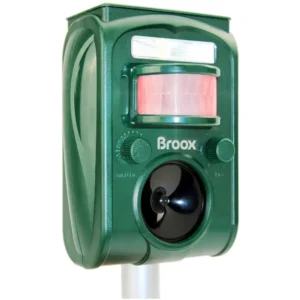
7. Make Some Noise
Bats prefer quiet, undisturbed spaces, which is exactly why they gravitate toward attics and wall voids that nobody visits. Introducing regular noise into those areas can make the space feel far less safe to them. Ultrasonic devices marketed specifically for bats are hit or miss in my experience. If a homeowner asks me where to spend the money first, I’d put it into finding and correcting an entry point before buying an ultrasonic device. Bats communicate and navigate using ultrasonic frequencies themselves, so results vary a lot depending on the species and how well the device is positioned.
What tends to work more consistently is simple, low-tech disruption. A battery-powered radio left on a talk station in the attic, or a small fan running near the roost, introduces the kind of ongoing noise and air movement that bats generally avoid. It’s not glamorous, but it’s cheap, and I’ve seen it contribute to colonies relocating within a week or two when paired with proper exclusion of the openings they’d otherwise use to come back.
8. Try A Bat Repellent Product
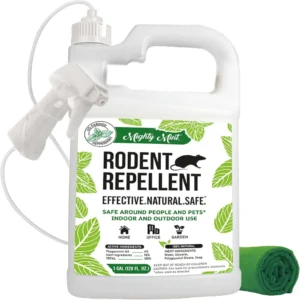
Commercial bat repellents are another option homeowners can try when they’re trying to make an area less attractive to bats. Depending on the product, repellents may use strong odors or other ingredients intended to discourage bats from using a particular space. Sprays, granules, and repellent pouches are marketed for different applications, so the specific product and label instructions matter. Never apply a repellent directly to a bat or use a product in a way that could trap, poison, or physically harm an animal.
Read the label carefully before you buy, since some products are formulated for outdoor use only and can be harmful if used in an enclosed, poorly ventilated attic. If you decide to use one, choose a product specifically labeled for bat deterrence and follow the application directions rather than improvising with a general-purpose pesticide. As with essential oils, repellents work best as part of a broader plan. Spraying a repellent without sealing the entry point just means you’re re-treating the same spot every few weeks indefinitely.
Is It Really Worth Trying To Keep Bats Away?
Honestly, this depends on where the bats are living. If they’re roosting in a tree at the back of your property or under a bridge down the road, I’d actually encourage you to leave them alone. Bats are incredibly beneficial. Bats consume large numbers of night-flying insects, including mosquitoes, moths, beetles, and other agricultural pests. Getting rid of every bat near your property isn’t a realistic or particularly smart goal.
The calculation changes the moment bats move into your house. A colony living in your attic leaves behind guano that builds up over time, and that accumulated guano can create conditions where Histoplasma fungus may be present, particularly when contaminated material is disturbed. Bats can also carry rabies, although only a small proportion of bats are infected. Because rabies is serious, the CDC recommends avoiding direct contact with bats and contacting public health authorities when a person or pet may have been exposed. On top of the health side, guano and urine slowly damage insulation, wood, and drywall, which gets expensive to repair the longer it’s left alone.
So yes, it’s worth the effort when bats are inside your living space or attic. When they’re simply flying around outside doing what bats do, the smarter move is usually to let them be.
I’d also add that trying to keep bats away isn’t an all-or-nothing decision. Plenty of homeowners land somewhere in the middle, using a bat house and better yard drainage to redirect bats away from the house itself while still letting them patrol the yard for mosquitoes every evening. That approach gets you the pest control benefit bats provide without the health and structural risks that come with an attic colony. It’s often the most practical outcome, and it’s a lot less work than trying to eliminate every bat from the area entirely.
How To Keep Bats Out Of Your House
If you’re trying to figure out how to get rid of bats in your attic, don’t start by sealing the first opening you find. First determine where the bats are getting in and whether exclusion is appropriate for the time of year and species in your area.
The eight tricks above are great for discouraging bats from sticking around your property, but if you already have a colony living inside your house, you need a more direct approach. This is where exclusion work comes in, and it needs to be done carefully and in the right order.
Find Out How They’re Getting In
Bats can squeeze through surprisingly small gaps, which means the entry point is often smaller and less obvious than homeowners expect. The most reliable way to find it is to watch your house at dusk for a few evenings in a row. Sit outside with a clear view of the roofline and eaves, and watch for bats emerging as they head out to feed. Note exactly where they’re exiting, whether that’s a gap under a fascia board, a broken vent screen, a chimney, or a gap where two rooflines meet.
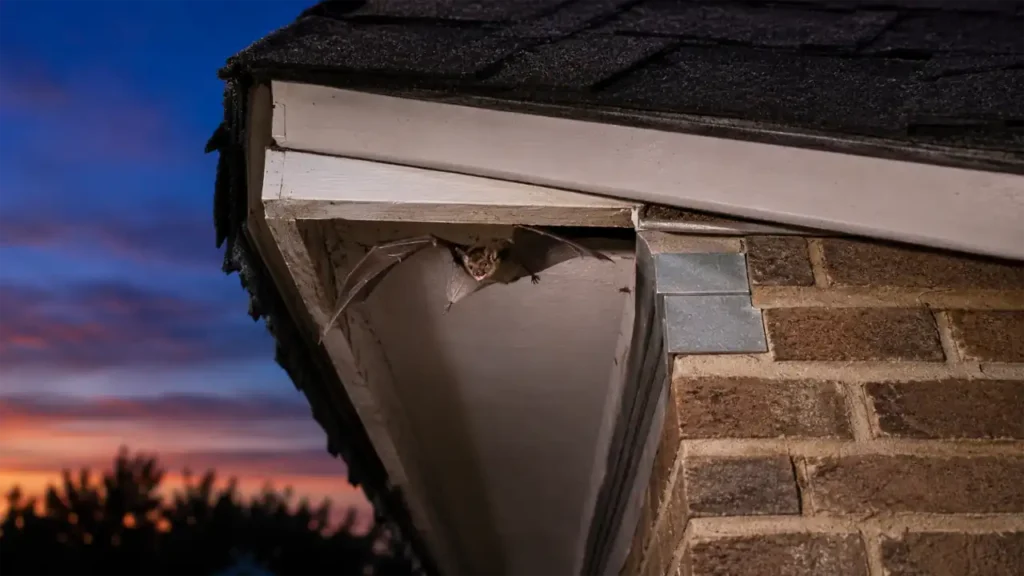
If you can identify the species, that’s even better, since bat behavior, roosting preferences, diet, and legal protections can vary.
It’s worth watching more than one night, since colonies don’t always use every exit point in the same way, and you want to catalog every opening before you start sealing anything up.
Close Up The Opening
Once you know where bats are getting in and out, and you’ve confirmed that exclusion is appropriate for the time of year and species in your area, you can begin sealing. The best materials here are ones bats can’t chew or squeeze through, like copper mesh, hardware cloth, or metal flashing. For vents and other openings that need to remain functional, use an appropriate wildlife-proof screen rather than blocking the opening completely. Steel wool works for smaller gaps but shouldn’t be your only fix for larger openings, since it degrades over time.
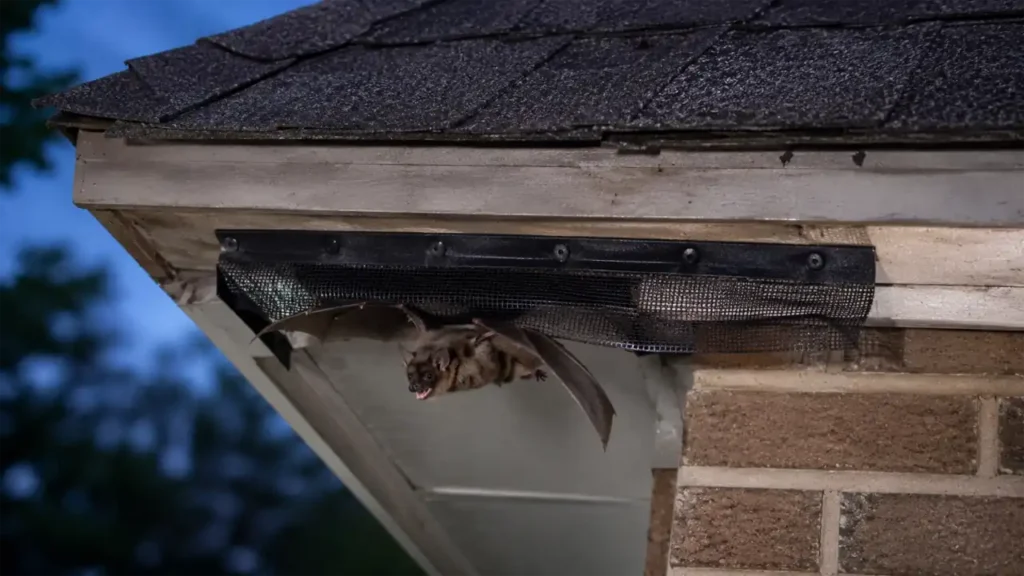
The order matters. Seal every secondary opening first, leaving only the main entry or entries open. Then install a one-way exclusion device, like the netting method described earlier, over those remaining spots so bats can leave but can’t return. Give it several nights before sealing the final openings completely, since you want to be confident every bat has actually left and none are still roosting inside.
A mistake I see homeowners make constantly is sealing everything up in one pass because it feels faster. That approach almost always backfires. Bats that are temporarily out foraging come back to find their usual entry sealed, and they’ll often find or force open a new gap somewhere nearby rather than giving up and moving on. Working through the openings in order, patiently, is what actually keeps them out for good instead of just relocating the problem to a different corner of your roofline.
Remove Food & Water Sources They Can Access In The House
If bats have been in your attic for any length of time, inspect the space for other pest and moisture problems while you’re dealing with the colony. A roof leak, condensation problem, clogged gutter, or other moisture issue can create conditions that attract insects and other pests.
Fix obvious water problems, improve ventilation where needed, and remove accessible food or water sources for insects and rodents. These steps won’t replace bat exclusion, but they can make the attic less attractive to the other pests that often turn up after a wildlife infestation.
The bigger point is to correct the conditions that made the space vulnerable in the first place. Once the bats are out, you don’t want to discover six months later that the attic has become a damp, pest-friendly space all over again.
Also Read: Where Japanese Beetles Go at Night: A Homeowner’s Guide
Clean Up
This step gets skipped more often than it should, and it’s a mistake. Guano needs to be removed carefully, not just swept away, because disturbing dry droppings can release spores into the air. Avoid dry sweeping or stirring up the droppings, and use appropriate respiratory protection if you’re handling cleanup yourself. A basic dust mask isn’t adequate protection against airborne contaminants.
For anything beyond a small, isolated amount of guano, it’s genuinely worth hiring a professional for the cleanup and decontamination. Beyond the health risk, leftover guano holds onto odor that can actually attract new bats or other wildlife looking for an easy roosting spot, undoing all the exclusion work you just did.
When To Call A Professional
Call a wildlife-control professional if you’re dealing with a large colony, can’t find all the entry points, suspect flightless pups are inside, or can’t safely reach the roofline, chimney, soffits, or other areas where bats are getting in. Professional help is also a good idea when there’s a large buildup of guano or contaminated insulation that needs to be removed.
In my experience, the biggest mistake homeowners make is sealing an opening too quickly and trapping bats inside. If you’re unsure whether it’s safe or legal to exclude bats at the time you’re dealing with them, it’s better to have the situation assessed before you start sealing.
What Not To Do When Trying To Keep Bats Away
Don’t seal an active bat entrance without first determining whether bats or flightless young are still inside. Don’t use mothballs or other pesticides off-label in an attic, and don’t rely on ultrasonic devices as your only solution. Avoid handling bats or dry guano with bare hands. Most importantly, don’t assume that making one entrance inaccessible means you’ve solved the problem—bats can use multiple openings.
Final Thoughts
Keeping bats away from your home isn’t about one clever trick. It’s about stacking a few different tactics, understanding the timing rules that protect these animals during maternity season, and being thorough about sealing your home once the bats are actually gone. Essential oils, lights, noise, foil, and repellents can all help make a property or particular area less inviting, but if bats have already moved into your attic, exclusion and cleanup are what actually solve the problem.
If you’re dealing with an active colony, especially a large one, or you’re not sure whether you’re in a legally restricted window for exclusion work, it’s worth calling in a wildlife control professional. Bats are protected in many areas, and getting the timing or the method wrong can mean starting the entire process over, or worse, ending up with trapped pups and a much bigger cleanup on your hands.