If your yard looks like it’s crawling with spotted lanternflies, you know how frustrating they can be. They land on trees, patios, and outdoor furniture, they’re tough to catch, and they leave a sticky mess behind. If you’re wondering how to get rid of spotted lanternfly infestations, the key is to combine practical control methods with ongoing monitoring. In this guide, I’ll explain eight approaches, which methods are most reliable, and why killing visible insects is only part of the job.
Also Read: Are Opossums Dangerous? Key Facts Before You Panic
Quick Answer
To get rid of spotted lanternflies, crush or vacuum reachable insects, use an appropriately labeled insecticide when necessary, remove egg masses, and manage tree of heaven where appropriate. Avoid exposed sticky bands that can trap wildlife, and monitor the property because more lanternflies may arrive from nearby areas.
What Are Spotted Lanternflies?
The spotted lanternfly is an invasive insect from Asia that showed up in Pennsylvania in 2014 and has been spreading across the eastern United States ever since. Despite the name, it isn’t a fly. It’s a planthopper, which puts it in the same broad family tree as cicadas and leafhoppers. It sucks sap out of plants through a tiny needle-like mouth, and that habit is the root of nearly every problem it causes.
How to Identify Spotted Lanternfly Nymphs and Adults
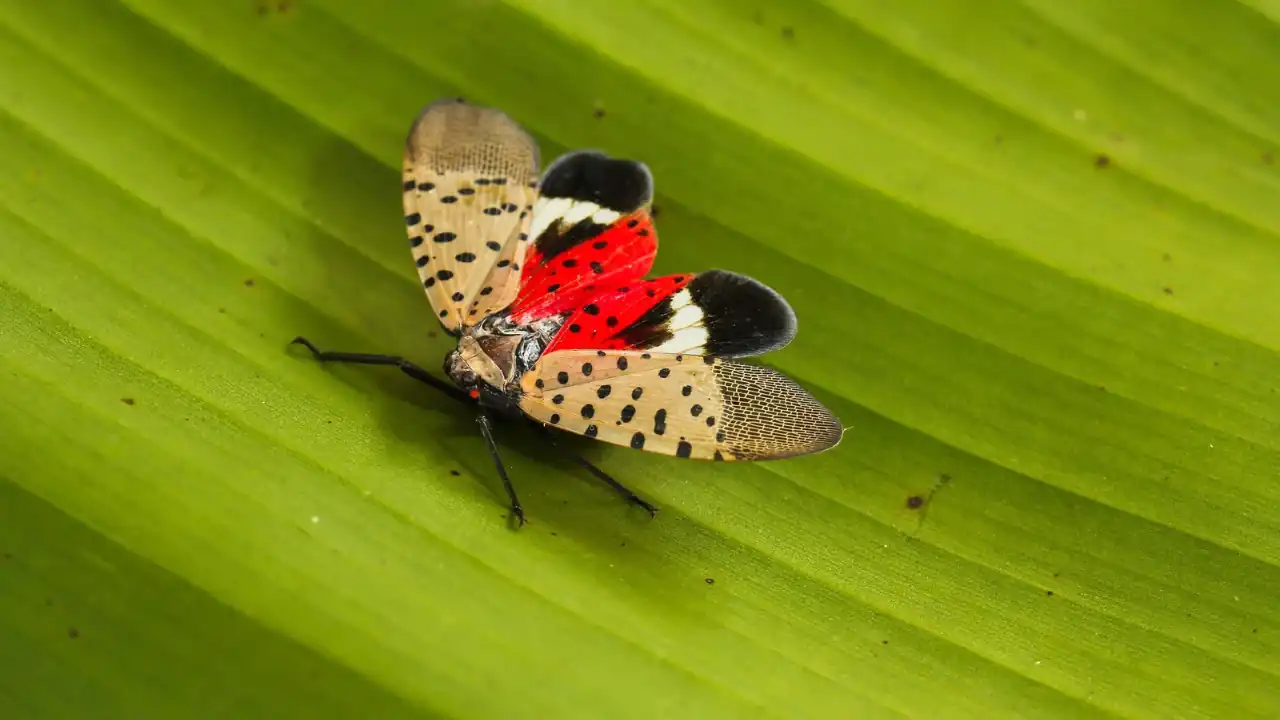
Spotted lanternflies change appearance as they mature. Early nymphs are black with white spots; later nymphs develop red markings alongside black and white. Adults have gray, black-spotted forewings and distinctive red hindwings. Nymphs cannot fly, while adults can fly short distances and jump readily when disturbed.
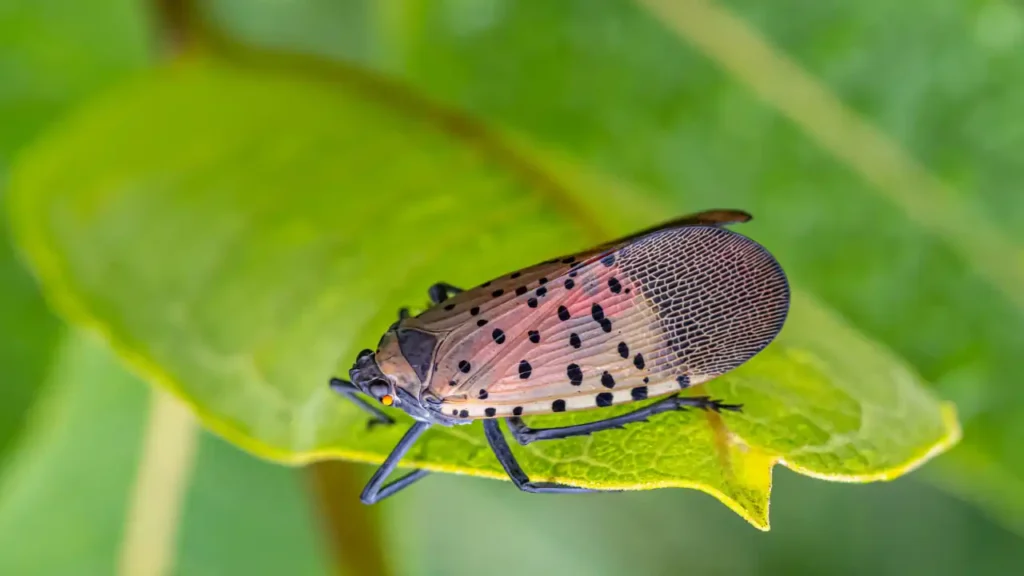
The red hindwings often catch people’s attention, but appearance isn’t the important part. What matters is recognizing the insect and understanding the damage large populations can cause to plants.
One more thing worth knowing. Spotted lanternflies are great hitchhikers. The adults and the egg masses ride along on cars, trailers, firewood, outdoor furniture, and even stone or lumber. That’s a big reason they keep showing up in new towns and new states. It’s also why your own habits matter when you’re trying to stop them from spreading. For reliable identification, life-cycle details, and current management guidance, consult Penn State Extension’s spotted lanternfly resource. Its guidance is especially useful when you’re deciding which control methods to use and when to take action.
Why They’re A Problem
On their own, a few lanternflies on a maple tree wouldn’t keep anyone up at night. The trouble is that they gather in huge numbers. A single tree can end up with hundreds of them stacked up on the trunk, all drinking sap at once. That’s a lot of stress for any plant to handle.
Spotted lanternflies feed on a range of host plants, including tree of heaven, grapevines, maples, willows, walnuts, and fruit trees. Heavy feeding can contribute to wilting, branch dieback, and reduced growth, especially in young, stressed, or heavily infested plants. Grapevines can be particularly vulnerable. The plants lanternflies use may change with their life stage, so finding them on one tree doesn’t mean it’s their only food source.
Second, they leave behind honeydew. That’s the sugary liquid they excrete after feeding, and it rains down on whatever is underneath. Decks, patio furniture, cars, swing sets, and the leaves below all get coated. The honeydew can encourage the growth of sooty mold, a dark fungal coating that develops on sugary deposits. Although the mold generally doesn’t directly infect or kill the plant, heavy buildup can interfere with photosynthesis and make outdoor surfaces unpleasant to use.
It’s worth keeping the damage in perspective. Large, established trees often tolerate spotted lanternfly feeding, while young, stressed, or heavily infested plants may be more vulnerable. The sticky honeydew can become a major nuisance even when the tree itself isn’t in immediate danger. Before removing a valuable tree, assess its condition and the severity of the infestation rather than assuming that every tree with lanternflies needs to come down.
Third, there’s the legal side. In many areas, spotted lanternflies fall under quarantine rules, which means moving certain items out of an infested zone without checking them can cause trouble. Rules differ by state, so it’s worth a quick look at what your local agriculture department says.
Quick Tip: The most useful habit you can build is a quick walk around your vehicle, trailer, and outdoor gear before you leave an infested area. Look for adults on doors, wheel wells, and roof racks, and for gray mud-like egg patches on flat surfaces. Ten seconds of checking can stop you from taking the problem to someone else’s yard.
How To Get Rid Of Spotted Lanternfly
Not all eight methods are equally effective. Physical removal, appropriate insecticide use, and egg-mass removal can directly reduce lanternfly numbers. Monitoring and checking outdoor items help you catch renewed activity and prevent the insects from spreading. Managing tree of heaven may also help as part of a broader plan, while milkweed and homemade essential-oil sprays should not be relied on for dependable control. Here’s how each approach works and where it falls short.
1. Squash Or Vacuum Them
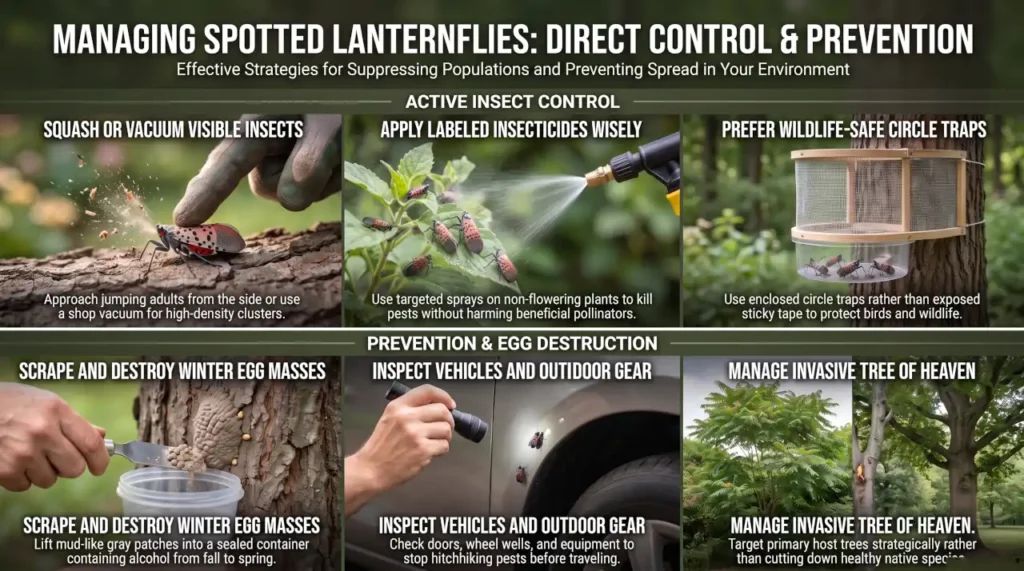
This is the oldest trick, and it’s still one of the best places to start. If you can reach the lanternflies, you can kill them. Stomping on them, swatting them, or squashing them on a trunk works fine. Nymphs are easier to catch than adults, because adults are strong jumpers and will launch the moment you get close. A good trick is to approach slowly from the side instead of straight on, then swat quickly. If one jumps, don’t chase it all over the yard. It’ll usually land nearby, and often back on the same tree.
For bigger groups, a vacuum is a lifesaver. A shop vacuum is ideal, but a handheld one works if you don’t mind dedicating it to the job. Move slowly along the trunk and pull them off in a sweep. The main advantage is that you can remove lanternflies without applying pesticides. Use the vacuum according to its manufacturer’s instructions, keep electrical equipment away from water unless it is designed for wet use, and make sure captured insects cannot escape during disposal.

The main limitation is that physical removal only deals with insects you can reach. If lanternflies are spread across several trees, use it as one part of your control plan rather than your only method.
Quick Tip: If you use a vacuum, follow the manufacturer’s instructions for collecting insects and emptying the unit. Don’t add soapy water to a vacuum unless the manufacturer specifically permits liquid collection. Empty captured lanternflies into a container or disposal method that prevents them from escaping, and kill them before disposal. Check the vacuum and collection chamber afterward because some insects may remain alive.
2. Spray Them With An Insecticide
When lanternfly numbers are too high for physical removal alone, an appropriately labeled insecticide may help reduce them. Contact sprays kill insects they directly reach, while some products provide longer-lasting control when used according to their labels.
For homeowners, start by checking whether a pesticide is necessary and whether a product is labeled for spotted lanternflies and the specific site you’re treating. Insecticidal soaps can kill insects they contact directly, but they offer little residual control and may injure plants if used incorrectly. They are not automatically safe for every plant, pet, or beneficial insect.
Products containing ingredients such as bifenthrin or carbaryl may provide longer-lasting control, but they can also harm pollinators and other non-target organisms. Use only products whose labels permit the intended application, and follow all directions for rates, protective equipment, application sites, and restrictions around water. Avoid spraying flowering plants while pollinators are visiting them. For large trees or heavy infestations, consult a qualified pesticide applicator familiar with local spotted lanternfly recommendations.
New lanternflies may move in from nearby properties, and the effectiveness and persistence of a treatment depend on the product, application site, weather, and insect life stage. Reassess the infestation before deciding whether another application is necessary, and never exceed the label’s directions.
3. Use Sticky Traps & Tape
Sticky bands are sometimes used to intercept spotted lanternflies moving along tree trunks. However, exposed adhesive can trap birds, bats, small mammals, and beneficial insects. Before using any tree-trunk trap, consider a design that minimizes wildlife exposure and follow the manufacturer’s installation instructions. Sticky traps should not be treated as a complete control solution.
Young spotted lanternflies often move up and down tree trunks as they feed and seek shelter in the canopy. This behavior can make the trunk a useful place to monitor their activity, but it doesn’t mean every nymph will pass a trap. Some insects may use nearby vegetation or other routes, so a sticky band should never be treated as a complete control solution.
But I have to be honest about the downside, because it’s a big one. Sticky traps catch whatever touches them. That includes bees, beetles, small birds, chipmunks, lizards, and the occasional bat. Wildlife groups and extension offices have received many reports of non-target animals getting trapped, and it’s heartbreaking when you find a songbird stuck to a band you put there.
If you use a sticky band, never leave the adhesive exposed where birds, bats, small mammals, reptiles, or beneficial insects can become trapped. A loose protective mesh or a properly designed circle trap can reduce wildlife exposure, but the setup still needs regular inspection. Check traps at least daily, remove captured insects, and repair or remove the trap if wildlife can reach the adhesive. On trees where wildlife activity is common, avoid exposed sticky tape and choose a safer control method.
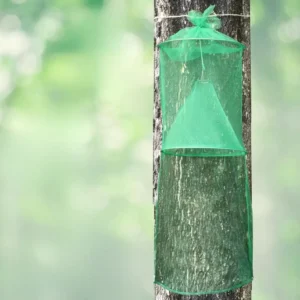
Quick Tip: Don’t place traps on trees you want to keep long term without thinking about the bark. Remove the tape carefully when you’re done, and cut off any gummy residue so it doesn’t harm the tree or trap debris.
4. Monitor Infested Trees and Repeat Control as Needed
Spotted lanternflies may return after you’ve removed visible insects because new ones can arrive from nearby properties or remain elsewhere on your property.
Inspect heavily affected trees and nearby vegetation regularly during the season. Look for new clusters, fresh honeydew, and increasing activity. Remove reachable insects and reassess whether a labeled treatment is warranted.
Monitoring won’t eliminate an infestation by itself, but it helps you identify renewed activity early and avoid unnecessary treatments.
5. Inspect Outdoor Items and Stop Them From Hitchhiking
Spotted lanternflies can travel on vehicles, trailers, outdoor furniture, equipment, and other items stored outside. If you’re seeing them in your yard, inspect those items regularly, particularly before moving them to another property or traveling out of an infested area.
Look for adults on vehicle surfaces and equipment, as well as egg masses on hard, sheltered surfaces. Scrape off egg masses you find, contain them, and destroy them using an appropriate method. Check state agriculture guidance for any quarantine or movement requirements that apply where you live.
Inspecting outdoor items won’t eliminate an existing infestation, but it can help prevent lanternflies from spreading to another location.
6. Try Some Neem Oil
Neem oil is used in some garden pest-control products, but it shouldn’t be treated as a guaranteed spotted lanternfly solution. Its effects depend on the formulation, insect life stage, and application. It generally isn’t a quick knockdown treatment, so don’t expect results comparable to directly crushing insects or using an appropriately labeled contact pesticide.
If you choose a neem-based pesticide, use a product labeled for the plant and pest you’re treating, and follow its mixing and application directions exactly. Don’t add dish soap or other ingredients unless the product label specifically directs you to do so. Apply only under the temperature and weather conditions permitted by the label, because some formulations can injure foliage in hot or stressful conditions.
Neem-based products are not automatically harmless to beneficial insects. Avoid exposing pollinators directly, and follow any restrictions on flowering plants. Treat neem as one possible tool rather than a guaranteed solution, especially when dealing with adult lanternflies.
7. Avoid Relying on Essential-Oil Sprays
Peppermint, rosemary, lavender, and eucalyptus oils are often promoted as spotted lanternfly repellents. However, homemade sprays have not been established as dependable control methods under ordinary yard conditions.
Some mixtures may temporarily discourage insects from remaining on a surface, but that is not the same as controlling an infestation. Essential oils can also irritate pets or damage plants, depending on the ingredients and concentration. Don’t spray homemade mixtures around animals or valuable plants without understanding the risks.
For a more reliable result, focus on physical removal, monitoring, egg-mass management, and pesticides labeled for the intended use when necessary.
8. Manage Tree of Heaven and Other Host Trees Carefully
Managing tree of heaven can be part of a spotted lanternfly control plan, but removing every tree where you see lanternflies is not a sensible solution. Tree of heaven is an invasive host plant that deserves special attention. Healthy maples, fruit trees, and other valuable trees generally should not be removed just because lanternflies are feeding on them.
There’s a catch, though: tree of heaven can resprout aggressively after cutting. Simply felling the tree may trigger new shoots from the stump and roots, creating a larger management problem. Before removing it, consult your state extension service or a qualified invasive-plant professional about the appropriate treatment and timing for your property.
Some management programs use selected tree-of-heaven stems as trap trees and treat them with a systemic insecticide. That approach requires specialized knowledge and careful pesticide use; it isn’t a DIY shortcut. Don’t attempt it without professional guidance and confirmation that the method is permitted locally.
I would not remove healthy, valuable trees like your favorite maple just because lanternflies are on them. Those trees usually survive with proper care and treatment, and cutting them down punishes you more than it punishes the bug. Consider tree-of-heaven management as part of a planned control strategy. For other trees, base any removal decision on the tree’s condition, the severity of the damage, and advice from a qualified arborist or other relevant professional.
What Experience Has Taught Me About Spotted Lanternfly Control
One common frustration with spotted lanternfly control is seeing more insects after an initial cleanup. That doesn’t automatically mean the treatment failed. Lanternflies may arrive from nearby properties, and different life stages can remain active throughout the season.
That’s why I recommend treating control as an ongoing process. Remove reachable insects, use pesticides only when appropriate, avoid traps that expose wildlife to adhesive, and develop a plan for managing tree of heaven if it is present.
Don’t stop checking the property when adult activity declines. Egg masses can remain on trees, fences, outdoor furniture, vehicles, and other sheltered surfaces. Controlling visible insects addresses the immediate problem; monitoring and egg removal help reduce the risk of another infestation.
The Importance Of Finding Eggs And Removing Them
Removing spotted lanternfly egg masses can help reduce the number of insects that hatch the following spring. Even after adult activity declines, inspect outdoor surfaces for egg masses and remove them using the recommended method for your area.
Spotted lanternflies generally lay eggs from late summer into late fall, although timing varies with local conditions. Adults eventually die as the season ends, but the egg masses can survive through winter and hatch the following spring, often beginning in late April and continuing into early summer depending on the region.
A typical egg mass can contain several dozen eggs, and a female can lay multiple masses. That means even a small number of overlooked egg masses can produce many new nymphs the following season. This is why checking likely egg-laying surfaces matters, even after the visible adults have disappeared.
The egg masses are easy to miss because they don’t look like eggs. Fresh ones are covered in a gray, putty-like coating that looks like old mud or smeared clay. As time passes, the coating cracks and fades, and you can see rows of small brown seed-like eggs underneath. Lanternflies aren’t picky about where they lay them. Look on tree trunks, the underside of branches, fence posts, stone walls, outdoor furniture, grills, playground equipment, vehicles, trailers, and stacks of firewood or lumber. Anything flat and sturdy is fair game.
Also Read:
To remove an egg mass, use a plastic card, putty knife, or similar scraper to lift the entire mass from the surface. Hold a bag or container underneath to catch the material, and check that no eggs remain attached. Avoid simply scraping the eggs onto the ground, where they may survive.
Contain the removed eggs and destroy them using a method recommended by your state agriculture department or extension service. If you use rubbing alcohol or hand sanitizer as directed by local guidance, keep the material away from flames, sparks, and other ignition sources because alcohol-based products are flammable. Seal and dispose of the material appropriately, following local instructions.
Fall through early spring is generally a useful time to search for spotted lanternfly egg masses, although the best inspection window depends on your local climate and the timing of egg laying and hatching. Check sheltered outdoor surfaces throughout the season rather than relying on one calendar date.
Without leaves on the trees, egg masses are easier to spot. Make it a habit to check once a month through the cold season, especially on the trees where you saw the most adults. Egg-laying locations tend to be the same ones from year to year, so that gives you a good idea of where to start.
If you find a lot of egg masses in a place where lanternflies haven’t been reported before, tell your state agriculture department. Many states want to know about new spots, and reporting helps slow the spread.
When to Call a Professional
Consider hiring a qualified pest control professional if spotted lanternflies are gathering in large numbers high in trees, repeated control efforts aren’t reducing the infestation, or you need help choosing an appropriate pesticide treatment. Professional guidance is also worthwhile when managing tree of heaven, which can resprout aggressively if removed incorrectly. Choose someone familiar with spotted lanternfly control and local recommendations, and ask about treatment risks to valuable plants, pollinators, pets, and other wildlife before work begins.
Final Thoughts
Getting rid of spotted lanternflies takes more than killing the insects you see. Start with physical removal, consider an appropriately labeled treatment when necessary, and use trapping methods that minimize risks to wildlife. Manage tree of heaven carefully rather than removing healthy trees indiscriminately.
Continue monitoring during the growing season and inspect outdoor surfaces for egg masses when adults become less noticeable. Before moving potentially infested items, check applicable quarantine rules. For heavy infestations, large trees, or complicated tree-of-heaven removal, consult a qualified professional familiar with local recommendations.