If you’re dealing with clover mites, chances are you noticed tiny red or brown dots crawling along your windowsills, walls, or curtains. Maybe you wiped one away and ended up with an ugly red smear. That moment usually triggers panic, confusion, and a whole lot of Googling.
I’ve been in pest control for nearly two decades, and I can tell you this straight. Clover mites look alarming, but they’re one of the most misunderstood household pests. They don’t bite. They don’t live indoors permanently. But they can absolutely drive you crazy if you don’t handle them the right way.
Most people make the same mistake. They spray random chemicals, smash the mites, or focus only on the inside of the house. That’s why the problem keeps coming back every spring or fall.
In this guide, I’m going to walk you through how to get rid of clover mites step by step, using methods that actually work in real homes. No fluff. No scare tactics. Just practical advice you can use today. Think of this like a conversation over coffee with someone who’s seen this exact problem hundreds of times and knows how to fix it for good.
Also Read: Killing Groundhogs with Bubble Gum: Does It Really Work?
How To Get Rid of Clover Mites?
Clover mites are harmless plant-feeding mites that wander indoors from lawns, especially in spring and fall. The most effective way to get rid of them is to vacuum indoors, create a vegetation-free strip around your foundation, seal entry points, and treat the exterior perimeter. Indoor spraying alone will not solve the problem.
What Are Clover Mites?
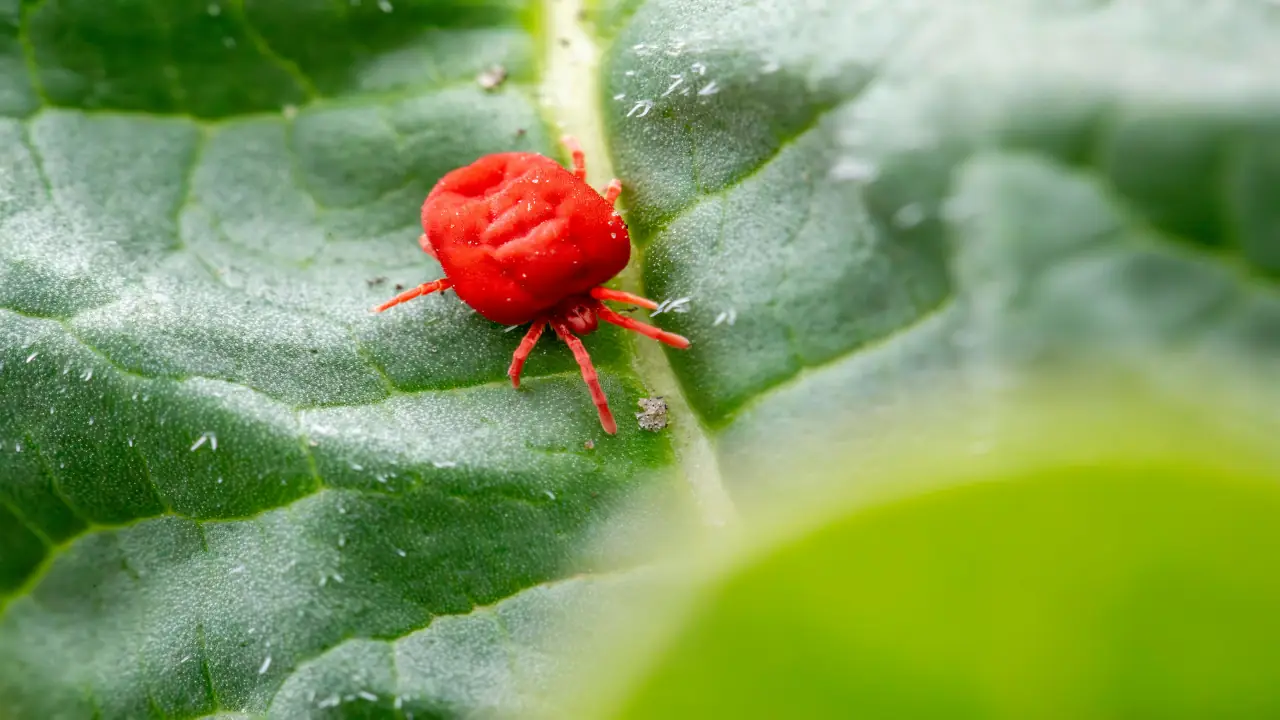
Clover mites are tiny plant-feeding mites that belong to the arachnid family, which means they’re related to spiders and ticks. They’re about the size of a pinhead and are usually reddish-brown, olive, or dark green. What really stands out are their front legs, which are extra long and often mistaken for antennae.
They don’t come inside to infest your home like ants or roaches. They wander indoors by accident, usually through tiny cracks around windows, doors, siding, or foundations. Once inside, they head toward light and warmth, which is why you see them clustering around sunny windows.
Here’s the key thing to understand. Clover mites feed on grasses and plants outside. Your home is not their food source. Indoors, they eventually die on their own. The problem isn’t danger. The problem is nuisance.
According to the University of Minnesota Extension, clover mites are accidental invaders that enter homes from surrounding vegetation and cannot survive indoors long-term. Their presence inside is almost always tied to lawn conditions around the foundation.
Understanding Their Seasonal Cycle
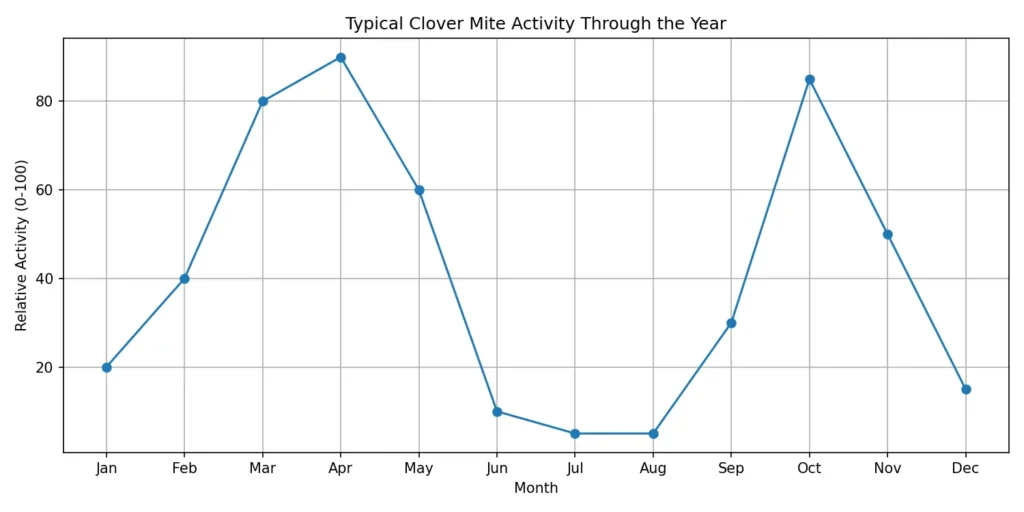
This seasonal pattern explains why many homeowners see clover mites twice per year, even when nothing inside the home has changed.
Clover mites follow a predictable seasonal pattern.
In most of North America, eggs hatch in early spring when temperatures consistently reach the mid-50s. Populations build quickly during mild weather. When summer heat intensifies, activity slows dramatically, and many mites go dormant.
In the fall, when temperatures cool again, a second wave of activity often appears. That’s why many homeowners see clover mites twice per year.
Understanding this cycle helps you time prevention efforts before populations peak.
Penn State Extension also notes that clover mite populations peak during mild temperatures and decline during extreme heat or cold, which is why activity often appears twice per year in many regions.
Quick Answer: Never crush clover mites with your fingers or a paper towel. They leave behind a red stain that’s hard to remove, especially on walls, curtains, and carpets.
What Attracts Clover Mites?
Clover mites are drawn to very specific conditions, and once you know what those are, controlling them becomes much easier.
The biggest attractor is lush, well-fertilized grass right up against your home’s foundation. Clover mites love lawns that are thick, green, and heavily fertilized with nitrogen. Overwatered lawns are another major draw.
They’re also attracted to warmth and sunlight. South-facing walls, windows, and siding get hit hardest, especially in spring and fall when temperatures are mild.
Cracks and gaps around your home give them easy entry points. Even a gap as thin as a credit card around a window frame is enough.
Quick Answer: If clover mites keep showing up on the same side of your house every year, that’s almost always where the outdoor source is located.
Step-by-Step Guide to Get Rid of Clover Mites
This is the part most people care about. Let’s talk about what actually works. You don’t need to do every method below, but combining a few of them gives you the best results.
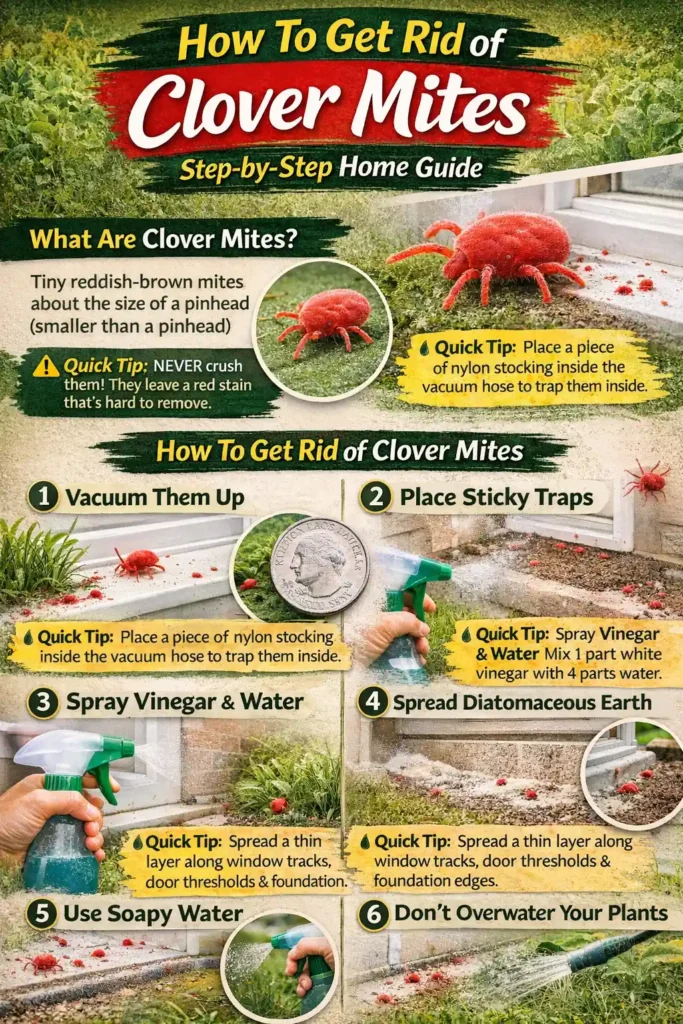
1. Vacuum Them Up
The fastest way to deal with clover mites indoors is a vacuum cleaner. Use a hose attachment and gently vacuum them from windowsills, walls, and baseboards. Once you’re done, remove the vacuum bag immediately or empty the canister into a sealed bag and take it outside. If you leave them inside the vacuum, they can crawl back out.
Quick Answer: Put a piece of nylon stocking inside the vacuum hose before vacuuming. It traps the mites and makes disposal easier.
2. Place Sticky Traps
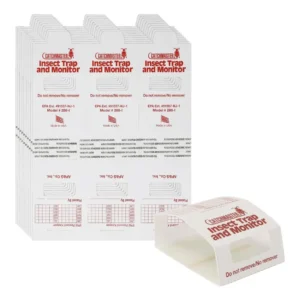
Sticky traps work well for monitoring and reducing numbers, especially near windows and doors. Place them along windowsills, near sliding doors, and anywhere you consistently see mite activity. They won’t eliminate the problem on their own, but they help confirm where mites are entering.
3. Spray Vinegar and Water
A simple vinegar-and-water spray can kill clover mites on contact. Mix one part white vinegar with four parts water and spray directly on visible mites. Use this method sparingly and test surfaces first. Vinegar is acidic and can damage finishes, paint, or stone if overused.
Quick Answer: Vinegar is best used outdoors on foundation walls and entry points, not as a whole-house indoor solution.
4. Spread Diatomaceous Earth
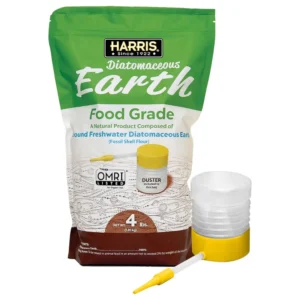
Food-grade diatomaceous earth works by drying out clover mites when they crawl across it. Apply a thin layer along cracks, window tracks, door thresholds, and foundation edges. Make sure the area stays dry. Moisture makes diatomaceous earth ineffective.
5. Use Soapy Water
Soapy water kills clover mites by breaking down their outer coating. Mix a few drops of liquid dish soap with water and spray directly on mites or infested plants near your home. Avoid using detergent with degreasers or bleach. Plain dish soap works best.
Quick Answer: Soapy water is especially effective for mites found on exterior plants touching your house.
6. Try Boric Acid
Boric acid can help in outdoor perimeter treatments, but it’s not my first choice for clover mites. They don’t groom themselves like insects, so exposure is limited. If you use it, keep it outside only and away from pets and children.
Quick Answer: Boric acid works better as a supplemental barrier, not a standalone solution.
7. Sprinkle Some Baby Powder
This one surprises people, but baby powder can create a temporary barrier. Clover mites don’t like crossing fine powders. Sprinkle a light line along window tracks and door thresholds. It’s not permanent, but it can help during peak activity.
8. Don’t Overwater Your Plants
Overwatering creates the perfect environment for clover mites. Reduce watering near your foundation and avoid soaking the soil right next to your home. Dry soil discourages mite populations naturally.
What Works Best (Ranked by Effectiveness)
After handling clover mite issues for years, here’s what consistently works — ranked from most effective to least:
If you focus on exterior correction first, indoor sightings usually drop fast.
Why Indoor Sprays Usually Fail
One of the biggest mistakes I see homeowners make is treating clover mites like roaches or ants.
Clover mites do not live or reproduce indoors. When you see them inside, they’ve wandered in from outside. Spraying baseboards or fogging rooms might kill the mites you see, but it does nothing to stop new ones from entering.
I’ve seen homeowners spend hundreds of dollars treating the interior repeatedly, only to have the problem return the next warm afternoon.
The real solution is almost always outside. If you don’t address the lawn, foundation, and entry points, the cycle continues.
Think of indoor treatment as cleanup. Exterior correction is prevention.
Real-World Example from the Field
A few springs ago, I worked with a homeowner who was convinced something was “breeding inside the walls.” Every sunny afternoon, hundreds of tiny red mites showed up along the south-facing windows of a two-story brick home. They had already sprayed multiple indoor products and even replaced window trim, but the mites kept coming back.
When I walked the property, the problem was obvious. The lawn was thick, heavily fertilized, and growing right up against the foundation. The south wall got full sun most of the day, which warmed the brick and made it ideal for clover mite activity. There was no vegetation break at all.
Instead of treating inside again, we created a 24-inch vegetation-free strip along that wall, reduced irrigation near the foundation, and applied a targeted exterior perimeter treatment to the brick and soil line. Within two weeks, activity dropped by more than 90 percent. By the next season, the issue didn’t return.
That’s the pattern I’ve seen repeatedly. When homeowners focus on the exterior source instead of chasing mites indoors, the problem becomes manageable and often disappears entirely.
Ways To Prevent Them from Coming Back
Prevention is where most homeowners fail, and it’s why clover mites return year after year.
Create a vegetation-free zone around your foundation. A strip of gravel, mulch, or bare soil that’s 18 to 24 inches wide makes a huge difference.
Trim grass, weeds, and shrubs so they don’t touch your house. Seal cracks around windows, doors, siding, and foundation joints.
Avoid heavy nitrogen fertilizers near your home. If you fertilize, keep it light near the structure.
This is also where professional perimeter treatments can help. A targeted exterior treatment is far more effective than spraying inside your home.
Are They Dangerous?
No. Clover mites are not dangerous to people or pets. They don’t bite, sting, or spread disease.
The biggest issue is staining. When crushed, they release a red pigment that can permanently stain fabrics and walls.
They’re annoying, not harmful.
Extension agencies consistently classify clover mites as nuisance pests rather than structural or health threats.
Can They Hurt Your Lawn and Garden?
Yes, but the damage is usually cosmetic. Clover mites feed by piercing plant cells and sucking out the contents. This can cause silvery streaks or stippling on grass and leaves.
Severe infestations can thin turf over time.
Quick Answer: If your lawn near the foundation looks stressed while the rest looks fine, clover mites may be part of the problem.
Vegetation They Prefer
Clover mites love clover, which is where they get their name, but they also feed on grasses, dandelions, shepherd’s purse, strawberries, and many ornamental plants. They prefer well-maintained, fertilized lawns over neglected ones.
Where To Find Their Eggs
Clover mite eggs are laid outdoors, never inside your home. If you’re seeing mites indoors, they are not breeding there — they are entering from outside. They’re usually hidden in cracks in concrete, foundation walls, under siding, and in soil near the foundation.
The University of California IPM program confirms that eggs are typically deposited in cracks around foundations and exterior structures, reinforcing why interior treatments alone don’t solve the issue.
This is why indoor treatments alone never solve the problem. You have to deal with the exterior source.
Safety Considerations
While clover mites aren’t dangerous, the products and methods used to control them still require care.
When in doubt, less is more. Clover mite control is primarily about habitat adjustment, not heavy chemical use.
Also Read: How To Get Rid of Skinks Fast (Proven Methods That Actually Work)
Frequently Asked Questions
Conclusion
Clover mites look dramatic, but they’re predictable once you understand their behavior.
They aren’t invading your home to live there. They’re staging from your lawn and accidentally wandering inside. When you shift your focus to exterior prevention — reducing vegetation near the foundation, sealing entry points, and adjusting lawn care — the problem usually shrinks quickly.
Indoor sprays and panic treatments rarely fix the issue long term. The real solution almost always starts outside.
If you approach the issue methodically instead of reactively, how to get rid of clover mites becomes much simpler than most homeowners expect. In most cases, it’s not about stronger chemicals — it’s about smarter prevention.