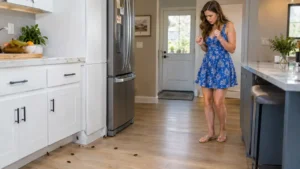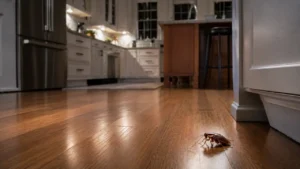
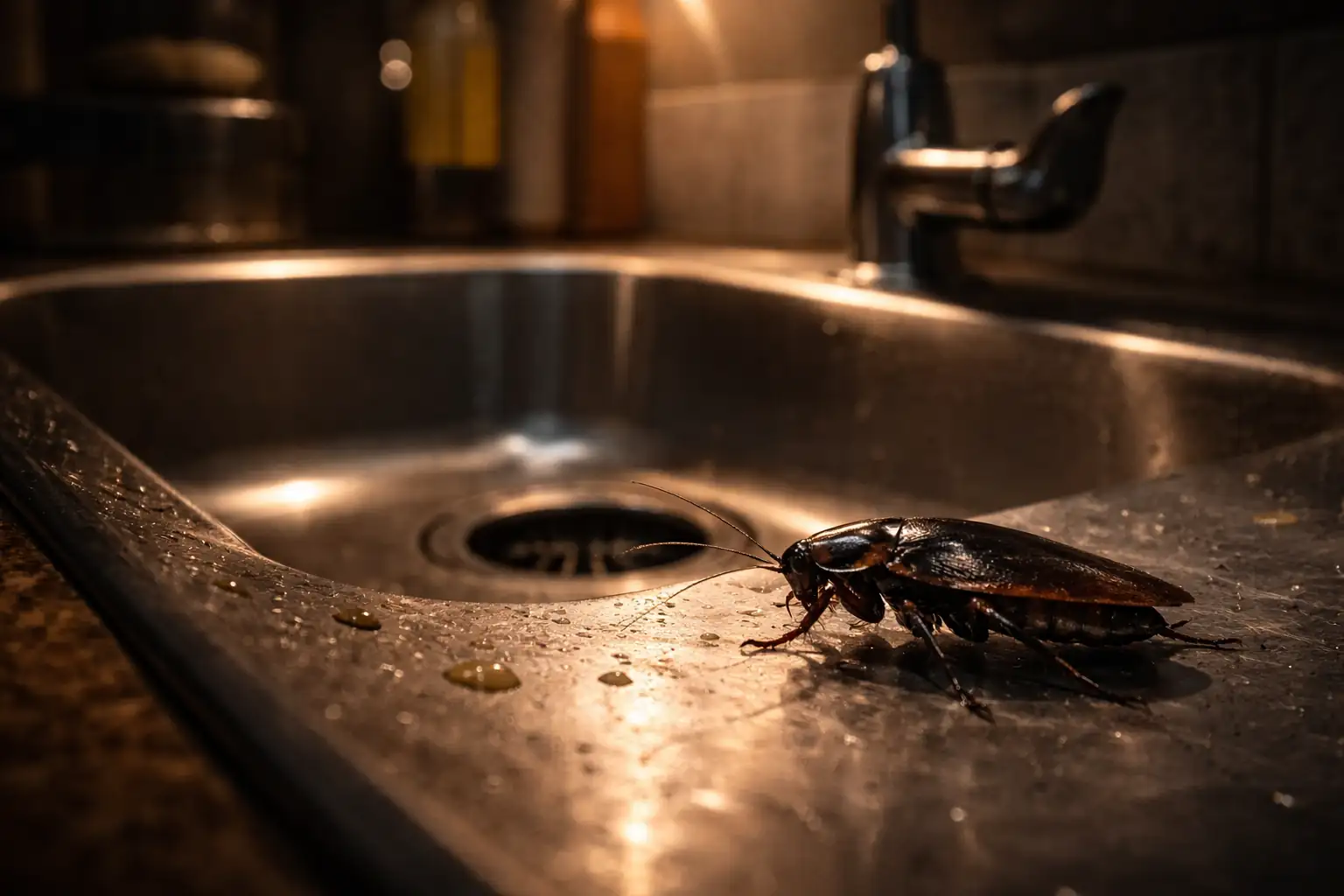
If you’ve ever woken up to a skittering sound and felt your skin crawl, you’re not alone. Cockroaches are one of those household pests that make people lose sleep—literally. For many homeowners, even one late-night sighting is enough to make every shadow feel suspicious.
The good news is that most of the time they’re avoidable with a few smart habits and the right tools. I’ve spent years helping people get rid of roaches for good, and I’ll be straightforward with you: prevention and basic housekeeping beat panic.
If you’re trying to keep cockroaches away at night, the solution isn’t fear — it’s understanding their behavior and removing what attracts them.
In apartments and condos, nighttime roach activity is often linked to shared walls, plumbing lines, or neighboring units. In single-family homes, I more often see problems tied to kitchens, basements, crawl spaces, or seasonal shifts — especially in colder months when cockroaches move indoors looking for warmth and moisture. Understanding where you live and the time of year helps you focus on the real source instead of just reacting to what you see in the bedroom.
In this article I’ll explain why roaches come out at night, how likely they are to crawl on you, and then walk you through practical, tested steps you can take tonight to reduce the chance that any roach will cross your bedroom. You’ll get quick tips you can try immediately, explanations of what works versus what’s mostly hype, and sensible next steps if the problem looks bigger than a few strays.
Also Read: What Do Cockroaches Hate — Real Smells & Tricks That Actually Help
Quick Answer: How to Keep Cockroaches Away at Night
To keep cockroaches away at night, remove food and water sources from your bedroom, seal cracks and gaps, use gel bait along baseboards, and monitor activity with glue traps. Consistent sanitation and exclusion are far more effective than relying on smells or light alone.
Why Cockroaches Show Up at Night
Cockroaches are mainly nocturnal. They prefer the cover of darkness to come out and search for food, water, and mates. That’s why many people only ever notice them after the lights are out—when the insects are active and moving around the house.
To understand why nighttime prevention works, look at how cockroach activity changes over a 24-hour period.
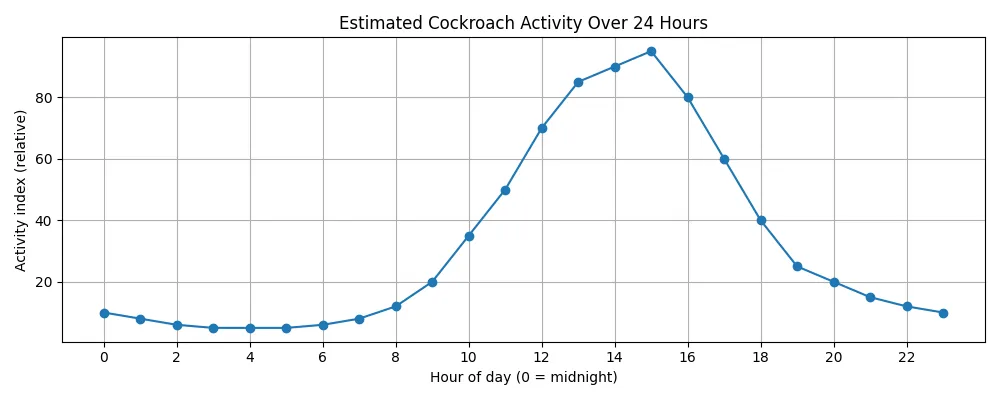
According to Health Canada’s pest prevention guidance, cockroaches are nocturnal insects that prefer dark, undisturbed areas and typically emerge at night to forage for food and moisture. That predictable behavior is what makes night time prevention possible when you remove their incentives.
These pests hide in cracks, behind appliances, inside cabinets, and in other dark, warm spots during the day. At night they leave those refuges and forage; if your bedroom has crumbs, drinks, or an easy route from the kitchen or bathroom, you may see them near your bed.
That pattern matters because night-time behavior is predictable. If you remove the attractors—food, moisture, and access—cockroaches lose the reason to cruise your bedroom after dark. The rest of this article is all about removing those reasons in practical, low-stress steps.
In most North American homes, nighttime activity usually involves German cockroaches (common in kitchens and apartments) or American cockroaches (larger and often found in basements and utility areas). Identifying the species can help you understand whether the source is likely inside walls, near plumbing, or coming from outside.
Do Cockroaches Crawl on You at Night?
Short answer: it can happen, but it is uncommon. Most cockroaches are more interested in hiding and finding food than in walking across a sleeping person. They prefer narrow pathways, edges, and the base of furniture rather than wide open, moving surfaces.
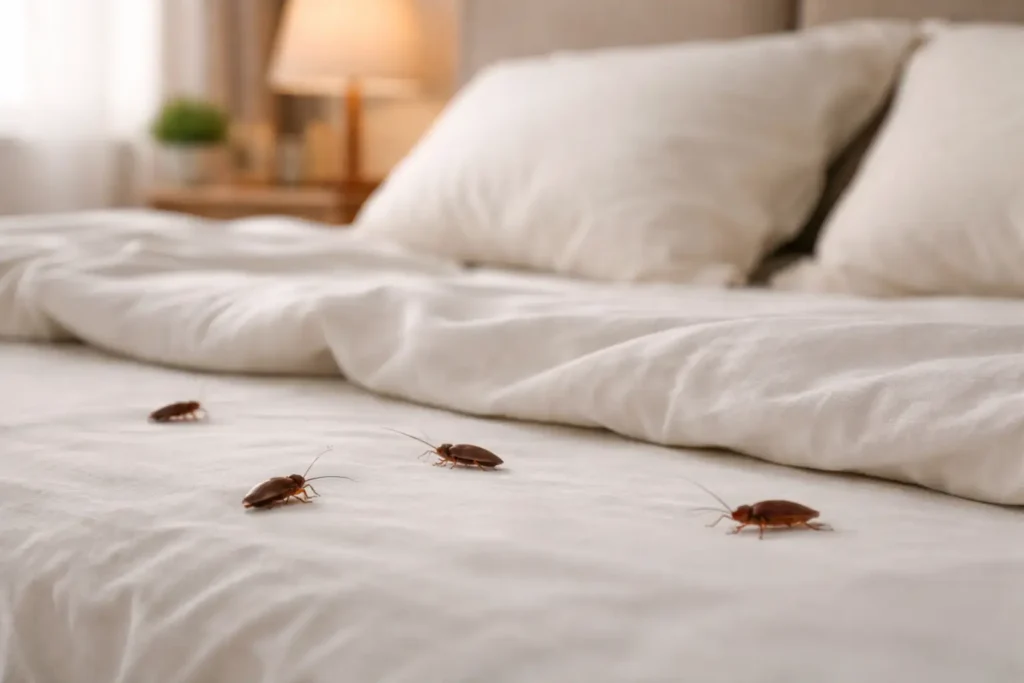
Cockroaches rely heavily on vibration detection through their legs and antennae. A sleeping person shifts position, breathes rhythmically, and creates subtle movement that most roaches interpret as a potential threat. In most cases, they choose stable surfaces like walls and furniture edges instead of unpredictable terrain like human skin.
However, if cockroaches are numerous or if your bedding is touching the floor and has food crumbs, a roach could climb onto bedding and possibly end up on a person. This is more likely in heavy infestations or when hungry roaches explore unusual places.
So, while the thought is unpleasant, the practical risk is low if you tackle the root issues: reduce food and water near the bed, seal entry points, and use targeted baits or traps. The following sections explain how to do that step by step.
Real-World Field Experience
In most of the homes I’ve serviced over the past 18+ years, roaches in bedrooms were not living in the mattress itself. They were traveling from kitchens, utility rooms, or shared walls in apartments.
I’ve inspected hundreds of beds where homeowners feared roaches were nesting inside — and in the vast majority of cases, the activity trail led back to moisture sources under sinks or behind appliances.
One memorable case involved a second-floor apartment where roaches were appearing on the bed nightly. The cause wasn’t the bedroom at all — it was a leaking dishwasher downstairs. Once that moisture source was fixed and baits were properly placed in the kitchen, the bedroom sightings stopped within two weeks.
The lesson: treat the source, not just where you see them.
How to Keep Cockroaches Away at Night (9 Easy Fixes)
I’ll lay this out as a natural routine you can start following tonight. The idea is to make your bedroom unattractive and inaccessible to roaches. Do the easy things now and keep up the better habits. If you’ve got a big infestation, include the professional options near the end. If you want to keep cockroaches away at night consistently, you need to combine sanitation, exclusion, and targeted baiting — not rely on one single trick.
1) Clean Your Room
Start simple: remove any food, drink, and dirty dishes from the bedroom. Wipe surfaces, vacuum or sweep under the bed, and wash any food-stained sheets or clothing. Roaches are opportunists; even a tiny crumb or sticky juice can be a magnet. Keep a small trash can with a sealed lid and empty it regularly.
Quick tip: Keep a small tray or container by the bed for non-food items (phone, watch, glasses) and empty it each morning to avoid crumbs collecting there. A very quick nightly ritual—five minutes—makes a big difference.
Regular cleaning reduces attractants and also makes it easier to spot early signs of infestation like droppings or egg cases. Over time, consistent cleaning forces roaches to find easier targets elsewhere.
Clutter also gives cockroaches physical protection as they travel. Piles of clothing, storage boxes, and stacked items create shaded pathways that allow them to move without exposure. Reducing clutter doesn’t just remove food — it removes safe travel routes.
2) Get Rid of Food and Water Near Your Bed
Cockroaches need moisture to survive. A spilled drink, a leaking humidifier, a pet water bowl, or even high humidity can give them the water source they need to hang around. Remove all edible sources and minimize standing water.
Quick tip: If you must keep a drink in your room, use a sturdy cup with a tight lid—no open glasses on the bedside table overnight. Also, wipe any condensation rings immediately.
Reduce humidity by ventilating the room at night or using a dehumidifier in damp climates. Fix small drips and seal pipes where possible. Removing food and water cuts the main incentives for roaches to come into your sleeping space.
3) Seal up cracks and openings
Roaches enter homes through tiny gaps: along skirting boards, under doors, through openings around plumbing, and through vents. Even a crack as thin as a credit card can be a highway for roaches.
Quick tip: Keep a tube of silicone caulk handy. Do a quick inspection: around pipes, behind the headboard, along the baseboard near the bed. Seal visible gaps tonight. If you find larger holes, use copper mesh or expanding foam before caulking.
Sealing gaps doesn’t just stop roaches from entering your bedroom. It also limits their ability to move inside your home, breaking up routes between their harborage (where they hide) and your bedroom.
4) Use Essential Oils
Essential oils are commonly used as a repellant. Oils like peppermint, eucalyptus, and citrus can be unpleasant to them and may disrupt their ability to navigate. In fact, roaches hate strong smells, which is why certain scents can temporarily deter them. While essential oils are not a full-proof extermination method for heavy infestations, they can help push roaches away from treated surfaces and act as a deterrent when combined with sanitation and sealing.
Quick tip: Mix 10–15 drops of peppermint or eucalyptus oil in a spray bottle of water and mist baseboards, behind bed frames, and the underside of furniture every few days. Don’t overdo it on fabrics that stain.
Note: Essential oils are a deterrent, not a killer. Use them to complement traps and sealing, not as your sole solution.
5) Set Up Bait
Bait is one of the most effective home treatments for reducing cockroach numbers. Bait stations or gel baits contain a food attractant and slow-acting poison. The cockroach eats the bait, returns to its hiding spot, and passes the poison to others. Proper placement is key: put baits along baseboards, near cracks, and where you’ve seen activity at night.
Cockroaches follow pheromone trails left by other roaches, which is why placing bait along edges and known travel routes increases success. When one roach finds the bait and returns to the harborage, others often follow the same path.
Quick tip: Place bait stations where you suspect roach traffic—near the bed’s baseboards, behind furniture, and in corners. Replace or refresh the bait according to label instructions, and rotate bait types if you don’t see progress after a couple of weeks.
Baits work best when you also remove competing food sources. If your room is clean and sealed, bait can pull roaches out of their hiding spots to feed and bring the bait back to the group.
6) Make Sure Sheets Aren’t Touching the Floor
Sheets or a bed skirt that drags on the floor provides an easy bridge for roaches to climb onto the mattress. Raising the bed slightly and ensuring bedding does not touch the floor reduces that access point.
Quick tip: If your bed frame allows it, raise the mattress or tuck the sheet so it clears the floor by an inch or two. Even better, put the bed on risers to create a physical gap between mattress and floor.
This is an easy, cost-free change that adds a small but meaningful layer of protection.
7) Try An Ultraviolet Light or Glue Traps
UV light traps and glue/sticky traps can be used to monitor activity and catch foraging roaches. Glue traps are cheap and show you where roaches are moving. UV light traps lure insects and capture or kill them; they are more commonly used in commercial settings, but some consumer models exist.
Quick tip: Place a few glue traps along baseboards and behind furniture for a week to map roach activity. Check traps each morning to see where catches are highest and focus your cleaning and bait placement there.
Monitoring with traps gives you evidence of whether your actions are working. If trap catches are dropping over a couple of weeks, you’re making progress. In real-world residential settings, UV lights are more useful for monitoring or minor deterrence than full control. They should never replace baiting and exclusion.
8) Consider sleeping somewhere else
If you’re dealing with a heavy infestation and are waking up stressed or unable to sleep, consider staying elsewhere temporarily while you take action. This isn’t always necessary, but it helps if you need to wash everything, let treatments set, or wait for a professional treatment to take effect.
Quick tip: Move to a clean guest room or a friend’s place for a few nights while you apply baits, seal gaps, and deep clean the infested rooms.
This is a practical, short-term move to protect your rest and mental health.
9) Check For an Infestation Somewhere Else in Your Home
Most of the time, the bedroom is a secondary area where roaches show up because their primary harborage is elsewhere—kitchen, bathroom, utility room, or even a neighboring unit in multi-family buildings. If you find roaches in your bedroom, check these places: under sinks, behind stoves and fridges, inside cabinets, around drains, and in cluttered storage areas.
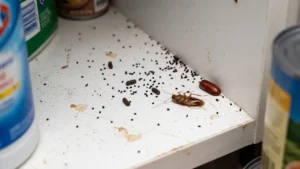
Investigate for droppings (tiny pepper-like specks), egg casings (smooth, dark capsules), or live roaches during the day (a sign of a heavy infestation). If you find a larger source, treat the source rooms aggressively with baits and sealing.
What Actually Works to Keep Cockroaches Away at Night
As someone who’s handled many roach jobs, here’s the short practical list.
What works well
What is limited or situational
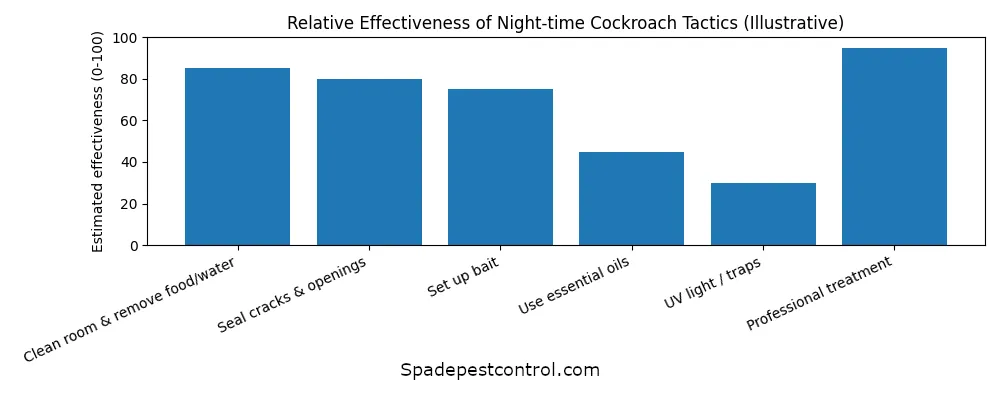
Here’s a simple visual breakdown of what actually works versus what only provides short-term relief.
Early Signs You May Have a Roach Problem
You don’t need to see live roaches to know you have a problem. Early warning signs include droppings (small black specks), a musty oily smell (in severe cases), egg casings, and shed skins.
Sticky traps are a useful early-detection tool: place a dozen in likely areas and check them each morning. If you catch several roaches in a week, escalate cleaning and baiting.
Seeing roaches frequently at night — especially in clean areas like bedrooms — can indicate that the population elsewhere in the home is growing. As colonies expand, competition for food increases, and roaches begin exploring new areas more aggressively.
If you find roach droppings near the bed or in the mattress seams, treat immediately and consider professional help. Some roach species reproduce quickly; addressing them early saves months of trouble. For example, a single German cockroach female can produce dozens of offspring in a short period, which is why small problems can escalate rapidly if ignored.
Health and Safety Considerations
Cockroaches are more than just unpleasant. Their droppings, shed skins, and saliva can trigger asthma and allergy symptoms, especially in children. Studies have shown that cockroach allergens are a common asthma trigger in urban housing, particularly in children living in multi-unit buildings. The U.S. Environmental Protection Agency and public health agencies recognize cockroach allergens as a common indoor trigger.
If you are using baits or insecticides:
- Follow all label instructions exactly.
- Keep products away from pets and children.
- Avoid mixing cleaning chemicals (especially bleach and ammonia).
- Never spray directly on bedding or mattresses.
For severe infestations, professional treatment is often safer than repeated over-the-counter pesticide use.
When to Call a Professional for Nighttime Roach Activity
If, after two to three weeks of consistent baiting, sealing, and cleaning, you still see roaches nightly or find live roaches during the day, the infestation is likely established. Daytime roach sightings are often a sign of overcrowding within wall voids or cabinets and typically indicate a well-established infestation.
Call a professional if you locate roach nests (clusters of egg cases, piles of droppings) or if you live in a multi-unit building where a neighbor’s infestation keeps re-seeding your home.
Professional services use targeted treatments, insect growth regulators (IGRs) that stop reproduction, and follow-up plans. For a heavy infestation, hiring a reputable pro gets faster, more reliable results.
Insect growth regulators disrupt the molting and reproductive cycle of cockroaches, preventing immature roaches from reaching adulthood. This is one reason professional treatment is often more effective than relying on repellents or light-based deterrents.
General home care publications like Southern Living also emphasize that persistent roach problems often require professional-grade products and follow-up treatments — especially in multi-unit housing where infestations spread between walls.
Before hiring a company, verify licensing in your state or province and ask whether they include follow-up visits. Effective roach control often requires more than one treatment, especially in multi-unit housing.
Also Read: Do Cockroaches Make Noise? The Sounds Might Surprise You
Final Thoughts on How to Keep Cockroaches Away at Night
If you want to keep cockroaches away at night, think of the bedroom as a place you make unattractive and inaccessible. That means removing food and water, sealing gaps, using baits smartly, and monitoring with traps. Essential oils and UV traps can help, but they rarely solve serious infestations on their own. For heavy or stubborn problems, a professional will save you time and stress. The goal is to reduce incentives for roaches to enter your bedroom. Do that consistently and you’ll sleep safer.
Remember: treat the house, not just the symptom. If roaches keep coming into your bedroom, they are probably living somewhere else in the home or coming in from outside. Find and fix the source.
If you consistently apply these steps, you can keep cockroaches away at night and reduce the stress that comes with unexpected sightings.