Homeowners often ask the same question when squirrels start digging in the yard or nesting in the attic: will rat poison kill squirrels?
It’s an understandable thought. You may already have rat bait in the garage, and when squirrels start raiding bird feeders or chewing through soffits, poison can seem like the fastest solution.
But pest control problems in real homes are rarely solved with a single quick fix.
Rat poisons are designed for rats and mice. Squirrels behave differently, eat differently, and interact with bait in ways that make poisoning unpredictable. In many situations, using rat poison for squirrels creates bigger problems — including risks to pets, wildlife, and even your own property.
Before putting out bait, it’s important to understand what actually happens when squirrels encounter rodenticides and whether rat poison will actually kill squirrels in real situations.
Also Read: Spadepestcontrol Blog
Quick Answer: Will Rat Poison Kill Squirrels?
Yes, rat poison can kill squirrels if they consume a lethal dose. However, most rodenticides are designed for rats and mice, not squirrels. In many cases squirrels ignore the bait, eat too little to die, or die in hidden places. More importantly, rat poison can seriously harm pets, owls, hawks, and other wildlife through secondary poisoning.
Will Rat Poison Kill Squirrels?
Yes, some rodenticides commonly used as rat poison can kill squirrels. Many common rodenticides act as anticoagulants or otherwise disrupt a mammal’s biology and will kill squirrels if the squirrel eats a lethal dose. But the result depends on the product, the active ingredient, the squirrel’s feeding behavior, and where the bait is placed. Anticoagulant baits cause internal bleeding over several days; other baits (vitamin D3 based or cholecalciferol) cause different toxic effects. Because the outcomes vary and secondary risks exist for pets and wildlife, using rat poison for squirrels is rarely a simple, safe solution.
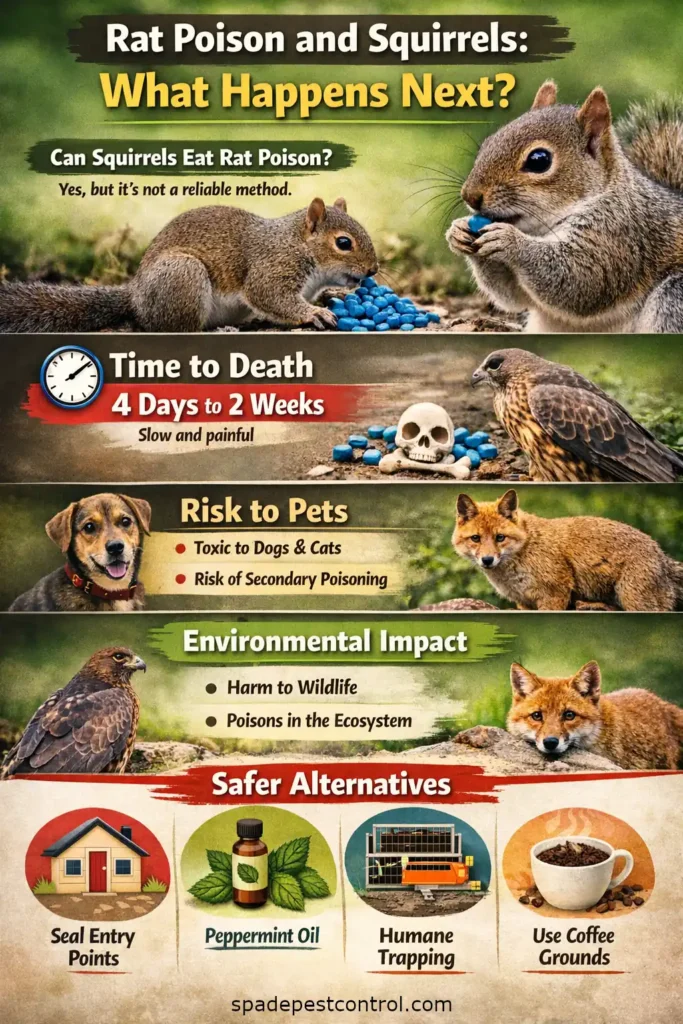
As the infographic shows, rat poison may kill squirrels, but it often causes unintended harm to pets, predators, and the surrounding ecosystem.
| Type of Rat Poison | How It Affects Squirrels |
| Anticoagulant rodenticides (warfarin, brodifacoum) | Prevent blood from clotting and cause internal bleeding over several days |
| Cholecalciferol (Vitamin D3) | Raises calcium levels in the blood, damaging organs such as the kidneys |
| Zinc phosphide | Produces toxic gas in the stomach that can quickly damage organs |
Should You Use Rat Poison to Get Rid of Squirrels?
Rat baits are designed with rats and mice in mind: smaller body size, different tastes, and a tendency to feed repeatedly in the same place. Squirrels are larger, often less interested in the flavor profile that attracts rats, and they forage more widely.
Because of that mismatch, squirrels may ignore the bait, or they may nibble and not consume a lethal amount. Even if they eat a lethal dose, anticoagulant bait products typically take days to kill—during which the animal can wander, hide, or be eaten by predators, exposing them to secondary poisoning.
And crucially, the bait itself is a hazard to pets and non-target wildlife. Given the slow, painful nature of anticoagulant poisoning and the risk of harming pets, birds of prey, raccoons, and other animals, it’s not a humane or smart first choice.
Short answer: No, I generally advise against using consumer rat poisons as a squirrel control method.
Why Rat Poison May Fail on Squirrels
Squirrels are not rats. They have different diets and behaviors. Many rat baits are formulated with ingredients (peanut oils, cereal chunks, or meat-based attractants) tailored for rats’ palate. Most poison bait products are designed specifically for rats and mice, so they don’t always appeal to squirrels that prefer whole nuts, seeds, and natural foods. Squirrels often prefer whole natural foods such as acorns, seeds, and fruit rather than processed bait blocks designed for rats. That means many baits just sit untouched.
When baits are eaten, you also need to consider the type of rodenticide:
- First-generation anticoagulants (like warfarin or diphacinone) require multiple feedings over several days. Squirrels might learn to avoid stations or simply not feed long enough to reach a lethal dose.
- Second-generation anticoagulants (like brodifacoum) are far more potent and can kill after a single feeding, but they are more persistent in tissues and greatly increase the risk of secondary poisoning to predators and scavengers. They’ve been restricted in many contexts because of those risks.
Add to this that bait placement matters. Baiting in open yards without secured bait stations makes products accessible to pets and to non-target wildlife. Even when bait is in tamper-resistant stations, squirrels are clever and can sometimes access bait or find ways into stations not designed specifically with squirrels in mind.
So “does it work?” Sometimes yes, sometimes no—and sometimes the collateral damage far outweighs the benefit.
Real-World Pest Control Experience
In real pest control work, rat poison almost never solves a squirrel problem.
I once inspected an attic where a homeowner had placed multiple rat bait blocks around the garage and yard hoping it would eliminate the squirrels chewing the roofline. Weeks later the squirrels were still active, but the homeowner’s dog had gotten sick after eating a bait block that had been dragged out of a station.
The squirrels ignored most of the bait entirely.
What finally solved the problem was sealing the roofline gaps with hardware cloth and installing a one-way door so the squirrels could exit the attic but not get back in.
That situation is extremely common. Poison rarely addresses the real issue — access points and food sources.
Ethical Concerns: The Reality of Anticoagulant Poisoning
If you’ve ever found a small animal that’s been poisoned, you know it’s not pretty. Anticoagulant rodenticides interfere with blood clotting, leading to internal bleeding. Death can be prolonged and distressing—animals become weak, may stop feeding, and eventually die from hemorrhage.
According to research reviewed by the National Pesticide Information Center, anticoagulant rodenticides interfere with blood clotting and can cause prolonged internal bleeding in animals that ingest them. If your goal is humane removal, poisoning is low on the list.
There’s also a moral duty to consider the ecosystem: predators such as owls, hawks, foxes, and even neighborhood dogs can eat a poisoned squirrel or rat and suffer secondary poisoning. The toxins used in rodent baits can build up in body tissues, particularly with second-generation compounds, and this persistence heightens the risk to predators and scavengers. For many communities and conservation-minded homeowners, that risk makes rodenticide use unacceptable.
Legality
Regulations vary by country and by state. In the U.S., the Environmental Protection Agency (EPA) has tightened rules over the years, particularly for powerful second-generation anticoagulants, limiting their availability to commercial applicators in some cases. This means certain products that once were sold over the counter are now restricted or reformulated. Always read and follow the product label; the label is the law.
If you are in doubt, consult your local agricultural extension office or pest control regulator. Expert tip: if you decide you need a pesticide, hire a licensed pest control professional—commercial applicators understand label restrictions, product differences, and best practices to minimize non-target risk.
Potential Environmental Damage
This is a big one. Anticoagulant rodenticide compounds don’t simply disappear from the environment. Second-generation anticoagulants accumulate in body tissues. When a predator eats a poisoned rodent, it can ingest enough toxin to become sick or die. Studies have documented widespread exposure to rodenticides in wildlife. For example, research published in a peer-reviewed review of anticoagulant rodenticides found measurable toxin exposure in many non-target predators and scavengers that feed on poisoned rodents.
The chart below shows what commonly happens after squirrels consume anticoagulant rodenticide.
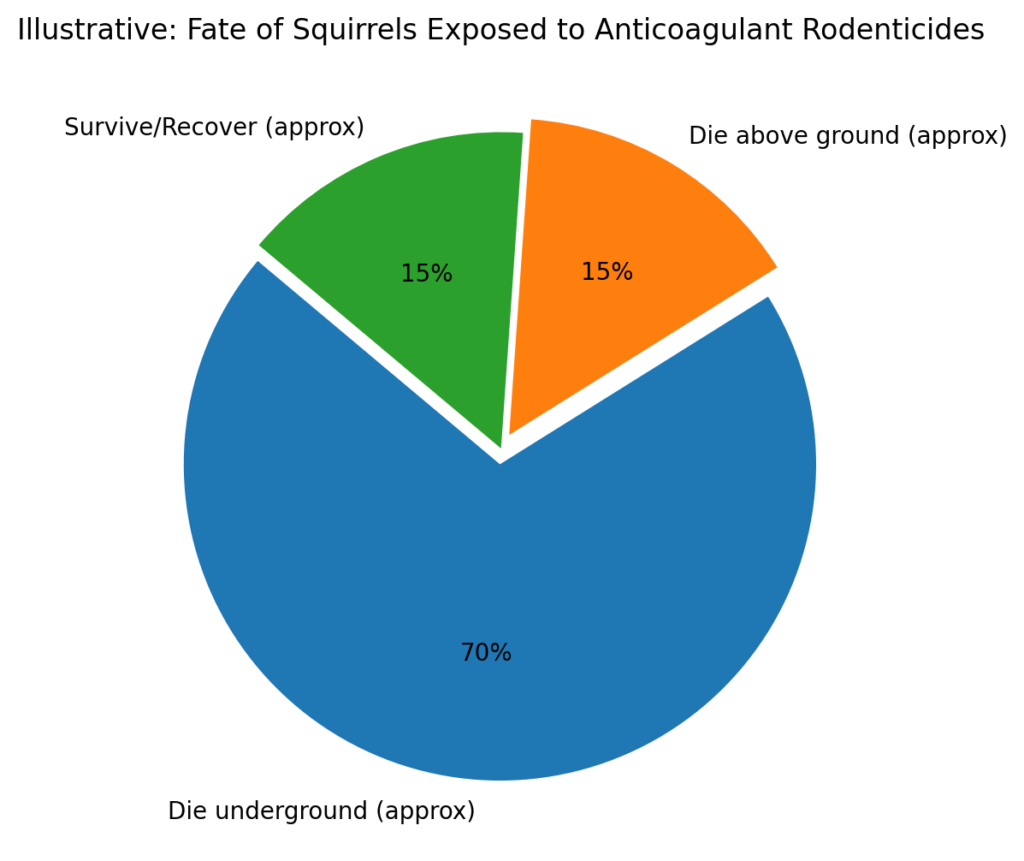
Reviews summarized by the U.S. Environmental Protection Agency show that predators such as owls, hawks, and foxes are frequently exposed after eating poisoned rodents. Beyond wildlife, there’s also the problem of carcass disposal: poisoned rodents often die underground, but a portion die above ground and can be found by others, spreading the toxin further.
Risk Of Injury and Illness
Pets are particularly vulnerable. Dogs and cats are curious and frequently investigate baits. Dogs, especially, will sometimes eat baits directly or eat poisoned rodents. Anticoagulant poisoning in pets causes bleeding, bruising, lethargy, and can be fatal without prompt veterinary care. Some baits contain cholecalciferol (vitamin D3), which causes a different pathology (hypercalcemia) and can also be life-threatening. Labels and veterinary resources highlight vitamin K (for anticoagulants) and supportive care as lifesaving interventions.
The chart below shows relative risk pathways from rodenticide use.
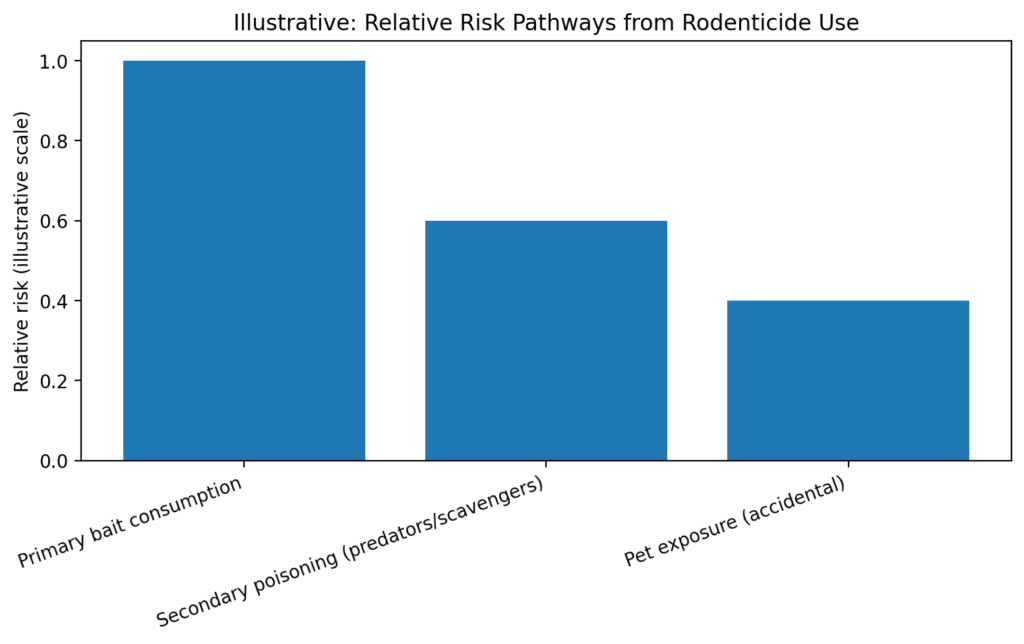
If you’re researching backyard tricks, you might have also seen mothballs mentioned. Don’t use mothballs to repel or kill squirrels. Mothballs contain naphthalene or paradichlorobenzene and are not registered or effective for wildlife control; they also pose health risks to pets and children. For pet exposure, always assume immediate veterinary attention is necessary if you think your pet ate bait or a poisoned animal.
Safety Warning for Pet Owners
If you suspect your pet has eaten rat poison or a poisoned animal, contact a veterinarian immediately.
Symptoms of rodenticide poisoning may include:
Early veterinary treatment can save a pet’s life. Anticoagulant poisonings are commonly treated with vitamin K1 therapy, but timing is critical.
Will D-Con Kill Squirrels?
D-Con is a well-known brand and historically included potent anticoagulants such as brodifacoum. Over the last decade D-Con changed some product formulations in response to regulatory pressure and now offers products with different active ingredients in certain product lines (for example cholecalciferol in some residential products).
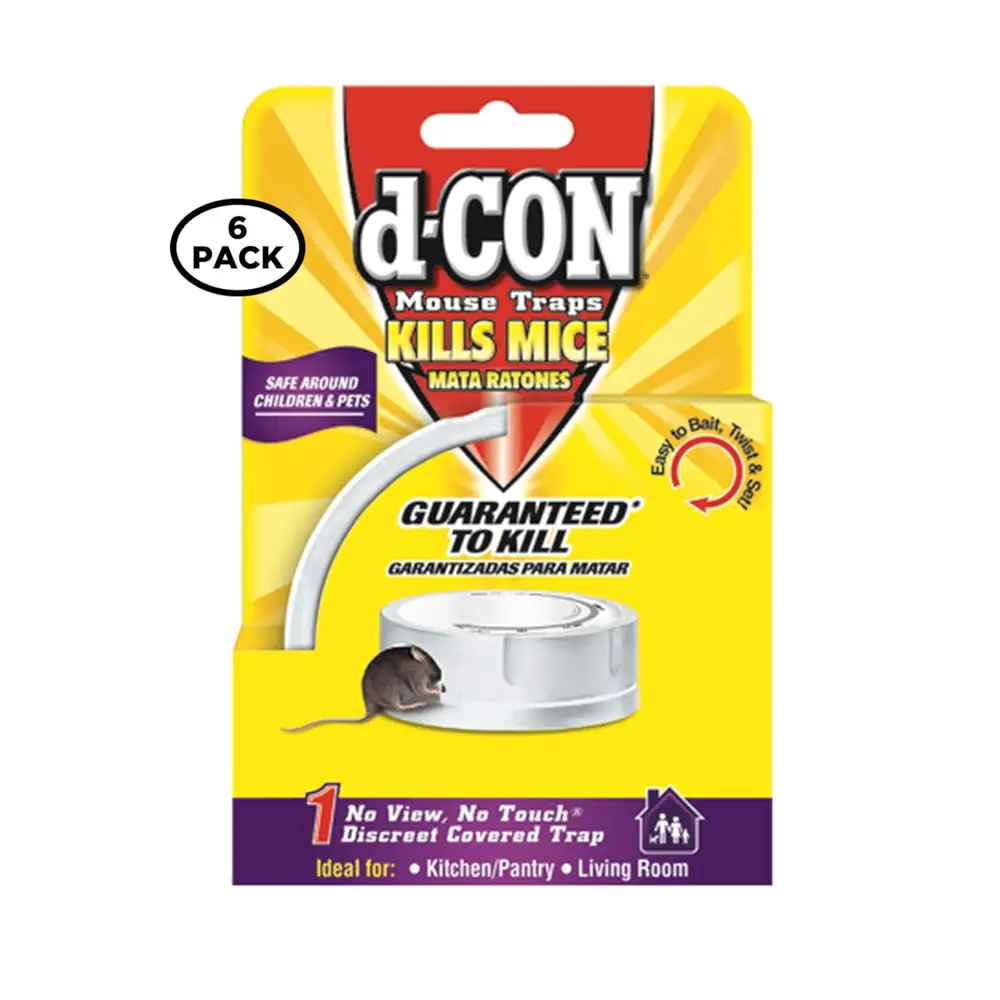
Whether a specific D-Con product will kill squirrels depends on the active ingredient and the dose consumed. Older brodifacoum products are highly toxic to many mammals and can kill squirrels after a single feed, but they also carry high secondary-poisoning risk. Newer D-Con formulations may use different compounds with different effects. Always check the label and active ingredient; if you want to avoid dangerous anticoagulants, consider non-toxic control options first.
Are Squirrels Attracted to Rat Poison?
Not necessarily. Squirrels have specific food preferences and can be picky. Many commercial rat baits use meat or cereal-based attractants that rats find palatable. Tree squirrels and many ground squirrels often prefer nuts, seeds, and fruit. That means rat poison is not reliably attractive to squirrels. In some situations, squirrels may sample rodent bait or other poison bait products, especially if they are flavored with peanut butter or sweet oils. But overall attractivity is hit-or-miss. Also, when baits are presented in tamper-resistant stations aimed at mice and rats, squirrels may be physically unable or unwilling to enter and feed. So in general, squirrels are not consistently attracted to typical rat bait.
Methods To Try Instead
I always recommend starting with exclusion and habitat modification. Make your yard less attractive and block access points. Some products marketed as squirrel poison do exist, but many wildlife experts discourage using them because they carry the same risks to pets, predators, and other non-target animals as rat poison.
If you want practical alternatives to poison, try these tested options:
1. Exclusion and proofing. Seal attic vents, gaps in eaves, and holes in soffits with metal flashing or hardware cloth. Squirrels are strong and chew through thin materials—use small-gauge galvanized mesh for long-term results.
2. Live trapping (humane removal). For persistent nuisance squirrels in attics, a professional trap-and-relocate approach using one-way doors or live traps can be effective. Know local laws—many areas restrict relocation.
3. Habitat reduction. Remove food sources—secure trash, use squirrel-proof bird feeders, and pick up fallen fruit. Squirrels are less likely to hang around if food is scarce.
4. Repellents and natural deterrents. Some homeowners have success with strong scents or taste repellents. For example, you can deter them with peppermint oil and used coffee grounds can make certain areas less appealing. These aren’t guaranteed cures, but they’re low-risk first steps for garden beds or small problem spots.
5. Modify garden layout. Plantings that are less attractive to squirrels, using raised beds with wire mesh under the soil, and removing hiding places can reduce conflict over time.
6. Professional integrated pest management (IPM). A licensed pest control pro will combine exclusion, trapping, and targeted deterrents instead of defaulting to poison. That approach is more likely to give you a humane, long-term fix.
Also Read: Squirrel Bites: Are They Dangerous? Symptoms, Risks, and What to Do Next
Common Mistakes When Trying to Poison Squirrels
Many homeowners assume rat poison will quickly solve a squirrel problem, but several mistakes make the situation worse.
Frequently Asked Questions
Conclusion
If you’re irritated by squirrels, rat poison is rarely the best first move. It can kill squirrels, but the results are unpredictable and can cause prolonged suffering, plus it puts pets and wildlife at risk. Safer and more reliable strategies are exclusion, habitat modification, targeted trapping, and humane deterrents. If you feel the situation requires chemical control, consult a licensed professional who can select the correct product, minimize non-target exposure, and follow label requirements. Your neighborhood wildlife and your pets will thank you.