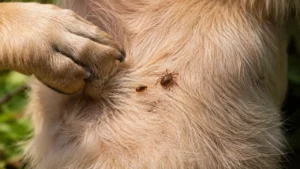
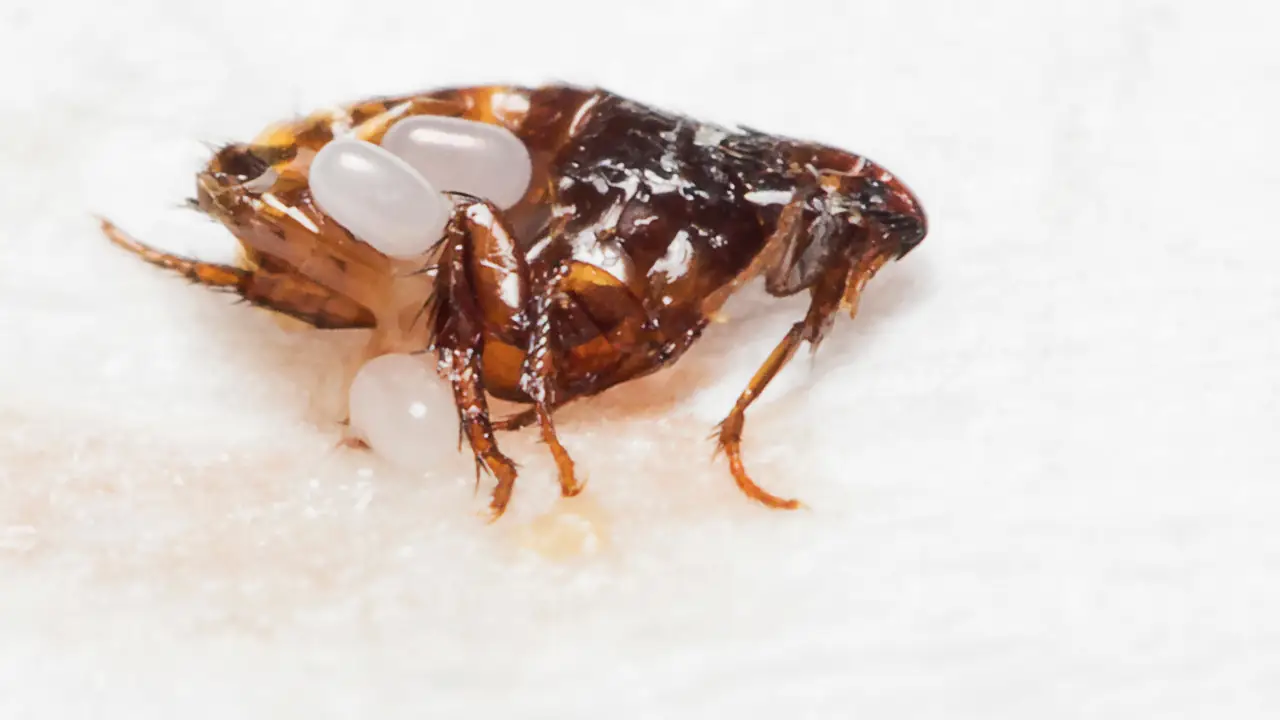
If you are dealing with fleas at home, the first thing to understand is this: fleas are not random. They show up where the conditions help them find a host, hide, and survive long enough to keep breeding. That is why one house can stay flea-free while another just a few doors down keeps getting hit again and again.
In most cases, the real problem is not one flea. It is the mix of pets, wildlife, shade, moisture, and hidden resting spots that lets fleas keep going. Fleas also spend a lot of time off the animal, in carpets, pet bedding, cracks, shaded yard areas, and other protected places, which is why a simple spray on the pet usually does not solve the full problem.
In real flea jobs, the biggest mistake I see is homeowners focusing only on the pet and missing the places fleas are actually developing. You can treat the dog or cat and still keep getting bitten because the next wave is already sitting in carpet fibers, pet bedding, under furniture, or shaded spots outside where animals rest.
In other words, fleas usually come back because the environment is doing most of the work for them. In this guide, I’ll break down what attracts fleas, why they keep showing up in the same areas, and what actually helps when you want to stop the cycle instead of just reacting to bites.
Also Read: How To Get Rid of Fleas: 8 Proven Methods That Actually Work
Quick Answer: What Attracts Fleas?
Fleas are mainly attracted to carbon dioxide, body heat, movement, and protected places where pets or wildlife rest. In real homes, the biggest flea hotspots are usually pet bedding, carpets, upholstered furniture, shaded yard areas, under decks, and along fence lines where animals spend time.
If fleas keep coming back, it usually means the flea life cycle is still active in the environment, with eggs, larvae, or pupae developing in carpets, bedding, cracks, or shaded outdoor areas, not just adult fleas on the pet. That’s why the most effective flea control always treats the pet, the indoor resting areas, and the outdoor pet zones together.
If you are wondering what fleas are attracted to, the short answer is host signals and protected hiding places, not just your pet.
The 5 Biggest Things That Attract Fleas
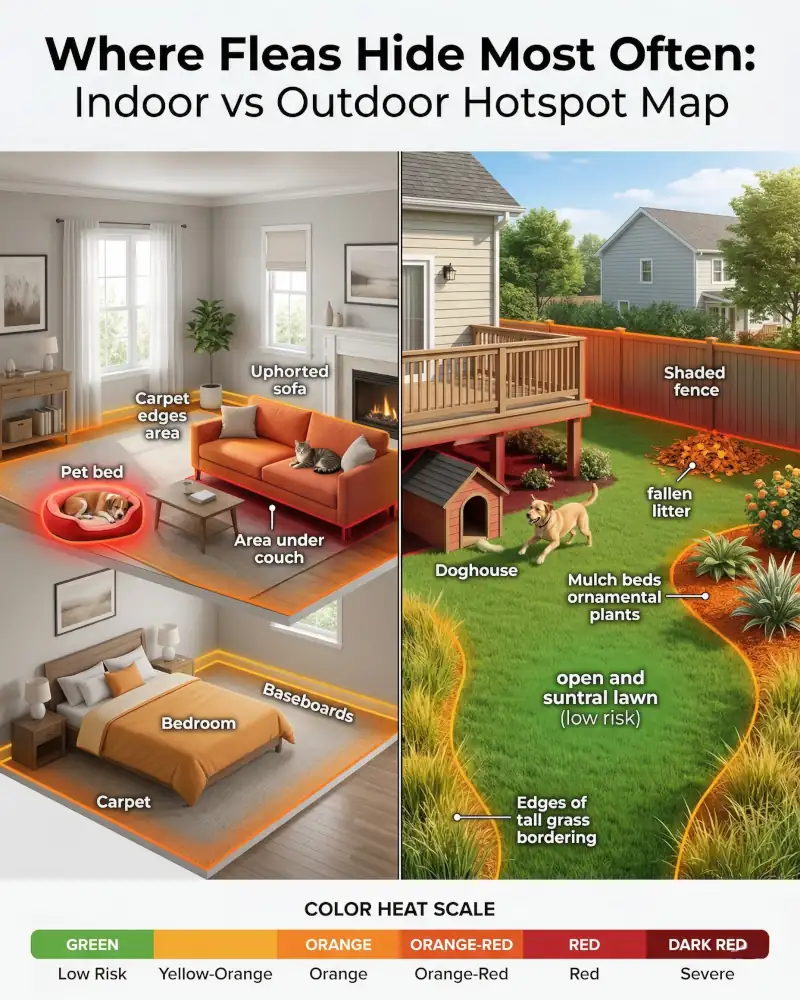
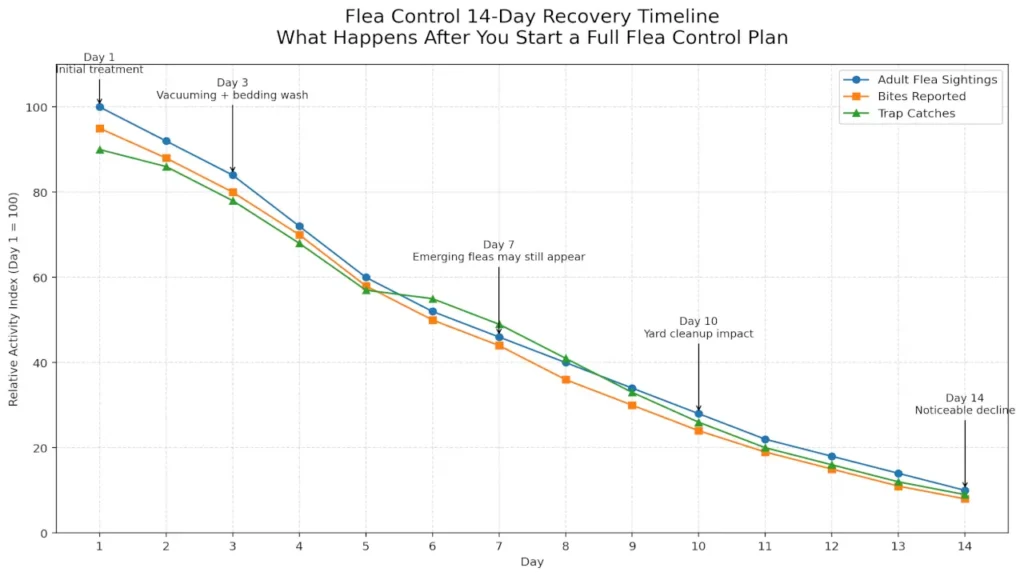
If you want the short version, this visual breaks down the five biggest flea attractants, the most common indoor and outdoor hotspots, and why flea control usually takes at least two weeks to fully settle down.
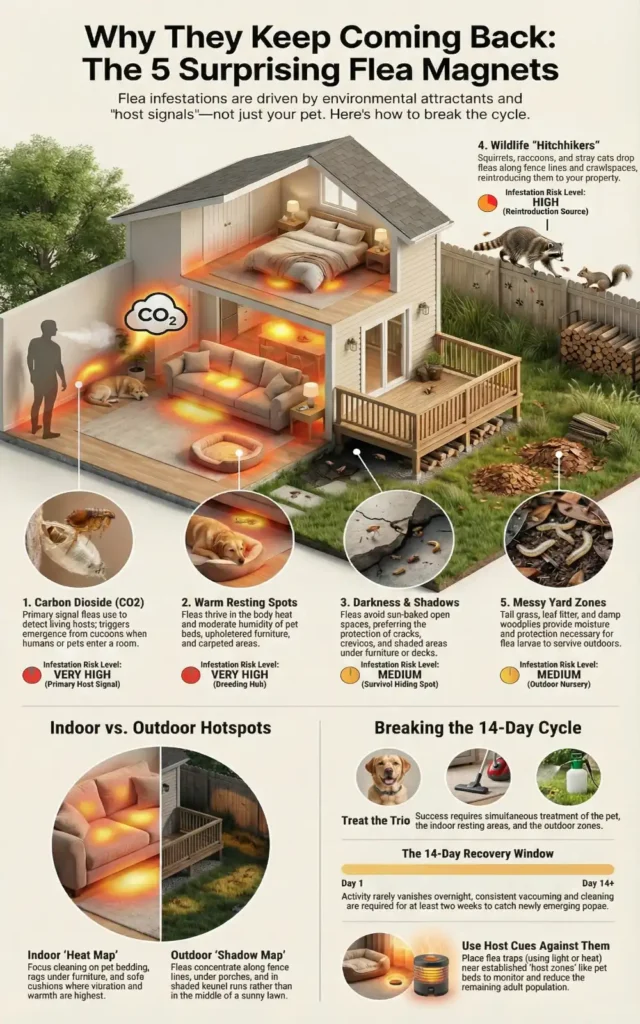
- Carbon dioxide from people and pets
- Warm resting spots like pet beds, furniture, and carpet
- Dark or shaded hiding areas indoors and outdoors
- Wildlife activity around the property
- Messy, damp, protected yard zones where animals rest
What Attracts Fleas in the House or Yard?
Once you understand the main host cues and hiding conditions fleas respond to, it becomes much easier to find the real hotspots inside the home and outside in the yard. In practical terms, what causes fleas in the house is usually not just the pet itself, but the combination of indoor resting areas, flea eggs in the environment, and outdoor reintroduction from shaded animal zones.
Carbon Dioxide
Carbon dioxide is one of the biggest signals fleas use to find a host. When people and animals breathe, they give off carbon dioxide, and fleas can detect that as a cue that something warm and living is close by. Fleas inside cocoons can also respond to host signals before emerging, which is one reason they can seem to “appear” suddenly when someone enters a room, sits on a couch, or settles into a pet’s favorite resting spot. This is also one of the main reasons fleas are attracted to humans, especially when people are sitting still in the same area where fleas are already hiding.
Expert Tip: If you are using a flea trap, place it where the host cues are strongest, such as near a pet bed, a couch where people sit in the evening, or another low-traffic resting area. Fleas respond best when the trap is part of the space they already think of as a feeding zone, not in some random corner of the house. Also remember that vibration and movement can help wake fleas up from their pupal stage, so cleaning and vacuuming are useful, but they can also stir hidden fleas into activity before they are removed. That is one reason consistent cleanup matters more than one big effort.
Warmth
Warmth is another major flea magnet. Fleas do well in warm, moderate indoor conditions, and they also respond to the warmth of a body, bedding, or a resting spot. Fleas do especially well in warm indoor conditions with moderate humidity, which is exactly why pet beds, upholstered furniture, and carpeted living spaces can become comfortable flea zones. Outdoors, fleas do not thrive as well in hot, sunny, dry areas. They tend to do much better where it is shaded and moist.
You will often see this pattern in homes with pets. The dog sleeps in one chair every night. The cat chooses one blanket. The flea problem seems concentrated there because those warm spots are where fleas, eggs, and larvae keep reconnecting with a host. Eggs can fall off the animal and settle into the environment, and then the next generation is waiting in the same familiar warm area.
Expert Tip: Wash pet bedding often and dry it on high heat when the fabric allows it. Clean the places where pets actually rest, not just the pet itself. Flea control is much easier when you remove the warm, protected places they keep using as a home base. The EPA also recommends thorough vacuuming and cleaning as part of flea control because eggs, larvae, and adults often stay hidden in the environment.
Darkness & Shadows
People sometimes say fleas “like darkness,” and that is partly true in the practical sense. Fleas are not looking for a bright open lawn or a sun-baked patio. They prefer protected spots where they can hide, wait, and move toward a host when the timing is right. That includes under furniture, in pet bedding, in cracks, under decks, along foundations, and in shady yard areas near where animals sleep or lounge. Texas A&M AgriLife Extension notes that moist, shaded spots near pet resting areas are the most likely places to hold fleas outdoors, while hot, sunny lawns are usually much less flea-friendly.
There is also a clever trap detail here. Some flea traps use blinking or flickering light because it better mimics the movement of a nearby host. In practice, fleas respond better to a realistic “host cue” than to a plain light left on in an empty corner. In other words, fleas are not simply chasing light. They are reacting to a signal that suggests a host is moving nearby.
Expert Tip: When you are hunting fleas, do not just inspect the open center of the room or the middle of the yard. Check the shaded edge areas first. Look under couches, behind furniture, under porch furniture, beside kennel runs, and around any place a pet likes to nap. That is where flea activity is most likely to stay hidden.
Wildlife On Your Property
Wildlife is a huge reason fleas keep coming back. Squirrels, raccoons, opossums, feral cats, rodents, and other animals can carry fleas onto your property and leave them behind in nesting or resting areas. Once those fleas get into the environment, your pets can pick them up, and then the cycle moves right into the house. That is why a flea problem is often bigger than the pet in front of you. It may actually start with the wildlife around your fence line, shed, crawlspace, or deck. Once pets start carrying fleas, both the house and the yard can quickly become part of the life cycle, especially where animals sleep, lounge, or nest.
Wildlife activity matters because it creates a steady supply of host cues and sheltered nesting debris. Fleas do not need a perfect animal-only environment. They only need a warm-blooded host nearby and a protected place to wait. If birds, rodents, or stray cats are using your yard, fleas may already be living in the grass, debris, or resting spots long before you notice the first bite.
Expert Tip: If wildlife is active on your property, fix the attractants around them. Secure trash, remove pet food left outside, close off access to crawlspaces or sheds, and reduce hiding spots near the home. If your pets spend time outdoors, focus treatment on the pet resting zones first. In most cases, outdoor treatment works best when you focus on the exact places animals actually use instead of trying to blanket the entire yard.
A Messy Yard
A messy yard is one of the easiest ways to invite fleas. Tall grass, leaf litter, woodpiles, weeds, shaded groundcover, clutter, and damp resting areas all create the kind of protected environment fleas like. Flea larvae usually do much worse in hot, sunny lawns, which is why messy, shaded, moist corners are the bigger concern. In most yards, the real flea hotspots are concentrated around pet resting and travel zones, not spread evenly across the whole lawn.
This is one of the most misunderstood parts of flea control. People often think the whole lawn is “infested,” when the real hotspot is usually a narrow band of problem areas. That could be under a deck, along a fence line, next to a doghouse, around a shady patio, or beside a foundation where leaves collect and moisture lingers. Once those spots are cleaned up, you remove some of the best conditions fleas depend on.
Expert Tip: Keep the grass cut, clear out leaves and debris, and trim dense plants near the home. Do not ignore the side yard, the area under decks, or the back corner where pets hang out. Those overlooked spaces are often where flea populations stay alive the longest.
Real-World Flea Pattern I See Most Often
One of the most common flea situations I’ve seen is a homeowner treating the dog, vacuuming once, and assuming the problem should be gone in a few days. Then a week later, they start getting bitten again and think the treatment “failed.”
In a lot of those cases, the real issue is that fleas were developing in two places at once: inside around the pet’s favorite resting spots, and outside in a shaded area like under a deck, along a fence, or near a dog run. The pet gets treated, but the environment keeps reloading the problem.
The homes that improve fastest usually do the same three things right away: they treat the pet consistently, vacuum daily for the first week or two, and clean up the exact outdoor spots where the animal rests. That is usually what breaks the cycle. Flea control works best when you stop thinking “Where are the fleas I can see?” and start thinking “Where are the fleas developing when nobody is looking?”
Once you know what attracts fleas, the next step is using those same host cues against them to monitor activity and reduce adult fleas. This is why flea control often fails in DIY situations: people treat the visible fleas, but they miss the places the next generation is developing.
How to Attract Fleas Into Traps (Without Making the Infestation Worse)
This is where traps come in. Flea traps do not solve every infestation by themselves, but they can help monitor activity and reduce adult fleas when used correctly. They work best as a support tool, not a standalone solution. If you are also wondering whether general household sprays are enough, read our guide on Does Bug Spray Work on Fleas? That is another area where homeowners often waste time on the wrong product.
A simple DIY flea trap can also use a light source over a shallow dish of soapy water, which can help you monitor adult flea activity in problem areas. The main point is that traps should be part of the plan, not the whole plan. The fastest progress still comes from vacuuming, cleaning bedding, and treating both the pet and the environment.
Think of trapping as a way to pull a few adults into a controlled spot where they cannot keep biting or breeding. That is useful, especially when you are trying to measure whether the problem is shrinking. But traps work best when you also remove eggs, larvae, and pupae from the home and yard. That is why daily vacuuming, pet treatment, and cleaning bedding are still so important.
Sticky Pads
Sticky pads or sticky cards are one of the simplest flea-trap tools. Most sticky-card flea traps work by attracting adult fleas into a small capture zone near pet beds, furniture, or other loafing areas. These traps are helpful because they give you a visible sign of activity. If you are catching fleas, you know they are still present. If the trap stays empty after enough time and the rest of the cleanup is consistent, that is a good sign the population is dropping.
The key thing to remember is that sticky pads are only one piece of the puzzle. They are a monitor and a capture tool, not a magic fix. If the pet is untreated, the bedding is dirty, or the yard still has shady flea-friendly pockets, the trap will keep catching newcomers forever.
Traps With Heat Lamps
Heat-style traps work because fleas respond to warmth and light, especially when the trap is placed low to the floor near the areas they already use. That combination of warmth, light, and movement cues is what makes the trap more interesting to a flea than a plain overhead light.
The best results usually come at night or in a darker room where the trap stands out. Fleas are active while foraging, and the trap becomes a more convincing “host signal” when there is less competing light around it. Keep the trap near the floor, close to the places fleas already seem to favor.
Make Your Own Trap
A simple homemade flea trap can be made with a small lamp shining over a shallow dish of soapy water. The light draws fleas in, the water traps them, and the soap helps them sink. A tea light in the dish can also work, though safety matters whenever you mix heat, water, and electricity. This kind of trap is best used as a nighttime monitor near pet resting areas, especially where you already suspect flea activity.
Here is the practical part: set the trap where the fleas are likely traveling, not in a place you never see them. Put it near the pet bed, along a baseboard, or in the corner where the animal sleeps. Then check it regularly. If it catches fleas, that tells you the infestation is still active and that the area needs more cleaning and treatment. If it stops catching fleas after cleanup and treatment, that is a useful sign your efforts are working.
Safety Notes Before You Start
If you are using flea products on pets, always follow the label for the animal’s species, age, and weight. Dog products should never be used on cats unless the label specifically says they are safe for cats.
If you use a homemade flea trap with a lamp, keep it away from children, pets, curtains, and anything flammable. If the infestation is heavy or someone in the home is reacting badly to bites, it may be worth talking to your veterinarian or a licensed pest professional so the problem does not keep escalating.
Also Read: Bed Bug Bites vs Flea Bites: Most People Misidentify Them, Do You?
Common Mistakes That Keep Fleas Around
Conclusion
If you are asking what attracts fleas, the real answer is a combination of host cues and hiding places. Carbon dioxide, warmth, movement, shadows, shade, messy yard conditions, and wildlife activity can all make your home or yard more attractive to fleas. That is why fleas often keep showing up in pet bedding, under furniture, around decks, along fences, and in other protected spots. Good control means removing those conditions, not just treating the bites you can see today.
The fastest way to get ahead of a flea problem is to attack it from every angle at once. Treat the pet, clean the bedding, vacuum often, focus on shady yard zones, and use traps to monitor what is still active. When you do that, you stop feeding the flea life cycle instead of just chasing adults around the house.
If you focus on the exact places fleas feed, hide, and develop instead of just the bites you notice, you usually solve the problem faster and with a lot less frustration. The best prevention is simple: keep pet resting areas clean, stay ahead of outdoor flea zones, and deal with the environment before a few fleas turn into a full indoor cycle.