Bathrooms are one of the easiest places to miss plaster bagworms at first. What looks like a tiny piece of lint on the wall or ceiling is often a case-bearing larva hiding in plain sight. The good news is that this is usually a cleanup and moisture-control problem, not a serious infestation emergency. In most homes, plaster bagworms in bathroom areas show up because of humidity, dust, and old spider webs collecting in corners people rarely clean. Once you know where to look and what is feeding them, they are usually very manageable.
Quick Answer: Plaster Bagworms in Bathroom
Plaster bagworms in bathroom areas usually show up because humidity, dust, lint, and spider webs build up in overlooked corners. The fastest fix is to vacuum the cases, remove webs and debris, clean around vents and mirrors, and lower moisture so they stop coming back.
In real homes, I’ve seen these show up most often in guest bathrooms, basement bathrooms, and older bathrooms with weak airflow. Homeowners usually notice them after spotting what looks like a bit of lint stuck near the ceiling line or above a mirror. Once you start checking the forgotten areas—fan covers, vanity light bars, towel racks, and upper corners—you usually find the pattern fast: light moisture, trapped dust, and old webbing.
Also Read: 18 Wasp Repellent Plants That May Help Keep Wasps Away Naturally
Why You’re Seeing Plaster Bagworms in the Bathroom
Plaster bagworms tend to show up where there is moisture plus something for them to feed on. The University of Florida’s IFAS Extension notes that household casebearers are commonly associated with spider webs, lint, hair, wool, and other bits of organic debris, which is exactly why bathrooms become such a common hiding place in real homes. Bathrooms check a lot of those boxes at once. Shower steam raises moisture, exhaust fan covers collect dust, corners stay untouched, and spider webs can build up around fixtures without anyone noticing for weeks.
That is why bathrooms—especially guest bathrooms—are such a common surprise spot for plaster bagworms. They are not always cleaned as often as the kitchen or living room, and they have plenty of low-traffic edges where debris can collect. When people say, “Why are there plaster bagworms in my bathroom?”, the answer is usually not one single thing. It is the combination of humidity, airflow that is not great, and tiny food sources hiding in plain sight. Bathrooms are often just the place where homeowners first notice them, not always the only place they are living. If you’re starting to see them in other rooms too, the full plaster bagworm guide gives you the broader whole-house picture.
Where Plaster Bagworms Hide in a Bathroom
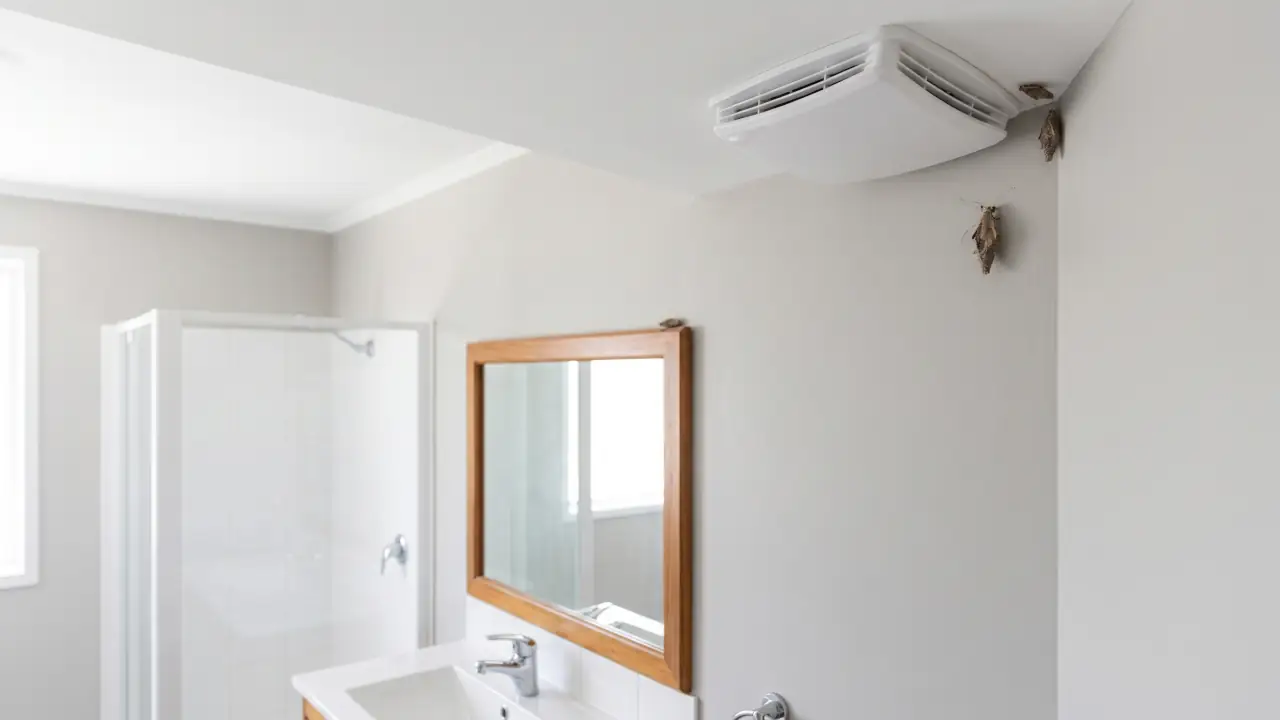
In a bathroom, plaster bagworms usually hide where your eyes do not land first. Ceiling corners are a classic spot because spider webs and dust collect there. The same goes for the space above mirrors, behind towel racks, around vanity edges, and near light fixtures or exhaust fans. In real inspections, these are the exact “out-of-sight” zones where homeowners miss them for weeks because the cases blend in like dust or tiny lint shells. In bathrooms, they are especially easy to miss when the case is attached near white paint, caulk lines, or textured ceilings.
You will also want to check behind bathroom wall decor, in window corners, and near baseboards if dust has built up. These are not magical hiding places. They are just the spots people forget to touch when they clean. Once one case appears there, it is easy for more to show up nearby because the same little pocket of dust and webbing is still there.
What Plaster Bagworms Look Like on Bathroom Walls and Ceilings
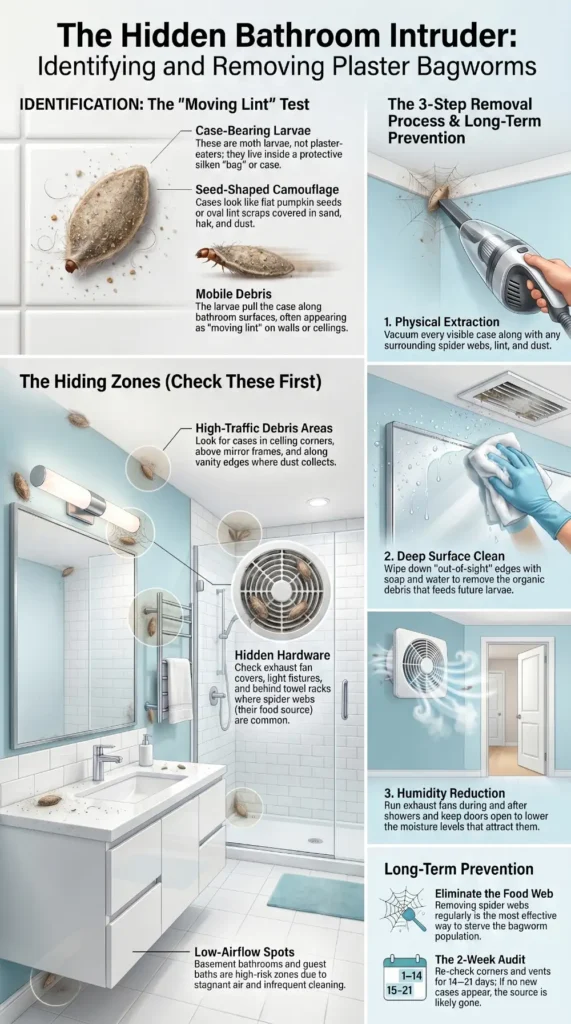
On bathroom walls and ceilings, plaster bagworms often look like tiny seed-shaped bits of lint or dust. If you notice what looks like plaster bagworms on a bathroom wall or plaster bagworms on the bathroom ceiling, the cases usually look like tiny moving lint shells stuck close to the surface.
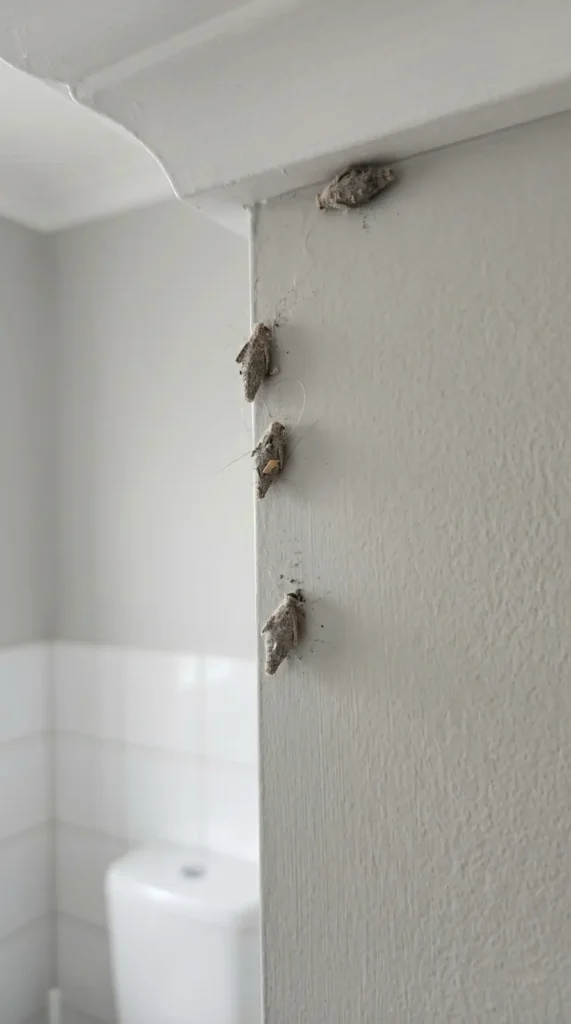
People frequently mistake them for wall debris at first, which is understandable because the larva lives inside a silken case that is covered in whatever it found nearby, such as lint, sand, paint fragments, hair, or other fine debris. They can look like a crawling pumpkin seed or a small, flat cocoon, and the larva can slowly pull the case along as it moves.
The important part is this: the name is misleading. They do not eat plaster. They are case-bearing moth larvae, and the case is their shelter. In a bathroom, that means the clue you are looking for is not a plaster-eating insect. It is a tiny mobile case tucked into a corner, along a wall, or near the ceiling line.
Are Plaster Bagworms in the Bathroom Dangerous?
For most homeowners, plaster bagworms are a nuisance, not a health emergency. The main problem is the appearance of the cases and the fact that they can keep coming back if the room stays humid and dusty. They can also feed on spider webs and, in some situations, on wool and other natural fibers. That makes them annoying, but it does not make them a high-risk pest in the way mosquitoes or rodents can be.
So the right attitude is calm but firm. You do not need to treat the bathroom like it is under siege. You do need to clean it thoroughly, dry it out, and remove the hidden buildup that keeps the population going. In most cases, that is enough. If you start seeing large numbers in multiple rooms, the concern is usually not health risk—it is that the home has a broader dust, webbing, or hidden harborage issue that needs attention.
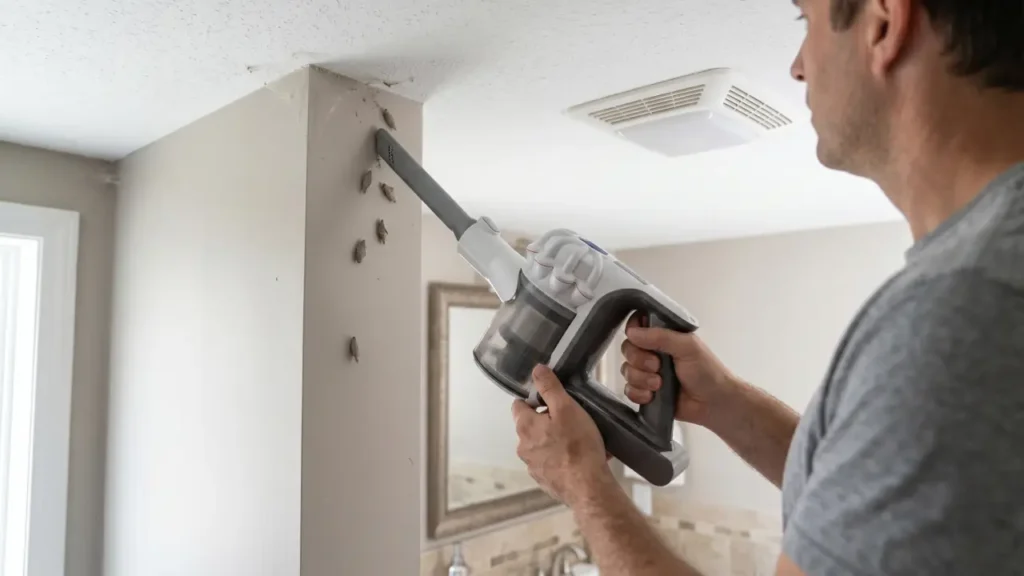
How to Get Rid of Plaster Bagworms in Bathroom (Step-by-Step)
1. Vacuum Visible Cases and Spider Webs
Start with the obvious cases first. Vacuum every visible plaster bagworm, along with the loose dust, lint, and spider webs around it. Mississippi State University Extension specifically recommends physical removal and cleanup as the first line of control, which matches what actually works in homes: the bags themselves, the webbing around them, and the debris feeding them all need to go—not just the visible insect.
2. Clean Hidden Bathroom Edges
Next, clean the hidden spots that feed the problem. Wipe behind mirrors, around shelves, along the vanity edge, and near light fixtures or vent covers. If you only clean what is easy to see, you leave the food source behind. That is why the insect seems to “come back” even after someone already removed a few cases. The source was never really gone.
3. Lower Bathroom Humidity
After that, focus on moisture. Run the exhaust fan after showers, keep the bathroom door open when possible, and dry wet surfaces instead of letting steam sit on the walls and ceiling. High humidity is a real part of why these insects thrive, so moisture control is not just a nice extra step. It is part of the fix.
If I had to rank what matters most in bathrooms, I’d put hidden dust and webbing first, humidity second, and insecticide a distant third. Homeowners often assume the moisture alone is the whole problem, but in most bathrooms the infestation keeps going because the food source is still sitting above eye level. If you remove the cases but leave the dusty corners and old webs, you usually end up seeing them again.
4. Check the Rest of the House if They Keep Returning
If the problem is still active after cleaning, take a broader look at the home. Bathrooms often show the symptom, but the source can sit elsewhere in the house, especially where spider webs, dust, or natural fibers collect. That matters because bathroom control works best when the rest of the home is not quietly feeding the same problem.
5. Use Insecticide Only as a Last Resort
Only after that would I consider a targeted insecticide in cracks and crevices, and only if the product label specifically allows bathroom use on that surface. Even then, it is not the main fix. Cleaning, vacuuming, and moisture control do most of the work. In a bathroom, be extra careful around exhaust fans, towel storage, toothbrush areas, and any surface that may contact skin or moisture. If kids or pets use the space, avoid casual overapplication. If you skip cleanup and spray first, the bathroom often stays attractive to the next generation anyway.
6. Monitor the Bathroom for 2 to 3 Weeks
Finally, recheck the bathroom for the next two to three weeks. That matters because you want to know whether you solved the source or just removed the visible cases. If no new cases appear after a couple of weeks and the corners stay clean, you are probably past the worst of it.
Why Bathrooms Keep Attracting Plaster Bagworms
Bathrooms keep attracting plaster bagworms when the same conditions keep repeating. Steam from showers, poor airflow, dust above eye level, and hidden cobwebs all create a steady home for the larvae. Guest bathrooms are especially common trouble spots because people use them less often, so the corners can go untouched for months.
Another reason is clutter. Decorative items, extra towels, shelves, and wall hangings all give dust more places to settle. Add a little moisture, and you have a small, quiet zone that is easy for a case-bearing larva to use. This is why bathroom infestations often feel stubborn. In real homes, the worst repeat spots are usually the bathrooms people clean “visually” but not structurally—meaning the sink gets wiped, but the vent cover, upper corners, mirror tops, and fixture bases never do.
How to Prevent Plaster Bagworms from Coming Back in the Bathroom
Prevention is mostly about making the room less comfortable for them. Run the exhaust fan after showers, wipe down wet walls or glass when you notice condensation, and clean ceiling corners on a regular schedule. The goal is not perfection. The goal is to stop dust and webbing from piling up again. A quick 2-minute check once a week is usually enough to catch new cases before they build into a repeat problem.
It also helps to inspect above mirrors and around vent covers every so often. Those spots are easy to ignore, but they are exactly where spider webs and dust like to settle. Keep window screens in good shape, reduce shelf clutter, and remove webs as soon as you see them. That small routine goes a long way.
If you keep a bathroom closed up for long periods, open it now and then and let the air move. Fresh air and lower humidity make the room less attractive to these insects. That is especially useful in basements, guest baths, and older homes where airflow is not great to begin with.
Also Read: Do Boxelder Bugs Bite? The Truth Most People Get Wrong
When to Call a Pest Control Professional
Call a pest control professional if the problem is showing up in more than one bathroom, if cases keep returning after two to four weeks, or if you suspect the source may be in a vent, attic, or another hidden space. At that point, the bathroom may just be the place where the issue is easiest to see.
I would also call for help if the infestation is heavy enough that you are finding fresh cases every time you clean, especially if you are seeing them in more than one room. At that point, the bathroom may just be the visible symptom of a larger housekeeping or hidden-harborage issue in the home, such as attic edges, utility closets, vent pathways, or long-undisturbed storage areas.
Frequently Asked Questions
Conclusion
Plaster bagworms in bathroom spaces are annoying, but they are usually very manageable once you understand what is attracting them. The real fix is not complicated: remove the cases, clean out the webs and dust, lower the humidity, and pay attention to the upper corners and hidden edges that usually get skipped. In most homes, consistent cleanup for two to three weeks is enough to break the cycle. If it keeps happening after that, the bathroom is probably just the place where the problem is easiest to spot—not where it started.