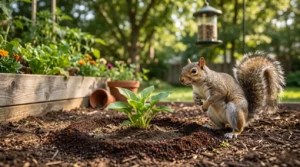
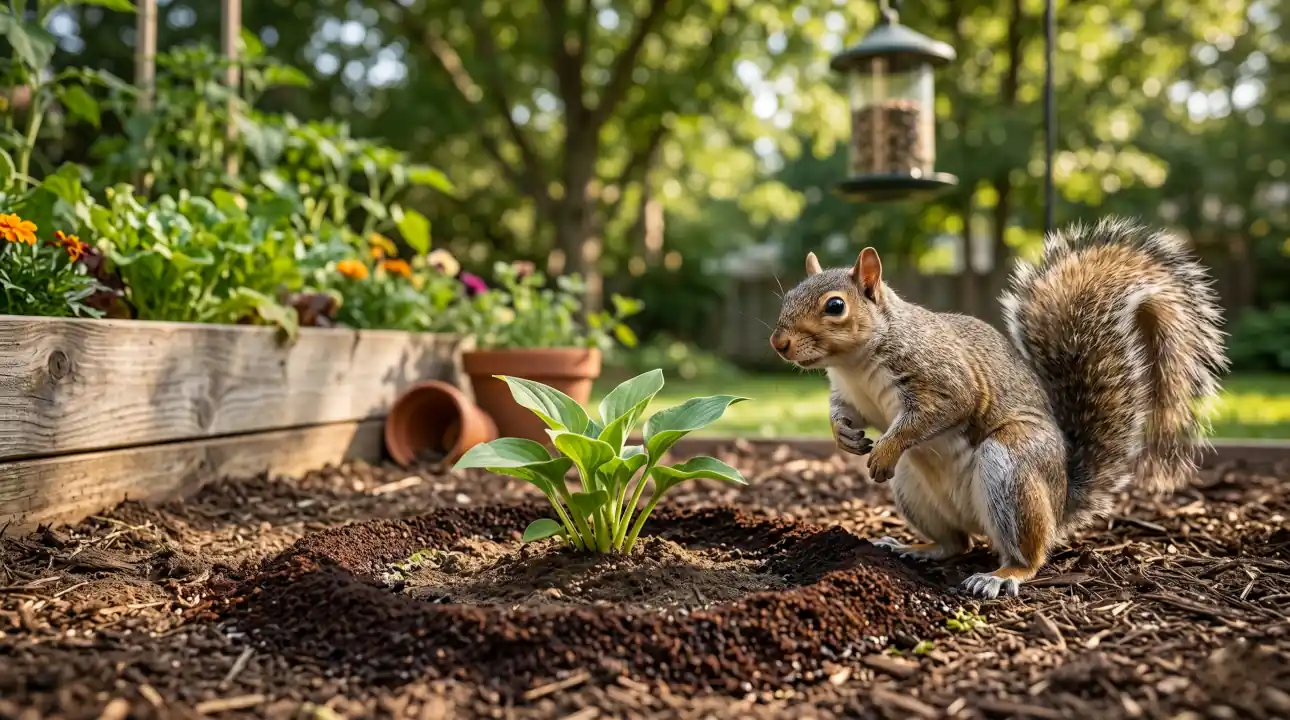
Squirrels can be entertaining right up until they start digging in your flower beds, stealing birdseed, or treating your garden like a buffet. If you have been searching for a simple, natural way to push them out, coffee grounds are probably one of the first things you have heard about.
They are cheap, easy to find, and already sitting in many kitchens, which makes them sound like a perfect fix. But do coffee grounds keep squirrels away in real life, or is that just another garden myth that gets repeated because it sounds convenient? The honest answer is a little more balanced.
Coffee grounds can discourage squirrels in certain situations, but the results are usually temporary. If you use them the right way and combine them with other pest control habits, they can be part of a useful plan. If you expect them to solve a serious squirrel problem on their own, you will probably be disappointed.
Also Read: Squirrel Bites: Are They Dangerous? Symptoms, Risks, and What to Do Next
Quick Answer: Do Coffee Grounds Keep Squirrels Away?
Yes, coffee grounds can help repel squirrels temporarily because the strong smell may discourage digging and feeding activity. However, coffee grounds are only a mild deterrent and work best when combined with cleanup, barriers, and other squirrel-control methods.
Why Coffee Grounds Do Not Keep Squirrels Away Permanently
That said, squirrels are smart and adaptable. Once the smell fades, the coffee dries out, or rain washes it away, the effect drops fast. In other words, coffee grounds may buy you some time, but they are not a permanent fix. If your yard is already a favorite squirrel hangout, they will usually return unless you make the space less attractive overall.
The best way to think about coffee grounds is this: they are a mild deterrent, not a total defense. They can help in a layered approach, especially when the squirrel activity is light or new. For a heavier infestation, they should be paired with exclusion, cleanup, and other deterrents.
Why Coffee Grounds Might Help at All
Coffee grounds have a strong smell, and that is the main reason people try them. Squirrels have a good sense of smell, and they do not love every odor humans enjoy. The bitter, earthy scent of coffee can be unpleasant enough to make a squirrel pause. That pause matters when you are protecting a small target like a potted plant, a bird feeder pole, or a freshly dug garden bed.
There is another reason coffee grounds get attention in pest control. They are easy to spread around problem areas without introducing harsh chemicals. Many homeowners want to avoid spraying synthetic products near pets, vegetables, or places where children play. Coffee grounds feel safer, more natural, and easier to try before moving on to something stronger.
Still, there is a difference between “helps a little” and “solves the problem.” Coffee grounds work best when the squirrel issue is minor, when the grounds are fresh, and when you keep reapplying them. If you let them sit too long, the smell weakens and the effect fades.
In one backyard job involving persistent squirrel digging around newly planted bulbs, the homeowner tried coffee grounds alone with mixed results. The squirrels stayed away for about two days, then returned once rain weakened the scent.
After adding mulch netting and removing spilled birdseed nearby, the digging stopped almost completely within a week. That situation is pretty typical. Coffee grounds may interrupt squirrel behavior temporarily, but the bigger improvements usually come from removing food rewards and limiting access.
The Benefits of Using Coffee Grounds to Repel Squirrels
There are a few real benefits to using coffee grounds, and the biggest one is that they are convenient. Most people do not need to buy anything special. If you drink coffee regularly, you already have the material. If not, many coffee shops are happy to give away spent grounds because they usually throw them out anyway. That makes coffee grounds one of the cheapest squirrel deterrents homeowners can realistically test.
In real residential settings, coffee grounds tend to work best in smaller controlled areas rather than large open yards. Homeowners usually see the most success around container gardens, deck planters, freshly seeded beds, and bird feeder poles where squirrel traffic is predictable and concentrated.
Another benefit is that coffee grounds can serve more than one purpose. In some gardens, they may help create an environment that is less appealing to certain pests. Gardeners often mention their potential role around deer if that is also part of your problem. Coffee grounds are also sometimes discussed in connection with insects, including ants, although results can vary depending on the setup and the pressure you are dealing with.
There is another reason many homeowners start with coffee grounds first. Coffee grounds can feel like a low-risk first step. If you are not ready for sprays, traps, or stronger deterrents, they let you test a natural option without much hassle. That makes them useful as a starting point, especially in smaller gardens or around individual plants.
Expert Tip: Coffee grounds work best as a scent-based nudge, not as a standalone defense. If squirrels have already learned that your yard offers food, water, and easy digging spots, the grounds may slow them down, but they will not erase those rewards. Think of coffee grounds as one piece of the puzzle, not the whole plan. For stronger results, pair them with cleanup, netting, and a change in feeding habits around the yard.
How To Use Coffee Grounds The Right Way
The way you apply coffee grounds matters just as much as the grounds themselves. A light sprinkle in the wrong place will not do much. You want to create a stronger scent zone where squirrels are most likely to land, dig, or climb. The goal is not to cover your whole yard. The goal is to make the hot spots less inviting.
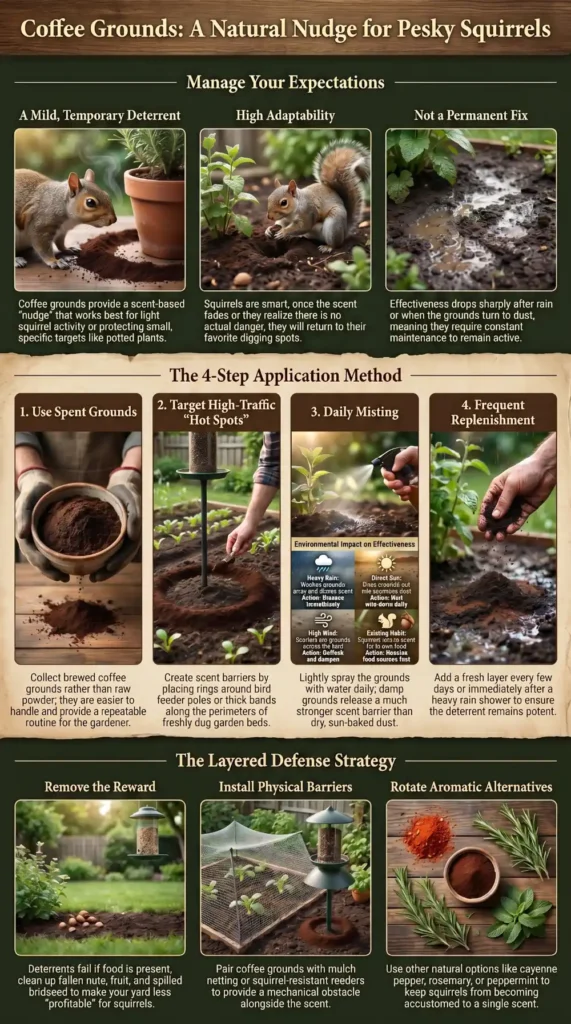
1. Collect Spent Coffee Grounds
Start with used coffee grounds, not dry store-bought grounds. Spent grounds are usually better because they have already been brewed, which means they are easier to collect and use. After you make coffee, let the grounds cool and store them in a container until you are ready to apply them. A small bucket, jar, or sealed tub works fine.
Dry grounds can still have a smell, but spent grounds tend to be more useful because they are already part of a repeatable routine. If you are not a coffee drinker, ask a local café or office break room. Many places are happy to hand over spent grounds for gardening use.
Keep in mind that old, moldy grounds are not what you want. If they sit too long in a warm, closed container, they can start to smell bad in the wrong way and become messy to handle. Use them while they are still reasonably fresh.
2. Find The Perfect Placement
Placement is where most people get it wrong. They scatter a few pinches here and there and hope for the best. That usually is not enough. You want to target the exact places where squirrels are active. Look for dug-up soil, chewed planters, feeder poles, tree bases, or the edge of raised beds.
Around flower beds, place the grounds near the perimeter so squirrels meet the scent before they reach the plants. Around containers, keep the grounds at the base and outer edge of the pot. Around feeder poles or small structures, create a ring near the entry area.
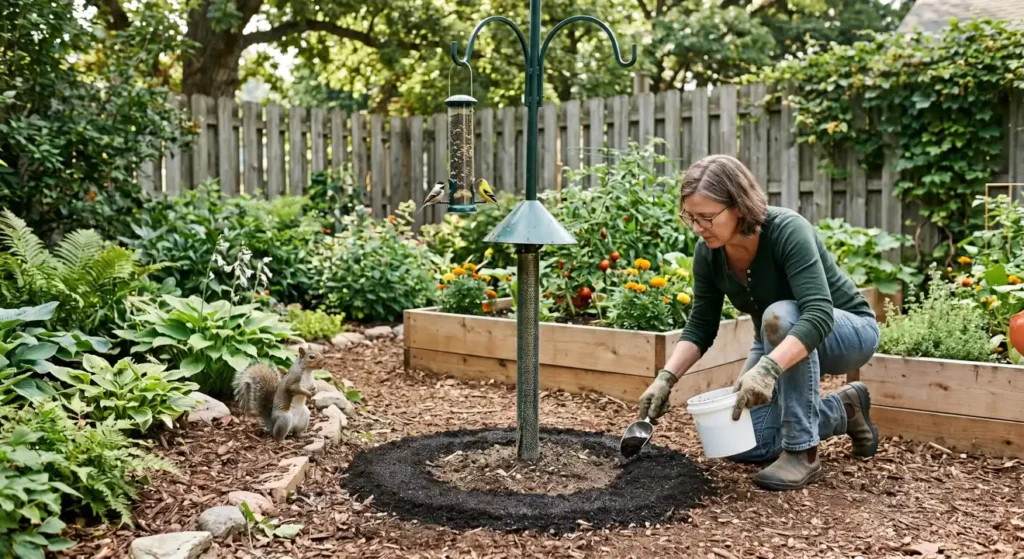
Around bird feeders, applying the grounds in a complete ring around the pole usually works better than placing small patches on only one side. The point is to create a noticeable smell barrier where squirrels naturally move.
In yards with heavy squirrel activity, homeowners often get better results by targeting just one or two high-traffic digging areas first instead of trying to spread coffee grounds across the entire property.
If squirrels are digging in one section of lawn or garden soil, a thicker band may work better than a scattered dusting. You are trying to interrupt their habit and make them think twice before landing there again.
In heavily shaded areas or during rainy weeks, homeowners usually need to refresh the grounds more often because moisture breaks down the smell faster.
3. Mist Daily
This step matters more than people expect. Coffee grounds lose strength as they dry out. Once they dry, the smell becomes weaker and the grounds can blow away more easily. A light mist of water helps bring the scent back to the surface and keeps the grounds from turning into useless dust.
Moist grounds release a much stronger scent barrier than dry grounds that have already baked in the sun.
One common mistake is letting old coffee grounds pile up for weeks without replacing them. Once the smell weakens or mold starts forming, the deterrent effect drops sharply.
You do not need to soak the area. A gentle spray is enough. The idea is to keep the grounds damp, not soggy. In hot weather, this may need to be done every day. In cooler or more humid conditions, you may be able to stretch that a little longer.
Rain changes everything. A heavy shower can wash the grounds apart or move them out of place, which means you will need to refresh the area sooner.
4. Replenish Frequently
Coffee grounds do not last forever. That is one of their biggest weaknesses. Even when the smell is fresh, squirrels can get used to it or simply wait until it fades. Replenishing the grounds every few days is often necessary, especially during wet weather or periods of heavy squirrel activity.
Some squirrels will eventually test the area again once they realize the smell is not associated with actual danger, which is why rotating deterrent methods usually works better long term.
If you notice the digging has started again, do not assume the method failed completely. It may just mean the scent has worn off. Add a fresh layer, mist it lightly, and keep an eye on the area. The more consistent you are, the better your chances.
The Best Coffee Grounds to Use
The best coffee grounds to use are the ones you have actually brewed. That may sound obvious, but it matters. Freshly brewed spent grounds are usually the easiest to collect and the most practical to use. Any type of coffee can work, whether it is regular, dark roast, light roast, or decaf. The main thing is that the grounds have been used and still carry that coffee smell.
If you are choosing between different kinds of coffee, the stronger-smelling roasts may seem like a good idea, but the difference is usually less important than how fresh the grounds are and how often you replace them. A fresh batch of basic spent grounds is better than an old batch of expensive grounds that have sat out too long.
Avoid relying on unused coffee from a bag or canister. Unbrewed coffee does not break down the same way, and it is not the same as using real spent grounds. The whole idea is to use the leftover material from brewing, not raw coffee powder. Coffee grounds can slightly influence soil acidity over time, especially when applied repeatedly in concentrated areas, so it helps to monitor sensitive plants closely.
For most homeowners, the simplest approach is best. Brew coffee, save the grounds, apply them where squirrels are active, mist them, and replace them often. That keeps the method affordable and easy to repeat.
A Few Alternatives To Coffee Grounds
Coffee grounds are helpful to try, but they are not the only option. In many yards, a combination of deterrents works better than a single trick. If squirrels keep coming back, these alternatives may give you a stronger result.
Aromatic Plants
Strong-smelling plants can help make a garden less appealing to squirrels. Lavender, rosemary, mint, garlic, onion, and other aromatic plants may help create a scent profile that squirrels do not enjoy. They are not a guaranteed shield, but they can add pressure in the right places, especially around borders, walkways, and beds that squirrels like to enter.
Aromatic plants also look nice, which is a bonus. You are not just trying to repel pests. You are also building a garden that feels intentional and maintained. Well-maintained garden borders also leave squirrels with fewer hidden digging spots and less cover near vulnerable plants.
Cayenne Pepper
Cayenne pepper is another common squirrel deterrent. The strong heat can make an area unpleasant for them. Many homeowners use it around planters, flower beds, and feeder zones. It can work well for short periods, but like coffee grounds, it needs to be reapplied. Rain and watering will weaken it fast.
Be careful where you use it. You do not want to irritate pets, children, or beneficial wildlife. Use it thoughtfully and avoid overdoing it near paths or play areas.
Avoid applying large amounts of cayenne pepper where pets regularly sniff or play. While it is commonly used as a deterrent, excessive amounts can irritate the eyes and nose of both animals and people.
Repellent Spray
Commercial repellent sprays can be more reliable than coffee grounds because they are designed for the job. Some use taste deterrents, some use odor deterrents, and some combine both. The key is to choose a product that is meant for outdoor wildlife and to follow the label closely.
According to the University of Minnesota Extension, repellents tend to work best when they are part of a broader plan and usually need to be reapplied after rain or irrigation. That is an important reminder for homeowners expecting a one-time fix. Squirrels are persistent, and the method you choose needs to be maintained.
Deterrent Devices
Deterrent devices can be a strong next step when scent-based methods are not enough. Motion-activated sprinklers, flashing lights, reflective surfaces, and certain noise devices can interrupt squirrel behavior and make the yard feel less safe. These tools do not need to be used forever, but they can help reset squirrel habits.
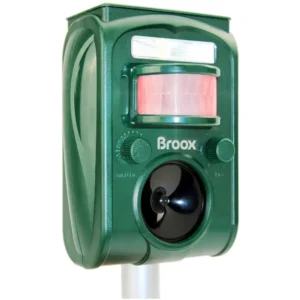
The biggest advantage of deterrent devices is that they address behavior, not just smell. Squirrels may ignore a scent after a while, but a sudden spray of water or movement can be harder to get used to. That makes these tools useful around beds, decks, and feeder areas.
Predator Urine or Decoys
Predator scent and visual decoys are old-school but still popular. Some homeowners use fox or coyote urine products, while others set out owl decoys or similar predator figures. These can work at times, especially when squirrels first notice them.
The catch is that squirrels are quick to figure out whether the threat is real. If the decoy never moves or the scent never changes, they may ignore it. Rotating the setup and moving decoys around can help keep the illusion alive.
What Works Better Than Coffee Grounds Alone
If you really want to keep squirrels away, do not stop at smell. Remove easy food sources first. Birdseed is a huge attractant, so use squirrel-resistant feeders or clean up spilled seed. Once squirrels establish a reliable feeding routine in a yard, simple scent deterrents become much less effective on their own.
Pick up fallen nuts, fruit, and garden scraps. Trim branches that give squirrels easy access to roofs, fences, or feeders. If possible, block the exact entry point or digging spot instead of trying to protect the whole yard at once.
This is where a more complete plan starts to matter. Squirrels usually stay where food, shelter, and easy access all come together. Once you remove those advantages, deterrents become much more effective. That is the honest truth with most nuisance wildlife control. You get better results when you make the location less profitable for the animal, then add a deterrent that discourages return visits.
So, yes, coffee grounds can help. But the bigger win comes from making the area less rewarding. If there is no food, no easy access, and no safe landing zone, squirrels will eventually move on.
Also Read:
Final Thoughts
So, do coffee grounds keep squirrels away naturally and long term? Sometimes, yes, but only in a limited way. They can help with mild squirrel pressure, especially in small garden areas, around planters, or near specific trouble spots. They are cheap, natural, and easy to try. That makes them worth testing before you spend money on stronger products.
But they are not a permanent fix. Coffee grounds lose strength fast, wash away in rain, and often need to be refreshed every few days. If squirrels are already treating your yard like home, coffee grounds alone will probably not be enough. The best results come when you use them as part of a larger plan that includes cleanup, barriers, repellent rotation, and smarter placement.
If you want the simplest honest answer, here it is: coffee grounds may help push squirrels out, but they work best as a supporting tactic, not as the main defense. Start there, watch the results, and be ready to combine them with other methods if the squirrels keep coming back.