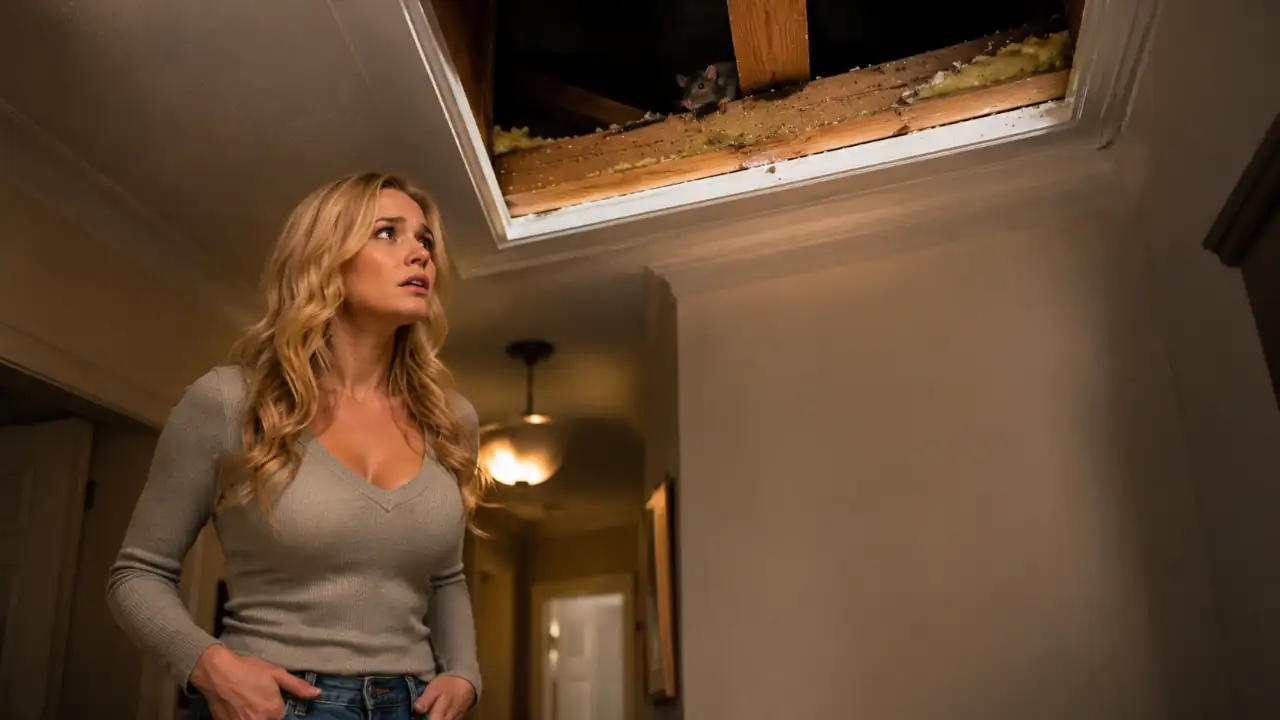
If you’ve ever laid in bed listening to something scratch and scurry above your head, you already know that “just ignore it” isn’t an option. If you’re wondering how to get rid of rats in the attic, the sooner you act, the better. Rats in the attic don’t go away on their own. I’ve been doing pest control for over 18 years, and I want to walk you through exactly what works, what doesn’t, and how to keep them from coming back.
Also Read: Spadepestcontrol blog
Quick Answer
The best way to get rid of rats in the attic is to confirm the infestation, place snap or electronic traps along active rat runways, remove all rats, seal every entry point, and clean contaminated areas safely. Trapping alone won’t solve the problem unless you also block access to the attic and eliminate conditions that attract rodents.
To Get Rid of Rats in the Attic
- Identify signs like noises, droppings, and gnaw marks.
- Place snap or electronic traps along rat travel routes.
- Remove every rat before sealing entry points.
- Seal gaps around the roofline, vents, pipes, and eaves.
- Clean and disinfect contaminated areas safely.
Signs That You Have Rats in Your Attic
Most homeowners don’t actually see a rat until the infestation has been going on for weeks, sometimes months. By the time you notice something’s off, there’s usually already a small colony settled in above your ceiling.
The good news is that rats leave a trail. You just need to know what you’re looking for.
Noise
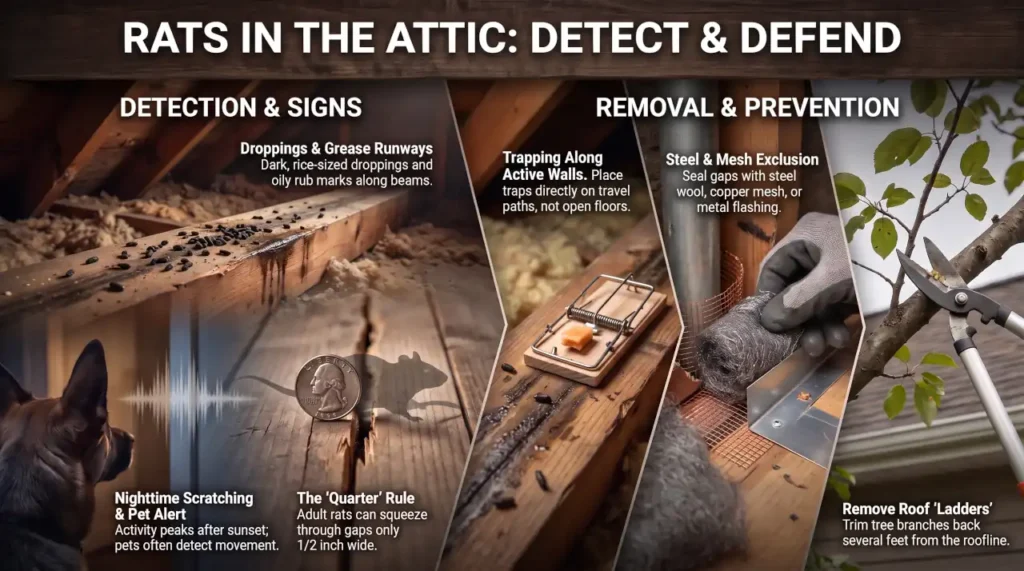
This is almost always the first clue. You’re watching TV, or you’re lying in bed reading, and you hear it: scratching, light thumping, or something that sounds like tiny footsteps running across your ceiling. Sometimes it’s scratching inside the walls instead of overhead. A lot of people brush this off as “the house settling” the first time they hear it, but if it keeps happening and it’s worse at night, that’s a rat, not your house creaking.
If possible, try to note roughly what time the noises start each night. Consistent activity shortly after sunset is a common pattern with rats and can help distinguish them from squirrels, which are usually active during the day.
Droppings & Damage
If the noise has you suspicious, the next step is a flashlight and a trip up into the attic (or at least a look with your head poked through the hatch). Rat droppings look like small dark grains of rice, usually clustered near nesting areas or along the paths rats travel repeatedly.
Another clue many homeowners miss is dark, greasy rub marks along beams, rafters, or walls. As rats repeatedly travel the same routes, the natural oils in their fur leave behind these marks, making them a useful indicator of active rat traffic. You might also notice chewed insulation, shredded cardboard, or gnaw marks on wooden beams, wiring, or even the underside of your roof decking.
Rats also build nests using whatever soft materials they can find. Shredded fiberglass insulation, paper, cardboard, fabric, and even old storage boxes are all common nesting materials you’ll find in an active attic infestation.
Expert Tip: Don’t just check for droppings, use your nose too. A heavier infestation often has a distinct ammonia-like smell from accumulated urine. If you catch that smell the moment you open the attic hatch, you’re probably dealing with more rats than you think. It’s also worth pulling back a section of insulation in a few spots, since rats will burrow tunnels through it to build nests, and that’s often where you’ll find the real evidence.
Your Pets Know First
Dogs and cats have far better hearing and smell than we do, and they usually clue in to a rat problem before their owners ever do. If your dog keeps staring up at the ceiling and won’t settle down, or your cat is suddenly obsessed with sitting under the attic hatch, pay attention. Pets picking up on movement or scent in the walls or ceiling is a pretty reliable early warning sign, even before you hear or see anything yourself.
Seeing Them in Action
Sometimes the confirmation comes from outside the house entirely. If you spot a rat running along a power line, climbing a tree near your roofline, or darting across your backyard at dusk, that’s a strong hint that rats are active in your neighborhood, and your attic is exactly the kind of warm, quiet space they’re looking for. Roof rats especially are excellent climbers, so seeing one anywhere near your roof or gutters should raise a flag.
If you’re seeing multiple signs at once, noise, droppings, pet behavior, and sightings, a professional inspection is usually worthwhile because it identifies both the size of the infestation and every active entry point before you spend money on traps or repairs. A trained technician can tell you how large the infestation actually is and where the rats are getting in, which saves you from guessing.
One thing worth mentioning: a lot of homeowners confuse rat activity with squirrels or mice, especially when the sounds are muffled by insulation. Squirrels tend to be active during the day and move in quick bursts, while rats are almost exclusively active at night and move more steadily, like they’re patrolling a route. Mice, on the other hand, leave much smaller droppings, roughly the size of a grain of rice tip rather than a full grain, and their gnaw marks are noticeably finer.
If you’re not sure which pest you’re dealing with, that distinction actually matters, because the traps, bait, and entry points can differ between species. When in doubt, a quick inspection from a pest control company will settle it in minutes.
Why You Need to Get Them Out ASAP
I get asked this a lot: “It’s just a couple of rats, does it really matter if I deal with it next weekend?” Yes. It really does. Rats are not a problem that improves with patience.
Let’s start with health. Rats are known carriers of several diseases that can affect people, including hantavirus, salmonellosis, leptospirosis, and rat-bite fever, and these can spread through their urine, droppings, saliva, or a bite.
The Centers for Disease Control and Prevention (CDC) explains that people can become sick through direct contact with rodents or by breathing in dust contaminated with rodent urine or droppings, as well as through contaminated food, bites, or scratches. This is why it’s important to avoid sweeping or vacuuming dried rodent droppings before they’re properly disinfected, since that can stir contaminated particles into the air. That’s a real risk sitting right above your bedroom ceiling, not some rare, far-off scenario.
Then there’s the structural side of things. Rats gnaw constantly, it’s how they keep their teeth from overgrowing, and your attic gives them plenty to chew on. Wiring, roof decking, wooden beams, ductwork, even PVC pipes aren’t safe. Chewed electrical wiring is a legitimate fire hazard, not just an inconvenience, and I’ve seen homeowners face repair bills running into the thousands after a rat problem was left unchecked for a season.
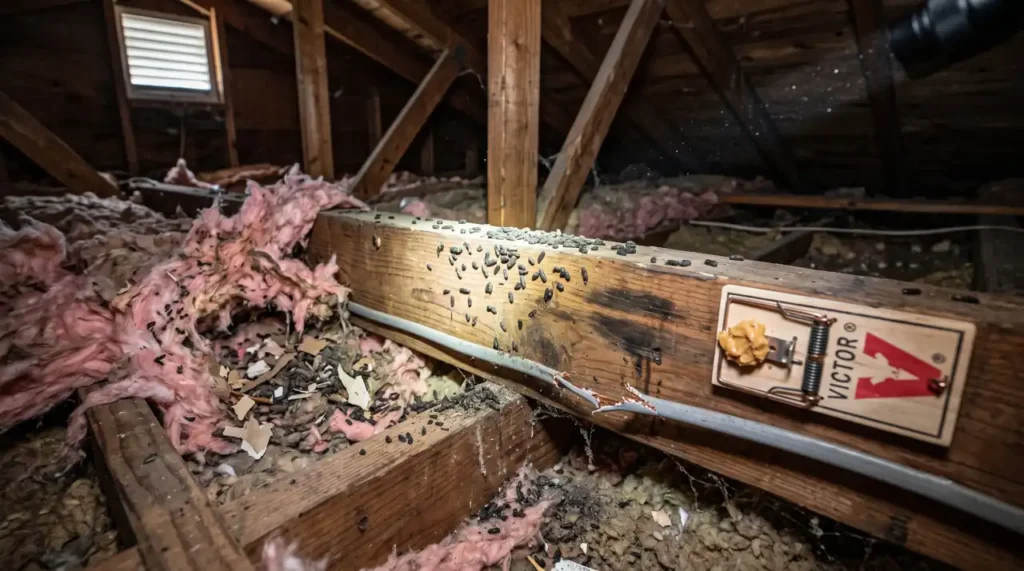
One attic inspection that sticks with me involved a homeowner who waited until the scratching became loud enough to hear every night. By then, the rats had chewed multiple sections of electrical wiring and flattened large areas of insulation into nesting sites. What could have been a simple exclusion job turned into electrical repairs, insulation replacement, and a full attic cleanup. Situations like that are exactly why I recommend acting as soon as you notice the first signs.
And here’s the part that really makes speed matter: rats breed fast. A single female rat can produce a new litter every few weeks, and each litter can include half a dozen or more pups. What starts as “I think I heard something last week” can turn into a full colony living in your insulation within a couple of months. The longer you wait, the harder and more expensive the removal becomes, and the more damage accumulates in the meantime.
There’s also a cost angle that people don’t always think about upfront. Sealing two or three small entry points early in an infestation might cost you an afternoon and a tube of caulk. Wait six months, and you could be looking at replacing chewed wiring, patching insulation that’s been soiled and torn apart for nesting, or repairing sections of roof decking that have been gnawed through. Homeowners insurance often excludes rodent damage because it’s considered preventable maintenance rather than sudden accidental damage, so it’s worth checking your individual policy before assuming repairs will be covered.
If you’re dealing with a large or established infestation, this is genuinely one of those situations where calling in a professional pays for itself. Breathing in dust from dried droppings, handling nests, or getting bitten while trying to clear an attic yourself isn’t worth the risk.
How To Get Rid of Rats in the Attic
Once you’ve confirmed you’ve got rats, it’s time to actually deal with them. There are several routes you can take here, from classic hardware store solutions to newer tech, and the right one really depends on how bad the infestation is, your budget, and whether you’ve got kids or pets running around the house.
Choosing the Right Rat Trap
Trapping is still the most reliable DIY method for getting rats out of an attic, and it’s usually where I tell people to start if the infestation is small and manageable. But not all traps work the same way, so let’s go through your options.
Snap Traps
This is the classic wooden or plastic trap most people picture, a spring-loaded bar that snaps down when a rat takes the bait. They’re inexpensive, reusable, and there’s no chemical or poison involved, which matters to a lot of homeowners.
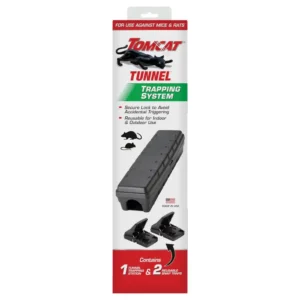
Skip the cheese, by the way. Peanut butter, small chunks of dried fruit, or even a bit of nesting material like cotton or string tends to work better, since rats are drawn to nesting supplies almost as much as food. Place several traps along the walls of the attic where you’ve noticed droppings or gnaw marks, since rats travel along the same routes repeatedly and rarely cut across open floor space.
The downside is that you’ll need to check and reset them yourself, and dead rats need to be removed promptly to avoid odor and further sanitation issues. Wear disposable gloves when handling traps or dead rodents, place them in a sealed plastic bag before disposal, and disinfect the surrounding area rather than sweeping dry droppings. Proper cleanup reduces the risk of exposure to bacteria and viruses associated with rodent infestations. Snap traps can also be dangerous around curious pets or kids, so keep that in mind if anyone besides you has attic access.
Glue Traps
Glue traps use a sticky adhesive board instead of a spring mechanism. They’re cheap and simple to set out, and like snap traps, they don’t involve poison. The tradeoff is that unless the rat has been stuck for a long stretch of time, it’s often still alive when you find it, which isn’t a pleasant discovery and raises some humane concerns for a lot of people. I generally recommend these as a backup option rather than your primary method. If you have children, pets, or wildlife that could accidentally encounter the trap, consider one of the enclosed trap systems instead.
Electronic Traps
If you want something more modern and a bit less hands-on, electronic traps are worth considering. These deliver a quick, high-voltage shock that kills the rat almost instantly once it enters the chamber. Most models have an indicator light that lets you know when a rat has been caught, so you’re not opening the trap blind, and the body stays enclosed inside the unit rather than sitting out in the open. These traps work best indoors in dry attic spaces and should be placed along walls where rats naturally travel.
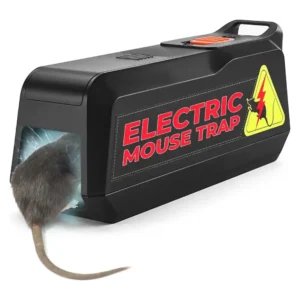
Expert Tip: Electronic traps are generally considered one of the safer options around kids and pets since the kill chamber is enclosed, but I’d still tuck them into corners or behind boxes in the attic where little hands (or paws) can’t reach them. It’s also worth checking the traps every day or two, especially in warmer weather, since a rat left inside too long will start to smell.
Live Traps
Live traps let you catch a rat without killing it, which sounds appealing on paper. The problem is what happens next. Releasing a rat somewhere away from your property might feel like the humane choice, but relocated rats have a very low survival rate once they’re away from a familiar food and water source. If you go this route, you’ll also need a plan for handling a very much alive, very stressed rat once you find one in the cage, which isn’t a fun task.
Expert Tip: If you do decide to use live traps, check them at least twice a day. Leaving a trapped rat without food, water, or a clear release plan for too long isn’t doing anyone any favors, the rat included.
Try Ultrasonic Repellent
Ultrasonic repellents are plug-in devices that emit high-frequency sound waves meant to be irritating or unbearable to rodents, without harming them. They’re easy to use, don’t involve poison, and are generally safe around dogs and cats (though you’ll want to keep them away from small pets like hamsters or guinea pigs, since the frequencies can affect them too).
I’ll be straight with you here: the science on these is shaky. Some homeowners also try scent-based repellents instead of ultrasonic devices. If you’re curious about those options, here’s what the evidence says about the scents mice hate and whether they actually help keep rodents away.
Results are inconsistent, and the Federal Trade Commission has raised doubts about how effective ultrasonic devices actually are at driving rodents out long-term. Some homeowners report a noticeable difference, others see zero change. If you want to try one alongside traps, that’s reasonable, but I wouldn’t rely on it as your only line of defense, and I’d be cautious about spending a lot of money on a premium version expecting guaranteed results.
What About Rat Poison?
I generally don’t recommend using loose rodenticides inside an attic. They also increase the risk of secondary poisoning if pets or wildlife consume a poisoned rodent outdoors. If a poisoned rat dies in a wall or inaccessible part of the attic, you may end up dealing with a strong odor for days or even weeks.
Professional pest control companies sometimes use tamper-resistant exterior bait stations as part of a broader control plan, but for most DIY situations, trapping is the more predictable option. Never place loose poison where children, pets, or non-target wildlife can access it.
Where Should You Place Rat Traps in the Attic?
Once you’ve decided which type of trap to use, the next step is placing it correctly. Even the best trap won’t do much good if it’s sitting in the wrong location. One of the biggest mistakes homeowners make is scattering traps randomly across the attic floor. Rats rarely travel out in the open. Pest control professionals often refer to these regular travel paths as runways because rats tend to follow the same routes night after night. Instead, they stick close to walls, rafters, beams, and other edges where they feel protected.
Look for signs of regular activity such as droppings, grease marks, gnawing, or narrow paths through the insulation, then place traps directly along those travel routes with the trigger end facing the wall. If you’re dealing with roof rats, don’t overlook elevated areas like rafters or ledges, since they often travel above the insulation rather than across it.
Expert Tip: Wear disposable gloves when setting traps. While rats are naturally curious, minimizing human scent on traps and bait is still a good habit, especially if you’re dealing with cautious older rats that have avoided traps before.
How Long Does It Take to Get Rid of Rats in an Attic?
The timeline depends on how many rats you’re dealing with and whether you’ve sealed the entry points. A single rat or a very small infestation can sometimes be resolved within a few days using properly placed traps. More established infestations often take one to three weeks, especially if multiple rats are using different travel routes throughout the attic.
One thing I always tell homeowners is not to judge success too quickly. It’s common to hear activity for a few nights after setting traps, particularly if several rats are present. Keep checking and resetting traps until you’ve gone at least a week without hearing noises or finding fresh droppings.
Just as importantly, don’t seal every entry point until you’re confident the rats are gone or you’re following a planned exclusion strategy. Removing the rats without closing the access points—or sealing the house before the remaining rats have been removed—can create new problems. Lasting success comes from combining trapping, exclusion, and a follow-up inspection to make sure no new activity has started.
How To Keep Them Out in the Future
Trapping rats without addressing why they got in to begin with is a temporary fix at best. If you want to keep rats out of the attic for good, you need to eliminate entry points and remove the food, water, and shelter that attracted them in the first place. You might clear out the current batch, but if the entry points are still open and the yard is still inviting, you’ll be dealing with new rats within a matter of weeks. Long-term rat control is really about closing the door behind you, literally.
Block All Entry Points
This is the step people skip because it’s tedious, and it’s also the step that matters most. Adult rats can squeeze through openings about ½ inch wide, roughly the size of a quarter, so a “tiny” crack near your roofline or foundation is more than enough of an invitation.
Don’t forget to inspect the roof itself. Loose soffits, damaged fascia boards, uncapped chimneys, torn vent screens, and gaps around plumbing or electrical penetrations are some of the most common entry points I find during inspections. Walk the perimeter of your house and check around windows, vents, garage doors, roof eaves, and any spot where pipes or wiring pass through an exterior wall.
While you’re inspecting the exterior, it’s also a good opportunity to look for other structural pest issues, such as the early signs of termites, especially around wooden roof components and siding.
Small gaps can be sealed with steel wool packed tightly into the hole or a good exterior-grade caulk. For larger openings, you’ll want something rats can’t chew through, like hardware cloth, copper mesh, or fitted metal flashing. Roof and attic vents should be covered with a screen, and chimney openings need a proper cap. If this sounds like more than you want to tackle yourself, a pest control company or handyman experienced in rodent exclusion can usually knock it out in an afternoon.
Expert Tip: Don’t seal every opening immediately if you know rats are still actively using the attic. Removing the rats first—or leaving one controlled exit point until trapping is complete—helps avoid trapping live rodents inside walls or inaccessible areas.
Trim Trees & Vines
Roof rats in particular are excellent climbers, and they’ll use tree branches, ivy, or climbing vines as a direct route from the ground to your roofline. Cut back any branches hanging within a few feet of your house, clear away climbing vines growing up the exterior walls, and keep shrubs and hedges trimmed away from the foundation. Basically, you want to remove the ladder before you worry about locking the door.
Get Rid of Debris
Woodpiles, brush piles, and general yard clutter are magnets for rats looking for shelter close to your home. If you’ve got stacked firewood, old lumber, or a pile of yard waste sitting near the house, that’s prime real estate for a rat nest, and it puts them within a short scurry of your attic. Clearing this out removes both the hiding spots and the stepping stone rats use to get closer to your home.
One mistake I see fairly often is homeowners cleaning up the attic but leaving the outside conditions unchanged. If woodpiles, overgrown shrubs, or overflowing bird feeders remain near the home, new rats often move in before long.
Cover Your Trash
An open or loosely closed trash can is basically a dinner bell. Rats are surprisingly capable of prying open lids that aren’t secured, so use a can with a tight-fitting lid, and consider a bungee cord or a heavy object on top for extra insurance. Keep the area around your bins clean too, since spilled food scraps or grease buildup will draw rodents even if the can itself is sealed properly.
Don’t overlook other food sources either. Pet food left outside overnight, spilled bird seed beneath feeders, backyard chicken feed, and fallen fruit from trees can all attract rats and encourage them to stay close to your home.
Food isn’t the only thing rats are looking for. Leaking outdoor faucets, dripping irrigation systems, clogged gutters that hold standing water, and even pet water bowls left outside overnight can provide the water they need to stay nearby.
How Do Rats Get into Your Attic?
This is the question I get asked constantly, because most people assume their house is more sealed up than it actually is. Rats are remarkably flexible and built for squeezing through tight spaces. Their bone structure allows their ribcage to compress, which is exactly why a hole that looks far too small to fit a rat often isn’t.
They’ll climb trees and jump onto your roof, scale exterior pipes or downspouts, slip under garage doors, or exploit rotted wood along the eaves. Roof rats especially prefer higher entry points, so vents, gaps under roof tiles, and gaps where the roofline meets the wall are common access spots. Once they find a route in and confirm there’s food, warmth, and shelter waiting, they’ll keep using that same entry point and often chew it wider over time to make it easier for the rest of the group.
If you’re dealing with rats or noticing early signs like rat droppings versus other pests, it helps to do a full walk-around of your exterior rather than assuming there’s just one obvious gap. Most infestations trace back to two or three entry points, not just one.
If you find one entry point, keep looking. In my experience, it’s common to find multiple access points around the same home, especially where rooflines, utility penetrations, and vents come together.
How Do Exterminators Get Rid of Rats in Attics?
DIY methods work fine for smaller, early-stage infestations, but once you’re dealing with an established colony, a professional is usually the faster and safer route. Here’s generally how it plays out.
A pest control technician will start with an inspection to figure out how many rats you’re dealing with, where they’re entering, and where they’re nesting. From there, they typically use professional-grade traps placed strategically, often leaving certain exit points open temporarily so rats can clear out on their own before those gaps get sealed permanently.
During that inspection, technicians aren’t just looking for rats. They’re also checking for rub marks along rafters, grease stains around entry holes, fresh gnawing, nesting material, travel routes, and whether the droppings are old or fresh. Those details help determine whether the infestation is active or if you’re dealing with leftover evidence from a previous problem.
Once the technician is confident the attic is clear, the real prevention work begins: sealing every entry point they identified, removing nesting material, and decontaminating the space, since dried droppings and urine can pose a respiratory hazard if disturbed and inhaled. Many companies will also treat for fleas at this stage, since rats commonly carry them, and a rat problem that goes untreated can quietly turn into a flea problem too.
Some pest control services also install locked bait stations around the exterior perimeter of the home. These are checked on a regular schedule, usually monthly, and are designed so pets and kids can’t access what’s inside. It’s a good supplementary option for homes in areas with a persistent rodent presence nearby.
A follow-up visit is usually part of the deal too. Reputable companies will come back a few weeks after the initial treatment to confirm the attic is actually clear and that no new activity has started up around the sealed entry points. That follow-up matters more than people realize, because a single missed gap or a rat that was out foraging during the initial sweep is all it takes to undo the work you just paid for. If you’re comparing quotes, it’s worth asking specifically whether follow-up inspections are included, since some companies charge for that as a separate visit.
If cost is a concern, it’s fair to ask for a breakdown of what you’re paying for: inspection, trapping, exclusion work, and decontamination are often priced differently, and some companies bundle them while others itemize each step. Getting a couple of quotes before committing isn’t a bad idea, especially for a bigger job.
Clean Up Carefully After Removal
Once you’re confident the rats are gone, don’t rush into sweeping or vacuuming droppings. Lightly mist contaminated areas with a disinfectant, allow it to sit for several minutes, and wipe up the material while wearing gloves and appropriate respiratory protection if the contamination is extensive. If the attic contains a large amount of droppings or heavily soiled insulation, professional remediation is often the safest option.
Also Read:
If you’re unsure whether the contamination is extensive enough to require professional cleanup, err on the side of caution. Large accumulations of droppings and urine can require specialized protective equipment and disposal procedures.
Final Thoughts
Rats in the attic are one of those problems that only get worse the longer you wait. If you’re catching it early, a few well-placed traps and a thorough sweep for entry points can genuinely solve the problem yourself.
If you’re already hearing a lot of activity, finding droppings in multiple spots, or noticing a smell, that usually means the colony is bigger than it looks, and that’s when I’d recommend bringing in a professional rather than risking your own health trying to clear it solo.
Either way, don’t stop at trapping. Sealing up your home and cleaning up your yard is what actually keeps rats from coming back next season. That combination—inspection, removal, exclusion, and prevention—is the only approach that consistently works long term. If you prefer to minimize chemical use around your home, you may also find our guide to eco-friendly pest control methods helpful for long-term prevention.