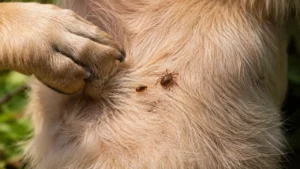

Your dog won’t stop scratching, so you check their fur and spot a tiny black speck making a run for it. A bath feels like the obvious fix, and it can knock down the adult fleas you see right away. But that’s the catch: getting the fleas off your dog is only part of the job. Eggs, larvae, and pupae may already be developing in bedding, carpet, furniture, and other areas where your dog spends time.
Here’s how to get rid of fleas on dogs without falling into the cycle of treating the dog, seeing improvement, and then wondering why the fleas suddenly came back.
Also Read: Fleas vs Ticks: What’s the Difference (and Which Is Worse)?
How to Get Rid of Fleas on Dogs
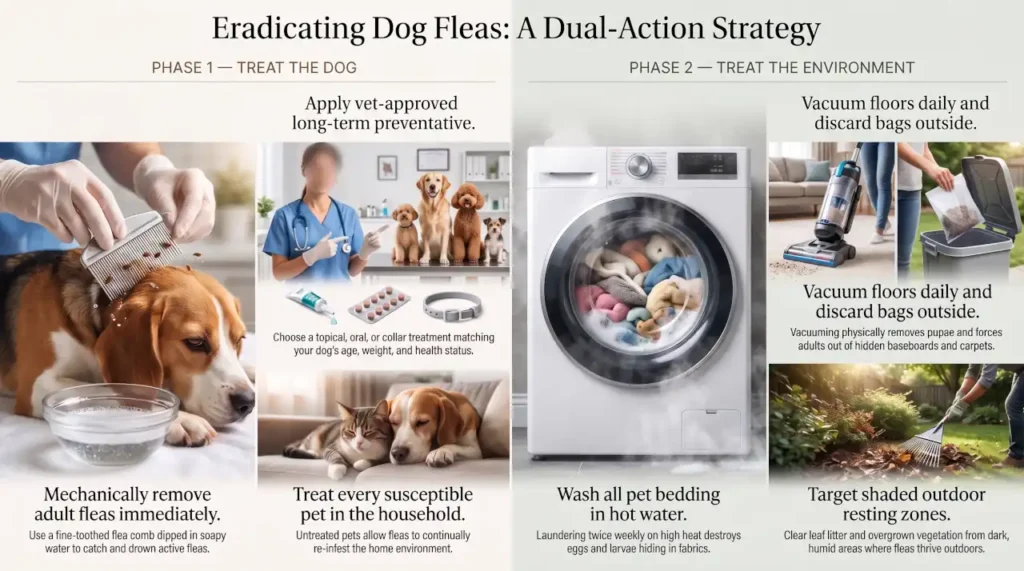
To get rid of fleas on a dog, remove adult fleas with a flea comb or appropriate bath, start a flea-control treatment suited to your dog’s age and health, wash bedding, vacuum the home frequently, and treat every pet appropriately. Keep following the treatment schedule and environmental cleaning routine because eggs, larvae, and pupae already in the home can continue producing adult fleas after treatment begins.
10 Vet-Approved Ways to Get Rid of Fleas on Dogs
Fleas multiply fast, but the bigger problem is that the adults you see are only one stage of the infestation. The order you tackle this in matters: remove what you can from the dog, clean the environment, address likely outdoor sources, involve your vet when needed, and then stay consistent long enough to interrupt the flea life cycle.
1. Gather the Right Tools Before You Start
Nothing derails a flea removal session faster than realizing halfway through that you don’t have what you need, while your dog squirms away and fleas scatter into the carpet. Get everything laid out first.
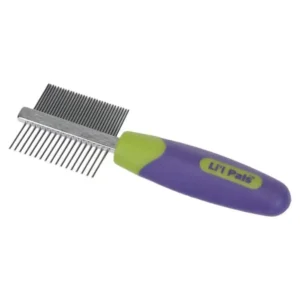
You’ll want a fine-toothed flea comb, since regular brushes have teeth spaced too far apart to reliably catch adult fleas and flea dirt. The comb is mainly useful for finding and physically removing adult fleas from your dog’s coat. Fill a bowl with warm water and a squirt of dish soap. This is where you’ll drown fleas as you pull them off, because soap breaks the water’s surface tension and fleas can’t just float and hop back out.
Grab a roll of white paper towels too. If you spot dark specks in your dog’s fur and aren’t sure whether it’s dirt or flea droppings, dab one on a damp paper towel. If it turns a reddish-brown, that’s digested blood, which means it’s flea dirt, not garden soil. A pair of disposable gloves keeps things sanitary, and it’s worth having a pet-safe household flea spray on hand for later steps.
Laying all of this out ahead of time means you’re not chasing supplies while your dog, understandably, wants nothing to do with any of this.
2. Pick a Spot That’s Easy to Clean
Where you do this matters more than people expect. You want a spot where loose fleas, flea dirt, and debris are easy to clean up rather than somewhere they can disappear into carpet or furniture.
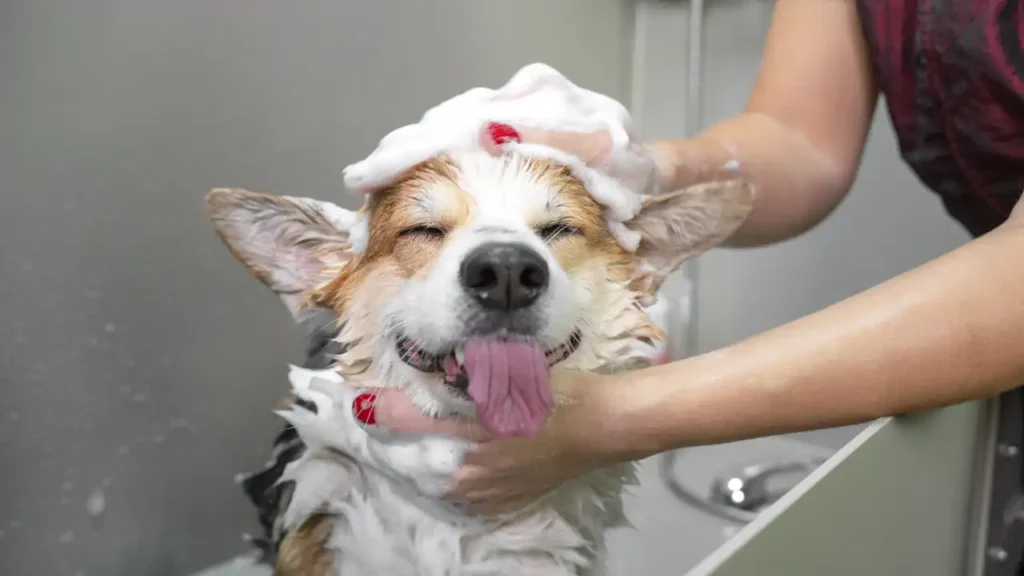
A backyard spot, a bathtub, or a shower stall all work well because of the drainage and because dropped fleas can’t just hop into your furniture. Natural daylight outside also makes it much easier to actually see what you’re picking through.
If you’re working indoors, lay down some old towels or a cheap plastic sheet first so nothing falls into the grout lines or carpet fibers. Give yourself enough room to reach your dog’s belly, ears, and tail without both of you feeling cramped, since a stressed, wriggling dog is much harder to comb through thoroughly.
3. Comb Out Adult Fleas and Flea Dirt
This is the step that gives your dog the most immediate relief, and it’s oddly satisfying once you get into a rhythm. Start at the head and work toward the tail, going with the direction the coat grows. Pay extra attention to the neck, behind the ears, the belly, and the base of the tail, because that’s where fleas cluster to stay warm and hidden.
After every pass through the fur, dunk the comb straight into your bowl of soapy water before any fleas have a chance to jump free. A good flea comb is excellent for removing adult fleas, flea dirt, and other debris from the coat, but don’t count on it to remove the eggs already scattered around your home. Flea eggs are small and easily fall from the coat into bedding, carpet, furniture, and floor cracks. Your dog may look much better after a thorough combing, but that only deals with the fleas you can physically remove right now.
4. Groom Your Dog Often, Not Just During a Flare-Up
Brushing your dog two or three times a week does more than keep their coat looking nice. It gives you regular opportunities to spot adult fleas, flea dirt, irritated skin, or other changes before a small problem becomes a larger one. Regular grooming can also physically remove some fleas and debris from the coat, although it shouldn’t replace a proven flea-control product when fleas are established.
Dogs with thick double coats or long fur need this more than short-haired breeds, simply because fleas have more places to disappear into. While you’re at it, grooming sessions are a good time to check for ticks, hot spots, or any new lumps worth mentioning to your vet. It becomes a habit that pays off in more ways than just flea prevention.
5. Wash Your Dog’s Bedding on a Regular Schedule
Every time your dog curls up in their bed, flea eggs and larvae that have fallen off settle right into the fabric. That bed becomes a flea nursery if it’s never washed. Wash bedding using the hottest water setting that the fabric safely allows, then run it through a thorough dryer cycle using the manufacturer’s recommended heat setting. Washing and drying help remove and kill fleas and immature stages hiding in washable fabrics, but don’t assume one laundry cycle has eliminated every flea in the home.
During an active flea problem, wash the bedding twice a week. Once things calm down, weekly washing keeps new eggs from building up again. Don’t forget the couch cushion covers if your dog has a favorite napping spot on the furniture, and if a bed is too worn out or was heavily infested, it’s honestly easier to just replace it than to keep fighting it.
6. Vacuum Every Room, Not Just the Ones Your Dog Uses
Your floors are quietly holding onto flea eggs, larvae, and pupae that can survive for weeks or even months before hatching. Vacuuming physically removes a huge chunk of that hidden population before it ever gets the chance to mature into biting adults.
Focus on the areas your dog spends the most time, along baseboards, under furniture, and in corners where debris tends to collect. Vacuuming also disturbs areas where developing fleas are hiding. That can bring some adult fleas out of protected pupal stages, making them more accessible to continued vacuuming and appropriate flea treatment. It may seem counterproductive to see newly emerged fleas, but those adults are easier to target than protected pupae hidden deep in the environment.
Empty the canister or bag right away into a sealed bag and take it straight outside, since fleas can crawl back out of an indoor trash can. During a bad infestation, vacuum daily. Once things are under control, you can gradually reduce the frequency while continuing to vacuum the areas your dog uses most. Don’t skip hard floors either, since fleas gather in cracks, rugs, and along the edges of rooms just as easily as they do in carpet.
7. Treat Your Home With a Pet-Friendly Flea Product
This is where environmental treatment can make a major difference. Killing the adult fleas on your dog doesn’t remove the eggs, larvae, and pupae already developing in the home. If you’re wondering whether regular bug spray is enough to handle fleas, don’t assume a general household insect spray is interchangeable with a product specifically labeled for flea control.
If you use an indoor flea product, choose one specifically labeled for the surfaces and rooms you’re treating and follow every instruction about ventilation, application, drying time, children, and pets. Never assume that a product is safe simply because the package says it is intended for flea control.
Some indoor products contain insect growth regulators (IGRs), which interfere with the development of flea eggs and larvae. That can be useful because you’re addressing immature stages rather than relying only on products that kill adult fleas. For a significant infestation, environmental treatment works best alongside consistent treatment of every susceptible pet in the household and regular vacuuming. If you hire a pest professional, follow the provider’s instructions about leaving the treated area and keeping pets away until it is safe to return.
Don’t double up on flea products just because you are still seeing fleas. Using multiple products or applying a product more frequently than its label allows can increase the risk of adverse reactions without necessarily solving the environmental part of the infestation. If fleas are still appearing, check the treatment schedule, make sure every pet is being treated appropriately, and talk with your veterinarian before adding another product.
8. Reduce Flea Exposure Around Your Yard
Keeping the areas around your home clean and less attractive to wildlife can reduce opportunities for fleas to be introduced outdoors. Fleas tend to do better in protected, shaded, humid areas, especially where pets or wildlife rest. Overgrown vegetation and accumulated leaf litter can provide those conditions before fleas make their way inside.
Wildlife and other animals can also introduce fleas into areas around your home. Understanding what attracts fleas can help you identify the conditions around your property that may be making the problem more likely. Instead of treating the entire yard automatically, concentrate on shaded, protected areas where pets or wildlife spend time, particularly places with organic debris, leaf litter, or consistently humid conditions.
Keep grass and vegetation maintained, remove accumulated leaves and debris, and discourage wildlife from using areas immediately around the house. If your dog regularly rests in one particular outdoor area, pay extra attention to that spot rather than assuming the entire lawn needs treatment.
9. Bring Your Vet Into the Conversation
A vet visit is worth it for anything beyond a mild, one-time flea sighting. Your vet can check for flea allergy dermatitis, screen for tapeworms (which fleas commonly carry and transmit), and recommend a treatment suited to your dog’s age, weight, and health history rather than whatever happened to be on sale. If you’re also finding attached parasites on your dog, knowing the difference between fleas and ticks can help you describe what you’re seeing when you speak with your vet.

If you’re considering an over-the-counter flea product, have the exact product and active ingredient available when you speak with your veterinarian. This is especially important for puppies, dogs with medical conditions, dogs taking other medications, and households with cats. Some flea-control ingredients that are appropriate for dogs can be dangerous to cats, particularly when a dog product containing permethrin is involved. Never apply a product to a pet unless its label specifically says it is appropriate for that species, age, and weight.
Vets also stay current on which products genuinely work and which ones have quietly fallen out of favor for safety or effectiveness reasons. If your dog has been dealing with fleas for a while, they may need something for irritated skin or a secondary infection from all that scratching, which isn’t something you can diagnose from a search engine. This step matters even more for puppies, senior dogs, or pets with existing health conditions, since not every product is safe across the board.
10. Stick With It Through the Full Flea Life Cycle
Here’s the step people skip, and it’s the reason so many flea problems come back a month later feeling brand new. Fleas don’t all develop at the same speed, and the protected pupal stage is especially frustrating because it can remain hidden in the environment until the conditions are right for an adult flea to emerge. That’s one reason a home can seem completely clear and then suddenly have fleas again. The flea life cycle is a big part of why these infestations can be so stubborn once they’ve become established.
The fix is simply not stopping early. Keep up the combing, washing, and vacuuming routine while following the flea-control product’s labeled treatment schedule, even when you aren’t seeing adult fleas anymore. As this explanation of the flea life cycle from American Pest points out, the different stages don’t all respond to the same conditions or treatments, which is why getting rid of the adults you can see doesn’t necessarily mean the infestation is finished.
You may still see an occasional flea after you’ve started treatment. That doesn’t automatically mean the treatment has failed. Some adults may emerge from pupae that were already present before you started. What matters is that you’re continuing the environmental cleanup and staying consistent with the prevention schedule instead of stopping the moment the scratching improves.
Flea control isn’t a single afternoon project. It’s a short season of consistency, and that consistency is what gives you the best chance of finishing the job the first nine steps started.
What Kills Fleas on Dogs Immediately?
If you need immediate relief and want to get rid of fleas fast, physically removing adult fleas with a flea comb is one of the simplest things you can do right away. A flea bath formulated for dogs can also reduce the number of adult fleas on the dog during the bath.
For longer-lasting control, you’ll need a flea treatment appropriate for your dog’s age, weight, health, and other medications. Different products work differently: some kill adult fleas, some provide longer-lasting protection, and some also target other parasites. The important distinction is that quickly killing the fleas currently on your dog is not the same thing as eliminating the infestation from your home.
That’s why the most effective approach combines treatment of the dog with environmental control. If you only deal with the fleas you can see on your dog, newly emerging adults from the home can continue the cycle.
What to Expect After Treating Your Dog for Fleas
One of the most frustrating parts of flea control is seeing a flea after you’ve already treated your dog and cleaned the house. It can make you wonder whether the treatment worked at all. In many cases, though, an occasional flea doesn’t mean you’ve started over.
Flea eggs, larvae, and pupae that were already in the environment can continue developing after you begin treatment. Adult fleas may emerge from protected areas such as carpet, bedding, furniture, or cracks around floors. That’s why flea control usually feels more like a process than a single treatment.
Keep following the product’s labeled treatment schedule and continue vacuuming, washing bedding, and cleaning the areas where your pets spend time. Don’t apply extra doses or combine flea products simply because you see another flea unless the product label or your veterinarian tells you to.
The trend matters more than one isolated flea. If you’re seeing fewer fleas over time, your dog is scratching less, and you’re consistently treating all pets and the environment, you’re moving in the right direction. If flea numbers aren’t declining or the infestation continues despite consistent treatment, that’s when it’s worth speaking with your veterinarian or a qualified pest professional.
How to Tell If Your Flea Treatment Is Working
Don’t judge a flea treatment by whether you see one flea the next morning. Fleas already developing in your home can continue emerging after you begin treatment.
Instead, look for an overall decline. Your dog should gradually scratch less, you should find fewer adult fleas when combing, and the number of fleas you’re seeing around the home should decrease over time. Continue vacuuming and treating every pet according to the appropriate schedule while this is happening.
If you’re still seeing large numbers of adult fleas, the problem isn’t improving, or fleas return repeatedly after treatment, look for an untreated pet or overlooked area of the home. At that point, your veterinarian or a qualified pest professional can help determine what is keeping the infestation going.
How to Find the Most Effective Flea Treatment
There’s no single flea treatment that’s perfect for every dog. The right choice depends on your dog’s age, weight, health, lifestyle, the other pets in your home, and how established the flea problem has become. Instead of choosing based on brand name alone, compare the active ingredient, treatment interval, parasite coverage, and safety information.
| Treatment type | Best use | How it helps | Main limitation |
| Flea comb | Immediate physical removal | Removes adult fleas and flea dirt from the coat | No ongoing protection |
| Flea shampoo | Heavy flea load or quick relief | Reduces adult fleas present during the bath | Limited or variable residual control |
| Topical treatment | Ongoing flea control | Provides residual flea control when used as directed | Application and bathing instructions vary |
| Oral treatment | Ongoing flea control | Convenient systemic flea control without medication left on the coat | Not appropriate for every dog |
| Flea collar | Longer-term prevention | Some products provide extended flea protection | Duration and parasite coverage vary |
| Home flea treatment | Environmental infestation | Helps control fleas developing in the home | Must be used according to the product label |
1. Check the Active Ingredients
Look at the active ingredients rather than choosing a flea treatment based only on the brand name. Different ingredients work in different ways, and products vary in which flea stages or other parasites they control.
Fipronil, imidacloprid, selamectin, and spinosad are examples of active ingredients used in flea-control products, but that doesn’t mean any one of them is automatically the right choice for your dog. The specific product, concentration, approved age and weight range, other medications, and parasites you’re trying to control all matter.
The label is your starting point. If you’re unsure whether a particular active ingredient is appropriate for your dog, especially if your dog has a medical condition or takes other medications, ask your veterinarian.
2. Match the Treatment to Your Dog
A flea treatment that works well for one dog may not be appropriate for another. Check the product’s approved age and weight range and consider your dog’s health, skin condition, lifestyle, and any medications they’re already taking.
Puppies, senior dogs, dogs with existing health problems, and dogs that have reacted badly to flea products deserve extra care when choosing a treatment. If your dog has irritated or damaged skin, a topical product may not be the most comfortable option, while dogs that swim frequently may make some topical applications less convenient.
If you’re unsure, give your veterinarian the exact product name and active ingredient rather than asking about “flea medicine” in general. That makes it easier to determine whether that specific product fits your dog.
3. Compare How Long It Lasts
The treatment interval matters because consistency is a major part of successful flea control. Choose a schedule you can realistically follow, whether the product calls for monthly application or a less-frequent treatment.
Don’t assume every flea treatment lasts the same amount of time. Follow the interval printed on the product label, and don’t reapply early simply because you’re still seeing fleas unless the label or your veterinarian specifically directs you to do so.
A treatment that fits easily into your routine can be easier to maintain than one you frequently forget. Missing or delaying doses can create gaps in protection and give fleas an opportunity to reestablish themselves.
4. Decide Between Topical, Oral, Shampoo, or Collar
The format of the treatment matters almost as much as the ingredient. Topicals are applied directly to the skin, oral treatments are given by mouth, shampoos are used during bathing, and some collars provide longer-term protection through active ingredients released over time.
Think about what actually works for your dog and your household. A dog that swims frequently may make an oral treatment more convenient than a topical, while another dog may be much easier to treat with a topical application. Shampoo can be useful when you need to reduce a heavy flea load quickly, but it generally shouldn’t be relied on as the only long-term flea-control method.
Check the individual product’s label for its treatment interval, parasite coverage, bathing instructions, approved age and weight range, and safety information.
5. Consider Your Other Pets
Treating only the dog that is visibly scratching can allow fleas to keep circulating through the household. If you have multiple dogs or cats, every susceptible pet should receive an appropriate flea-control treatment unless your veterinarian advises otherwise. Cats may show flea problems differently from dogs, so it’s worth knowing the common signs of flea bites on cats if you have a cat in the household.
Never assume that a flea treatment is interchangeable between species. Some ingredients that are appropriate for dogs can be dangerous to cats. A particularly important example is permethrin-containing dog products, which can be highly toxic to cats.
If you have both dogs and cats, check every product’s species-specific label before applying it to any pet.
6. Treat the Environment Too
Treating your dog is only part of the job when an infestation is established. A large portion of the flea population can be developing in the environment rather than living on your dog.
Continue vacuuming carpets, rugs, floors, furniture, and other areas where your pets spend time. Wash pet bedding regularly, and consider an appropriate household flea product when environmental treatment is necessary.
If you use an indoor flea spray or other pesticide, choose one specifically labeled for the surfaces and rooms you’re treating. Follow all instructions about application, ventilation, drying time, children, and pets.
Don’t assume that using more product will make it work better. Applying multiple flea products or using them more frequently than the label allows can increase the risk of adverse reactions without necessarily solving the environmental part of the infestation.
7. Follow the Treatment Schedule
Once you’ve chosen an appropriate flea treatment, consistency matters. Follow the product’s labeled schedule even after your dog stops scratching or you stop finding adult fleas. In homes where fleas remain a recurring problem, year-round prevention may be appropriate, depending on your climate and your veterinarian’s recommendation.
Seeing an occasional flea after treatment does not automatically mean the product has failed. Fleas that were already developing in the home can continue emerging after treatment begins, which is why environmental cleaning and ongoing prevention need to continue.
If you’re still seeing substantial flea activity despite treating every pet appropriately, following the product directions, and consistently cleaning the environment, don’t simply keep adding products. Talk with your veterinarian and, when the remaining problem is primarily environmental, consider getting help from a qualified pest professional.
What About Natural Flea Remedies?
Home remedies are tempting when you want to avoid using pesticides on your dog, but they shouldn’t be confused with reliable flea control. Combing, bathing, washing bedding, and vacuuming can physically reduce fleas without applying an insecticide, but they don’t necessarily provide lasting protection.
Be particularly careful with concentrated essential oils and homemade flea mixtures. “Natural” doesn’t automatically mean safe for pets, and some substances can irritate the skin or cause toxicity if a dog or cat licks or ingests them.
If fleas are established, focus on methods that address both the pet and the environment. If you’re considering a plant-based or other nontraditional product, check its label carefully and ask your veterinarian whether it’s appropriate for your pet.
When DIY Flea Control Isn’t Enough
Most mild flea problems can be managed with consistent pet treatment and environmental cleaning, but some infestations become difficult to control without professional help.
Consider getting additional help when fleas continue appearing despite correctly treating every pet and consistently cleaning the environment, when the infestation has spread throughout multiple rooms, or when wildlife may be repeatedly introducing fleas around the property.
Your veterinarian should be the first call when your dog has severe itching, raw or infected skin, hair loss, signs of an allergic reaction, or other symptoms that go beyond a few flea bites. A pest professional can help when the remaining problem is primarily environmental and you can’t identify where the fleas are developing.
The important thing is not to keep adding more flea products blindly. Persistent fleas usually mean that an untreated pet, overlooked area, or part of the flea life cycle is being missed.
If you do need a flea-control product, the next step is understanding how the major treatment types differ and what to look for before choosing one.
Types of Flea Treatments for Dogs
Once you understand what to look for, it helps to know how the actual products on the shelf differ from each other, since they’re not interchangeable.
Over-the-Counter Flea Treatments
These are products available without a prescription, but they are not all interchangeable. Read the label carefully for the species, age, weight range, parasites controlled, application method, and treatment interval. If your dog has an established infestation, severe skin irritation, a history of reactions to flea products, or another medical condition, ask your veterinarian whether an over-the-counter option is appropriate.
Topical Flea Treatment
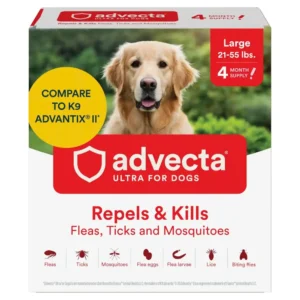
Topical treatments come in small applicator tubes you squeeze directly onto your dog’s skin, usually between the shoulder blades where they can’t easily lick it off. Depending on the active ingredient, a topical treatment can kill fleas through contact with the treated animal or after fleas are exposed to the medication while feeding.
How long it works and which parasites it controls vary by product, so follow the label rather than assuming every topical works the same way. The length of protection and bathing instructions vary by product. Some topical treatments are reapplied monthly, while others provide protection for longer, and the label will tell you when the product can be exposed to water or when bathing should be avoided after application.
Oral Flea Treatment
Oral flea treatments come as tablets, chews, or other formulations that your dog takes by mouth.
Depending on the active ingredient and product, they can kill adult fleas after the medication reaches the appropriate concentration in the dog and may also provide protection against other parasites.
One advantage is that there is no residue left on the coat, which can make oral treatments appealing for dogs that swim frequently or for households where topical applications are difficult. The tradeoff is that not every oral product is appropriate for every dog, and treatment intervals vary.
Check the product label for the approved age and weight range, active ingredients, treatment interval, and parasites controlled. If your dog has a medical condition or takes other medications, ask your veterinarian whether an oral flea treatment is appropriate.
Also Read:
Flea Shampoo
Flea shampoo can kill adult fleas present during the bath, which makes it useful for reducing a heavy flea load and giving your dog short-term relief. The limitation is that a shampoo bath does not address the eggs, larvae, and pupae already developing in your home, and its residual protection varies by product. It works best as one part of a broader flea-control plan rather than as the only treatment.
Use a shampoo specifically labeled for dogs and follow the directions for the dog’s age, weight, application time, and frequency. If your dog has irritated or damaged skin, ask your veterinarian before bathing with a medicated flea product.
Wearable Flea Treatments
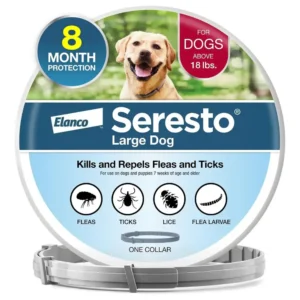
Some flea collars provide long-lasting protection by releasing active ingredients over time, but the duration and parasites controlled depend entirely on the product. Check the label for the approved species, age and weight range, protection period, and any additional parasites it controls. Fit the collar according to the manufacturer’s instructions rather than relying on a universal two-finger rule, since designs differ. If your dog develops redness, irritation, or other unusual symptoms around the collar, remove it and contact your veterinarian.
Final Thoughts
Getting rid of fleas on dogs isn’t really about finding one magic product. It’s about hitting the problem from three directions at once: your dog, your home, and your yard. Skip the part of the problem where fleas are actually developing, and you leave yourself open to seeing them come right back. The good news is none of these 10 steps require a pest control degree. They just require actually following through, especially during those first few weeks when it’s tempting to stop early because things look fine.
If you’re already several weeks in and still seeing fleas, first check that every pet in the household is being treated appropriately and that you’re continuing the environmental work. If the problem persists despite consistent treatment and cleaning, that’s the point to involve your veterinarian and, when appropriate, a qualified pest professional. Persistent fleas are usually a sign that part of the life cycle or an untreated host is being missed—not necessarily that you simply need to apply more product.