If you’ve ever woken up at 2:17 a.m. convinced something just crawled across your arm, you know the sinking feeling that follows. You check the sheets. You see a tiny dark speck near the mattress seam. Now your mind is racing.
“Maybe if I sleep on the couch for a few weeks, they’ll die.”
“Maybe if I leave for vacation, they’ll starve.”
That’s usually when homeowners start searching: How Long Can Bed Bugs Live Without Food?
It’s a smart question. Bed bugs are completely dependent on blood meals. No food should mean no survival… right?
Unfortunately, bed bugs are patient. They are built to wait.
Understanding how long bed bugs can live without feeding is critical. It determines whether “waiting them out” could work (usually it won’t), how aggressive your treatment plan needs to be, and why infestations sometimes reappear months later.
Let’s break it down clearly and practically.
Also Read: How Fast Do Bed Bugs Spread?
How Long Can Bed Bugs Live Without Food?
Under normal indoor conditions (68–75°F), bed bugs can survive 2 to 6 months without feeding. In cooler environments below 65°F, adults have been documented surviving over a year without a blood meal.
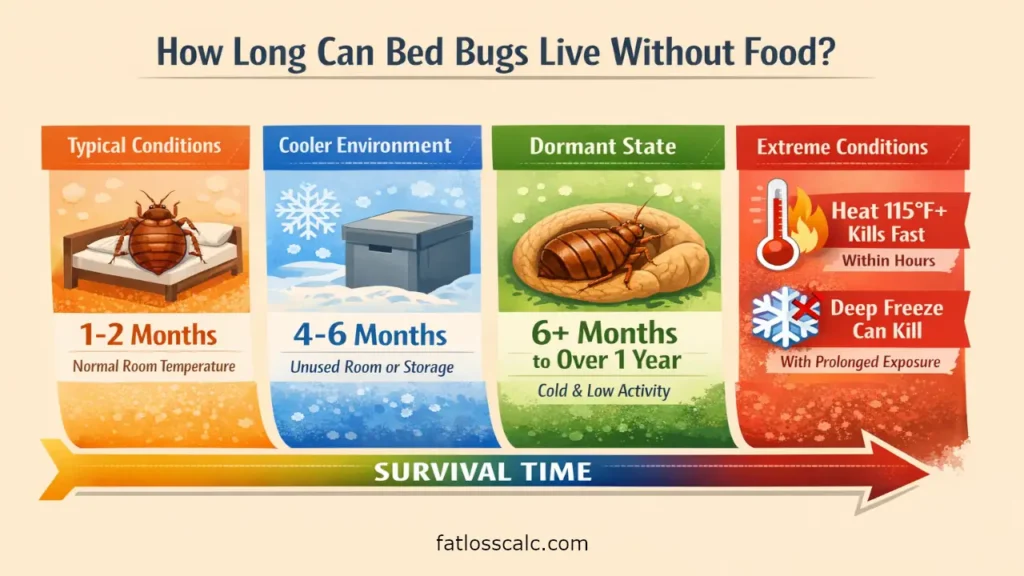
| Condition | Survival Without Feeding |
| Heated home (68–75°F) | 2–6 months |
| Cool room (60–65°F) | 6–12+ months |
| Vacant cool apartment | Up to 1 year |
| Sustained heat above 120°F | Death within minutes |
According to the CDC and university extension research (CDC; UC IPM; Penn State Extension), cooler temperatures dramatically slow their metabolism, allowing extended survival.
Why Bed Bugs Can Survive So Long Without Feeding
Here’s the real-world answer.
In most heated North American homes where temperatures stay between 68°F and 75°F, bed bugs typically survive a few months without feeding. They don’t need to stretch survival very long in active infestations because hosts are available.
But in cooler rooms — spare bedrooms, storage units, vacant apartments — their metabolism slows dramatically. Laboratory studies summarized by University of California Integrated Pest Management (UC IPM) show adult bed bugs surviving many months, and in some cool-temperature studies, more than a year without feeding.
In entomology, this slowdown is sometimes described as a diapause-like state. It’s not true mammalian hibernation, but rather a metabolic slowdown that allows bed bugs to conserve energy and survive extended periods without feeding when conditions aren’t ideal.
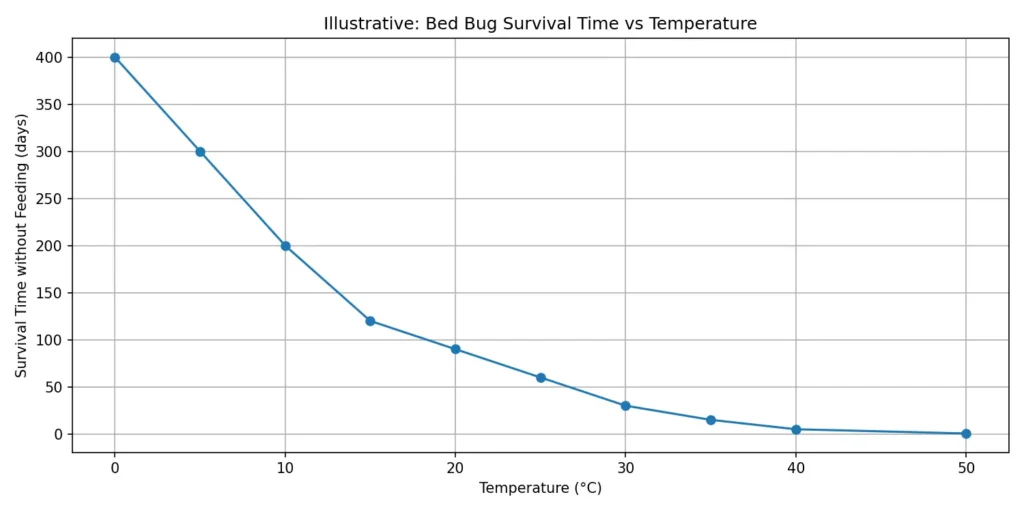
The CDC confirms that under certain conditions, bed bugs can live for several months without a blood meal. Penn State Extension also notes survival is strongly influenced by temperature and life stage.
Why the wide range?
- Life stage matters. Newly hatched nymphs die faster without feeding.
- Temperature matters more than anything.
- A recently fed adult survives longest.
In real homes, temperature is the deciding factor. A climate-controlled house rarely gets cool enough long-term to dramatically shorten survival.
In most North American homes with central heating or air conditioning, indoor temperatures stay within the bed bug survival zone year-round. That’s why waiting rarely works.
What Influences How Long Bed Bugs Can Live Without A Host?
Several factors change how long a bed bug can survive away from a human host. The biggest players are:
- Life stage (nymph vs adult): Older nymphs and adults can survive longer without food than newly hatched nymphs. Adult females that have had plentiful meals can last longest.
- Temperature: The cooler the environment (within reason), the more slowly a bed bug’s metabolism runs. At lower temperatures, insects can conserve energy and survive much longer—sometimes many months or over 400 days in lab conditions. Conversely, higher temperatures speed up metabolism and shorten starvation survival.
- Humidity: Humidity affects water loss. Low humidity can increase desiccation and reduce survival; however, humidity interacts with temperature in complex ways. Recent research suggests humidity and temperature combinations strongly influence mortality.
- Previous feeding and energy reserves: A bug that recently fed heavily can last longer than one that has been starving for weeks.
- Access to shelter and aggregation cues: Bed bugs tend to cluster in protected spots that reduce desiccation and offer safety, which improves survival prospects.
Quick Answer: If you store belongings in a cold garage to “starve” the bugs, it won’t reliably work. Bugs hide deep in fabrics and folds. For reliable control, combine sanitation, encasements, and professional treatment.
Real-World Example: Bed Bugs in a Vacant Apartment
A few years ago, I inspected a rental unit that had been vacant for nearly six months. The previous tenant had reported bed bugs before moving out, and the landlord assumed that leaving the apartment empty would solve the issue.
It didn’t.
When I inspected the unit, live adult bed bugs were still present inside the box spring and behind the headboard. The apartment had been kept cool during vacancy to save energy — around 62°F. That lower temperature slowed their metabolism just enough to let them ride out the vacancy.
The moment new tenants moved in, feeding resumed within days.
That situation is exactly why the question how long can bed bugs live without food matters so much. Vacancy alone is unreliable. Dormancy is not death.
How They Feed
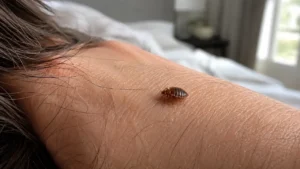
Bed bugs are blood feeders. They are attracted to carbon dioxide, body heat, and the odor of humans. They come out of hiding at night (or when people are stationary) and crawl to exposed skin to feed. A single feeding is a calm, quick event: the insect pierces the skin, draws blood until it’s engorged, then retreats back to its hiding place. The whole feeding can take only a few minutes.
Nymphs and adults both need blood to grow and reproduce. Nymphs must take at least one blood meal between each molt to reach the next stage. That’s why newly hatched babies (nymphs) will actively search out a host shortly after emerging.
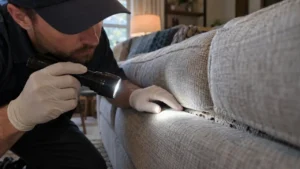
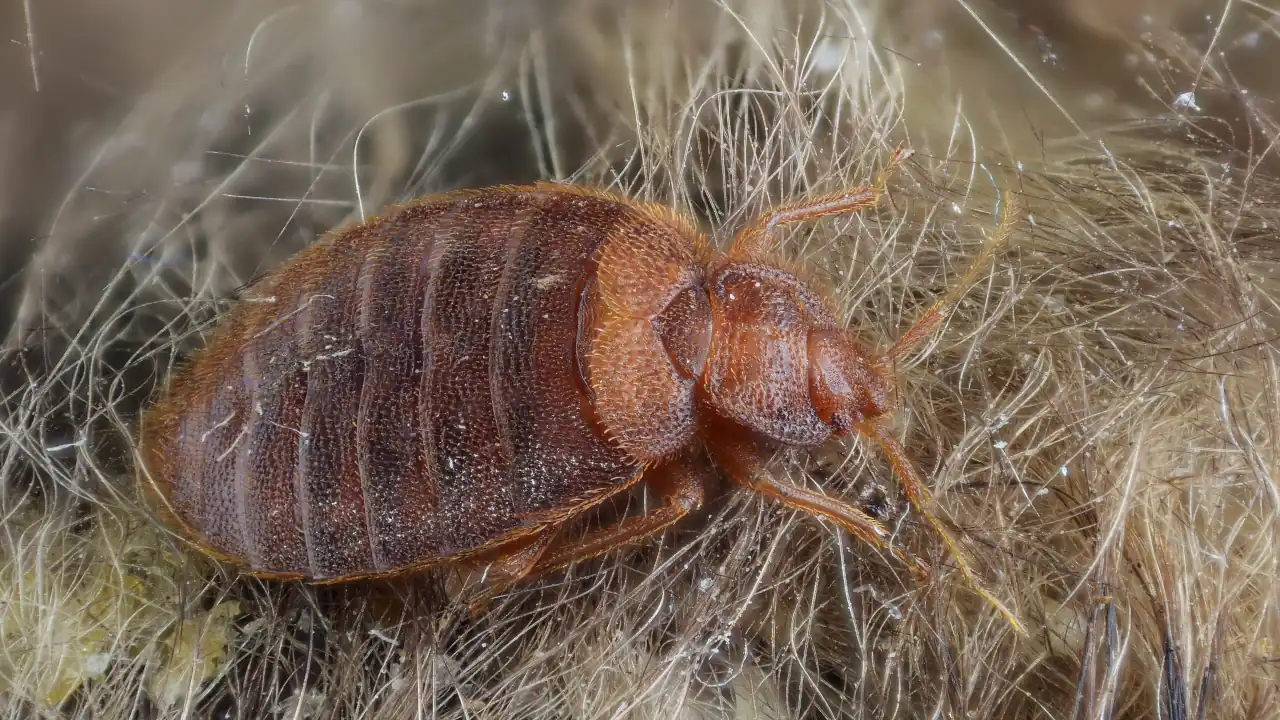
Quick Answer: If you’re inspecting for signs, look for tiny rusty spots (digested blood), shed skins (exuviae), and the insects themselves along mattress seams, bed frames, and behind headboards. Washing bedding in hot water and drying on high helps kill bugs on linens but won’t reach hiding bugs in furniture.
How Often Bed Bugs Feed
In an active infestation, bed bugs commonly feed about every 3 to 10 days. Many sources estimate a practical window of every 5–10 days, although some research and extension documents note feeding every 3–7 days under certain conditions. While only a portion of the population feeds on any given night (most are digesting or hiding), the population as a whole feeds frequently enough to keep the infestation growing.
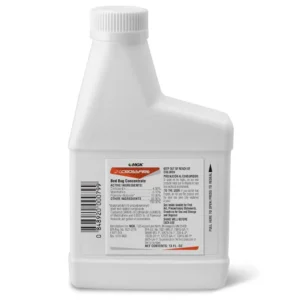
MGK Crossfire® Bed Bug Concentrate
Research from Penn State Extension notes that under optimal indoor conditions with regular feeding, bed bugs can complete their full life cycle in roughly five to eight weeks — which explains how quickly a small issue can turn into a larger infestation.
They are opportunistic but efficient: if a host is available and stationary, they’ll feed. If a host isn’t easily found, they’ll wait and roam at night to find one.
Quick Answer: Frequent bites clustered in time usually indicate active feeding and a larger population. If bites stopped suddenly but you still find signs, that might mean they’re hiding because you disturbed their harborages or because you are using repellent measures; it does not mean they’re gone.
How Long a Feeding Session Lasts
A single feeding session usually takes about 5 to 15 minutes—adult males and females typically finish quicker than nymphs. Newly hatched nymphs — often called A baby Bed Bug — must take a blood meal before each molt. That’s why younger life stages are more vulnerable to starvation than well-fed adults.
After feeding, bed bugs withdraw and return to hiding places to digest, mate, and lay eggs (females). Female bed bugs can lay multiple eggs after feeding; a single female can produce hundreds of eggs in her lifetime when conditions and hosts are available.
Quick Answer: Because meals are short and painless for the bug, you may not wake when they feed. That’s why inspecting bedding and using mattress encasements is so useful — it reduces accessible skin and protects the mattress where hematophagous insects often hide.
Survival Scenarios: How Long Bed Bugs Live Without Food in Real Homes
Let me translate the science into plain language you can use. If you imagine a range of scenarios:
So, “how long” depends on context: weeks to over a year is the practical answer, with warm/high-activity homes at the short end and cool/dormant conditions at the long end.
Why Waiting Them Out Rarely Works
A common question I get is: “If I don’t sleep here for a month, won’t they starve?” That’s tempting logic. The problem is bed bugs are supremely adapted to hiding and low metabolism. If a subset survives in cooler spots, they can simply wait out weeks or months. Meanwhile, eggs may be waiting to hatch when a host returns. So the “vacate and wait” strategy is unreliable as a standalone tactic.
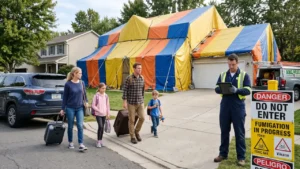
Also, moving infested furniture or luggage without proper treatment can spread bugs to new areas. If you must be away, combine vacancy with protective measures: encase mattresses, seal hiding sites, and have a professional inspect and treat if necessary.
Bed bugs don’t just wait — they relocate. In multi-unit housing especially, bed bugs spread quickly through shared walls, plumbing gaps, and hallway traffic.
Quick Answer: If you plan to leave your home temporarily, isolate and seal belongings, encase mattresses, and arrange a professional inspection afterward. Don’t assume absence alone will solve it.
Common Mistakes Homeowners Make
Over the years, I’ve seen the same patterns repeat.
Each of these strategies misunderstands how long bed bugs can live without food.
Practical Control: What Works and Why
After 18 years in the field, the thing that separates temporary fixes from long-term success is an integrated approach. Here’s the logic in human terms.
First, you want to find whether there’s an active population, where they are hiding, and what life stages are present. That’s inspection. A good inspection tells you whether you need targeted treatments (spot-sprays, dusts), non-chemical options (heat treatment, steaming), or both. For many heavy infestations, professional heat treatment is the fastest way to reach bugs in deep hiding; done properly, it raises room temperatures to a level that kills all life stages in one go. Heat is effective because bed bugs are sensitive to sustained high temperatures.
Second, encasements for mattresses and box springs slow re-infestation and help monitor whether bugs are active. A sealed mattress means bugs can’t live in the seams or feed unnoticed there.
Third, targeted chemical treatments applied by a trained technician kill bugs in cracks and crevices where sprays don’t reach well. These are not the “spray everything” tactics of the past. They’re precise, safer, and better combined with non-chemical tactics.
Fourth, follow-up inspections and monitoring traps are essential. Because of the long possible dormancy period, follow-up checks at one, two, and four weeks after treatment are common practice to ensure no survivors or new hatchlings remain.
Why this works: each method covers the weaknesses of the others. Heat gets everything but costs more; chemicals target harborages but may miss hidden bugs; encasements and traps provide ongoing protection and monitoring. Together, they increase the chance of complete elimination.
Quick Answer: If you call a pro, ask about follow-ups and warranties. A one-visit guarantee that doesn’t include follow-ups is a red flag.
Safety and Caution Notes
Avoid using over-the-counter foggers (“bug bombs”) for bed bugs. They rarely penetrate hiding areas and can scatter the infestation deeper into walls and adjacent rooms.
Never apply outdoor pesticides indoors or mix chemicals. Misuse can cause respiratory irritation, skin reactions, or worse — especially in homes with children or pets.
If you attempt DIY steaming, move slowly and use caution around electrical outlets and electronics.
Professional treatments are safest and most effective when done according to label instructions and local regulations.
Signs You Still Have Bed Bugs After Treatment or Absence
Even after treatment (or after leaving and returning), these signs mean trouble:
You see fresh blood spots on sheets, new bites clustered in time, or shed skins and live insects. If you find any of these, don’t assume it’s a false alarm—act. Re-treatment or a second inspection is a reasonable next step. Remember: eggs are small and can survive some sprays, which is why professional follow-up timing is critical.
MGK Crossfire® Bed Bug Concentrate
Immediate Steps If You Find Bed Bugs Tonight
Here’s what to do right now, in plain steps:
- Gather visible affected bedding and wash on hot, dry on high.
- Use a flashlight and check seams, headboards, box springs, baseboards, electrical outlets, and nearby furniture.
- Place clothing in sealed bags for transport to laundry; avoid spreading bugs in hallways.
- Consider mattress encasements and interceptors under bed legs to monitor activity.
- Contact an experienced pest-control professional to inspect and recommend a treatment plan; avoid DIY fumigants or banned pesticides.
These actions reduce immediate bites and slow spread while you plan a full treatment.
Also Read: Bed Bug Nests: How to Find Them Before They Spread Everywhere
Frequently Asked Questions
Conclusion
So, how long can bed bugs live without food? Long enough that starvation is not a reliable solution. They can live without feeding for weeks, months, and—in cool conditions—more than a year. That resilience makes “wait them out” a risky strategy. The smart move is inspection, combined treatments (heat and targeted insecticides when appropriate), mattress encasements, and follow-ups. If you want the shortest path to being bite-free, a measured professional approach backed by good monitoring is your friend.