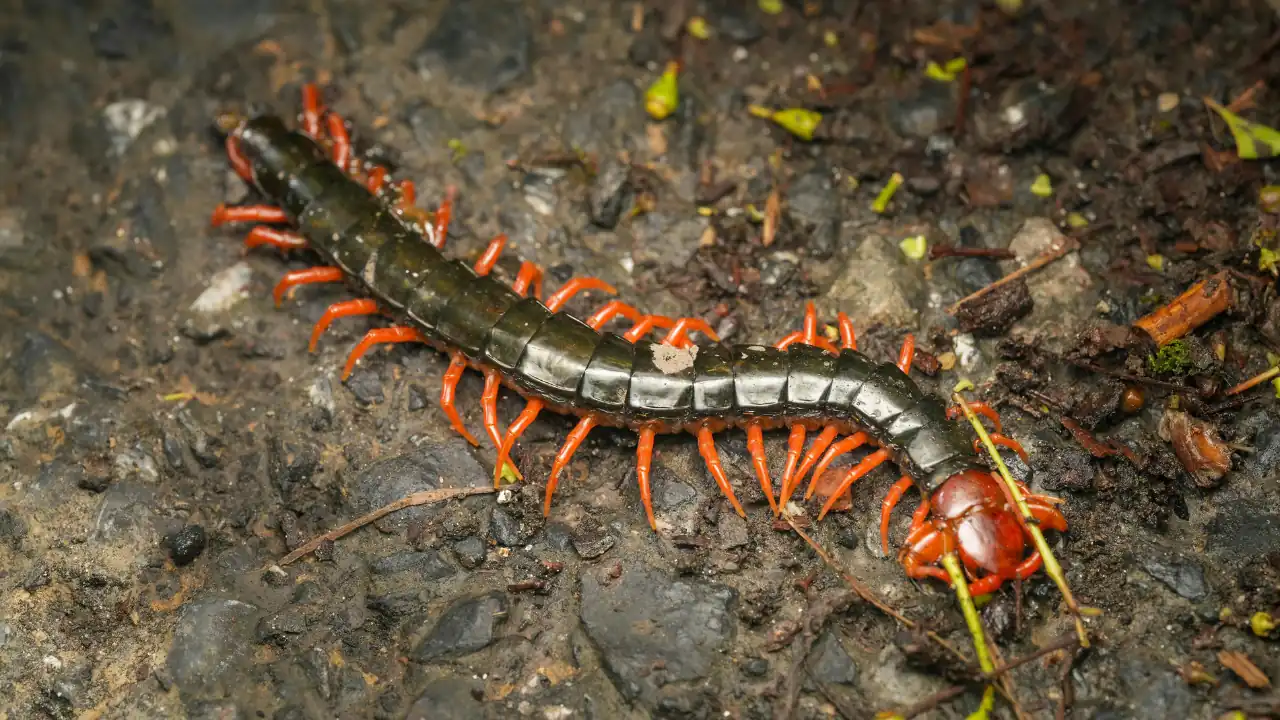
Centipedes in the house can feel like a jump scare you did not ask for. The good news is that they are usually a warning sign, not a mystery. In most homes, centipedes show up because something is damp, dark, cluttered, or full of other insects they can eat.
So the real fix is not just killing the one you saw. It is changing the conditions that brought it in, and that is exactly what works long term. If you are trying to figure out how to get rid of house centipedes permanently, the key is understanding what is attracting them in the first place.
Also Read: Do Boxelder Bugs Bite? The Truth Most People Get Wrong
Quick Answer
The best way to get rid of centipedes in your house is to eliminate excess moisture, seal entry points, reduce other insect populations, and remove hiding places. Dehumidifiers, crack sealing, sticky traps, decluttering, and targeted pest control treatments are the most effective long-term solutions because they address the conditions that attract centipedes indoors. Most indoor centipede problems are caused by moisture issues, hidden entry points, or other insects living inside the home.
Why Centipedes Keep Showing Up in Homes
If you keep seeing centipedes, do not assume your house is dirty. Centipedes are predators, and they usually move indoors because they are chasing other pests or looking for moisture and shelter. Extension sources consistently point to the same core causes: damp spaces, cracks and gaps, clutter, and a food supply made up of other insects. That is why the best centipede control plan starts with dryness, sealing, and cleanup rather than random spraying.
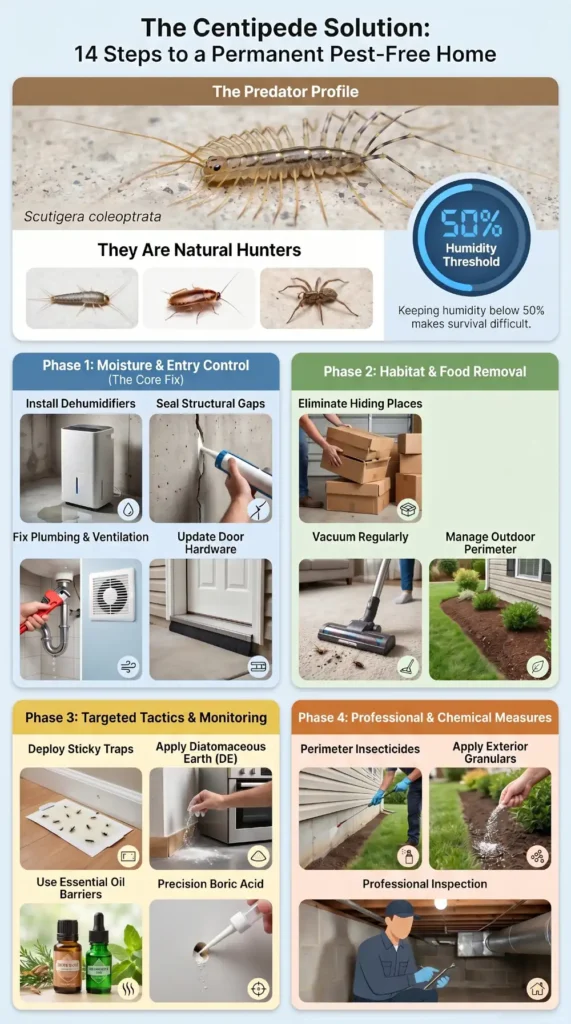
Most house centipedes are not trying to bite people. The species most homeowners encounter indoors is the house centipede (Scutigera coleoptrata), a fast-moving predator that feeds on spiders, silverfish, cockroaches, and other small insects.
They are trying to survive. That does not make them welcome, of course, but it does mean your strategy should be smarter than panic. If you remove moisture, cut off entry points, reduce hiding places, and knock down the insects they feed on, centipedes usually stop being a repeat problem.
Why Do I Have Centipedes in My House?
If you are wondering why you have centipedes in your house, the most common reasons are excess moisture, hidden entry points, clutter, and other insects they can feed on. Bathrooms, basements, crawl spaces, laundry rooms, and storage areas are especially attractive because they provide humidity, shelter, and a reliable food source.
What Attracts Centipedes to Your House?
Centipedes are attracted to moisture, darkness, shelter, and insects they can hunt. Many of the same conditions that attract ants indoors, such as food availability, moisture, and easy access points, can also contribute to recurring centipede activity.
Leaky pipes, damp basements, cluttered storage areas, and existing pest problems create ideal conditions for centipedes to survive indoors. In most cases, the centipedes themselves are not the primary problem. They are responding to favorable conditions inside the home.
How To Get Rid of Centipedes in Your House
Not every centipede-control method delivers the same results. Some approaches help reduce activity temporarily, while others address the moisture, shelter, and food sources that allow centipedes to keep returning. The steps below are organized from the most practical long-term solutions to supplemental control measures.
1. Use Essential Oil Repellents
I treat essential oils as a helper, not the main solution. Peppermint, eucalyptus, tea tree, cedar, and lavender oils are commonly used by homeowners who want a lighter, more natural approach, especially around baseboards, closets, laundry rooms, and under sinks. The reason people like them is simple: they smell strong, and centipedes tend to avoid exposed, disturbed areas.
Research on essential oils for centipede control is limited, and extension programs generally recommend focusing on moisture reduction, exclusion, and habitat modification instead of relying on scent-based repellents alone. In practical terms, homeowners usually see better long-term results from fixing the conditions attracting centipedes than from attempting to repel them with fragrances. But they work best as a temporary repellent layer, not as a fix for moisture, cracks, or a pest infestation.
If you want this to help, use it where centipedes travel, not just where you wish they would not go. Entry points, basement corners, and wall edges are better targets than the middle of a room. Reapply often, because natural scents fade fast. I would not rely on essential oils alone, especially if you are seeing centipedes every week. At that point, the issue is bigger than fragrance. It is usually habitat, entry, and prey insects.
The cleanest way to think about this is: essential oils can make a spot less attractive, but they do not solve the underlying reason centipedes are there. Use them as a support tool while you work on the bigger jobs.
2. Apply Diatomaceous Earth Around Your Home
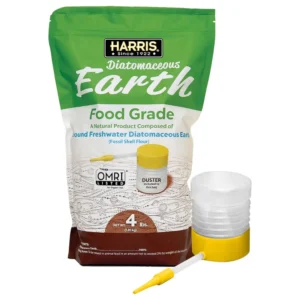
Diatomaceous earth, or DE, is one of the better natural options for crawling insects because it works physically, not chemically. Diatomaceous earth is made from fossilized diatoms and works by damaging the protective outer layer of crawling insects, causing them to dry out over time. It stays effective only while it remains dry and undisturbed. Many labeled diatomaceous earth products include centipedes among the crawling pests they can help control when used according to directions.
For centipedes, the smart move is a thin application in dry, protected areas where they travel. Think cracks, crevices, baseboards, behind appliances, and around known entry points. Do not pile it on thick. More is not better here.
A heavy layer can get disturbed easily and may lose effectiveness faster. Also, keep kids and pets away from treated areas until the dust has settled, and always follow the label. Use only products labeled for residential pest control.
Pool-grade diatomaceous earth should never be used indoors because it is processed differently and can pose greater respiratory risks. Like any fine dust, excessive inhalation can irritate the nose and lungs, which is why careful placement is important.
The biggest mistake people make with DE is using it where moisture is active. If the area is damp, DE stops being the reliable barrier people expect. That is why I use it after fixing leaks and drying the space, not before. Dry space first, dust second. That order matters.
3. Install and Run Dehumidifiers
If I had to pick one thing that makes the biggest difference in centipede control, it would be moisture reduction. Centipedes are very sensitive to moisture loss, and extension guidance keeps coming back to the same point: lower humidity makes homes less welcoming to them. Research-based pest management guidance consistently recommends reducing indoor humidity in damp areas.
Basements are usually the first place to start, followed by crawl spaces, laundry rooms, bathrooms, and any room that gets condensation on windows or walls. If you can keep humidity under control, you make life harder not only for centipedes but also for the insects they feed on.
As a practical target, try to keep indoor humidity below 50 percent in basements and other moisture-prone areas. Many homeowners are surprised how quickly centipede activity drops once humidity levels are consistently reduced. That is a double win. You are not just making the room drier. You are shrinking the whole pest habitat.
A dehumidifier works best when it runs consistently, not just once in a while when the air feels sticky. If the room keeps cycling between damp and dry, the problem stays alive. I also tell people to check hidden spots, because the worst humidity is often the one nobody notices. The corner behind a storage rack or the space around a water heater can be enough to keep centipedes happy. Dry those places out, and their hiding comfort drops fast.
In one basement inspection I handled, the homeowner had been spraying for centipedes every few weeks without much success. The real issue turned out to be a slow plumbing leak behind stored boxes that kept the humidity elevated year-round. Once the leak was repaired and a dehumidifier was installed, centipede sightings dropped dramatically within a few weeks. Situations like this are why moisture control usually delivers better results than repeated pesticide applications.
4. Seal All Entry Points and Create Physical Barriers
Sealing is one of the most boring steps, but it is also one of the most important. According to a Cornell University Integrated Pest Management publication, cracks and crevices in foundations, along with gaps around windows and doors, are common centipede entry points, making exclusion one of the most effective long-term control methods.
Start with the foundation, windows, doors, and places where pipes, wires, or utility lines enter the structure. Pay particular attention to foundation cracks, utility penetrations, basement wall joints, and gaps where concrete meets framing.
Use caulk for small cracks, expanding foam for larger irregular gaps, weather stripping for loose-fitting windows and doors, and door sweeps for the bottom of exterior doors. Also inspect door thresholds for small gaps that can allow centipedes and other crawling pests to enter.
If vents or drains are part of the problem, screen them appropriately so you keep airflow without leaving a pest-sized opening.
A lot of centipede control failures happen because people treat the visible pest and ignore the route it used. That is like mopping the floor while the faucet is still running. If you block the route, you reduce new arrivals. If you also dry the space, you make the route far less attractive in the first place. That is the kind of one-two punch that actually lasts.
5. Set Up Sticky Traps for Monitoring and Control
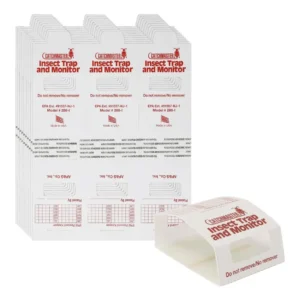
Sticky traps are one of my favorite practical tools because they do two jobs at once. They catch centipedes, and they tell you where the problem is active. Sticky traps can be useful for both monitoring and reducing centipede activity.
Put them along baseboards, behind furniture, near utility rooms, in basement corners, and near doors where you suspect entry. Do not spread them randomly across the whole house. You want them where movement is likely. That is how you get signal, not just clutter. When the traps start catching fewer pests over time, that is a good sign your moisture, sealing, and cleanup steps are working.
I especially like sticky traps because they show you what else is in the room. If you find spiders, silverfish, or other small insects, that is a clue that centipedes may be feeding there too. In other words, the trap is not only a catcher. It is an inspector.
6. Use Boric Acid Treatment for Problem Areas
Boric acid can help in targeted problem areas, but I always put it in the category of careful, labeled use. Boric acid has long been used as a pest management tool for a variety of crawling insects. That makes it a useful tool in the broader pest-control toolbox. The key is precision and restraint.
For centipede control, boric acid makes the most sense in hidden cracks, wall voids, and protected edges where centipedes travel but kids and pets cannot access the dust. It should not be scattered casually around the house. Keep it thin, targeted, and exactly where the label allows. It is not a miracle fix, and it should never replace sealing, drying, and cleaning. Think of it as a support treatment, not the whole plan.
The reason I still include boric acid in a serious centipede plan is simple: it gives you another layer in hard-to-reach areas where centipedes and their prey may move. But if you are applying it to areas that stay damp or get walked through constantly, you are wasting effort. Like every good treatment, it works best when the environment is already being improved.
7. Eliminate Food Sources by Controlling Other Insects
This step matters more than most people think. House centipedes are hunters, which means their presence often points to a larger insect problem somewhere in the home. Research-based pest management guidance consistently shows that reducing insect populations also reduces centipede activity. Seeing numerous centipedes often indicates that other insects are present as a food source.
That means you have to think bigger than centipedes alone. For example, if cockroaches are part of the problem, addressing the factors that attract and support them can make your home far less appealing to centipedes over time.
If you have silverfish, cockroaches, spiders, flies, ants, or other small bugs hanging around, centipedes will not leave because their pantry is still open. In many homes, reducing spider activity alone can remove one of the food sources that helps support indoor centipede populations. Clean kitchen edges, store food tightly, wipe crumbs, vacuum regularly, and fix any pest problem that is quietly feeding the centipedes.
I like to say it this way: remove the dinner, and the guest stops showing up. This is the logic behind almost every lasting centipede fix. If the insect population in the home falls, the centipede problem usually follows. That is why a centipede plan should always include other insect control, not just centipede treatment.
I have also seen homes where centipede complaints disappeared after addressing a hidden silverfish infestation. The homeowners assumed the centipedes were the primary problem, but the real issue was the steady food source supporting them. Once the silverfish population was reduced, the centipedes largely disappeared on their own.
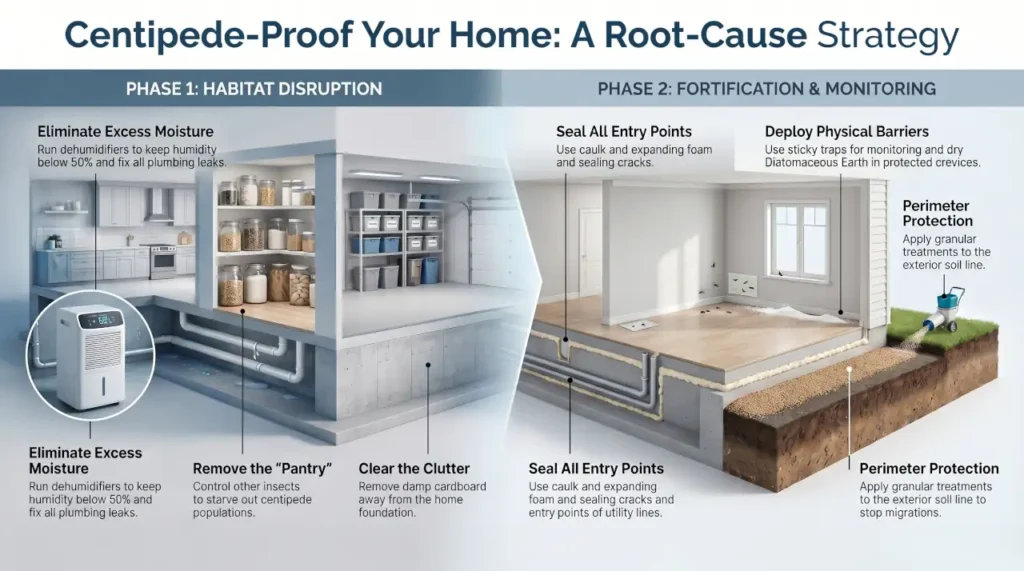
8. Improve Ventilation and Fix All Moisture Issues
Good ventilation is not just about comfort. It is pest control. Centipedes are highly sensitive to moisture loss, which is why damp environments support larger populations. Improving airflow and drying damp areas helps make the environment less attractive.
Check under sinks, behind toilets, around bathtubs, near water heaters, around washing machines, and in basements after heavy rain. Fix leaks right away. Persistent condensation on windows, pipes, or HVAC components often signals humidity levels that can support centipede activity.
Make sure bathroom fans vent outside, not just into an attic. Clean gutters. Extend downspouts away from the foundation. If water pools beside the house, that damp edge becomes a centipede-friendly zone. Homes with chronic basement moisture may also benefit from a properly maintained sump pump system.
This is one of those jobs where small fixes add up. A dripping pipe, a weak exhaust fan, and a bad downspout might not seem connected, but together they can create exactly the kind of damp environment centipedes love. Once you improve airflow and reduce lingering moisture, the house stops feeling like shelter to them.
9. Remove Outdoor Attractants and Modify Your Landscape
Your yard often sets up the indoor problem before the centipedes ever cross the threshold. Moist outdoor hiding places such as mulch, woodpiles, and landscape debris often support centipede activity. Removing decaying organic material around the foundation can help reduce outdoor populations.
Keep mulch away from the foundation if you can, especially in the wettest spots. Move firewood away from the house. Clean up leaf litter. Trim dense plant growth so it does not touch the walls. If your landscaping traps water or creates a shady, damp band against the structure, you are building a centipede corridor without meaning to.
I also like to check where irrigation hits the house. Overspray, clogged drainage, and overwatered beds can all keep the area around the home damp. The goal is simple: make the zone nearest the house dry, open, and less useful as shelter. When the edge of the property gets less attractive, the house gets fewer visits.
10. Vacuum Regularly in Problem Areas
Vacuuming is one of the easiest ways to deal with centipedes you already have while also cleaning up the environment that supports them. Vacuuming is one of the easiest ways to remove visible centipedes while also cleaning up debris that supports pest activity. That makes vacuuming a practical part of both removal and prevention.
Focus on basements, corners, baseboards, closets, storage rooms, and under furniture. These are the places where centipedes hide, hunt, and move quietly. Vacuuming also removes dust, dead insects, spider webs, and crumbs, which means you are removing both the centipedes and some of what attracts them. That is a better deal than people think.
If you see centipedes often in the same spot, vacuum that zone more frequently for a while. I usually tell homeowners to think in terms of pattern breaking. Once you interrupt the hiding place and the food trail, the pest has a harder time settling in. Clean space does not guarantee zero centipedes, but it makes your other steps work much better.
11. Apply Chemical Insecticides for Severe Infestations
Sometimes a home needs more than natural methods. When a centipede problem is heavy, persistent, or tied to a larger pest issue, a labeled insecticide can be part of the solution. Most centipedes are susceptible to properly labeled insecticides when used according to label directions. In many cases, however, indoor spot treatments are unnecessary when moisture issues and entry points have already been addressed.
The important part is using the right kind of treatment in the right place. Perimeter treatments are typically more useful than random indoor sprays because they target the route centipedes use to enter. Total-release foggers generally perform poorly against centipedes because they rarely reach the cracks and voids where they hide. In plain English, foggers usually waste time.
This is also where label reading matters a lot. Use only products specifically labeled for the pest and the site, and follow all directions carefully. Never apply outdoor-only products indoors, and keep people and pets away from treated areas until the label indicates it is safe to re-enter. I always prefer targeted treatment over broad spraying because it is cleaner, safer, and usually more effective when centipedes are using foundations, basement walls, and hidden edges as travel routes.
12. Use Granular Treatments for Exterior Protection
When the outdoors is part of the problem, a granular perimeter treatment can give you longer-lasting exterior protection than some sprays. Granular formulations often provide longer residual protection than some spray treatments because they remain active in protected outdoor areas for longer periods. That does not mean every home needs them, but they can be useful when centipedes keep migrating from the soil line, mulch edge, or foundation perimeter.
I like granular treatments as a defensive layer outside the house, not as a substitute for drying and sealing. If the yard is wet, cluttered, or full of hidden shelters, granulars alone will not solve the problem. But if you have already reduced moisture and cleaned up the perimeter, they can help reinforce the boundary. Think of them as part of a barrier system.
The best outdoor pesticide plan is never just, “spray and hope.” It is, “fix the moisture, clear the debris, seal the structure, then use a labeled treatment where needed.” That layered approach is what makes control more reliable and reduces the chance of the same problem coming back every few weeks.
13. Try Natural Plant Repellents in Strategic Locations
While some homeowners use aromatic plants around patios and entryways, university extension recommendations for centipede management focus primarily on habitat modification, moisture control, and exclusion rather than plant-based repellents. For that reason, I view landscape plants as a supplemental measure rather than a proven centipede-control strategy.
This works best when you place those plants away from the foundation and keep the area around them dry. If you crowd a wall with dense plantings and moisture, the plants become decoration on top of the same old problem. So use this step only after the bigger issues are handled. I see it as a finishing touch, not a core control method.
When homeowners ask me whether natural repellents are worth trying, my answer is usually yes, but only after the home has been dried out and sealed. Otherwise, you are trying to perfume a problem instead of solving it.
14. Declutter and Organize to Eliminate Hiding Spots
Clutter is a centipede hotel. Removing unnecessary boxes, bags, and clutter helps eliminate centipede hiding places. The more crowded your storage spaces are, the easier it is for centipedes to move around without being noticed.
This is especially important in basements, garages, laundry rooms, and utility spaces. Stack boxes off the floor if you have to keep them. Better yet, reduce the pile. Keep storage bins sealed. Do not leave old cardboard, damp paper, or unused fabric sitting on concrete. Those things can trap moisture and create perfect hiding places for centipedes and the insects they hunt.
A cleaner storage area makes inspection easier too. When you can actually see the floor, the corners, and the wall edges, you catch pest activity sooner. That alone can save you a lot of frustration. Centipedes love places where people do not look. Take that hiding place away, and the problem gets much easier to manage.
I have walked into more than a few basement storage rooms where the centipedes were concentrated almost entirely behind stacks of cardboard boxes that had not been moved in years. Once the clutter was removed and the area dried out, homeowners often discovered the problem was far smaller than they originally thought.
15. Call Professional Pest Control for Persistent Problems
If centipedes keep coming back after you have dried the house, sealed entry points, cleaned the clutter, and treated the perimeter, it is time to bring in a professional.
Sometimes the centipedes are just the visible part of a deeper issue, like a crawl space moisture problem, a hidden leak, or another pest population feeding them. Extension sources also note that structural repairs may be necessary when dryness cannot be restored by simple cleanup alone.
Also Read: Are House Centipedes Dangerous? The Bite Risk Homeowners Often Ignore
A good pest control pro does more than spray. They inspect the home, identify the moisture source, look for entry points, check the outside perimeter, and decide whether the centipede problem is really a centipede problem or a symptom of something else. That is the kind of diagnosis homeowners often need when the issue is stubborn.
I always tell people this: if you are seeing centipedes in multiple rooms, or you keep catching them even after you have cleaned up the area, do not keep guessing. At that point, a professional inspection can save time, money, and a lot of trial and error. Centipede control gets a lot easier when someone finds the root cause instead of just the latest bug on the wall.
Final Thoughts
If you remember only one thing from this guide, remember this: centipedes are rarely the real problem. They are usually the clue. Moisture, clutter, cracks, and other insects are what bring them inside and keep them there.
That is why the most effective plan is layered. Dry the home. Seal the openings. Remove food sources. Clean up hiding spots. Those four steps solve the vast majority of recurring centipede problems without requiring aggressive treatment programs.
These preventive measures are often more effective than relying solely on repeated pesticide applications because they address the conditions that pests need to survive. Then use traps or targeted treatments where needed.
Once you start treating the cause instead of the symptom, the whole situation gets easier. A few centipedes may still show up from time to time, but they should stop feeling like a recurring invasion. That is the goal. Not a temporary win. A house that is simply less inviting to them.
What Does a House Centipede Look Like?
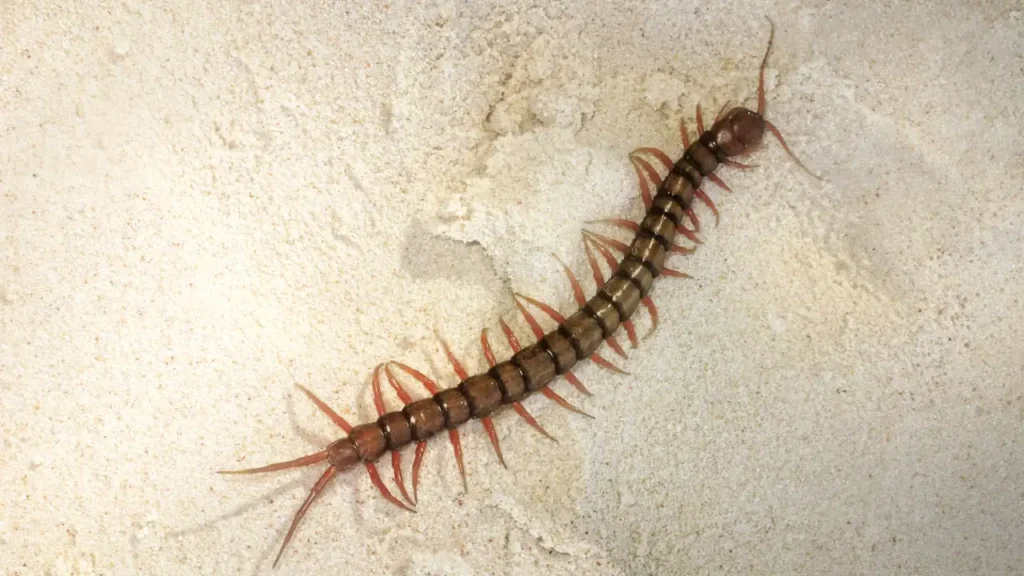
House centipedes typically have a yellowish-gray body with dark stripes and 15 pairs of long legs. Their legs often make them appear much larger than they actually are. Most adults measure between 1 and 1½ inches long, although the leg span can make them look significantly bigger. Because they move extremely fast, homeowners often mistake them for larger pests when they first spot one running across a wall or floor.