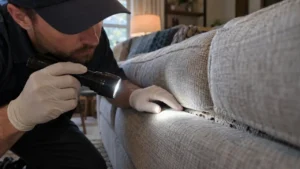

You wake up with itchy red bumps on your skin and immediately wonder what caused them. Was it mosquitoes that got into the house overnight, or could bed bugs be hiding somewhere in your bedroom? Since both bites can look surprisingly similar, it’s easy to jump to the wrong conclusion. Knowing how to tell a bed bug bite vs mosquito bite can save you time, money, and a lot of frustration. More importantly, it helps you take the right steps to solve the actual problem instead of treating the wrong one.
Also Read: How Big Are Bed Bugs? A Simple Size Guide With Pictures
Quick Answer: Bed Bug Bite vs Mosquito Bite
The fastest way to tell a bed bug bite vs mosquito bite is by looking at the bite pattern, when the bites appear, and whether they occur in lines or random spots. Bed bug bites usually appear in clusters or straight lines after sleeping, while mosquito bites are more randomly scattered and often become itchy soon after the bite occurs.
Why It Matters to Know the Difference
If you’re still unsure which insect caused the bites, don’t rely on appearance alone. Inspect your sleeping area for live bed bugs, shed skins, or black fecal spots, since physical evidence is usually more reliable than skin reactions.
Many homeowners assume every itchy bump is a mosquito bite. After nearly two decades in pest control, I’ve seen this mistake more times than I can count. Unfortunately, waiting too long to identify the real culprit often gives bed bugs time to spread throughout a home.
The sooner you confirm what’s causing the bites, the easier the problem usually is to contain because bed bugs can spread much faster than many homeowners expect.
I’ve visited homes where people spent weeks spraying mosquito repellent around their bedroom because they thought mosquitoes were the problem. Meanwhile, dozens of bed bugs continued feeding every night.
I’ve also seen the opposite happen. Someone notices one itchy bump after spending the evening outside and assumes they have bed bugs. They panic, throw away furniture, and spend hundreds of dollars unnecessarily.
In many inspections, the bite itself turns out to be the least reliable clue. I spend far more time looking for physical evidence than examining the bites because visible signs usually provide a much more accurate identification.
Knowing what bit you helps you treat the bites correctly, identify the source of the problem, prevent future bites, avoid unnecessary stress, and spend your time and money on the right solution. The bites may look similar, but the solution is completely different depending on which insect caused them. When homeowners know what they’re dealing with early, solving the problem becomes much easier.
Meet the Bugs Behind the Bites
Before comparing the bites themselves, it helps to understand the insects responsible.
Bed Bugs: The Sneaky Nighttime Visitors
Bed bugs are tiny, flat insects that survive entirely on blood meals. Adult bed bugs are about the size of an apple seed, reddish-brown, and excellent at hiding in tiny cracks. Unlike mosquitoes, bed bugs don’t fly or jump. They crawl quietly and stay hidden most of the day.
Bed bugs hide in mattress seams, bed frames, box springs, headboards, furniture joints, baseboards, and other narrow cracks close to where people sleep. They rarely stay out in the open, which is why knowing where they usually hide makes inspections much easier. Their entire schedule revolves around sleeping humans.
One thing many people don’t realize is that you usually don’t feel the bite as it’s happening. Bed bugs feed using a needle-like mouthpart that pierces the skin while injecting saliva containing mild anesthetic compounds and anticoagulants.
I’ve inspected homes where homeowners insisted they never felt anything during the night. Yet the next morning, they woke up covered in itchy bite marks.
Another important point is that not everyone reacts the same way. One family member may have dozens of visible bites while another sleeping in the same room shows no reaction at all. That difference often causes confusion during inspections.
Also Read: Are Mosquitoes Attracted To Light? It’s Not What You Think
Mosquitoes: The Flying Disease Carriers
They have wings, long legs, and spend most of their lives outdoors, although some species readily enter homes in search of a blood meal. Even when mosquitoes end up inside a home, it isn’t always because they were drawn in by a porch light, as many people assume.
Only female mosquitoes bite because they need blood protein to produce eggs. Unlike bed bugs, mosquitoes don’t depend on people sleeping. They’ll bite anytime they find an opportunity.
Depending on the species, mosquitoes may bite during the day, at dusk, or throughout the night. After landing, they insert a long needle-like mouthpart called a proboscis into the skin.
Instead of injecting anesthetic like bed bugs, mosquitoes inject saliva that prevents blood from clotting. Your immune system reacts to this saliva, creating the familiar itchy bump. This difference in feeding behavior is one of the easiest ways to tell the bites apart.
Bed Bug Bite vs Mosquito Bite Comparison Chart
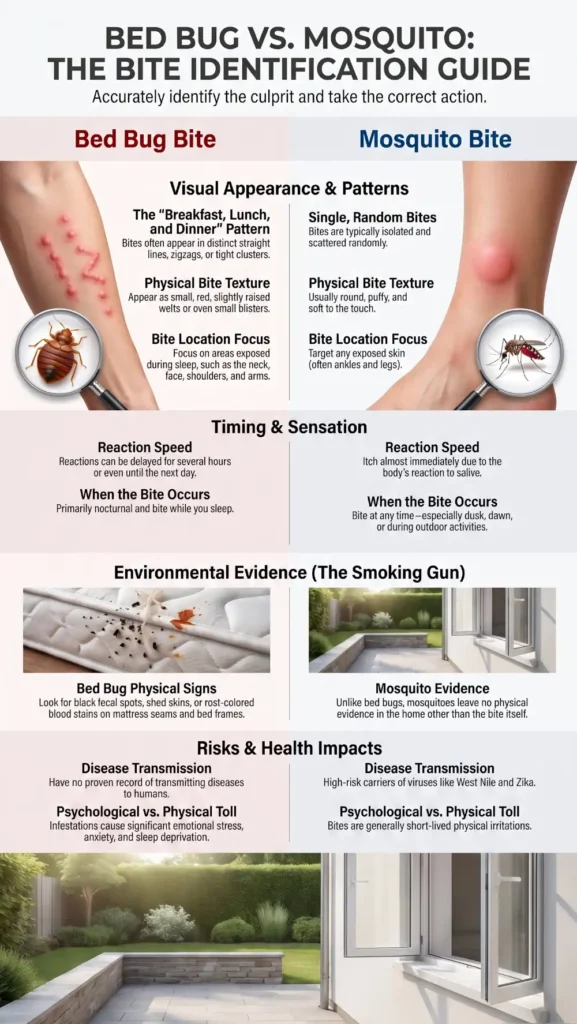
If you’re wondering what bed bug bites look like vs mosquito bites, this comparison highlights the most reliable differences in appearance, timing, bite pattern, and where the bites occur.
| Feature | Bed Bug Bite | Mosquito Bite |
| Bite Pattern | Lines or clusters | Usually single, random bites |
| Time of Bite | Mostly while sleeping | Day or night depending on mosquito species |
| Bite Location | Arms, shoulders, neck, face, legs | Any exposed skin |
| Itching | Often intense | Mild to moderate |
| Swelling | Small raised welts | Round puffy bump |
| Number of Bites | Several close together | Usually isolated |
| Infestation Risk | Indicates possible home infestation | Usually outdoor exposure |
| Disease Risk | No proven disease transmission | Can transmit serious diseases |
| Evidence Left Behind | Black fecal spots, shed skins, live bugs | Usually none |
No single characteristic can identify every bite with complete certainty. Instead of focusing on one symptom, compare the bite pattern, where the bites appear, when they developed, and whether you can find evidence of insects nearby. Using several clues together provides a much more accurate diagnosis than relying on appearance alone.
How to Tell Bed Bug Bites vs Mosquito Bites Apart
At first glance, both bites may appear similar. They’re usually red, itchy, and slightly raised. That’s why so many homeowners confuse them.
The key isn’t just the bite itself. It’s the overall pattern, timing, and surrounding clues. When I inspect a home, I rarely rely on the bite alone. Instead, I ask homeowners several questions. Let’s look more closely at what each bite usually looks like.
Don’t Diagnose Based on Bites Alone
One of the biggest mistakes homeowners make is assuming they can identify the insect based only on the appearance of a bite. In reality, bed bug bites, mosquito bites, flea bites, and even allergic skin reactions can look surprisingly similar. After inspecting thousands of homes, I’ve learned that the surrounding evidence is usually much more reliable than the bite itself. If you suspect bed bugs, look for signs such as live insects, black fecal spots, shed skins, or blood stains on bedding before deciding how to treat the problem.
Flea bites can create similar confusion, especially when they’re clustered together. If you’re still deciding which pest you’re dealing with, our comparison of bed bug bites vs. flea bites explains the differences in more detail.
However, they’re more commonly found around the ankles and lower legs, especially in homes with pets or wildlife activity. Looking for physical evidence of the insect is usually more reliable than relying on the bite alone. Bite patterns are useful clues, but they shouldn’t be considered proof on their own.
What Bed Bug Bites Look Like
Comparing clear photos of bed bug bites and mosquito bites can be helpful, but remember that pictures alone can’t confirm what’s causing your bites because individual skin reactions vary considerably.
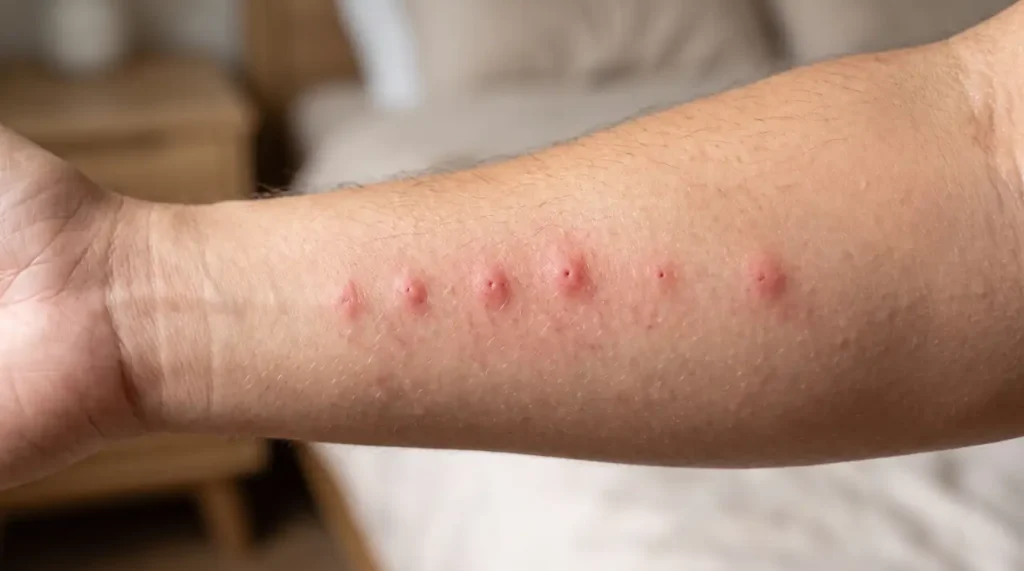
Bed bug bites often appear in a recognizable pattern. Instead of one isolated bump, you’ll frequently see multiple bites lined up in a row or grouped together.
Pest control professionals sometimes call this the “breakfast, lunch, and dinner” pattern because a single bed bug may feed several times while moving across exposed skin.
Bed bug bites are usually small red welts that may be flat or slightly raised. They often itch intensely and appear in straight lines, zigzag patterns, or tight clusters. Unlike mosquito bites, reactions may not appear for several hours or even until the following day.
They’re most commonly found on exposed skin such as the neck, face, shoulders, arms, hands, upper back, and legs. One thing that surprises many homeowners is that bed bug bites don’t always show up immediately.
I’ve inspected homes where someone woke up feeling perfectly fine, only to develop itchy welts later that afternoon. That’s because everyone’s immune system reacts differently to bed bug saliva.
Some people show almost no visible reaction, while others develop large swollen welts or even small blisters. Reactions also vary over time, with some people becoming more sensitive after repeated exposure. Because of this, bite appearance should always be considered alongside physical evidence such as shed skins, black fecal spots, or live bed bugs.
What Mosquito Bites Look Like
Instead of appearing in neat lines or clusters, they’re typically scattered randomly across exposed skin.
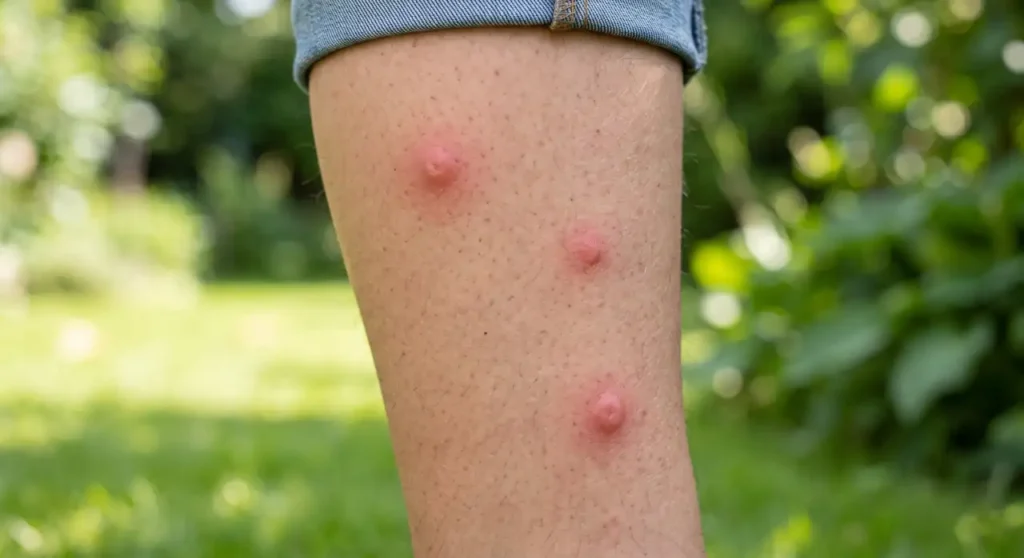
A typical mosquito bite is round, slightly raised, soft to the touch, and becomes very itchy soon after the mosquito feeds.
Unlike bed bug bites, mosquito bites often become itchy almost immediately because your body reacts quickly to mosquito saliva.
Mosquitoes also don’t limit themselves to bedrooms. You might get bitten while gardening, walking the dog, sitting on the patio, or even cooking dinner if a mosquito has found its way indoors.
Common locations include:
- Ankles
- Arms
- Legs
- Face
- Neck
- Hands
One detail I’ve consistently noticed during inspections is that mosquito bites are usually much more spread out. When homeowners show me bites scattered across different parts of the body after spending time outdoors, mosquitoes are often the more likely explanation than bed bugs. A mosquito may bite your ankle, then your arm, then your shoulder before flying away.
Another clue is timing. If you spend the evening outdoors and wake up with one or two itchy bumps, mosquitoes are a much more likely explanation. If you wake up morning after morning with new bites appearing in similar spots, it’s time to consider the possibility of bed bugs.
The Health Risks: Why Mosquitoes Are More Dangerous
Although both insects feed on blood, mosquitoes pose the greater health risk because they can transmit diseases, while bed bugs are not known to spread diseases through their bites. Bed bugs can still cause itching, allergic reactions, sleep disruption, and stress, so infestations should never be ignored.
Mosquitoes Can Spread Deadly Diseases
Mosquitoes can transmit diseases including West Nile virus, dengue, Zika, chikungunya, and malaria in certain parts of the world. In the United States, West Nile virus is the mosquito-borne illness reported most often.
Fortunately, the vast majority of mosquito bites never lead to illness. Still, it’s important to know the warning signs if you’ve recently traveled or live in an area where mosquito-borne diseases have been reported.
Symptoms to watch for include:
- Fever
- Severe headache
- Muscle or joint pain
- Skin rash
- Extreme fatigue
- Swollen lymph nodes
- Nausea or vomiting
If these symptoms develop after mosquito bites, especially within a few days or weeks of travel, it’s best to contact a healthcare provider promptly.
Bed Bugs: Annoying but Not Disease Carriers
Bed bugs have a terrible reputation, but disease transmission isn’t one of the reasons.
According to the U.S. Centers for Disease Control and Prevention (CDC), there is currently no evidence that bed bugs transmit diseases to people through their bites, even though they can cause itching, allergic reactions, and loss of sleep. That’s an important distinction that many people don’t realize.
Their bites can cause intense itching, allergic reactions in some individuals, and secondary skin infections if the bites are scratched excessively. Beyond the physical irritation, bed bug infestations often take a significant emotional toll. I’ve worked with families who struggled to sleep because they were anxious about being bitten again. Others became so stressed that they avoided using their own bedrooms until the infestation was eliminated.
In severe infestations, repeated bites over an extended period may contribute to sleep deprivation and increased stress, both of which can affect overall well-being.
Although bed bugs don’t transmit diseases, they should never be ignored. An infestation rarely resolves on its own, and the longer it goes untreated, the more difficult and expensive it usually becomes to eliminate. They also survive much longer without feeding than most people realize, which is one reason infestations rarely disappear on their own.
How to Treat Both Types of Bites
Most bed bug and mosquito bites heal on their own, but treating the itching and avoiding infection can make them much more comfortable while they heal.
Immediate Care for Any Bug Bite
As soon as you notice a bite, wash the area gently with soap and warm water. This helps remove dirt and bacteria from the skin and lowers the risk of infection if you accidentally scratch the bite later.
If the itching becomes bothersome, applying a cool compress for 10 to 15 minutes can reduce swelling and provide temporary relief.
The biggest mistake I see is excessive scratching. It may feel satisfying for a few seconds, but scratching damages the skin, increases the risk of bacterial infection, and can slow healing by repeatedly damaging the skin.
For most people, over-the-counter anti-itch creams or oral antihistamines can make the itching much easier to tolerate.
Treating Bed Bug Bites
Bed bug bites usually don’t require medical treatment unless they trigger a severe allergic reaction.
In most cases, the itching gradually fades over several days. Depending on your body’s reaction, some bites may remain visible for a week or longer.
Hydrocortisone cream, calamine lotion, oral antihistamines, and cool compresses all help relieve itching and swelling for most people.
While treating the bites is important, it’s only half the solution.
If bed bugs are still living in your home, new bites will continue to appear every night. That’s why identifying and eliminating the infestation is just as important as treating your skin.
I’ve visited homes where homeowners had drawers full of creams and medications but had never inspected their mattress or bed frame. The bites kept returning because the source of the problem was still there.
Treat the infestation, not just the symptoms.
Treating Mosquito Bites
Mosquito bites usually begin itching shortly after the bite occurs and improve within a few days.
Most people find relief with simple home care. Hydrocortisone cream, calamine lotion, aloe vera gel, or an oral antihistamine can all reduce itching. Applying a cold compress also helps decrease swelling.
If the bite becomes unusually swollen or develops increasing redness, warmth, or pus, it may have become infected due to scratching.
That’s uncommon, but it does happen.
Children are often more prone to scratching mosquito bites until the skin breaks, so keeping fingernails trimmed and discouraging scratching can help prevent infection.
When to See a Doctor
Most insect bites can be managed at home, but certain situations require medical attention.
Seek medical care if you experience any of the following after a bug bite:
Symptoms such as fever, severe headache, rash, muscle or joint pain, unusual fatigue, or nausea after mosquito bites—particularly following travel or during local outbreaks—should be evaluated by a healthcare provider.
These symptoms may indicate an allergic reaction, an infection, or a mosquito-borne illness that needs prompt evaluation.
When in doubt, it’s always safer to contact a healthcare professional rather than trying to diagnose a serious reaction on your own.
How to Prevent Future Bites
Preventing future bites starts with knowing which insect you’re dealing with because bed bugs and mosquitoes require very different control strategies.
Stopping Bed Bugs Before They Start
One of the biggest misconceptions about bed bugs is that they only infest dirty homes.
That’s simply not true.
I’ve found bed bugs in spotless homes, luxury hotels, apartments, college dormitories, and vacation rentals. Cleanliness has very little to do with whether bed bugs arrive.
They’re hitchhikers. They don’t appear because a home is dirty—they arrive because they’re accidentally carried inside.
Inspect Sleeping Areas Carefully
Every few weeks, take a few minutes to inspect your mattress seams, box spring, headboard, and bed frame.
Early warning signs include live bugs, black fecal spots, shed skins, tiny white eggs, and rust-colored stains on bedding.
Finding these signs early can prevent a small problem from becoming a major infestation.
Be Careful with Secondhand Furniture
Used furniture can be a great bargain, but it also comes with risk.
Never bring used mattresses or upholstered furniture into your home without thoroughly inspecting them. Even wooden furniture should be checked carefully around joints, screw holes, and cracks where bed bugs like to hide. Bed bugs don’t just hide in mattresses—they can also take shelter deep inside wooden furniture where they’re much harder to spot.
I’ve seen infestations start from a single used nightstand picked up at a garage sale.
It only takes one pregnant female bed bug to start a new population.
When You Travel
Whenever you stay in a hotel, vacation rental, or guest room, inspect the mattress seams, headboard, and nearby furniture before unpacking. Keep luggage on a luggage rack instead of the bed or floor. If no rack is available, storing luggage in the bathroom during your stay can reduce the risk of bringing bed bugs home.
After You Get Home
After returning home, inspect your luggage. Wash clothing using the hottest water that’s safe for the fabric, but remember that the high heat of the dryer is what reliably kills bed bugs and their eggs. Vacuum luggage before storing it to reduce the chance of bringing bed bugs into your home. If possible, store luggage away from bedrooms, such as in a basement, garage, or storage area.
Keeping Mosquitoes Away
Unlike bed bugs, mosquitoes usually breed outdoors in standing water. Reducing water sources around your property and using effective repellents are the two most reliable ways to prevent bites.
Use Effective Repellents
When spending time outdoors, especially during mosquito season, an EPA-registered insect repellent is one of the best defenses against bites.
Products containing DEET, picaridin, IR3535, or oil of lemon eucalyptus (for children over the recommended age) have been shown to provide reliable protection when used according to the label directions.
DEET helps make people harder for mosquitoes to detect, while picaridin may reduce the likelihood of mosquitoes landing in the first place. Both are effective when used according to the label directions.
Apply repellent to exposed skin and, when appropriate, to clothing. If you’re also using sunscreen, apply sunscreen first and insect repellent afterward. While some plant-based repellents provide short-term protection, EPA-registered products generally offer more reliable results in areas with heavy mosquito activity.
Dress for Protection
Wearing long sleeves, long pants, socks, and closed-toe shoes reduces exposed skin. Light-colored clothing may also make you less attractive to some mosquito species.
Control Your Environment
Reducing mosquito breeding areas is one of the most effective long-term solutions.
Walk around your property after a rainstorm and look for anything holding water.
Common problem areas include:
- Clogged gutters
- Plant saucers
- Buckets
- Children’s toys
- Tarps
- Wheelbarrows
- Birdbaths
- Old tires
- Pet water bowls left outside
Empty standing water at least once a week whenever possible. Mosquitoes don’t need much water to reproduce. Even a small container can become a breeding site.
Repair torn window screens and door screens to keep mosquitoes from entering your home. If you enjoy spending time on a porch or patio, using outdoor fans can also help. Mosquitoes are weak flyers, and moving air makes it harder for them to land.
Homeowners who combine repellents with habitat reduction usually see the best results.
Common Myths and Mistakes
Misinformation about bed bugs and mosquitoes spreads almost as quickly as the insects themselves. Let’s clear up a few common myths that often lead homeowners in the wrong direction.
Bed Bug Myths
One of the biggest myths is that bed bugs only infest dirty homes.
In reality, bed bugs don’t care whether your house is spotless or cluttered. They’re interested in one thing: finding a blood meal. I’ve treated luxury homes, upscale hotels, and meticulously clean apartments that had bed bug infestations.
Another myth is that you’ll always see bed bugs if they’re present.
Not necessarily.
Bed bugs are experts at hiding in narrow cracks and crevices. During the day, they often remain tucked away behind headboards, inside bed frames, or beneath furniture. A homeowner may have an active infestation without ever spotting a live bug.
Many people believe throwing away a mattress will solve a bed bug problem, but bed bugs often hide in bed frames, furniture, baseboards, and other nearby cracks. Replacing the mattress without treating the infestation usually doesn’t solve the problem.
They’re primarily nocturnal because that’s when people are asleep and easier to feed on, but if they’re hungry enough and a person is resting during the day, bed bugs can bite then too.
Mosquito Myths
A common myth is that mosquitoes only bite at dusk.
While many species are most active around sunrise and sunset, others bite throughout the day. The Asian tiger mosquito, for example, is well known for biting during daylight hours.
Another misconception is that mosquito zappers eliminate mosquito problems.
Traditional bug zappers kill many flying insects, but research has shown they have little impact on mosquito populations because mosquitoes are not strongly attracted to the light used in most zappers.
Some homeowners also believe that citronella candles alone provide complete protection.
Citronella may help reduce mosquito activity in a very small area under ideal conditions, but it shouldn’t be your only line of defense if mosquitoes are abundant.
Finally, many people assume mosquitoes only breed in ponds or swamps.
In reality, they can reproduce in something as small as a bottle cap filled with rainwater. That’s why eliminating standing water around your property is so important.
When Bites Become a Bigger Problem
Most bug bites heal without complications, but sometimes they’re a sign of a larger issue that needs attention.
Knowing when to look beyond the bite itself can save you time, money, and unnecessary stress.
Signs of a Bed Bug Infestation
If you’re waking up with new bites every morning, don’t stop at treating your skin. Start looking for evidence that bed bugs are living somewhere nearby.
Some of the most common warning signs include small reddish-brown insects hiding around the bed, black fecal spots on mattresses or sheets, tiny white eggs tucked into seams or cracks, shed skins, and small rust-colored stains on bedding left behind after feeding.
Another clue is consistency. Bed bug bites tend to appear over multiple nights because the insects remain close to where you sleep. If you suspect bed bugs, inspect carefully before buying sprays or throwing away furniture. Proper identification is always the first step toward effective control.
Mosquito-Borne Disease Concerns
While most mosquito bites are harmless, it’s important to pay attention to how you feel after being bitten.
If you develop a high fever, severe headache, muscle pain, rash, unusual fatigue, or other flu-like symptoms, especially after traveling or during periods when mosquito-borne illnesses have been reported in your area, contact a healthcare provider promptly.
Also Read: How To Get Rid of Bed Bugs in Your Couch for Good
Quick Bite Identification Checklist
If you’re still unsure whether you’re dealing with bed bugs or mosquitoes, ask yourself these questions:
- Did the bites appear after sleeping or after spending time outdoors?
- Are the bites grouped in lines or scattered randomly?
- Are new bites appearing every morning?
- Can you find physical evidence of bed bugs around the bed?
- Did the itching start immediately or several hours later?
Conclusion
Bed bug bites and mosquito bites may look similar, but the surrounding clues usually tell the real story. Understanding the difference between bed bug bites and mosquito bites helps you treat the real problem instead of wasting time on the wrong solution.
While mosquitoes pose the greater health risk because they can transmit diseases, bed bugs are far more likely to indicate an infestation inside your home. If you’re unsure what’s causing your bites, inspect your sleeping area, consider your recent activities, and address the source rather than treating the bites alone.